

San Francisco in 3 days: Alcatraz, the redwoods and the park
Three days in San Francisco are enough to see the city and leave twice over. The first day is about the icons. The second takes you to an island in the middle of the bay: Alcatraz, which was a military fortress, a military prison, America’s toughest federal penitentiary, and finally, for nineteen months, territory occupied by Native Americans — and it’s this last story, which almost nobody knows, that makes the visit worthwhile. The third crosses the bridge and goes among the redwoods, which are the tallest trees in the world and grow half an hour from the city.
In summary
- Duration · three full days, from 9 am to 10 pm
- How much walking · 7–9 km a day, with real climbs in the city
- Book in advance · Alcatraz weeks ahead, often two or three: it’s the city’s hardest reservation. And the permit for Muir Woods
- You need a car · only for day 3, and you can skip it with the shuttle
- Budget · 320–480 dollars per person for three days, lodging not included
- When · September and October. July and August are the foggiest and coldest months in the city
- What’s left out · Napa and Sonoma wineries, Big Sur: that’s day four and five
One color per day. On day three you cross the bridge heading north and return by ferry.
Day 1 — The city
9 km · from 9 am to 10 pm · this is the one-day itinerary, without cuts

Breakfast at the Ferry Building, then the oldest Chinatown in North America with the fortune cookie factory in the alley. Mid-morning, a cable car ride and the switchbacks of Lombard Street; afternoon on foot across the Golden Gate, with a jacket. Evening at the Painted Ladies of Alamo Square and dinner in the Mission or North Beach.
Day 2 — Alcatraz and the hills
7 km · 2 stages · from 9 am to 10 pm · ferry departs from pier 33
Morning – The island
Duration 4 hours, ferry included · Ticket about 47 $ with audio guide · BOOK in advance by weeks

Alcatraz sits two and a half kilometers from shore, in a bay where the water is around twelve degrees Celsius and the current is strong. It was a military fortress, then a military prison, and from 1934 to 1963 the maximum-security federal penitentiary where inmates went that other prisons couldn’t hold: Al Capone, Machine Gun Kelly, and Robert Stroud, the “Bird Man,” all passed through.
The visit is done with a very well-made audio guide, recorded with the voices of former inmates and former guards: you walk through the cellblocks, the mess hall, the yard, and the isolation cells. One striking thing is that from the yard you can see the city, very close by: inmates said that on New Year’s Eve nights the sound of celebrations from the Yacht Club would reach them, and it was the worst part of the punishment.
Officially, no one ever escaped. In June 1962, though, three men — Frank Morris and the Anglin brothers — spent months digging through the air vents with spoons and a drill made from a vacuum cleaner, left plaster-of-Paris heads with real hair from the barber in their beds, and vanished on a raft made of raincoats. They were never found, dead or alive, and the case is still formally open.
The part that almost nobody expects comes after closing: from November 1969 to June 1971, for nineteen months, the island was occupied by a group of Native Americans who claimed possession based on a treaty assigning federal abandoned lands to tribes. The occupation had enormous impact and helped change U.S. policy toward Native Americans. The red writings from back then are still on the walls and were deliberately preserved in the restoration.
Tickets are sold only on the concessionaire’s official website and sell out weeks in advance, even two months in high season. Beware of resellers offering them at inflated prices. If you can’t find a spot, the ferry tour around the island is the fallback.
Afternoon – North Beach and the Coit Tower
Duration 4 hours · Coit Tower about 11 $ for the elevator · Filbert Steps free, but 400 steps
North Beach is the Italian neighborhood, and still is in its bars and bakeries. In the 1950s it was the headquarters of the Beat Generation: the City Lights bookstore, founded by Lawrence Ferlinghetti in 1953, was the first American bookstore to sell only paperbacks, and in 1957 Ferlinghetti was prosecuted for obscenity for publishing Ginsberg’s Howl. He won, and that verdict expanded freedom of the press in the United States. The bookstore is still open and is a city landmark.
Above the neighborhood sits the Coit Tower, a white tower from 1933 built with a bequest from Lillie Hitchcock Coit, who as a girl was adopted as the mascot of a volunteer fire company. The legend that it’s shaped like a fire hose nozzle is denied by the family, but it persists. Inside, on the ground floor, are twenty-seven frescoes painted in 1934 by artists paid by the public program against unemployment: they tell the story of working California, and some were judged so left-leaning that the inauguration was delayed by months. They’re free.
To go down, don’t take the road but the Filbert Steps: a wooden stairway through private gardens and houses perched on the hillside, where the wild parrots of Telegraph Hill live, descendants of escaped pets from the 1990s. They made a documentary about them.
Day 3 — The redwoods and the park
6 km · 3 stages · from 8:30 am to 9 pm · you cross the bridge heading north
Morning – Muir Woods
Duration 3 hours · Entry about 15 $ · Parking or shuttle REQUIRED, book in advance · 45 minutes from San Francisco
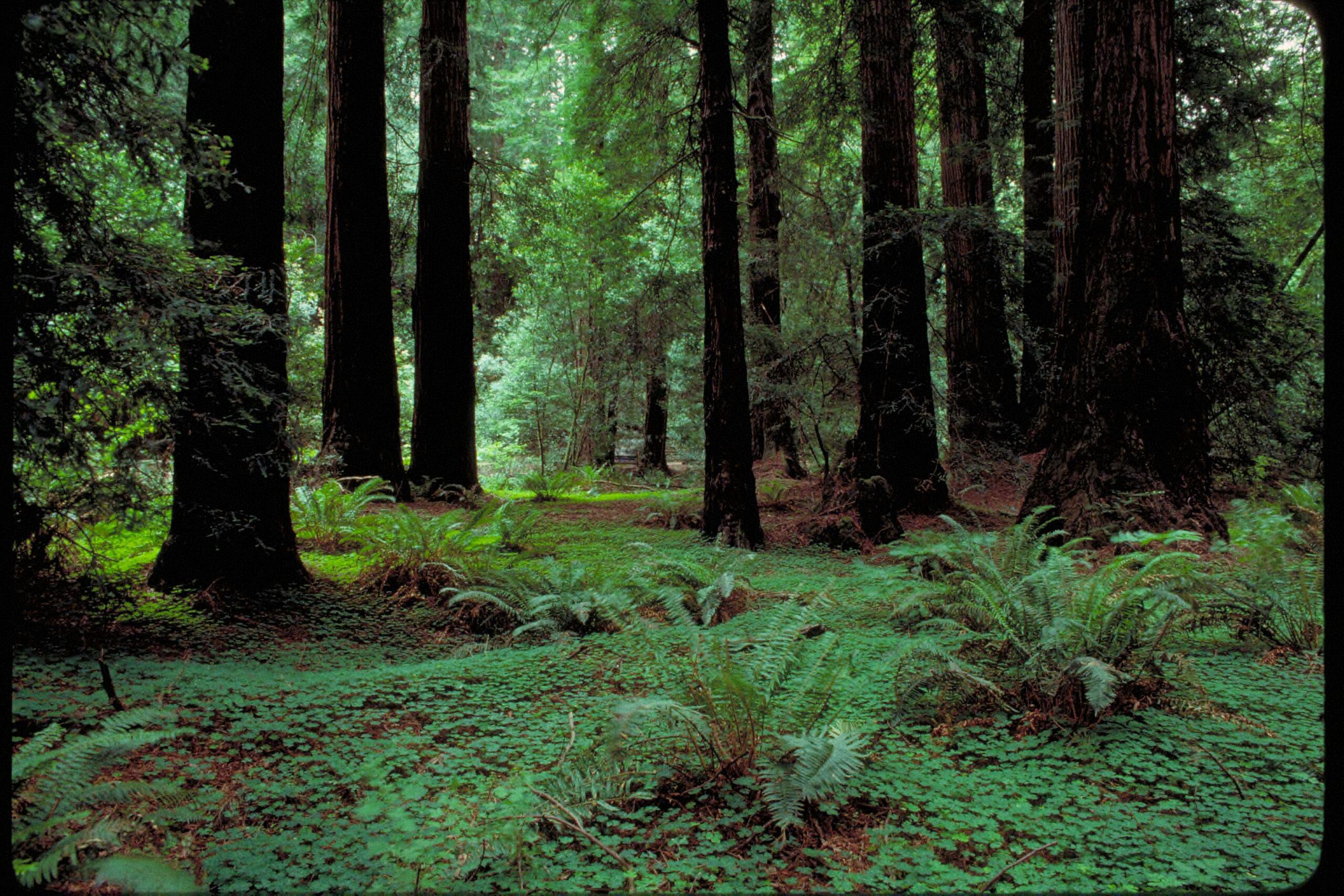
Once you cross the bridge, half an hour later you’re inside a forest of coast redwoods up to eighty meters tall and up to eight hundred years old. The coast redwood is the tallest tree in the world, and these specimens survive here for a precise reason: the roots reach the water table, but in summer the water wouldn’t be enough, and the trees absorb it directly from the fog that rises from the ocean, through the leaves.
The forest was saved by chance: in 1908 an industrialist, William Kent, bought it to prevent logging and donated it to the State, asking that it be named after John Muir, the naturalist who founded the national parks movement. Muir wrote to him that it was “the best action as a forest man” in all of California.
You walk on wooden boardwalks along the stream, with loops from half an hour to two hours. The silence is total and the place has strict rules about noise. Warning: since 2018 both parking and the shuttle must be booked in advance, and without a reservation you can’t enter, not even on foot.
Afternoon – Sausalito and the ferry ride back
Duration 3 hours · Ferry about 14 $ · 20 minutes from Muir Woods
Sausalito is the town on the north shore of the bay, with houses in tiers on the hillside, boats, and a straight view across to San Francisco. It has a peculiarity: a community of floating houses, some quite eccentric, born after World War II when the shipyards closed and the workers stayed to live on the hulls; in the 1970s there were even clashes with police over evictions. Today it’s a full-fledged neighborhood and you visit it by walking on the public docks.
The right way to get back to the city is by ferry: it goes under the Golden Gate, circles Alcatraz, and arrives at the Ferry Building with the skyline in front. It costs a bit more than a bus ticket and is one of the best things about the whole trip.
Evening – Golden Gate Park
Duration 3 hours including dinner · Park free, de Young about 20 $ · Bus 5 or 7
Golden Gate Park is bigger than Central Park — four kilometers long — and is entirely built on sand dunes: at the end of the 1800s this was a barren expanse that everyone thought impossible to plant. A Scottish gardener, John McLaren, pulled it off, directing it for fifty-three years, until his death at ninety-six.
Inside is the oldest Japanese garden in the United States, from 1894, where according to tradition the first fortune cookies in America were served; the de Young Museum, with a free-access panoramic tower; the California Academy of Sciences, which has a living roof covered in grass with an aquarium, a planetarium, and a tropical forest under a dome inside; and the Conservatory of Flowers, a white glass Victorian greenhouse from 1879.
If there’s fog, or if it rains
- Alcatraz · with rough seas, tours can be canceled, and in that case you get a refund or rescheduling. With fog you go anyway: the island in the fog is actually more atmospheric.
- Muir Woods · holds up fine in light rain, in fact that’s its natural climate: the forest lives on fog. With heavy rain the boardwalks get slippery.
- Indoors · the California Academy of Sciences and the de Young face each other in the park and take up a full day; the SFMOMA downtown is the biggest modern art museum in America after MoMA.
- The microclimate · in San Francisco you can have sun in the Mission and thick fog in the Sunset at the same time. If one area is gray, move: often one neighborhood over does the trick.
How much the three days cost
| Voce | Spesa |
|---|---|
| Alcatraz with ferry and audio guide | about 47 $ |
| Cable car, one ride | about 8 $ |
| Coit Tower | about 11 $ |
| Muir Woods: entry and shuttle | about 30 $ |
| Ferry from Sausalitor | about 14 $ |
| de Young Museum | about 20 $ |
| Golden Gate on foot, Chinatown, parks, Coit Tower frescoes | free |
| City transit, 3 days | about 18 $ |
| Meals, 3 days170– | 270 $ |
| Totalabout 320– | 420 $ per person |
Reference figures as of August 2026, in dollars. The item to book first isn’t an expense but a reservation: Alcatraz tickets sell out weeks in advance, and without them the second day needs rewriting.
Frequently asked questions
Are three days enough for San Francisco?
Yes, and it’s the right scope: one for the city, one for Alcatraz and the hills, one for the redwoods and the park. The city is small — eleven kilometers by eleven — and in three days you see it well. With five days you add the wineries and the coast to the south.
How far in advance do you book Alcatraz?
Weeks, often two or three, and in high season even two months. It’s the city’s hardest reservation and is only done on the concessionaire’s official website. If you don’t find a spot, there’s the ferry tour around the island, but it doesn’t land.
Is it true that no one ever escaped from Alcatraz?
Officially yes. In June 1962, though, three inmates dug through the air vents with spoons, left plaster-of-Paris heads with real hair in their beds, and vanished on a raft made of raincoats: they were never found, dead or alive, and the case is still formally open.
What is the Alcatraz occupation?
From November 1969 to June 1971 the island, by then closed as a prison, was occupied for nineteen months by a group of Native Americans who claimed it based on a treaty about federal abandoned lands. The impact was huge and helped change federal policy. The red writings from back then are still on the walls, deliberately preserved.
Do you need to book Muir Woods too?
Yes, and it surprises many: since 2018 parking or the shuttle must be booked in advance, and without a reservation you can’t enter even if you walk. It’s to limit visitor numbers: the forest is small and fragile.
Why do the redwoods grow right there?
Because they live on fog: in summer the ground water wouldn’t be enough, and these trees absorb it directly from ocean fog through the leaves. That’s why the coast redwood grows only on this coastal band and becomes the world’s tallest tree there.
Is the Coit Tower worth it?
Yes, and not so much for the view: on the ground floor are twenty-seven 1934 frescoes painted by artists paid by the public program against unemployment, showing working California. Some were judged too political and the opening was postponed by months. The frescoes are free; you only pay for the elevator.
How do you get back from Sausalito?
By ferry, and it’s the best way: it goes under the Golden Gate, circles Alcatraz, and arrives at the Ferry Building with the skyline in front. It costs about fourteen dollars, a bit more than a bus ticket, and is one of the most beautiful parts of the whole trip.
What is City Lights?
The bookstore founded by Lawrence Ferlinghetti in 1953 in North Beach, the first all-paperback American bookstore and headquarters of the Beat Generation. In 1957 Ferlinghetti was prosecuted for obscenity for publishing Howl by Ginsberg: he won, and the verdict expanded freedom of the press in the United States. It’s still open.
How much do three days in San Francisco cost?
Between 320 and 420 dollars per person without lodging. The city is expensive for sleeping but the days cost little: the Golden Gate, parks, Chinatown, and the Coit Tower frescoes are free, and the biggest expense is the Alcatraz ticket.
September 6, 2026

