

What to see in Rome: a guide to the places that really count
There are too many things to see in Rome, and the problem for anyone arriving is not finding them: it is working out which ones are worth the queue and which are not. This guide sets out the places that genuinely matter, sorted by type rather than by day, saying for each one how much time it takes, what it costs and whether it has to be booked. At the bottom you will find how to fit them into the time you have: one day, three or five.
At a glance
- The five things not to miss · the Colosseum with the Forum, the Pantheon, the Vatican Museums, the Galleria Borghese, an evening in Trastevere
- The only compulsory bookings · Colosseum, Vatican Museums, Galleria Borghese
- What the main entry fees come to · about €100 per person in total
- The finest thing that is free · the Capitoline terrace over the Forum, at sunset
- The most underrated museum · Palazzo Massimo alle Terme, almost always empty
- Best time to go · April-May and October
Six thematic layers, not days: switch on only the ones you care about, from the box at the top right.
The landmarks, the reason people come to Rome
There are six of them, they are all inside the historic centre and you can walk from one to the next. If you are short of time, this is the right selection: nobody comes back from Rome pleased to have skipped the Colosseum for a museum.
Colosseum
Time 2 hours · Ticket €18 with Forum and Palatine · Booking compulsory, timed slot

Fifty thousand spectators, four tiers of arches, and underneath a system of lifts and trapdoors that made the animals appear in the middle of the arena. The visit works if you get there early: take the first available slot, go up to the second tier to see the hypogeum from above, and only then come down. Sales open thirty days ahead and in peak months the mornings go within hours.
What almost nobody does: look at it in the evening from Via Nicola Salvi, the street climbing towards Monti. Lit up and with no queue in front of it, it is a different building.
Roman Forum and Palatine
Time 2 hours 30 · Ticket the same as the Colosseum, valid 24 hours

The political and religious centre of the empire, and today the hardest thing in Rome to read: from street level it is scattered stones, with no signs and no context. The trick that changes the visit is to climb the Palatine first and look at the Forum from the terrace of the Farnese Gardens, where the whole thing becomes comprehensible in ten minutes. Then come down and walk the Via Sacra to the Basilica of Maxentius, the only one left intact enough to restore the proportions.
Pantheon
Time 40 minutes · Ticket €5, no longer free since 2023 · No booking

It is the best preserved ancient building in the world, and the reason is simple: it never stopped being used. The dome has the same diameter as its height from the floor, exactly forty-three metres, which means a perfect sphere would fit inside. The oculus at the top is a real hole and when it rains it rains inside: the floor is slightly convex and has twenty-two drainage holes that have worked for nineteen centuries.
Trevi Fountain
Time 20 minutes · Free

Thirty metres of facade crushed into a square that cannot hold them, and that is exactly the effect Nicola Salvi was after: you turn a corner and a stage set is on top of you. The water still arrives through the Aqua Virgo, built in 19 BC. At eight in the morning there are twenty people; at midday, two thousand.
Piazza Navona
Time 30 minutes · Free
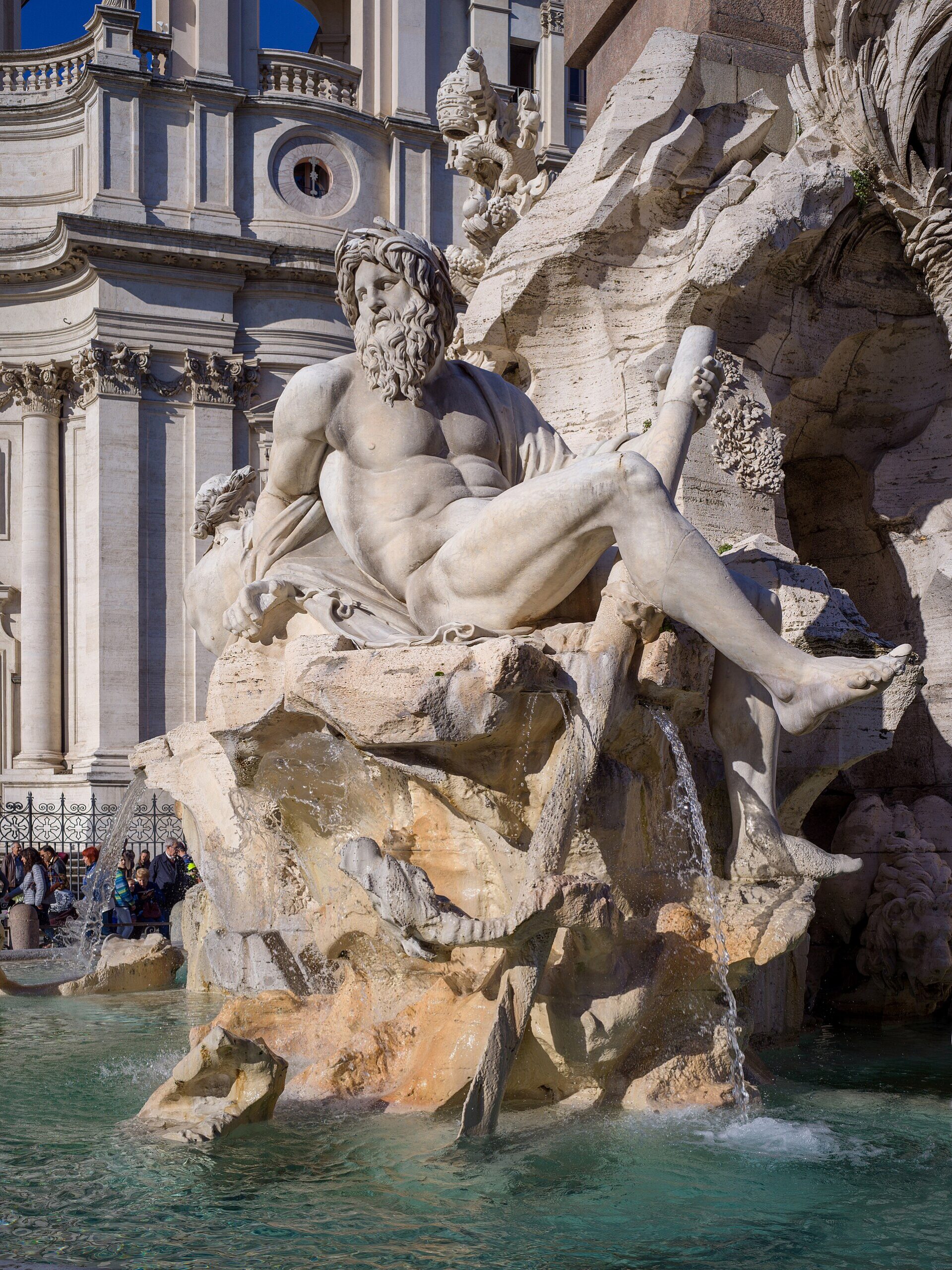
The shape is not an aesthetic choice: Domitian’s stadium lies underneath the square, and the buildings stand on the old tiers. At the centre is Bernini’s Fountain of the Four Rivers, with the Nile, the Ganges, the Danube and the Río de la Plata; opposite it, the church of Sant’Agnese in Agone by Borromini. The two men detested each other, and the poses of the statues are all that survives of the quarrel.
Spanish Steps
Time 30 minutes · Free
The staircase up to Trinità dei Monti, the Barcaccia fountain below and Via dei Condotti running straight ahead with all the windows. Sitting on the steps is forbidden and the fines are real. What is worth doing is going to the top: from the terrace in front of the church you see the roofs of the centre in one sweep, and there is a lift up from the metro station.
The Vatican
It is a different country, with different tickets, different opening hours and different rules: the Museums are closed on Sundays except the last of the month, the dress code is genuinely enforced — shoulders and knees covered, even in August — and the Roma Pass is worth nothing here.
Vatican Museums and the Sistine Chapel
Time 3 hours · Ticket €20, €25 booked · Booking strongly advised

Seven kilometres of rooms, and at the end the Sistine Chapel. The most useful advice runs against instinct: book 8 am and walk straight to the Sistine without stopping, then double back and do the normal route. At 8:20 am there are fifty people in the chapel; at 11 am five hundred, and the guards shout for silence every two minutes.
On the normal route do not skip the Gallery of Maps, forty frescoed maps of sixteenth-century Italy, or the Raphael Rooms, which many people hurry through believing they are a corridor.
St Peter’s Basilica
Time 1 hour 30 with the dome · Entry free, dome charged

Going in costs nothing, but you pass through security on the square and in summer the queue is over an hour: around midday, when many people are at lunch, you get in faster than at nine. Inside, Michelangelo’s Pietà is immediately on the right, behind glass since 1972. The dome climb has two prices, on foot or with the lift to the first level, but the last hundred and fifty steps are on foot in a corridor that narrows and tilts with the curve of the dome.
Castel Sant’Angelo
Time 1 hour 30 · Ticket separate, bought at the door

Hadrian’s mausoleum, then the popes’ fortress, then a prison. The passetto, the raised corridor connecting it to the Vatican, was there for escaping and worked at least twice. The internal spiral ramp is still the Roman one. But the reason to go up is the terrace at the top: St Peter’s opposite and the whole bend of the Tiber below.
The museums worth the trip
Rome has dozens of museums and most visitors see none of them, which is a shame: they are the part of the city where there is no queue and where you get to sit down.
Galleria Borghese
Time exactly 2 hours, the slot does not extend · Ticket about €15 plus booking fee · Booking compulsory, closed Mondays

Twenty rooms holding more masterpieces per square metre than any other museum in Italy. On the ground floor, Bernini’s sculptures: the Rape of Proserpina, with the fingers sinking into a marble thigh, and Apollo and Daphne, which has to be walked round because the transformation only reads from one side. Upstairs, six Caravaggios. Entry runs in capped two-hour slots: in peak months places go weeks in advance, and buying at the door is not an option.
Capitoline Museums
Time 2 hours 30 · Ticket about €16 · No booking
The oldest public museum in the world, opened in 1471. It holds the She-wolf, the original bronze Marcus Aurelius, the Spinario and the fragments of the colossus of Constantine — the head two and a half metres tall, the hand with its pointing finger. But the thing that justifies the ticket more than any statue is the Tabularium gallery: a Roman corridor looking down over the Forum through its arches.
Palazzo Massimo alle Terme
Time 2 hours · Ticket about €12 · No booking, almost always empty
If I had to name one museum in Rome that hardly anybody visits and that would deserve the Colosseum’s queue, it would be this one. On the second floor are the frescoes from Livia’s villa: an entire room painted as a garden, detached from the villa and rebuilt here, which gives the impression of standing inside an orchard. Below, the Boxer at Rest and the Girl from Anzio. It is two steps from Termini and it is the right place for a rainy afternoon.
Doria Pamphilj Gallery
Time 1 hour 30 · Ticket about €16 including the audio guide
It stands on Via del Corso, inside a palace the family still lives in. The rooms are domestic ones, with paintings hung close together as they were in the seventeenth century, and in a room of its own is Velázquez’s Innocent X, the portrait the pope said was «too true». The audio guide is recorded by a descendant of the family and recounts the household quarrels: it is the most entertaining one in Italy.
Etruscan Museum of Villa Giulia
Time 1 hour 30 · Ticket about €12 · Inside Villa Borghese
The Sarcophagus of the Spouses, the reclining couple smiling straight ahead, is here. It dates from the sixth century BC and it is one of the loveliest things Italy owns. The museum is always half empty and it sits inside the park, so it combines well with a day at Villa Borghese.
The districts, which are worth as much as the monuments
Rome does not end at the ticketed sites: half a day spent walking a district says more than two museums, and it costs nothing.
Trastevere

Narrow lanes, ivy on the walls, washing hung out. The heart of it is Piazza Santa Maria in Trastevere, with twelfth-century mosaics on the basilica facade — go in, the ones inside are better still. In the evening the whole city comes here, so it is expensive and crowded: three lanes away from the square is enough to halve the bill.
Monti
The district behind Via Cavour, between the Colosseum and Termini. It was the Suburra, the disreputable quarter of ancient Rome; today it is the place with the craft workshops, the proper trattorias and Piazza della Madonna dei Monti where people sit on the fountain. It is also the best district to sleep in if it is your first time.
The Ghetto
Between Campo de’ Fiori and the Tiber. There is the Portico of Octavia, there are the brass stumbling stones set in the pavements, there is the Synagogue with the Jewish Museum, and there is the place to eat carciofi alla giudia, artichokes fried whole that open out like a flower. It is the quietest quarter in the centre.
Testaccio
Off the tourist circuit, which is the reason to go. There is the covered market, where you eat very well for ten euros; there is Monte dei Cocci, a hill thirty-five metres high made entirely of broken amphorae dumped by the Romans over eight centuries; and there is the Non-Catholic Cemetery, with the graves of Keats, Shelley and Gramsci under the cypresses, one of the stillest places in the city.
The views from above, nearly all of them free
Rome is looked at from its hills, and most of the viewpoints cost nothing. These are the four that are worth the climb.
Capitoline terrace · walk round the right-hand side of the Senatorial Palace and you find yourself above the Forum. It is free, it is signposted nowhere, and at sunset it is the finest spot in the city.
Janiculum · the terrace behind Trastevere from which the whole of Rome fits into a single frame, domes in a row. It is twenty minutes uphill from Piazza Santa Maria in Trastevere. At midday they fire a blank cannon shot, and have done since 1847.

Pincio terrace · the edge of Villa Borghese overlooking Piazza del Popolo, with the dome of St Peter’s behind. You get there without climbing stairs, and it is the only viewpoint reachable in a wheelchair.
Orange Garden and the keyhole · on the Aventine. From the garden you see the city from above in silence; fifty metres away, in the door of the Priory of Malta, is the famous keyhole framing the dome of St Peter’s at the end of a hedged path. Go early: from ten onwards there is a queue that spoils the surprise.
Churches and ruins hardly anyone sees
Basilica of San Clemente
Time 1 hour · Church free, excavations about €10

It is five minutes from the Colosseum and it is the most astonishing thing in Rome. On top is a twelfth-century basilica with an apse mosaic in which the cross becomes a tree full of animals. Beneath it is a fourth-century basilica, with frescoes. And beneath that, ten metres further down, is a second-century temple of Mithras with its altar intact, next to the walls of a Roman house. You go down three floors and eighteen hundred years.
San Luigi dei Francesi
Time 30 minutes · Free · two steps from Piazza Navona
In the chapel at the far left are three Caravaggios devoted to Saint Matthew, among them the Calling, the one with the light cutting across the room. You go in free, put a euro in the machine that turns on the lights and look at them for twenty minutes. It is the best ratio of what you see to what you pay in the whole of Italy.
Santa Maria del Popolo
Time 30 minutes · Free
On the north side of Piazza del Popolo, looking like any ordinary church. Inside are two more Caravaggios, the Conversion of Saint Paul and the Crucifixion of Saint Peter, facing each other in the same chapel, plus a chapel designed by Raphael. There is almost never anybody there.
San Pietro in Vincoli
Time 20 minutes · Free · above Cavour metro station
You go for Michelangelo’s Moses, which was to have been one of forty statues on the tomb of Julius II and is almost the only one that was made. You climb a staircase from Monti and find yourself in front of it with no warning, in a church with no queue and no ticket.
Baths of Caracalla
Time 1 hour 30 · Ticket about €8
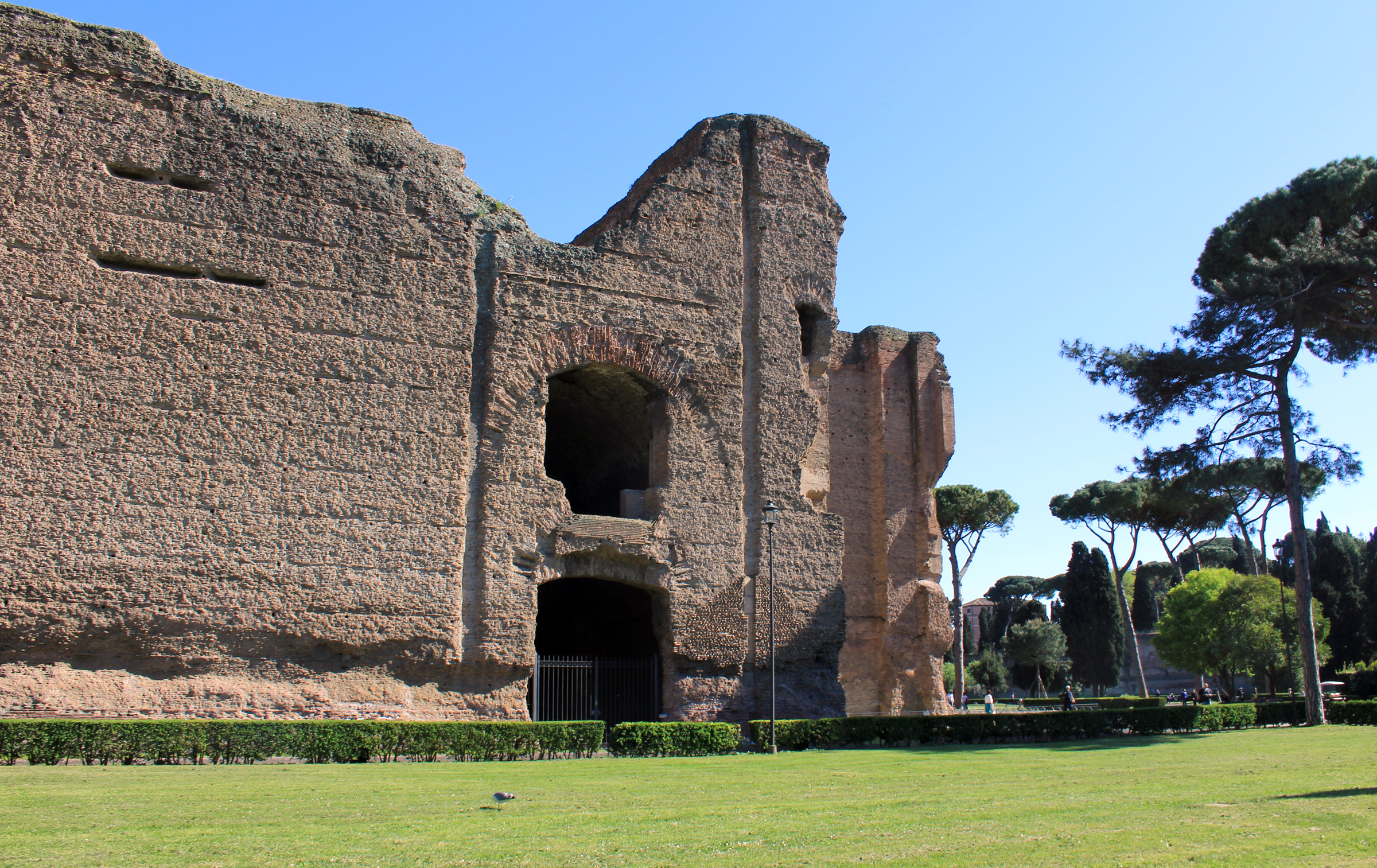
A bathing complex for seventeen hundred people at a time, with libraries, gymnasiums and gardens. What is left is brick walls thirty metres high, and the striking part is realising that those walls were not the outside: they were the internal partitions, and the ceiling was higher still. In summer they stage opera here in the open air.
Out of the centre, if you have an extra day
Ostia Antica · half an hour by train from Piramide, covered by the urban fare. It is an entire Roman town where you go inside the houses: apartment blocks with their staircases, baths with mosaics, public latrines with the seats in a row and a bar with the counter and the menu painted on the wall. It says more about everyday life than the Forum does.

The Appian Way · the regina viarum, lined with family tombs because the law kept burials outside the city. In some stretches you walk on the original slabs, worn by cart wheels. On Sundays the road is closed to traffic; on other days a bicycle is better, hired at the park entrance.
Tivoli · an hour away by public transport. Villa d’Este with its five hundred fountains and Hadrian’s Villa, an emperor’s country residence the size of a district. Together they are a full day, not half of one.
When to go
April-May and October are the right months: good weather, days long enough, and the Forum can be walked without suffering. They are also the months when bookings run out first.
July and August are hard going: the archaeological centre has no shade and the temperature stays high into the evening. On the other hand, in August the city empties of Romans and many trattorias close, which changes the evenings a great deal.
November to February means fewer people, hotels at half price and almost no queues. The price is that it is dark by five, so each day has to lose a stop.
What it costs to get in
| Place | Price | Booking |
|---|---|---|
| Colosseum, Roman Forum and Palatine | €18 | Compulsory |
| Vatican Museums and Sistine Chapel | €20-25 | Strongly advised |
| Galleria Borghese | about €17 | Compulsory |
| Capitoline Museums | about €16 | No |
| Doria Pamphilj Gallery | about €16 | No |
| Palazzo Massimo alle Terme | about €12 | No |
| Etruscan Museum, Villa Giulia | about €12 | No |
| San Clemente excavations | about €10 | No |
| Baths of Caracalla | about €8 | No |
| Pantheon | €5 | No |
| St Peter’s Basilica | free | — |
| The churches with the Caravaggios | free | — |
Reference figures as of August 2026: museums change their prices often, check the official websites before you travel. Entry to state sites is free for under-18s.
How to choose, according to the time you have
One day · Colosseum with the Forum in the morning, Pantheon, Piazza Navona and Trevi in the afternoon, Trastevere in the evening. The Vatican stays out, and that is not a mistake: the full route is in Rome in 1 day.
Three days · a day for ancient Rome, a day for the Vatican, a day for the baroque centre. It is the right length for a first visit and you will find it in Rome in 3 days.
Five days · the three above plus a day of museums and parks and a day out of the centre, between the Appian Way and Ostia Antica: that is Rome in 5 days.
Frequently asked questions
What should I see in Rome if it is my first time?
The Colosseum with the Roman Forum, the Pantheon, the Trevi Fountain, Piazza Navona, the Vatican Museums with the Sistine Chapel and St Peter’s Basilica. Those are the six nobody wants to have skipped, and they fit into three days without rushing.
Which attractions in Rome have to be booked?
Three: the Colosseum (compulsory timed slot, sales open thirty days ahead), the Vatican Museums (timed slot, closed on Sundays except the last of the month) and the Galleria Borghese (capped two-hour slots, closed on Mondays, often sold out weeks ahead). Everything else is bought at the door.
What can you see for free in Rome?
A great deal: all the squares and fountains, St Peter’s Basilica, the churches with the Caravaggios — San Luigi dei Francesi and Santa Maria del Popolo — Michelangelo’s Moses in San Pietro in Vincoli, and the viewpoints: the Capitoline terrace, the Janiculum, the Pincio, the Orange Garden. The Pantheon is not free any more: it costs €5.
Which is the best museum in Rome?
The Galleria Borghese, for sheer density of masterpieces: Bernini’s sculptures and six Caravaggios in twenty rooms. If instead you want the one nobody visits and which is worth the trip anyway, it is Palazzo Massimo alle Terme, with the frescoes from Livia’s villa rebuilt in a whole room.
Is the Roma Pass worth it?
It depends. The 72-hour version includes two entries to state or municipal museums plus transport: it pays off if in those days you do the Colosseum and the Capitoline Museums, otherwise not. The Vatican Museums are not included because they belong to another state, and the Galleria Borghese has to be booked separately anyway.
How many days do you need for Rome?
Three days for the landmarks, five to add museums, parks and the ancient outskirts. With a single day you see a coherent part of the city but not the Vatican. There is no number of days that is enough: even Romans have not seen everything.
Can Rome be visited on foot?
The centre can, and it is the best way: between one landmark and the next there are ten minutes on average. The metro is needed for the Vatican, Villa Borghese and Ostia. Count on 7 to 9 km a day, almost all on cobblestones: shoes matter more than fitness.
When is the best time to visit Rome?
April-May and October, for weather and light. November to February has fewer people and lower prices, but the days end at five. July and August are the hardest months, because the archaeological area has no shade.
August 22, 2026


