

What to see in Naples: a guide to the places that really count
Naples has the highest ratio in Italy between what is there and what gets talked about. It holds the most important museum in the world for Roman antiquity, an underground city carved out of tuff, three Caravaggios, and half an hour away by train two buried Roman towns and an active volcano. It also costs far less than the other art cities. This guide lists the places in order of importance rather than as an itinerary, saying for each how long it takes, what it costs and whether it has to be booked.
At a glance
- The five things not to miss · the Archaeological Museum, the Veiled Christ in the Sansevero Chapel, Spaccanapoli, the view from the San Martino charterhouse, a pizza in a historic pizzeria
- What has to be booked · Sansevero Chapel, Underground Naples, Vesuvius (compulsory)
- The day to avoid · Tuesday, when the Archaeological Museum is closed
- The finest thing that is free · the terrace of Castel dell’Ovo at sunset
- The most underrated museum · Capodimonte, which holds Caravaggio, Titian and Masaccio and is half empty
- Best time to go · April-June and September-October
Five thematic layers, not days: switch on only the ones you care about, from the box at the top right.
The landmarks, the reason people come to Naples
Spaccanapoli and the decumani
Time 2 hours walking · Free

The old centre is still the Greek grid of the fifth century BC: three parallel east-west streets, the decumani, cut by alleys. Via dei Tribunali is the decumanus maximus; the parallel street further south, the one that slices the centre like a blade seen from above, is Spaccanapoli — an unofficial name: on maps it is Via Benedetto Croce and then Via San Biagio dei Librai.
Between them runs San Gregorio Armeno, the street of nativity-scene craftsmen: workshops open all year making shepherds and, by now a firm tradition, famous people from the current year. In December it is impassable; in June you can walk.
Piazza del Plebiscito and the Royal Palace
Time 2 hours with the palace · Square free, palace about €10
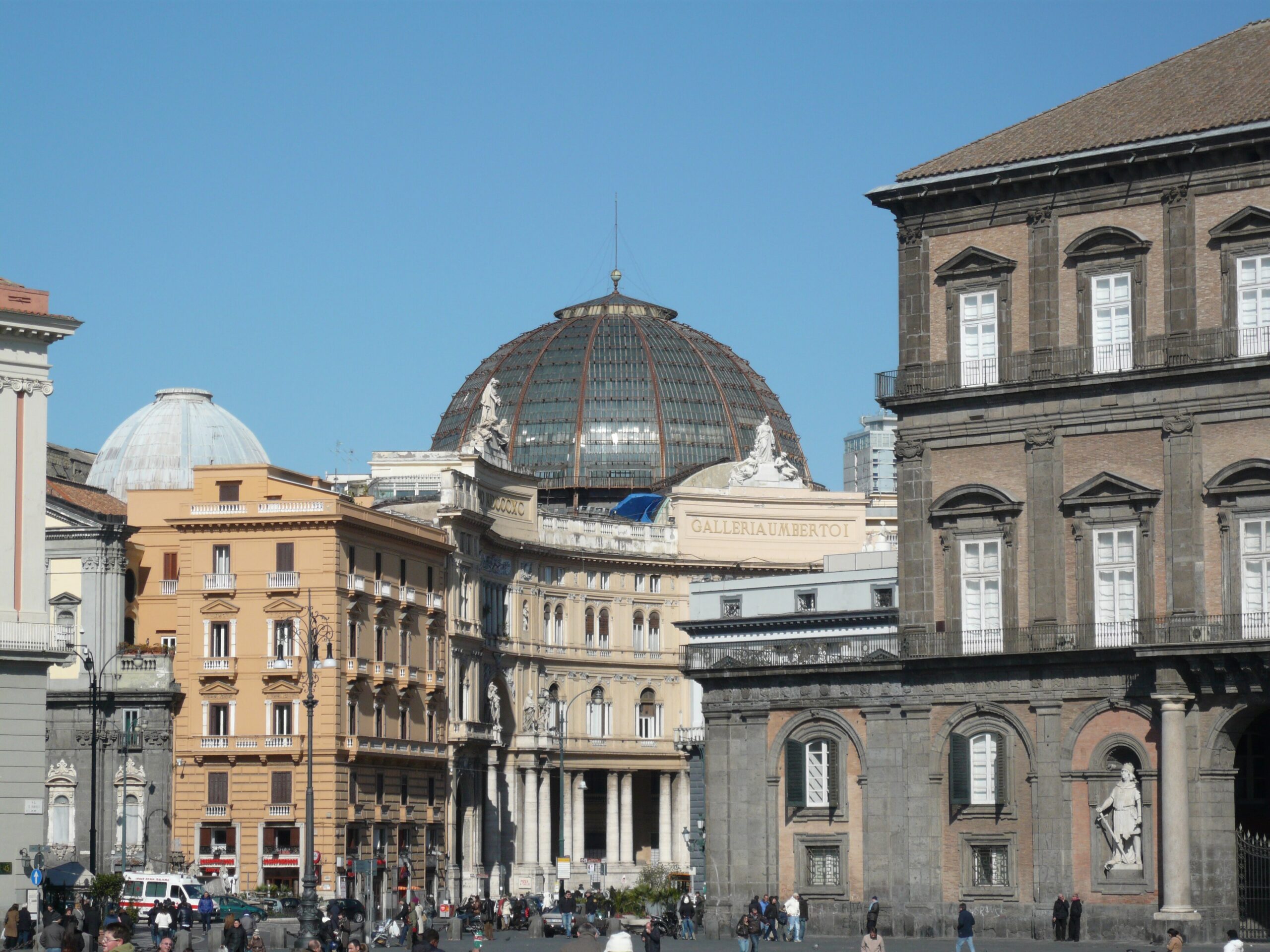
A semicircle of columns with the basilica of San Francesco di Paola on one side and the Royal Palace on the other. Inside you can see thirty rooms with the ceremonial staircase, the court theatre and the national library, which holds the carbonised papyri from Herculaneum — the only library from antiquity to reach us, and one people are still trying to read.
Galleria Umberto I and Teatro San Carlo
Time 1 hour 30 with the theatre tour · Galleria free, theatre about €12

The gallery, from 1890, has an iron and glass dome fifty-seven metres high. Opposite it, the Teatro San Carlo: opened in 1737, it is the oldest working opera house in Europe, forty years older than La Scala. The guided tour lasts half an hour and takes you into the auditorium, in front of six tiers of boxes.
Castel dell’Ovo and the seafront
Time 1 hour 30 · Free
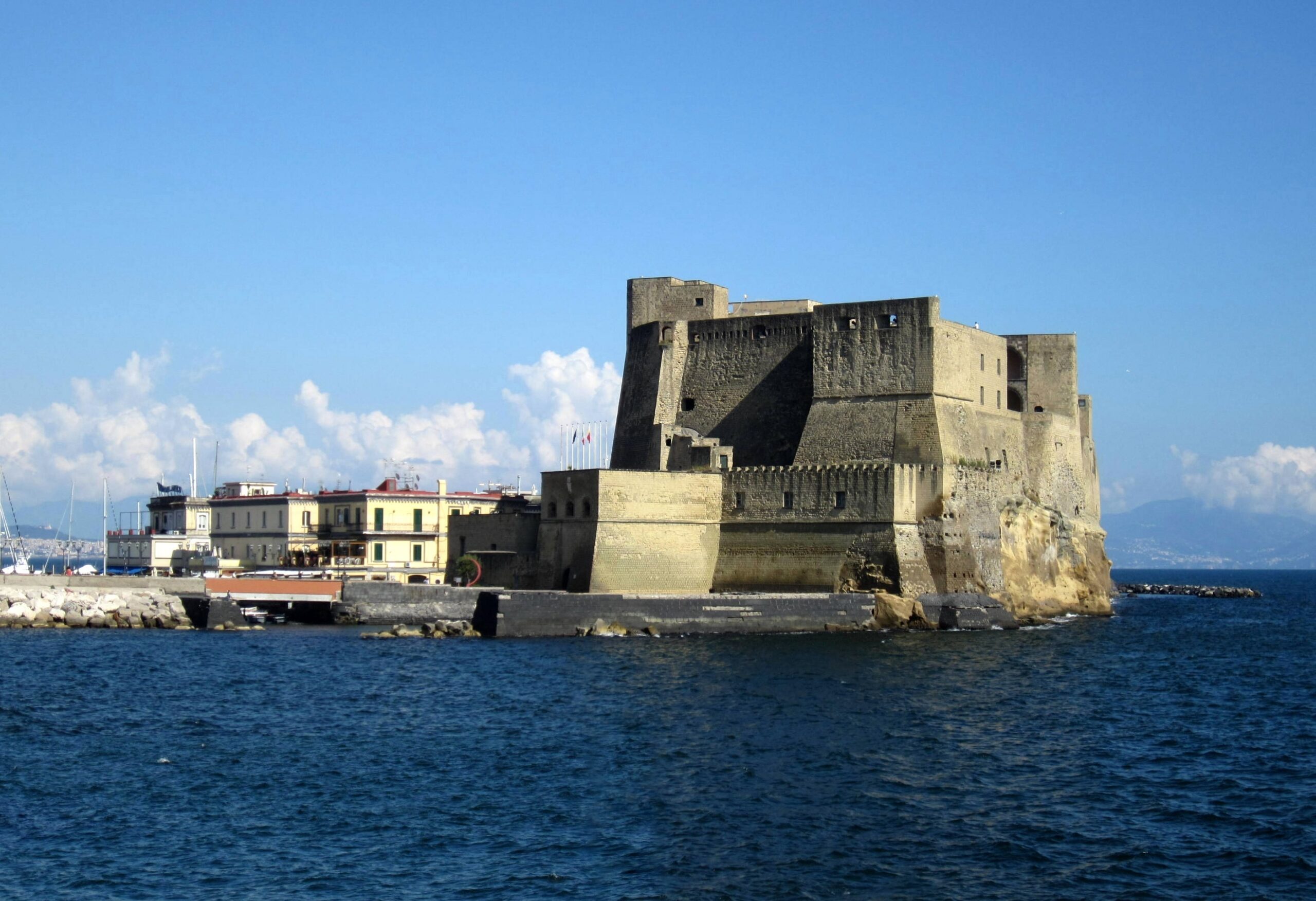
It stands on an islet linked by a bridge, and it is where the city began: the Greek colonists landed here and called it Parthenope. The name comes from a legend about Virgil, who is said to have hidden a magic egg in the foundations: as long as the egg holds, Naples holds.
Entry is free and you climb to the terrace at the top, from which you see the whole gulf. At sunset it is the best place in the city and it costs nothing. Below is the Borgo Marinari and from there runs the Lungomare Caracciolo, two and a half kilometres closed to traffic.
The museums
National Archaeological Museum
Time 2 hours 30 · Ticket about €22 · Closed on Tuesdays
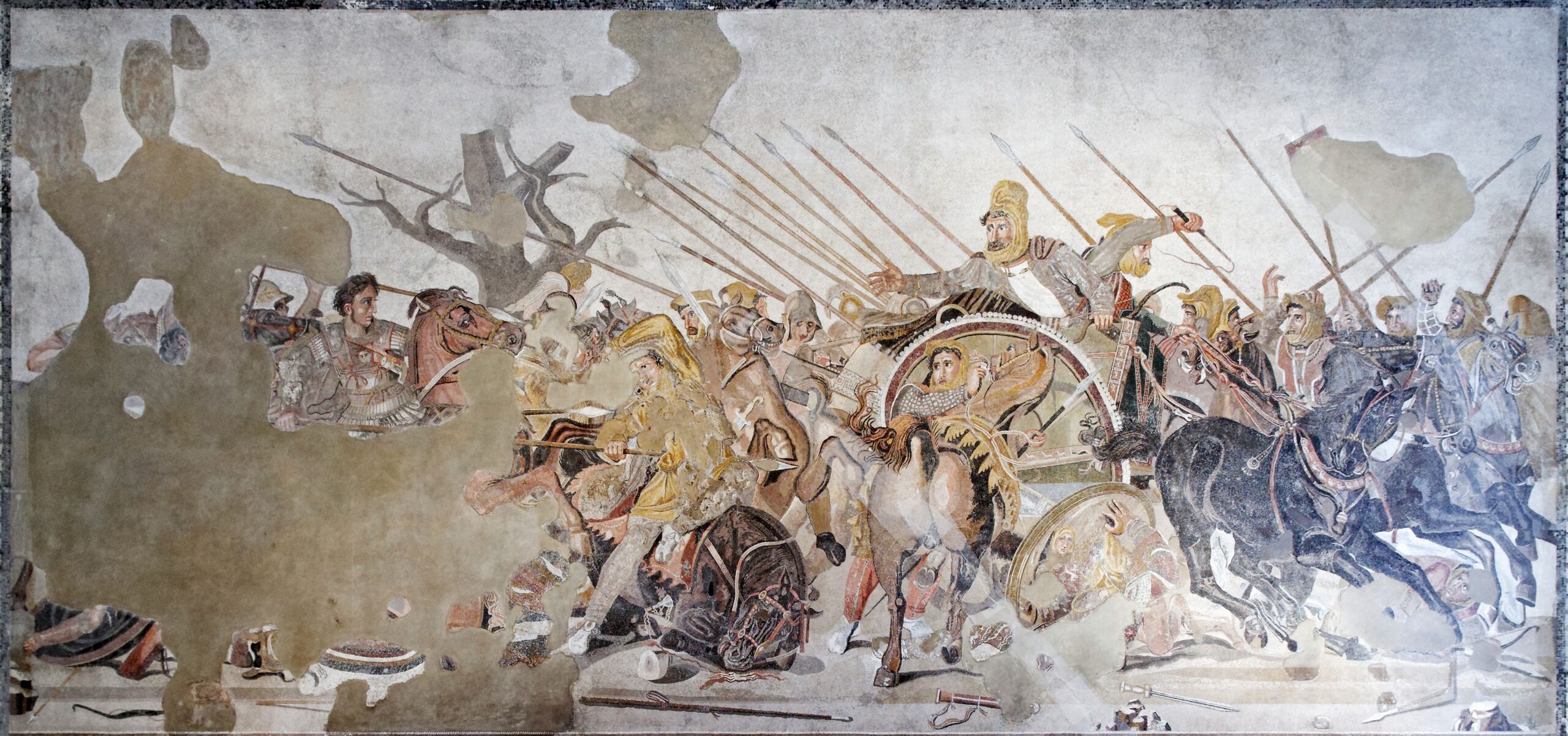
It is the most important museum in the world for Roman antiquity, and it holds everything taken out of Pompeii and Herculaneum: anyone who visits the excavations without coming here sees empty houses.
Three things not to skip: the Alexander Mosaic from the House of the Faun, ten square metres of a million and a half tesserae; the Farnese collection, with the Farnese Bull, the largest ancient sculptural group to reach us, carved from a single block; and the Secret Cabinet, the room of Pompeian erotic objects, walled up for nearly two centuries. Upstairs, the nineteenth-century cork model of Pompeii.
Capodimonte Museum
Time 3 hours · Ticket about €15 · Almost always half empty
It is the most underrated museum in Italy and occupies a palace inside a park of a hundred and twenty hectares. The Farnese painting collection is enormous: Caravaggio’s Flagellation, Masaccio’s Crucifixion, Titian’s Danae, Parmigianino’s Antea, and the preparatory cartoons by Raphael and Michelangelo for the Vatican Stanze and the Sistine Chapel.
You get there by bus from the centre. The park is free and is the city’s green lung.
San Martino charterhouse
Time 2 hours 30 · Ticket about €6 · Funicular from the centre
A seventeenth-century monastery on the Vomero hill, with cloisters, a baroque church loaded to excess and the nativity section: the eighteenth-century Cuciniello crib is an entire landscape with hundreds of figures. From the terraces you see the whole gulf, with Vesuvius opposite and the city below: it is the view on every postcard.
Fifty metres away, Castel Sant’Elmo has a 360-degree terrace, the highest viewpoint in Naples.
Churches and masterpieces
Sansevero Chapel
Time 45 minutes · Ticket about €10 · Limited entry, book ahead
A small chapel in an alley, and inside the Veiled Christ by Giuseppe Sanmartino, from 1753: a body laid out under a marble veil so fine that for two centuries people believed it was a real veil petrified by alchemy. It is carved from the same block, which is why it has to be seen in person.
The prince of Sansevero who commissioned it was an alchemist, a freemason and an inventor, excommunicated more than once. In the basement are his anatomical machines: two skeletons with the circulatory system entirely preserved, still argued over today.
Santa Chiara cloister
Time 45 minutes · Ticket about €6 · Church free

The church was bombed in 1943 and rebuilt bare, as it originally was. The majolica cloister survived: sixty-six octagonal pillars covered in eighteenth-century tiles, with hunting scenes, sea scenes and everyday life, and a garden of orange trees in the middle. It is the quietest place in central Naples.
Pio Monte della Misericordia
Time 45 minutes · Ticket about €8
A small church on Via dei Tribunali holding Caravaggio’s Seven Works of Mercy, from 1607, still above the altar it was painted for — a rare case: almost all Caravaggios have been moved into museums. From the first-floor gallery you look down on the painting, as the institution’s governors did.
Duomo and the Treasure of San Gennaro
Time 1 hour · Duomo free, Treasure museum about €12
In the Duomo, three times a year, the rite of San Gennaro’s blood takes place: the ampoule of congealed blood is displayed and, if it liquefies, it is a good sign for the city. It is the thing Neapolitans take most seriously of all.
The Treasure museum next door holds jewels donated over seven centuries, estimated to be worth more than the English crown: the mitre of 1713 has three thousand six hundred precious stones.
Underground Naples
Beneath the city is a second Naples carved out of tuff, and it is the part no other Italian city has.
Underground Naples
Time 1 hour 30 · Ticket about €12 · Guided only, fixed departures
Forty metres below the city: Greek quarries first, then cisterns of the Roman aqueduct, then air-raid shelters during the war, when thousands of people lived down here. The toys and the beds are still there. The tour passes through a tunnel half a metre wide, walked sideways with a candle, and ends inside a Roman theatre beneath a private flat.
Catacombs of San Gennaro
Time 1 hour · Ticket about €10 · Guided only
The largest catacombs in southern Italy, on two levels, with early Christian frescoes from the second century and high, wide spaces — not the narrow tunnels of the Roman catacombs. They are run by a cooperative of young people from the Rione Sanità, and the ticket funds the neighbourhood: it is one of the most cited cases of regeneration through tourism.
Fontanelle cemetery
Time 45 minutes · Free entry or a donation
An ossuary in a tuff quarry holding the remains of around forty thousand people, dead of plague in 1656 and of cholera in the nineteenth century. Here the cult of the anime pezzentelle was practised: Neapolitans adopted an anonymous skull, cleaned it and cared for it in exchange for protection. The Church banned the practice in 1969. It is a striking place and should be taken for what it is.
Toledo metro station
Time 20 minutes · Cost a metro ticket, a little over a euro
It is a metro station and it has repeatedly been named among the finest in Europe: a light shaft lined in blue mosaic simulating a descent into water, with escalators running down inside the cone. It is worth the detour even without taking a train. The same goes for Università station.
Vesuvius and the buried towns

Pompeii · sixty-six hectares, eight thousand inhabitants in AD 79, and a town preserved by the ash that killed it. It is not an archaeological site: it is a town where you walk down the street and go into the houses. Look for the Forum with Vesuvius at the end of it, the House of the Faun, the Villa of the Mysteries outside the walls, the Lupanar, the Stabian Baths and the Amphitheatre. Allow at least four hours. Circumvesuviana from Piazza Garibaldi, 35 minutes.
Herculaneum · much smaller and for many more striking: here it was not ash but a flow of boiling mud that sealed everything, preserving the upper floors of the houses, the wooden beams, the doors, the beds and even the food. On the ancient beach three hundred skeletons were found: people waiting for a boat. Two and a half hours.
Vesuvius · a shuttle takes you to the thousand-metre mark, then twenty minutes on foot over lapilli to the crater rim at 1170 metres. The crater is six hundred metres across and steam still rises from the fumaroles. Capped access with compulsory booking, and it closes in bad weather or strong wind.
Campi Flegrei · on the other side, towards Pozzuoli: the Solfatara, the temple of Serapis, the Flavian amphitheatre with its intact underground level, and submerged Baiae, visited by glass-bottomed boat. It is the volcanic area almost no tourist reaches.
Pizza, which in Naples is not a detail

Neapolitan pizza is a regulated product: dough of flour, water, salt and yeast only, long proving, shaped by hand without a rolling pin, baked in a wood oven at 485 degrees for sixty to ninety seconds. It comes out soft, with a puffed crust blistered black, and it folds: anyone expecting a crisp pizza will be disappointed, because that is a different thing.
The two classics are the marinara — tomato, garlic, oregano, oil, no cheese — and the margherita. In a serious pizzeria they cost between five and nine euros. The historic pizzerias are nearly all on Via dei Tribunali: in the evening you queue and cannot book, you take a number and wait in the street. At lunchtime the same pizzerias are half empty.
Also worth trying: fried pizza, which is another thing entirely and is eaten in the street, and the cuoppo of mixed fried food.
Three things to know
The traffic does not follow the rules you expect. Scooters do not always stop at pedestrian crossings: cross at a firm, predictable pace and the cars will slow down. Stopping halfway is the most dangerous thing you can do.
Bag in front in crowded alleys and on the Circumvesuviana, phone not in your hand while walking. The old centre and the tourist areas are walked comfortably even in the evening, but thefts almost always involve a phone in plain sight.
Coffee is drunk at the counter and costs about a euro, half what it costs in the north. The caffè sospeso is the tradition of paying for an extra one for whoever comes next and cannot afford it.
When to go
April-June and September-October are the right months: good weather and Pompeii is workable. They are also when the city is at its liveliest.
July and August are hot, and at Pompeii, where there is no shade, they become heavy going: in that case go at opening time. In August many workshops in the centre close.
Winter is mild and rainy but perfectly workable, and the museums can be visited without queuing. December makes San Gregorio Armeno impassable with the nativity crowds — which for many is precisely the reason to come.
What it costs to get in
| Place | Price | Booking |
|---|---|---|
| National Archaeological Museum | about €22 | No, closed Tuesdays |
| Pompeii | about €22 | Advised |
| Herculaneum | about €16 | No |
| Capodimonte Museum | about €15 | No |
| Underground Naples | about €12 | Fixed times |
| Teatro San Carlo, guided tour | about €12 | Yes |
| Treasure of San Gennaro museum | about €12 | No |
| Vesuvius | about €10 plus shuttle | Compulsory |
| Sansevero Chapel | about €10 | Advised |
| Catacombs of San Gennaro | about €10 | Fixed times |
| Royal Palace | about €10 | No |
| Pio Monte della Misericordia | about €8 | No |
| San Martino charterhouse | about €6 | No |
| Santa Chiara cloister | about €6 | No |
| Castel dell’Ovo, Duomo, Fontanelle cemetery | free | — |
Reference figures as of August 2026: museums change their prices, check the official websites before you travel. Entry to state sites is free for under-18s.
How to choose, according to the time you have
One day · the Archaeological Museum and Spaccanapoli in the morning, Santa Chiara and the underground in the afternoon, Castel dell’Ovo at sunset. The full route is in Naples in 1 day.
Three days · a day for the ancient city, a day for the Bourbons and the hills, and a full day out of town between Pompeii, Vesuvius and Herculaneum: that is Naples in 3 days.
Frequently asked questions
What should I see in Naples if it is my first time?
The Archaeological Museum, Spaccanapoli with San Gregorio Armeno, the Veiled Christ in the Sansevero Chapel, the Santa Chiara cloister, Piazza del Plebiscito and Castel dell’Ovo at sunset. If you are staying longer, Pompeii and the San Martino charterhouse.
What has to be booked in Naples?
The Sansevero Chapel has limited entry and sells out at weekends. Underground Naples and the San Gennaro catacombs have fixed departure times. Vesuvius has capped access with compulsory booking and closes in bad weather. Pompeii is worth booking. The Archaeological Museum is closed on Tuesdays.
Is Naples dangerous?
The old centre and the tourist areas are walked comfortably, including in the evening, because they are full of people until late. The precautions are those of any large city: bag in front in crowded alleys and on the Circumvesuviana, phone not in your hand while walking, nothing valuable on show.
What can you see for free in Naples?
Spaccanapoli and the decumani, which are half the trip; Piazza del Plebiscito; the Galleria Umberto I; the Duomo; Castel dell’Ovo with its terrace over the gulf; the Lungomare Caracciolo; the Fontanelle cemetery; and the park at Capodimonte.
Pompeii or Herculaneum?
Pompeii if you want to walk through an entire town and have a full day: sixty-six hectares, four hours minimum. Herculaneum if you prefer preservation: the mud sealed the upper floors, the wooden beams and even the food, and it takes two and a half hours. Herculaneum combines with Vesuvius on the same day; Pompeii does not.
How does Naples compare on price with the other art cities?
It is far cheaper. A pizza in a historic pizzeria costs between five and nine euros, a coffee at the counter about a euro, a day transport ticket €4.50. A full day comes to between €55 and €85 per person excluding accommodation: in Florence or Venice you spend almost double.
Which is the finest museum in Naples?
The National Archaeological Museum, for sheer importance: it holds everything taken out of Pompeii and Herculaneum. But the one nobody visits and which would deserve the queue is Capodimonte, with Caravaggio, Titian, Masaccio and the cartoons by Raphael and Michelangelo.
How many days do you need for Naples?
One is enough for the ancient centre, because the route runs almost entirely downhill and in a straight line. Three is the right length: it adds the monumental city, the hills and a full day out of town between Pompeii, Vesuvius and Herculaneum.
August 23, 2026


