

Argentina in 2 weeks: Buenos Aires, Iguazú, Patagonia and Mendoza
Two weeks in Argentina add to the Buenos Aires–Iguazú pairing the part of the country Argentina is famous for in travellers’ imaginations: Patagonia, with the Perito Moreno glacier still advancing and the spires of Fitz Roy above El Chaltén, and Mendoza, the wine region at the foot of the Andes. These are four stops very far apart from each other — Argentina is as long as Europe from Norway to Sicily — and domestic flights via Buenos Aires become a structural part of the trip.
In brief
- Duration · 14 full days, plus the intercontinental flight
- Route · Buenos Aires (3 nights) → Iguazú (2 nights) → El Calafate (3 nights) → El Chaltén (2 nights) → Mendoza (3 nights)
- Domestic flights · four, almost all transiting through Buenos Aires (Aeroparque): this is the typical hub-and-spoke pattern of long trips in Argentina
- Budget · €1,400-2,200 per person on the ground, intercontinental flight excluded
- To book ahead · the treks in El Chaltén (free and unguided, but refuges must be booked) and Mendoza’s wineries with tastings
- Season · for Patagonia, November-March (southern summer): out of season many services close and the cold turns serious
- What’s left out · Ushuaia, Península Valdés, the northwest: that’s the three-week version
From Buenos Aires to El Calafate is 2,700 km, as far as from Milan to Cairo: Argentina’s scale explains why every stop requires its own flight.
Days 1-3 — Buenos Aires
3 nights · the historic centre and the working-class neighbourhoods

Plaza de Mayo with the Casa Rosada, San Telmo with its Sunday market, La Boca and the Caminito, the Recoleta cemetery where Evita Perón rests: the same introduction to the capital already described in the one-week itinerary, with one extra day to slow down and add a tango evening or a visit to MALBA, the Latin American art museum with works by Frida Kahlo and Diego Rivera.

Days 4 and 5 — The Iguazú Falls
Flight from Buenos Aires, 1h50 · 2 nights

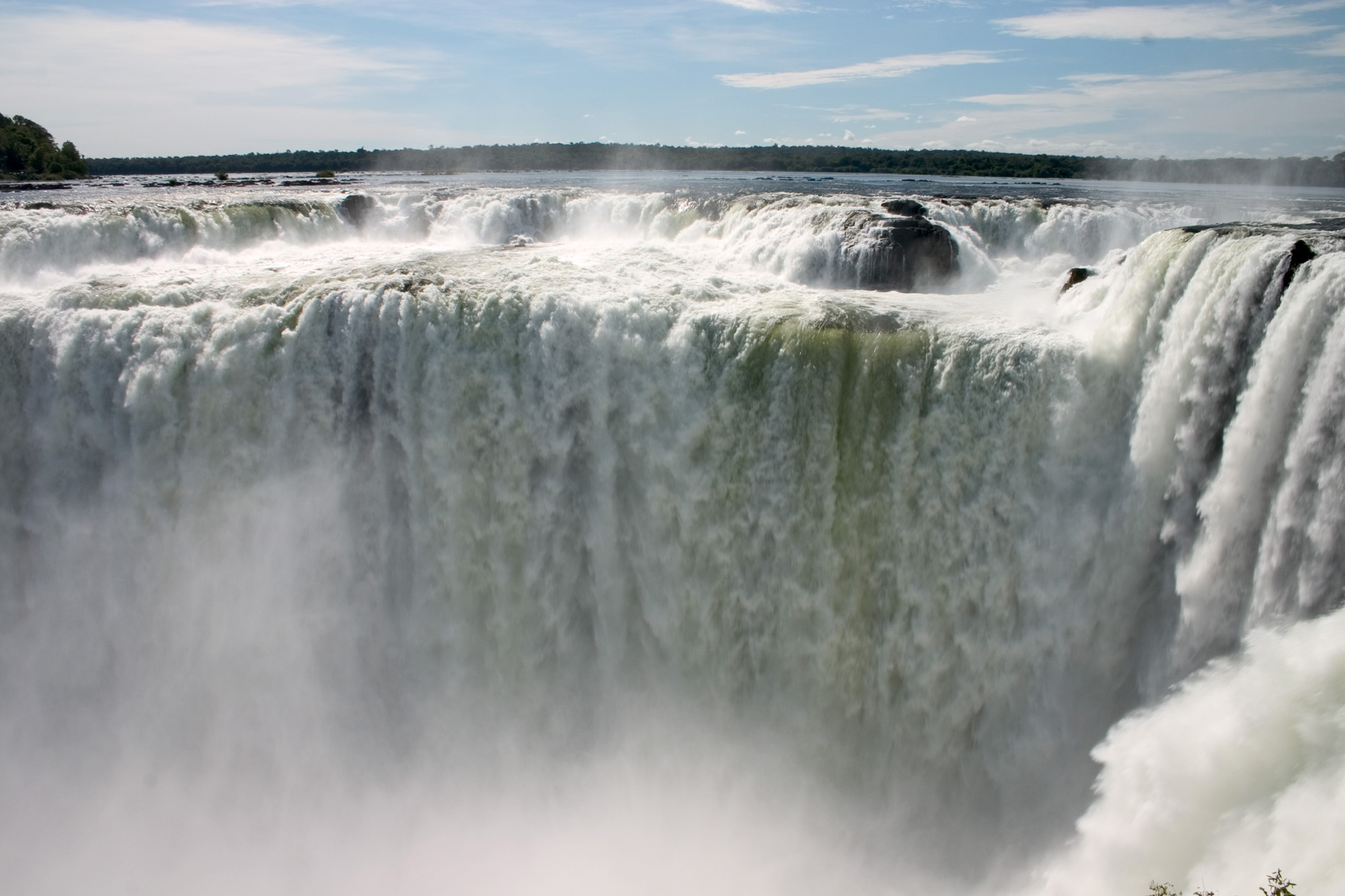
The system of over two hundred seventy waterfalls along nearly three kilometres of front, a UNESCO World Heritage site: the Garganta del Diablo, where 1,800 cubic metres of water per second plunge into a U-shaped amphitheatre, and the upper and lower circuits on the Argentine side, where you walk above and alongside the falls on metal walkways. Same approach as the one-week itinerary, at a more relaxed pace.
Days 6-8 — El Calafate and the Perito Moreno glacier
Flight Iguazú–Buenos Aires–El Calafate (with stopover) · 3 nights · glacial Patagonia

El Calafate is the base for Los Glaciares National Park, a UNESCO World Heritage site, and for its star attraction: the Perito Moreno glacier, a thirty-kilometre tongue of ice with a seventy-metre-high face overlooking Lake Argentino. Unlike almost all the world’s glaciers, Perito Moreno has been in near-stable equilibrium for a century, and periodically advances enough to block the Canal de los Témpanos, forming an ice dam that later collapses in a spectacular rupture — unpredictable in timing but witnessed by thousands of visitors over the decades.
The classic way to see it is from the panoramic walkways facing the glacier’s front, where the sound of blocks breaking off and crashing into the lake — the calving — is heard even before it’s seen. Those wanting a more physical experience can book a mini ice trek with crampons, a guided excursion of a few hours directly on the surface.
Days 9 and 10 — El Chaltén and Fitz Roy
Bus from El Calafate, 3 hours · 2 nights · the national trekking capital

El Chaltén, founded in 1985 almost solely to reinforce Argentina’s presence in an area disputed with Chile, is today officially the “national trekking capital”: a village of a few thousand inhabitants surrounded by some of the continent’s most beautiful trails, all free and without a mandatory guide, unlike many other Patagonian parks. The most famous trek leads to Laguna de los Tres, at the foot of Fitz Roy (3,405 metres): ten and a half kilometres one way, a significant climb in the final stretch, and at the top a turquoise glacial lake reflecting the granite spires when the weather is clear — which here, given the Patagonian wind, is never a given.
A shorter alternative leads to Cerro Torre, the granite spire considered one of the most technical peaks in the world for climbers, with a viewpoint reachable in about seven hours round trip. With two days you can do either of the two main treks at a relaxed pace, or both by shortening the routes.
Days 11-14 — Mendoza, the wine region
Flight El Calafate–Buenos Aires–Mendoza (with stopover) · 4 nights · the Andes and the vineyards
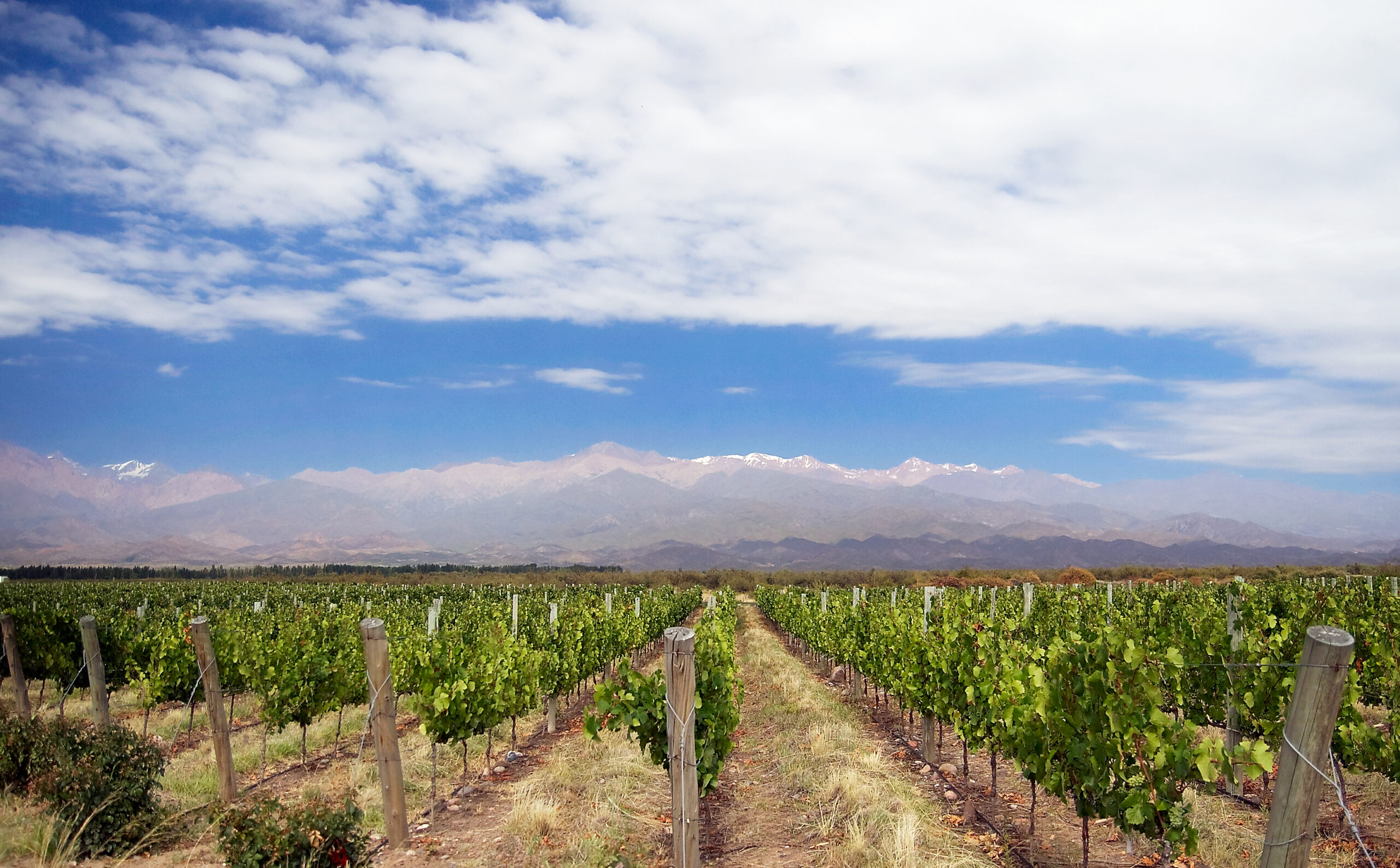
Mendoza produces about seventy per cent of Argentine wine and is the home of Malbec, the French grape variety that found its ideal conditions here — altitude between 900 and 1,500 metres, over three hundred days of sunshine a year, an irrigation system inherited from the pre-Columbian Huarpe and perfected by Italian immigrants in the late 19th century. The wineries (bodegas), from family-run estates to design-forward ones signed by international architects, offer tastings with the Andes cordillera in the background, often still snow-capped even in the height of southern summer.
The main wine areas — Luján de Cuyo and Valle de Uco — are visited by bicycle, with a private driver, or with organised tours that include transport between wineries: driving after tastings is not advisable and checks are frequent. Those with time can add an excursion toward Aconcagua, the highest mountain in the Americas (6,961 metres), visible from a viewpoint reachable in a day trip without needing to climb it.
A Mendoza l’asado si accompagna quasi sempre a un Malbec locale, spesso incluso nei pranzi delle bodegas. In Patagonia il piatto tipico è l’agnello al palo, cotto lentamente su un fuoco aperto per ore. A El Chaltén, dopo un trekking lungo, la cerveza artesanal patagonica è diventata quasi un rito quanto il trekking stesso.
How much two weeks cost
| Voce | Costo |
|---|---|
| 4 voli interni (via Buenos Aires) | 350-550 euro |
| Bus El Calafate–El Chaltén andata/ritorno | circa 40 euro |
| Alloggio, 14 notti (camera media) | 500-950 euro |
| Ingressi parchi (Iguazú, Los Glaciares) + mini-trekking sul ghiaccio | circa 120-180 euro |
| Degustazioni cantine a Mendoza | circa 60-100 euro |
| Pasti, 14 giorni | 250-400 euro |
| Totale in loco | circa 1.400-2.200 euro a persona |
Reference figures as of September 2026, intercontinental flight excluded. As always in Argentina, check the pesos/euro exchange rate a few days before departure: inflation and currency swings can noticeably change the real budget compared with estimates made months in advance. The multiple domestic flights via Buenos Aires are the most rigid item in the budget: booking them early helps keep costs down.
Frequently asked questions
Is two weeks enough for this trip?
Yes, at a full pace: three days in Buenos Aires, two in Iguazú, three in El Calafate, two in El Chaltén, four in Mendoza. Bear in mind that almost every move requires a flight, so “travel-only days” need to be factored in on top of the full days on the ground.
Why do almost all flights go through Buenos Aires?
Because Argentina’s air network is organised as a hub around the capital: very few direct flights connect tourist destinations to each other without a stopover in Buenos Aires (Aeroparque). It’s a structural feature of the country, not an inefficiency to avoid.
Do you need experience for the El Chaltén treks?
The trek to Laguna de los Tres is demanding but within reach of anyone in reasonably good shape who walks regularly: no technical gear or guide is needed. The final uphill stretch is the toughest. Always check the weather conditions, which change quickly in Patagonia.
What’s the best time for Patagonia?
November-March, the southern summer: long days, milder temperatures (though the wind stays strong all year). From April to October many of El Chaltén’s tourist services reduce activity or close, and the cold turns serious.
Can you drive after tastings in Mendoza?
Better not to: checks are frequent and blood alcohol limits strict. A private driver, an organised tour, or renting electric bikes to get between the closer wineries is a better choice.
How much do you spend per day?
At a mid-range standard, €100-160 per day per person including accommodation, with higher peaks on days with a domestic flight or a mini glacier trek. Wine tastings in Mendoza remain relatively cheap compared with Western Europe.
What’s the most common mistake?
Underestimating the distances and booking flights with connections in Buenos Aires that are too tight: a delay on one leg can make you miss the next. It’s better to leave at least three to four hours between an arriving flight and a departing one from the same airport, more if you change terminals (Aeroparque and Ezeiza are different airports).
September 11, 2026


