Argentina in 1 week: Buenos Aires and the Iguazú Falls
Argentina is the longest country in the world after Chile, four thousand kilometres from the Bolivian border to Tierra del Fuego: a week forces you to choose, and the most natural choice is the one almost every first trip makes — Buenos Aires, South America’s European capital, and the Iguazú Falls, one of the most spectacular natural wonders on the planet. These are two different Argentinas, one urban and one tropical, linked by a domestic flight of under two hours.
In brief
- Duration · 7 full days, plus the intercontinental flight
- Route · Buenos Aires (4 nights) → domestic flight → Iguazú (2 nights)
- Domestic flight · Buenos Aires (Aeroparque)–Iguazú, 1h50, several airlines
- Budget · €700-1,100 per person on the ground, intercontinental flight excluded
- Good to know · Argentina has very high inflation and two exchange rates (official and “blue”): always check the day’s rate, don’t trust figures found months earlier
- Iguazú from two sides · the Argentine side (larger, you walk inside the falls) and the Brazilian side (the overall panoramic view): with one week you focus on the Argentine side
- Season · Argentina is in the southern hemisphere: December-March is summer, June-August winter. Iguazú is subtropical and can be visited year-round
- What’s left out · Patagonia, Mendoza, the northwest: that’s the two- or three-week version
Buenos Aires and Iguazú are 1,300 km apart: the one hour fifty minute domestic flight is the only reasonable way to connect them in a week.
Days 1 and 2 — Buenos Aires: the historic centre and working-class neighbourhoods
2 days · from Plaza de Mayo to La Boca
1 – Plaza de Mayo and San Telmo
Time: full day · on foot

Plaza de Mayo has been Argentina’s political heart since 1580, the year the city was definitively founded: here stands the Casa Rosada, the seat of government, from whose balcony Evita Perón addressed the crowds and where, every Thursday afternoon since 1977, the Madres de Plaza de Mayo still march in silence with white headscarves, demanding the truth about children who disappeared during the 1976-1983 military dictatorship.
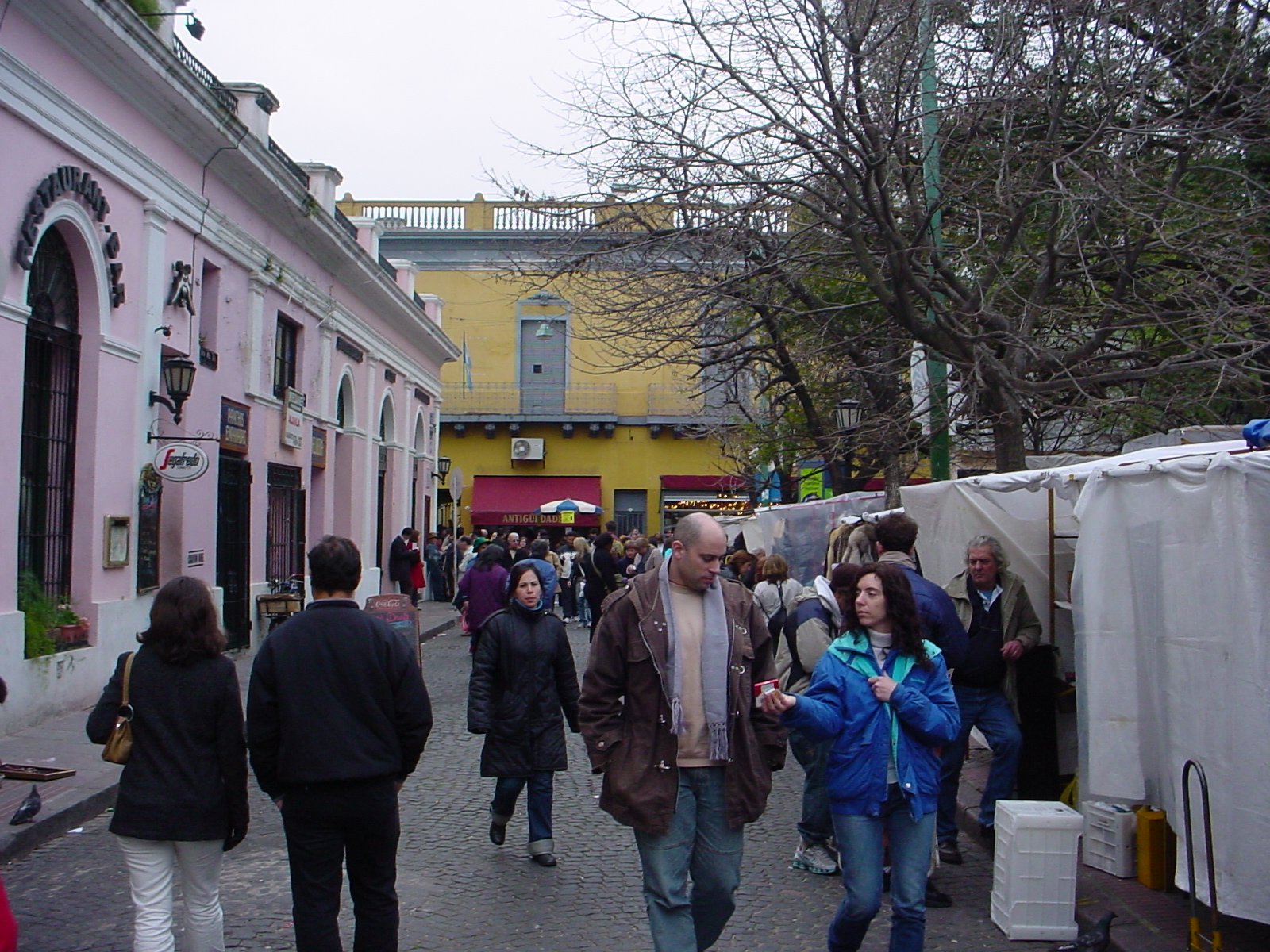
A few blocks away, San Telmo is the city’s oldest neighbourhood, with low colonial houses and inner courtyards: on Sundays it fills with the Feria de San Telmo, an antiques and crafts market running the length of Defensa street, with tango couples dancing on the pavement.
2 – La Boca and Recoleta
Time: full day · taxi or bus between the two neighbourhoods, which are far apart

La Boca, the port district where most Italian immigrants landed in the late 19th century, owes its brightly painted houses to a practical habit: the first residents, often shipyard workers, painted the tin-sheet walls with leftover ship paint, mixing whatever colours were on hand. El Caminito, a hundred-metre-long open-air museum street, now concentrates this tradition for visitors; La Bombonera, Boca Juniors’ stadium, is a few blocks away.
Il Caminito e le vie immediatamente intorno sono sicure e turistiche; il resto del quartiere ha una reputazione difficile e non è consigliato girarci da soli, specialmente di sera. Restate nell’area segnalata.
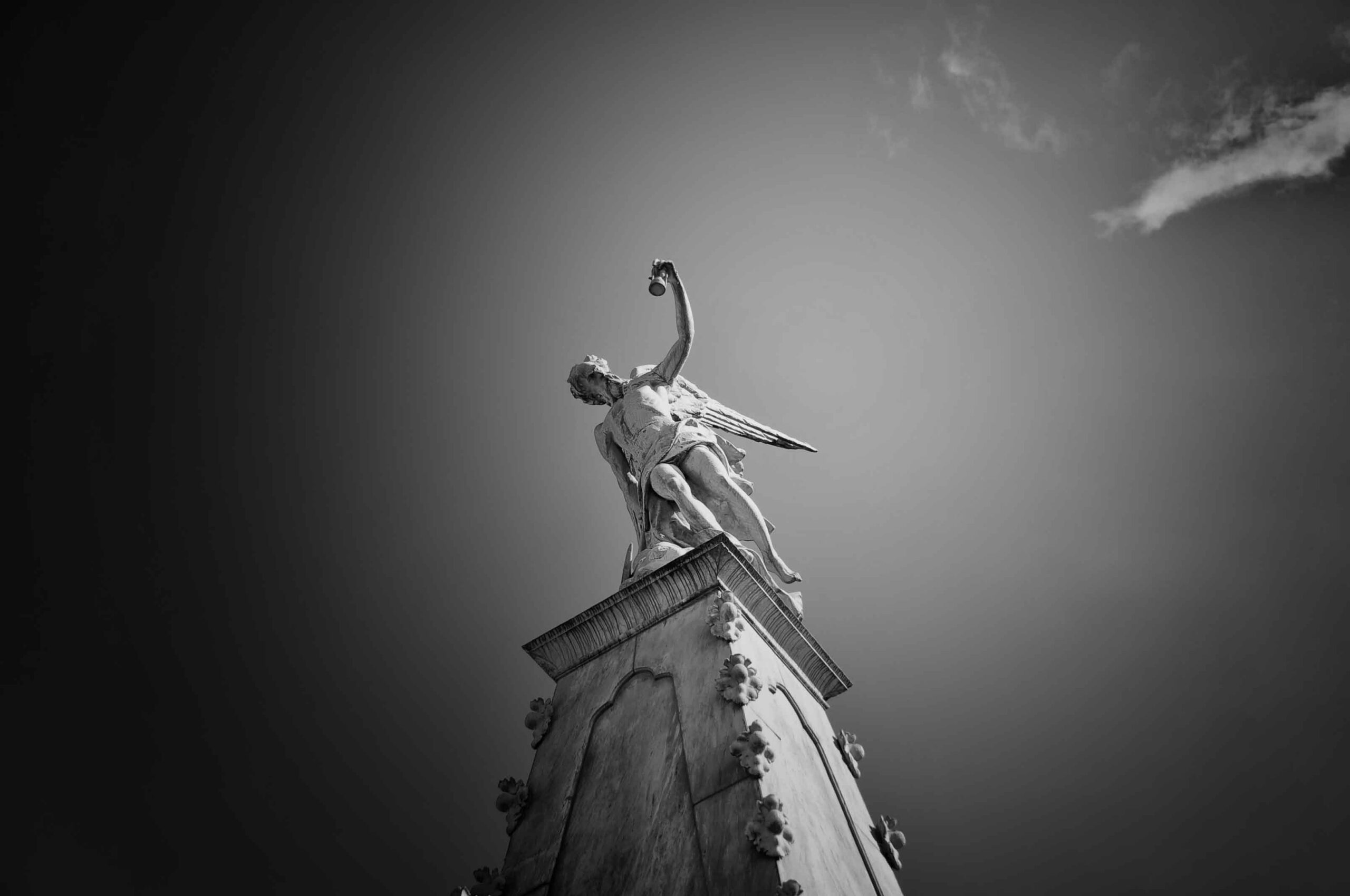
The Recoleta cemetery, opened in 1822, is a miniature city of four thousand six hundred mausoleums in styles ranging from Neo-Gothic to Art Deco: here rests Eva Perón, whose tomb — relatively modest compared with the others — remains the most visited, protected by a system of concrete slabs added after the body was stolen and hidden for years during the 1955-1973 dictatorship.
Days 3 and 4 — Buenos Aires: opera, tango and the new port
2 days · the city’s more elegant side
3 – The Teatro Colón and an evening of tango
Time: guided tour + the evening · tickets to book ahead
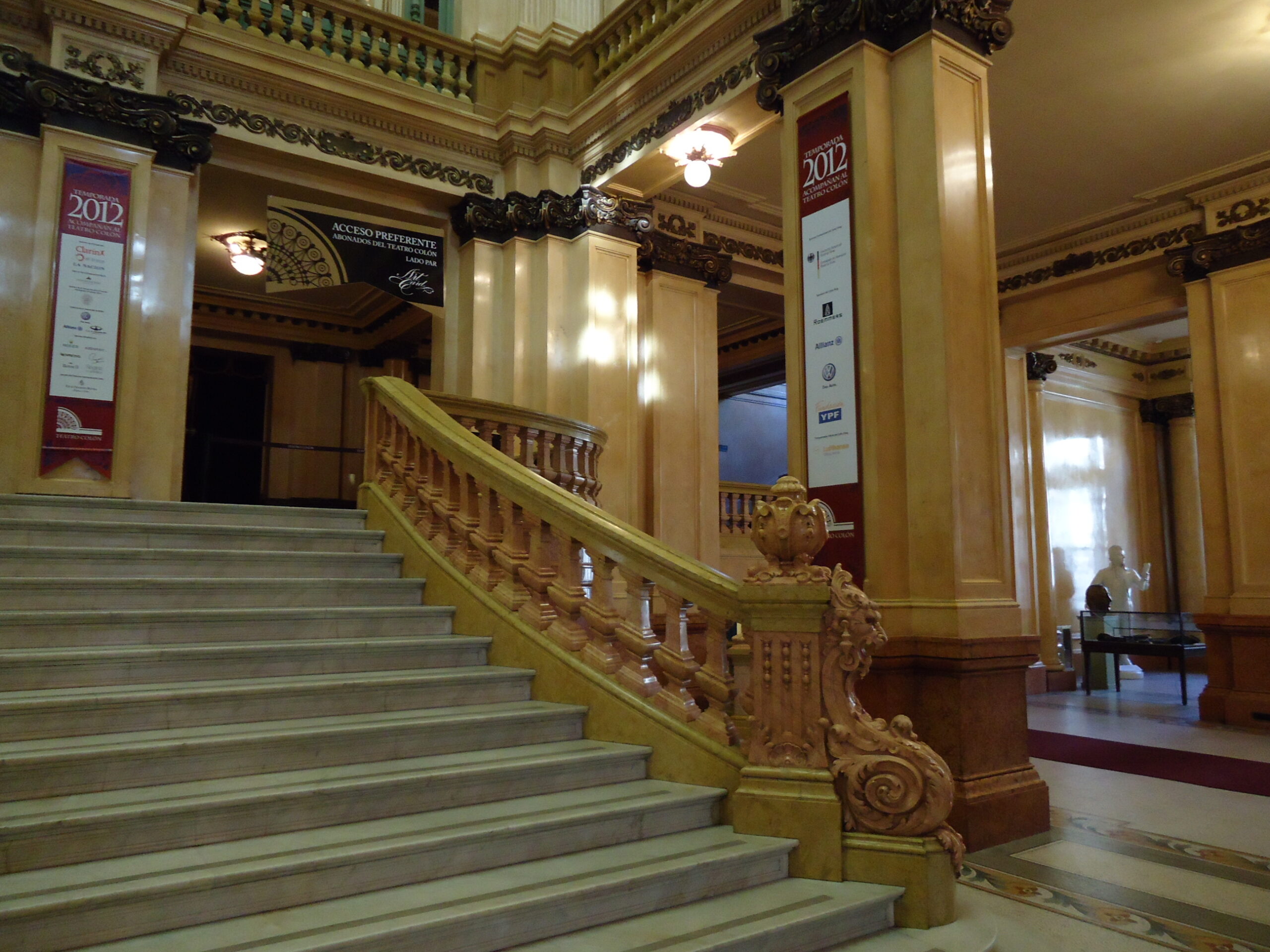
The Teatro Colón, inaugurated in 1908 after twenty years of construction, is considered by many critics one of the three or four opera houses with the best acoustics in the world, on a par with La Scala and the Paris Opéra: the guided tour (even for those not attending a performance) shows the horseshoe-shaped hall with twenty-five hundred seats and its seven tiers of boxes. In the evening, a milonga — a social tango evening, not a show staged for tourists — in the historic venues of San Telmo or Almagro shows the dance as porteños actually dance it.
4 – Puerto Madero
Time: half day
Puerto Madero, the former commercial port decommissioned in the 1960s and redeveloped from 1990 onward into one of the city’s most modern districts, with old brick warehouses converted into lofts and offices and the Puente de la Mujer, the white pedestrian bridge designed by Santiago Calatrava. It’s also the starting point for the Reserva Ecológica Costanera Sur, three hundred fifty hectares of wetland created by chance from the rubble of a 1970s urban demolition, now a refuge for hundreds of bird species just minutes from the financial district.
L’asado, la grigliata argentina di carne alla brace, è l’istituzione nazionale: un pasto in una parrilla di quartiere costa 8.000-15.000 pesos, in un ristorante turistico anche il doppio. Le empanadas (fagottini ripieni al forno) sono lo spuntino onnipresente, 1.000-2.000 pesos l’una. Il mate, l’infuso di erba amara bevuto da una zucca condivisa con una cannuccia metallica, è più un rito sociale che una bevanda da turisti, ma vale la pena provarlo se offerto. La cena si mangia tardi, spesso dopo le 21-22.
Days 5, 6 and 7 — The Iguazú Falls
Flight Buenos Aires–Iguazú, 1h50 · 2 nights · the Argentine side of the National Park

The Iguazú Falls, a UNESCO World Heritage site and one of the seven natural wonders of the world according to a 2011 poll, are not a single waterfall but a system of over two hundred seventy cascades spread across nearly three kilometres of front, with a maximum drop of eighty metres. They’re split between Argentina and Brazil along the border marked by the river: the Argentine side, eighty per cent of the system’s area, lets you walk literally inside the falls on metal walkways; the Brazilian side offers the panoramic overall view, but in a week focused on Argentina it’s left out.
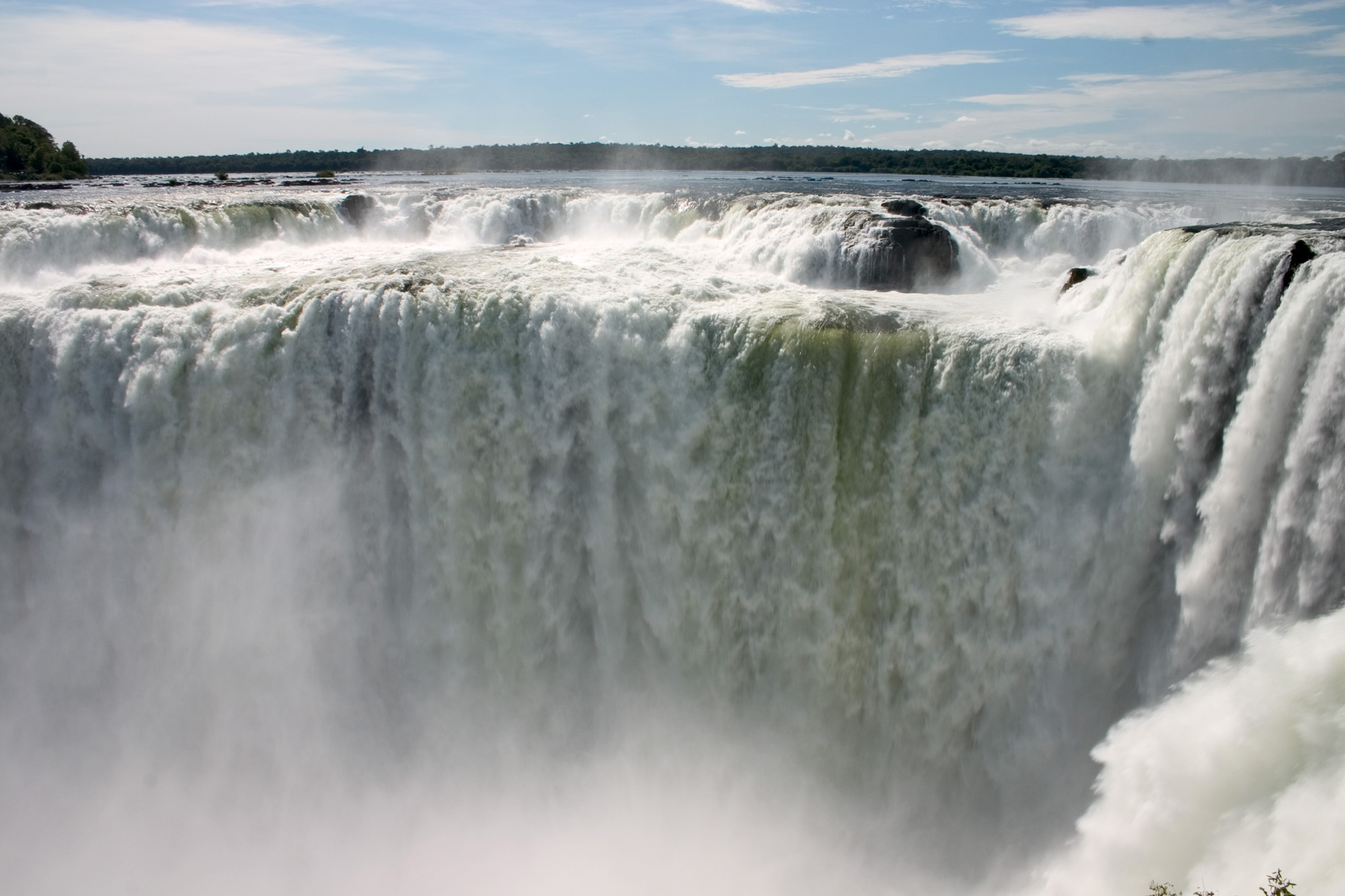
The high point is the Garganta del Diablo, the Devil’s Throat: fourteen falls joined together forming a U-shaped amphitheatre where 1,800 cubic metres of water per second plunge down under average conditions, with a spray rising visibly for kilometres. You reach it by a small eco-train followed by a walkway of over a kilometre over the river, and the final stretch — the water thundering underfoot as you lean over the edge — is the experience most visitors remember longest from the whole trip.
The upper and lower trails (Circuito Superior and Circuito Inferior) offer different perspectives on the smaller falls, often with permanent rainbows in the spray; the park is also home to coatis (similar to elongated raccoons, used to human presence but not to be fed) and toucans, as well as two thousand plant species in the subtropical forest surrounding the falls.
Nei tratti più vicini alla Garganta del Diablo e ad alcune cascate del circuito inferiore lo spruzzo bagna come una pioggia leggera continua: un k-way o un cambio d’abito nello zaino evita di passare il resto della giornata fradici. Le scarpe da trekking asciutte tornano utili.
How much a week costs
| Voce | Costo |
|---|---|
| Volo interno Buenos Aires–Iguazú, andata/ritorno | 90-160 euro |
| Alloggio, 7 notti (camera media) | 250-500 euro |
| Ingresso Parco Nazionale Iguazú (2 giorni) | circa 25.000 pesos, 20-25 euro |
| Teatro Colón (visita guidata) | circa 10.000 pesos, 8-10 euro |
| Trasporti urbani (subte e bus a Buenos Aires) | circa 15-20 euro |
| Pasti, 7 giorni | 150-250 euro |
| Totale in loco | circa 700-1.100 euro a persona |
Reference figures as of September 2026, intercontinental flight excluded. Argentina has one of the highest inflation rates in the world and for years has had more than one exchange rate at the same time (official and “blue”, the parallel market): the currency situation changes often and quickly, so check the actual rate a few days before departure, don’t trust figures found months in advance. Many tourist prices are quoted directly in dollars.
Frequently asked questions
Is a week enough for Buenos Aires and Iguazú?
Yes, for a first taste: four days in Buenos Aires are enough for the historic centre and main neighbourhoods, two to three in Iguazú for a relaxed visit to the Argentine side of the park. Patagonia, Mendoza and the northwest are left out, requiring another one or two weeks.
Is it worth seeing the Brazilian side of the falls too?
With only a week focused on Argentina, usually not: the Brazilian side requires a separate visa for some nationalities (not for Italians, but always check) and half a day more. With two full days on the Argentine side you already see the most spectacular part of the system.
Do you need a visa for Argentina?
For Italian citizens, no, for short tourist stays: a valid passport is enough. Check the updated requirements before leaving anyway, since the rules can change.
How does the currency exchange work?
Argentina has very high inflation and the exchange rate situation has changed several times in recent years: check the actual rate a few days before departure, don’t trust figures found months in advance. Bringing cash dollars or euros to exchange locally is often the most convenient choice.
What’s the best time to go?
Argentina is in the southern hemisphere: December-March is summer (hot and humid at Iguazú), June-August winter (cool in Buenos Aires, still hot and humid at Iguazú). The falls are worth visiting year-round; for Buenos Aires, spring (September-November) and autumn (March-May) are the mildest seasons.
Is it safe to walk around Buenos Aires?
In most tourist neighbourhoods, yes, with the normal precautions of a big city. Some areas (parts of La Boca outside the Caminito, some outlying areas) require more caution, especially in the evening: look into specific neighbourhoods before exploring them alone.
How much do you spend per day?
At a mid-range standard, €100-160 per day per person including accommodation. Asado and empanadas remain relatively cheap compared with Western Europe; the priciest items are the domestic flight and the falls park admission.
What’s the most common mistake?
Devoting only one day to the falls: the Argentine side of the park has several trails and the Garganta del Diablo alone takes half a day including transfers. The second mistake is exchanging too much currency in advance, before checking the actual rate at the time.
September 11, 2026