

Argentina in 3 weeks: from Iguazú to Ushuaia, via Patagonia and the Andean northwest
Three weeks is the time it takes to truly cross Argentina from end to end: from the seventeen latitudes of the Andean northwest, to the two thousand kilometres of Patagonia down to Ushuaia, the world’s southernmost city, taking in the marine wildlife of Península Valdés along the way. It’s the same skeleton as the two-week trip — Buenos Aires, Iguazú, El Calafate, El Chaltén, Mendoza — with three new stops that complete the loop around the country.
At a glance
- Duration · 21 full days, plus the intercontinental flight
- Route · Buenos Aires (3) → Iguazú (2) → El Calafate (3) → El Chaltén (2) → Ushuaia (2) → Península Valdés (2) → Salta and the northwest (3) → Mendoza (3)
- Domestic flights · six or seven, almost all via Buenos Aires: the trip’s most rigid budget item
- Budget · €2,200-3,400 per person on the ground, excluding the intercontinental flight
- Seasonal wildlife · southern right whales at Península Valdés are seen mainly June-December, peaking in September-October
- Season · November-March for Patagonia; the northwest (Salta) is best visited in the southern winter (April-October), when it rains less
- Good to know · the trip spans opposite climates within the same week: pack layers for Patagonian cold and for the dry heat of the northwest
It’s over 3,700 km from Ushuaia to Salta: on the same scale, that map of Argentina would stretch from London to Ankara.
Days 1-10 — Buenos Aires, Iguazú, El Calafate, El Chaltén
The first four stops follow the same route as the two-week itinerary: Buenos Aires (Plaza de Mayo, San Telmo, La Boca, Recoleta, Teatro Colón), the Iguazú Falls with the Garganta del Diablo, the Perito Moreno glacier at El Calafate, and the Fitz Roy trek from El Chaltén. With three weeks available, these ten days can be enjoyed unhurried, without having to compress Buenos Aires into just three days.

Days 11 and 12 — Ushuaia, the end of the world
Flight El Calafate–Ushuaia, about 1h40 · 2 nights · the southernmost city on the planet

Ushuaia, capital of Argentine Tierra del Fuego, is officially the world’s southernmost city with more than ten thousand inhabitants (Puerto Williams, in Chile, is further south but much smaller): it was founded in 1884, partly as a penal colony, following the model of British Australia, to settle a remote territory disputed with Chile. Today it’s the starting point for cruises to Antarctica and for sailing the Beagle Channel, named after Charles Darwin’s ship, which explored it in 1830.

Tierra del Fuego National Park, a short distance from the city, has trails through subantarctic lenga and coihue forests and the Lapataia bay, where Ruta 3, the road that starts in Buenos Aires, ends (or begins, depending on the direction): a sign marks kilometre 3,079. A boat trip on the Beagle Channel leads to Isla de los Lobos, a sea lion colony, and to the Les Éclaireurs lighthouse, often mistaken for the more famous “lighthouse at the end of the world” from a Jules Verne story, which actually stands on a different, uninhabited island.
Days 13 and 14 — Península Valdés
Flight Ushuaia–Trelew (via Buenos Aires) · 2 nights in Puerto Madryn · southern Atlantic wildlife
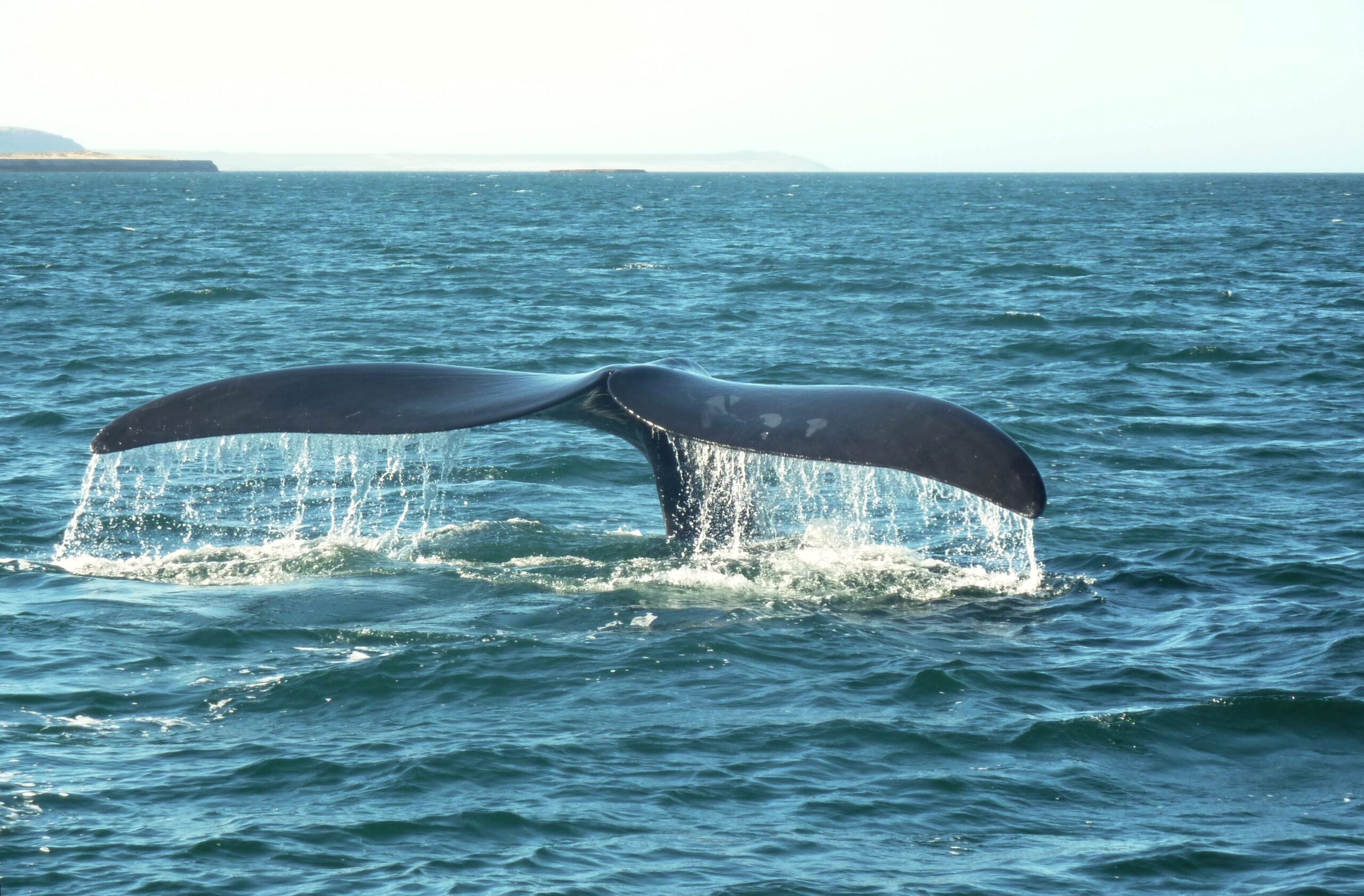
Península Valdés, a UNESCO World Heritage site since 1999, is one of the most important concentrations of marine wildlife in South America: in the right months (mainly June-December) southern right whales come to breed and raise their calves in the sheltered bays of Golfo Nuevo and Golfo San José, coming closer to shore than in almost anywhere else in the world — sometimes visible even from land, not only from authorised boats. Orcas, elephant seals, sea lions and Magellanic penguins round out an ecosystem Argentines call, without too much exaggeration, their marine Serengeti.

An hour and a half from Puerto Madryn, Punta Tombo is home to the largest Magellanic penguin colony on the continent: up to a million individuals between September and April, when they arrive to nest and raise their chicks before heading back out to open sea for the winter. Marked paths let you walk within metres of the nests without disturbing the animals, which are accustomed to controlled visitor presence.
Days 15-17 — Salta and the Andean northwest
Flight via Buenos Aires · 3 nights · Andean, colonial Argentina

Salta, nicknamed “la Linda” for having the best-preserved Spanish colonial architecture in the country, is the base for exploring the Quebrada de Humahuaca, a UNESCO World Heritage Andean canyon travelled by a trade route used continuously for over ten thousand years, first by the Incas and then by Spanish settlers. At Purmamarca, the Cerro de los Siete Colores shows bands of sedimentary rock ranging from red to green to yellow, the result of millions of years of different mineral deposits.

The Salinas Grandes, at over 3,000 metres of altitude, are a white salt flat covering almost three hundred square kilometres, reached along a breathtaking series of switchbacks through the Cuesta de Lipán: walking across it, with almost no reference points on the horizon, plays curious optical tricks in photographs. Anyone with time can add Cafayate, another wine region known for Torrontés, an aromatic white grape that finds unique conditions here thanks to the extreme altitude of the vineyards.
Buona parte del nord-ovest si visita oltre i 3.000 metri: mal di testa, nausea e affaticamento (soroche) sono comuni nei primi giorni. Bere molta acqua, evitare alcolici il primo giorno e salire gradualmente aiuta; il tè di coca, legale e diffuso in loco, è il rimedio tradizionale.
Days 18-20 — Mendoza
Flight via Buenos Aires · 3 nights · wineries at the foot of the Andes
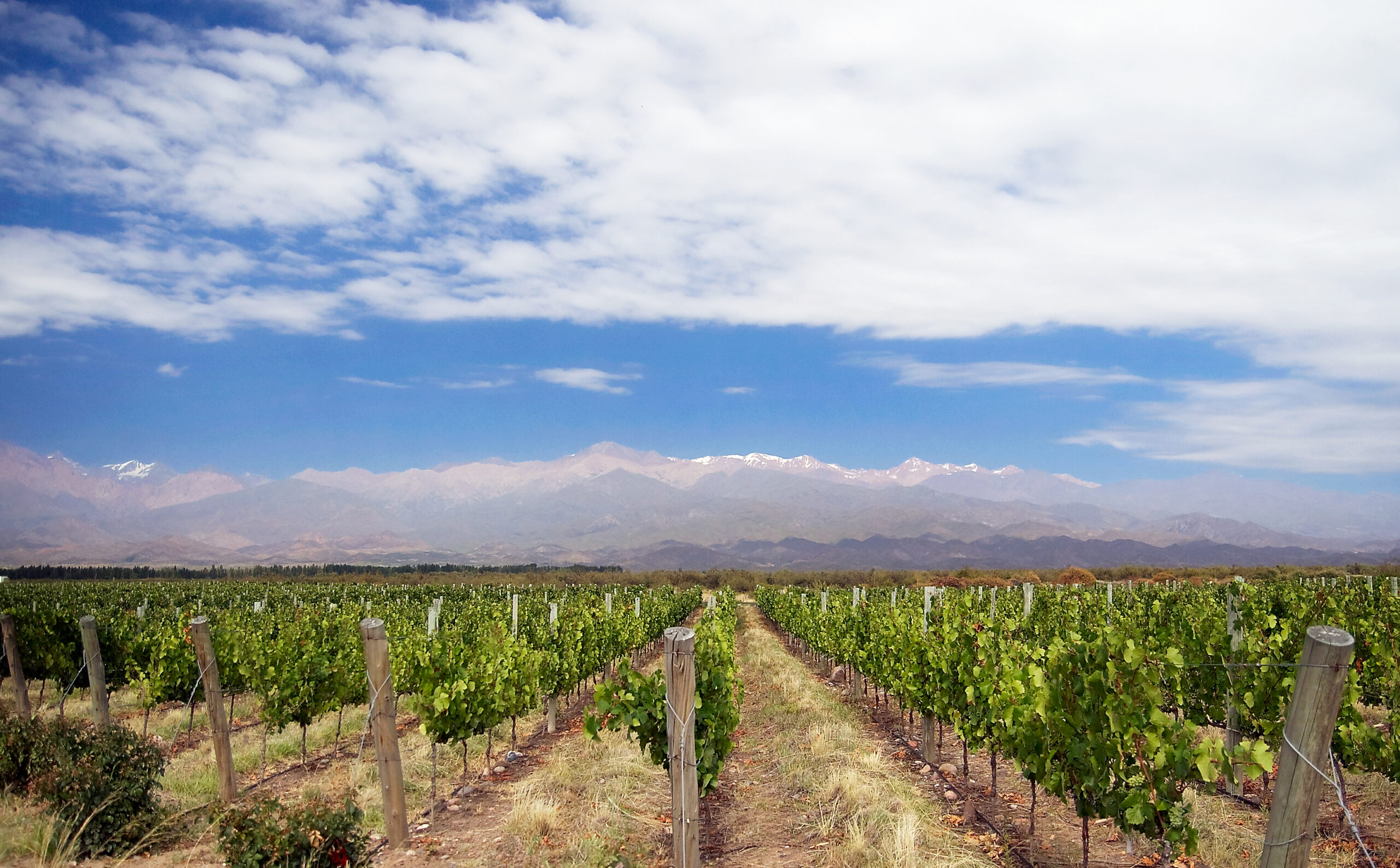
The Malbec bodegas, between Luján de Cuyo and Valle de Uco, with the Andes mountain range in the background: the same stop described in the two-week itinerary, here closing out a trip that has crossed nearly every climate and landscape in the country — from the subtropical forest of Iguazú to the ice of Patagonia, from the Andean desert to the vineyards. A spare day before the flight home helps absorb such a long itinerary without arriving at the airport exhausted.
What three weeks cost
| Voce | Costo |
|---|---|
| 6-7 voli interni (via Buenos Aires) | 600-950 euro |
| Bus El Calafate–El Chaltén | circa 40 euro |
| Alloggio, 21 notti (camera media) | 800-1.400 euro |
| Ingressi e gite guidate (Iguazú, Los Glaciares, canale di Beagle, avvistamento balene, Punta Tombo) | circa 250-350 euro |
| Degustazioni cantine (Mendoza e Cafayate) | circa 80-120 euro |
| Pasti, 21 giorni | 350-550 euro |
| Totale in loco | circa 2.200-3.400 euro a persona |
Figures as of September 2026, excluding the intercontinental flight. On such a long trip, inflation and the exchange rate matter even more: check the real rate close to departure, and keep in mind that many tourist services (tours, high-end hotels, flights) are quoted directly in dollars to protect against the peso’s devaluation.
Frequently asked questions
Is three weeks enough to see “all of” Argentina?
For the main stops, yes, but Argentina is too big to be “seen entirely” in any reasonable amount of time: left out, for instance, are the Jesuit Missions, the Lake District (Bariloche), and an extended version of Ushuaia with multi-day trekking. This itinerary does, however, cover the country’s most representative climates and landscapes.
How do you see the whales at Península Valdés?
With authorised boat trips from Puerto Pirámides, the only town on the peninsula: the best season is June-December, peaking in September-October. Outside these months the whales aren’t present and the visit focuses on other wildlife (elephant seals, seasonal orcas, penguins).
Do you need to acclimatise for the northwest?
Yes, a good part of the itinerary around Salta takes place above 3,000 metres: altitude sickness (soroche) is common in the first few days. Drinking plenty of water, ascending gradually and avoiding intense exertion on the first day helps reduce symptoms.
How do you handle such different climates on a single trip?
With layered clothing: a windbreaker and thermal layers for Patagonia (cold even in the southern summer, mainly because of the wind), light clothing and sun protection for the northwest, where the high-altitude sun is very intense despite temperatures not being extremely high.
Is it worth buying a domestic flight pass?
Some Argentine airlines offer multi-leg passes for foreigners that can be worthwhile on an itinerary with this many flights: it’s worth comparing the pass cost against single tickets at the time of booking, since the terms change over time.
How much do you spend per day?
At an average level, €100-160 per day per person including lodging, similar to the two-week trip but spread over more total days. Multiple domestic flights remain the heaviest, least compressible item in the budget.
What’s the most common mistake on such a long trip?
Not leaving buffer days between flights: with seven domestic legs, even a small delay can create a domino effect across the rest of the itinerary. It’s better to plan at least one buffer day every two or three stops, especially before the flight home.
September 11, 2026


