

Aruba in 1 week: beaches, Arikok and the wreck of the Antilla
Aruba is small — thirty kilometres long, narrower than many metropolitan areas — and that’s exactly why it works well as an unhurried full week: the white leeward beaches, a desert interior worth photographing, and the wild windward coast where the ocean breaks against the rock. Unlike most of the Caribbean, it sits outside the hurricane belt, and that’s the single fact that should most guide when to book.
At a glance
- Duration · 7 full days, plus the flight
- Base · a single lodging, on the west coast between Eagle Beach and Palm Beach: the island is small and there’s no need to move around
- Budget · €700-1,300 per person on the ground (Aruba isn’t cheap by Caribbean standards)
- Currency · Aruban florin (AWG), but the US dollar is accepted everywhere at the same reference value
- Good to know · Aruba is outside the Atlantic hurricane belt: it’s a good visit year-round, without the risk season that affects the rest of the Caribbean from June to November
- Climate · hot and dry all year, with a steady easterly trade wind that makes the heat more bearable than elsewhere in the Caribbean
- Language · Dutch and Papiamento are the official languages, but English and Spanish are spoken fluently everywhere in tourism
Aruba is 32 km long and barely 10 km wide: you can cross it end to end in an hour by car.
Day 1 — Eagle Beach and Palm Beach
Settling-in day · the island’s two most famous beaches
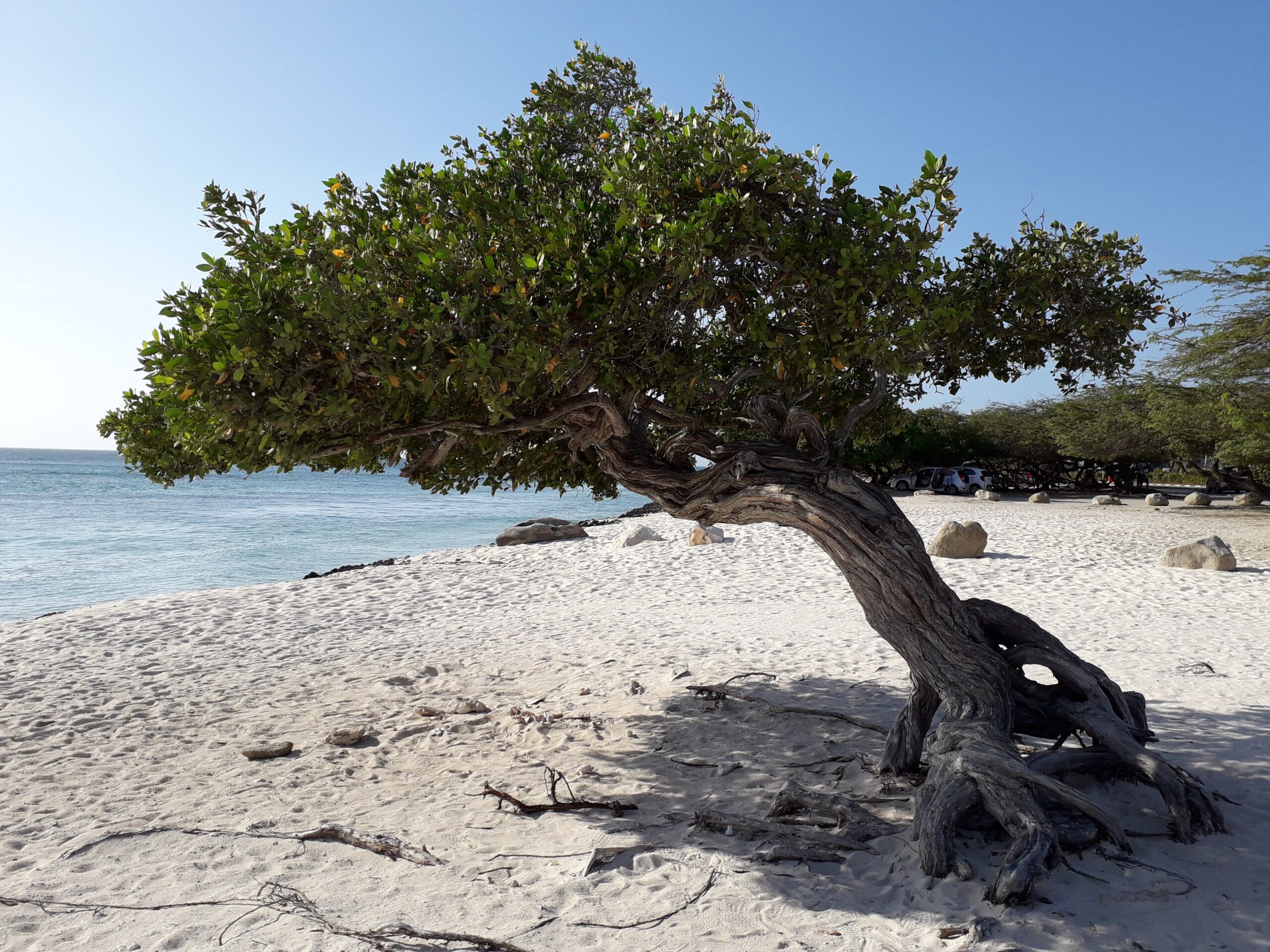
Eagle Beach has repeatedly been voted among the world’s best beaches by various international tourism rankings: extremely fine white sand, shallow turquoise water, and fewer, lower-density hotels than nearby Palm Beach, which keeps it quieter. The island’s photographic symbol is the divi-divi tree, permanently bent southwest by the steady trade wind that blows from the east all year round: they’re so common and recognisable that they’ve become Aruba’s unofficial emblem.

Palm Beach, a little further north, is where most of the island’s big resorts and casinos are concentrated: livelier, with water sports, restaurants and nightlife, it’s the right beach for anyone looking for amenities rather than silence.
Day 2 — Oranjestad
Half a day · the Dutch colonial capital

Oranjestad, founded in 1797 when Aruba was still a Dutch colony, retains low pastel-coloured façades that directly recall the architecture of Curaçao and the Netherlands. Aruba has been part of the Kingdom of the Netherlands as an autonomous constituent country since 1986, when it separated from the Netherlands Antilles: it’s neither a colony nor an independent state, but a territory with full internal autonomy and Dutch/European citizenship for its residents. The main port, Renaissance Marketplace, and the small historic centre can be covered in a few hours; the Renaissance Hotel’s artificial island even hosts semi-tame pink flamingos, visitable with paid access reserved for hotel guests or through organised tours.
Day 3 — Arikok National Park
Full day · 4×4 or organised tour · a fifth of the island
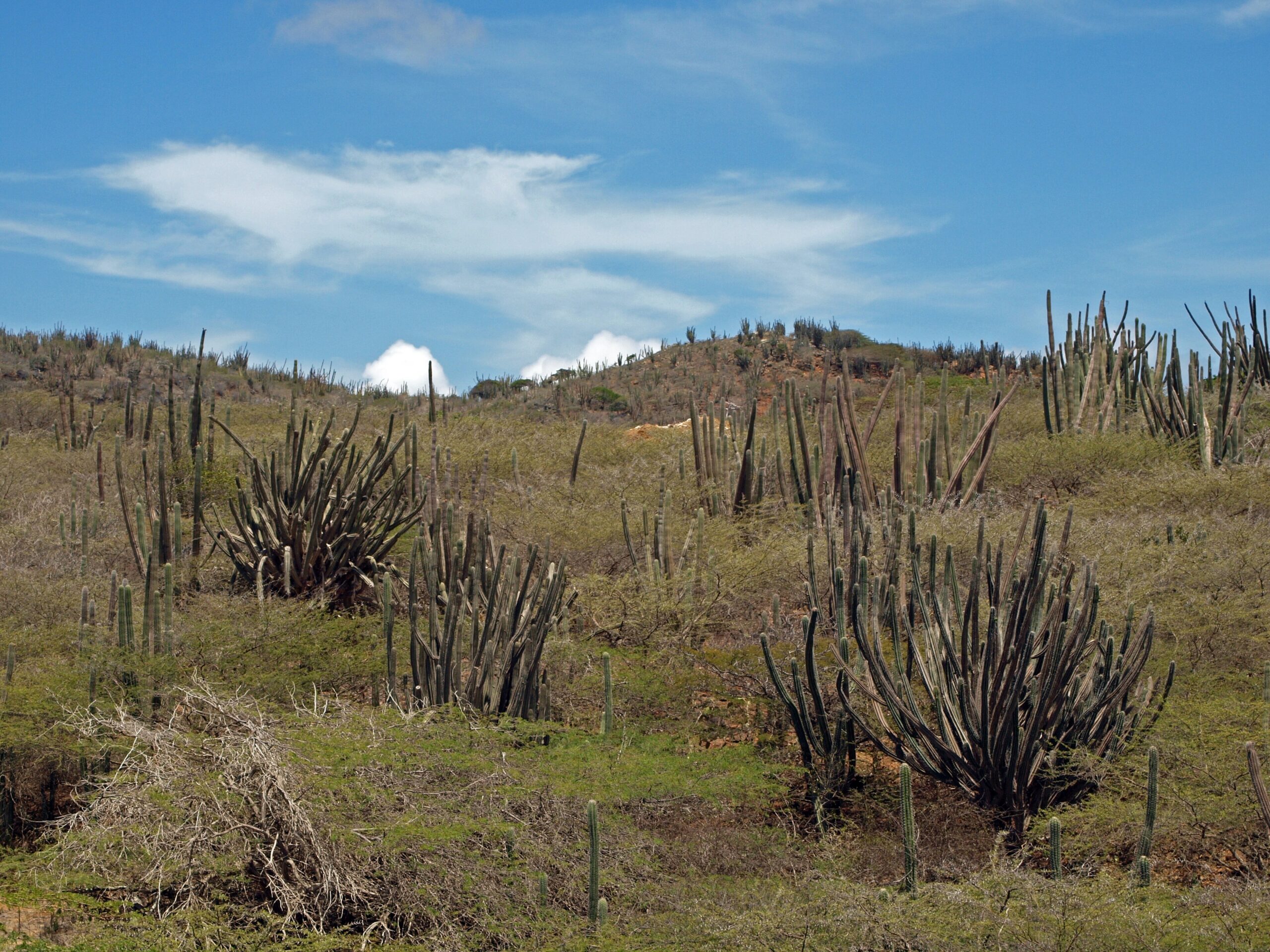
Arikok National Park protects almost a fifth of the island’s surface area: a desert landscape of candelabra cacti, coral limestone rock formations and dunes, so different from the leeward beaches that it feels like another planet. The roads inside are unpaved and rough: a 4×4 (rented or through an organised tour) is needed to reach the main sights, such as Conchi, a natural pool filled by ocean waves against the rock, or the Fontein caves with pre-Columbian indigenous pictographs left by the Arawak, the people who inhabited the island before the Spanish arrived in 1499.
Day 4 — The north: California Lighthouse and the windward coast
Half a day · the island’s wild side

The California Lighthouse, built in 1916 and named after the wreck of the ship California nearby shortly before, marks the island’s northwestern tip: from here you get a clear view of the contrast between the two Arubas, the calm, touristy leeward side and the wild windward side.

The windward coast, exposed directly to the open Atlantic, is made of fossil coral cliffs, powerfully breaking waves and dangerous currents: you don’t swim here, but it’s the place for photographs, for wind-powered surfing (kitesurfing and windsurfing, practised mainly further south around Fisherman’s Huts) and for understanding why the island has two such different faces just a few kilometres apart.
Day 5 — Underwater: the Antilla wreck
A day of snorkelling or diving · the largest wreck in the Caribbean

The Antilla, a 121-metre German cargo ship, was scuttled by its own crew in May 1940 off Aruba to keep it from falling into Dutch hands after the Nazi invasion of the Netherlands: it’s now the largest wreck accessible to divers anywhere in the Caribbean, resting on its side at depths between 7 and 18 metres, shallow enough that its upper section can also be visited while snorkelling, not only diving. Coral and colourful sponges have colonised the hull over the more than eighty years since, and the wildlife — turtles, parrotfish, moray eels — has made it one of the richest snorkelling spots on the island.
Day 6 — Baby Beach and the murals of San Nicolas
Full day · the south of the island

Baby Beach, at the island’s southeastern tip, is a lagoon almost enclosed by a coral reef: very shallow water (often under a metre) and calm, perfect for families with small children and for current-free snorkelling. The nearby oil refinery, visible in the background, is a reminder that this part of the island was, until a few decades ago, Aruba’s industrial heart, before tourism became the main economy.

San Nicolas, the island’s second city and a historic working-class centre tied to the refinery (opened in 1929, closed and reopened several times over recent decades), reinvented itself starting in 2016 as an open-air street art museum: the Aruba Art Fair brings international artists to paint new murals on the town centre’s façades every year, part of an urban regeneration project that has turned a peripheral neighbourhood into one of the island’s most photographed stops.
La cucina arubana mescola influenze olandesi, sudamericane e caraibiche: il keshi yena (formaggio ripieno di carne speziata, retaggio della cucina degli schiavi che riciclavano le forme di formaggio olandese vuote) è il piatto più identitario; il pastechi, fagottino fritto ripieno, è lo spuntino di strada più comune. I ristoranti di pesce fresco sono diffusi e di buona qualità ovunque sulla costa. I prezzi restano più alti della media caraibica: un pasto medio costa 15-30 dollari a persona.
What a week costs
| Voce | Costo |
|---|---|
| Alloggio, 7 notti (camera media) | 350-750 euro |
| Noleggio auto/fuoristrada, 7 giorni | 150-250 euro |
| Arikok National Park admission | about $15 |
| Snorkelling/diving at the Antilla (guided half-day) | $50-90 |
| Pasti, 7 giorni | 200-350 euro |
| Totale in loco | circa 700-1.300 euro a persona |
Figures as of September 2026, excluding the flight. Payment is in Aruban florin (AWG, fixed exchange rate of 1.79 to the dollar), but the US dollar is accepted everywhere, often at or near parity with the florin: many tourist prices are already quoted directly in dollars. Credit cards work at almost all tourist establishments.
Frequently asked questions
Isn’t a week in Aruba too long for such a small island?
No: with beaches, the national park, snorkelling/diving, and the two main towns, a relaxed week with a few active days fills up nicely without feeling repetitive. Anyone after just the beach can shorten it to 4-5 days, but Arikok and the Antilla deserve dedicated time.
Is it true that Aruba is outside the hurricane zone?
Yes: Aruba lies south of the belt where Atlantic hurricanes typically form and pass, unlike most Caribbean islands further north. This makes it a relatively worry-free visit year-round, including the June-November period considered at risk elsewhere in the Caribbean.
Do you need a visa for Aruba?
Italian citizens don’t need a visa for short tourist stays, but a digital entry declaration (ED-card) must be filled out before travelling. Always check the updated procedures on the official Aruba tourism website before leaving.
Can you get around the island without renting a car?
For the main beaches and Oranjestad, yes, using public buses and taxis. For Arikok National Park and the windward coast, a car (a 4×4 is better) or an organised tour is almost essential, given the state of the interior’s unpaved roads.
Can you drink the tap water?
Yes: Aruba has one of the largest desalination plants in the Caribbean, and tap water is safe to drink and of good quality across the whole island.
How much do you spend per day?
At an average level, €100-190 per day per person including lodging: Aruba isn’t a cheap island by Caribbean standards, but in exchange it offers very developed and reliable tourist infrastructure.
What’s the most common mistake?
Staying only on the leeward beaches and never visiting Arikok or the windward coast: they’re the part of the island that truly sets it apart from other pure-beach Caribbean destinations. The second mistake is underestimating the sun and the constant wind, which together dehydrate you faster than it seems.
September 11, 2026


