

Senegal and Gambia in 10 days: Dakar, Gorée, the Petite Côte and the Gambia River
Senegal and the Gambia are almost always visited together, and that’s no coincidence: the Gambia is a strip of land just a few dozen kilometres wide, wedged inside Senegal along the entire length of the river that shares its name, an enclave born of the 19th-century colonial division between France and England. Ten days are enough for a route that starts with the continent’s heaviest history — Gorée Island — passes through the beaches of the Petite Côte, and crosses the border to the Gambia River, tracing the story told in Alex Haley’s novel Roots.
In brief
- Duration · 10 full days, plus the flight
- Route · Dakar and Gorée (3 nights) → Petite Côte/Saly (2 nights) → the Gambia: Serekunda and the river (3 nights) → the Saloum Delta (2 nights)
- Border · a single land crossing between Senegal and the Gambia, at the Karang/Amdalai posts
- Budget · €900-1,500 per person on the ground, flight excluded
- Documents · valid passport, no visa required for short tourist stays in either country for Italian citizens (always check before leaving), a yellow fever certificate is often required
- Season · November-May, dry season. From June to October is the rainy season, hot and humid
- Good to know · two different currencies (CFA franc in Senegal, dalasi in the Gambia), different official languages (French and English) despite the shared territory
- Vaccinations · talk to a travel medicine centre: yellow fever, malaria and typhoid are the items to consider for this region
The Gambia is barely 24-48 km wide while it follows the course of the river for 320 km: on the map it’s easy to see why it’s an enclave inside Senegal, not a bordering country like any other.
Days 1-3 — Dakar and Gorée Island
3 nights · from the history of the Atlantic slave trade to the contemporary capital
1 – Gorée Island
Time: half day · Ferry from Dakar, 20 minutes, several crossings a day · Maison des Esclaves admission 5,000 CFA

Gorée, a UNESCO World Heritage site since 1978, was for three centuries a transit point of the Atlantic slave trade, run in succession by the Portuguese, the Dutch, the English and the French. The Maison des Esclaves, built in 1776, is the symbol of that history: its “door of no return”, facing directly onto the ocean, has become a place of memory visited by heads of state and delegations from around the world, including Nelson Mandela in 1991 and several American presidents. Historians still debate today how many enslaved people actually passed through this specific building compared with other larger ports along the coast, but the site’s symbolic value remains enormous and doesn’t depend on the exact number.
Beyond its historical significance, Gorée today is a quiet, car-free island, with ochre-coloured colonial houses and bougainvillea, artists’ studios, and a pace completely different from Dakar’s, just minutes away by ferry: it’s worth staying a few hours beyond the guided tour, to sit at a café on the harbour.
2 – Les Mamelles and the Soumbédioune market
Time: half day · Monument admission about 5,000 CFA including the internal lift
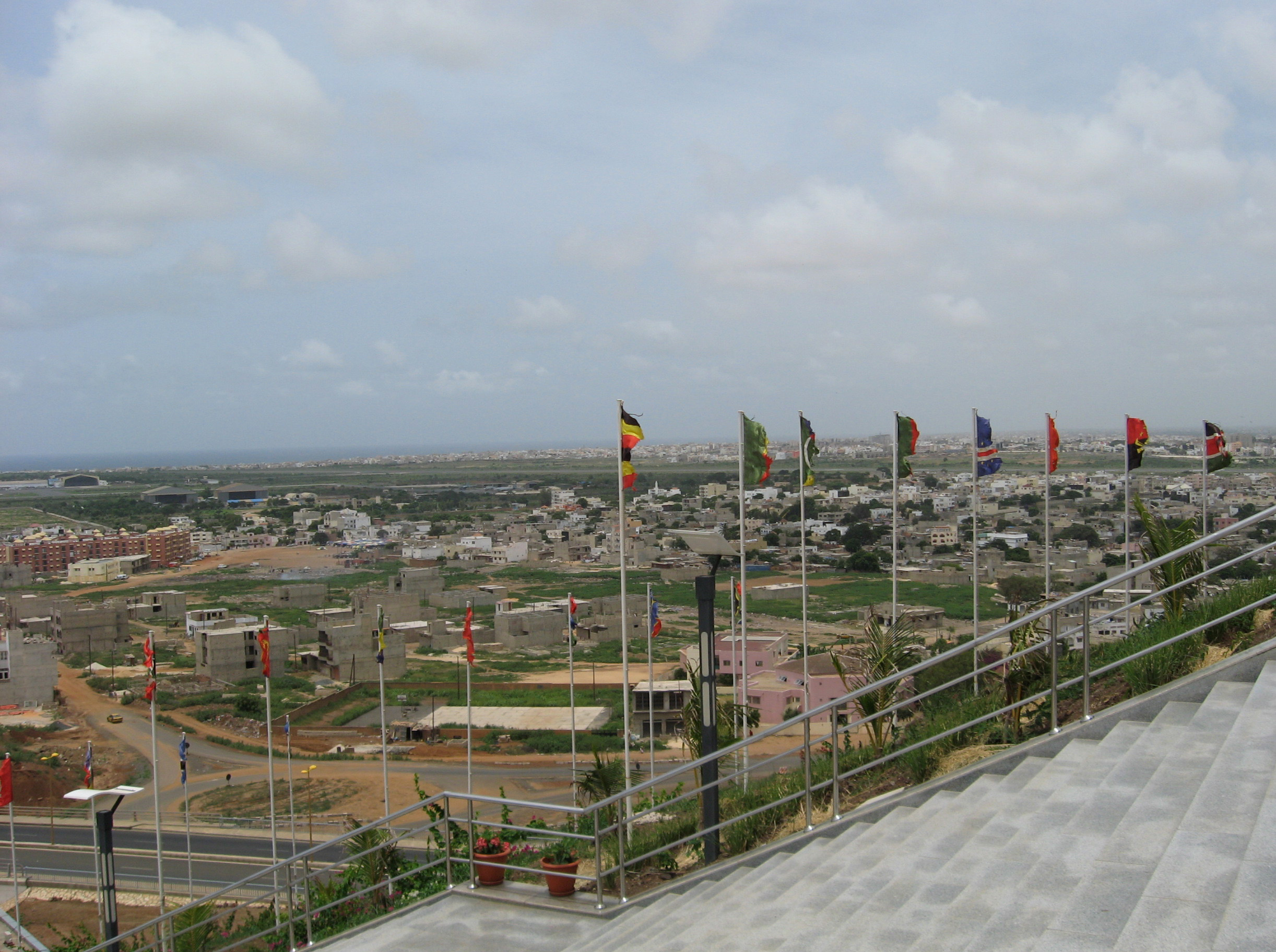
Les Mamelles, two volcanic hills at the westernmost point of the African continent, are home to Dakar’s oldest lighthouse (1864) and the gigantic African Renaissance Monument, unveiled in 2010 for the fiftieth anniversary of independence: fifty-two metres of bronze, taller than the Statue of Liberty, depicting a family emerging from the rock and gazing out at the ocean. It was built by a North Korean firm, and its cost — partly paid for with state land handed over in exchange — remains one of the most debated topics in recent Senegalese politics.

On the coast nearby, the Soumbédioune market is where hundreds of brightly coloured pirogues return from fishing every afternoon: the scene on the beach, with fish unloaded by hand and sold directly on the sand, is one of Dakar’s most authentic sights, and the adjacent craft market sells masks, textiles and carved figurines made on the spot.
Il piatto nazionale senegalese è il thiéboudienne, riso al pomodoro con pesce e verdure, dichiarato dall’UNESCO patrimonio culturale immateriale nel 2021; il yassa (pollo o pesce marinato con cipolle e limone) e il mafé (stufato in salsa di arachidi) sono altrettanto diffusi. In Gambia la cucina è molto simile, con influenze anglofone nei nomi dei piatti. Un pasto in un ristorante locale costa 2.000-5.000 CFA (3-8 euro) in Senegal, 150-300 dalasi in Gambia; il caffè touba, speziato con pepe di Selim, è la bevanda di strada per eccellenza a Dakar. L’acqua del rubinetto non si beve: solo acqua in bottiglia sigillata.
Day 3 — Lake Retba, the Pink Lake
Day trip from Dakar · 35 km northeast · by road, 1 hour

Lac Retba, known as the Pink Lake, owes its colour to an algae (Dunaliella salina) that produces a reddish pigment to protect itself from the extremely high salt concentration — up to 40%, the second highest in the world after the Dead Sea — and the shade is most intense in the dry season under a high sun. It was for decades the finish line of the Paris-Dakar Rally, before the race moved to South America in 2009 for safety reasons.
Hundreds of salt harvesters, men and women, still work along its shores, staying immersed for up to eight hours a day protected only by a layer of shea butter on their skin, and extracting up to forty kilos of salt each by hand in a day: gruelling work that supplies much of the salt market of Senegal and neighbouring countries. Swimming in the lake is possible and, thanks to the high salinity, you float effortlessly as in the Dead Sea.
Days 4 and 5 — Saly and the Petite Côte
Transfer from Dakar, 80 km, 1h30 · 2 nights · beaches and lagoon
4 – Saly
Time: a day of relaxation

Saly is Senegal’s main seaside resort, developed from the 1980s onward for European tourism, especially French and Italian: golden sand beaches, well-equipped resorts, and a small traditional fishing village (Saly-Niakh-Niakhal) that has remained next to the tourist zone. After intense days between Dakar and the Pink Lake, it’s the right place to slow down: water sports, a golf course, or simply a day at the beach.
5 – The Somone lagoon
Time: half day · Pirogue trip about 5,000 CFA per person

The Somone Lagoon Community Nature Reserve, established in 1998 and managed directly by the communities of the nearby villages, protects a mangrove and brackish water ecosystem home to over one hundred twenty bird species, including pelicans, herons and kingfishers. The pirogue trips, run by local fishermen, wind through the channels between the mangroves to the sandbar separating the lagoon from the ocean: it’s also a direct way to see how community-based tourism works in this part of Senegal, with the proceeds staying largely with the villages.
Day 6 — Joal-Fadiouth, the shell island
On a day trip or passing through heading south · 20 km from Saly · by road, 30 minutes

Fadiouth is a village built entirely on an artificial island of seashells, accumulated over the centuries by the Serer inhabitants who lived by fishing and shellfish gathering: the island’s very streets are made of compacted shells, not earth. A roughly seven-hundred-metre wooden footbridge links it to nearby Joal, the birthplace of independent Senegal’s first president, Léopold Sédar Senghor, a poet and a towering figure of French-language African literature.
Fadiouth’s cemetery, also built on a mound of shells at the centre of the island, is perhaps the most striking thing about the village: Christians and Muslims are buried side by side in the same ground, with no separation, a coexistence the inhabitants describe as normal for generations, and one that well reflects the model of religious tolerance widespread across much of Senegal.
Days 7 and 8 — The Gambia: Serekunda, the river and Abuko
Border crossing at Karang/Amdalai, about 3 hours from Saly · 3 nights
The Senegal-Gambia border is crossed by land, with standard passport checks on both sides: it’s a busy route, often slow on weekends, so it’s worth allowing a few extra hours beyond what you’d expect. The language switch is immediate — from French to English — as is the currency switch, from the CFA franc to the Gambian dalasi.
7 – Serekunda and Bakau
Time: half day · Market open every day except Sunday afternoon

Serekunda, not Banjul, is the Gambia’s real urban centre: with over three hundred thousand inhabitants it’s the country’s most populous city, while Banjul, the administrative capital on an island at the mouth of the river, counts barely a few thousand — one of the least populated capitals in the world. Serekunda market is the country’s largest and liveliest: batik fabrics, spices, smoked fish, craft goods, in a maze of aisles where the price is always negotiated.

A few kilometres away, Bakau has a fishing beach with dozens of colourful pirogues pulled ashore every morning, and nearby the Katchikally Crocodile Pool, a sacred pond home to dozens of crocodiles considered spiritual protectors of the village according to local traditional beliefs — despite the name, they’re used to human presence and the pond can be visited safely with a guide.
8 – The Gambia River and Kunta Kinteh Island
Time: full day · Boat trip to arrange with a local operator, 4-6 hours
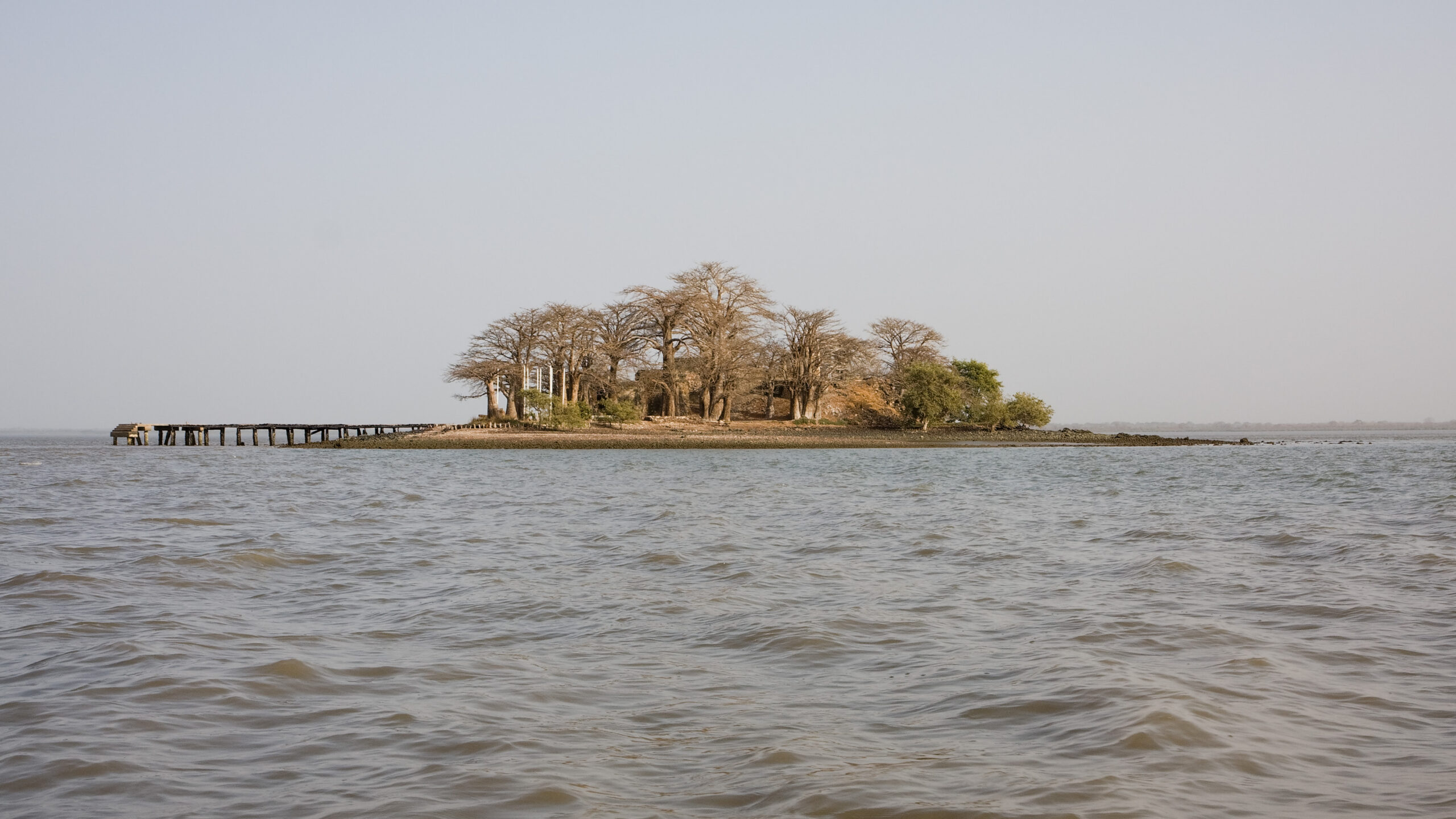
Kunta Kinteh Island — called James Island until 2011, when the Gambia officially renamed it in honour of the character in Alex Haley’s novel Roots, a descendant of a slave actually captured in this region — was home to a British fort used from the 17th century onward as a base for the Atlantic slave trade on the Gambia River. A UNESCO World Heritage site since 2003, today it’s little more than a pile of ruins eroded by water and coastal erosion, but its historical and symbolic value — a significant part of the slave trade to the Americas passed through here — makes it as essential a stop as Gorée.

The boat trip on the river, besides the island, often takes in Mandinka villages along the banks and mangrove forests where herons and kingfishers nest: the Gambia River is also one of the least polluted waterways in West Africa, and the wildlife — hippos, monkeys, over five hundred bird species recorded across the whole country — remains abundant along its entire course.
La riserva naturale di Abuko, a mezz’ora da Serekunda, fu la prima area protetta della Gambia (1968) e resta, nonostante le sue dimensioni ridotte (appena 105 ettari), una delle riserve più dense di fauna dell’Africa occidentale: scimmie verdi e babbuini, coccodrilli, oltre duecento specie di uccelli in un tratto di foresta-galleria lungo un ruscello. Con solo una mezza giornata a disposizione, si può sostituire alla gita sul fiume o aggiungere a Serekunda, essendo molto più vicina.

Days 9 and 10 — The Saloum Delta, heading back
Return to Senegal · the delta sits roughly halfway back to Dakar · 2 nights

The Saloum Delta, a UNESCO World Heritage site since 2011, is a maze of channels, mangrove islands and fishing villages at the mouth of three rivers (Saloum, Bandiala, Diomboss), spanning over eighty thousand hectares of land and brackish water. It’s the right place to close out the trip at a slower pace: pirogue trips through the mangroves, watching the migratory birds that stop here along the Atlantic flyway, and the shell mounds (amas coquilliers) left by prehistoric fishing communities, some over two thousand years old and still the subject of archaeological study.
The delta’s villages, such as Djifer, Palmarin or the islands around Foundiougne, still live largely off small-scale fishing: it’s common to see women smoking fish on the shore using techniques handed down through generations, a craft (the keccax) also recognised by UNESCO as intangible heritage. From here, the drive to Dakar airport takes about three hours.
How much ten days cost
| Voce | Costo |
|---|---|
| Traghetto Dakar–Gorée, andata/ritorno | 5.200 CFA, 8 euro |
| Trasferimenti privati/taxi fra le tappe (10 giorni) | 250-400 euro |
| Alloggio, 10 notti (camera media) | 350-700 euro |
| Ingressi e gite guidate (Gorée, Monumento, Lago Rosa, Somone, Kunta Kinteh, Abuko) | circa 60-90 euro |
| Guida locale per il fiume Gambia (giornata) | 40-70 euro |
| Pasti, 10 giorni | 150-250 euro |
| Totale in loco | circa 900-1.500 euro a persona |
Reference figures as of September 2026, flight excluded. Senegal uses the CFA franc (fixed at 655.957 to the euro), the Gambia the dalasi (variable rate, check on arrival). It’s worth arriving with cash in euros to exchange, since international ATMs are reliable only in the main cities. A driver with a vehicle for the whole route, common for this kind of multi-stop itinerary, greatly simplifies logistics and is worth arranging before departure with a local operator or agency.
Per i cittadini italiani non è richiesto il visto per soggiorni turistici brevi né in Senegal né in Gambia, ma le regole possono cambiare: verificate sempre sul sito del Ministero degli Affari Esteri prima di partire. Il certificato di vaccinazione contro la febbre gialla è spesso richiesto all’ingresso o al passaggio di frontiera in quest’area dell’Africa occidentale: verificatelo con largo anticipo presso un centro di medicina dei viaggi, insieme alla profilassi antimalarica e alle altre vaccinazioni raccomandate. Consultate anche la pagina «Viaggiare Sicuri» della Farnesina per le indicazioni aggiornate su entrambi i paesi.
Frequently asked questions
Is ten days enough for Senegal and the Gambia together?
Yes, at a full pace: three days in Dakar and Gorée, two on the Petite Côte, three in the Gambia between Serekunda, the river and Abuko, two in the Saloum Delta. Those with less time can limit themselves to Senegal and coastal Gambia, without going up the river to Kunta Kinteh, and save two to three days.
Do you need a visa for Senegal and the Gambia?
For Italian citizens, no, for short tourist stays in both countries: a valid passport is enough. The rules can change over time: always check the up-to-date guidance on the Ministry of Foreign Affairs website before booking.
How do you cross the border between the two countries?
By land, with standard passport checks on both sides, typically at the Karang crossing (Senegalese side) and Amdalai (Gambian side). It’s a busy route, especially on weekends: allow for variable waiting times.
Are any particular vaccinations needed?
A yellow fever certificate is often required on entry or when crossing the border in this region. Malaria prophylaxis and vaccinations against hepatitis A and typhoid are also generally recommended: talk to a travel medicine centre at least a month before departure.
What’s the best time to go?
November-May, the dry season: more bearable temperatures and easier roads. From June to October is the rainy season, hot and humid, with frequent storms that can complicate travel on unpaved roads.
Is Italian or English spoken?
In Senegal the official language is French (alongside Wolof and other local languages); in the Gambia it’s English, a legacy of British colonial rule. Italian isn’t widely spoken: a bit of French or English goes a long way in both countries.
How do payments work?
Senegal uses the CFA franc, the Gambia the dalasi: two different currencies despite the geographic proximity. It’s best to bring cash in euros to exchange on arrival in each country; cards work only at the more touristy hotels and restaurants in the main cities.
How much do you spend per day?
At a mid-range standard, €90-150 per day per person including accommodation and transfers between stops. The most significant item is multi-stop private transport, which greatly simplifies logistics on such a complex itinerary.
What’s the most common mistake?
Underestimating travel times on roads that aren’t always in good condition, especially toward the Saloum Delta and along the Gambia River: it’s better to allow generous margins between stops. The second mistake is arriving without a yellow fever certificate, which can block entry at the border.
September 11, 2026


