

Turkey in 1 week: Istanbul and Cappadocia
A week in Turkey plays on a sharp contrast: Istanbul, the only metropolis in the world straddling two continents, capital of three empires across sixteen hundred years of history; and Cappadocia, a lunar landscape of fairy chimneys carved from volcanic rock, where you sleep in a cave and wake up to hundreds of hot-air balloons in the sky. These are two different Turkeys — one urban and layered, the other rural and geological — linked by an hour-and-a-quarter domestic flight.
At a glance
- Duration · 7 full days, plus the intercontinental flight
- Route · Istanbul (4 nights) → domestic flight → Cappadocia (3 nights)
- Domestic flight · Istanbul–Kayseri or Nevşehir, 1h15, several low-cost airlines
- Budget · 700-1,100 euros per person on the ground, intercontinental flight excluded
- To book ahead · the hot-air balloon flight (limited spots, often full days in advance) and the cave accommodation in Göreme
- Season · April-June and September-October, mild climate and more stable balloon flights. July-August very hot, December-February flights often cancelled for wind
- Good to know · in mosques, shoulders and knees must be covered, headscarves for women (often available to borrow at the entrance)
- What’s left out · Pamukkale and Ephesus, on the Aegean coast: those are for a second trip or a few days’ extension
Istanbul and Cappadocia are 700 km apart as the crow flies: an hour-and-a-quarter domestic flight, the only sensible way to link them in a week.
Days 1 and 2 — Istanbul: the layered empires
2 days · the historic core of Sultanahmet
1 – Hagia Sophia and the Blue Mosque
Time half a day · Hagia Sophia free for prayer, ticket for visitors during designated time slots · Blue Mosque free entry outside prayer times

Hagia Sophia has spent seventeen hundred years changing function three times: built as a Christian basilica in 537 on the orders of the Byzantine emperor Justinian, it remained the largest church in the world for nearly a thousand years; converted into a mosque in 1453 after the Ottoman conquest of Constantinople; turned into a secular museum in 1935 by Atatürk; and returned to being a mosque in 2020 by a controversial decision of the Turkish government. The dome, forty-five metres across and supported by a ring of forty windows that give it a floating appearance, remains one of the masterpieces of ancient engineering: the most precious Byzantine mosaics are now covered by curtains during prayers and visible for the rest of the day.

Opposite, the Blue Mosque (Sultanahmet Camii), built between 1609 and 1616 by Sultan Ahmed I specifically to rival Hagia Sophia, takes its name from the more than twenty thousand blue and turquoise Iznik tiles lining the interior. It’s one of the few Ottoman mosques with six minarets: according to a story handed down (never confirmed by contemporary sources), the sultan supposedly asked for gold minarets (altın in Turkish), which the architect misheard as altı, ‘six’ — a number that at the time matched that of the Great Mosque of Mecca, prompting Mecca to add a seventh minaret to preserve its uniqueness.
Si tolgono le scarpe prima di entrare (sacchetti disponibili all’ingresso), le donne coprono i capelli con un foulard (spesso prestato gratuitamente) e le spalle e le ginocchia vanno coperte per tutti. Le visite turistiche si sospendono durante le cinque preghiere quotidiane, in particolare quella del venerdì a mezzogiorno.
2 – The Basilica Cistern
Time one hour · Paid entry
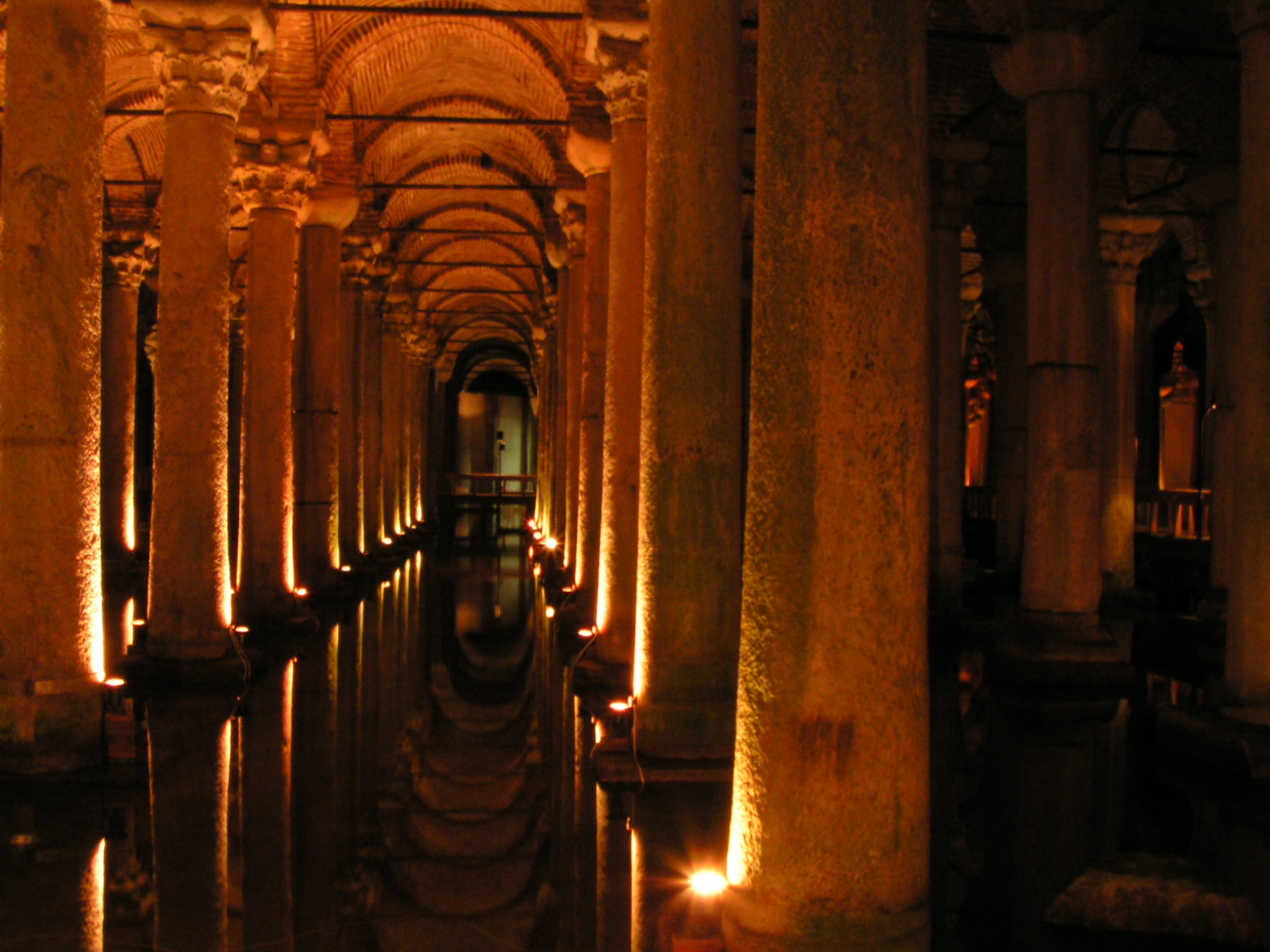
Beneath the streets of Sultanahmet lies the Basilica Cistern, built in 532 to supply water to the nearby Byzantine Great Palace: three hundred and thirty-six marble columns, many salvaged from older temples, support a vaulted ceiling over an area the size of two football pitches. At the base of two columns are two Medusa heads, placed upside down or sideways — no one knows for certain why, perhaps simply to fit the available space, perhaps out of a taboo against looking her straight in the eye even in stone. Restored several times over, it now has just a few centimetres of water on the floor and a walkway on raised platforms.
Days 3 and 4 — Istanbul: the palace, the markets, the Bosphorus
2 days · from Ottoman power to commerce, all the way to the strait
3 – Topkapi Palace
Time half a day · Paid entry, separate ticket for the harem

Topkapi Palace was the residence of the Ottoman sultans for nearly four hundred years, from 1465 to 1856, and the administrative centre of an empire that at its peak stretched across three continents. It isn’t a single building but a succession of four courtyards, each with a more restricted level of access than the last: the first was open to the public, the last reserved for the sultan and his family alone. The Imperial Treasury holds the Topkapi Dagger with its three enormous emeralds, made famous by a 1964 heist film, and the 86-carat Kaşıkçı Diamond.
The Harem, with over three hundred rooms, wasn’t the site of Orientalist fantasy widespread in the West but the private residence of the sultan’s family, his wives, concubines, and mother — the valide sultan — who often wielded real political power behind the scenes, in a seventeenth-century period historians call the ‘Sultanate of Women.’
4 – The Grand Bazaar and the Spice Bazaar
Time half a day · Free entry
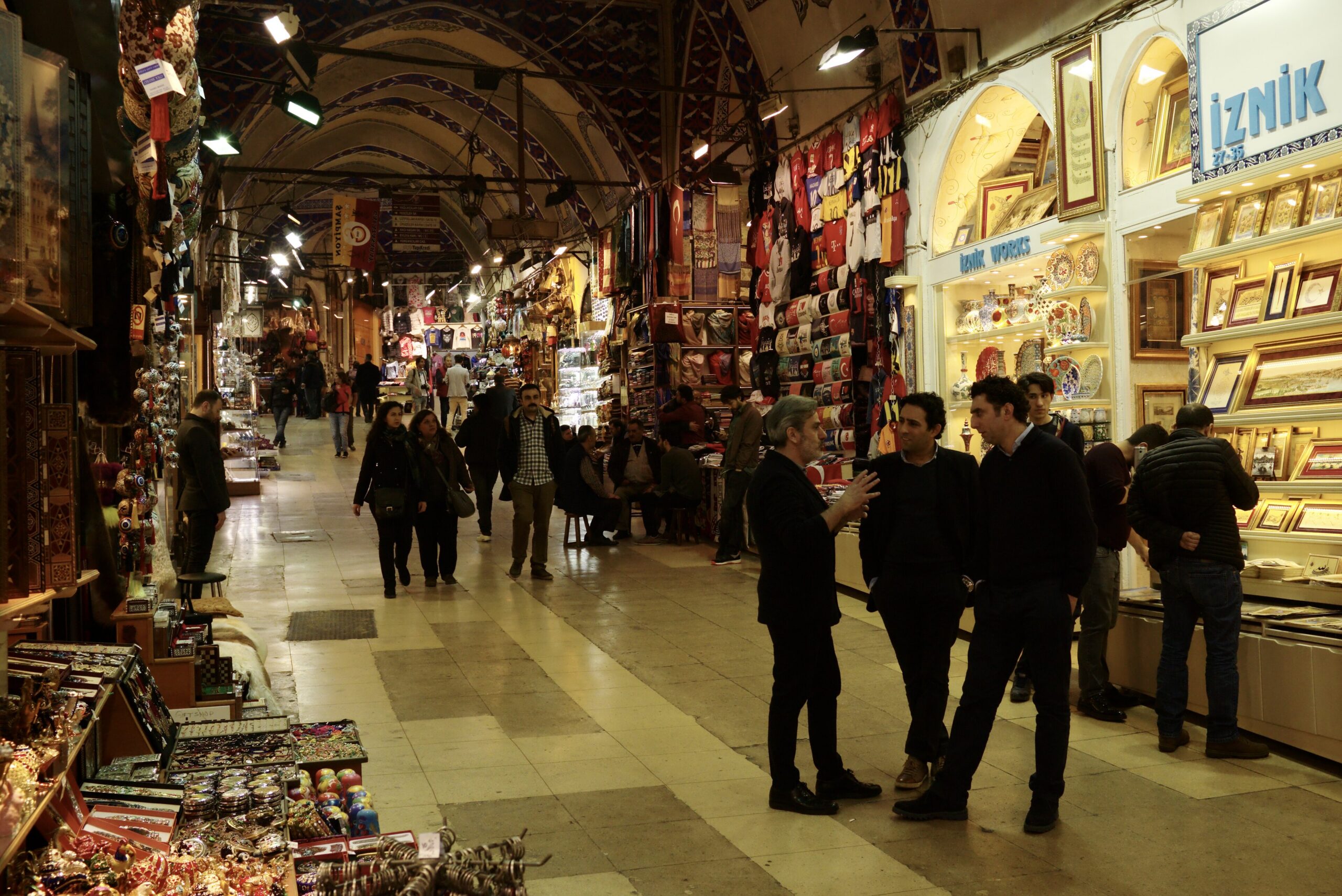
The Grand Bazaar, opened in 1461 on the orders of Mehmed II right after the conquest of the city, is one of the largest and oldest covered markets in the world: over sixty thousand square metres, more than four thousand shops along sixty-one covered streets, and up to half a million visitors a day during peak periods. Carpets, Iznik ceramics, gold, spices, souvenirs: haggling is part of the game almost everywhere, and starting at half the asking price is a reasonable place to begin.
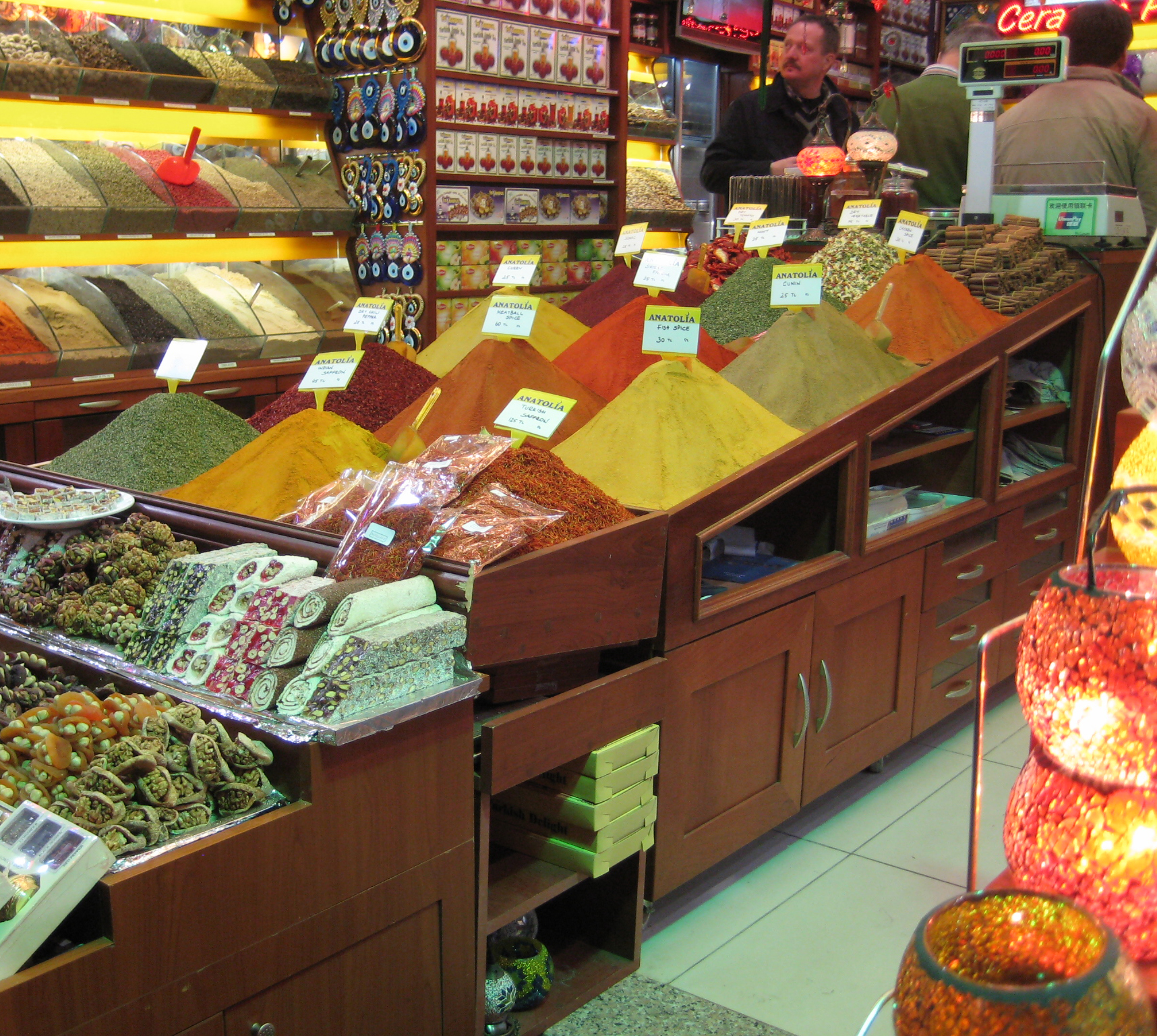
Smaller and more concentrated, the Spice Bazaar (or Egyptian Bazaar), opened in 1660 as part of the Yeni Cami mosque complex, is the place to buy saffron, sumac, Turkish delight and dried fruit: the smell, even before the sight, is what sets it apart from the Grand Bazaar.
Il kebab è solo l’inizio: da provare i meze (antipasti freddi condivisi), il köfte (polpette di carne speziata), il simit (l’anello di pane al sesamo venduto per strada, la colazione più comune della città), il balık ekmek (panino con pesce alla griglia, da provare ai moli di Eminönü). Un pasto in un ristorante di quartiere costa 150-300 lire turche a persona; una specialità da strada 30-80 lire. Il tè nero servito in bicchierini a forma di tulipano si beve tutto il giorno, ovunque, spesso offerto gratis dai commercianti prima ancora di comprare qualcosa.
5 – Galata Tower and the Bosphorus
Time half a day or the evening · Paid entry to the tower

Galata Tower, built by the Genoese in 1348 as part of the fortifications of their trading colony, is today the best vantage point over the old city: from here you can see the whole historic peninsula, the Golden Horn and, in the distance, Asia across the Bosphorus, the strait that literally divides Istanbul between two continents. A Bosphorus cruise, even just the public ferry instead of a tourist tour, remains the cheapest way to see the Ottoman villas along the shore and the two suspension bridges connecting Europe and Asia.
Day 4, afternoon — Dolmabahçe
Before the flight to Cappadocia · on the Bosphorus
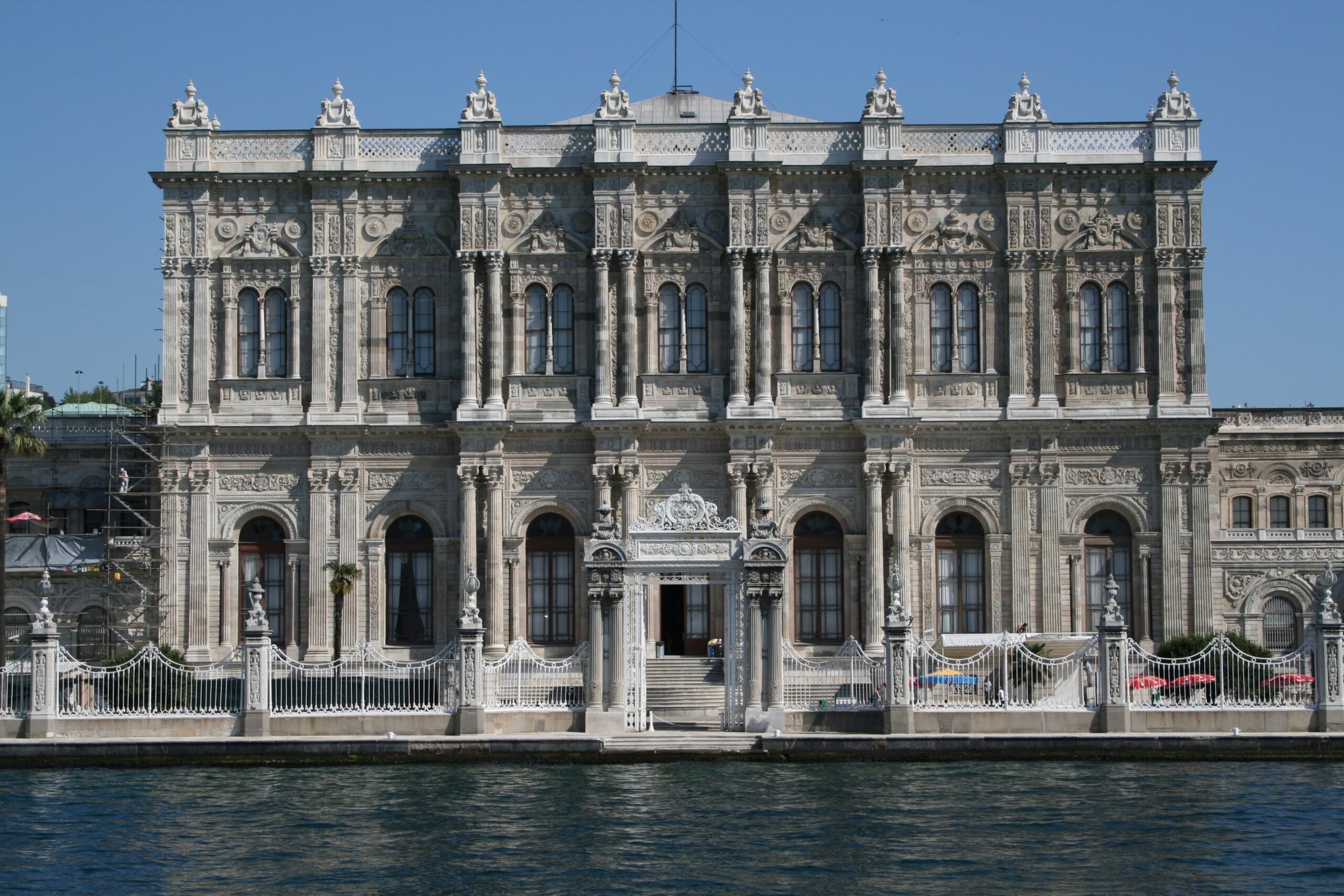
Built between 1843 and 1856, Dolmabahçe Palace marks the Ottoman sultans’ move from Topkapi to a European-style residence, with a six-hundred-metre baroque facade on the Bosphorus and a four-and-a-half-tonne Bohemian crystal chandelier in the throne room, the largest in Europe at the time. It’s also where Mustafa Kemal Atatürk, founder of modern Turkey, died in 1938: in his private apartment, every clock in the palace remains stopped at 9:05, the exact moment of his death.
Days 5, 6 and 7 — Cappadocia: the carved rock
Flight Istanbul–Kayseri or Nevşehir, 1h15 · 3 nights · Turkey’s most unusual landscape
Cappadocia owes its landscape to millions of years of volcanic eruptions, which covered the region in tuff — a soft rock, easy to carve — later eroded by wind and rain into thousands of cone-shaped spires, the fairy chimneys. For centuries, Christian communities fleeing first Roman persecution and later Arab raids carved entire underground cities and frescoed rock-cut churches into the stone: today the region is a UNESCO World Heritage Site and has also become famous for its cave hotels and hot-air balloon flights.
6 – The balloons and the Göreme valley
Time dawn + morning · Balloon flight 150-250 euros per person, hotel pickup before dawn
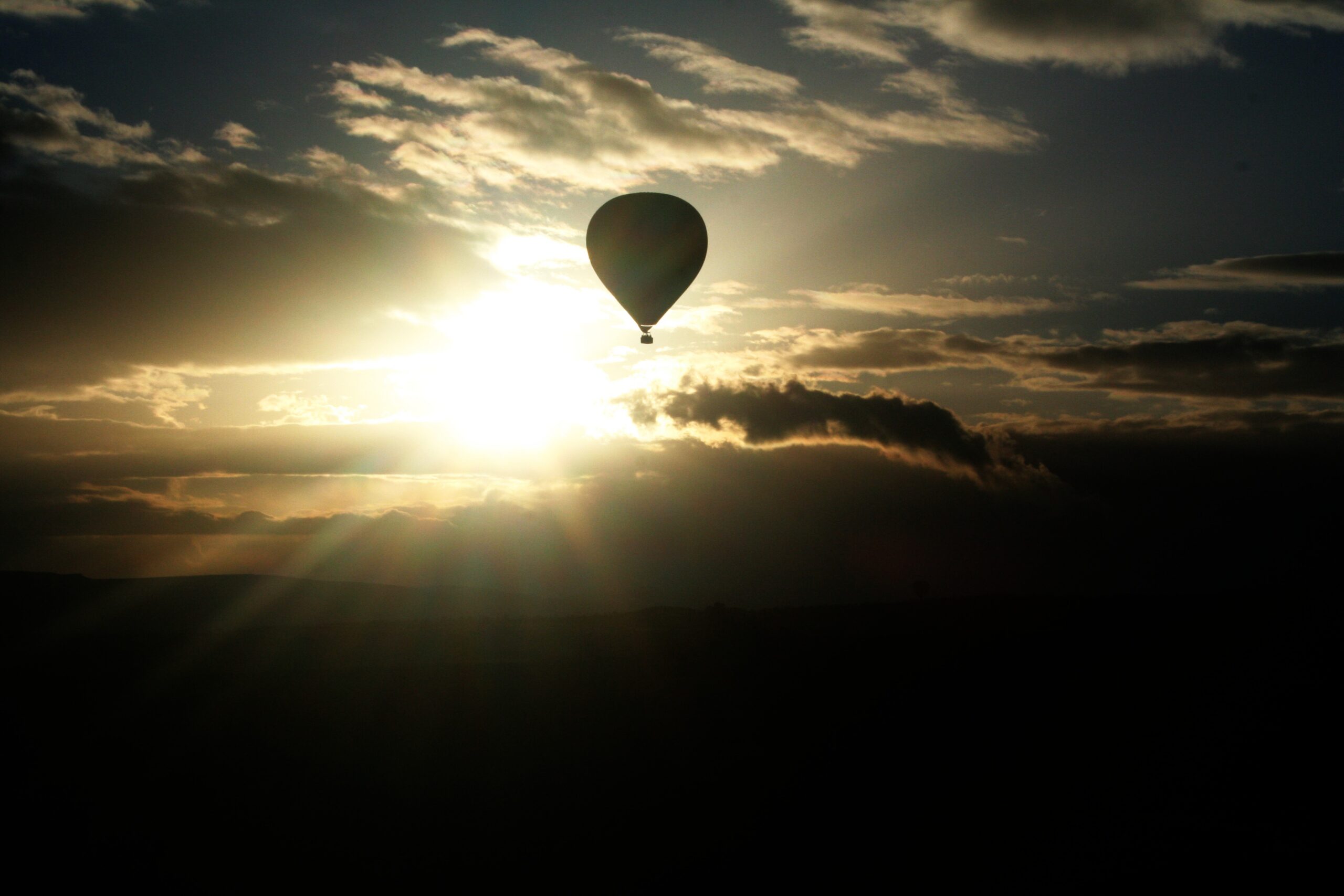
Every morning when the wind cooperates, up to one hundred and fifty hot-air balloons take off together at dawn over the Göreme valley: it’s one of the most photographed images of Turkey, and for good reason — seen from the ground or from the air, Cappadocia changes perspective completely. The flights last about an hour, climb up to three hundred metres, and get cancelled for strong wind on short notice, so it’s worth building in a spare night if the flight is an absolute priority of the trip.
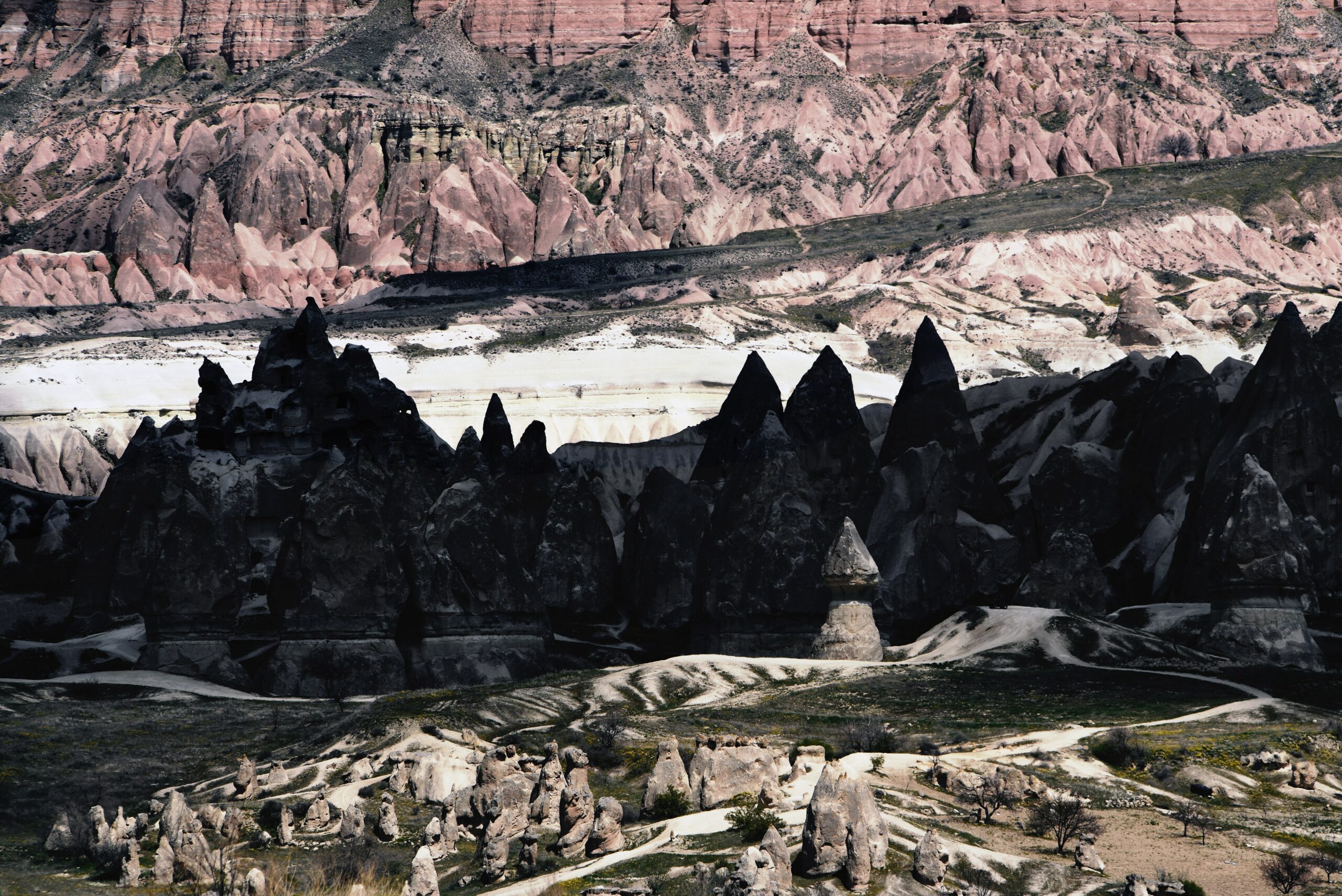
The Göreme Open Air Museum brings together more than thirty Byzantine churches and chapels carved into the rock between the tenth and twelfth centuries, with frescoes still largely legible: the Dark Church (Karanlik Kilise), so named because it has just one small window, has preserved its colours better than any other precisely because of the low light that has protected it over the centuries.
7 – Uçhisar and Paşabağ valley
Time half a day

Uçhisar is an entire natural castle carved out of a single cone of rock, the highest point in Cappadocia: used as a refuge and fortification since Byzantine times, today you climb to the top via a short staircase, and from up there you can see the whole region, including the outline of Göreme and, on clear days, Mount Erciyes, the volcano that produced the tuff on which all of Cappadocia sits.

Paşabağ valley, also called ‘Monks Valley’, has the most striking fairy chimneys in the region: some with two or three ‘caps’ of harder rock atop the eroded cone, formations that here reach almost surreal shapes. A fourth-century hermit, Simeon, is said to have lived in one of the highest cavities, which is where the valley’s popular name comes from.
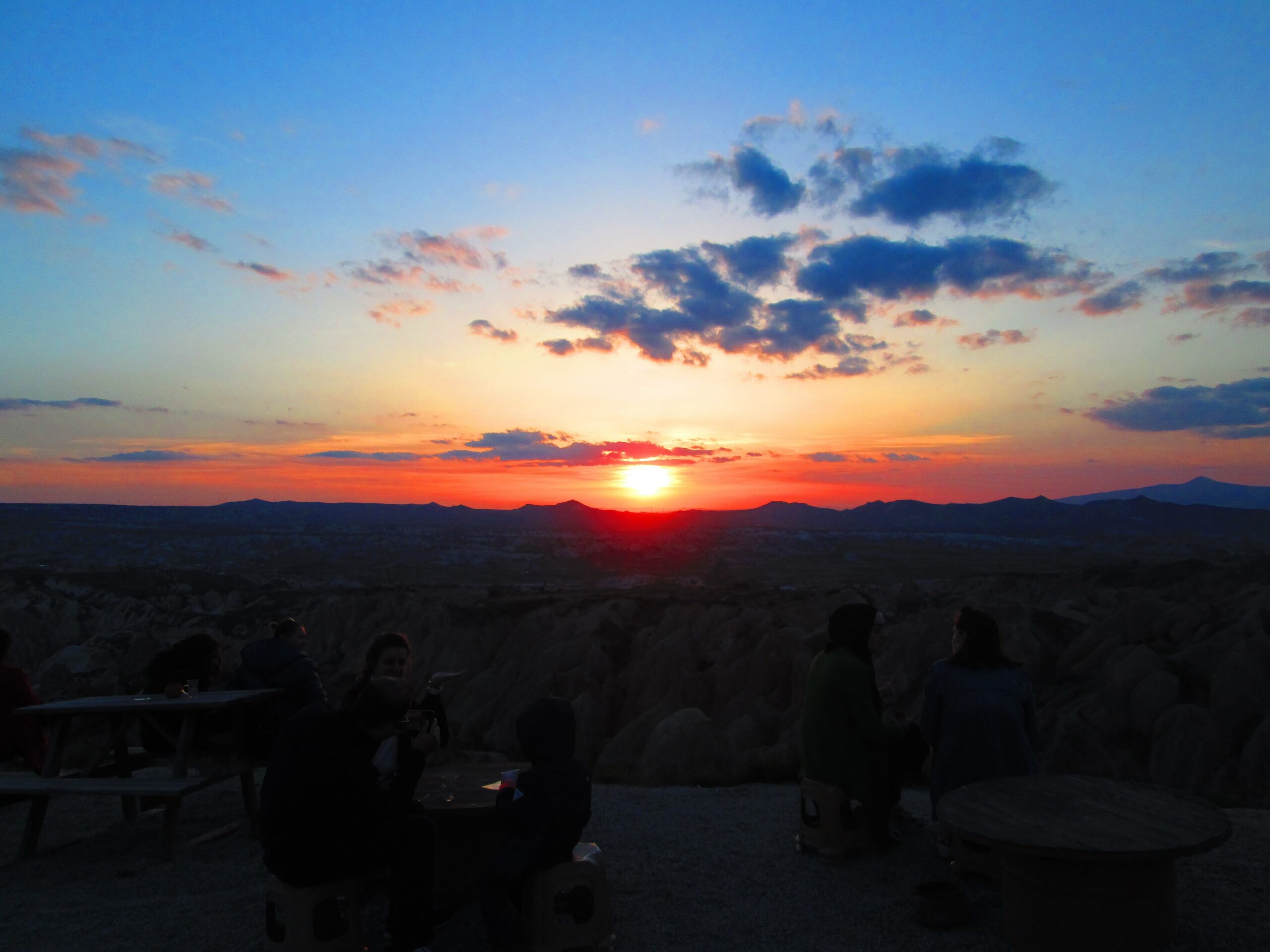
Chi ha un’ora libera nel tardo pomeriggio può aggiungere la Valle Rosa (K&ıacute;zílçukur), dove le rocce prendono una tonalità rosso-arancio intensa nell’ora prima del tramonto: è il punto panoramico preferito da chi non vuole svegliarsi all’alba per le mongolfiere ma vuole comunque un tramonto memorabile sulla regione.
The underground city of Derinkuyu
Time half a day · 40 km from Göreme · Paid entry
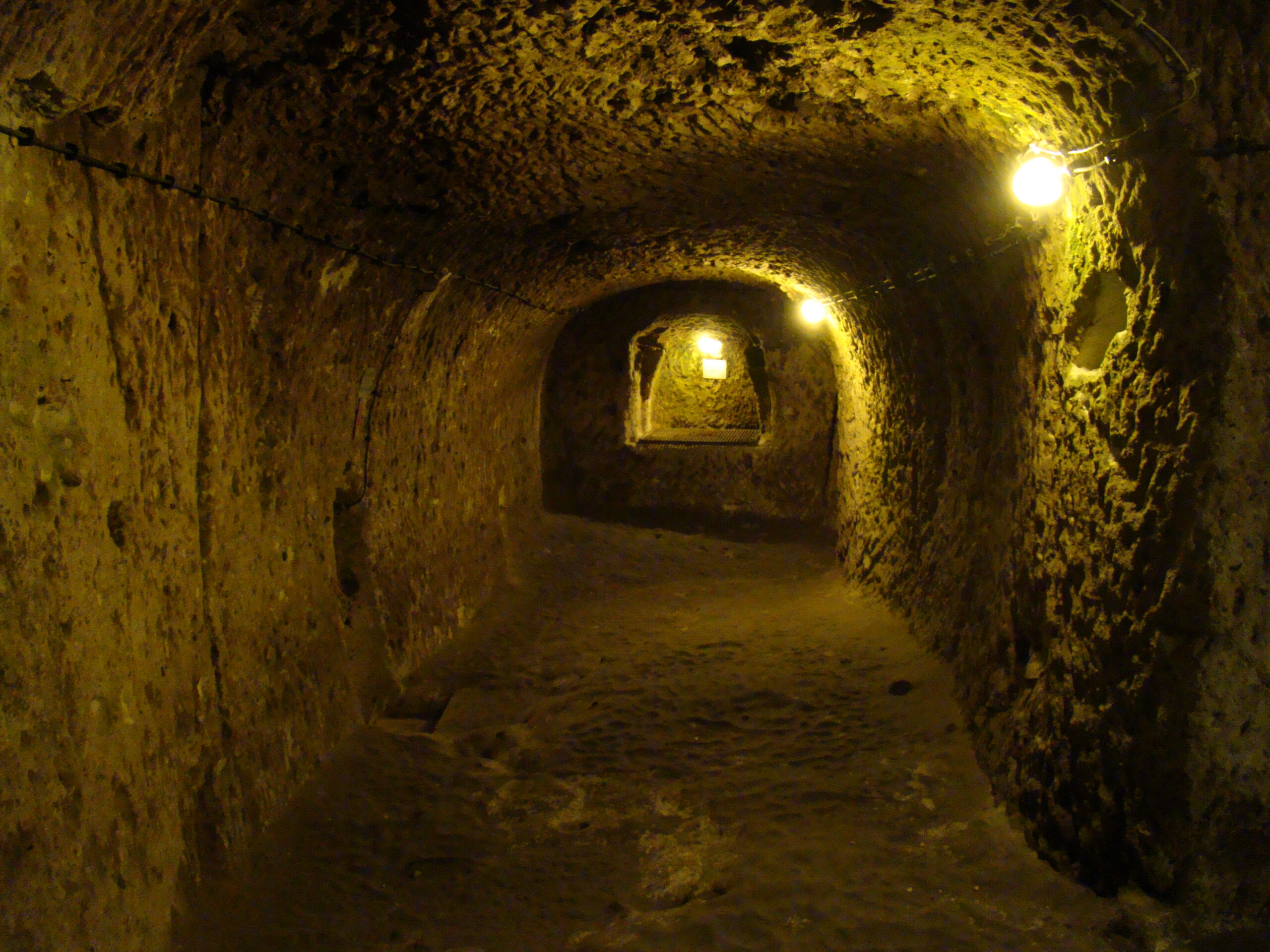
Derinkuyu is the largest of the roughly two hundred underground cities discovered in Cappadocia, probably first carved from the eighth-seventh century BC onward and expanded over the following centuries: it descends eight levels and eighty-five metres deep, and could shelter up to twenty thousand people with their livestock, in case of enemy raids, for weeks at a time. It has ventilation shafts still working, stables, wine cellars, a church, and enormous circular stone doors that were sealed from the inside to block the corridors during a siege. It was rediscovered by chance in 1963 by a villager who, knocking down a wall in his house, found a passage into an unknown room.
What a week costs
| Voce | Costo |
|---|---|
| Volo interno Istanbul–Cappadocia, andata/ritorno | 40-90 euro |
| Alloggio, 7 notti (camera media, 2 in grotta a Göreme) | 250-500 euro |
| Ingressi (Topkapi, Cisterna, Museo di Göreme, Derinkuyu) | circa 60-80 euro |
| Volo in mongolfiera | 150-250 euro |
| Trasporti locali (tram/metro Istanbul, tour Cappadocia) | circa 40-60 euro |
| Pasti, 7 giorni | 120-220 euro |
| Totale in loco | circa 700-1.100 euro a persona |
Figures as of September 2026, intercontinental flight excluded. Payment is in Turkish lira, with historically high inflation: check the current exchange rate shortly before leaving, since prices in euros can vary noticeably from month to month. Cards work almost everywhere in the main cities, but a bit of cash remains useful in the bazaars and for haggling.
Frequently asked questions
Is a week enough for Istanbul and Cappadocia?
Yes, with four days in Istanbul and three in Cappadocia you see the main highlights of both without rushing too much. Left out are Pamukkale and Ephesus, on the Aegean coast: those require a few days’ extension or a second trip dedicated to the coast.
Do you need a visa for Turkey?
Italian citizens don’t need a visa for short tourist stays: a valid passport is enough. Still, check the latest guidance on the Ministry of Foreign Affairs website before leaving, since rules can change.
Is the hot-air balloon flight safe?
Yes, it’s a regulated activity practised extensively, with thousands of flights a year: reputable companies suspend flights when wind conditions aren’t favourable, sometimes with little notice. Choose operators with good reviews and insurance, and factor in the possibility of a last-minute cancellation.
When’s the best time to go?
April-June and September-October: mild climate, good visibility and more stable wind conditions for the balloons. July-August is very hot, especially in Cappadocia during the day; winter (December-February) is cold, often snowy in Cappadocia, and balloon flights get cancelled more often for wind.
How should you dress to visit mosques?
Shoulders and knees covered for everyone, shoes come off at the entrance, and women cover their hair with a headscarf, often available to borrow for free. Visits are suspended during prayers, especially the Friday midday prayer.
Is English spoken?
Well in Istanbul’s tourist areas and on organised Cappadocia tours, less so in more outlying areas. A handful of Turkish phrases (thank you, please, how much) is always appreciated and useful for haggling in the bazaars.
How much do you spend per day?
At a mid-range level, 100-160 euros per person per day including accommodation, a bit more on the days with a balloon flight. Street food and public transport remain relatively cheap compared with Western Europe.
What’s the most common mistake?
Not booking the balloon flight in advance: during peak season, spots sell out days ahead, especially for the best time slots and packages. The second mistake is planning only one day in Cappadocia: with the travel between valleys, three full days is the minimum to avoid feeling rushed.
September 11, 2026


