

New York in 3 days: the Statue of Liberty, the High Line and Harlem
Three days is the minimum for New York to stop being a postcard. The first is the obligatory one, with Midtown from above and the Brooklyn Bridge. The second descends to the bottom of the island, where the city began: the Statue of Liberty, Ellis Island through which twelve million immigrants passed, the September 11 memorial, and then you climb back up on foot along the High Line to the Village. The third is the day for museums and Harlem, which is twenty minutes by subway from Central Park and is another city.
In summary
- Duration · three full days, from 8:30 AM to 10 PM
- How much walking · 9-11 km per day, flat terrain
- What to book · the observation skyscraper and the ferry to the Statue of Liberty: the crown must be booked months in advance
- Budget · 340-450 dollars per person for the three days, accommodation excluded
- Transport · subway 2.90 $ per ride with credit card; after 12 rides in one week the rest is free
- Day to avoid · Tuesday for smaller museums, and Monday for some galleries
- What’s left out · Brooklyn, Coney Island, Queens and the Bronx: they are the fourth and fifth day
One color for each day. The second day you go down to the tip of Manhattan and climb back up on foot along the river.
Day 1 — Midtown, the park and the bridge
10 km · from 8:30 AM to 10 PM · this is the one-day itinerary, without cuts

Morning at Grand Central Terminal — forty-four tracks, the ceiling with the zodiac painted backwards, the whispering gallery in front of the Oyster Bar — and then up to the Top of the Rock, which you choose instead of the Empire State because from there you can see the Empire State, and you can see Central Park in its entirety.
At noon half an hour at Times Square, no more, and lunch at Bryant Park with a visit to the reading room of the Public Library, which is free and almost no one goes in. Afternoon at Central Park, from the Mall to Bethesda Terrace to Strawberry Fields. At six you go down to the bottom of the island and cross the Brooklyn Bridge towards Brooklyn, with the sunset behind you, to end in Dumbo with the skyline lighting up on the other shore.
The detail of the day is the timing of the bridge: leave an hour and a half before sunset. It’s the only fixed appointment of all three days.
Day 2 — The tip of the island
9 km · 5 stages · from 8:00 AM to 10 PM · you go down by subway and climb back up on foot
Morning – The Statue of Liberty and Ellis Island
Time 4 hours · Ferry and entrance about 25 $, with the crown about 25 $ but must be booked months in advance · Subway 4 or 5 to Bowling Green · Leave with the first ferry

The ferry leaves from Battery Park and the checks are like at an airport: take the first one of the day, around eight thirty, or you’ll spend two hours in line. A single ticket includes Liberty Island and Ellis Island, and you must do both: the second is more important than the first.
The statue was a gift from France for the centennial of American independence, inaugurated in 1886. Frédéric Auguste Bartholdi sculpted it, but the internal iron structure that holds it up — and allows it to sway in the wind without breaking — is by Gustave Eiffel, three years before he started his tower. It is 93 meters tall with the pedestal, and it’s green because it’s made of sheets of copper two and a half millimeters thick, oxidized over time: originally it was the color of a new coin. At its feet, broken and almost invisible from below, are some broken chains: the statue is walking away from slavery, and that detail was deliberately kept hidden at the time.
Then Ellis Island, which is the real reason for the trip. Between 1892 and 1954, about twelve million immigrants passed through here: it’s estimated that nearly one in three Americans descends from someone who set foot in that hall. The Registry Room on the first floor is the hall where they waited in line for the medical exam, and the doctors marked the letters of suspected illnesses with chalk on their backs. Those who were rejected returned on the same ship, and that’s why the place was called the island of tears. There’s an archive where you can search for names: if you have relatives who emigrated between those dates, try it.
Early afternoon – Wall Street and the memorial
Time 2 hours and a half · Memorial free, museum about 33 $ · Movement 15 minutes on foot from Battery Park

Coming up from Battery Park you pass through Wall Street, which is a narrow street in shadow and is always disappointing: the wall (wall) really did exist, the Dutch built it in 1653 as a defensive palisade. The Charging Bull, the bronze bull, wasn’t commissioned by anyone: sculptor Arturo Di Modica illegally dumped it in front of the Stock Exchange on Christmas night 1989, after the 1987 crash, as a gift to the city. The police removed it, people protested and the city put it back.
Then the National September 11 Memorial. The two pools stand exactly in the footprints of the Twin Towers, and the water falls for nine meters and disappears into a second central void whose bottom you can’t see. On the bronze parapet are engraved the names of the 2,977 victims, arranged not in alphabetical order but according to the people they were with: colleagues next to colleagues, passengers from each flight together, firefighters by station. On the day of their birthday, a white rose is placed in the name of each one.
In the middle of the square is a pear tree, the Survivor Tree: it was extracted from the debris reduced to a charred stump, cared for in a Bronx nursery for nine years and replanted here. The underground museum is very intense and worth the price of admission, but allow two hours and a heavy mood; those traveling with small children can stop at the pools, which are free.

Next to it is the Oculus, the station designed by Santiago Calatrava and opened in 2016: a white rib of steel that from the outside looks like a skeleton and from the inside a cathedral. It cost four billion dollars, double the budget, and the controversy never died down. Every September 11, at 10:28 — the hour when the second tower fell — the skylight opens.
Afternoon – The High Line
Time 2 hours · Free · Subway A, C or E to 14 St, you go up from Gansevoort Street

The High Line is two and a half kilometers of linear park at nine meters height, created on a freight railroad viaduct from 1934. The line served the warehouses of the West Side and was built elevated after decades of fatal accidents: Tenth Avenue was called Death Avenue, and before the viaduct a man on horseback with a red flag rode in front of the trains to warn passersby.
The last train passed in 1980 — it was transporting frozen turkeys — and for twenty years the structure remained abandoned, invaded by wild herbs, while the building owners asked to demolish it. Two residents founded an association to save it and in 2009 the first section opened. The project preserved the tracks inside the flowerbeds and the plants chosen imitate those that grew on their own. Today it’s copied around the world, and it raised property values in the neighborhood so much that it became the classic case study on gentrification.
You walk from south to north to the Chelsea Market, which is inside the former Nabisco biscuit factory — this is where the Oreo was invented, in 1912 — and it’s the right place to eat something standing up.
Evening – Greenwich Village
Time 3 hours with dinner · Free · Movement 20 minutes on foot to the east

Greenwich Village is the only piece of Manhattan where the grid breaks: the streets go crooked, they intersect at absurd angles and there’s an intersection where West 4th Street crosses West 10th Street, which according to the numbering should be impossible. It’s like this because there was a village here, with its own streets, before in 1811 it was decided to square up the rest of the island.
The center is Washington Square Park, with the marble arch and chess players. Under the park there are still remains of an eighteenth-century poor cemetery: during work in 2015 two crypts with their skeletons resurfaced. Around it is New York University, and in the places around it have passed Bob Dylan, the beats and half the history of American folk.
Two blocks west, on Christopher Street, is the Stonewall Inn: in June 1969 the customers reacted to yet another police raid and days of clashes followed, from which the movement for gay rights and Pride parades around the world were born. In 2016 it became a national monument: it’s the first in the United States dedicated to that history.
Day 3 — The museums and Harlem
8 km · 3 stages · from 10 AM to 10 PM · half a day indoors, half in another city
Morning – The Metropolitan, or the MoMA
Time 3 hours · Met about 30 $, MoMA about 30 $ · Subway 4, 5 or 6 to 86 St
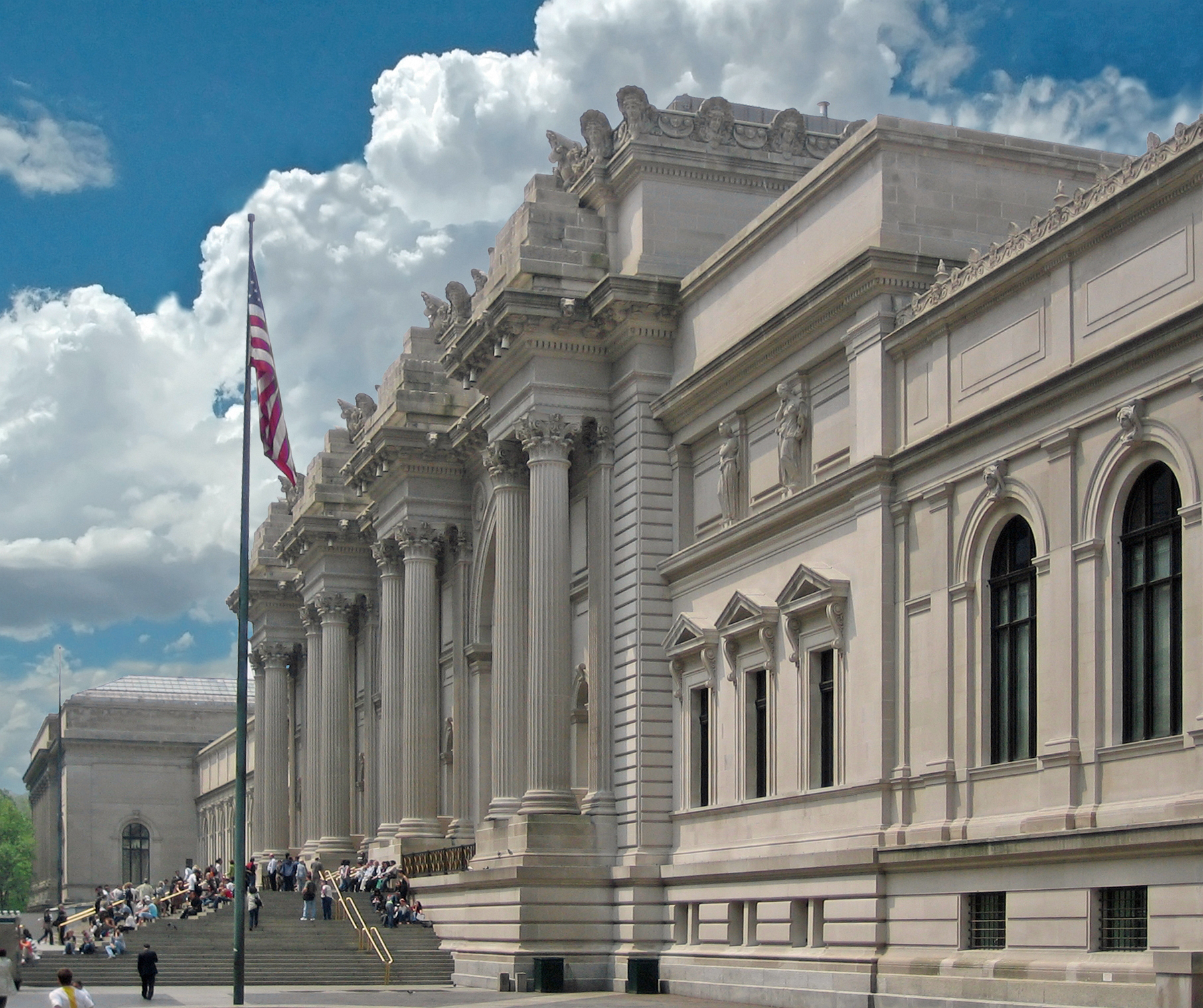
Here you choose, and you don’t do both on the same day: they are two museums with three full hours each and you won’t remember the second one.
The Metropolitan Museum of Art, founded in 1870, has about two million objects and covers five thousand years. If you have three hours, aim for three things and ignore the rest: the Temple of Dendur, an Egyptian temple from 15 BC dismantled and rebuilt here inside a glass room overlooking the park — Egypt gave it to the United States for the salvation of Nubian monuments from the Aswan Dam; the European halls with Vermeer, Caravaggio and Bruegel; and the American Wing, which has entire facades of reassembled houses inside. Be careful with the ticket: the “pay what you want” formula only applies to residents of the State of New York and students from New York, New Jersey and Connecticut. For everyone else the price is fixed.
The MoMA is the alternative if you prefer the twentieth century: Van Gogh’s Starry Night, Picasso’s Les Demoiselles d’Avignon, Dalí’s melting clocks, Warhol, Pollock. It’s much smaller and can be done in two and a half hours. It’s in Midtown, so it’s also more convenient if you’re sleeping there.
The Met is huge and museum fatigue is real. Three targeted hours are worth more than six complete hours: choose three rooms on the map at the entrance and go straight there.
Afternoon – North Central Park and the Upper East Side
Time 2 hours · Free · on foot
Coming out of the Met you’re already in Central Park, on the side you didn’t see on the first day: the Jacqueline Kennedy Onassis Reservoir, the water basin with the two and a half kilometer running ring and the skyscrapers reflected inside, the Conservatory Garden with its three parts Italian, French and English style, and the Harlem Meer at the northern tip.
Along Fifth Avenue, along the park, runs the Museum Mile: in a kilometer and a half there are nine museums, including Frank Lloyd Wright’s Guggenheim, which is worth a stop just for the exterior — it’s an inverted spiral, and inside you go up by elevator then walk down along the ramp.
Evening – Harlem
Time 3 hours with dinner · Free to walk around · Subway 2 or 3 to 125 St · Amateur Night at the Apollo on Wednesday

Twenty minutes by subway from Central Park and you’re in Harlem, which in the twenties and thirties was the cultural capital of Black America: the Harlem Renaissance, with Langston Hughes, Duke Ellington, Billie Holiday. The main street is 125th, and you walk around it safely.
The Apollo Theater opened to Black people in 1934, when almost no other theater in New York did, and invented Amateur Night, the Wednesday night amateur competition where the audience decides who stays and who gets booed off the stage. The first winner, that same year, was a seventeen-year-old girl who wanted to dance, got scared and started singing: she was Ella Fitzgerald. James Brown, Stevie Wonder, Jimi Hendrix, Michael Jackson have all played that stage. If you’re in the city on Wednesday, go there: it doesn’t cost much and it’s the liveliest thing of the whole week.
On Sunday mornings, instead, there’s gospel. Some churches welcome visitors, others don’t, and the difference isn’t always indicated: they are religious services, not shows. Unwritten but real rules: dress decently, don’t photograph, don’t get up halfway through, stay until the end and put something in the collection. Organized groups that come and go in twenty minutes are frowned upon, with reason.
For dinner, soul food: fried chicken, cornbread, collard greens, macaroni and cheese. It’s a cuisine born from scraps and became identity, and in Harlem you eat in the historic places of 125th and Lenox Avenue.
If it rains, or if it’s very cold
- Day 2, the ferry · with rough seas the runs get canceled and Liberty Island in the open under the rain doesn’t make sense. Swap day 2 with day 3, which is almost all indoors.
- Instead of the High Line · the Whitney Museum, which is exactly at its feet, or the Chelsea Market and the art galleries of Chelsea, which are free and are all in four blocks.
- Rainy day · the Met alone supports a full day, and the Frick Collection a stone’s throw away is a collector’s house left intact, with three Vermeers.
- In summer · the humidity in July and August is heavy. The High Line has no shade: do it at nine in the morning or at sunset, never at two.
How much the three days cost
| Voce | Spesa |
|---|---|
| Top of the Rock (or another panoramic) | 40-50 $ |
| Ferry, Statue of Liberty and Ellis Is | about 25 $ |
| September 11 museum | about 33 $ |
| Metropolitan Museum or MoMA | about 30 $ |
| Central Park, High Line, Brooklyn Bridge, memorial, Harlem, Village | free |
| Subway, 3 days | about 30 $ |
| Meals, 3 days | 180-280 $ |
| Total | about 340-450 $ per person |
Reference figures for August 2026, in dollars. The displayed price is not what you pay: taxes are added at checkout and at the restaurant the 18-20% tip in practice is not optional. Tourist passes like CityPASS only pay off if you do at least three paid attractions: with this itinerary you’re at the limit, do the math on yours.
Frequently asked questions
Are three days enough for New York?
They’re enough for the tourist’s Manhattan done right: the view from above, the Statue of Liberty, the memorial, a major museum, the bridge and Harlem. All other districts are left out — Brooklyn beyond Dumbo, Queens, the Bronx — and they’re why the five-day itinerary exists.
Do you go up to the crown of the Statue of Liberty?
Yes, but spots are very limited and book months in advance, often six. There are 162 steps in a narrow, hot spiral staircase, no elevator. The pedestal, much easier to book, offers an almost equally beautiful view and you get it with a few weeks in advance.
Is Ellis Island worth it?
More than the statue, and for many European visitors it’s the most moving place in New York. Between 1892 and 1954, about twelve million immigrants passed through here: there’s the hall where they waited for the medical exam and an archive where you can search for names. It’s included in the same ferry ticket.
Is the September 11 museum suitable for children?
The outdoor memorial with the two pools yes, and it’s free. The underground museum no: there are recordings of victims’ phone calls and objects recovered from the rubble, and it’s very heavy even for adults. Under ten years old stop at the pools.
Is the Metropolitan free or pay what you want?
Since 2018, the “pay what you want” formula only applies to residents of the State of New York and students from New York, New Jersey and Connecticut, with ID. For everyone else the ticket has a fixed price, around thirty dollars, valid for three locations on the same day.
Better the Met or the MoMA?
The Met if you want five thousand years of art history and aren’t scared of a huge museum; the MoMA if your interest is the twentieth century, from Van Gogh to Warhol. The MoMA is smaller, more concentrated and can be done in two and a half hours. You do one in the same day.
What is the High Line?
A two and a half kilometer park created on a freight railroad viaduct from 1934, closed in 1980 and reopened as an elevated garden since 2009. You walk at nine meters height between the buildings of the West Side, the old tracks remained inside the flowerbeds, and it’s free.
Is Harlem safe?
Yes, and it’s changed a lot: 125th is a commercial street full of people at all times. The rules of any big city apply — stay on the main streets in the evening, don’t wander alone in residential areas late at night. Go there: it’s the part of New York that most looks like itself.
How much do three days in New York cost?
Between 340 and 450 dollars per person without accommodation, with a panoramic, the ferry to the statue, the September 11 museum and a major museum. More than half the bill is meals: New York is expensive, and taxes and tips must be added to the menu prices.
When is it worth going?
May-June and September-October. July and August are hot and humid in a heavy way; January and February really cold, with wind between the skyscrapers. December is magnificent and very expensive: shop windows, Rockefeller Center tree, ice skating rinks, and hotels at double price.
September 6, 2026


