

Los Angeles in 3 days: the Getty, the film studios and the coast
Three days is the minimum to not leave Los Angeles with the impression of having seen only freeways. The first is the classic one: the hill, Hollywood, the center, the ocean. The second is the day for art and real cinema — the Getty Center, which is free and sits on a hill you climb by funicular, and one of the film studios, which are not in Hollywood but on the other side of the hills. The third takes the Pacific Coast Highway and goes north among the houses of Malibu, on one of the most beautiful coastal roads in the world.
In summary
- Duration · three full days, from 9 am to 10 pm
- Car needed · yes, for all three days; for the third it’s the whole point
- Budget · 330-520 dollars per person for three days, accommodation and car rental excluded
- Need to book · the film studio tour, which sells out, and a time slot at the Getty if you’re driving
- Traffic · plan every trip outside rush hour, 7-10 am and 3:30-7 pm
- When · year-round; September and October are the best months
- What’s left out · Disneyland, the deserts, San Diego: that’s the fourth and fifth day
One color per day. The third day leaves the city going west, along the coast.
Day 1 — The city
6 km on foot · from 9 am to 10 pm · it’s the one-day itinerary, without cuts

Morning at Griffith Observatory, free by the donor’s will, with a view of the Hollywood sign. One hour on the Walk of Fame, knowing what it is, and the courtyard of the Chinese Theatre with handprints in the cement. Afternoon downtown, with Gehry’s Walt Disney Concert Hall and Grand Central Market. Evening in Venice and Santa Monica Pier, with the Ferris wheel lighting up.
Day 2 — Art and cinema
5 km · 3 stops · from 9:30 am to 10 pm · three car trips
Morning – The Getty Center
Time 3.5 hours · Free admission, parking about 25 $ · Closed Mondays · you go up by automatic funicular

The Getty Center sits on a hill above the Brentwood neighborhood and you reach it by an automatic five-minute funicular from the parking lot: this alone makes it different from any other American museum. It opened in 1997, cost over a billion dollars and was designed by Richard Meier.
It’s covered in sixteen thousand tons of travertine brought from Tivoli, cut with a technique that splits the stone instead of sawing it, to leave the surface rough: inside some blocks you can see leaves and fossil fish. Admission is free — you only pay for parking — because Jean Paul Getty‘s bequest, at the time the world’s richest man, requires the foundation to spend a fixed portion of its assets every year.
The collection has Van Gogh, Rembrandt, Monet and a notable collection of photography; but what strikes most are the outdoor spaces: the courtyards, the terraces and especially Robert Irwin’s Central Garden, a spiral garden that descends into a basin with a maze of floating azaleas. From there you can see all of Los Angeles to the ocean.
There’s also a second location, the Getty Villa in Malibu: the reconstruction of a Roman villa from Herculaneum, dedicated to ancient art. It’s on the route of the third day, and it’s also free but with mandatory reservation.
Afternoon – The film studios
Time 3 hours · Warner Bros Studio Tour about 75 $, Universal Studios about 110 $ · Need to book
Here you have a choice to make, and they’re two different things:
- the Warner Bros Studio Tour in Burbank is a visit to a working studio: you ride in an electric cart between sound stages, the fake streets of New York used in hundreds of films, the set design and costume departments. You see how cinema is made, and you might encounter a film crew at work. It’s the right choice for those interested in the craft
- Universal Studios Hollywood is an amusement park with a backlot ride in it: roller coasters, Harry Potter and Simpsons attractions. It’s a whole day, not an afternoon, and it’s the right choice with children
The thing to know is that cinema hasn’t been made in Hollywood for decades: the studios moved early beyond the hills, to Burbank and Culver City, where land was cheap. Hollywood as a neighborhood remained the brand, not the place of production.
Evening – LACMA and Urban Light
Time 2.5 hours · LACMA about 28 $ · Urban Light free, outdoors · Closed Wednesdays
The Los Angeles County Museum of Art is the largest art museum in the American west. In front of the entrance is Urban Light, Chris Burden’s 2008 installation: 202 old Los Angeles streetlights, restored and planted in neat rows, lighting up at sunset. It’s become the city’s informal symbol, and it’s free and always accessible.
Next to it is something unequaled anywhere in the world: the tar pits of La Brea, pools of bitumen seeping from the ground for tens of thousands of years and which have trapped and preserved millions of bones of ice age animals — mammoths, saber-toothed tigers, giant wolves. They’re in the middle of the city, the tar still bubbles, and in the museum next door you can see the excavations in progress.
Day 3 — The coast
All day driving · 2 stops · 60 km along the ocean
Morning – Beverly Hills and Rodeo Drive
Time 2 hours · Free · Municipal parking: usually free for the first two hours
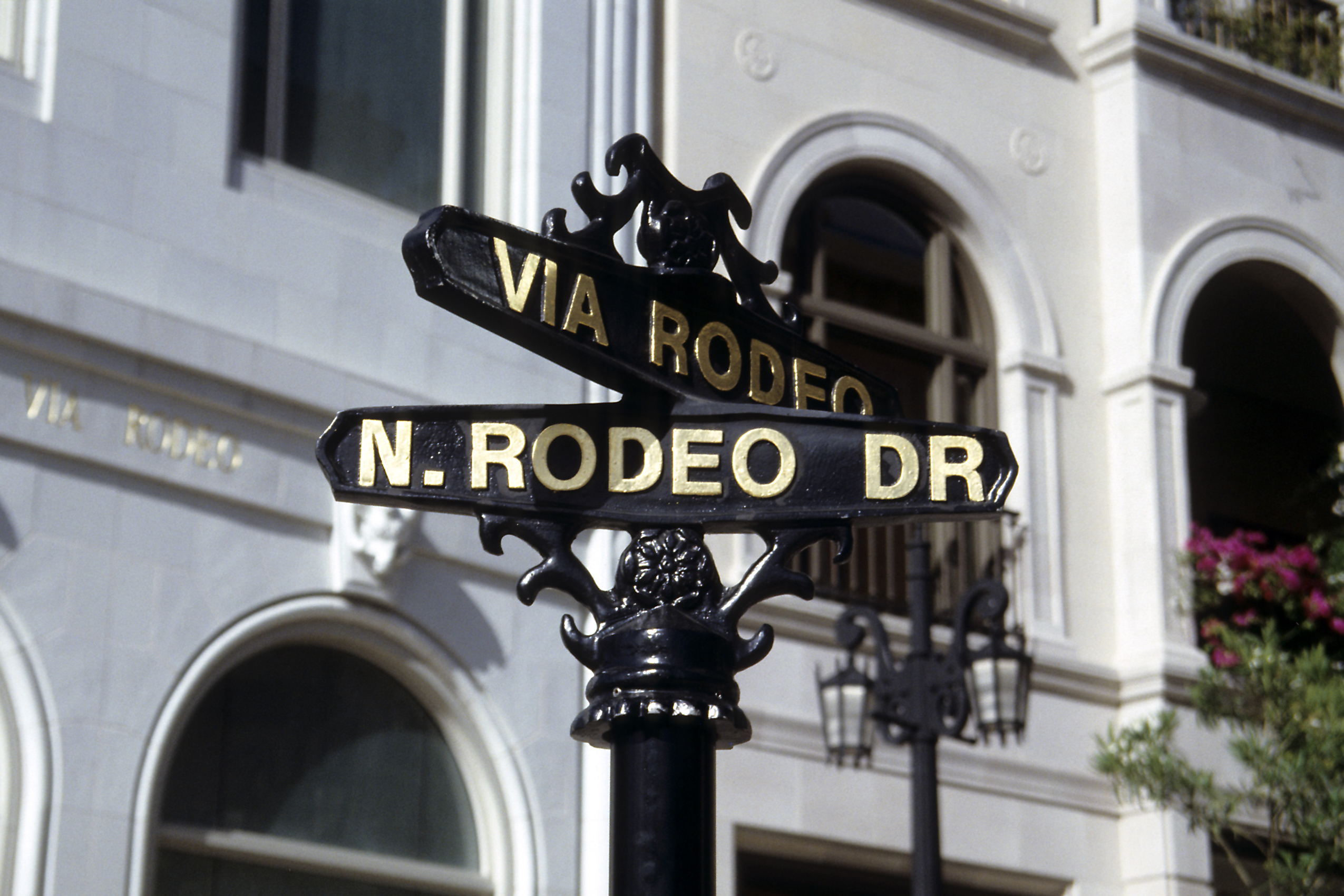
Beverly Hills is a city unto itself, with its own police and town hall, nestled inside Los Angeles. Rodeo Drive is three blocks of luxury shops: you look, photograph the sign and leave, unless you intend to buy. The really beautiful part is the residential streets around it, with aligned palms and gardens, and the pink Beverly Hills Hotel from 1912, which is on the cover of Hotel California by the Eagles.
From here starts Sunset Boulevard, which is worth a drive: it crosses the Sunset Strip with giant billboards, historic rock venues and houses in the hills, and ends on the ocean.
Afternoon and evening – The Pacific Coast Highway and Malibu
Time 5 hours with stops · Beaches free, parking 8-15 $ · Getty Villa free with reservation

The Pacific Coast Highway, Route 1, runs glued to the ocean with the Santa Monica Mountains behind. From Santa Monica to Malibu is forty kilometers, and the road is the reason for the trip: water on one side, houses hanging from the rock on the other.
The stops worth it, in order:
- the Getty Villa, the reconstruction of the Villa of the Mysteries of Herculaneum wanted by Getty for his collection of Greek and Roman art: it’s free, but reservation is mandatory and it sells out
- El Matador State Beach, a cove below the cliff with rock arches and caves: you go down a steep stairway and it’s the most photographed beach in southern California
- Malibu Pier from 1905, with the seafood restaurant at the end
- Point Dume, the headland from which in winter you can see gray whales passing in migration to Baja California
On the name: Malibu comes from Humaliwo, the word of the Chumash — the people who lived on this coast for nine thousand years — which means “where the waves roar loud”. The first syllable was lost with Spanish.
Beaches in California are public by law to the high tide line, even in front of houses. In Malibu property owners have for decades hidden or blocked public access, and there have been famous lawsuits: legal access points exist and are marked, but must be sought.
If it rains, or if there’s haze
- Day 3, the coast · with rain the PCH loses everything and can even close due to landslides. It’s the day to swap for the first.
- June Gloom · from May through June low clouds cover the coast until noon: it’s not bad weather, just reverse the day.
- Indoors · the Getty, LACMA, the tar pits museum and the Broad downtown easily cover two full days.
- With children · Universal Studios holds up better in rain than beaches, and the Aquarium of the Pacific in Long Beach is indoors.
Cost of three days
| Voce | Spesa |
|---|---|
| Getty Center and Getty Villa / free, parking | about 45 $ |
| Film studio tour / | 75-110 $ |
| LACMA / | about 28 $ |
| Griffith, Urban Light, beaches, Rodeo Drive, piers / | free |
| Parking and gas, 3 days / | 90-140 $ |
| Meals, 3 days / | 150-250 $ |
| Totale | circa 390-570 $ a persona, oltre al noleggio |
Reference figures for August 2026, in dollars. The paradox of Los Angeles is that the best museums are free — Getty, Broad, Griffith — and you pay for parking: count on twenty-five to thirty dollars a day just for parking. And as always in the United States, taxes and tip are added to the restaurant bill.
Frequently asked questions
Are three days enough for Los Angeles?
They’re enough for the three main faces: the city with its icons, art and cinema, the coast. But Los Angeles is huge — eighty-eight municipalities on 1,300 square kilometers — and something always stays out. With five days you add deserts or Disneyland.
Is the Getty Center really free?
Yes: admission isn’t charged, you only pay for parking, about twenty-five dollars. It depends on Jean Paul Getty’s bequest, which requires the foundation to spend a fixed portion of its assets each year. It’s closed Mondays and you go up by automatic funicular.
Why is the Getty covered in Italian stone?
Richard Meier chose Tivoli travertine: sixteen thousand tons, cut with a technique that splits the stone instead of sawing it, to leave the surface rough and alive. In some blocks you can see leaves and fossil fish embedded.
Better Warner Bros or Universal Studios?
They’re different things. The Warner Bros Studio Tour is a visit to a working studio, in electric cart between sound stages and departments: you see how cinema is made, and it’s an afternoon. Universal is an amusement park with roller coasters: it’s a full day and that’s the choice with children.
Are the studios in Hollywood?
No, and they haven’t been for almost a century: they moved early to Burbank and Culver City, beyond the hills, where land cost less. Hollywood as a neighborhood remained the brand, not where it’s made.
What are the La Brea tar pits?
Pools of bitumen seeping from the ground in the middle of the city, next to LACMA, for tens of thousands of years. They’ve trapped and preserved millions of bones of ice age animals: mammoths, saber-toothed tigers, giant wolves. The tar still bubbles and excavations are in progress.
What is Urban Light?
Chris Burden’s installation in front of LACMA: 202 old Los Angeles streetlights restored and planted in rows, lighting up at sunset. It’s free, always accessible, and has become the city’s informal symbol.
Are Malibu beaches public?
Yes: in California beaches are public by law to the high tide line, even in front of houses. In Malibu for decades property owners hid or blocked access, and there were famous lawsuits: legal access points exist and are marked, but you must seek them.
Is Rodeo Drive worth it?
Half an hour, to see it. It’s three blocks of luxury shops and without intention to buy it runs out fast. Much more interesting are Beverly Hills residential streets and the Sunset Boulevard drive, which crosses the Strip and ends on the ocean.
How much do three days in Los Angeles cost?
Between 390 and 570 dollars per person without accommodation and without rental, with the studio tour and one paying museum. The paradox of the city is that the best museums are free and you pay for parking: twenty-five to thirty dollars a day just for parking.
September 6, 2026

