

London in 3 days: the Thames, the royal west and the eastern markets
Three days are the minimum to understand that London is not a city but a sum of villages that grew together: which is why you visit it neighbourhood by neighbourhood, not monument by monument. The first day covers the Thames axis, the only part that resembles a normal European capital. The second heads west, through Buckingham, the royal parks and the three great free museums of South Kensington, ending in Notting Hill. The third heads east, where London has changed most in the last thirty years, and finishes with a boat ride down to Greenwich, where the meridian runs.
At a glance
- How long · three full days, from 9am to 9pm
- How much walking · 6-8 km a day, all flat
- What has to be booked · only the Tower of London and, if you want it, Buckingham Palace, open only in summer
- Budget · €150-260 per person for the three days, excluding accommodation
- Transport · tap the same contactless card at the gate every time: the daily cap applies itself
- Best day for day three · Sunday, when the Columbia Road and Brick Lane markets are on
- What is left out · Hampstead, Kew Gardens, Windsor, Wembley: those are a fourth and fifth day
One colour per day. London is wide: you will use the Underground several times a day, and distances on the tube map are not to scale.
Day 1 — The Thames, from Westminster to the Tower
7 km · 4 stops · 9am to 9pm · the day of the must-sees, almost all free
Morning – Westminster, Whitehall, Trafalgar
9am-1pm · Free, except the abbey (about €30) · Tube Westminster, exit 1
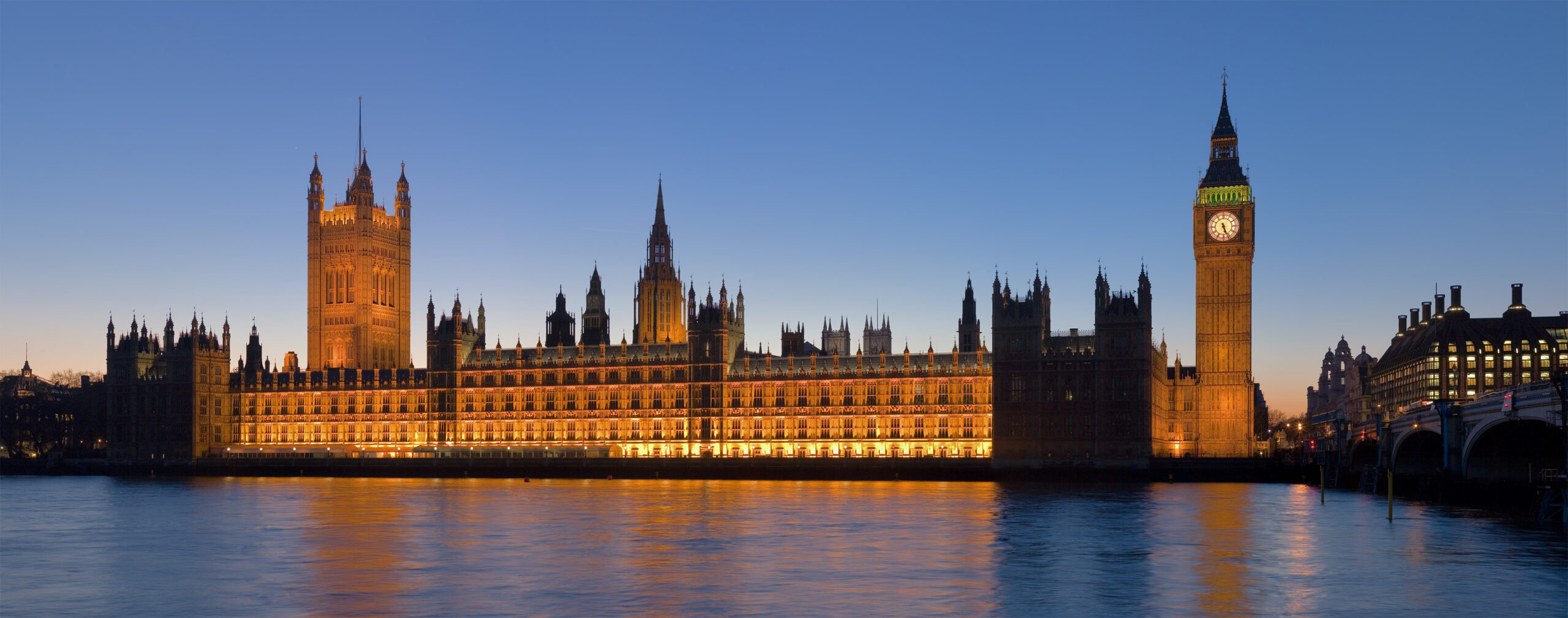
Come out at the Westminster stop and you find yourself under the tower. Big Ben is the bell, not the tower: that has been called the Elizabeth Tower since 2012. The palace is a nineteenth-century neo-Gothic reconstruction, because the medieval one burned down in 1834; Westminster Hall, from 1097, survived, with the largest hammer-beam oak roof in Europe.
The abbey next door is worth the ticket if English history interests you: monarchs have been crowned here since 1066, Newton and Darwin lie in the nave, and since 2018 Stephen Hawking’s ashes rest between them.
Then up Whitehall: Downing Street, the Cenotaph, and Horse Guards Parade, where you can watch the mounted changing of the guard from two metres away instead of fifty as at Buckingham. You come out at Trafalgar Square, with Nelson’s Column and the four lions.
Early afternoon – National Gallery and British Museum
1:30pm-5pm · Both free · no booking needed

The National Gallery is right on the square and entry is free: a focused hour, no more. Van Gogh’s Sunflowers, Van Eyck’s Arnolfini Portrait with its convex mirror, Velázquez’s Venus, and the Turners in room 34.
Then a twenty-minute walk north to the British Museum, also free. Eight million objects: you choose. The Rosetta Stone, the Parthenon Marbles with their two-century-old dispute, and the Assyrian rooms with the winged bulls of Nineveh, the most impressive part of the museum and the least visited.
The Great Court you enter through was a walled-in courtyard for a century and a half, filled with library stacks: Norman Foster opened it up in 2000, roofing it with a glass canopy, and it is the largest covered square in Europe.
Afternoon and evening – Tower of London, Tower Bridge, South Bank
5pm-9pm · Tower about €40, book ahead · Tube Central and District line

The Tower of London is a castle with two rings of walls and nine hundred years of history: fortress, palace, mint, menagerie with lions and elephants, prison where two of Henry VIII’s wives were beheaded. Inside are the Crown Jewels, still in use, and the free guided tour by the Yeoman Warders — former soldiers with at least twenty-two years of service, who live within the walls with their families — is worth the ticket on its own.
Next door is Tower Bridge, from 1894, which looks medieval and is a deliberate lie: under the stone is steel. It still opens about eight hundred times a year, in a minute and a half, and opening times are published on its website.

You cross to the south bank and head back west along the water: it is the finest walk in the city. Dinner standing at Borough Market for ten to fifteen pounds, then Shakespeare’s Globe — the only thatched roof licensed in London since the fire of 1666 — and Tate Modern, free, inside a decommissioned power station.
Day 2 — The west: the crown, parks, museums and Notting Hill
8 km · 4 stops · 9:30am to 8pm · half the day in parks, half in free museums
Morning – Buckingham Palace and St James’s Park
9:30am-noon · Free from outside; state rooms only in summer, about €35 · Tube Green Park or St James’s Park
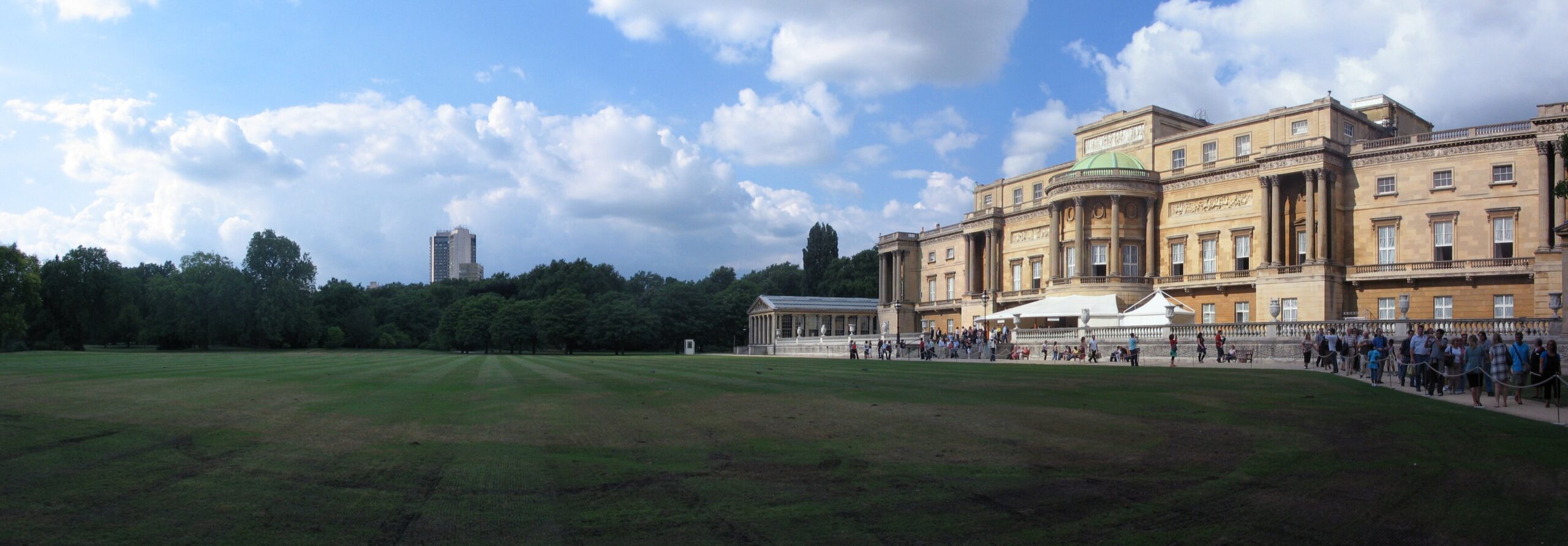
Buckingham Palace has 775 rooms and has been the sovereign’s official residence since 1837, from Victoria onward. Look at the flagpole on the roof: if the Royal Standard flies, the king is in; if it is the Union Jack, he is elsewhere. The state rooms are open only in summer, when the court moves to Scotland.
The changing of the guard takes place on alternating days depending on the season and lasts three quarters of an hour: to see anything, you need to be at the gate forty-five minutes early. If you would rather skip the crowds, you already saw the Horse Guards version yesterday, and it is better.
Far better than the palace is St James’s Park, right in front of it: the oldest of the royal parks, with a small lake full of pelicans, who have lived here since 1664, when a Russian ambassador gave a pair to Charles II. From the footbridge in the middle you get one of the strangest views in London: the turrets of Whitehall poking above the trees like a fairy-tale castle.
Midday – Hyde Park and Kensington Gardens
Noon-2:30pm · Free · Walk 20 minutes along Green Park, or one tube stop
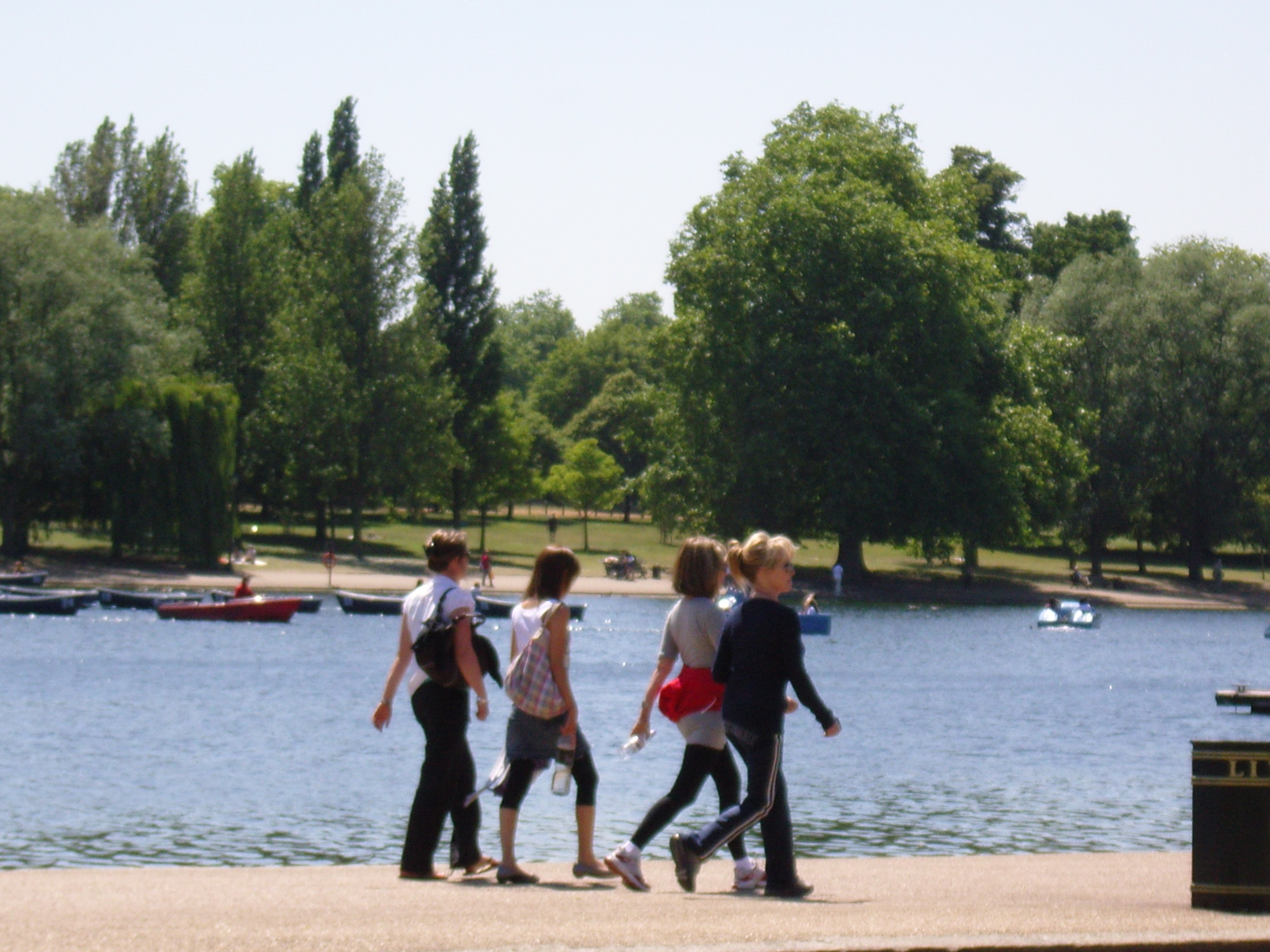
Hyde Park and Kensington Gardens together cover more than 250 hectares in the middle of the city. They were Henry VIII’s hunting ground, taken from the monks of Westminster in 1536, and were opened to the public in the seventeenth century.
In the park: the Serpentine, the artificial lake where people genuinely swim all year round — a club has held a race in the freezing water every Christmas Day since 1864 —; Speakers’ Corner at the north-east corner, where since 1872 anyone can climb on a box and speak about anything, and on Sunday mornings people still do; and Kensington Palace, where Queen Victoria was born and where Diana lived.
Have lunch here: there is a kiosk on the Serpentine, or buy something beforehand and sit on the grass. It is allowed in England, and everyone does it the moment the sun comes out.
Afternoon – The South Kensington museums
2:30pm-5:30pm · All three free · Tube South Kensington, with a covered subway to the museums
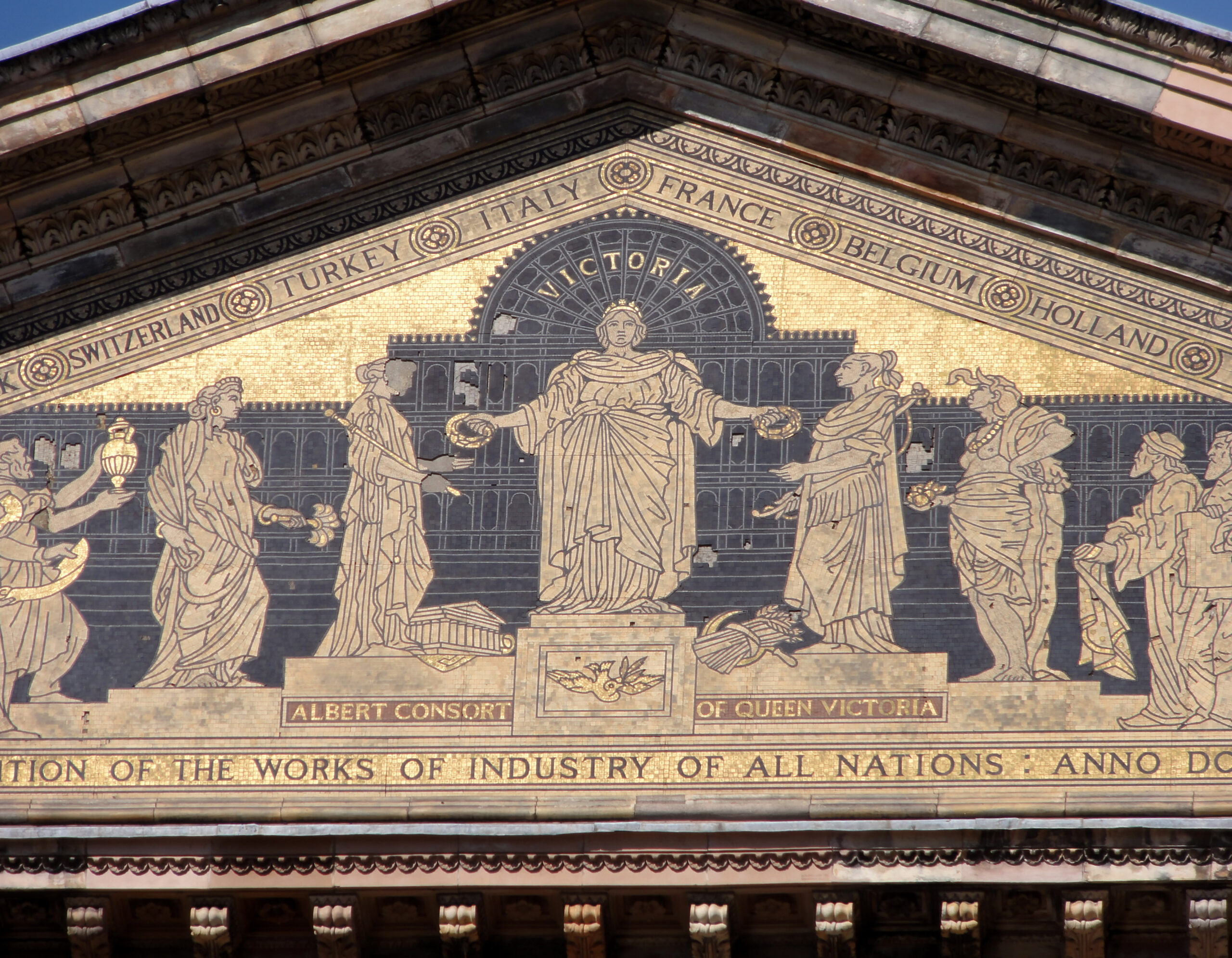
On the south side of the park stand three of the largest museums in the world, side by side, all free. They grew out of the profits of the Great Exhibition of 1851, through which Prince Albert wanted to build a district devoted to public knowledge: Londoners mockingly called it Albertopolis, and in the end he was right.
The Victoria and Albert is the largest museum of applied arts in the world: 145 galleries of ceramics, fashion, furniture, jewellery, ironwork, and a hall of life-size plaster casts — Michelangelo’s David, Trajan’s Column in two pieces — made in the nineteenth century so English students who could not afford the trip to Italy could still see the masterpieces. It is our favourite in London.
The Natural History Museum has a cathedral-like building with terracotta animals on the walls and, in the central hall, a twenty-five-metre blue whale skeleton hanging from the ceiling. It is the right museum if you have children. The Science Museum, next door, has steam engines and the Apollo 10 capsule.
Do not try to do more than one: entry is free, so there is nothing to justify by cramming it in. Pick one and do it well.
Evening – Notting Hill
6pm-8:30pm · Free · Tube Notting Hill Gate, 10 minutes

Notting Hill is the district of pastel-painted terraced houses, and the story behind those colours is less pretty than the image: until the 1950s it was one of the poorest parts of London, home to the first large Caribbean community, and in 1958 it was the scene of violent race riots. The Notting Hill Carnival, held the last weekend of August and the largest in Europe, was born precisely as a response to those events.
Portobello Road is the two-kilometre street that runs through it: the antiques market only happens on Saturdays and is the largest of its kind in the world; on other days the street is quieter and the houses are easier to see. Around it are residential streets with fenced private gardens — Lansdowne Road, Elgin Crescent — and good pubs.
Day 3 — The east, the markets and Greenwich
6 km · 3 stops · 10am to 8pm · the best day if it falls on a Sunday
Morning – Shoreditch and Brick Lane
10am-1:30pm · Free · Tube Liverpool Street or Shoreditch High Street · On Sundays all the markets are on
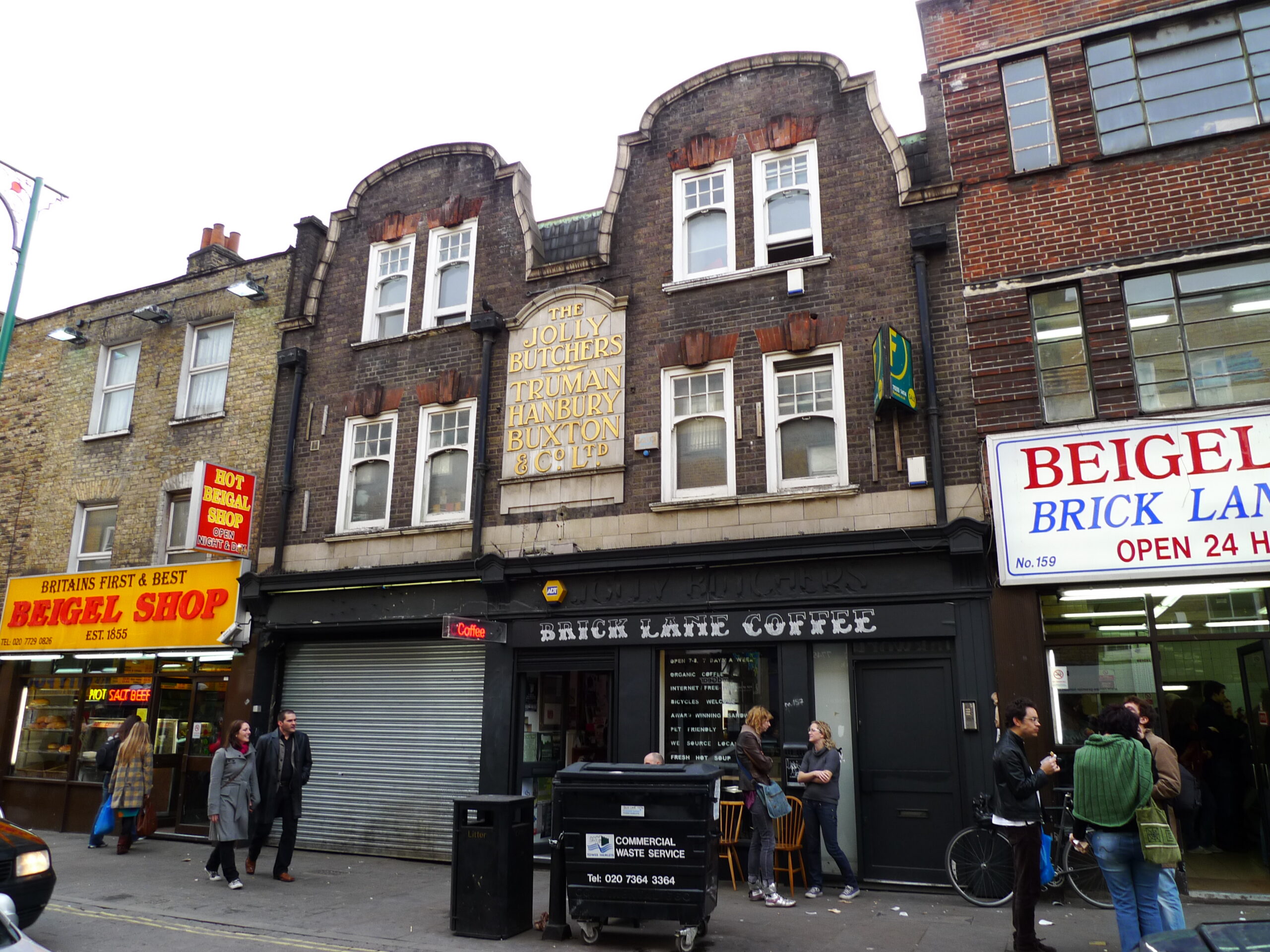
The East End is working-class, migrant London: French Huguenots arrived here in the seventeenth century, Eastern European Jews in the nineteenth, Bengalis in the twentieth. One street, Brick Lane, has had a Huguenot chapel that became a synagogue and then a mosque: the same building, three times over.
Today it is the district of murals, which change constantly and are never preserved: the unwritten rule is that anyone can paint over one with something better. Banksy, Stik and Ben Eine have all worked here. Wander without a plan through Rivington Street, Hanbury Street and Redchurch Street.
Sunday is the day to come here: the Columbia Road flower market early in the morning, with sellers shouting prices in cockney; Spitalfields Market under its Victorian roof; the Brick Lane market; and the food stalls of the old Truman Brewery. Brick Lane is also the street of Bengali restaurants and bagels: the Beigel Bake has been open twenty-four hours a day since 1974, and a salt beef bagel costs a few pounds.
Early afternoon – Camden
2pm-4pm · Free · Tube Camden Town, 25 minutes · Avoid Saturday afternoon, when it is impassable
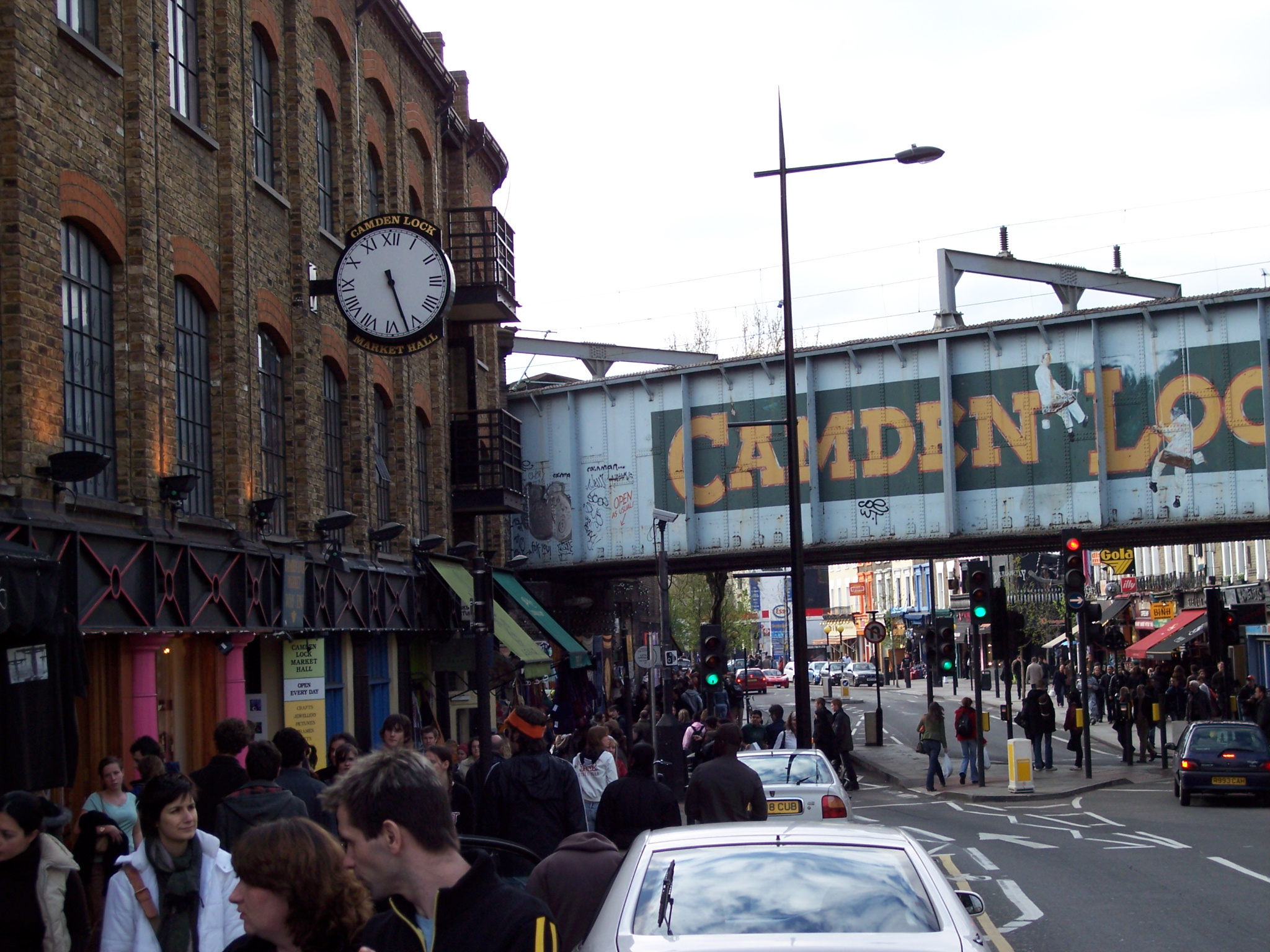
Camden is the district that invented the very idea of the alternative London market: it started in 1974 with sixteen craft stalls along the canal, and today tens of thousands of people pass through it daily. It is commercial and touristy, and it would be dishonest to say otherwise, but it remains good fun: the three-dimensional signs above the shops on Chalk Farm Road — giant boots, dragons, planes bursting through the wall — are a local tradition, and the food stalls of the Camden Stables, in the old horse stables, are the best spot for a late lunch at eight pounds.
The thing almost no one does: walk along the Regent’s Canal. From Camden Lock you can go west to Little Venice in an hour, passing through London Zoo, with almost no one else there. Or east to King’s Cross and the square at Coal Drops Yard.
Afternoon and evening – Greenwich, by boat
4pm-8pm · Park and Cutty Sark free from outside; Observatory about €22 · Uber Boat from the centre, about 45 minutes

You reach Greenwich by boat, and this is the single most important tip of the whole day: the Thames Clippers leave from the piers in the centre, are paid for with the same contactless card as the Underground, and take three quarters of an hour going down the river. It is how London is meant to be seen, and it is also how it was always crossed before the bridges.
You land in front of the Cutty Sark, the 1869 clipper that carried tea from China and made the crossing in three months: it is the last of its kind left in the world, now dry-docked inside a glass case.
Behind it stands Christopher Wren’s Old Royal Naval College, and inside it the Painted Hall: forty metres of frescoed ceiling that James Thornhill painted over nineteen years, and which the British call their Sistine Chapel. It was built as a hospital for disabled sailors, and is the twin of the Invalides in Paris.
Then climb into the park, and it is a real climb. At the top is the Royal Observatory, where the Prime Meridian runs: the line is marked in the courtyard, and you can straddle it with one foot in each hemisphere, which is a cliché and everyone does it anyway. The reason the meridian runs precisely here is commercial: in 1884, when a world reference line was agreed, two-thirds of the nautical charts in circulation were already British and used Greenwich.
From the terrace in the park, at sunset, you see the river curving around the Canary Wharf skyscrapers, with the City beyond. It is the finest view in London, and it costs nothing.
If it rains
- Day 1 · the two museums are already indoors. Instead of the South Bank, Tate Modern with the panoramic terrace on the tenth floor.
- Day 2 · skip the parks and stay in South Kensington: the Victoria and Albert, Natural History and Science Museum are linked to the Underground by a subway, so you can move between them without going outside.
- Day 3 · Greenwich loses a lot in the rain. Replace it with the Museum of London Docklands (free) or Sir John Soane’s Museum in Holborn, free and astonishing: a nineteenth-century architect’s house left exactly as it was, packed with artefacts to the ceiling.
- Always works · a pub with a fireplace, and a rainy afternoon becomes the best memory of the trip.
What the three days cost
| Item | Cost |
|---|---|
| British Museum, National Gallery, Tate Modern, V&A, Natural History, Science Museum | free |
| Tower of London | about €40 |
| Westminster Abbey, if you go in | about €30 |
| Greenwich Royal Observatory | about €22 |
| Boat to Greenwich, return | about €18 |
| City transport, 3 days with daily cap | about €30 |
| Meals, 3 days | €90-140 |
| Total | about €150-260 per person |
Reference figures as of August 2026, converted from pounds: check official websites and factor in the exchange rate. In London, national museums are free and private attractions are expensive: the sensible rule is one paid attraction a day. The London Pass only pays off for someone doing three or four a day, a pace that turns the trip into a race.
Frequently asked questions
Is three days enough for London?
It is enough for the three main Londons: the Thames axis with the must-see monuments, the royal west with the parks and the South Kensington museums, and the eastern markets with the trip down to Greenwich. Hampstead, Kew Gardens, Windsor and all of residential London are left out. London is enormous: three days make a well-built introduction.
What is the best way to get to Greenwich?
By boat, no question. The Thames Clippers leave from the piers in the centre, are paid for with the same contactless card as the Underground, and take three quarters of an hour going down the river: it is how London has always been crossed before the bridges, and it is far nicer than the DLR. Go by boat and return by train, so you get both.
Which day is best for the markets?
Sunday for the east: Columbia Road with its flowers early in the morning, Spitalfields, Brick Lane. Saturday for Portobello Road in Notting Hill, the largest antiques market in the world, but only that day. Camden runs every day, but Saturday afternoon is impassable: go during the week instead.
Which museum should you pick if you can only do one?
The British Museum if you are drawn to the ancient world, the Victoria and Albert if you like handmade objects — it is our favourite —, the Natural History Museum if you have children. They are all free, so there is nothing to justify by cramming it in: go in, spend a focused hour and a half, and leave before you get tired.
Is it worth visiting Buckingham Palace?
The state rooms are open only in summer, when the court is away, and cost around €35. From outside you see a façade and railings. The changing of the guard is extremely crowded and needs a forty-five-minute wait: if you want to see a guard in uniform, Horse Guards Parade on Whitehall is far better and almost empty.
Where is it best to stay in London?
For a first visit, the area between Covent Garden, Bloomsbury and Southwark: central, and you can walk back at night. Shoreditch costs less and is livelier in the evening. Do not save money by staying too far out: in London distance is paid for in time, and half an hour on the Underground each way means an hour a day wasted.
How much does transport cost in London?
About ten euros a day with the daily cap, which applies automatically as long as you tap the same contactless card at the gate on entry and exit. You do not need to buy tickets or an Oyster card. Buses cost less and have a separate, lower cap. Remember to tap out as well as in: forget, and you are charged the maximum fare.
What do you eat in London?
Much better than its reputation suggests. The food markets — Borough, Spitalfields, the Camden Stables — are the best way to eat well cheaply, ten to fifteen pounds. In pubs you order at the bar. And London has the best Indian and Bangladeshi food outside Asia: Brick Lane and Tooting are worth an evening.
Is the London Pass worth it?
Only at a pace of three or four paid attractions a day. With this itinerary, which relies on free museums and only pays for the Tower of London and the Observatory, it is not worth it: do the maths on the actual tickets you would buy.
Is London expensive?
It comes down to almost two things: accommodation and attractions. National museums are free, transport has a daily cap, and you can eat at the markets for ten pounds. If you limit paid attractions to one a day, three days in London cost less than three days in Paris.
September 3, 2026


