

London in 1 day: free museums along the Thames, from Westminster to the Tower
London in one day is a different bet from Paris or Rome, and for a precise reason: the museums are free. The British Museum, the National Gallery, Tate Modern cost nothing and need no booking, so the day should not be built around tickets but around distances, which here are real: London is enormous, and trying to walk all of it is the surest way to see nothing. This itinerary follows the Thames from Westminster to the Tower, uses the Underground three times, goes into two museums without paying, and ends on the South Bank as the lights come on.
At a glance
- How long · a full day, from 9am to 9pm
- How much walking · about 7 km, plus three Underground rides
- What has to be booked · only the Tower of London, if you want to go in; free museums need no booking
- Budget · €40-90 per person excluding accommodation, depending on whether you go into the Tower
- Starting point · Westminster, the tube exit on the bridge
- Finishing point · the South Bank, between Tower Bridge and the Millennium Bridge
- Payments · card or phone everywhere, cash almost useless
- What is left out · Greenwich, Camden, Notting Hill, the South Kensington museums: those are day two and three
Nine stops along the Thames, from west to east. There are three Underground rides, marked in the text.
Morning — Westminster, the seat of power
2 km · 3 stops · 9am to 12:30pm · all on foot within a kilometre
1 – Big Ben and the Houses of Parliament
Time 30 minutes from outside · Free · Take the Westminster tube exit, exit 1: you come out right under the tower
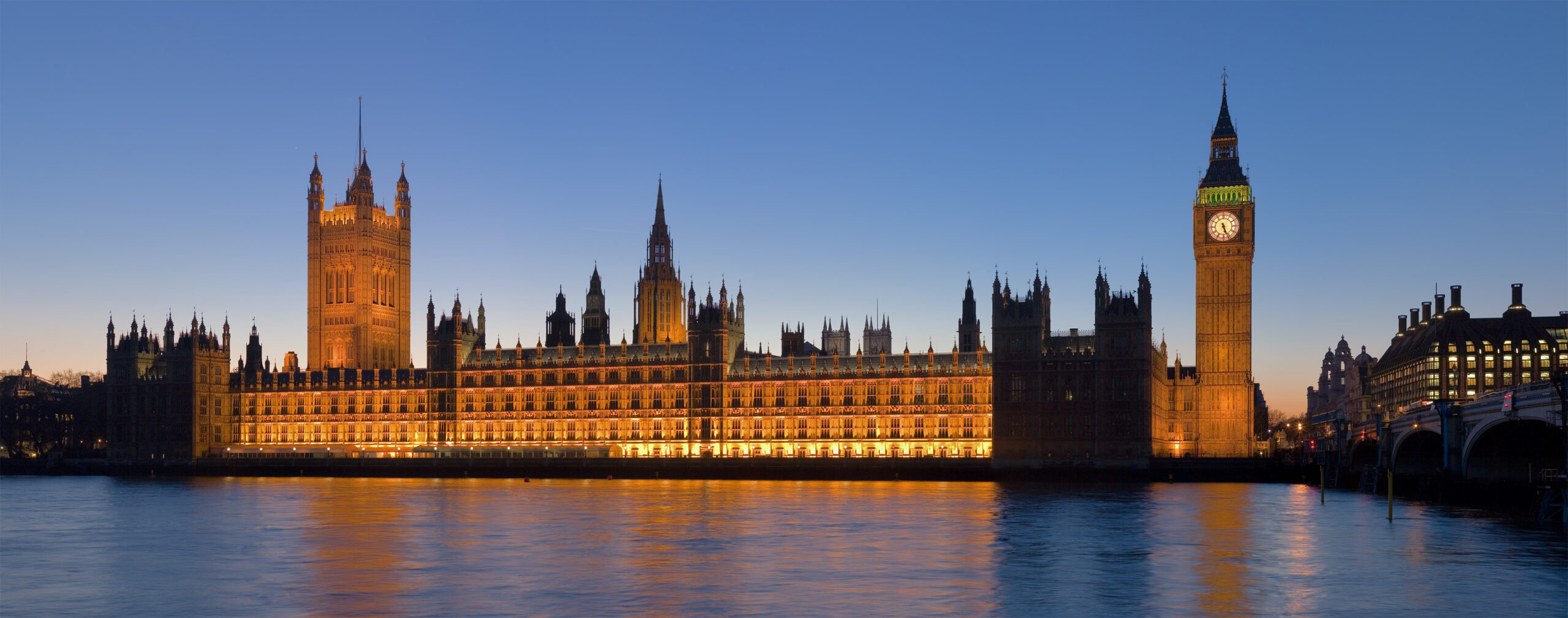
It is the best entrance London has to offer: you climb the tube stairs and the clock tower is above you, with no warning.
First, the name. Big Ben is not the tower: it is the bell inside it, thirteen and a half tonnes, cast in 1858. The tower has been called the Elizabeth Tower since 2012, when it was renamed for the Queen’s jubilee. The four clock faces are seven metres across, and for a century and a half they were kept on time by a system that sounds like a joke and is not: pre-decimal pennies are added or removed from the pendulum, and each coin shifts the clock’s rate by two-tenths of a second a day.
The Palace of Westminster houses the two chambers of Parliament and has over a thousand rooms. It is not as old as it looks: the medieval palace burned down almost entirely in 1834 — a fire started by a stove used to burn old wooden tally sticks — and what you see is the neo-Gothic reconstruction by Charles Barry and Augustus Pugin. From the medieval complex, Westminster Hall, from 1097, survived, with a hammer-beam oak roof that is the largest in Europe.
Cross Westminster Bridge and turn around: that is where you see the whole palace, and it is also where you will understand why morning is the right time, when the sun is on the correct side.
2 – Westminster Abbey
Time needed 1.5 hours · Ticket about €30 · Walk 4 minutes · Closed to visitors on Sundays

This is the most expensive ticket of the day, and it should be said upfront: thirty euros is a lot, and if your budget is tight you can just as well look at it from outside and put that money toward the Tower of London instead. But if you go in, know what you are looking at.
Every English monarch since 1066 has been crowned in the abbey, William the Conqueror included, and the most recent coronation was Charles III’s in 2023. The Coronation Chair, a wooden chair from around 1300 covered in centuries of graffiti carved by Westminster School boys, is still there and still in use.
Over three thousand people are buried inside. In Poets’ Corner lie Chaucer, Dickens, Kipling, Hardy, alongside memorials to those buried elsewhere — Shakespeare, Jane Austen, the Brontë sisters. In the nave are Newton, Darwin, and, since 2018, the ashes of Stephen Hawking, placed between the first two: a choice that, if you think about it for a moment, is the most English thing in the whole building.
Do not miss Henry VII’s Lady Chapel at the far end, with a stone fan-vaulted ceiling that looks woven, and the cloister, which is quiet while the abbey is packed.
3 – Whitehall and Trafalgar Square
Time 45 minutes · Free · Walk 15 minutes north
From Westminster you walk up Whitehall, the street where the British government sits. You pass the black gates of Downing Street — closed to the public since 1989, you can only see the entrance — and the Cenotaph, the war memorial standing in the middle of the road: deliberately empty and free of religious symbols, designed by Lutyens in 1920 so it could stand for the dead of every faith in the empire.
Halfway along, at Horse Guards Parade, two mounted guards stand motionless in their sentry boxes. It is the easiest changing of the guard to watch if you want to avoid the Buckingham Palace crowds: here you stand two metres away, not behind railings fifty metres back.

You come out onto Trafalgar Square, which commemorates the 1805 naval battle against the Franco-Spanish fleet. At its centre stands Nelson’s Column, fifty-two metres tall, with the admiral on top and four bronze lions at the base, cast, tradition says, from the metal of cannon captured from the French.
Look at the north-west corner of the square: there is a plinth, the Fourth Plinth, left empty for a hundred and fifty years because the money ran out for the statue meant to stand there. Since 1999 it has hosted a rotating contemporary artwork every two years, and the choice sparks debate every time.
Around Trafalgar Square the food is bad and pricey. Two better options five minutes away: the crypt of St Martin-in-the-Fields church, on the corner of the square, a café under the vaults with gravestones set in the floor and a hot dish for £10-14; or wait for Covent Garden, the next stop, and eat at Seven Dials or in the covered market. In pubs lunch runs £12-18 and you order at the bar, not the table: no one will come to take your order, and you will wait for nothing.
Midday — Two free museums and a market
2 km · 3 stops · 1pm to 5pm · you pay for nothing here
4 – National Gallery
Time 1 hour, focused · Free · It is right on the square, no need to move
The National Gallery stands on the north side of Trafalgar Square, entry is free and needs no booking, and this is the thing that changes how you visit London: you do not have to «do it all» to justify a ticket. Go in for an hour, look at six paintings, leave.
The six: Van Gogh’s Sunflowers, the Arnolfini Portrait by Van Eyck with the convex mirror reflecting the room and the painter, Velázquez’s Rokeby Venus, Constable’s The Hay Wain, Paolo Uccello’s The Battle of San Romano, and the two Turners in room 34, including The Fighting Temeraire being towed to her last mooring, which the British have repeatedly voted the nation’s favourite painting.
The museum was founded in a particular way: Britain had no royal collection open to the public like the Louvre, and in 1824 Parliament bought thirty-eight paintings from a banker to form the nucleus of a gallery for everyone. That is why it stands on a square rather than in a palace, and why entry has been free for two hundred years.
5 – Covent Garden
Time 45 minutes · Free · Walk 10 minutes

For three centuries this was London’s fruit and vegetable market: the one in My Fair Lady, where Eliza Doolittle sells violets. In 1974 the market moved south of the river and the square became what it is now, a covered market of shops with street performers under the portico.
The performers are not unlicensed: they perform under permit, with annual auditions and assigned slots, which is why the standard is high. Under the west portico there is always someone with a cello or an opera aria, and the acoustics are good by design.
Leave from the north side and walk to Seven Dials, the seven-street star junction with the sundial column at its centre: the streets around it have the best shops and restaurants in the area, two minutes from the crowds and at half the price.
6 – British Museum
Time 1.5 hours, focused · Free · Walk 12 minutes north

The British Museum is the most visited museum in the United Kingdom, and entry is free. It holds eight million objects, and you do not «do» it: you choose.
The Great Court, where you enter, was an open courtyard that in the nineteenth century was filled with library stacks and stayed inaccessible for a century and a half. In 2000 Norman Foster opened it up and roofed it with a glass canopy of 3,312 panels, each a different shape: it is the largest covered square in Europe.
The three things to see if you have an hour and a half: the Rosetta Stone, the block of granodiorite from 196 BC with the same text in hieroglyphic, demotic and Greek, which allowed Champollion to decipher ancient Egyptian; the Parthenon Marbles, removed by Lord Elgin between 1801 and 1812 and the subject of the longest restitution dispute in museum history, which Greece has pursued for two centuries; and the Assyrian rooms, with the winged bulls from Nineveh and the lion-hunt reliefs, which are the most impressive thing in the museum and get far fewer visitors.
On the Marbles it is worth being honest: they are here because a British ambassador removed them from the Parthenon under an Ottoman permit of disputed validity, and the museum displays them without hiding the controversy. Make up your own mind in front of the case.
Afternoon and evening — The City, the Tower and the river
3 km · 3 stops · 5pm to 9pm · one Underground ride, then everything along the water
7 – St Paul’s and the Millennium Bridge
Time 40 minutes from outside, 1.5 hours inside · Ticket about €30 · Tube Central line from Holborn to St Paul’s, 5 minutes

St Paul’s Cathedral is the monument to London’s resilience. Its predecessor burned down in the Great Fire of 1666, which destroyed eighty per cent of the city; Christopher Wren designed its replacement and took thirty-five years over it. In December 1940, during the Blitz, a photograph of the intact dome amid the smoke of burning buildings became the symbolic image of British resistance: the cathedral was manned day and night by volunteers putting out incendiary bombs on the roof.
The dome is 111 metres high and is a structural trick: it is actually three domes, one inside the other — an inner one sized to the nave, a brick cone that carries the weight of the lantern, and an outer one of timber and lead made to be seen from a distance. Inside is the Whispering Gallery, where a word whispered against the wall can be heard on the far side, thirty metres away. In the crypt lie Nelson, Wellington and Wren himself, under England’s driest epitaph: if you seek his monument, look around you.
Here too the ticket is pricey. If you do not go in, walk down behind the cathedral to the Millennium Bridge, the 2000 steel footbridge that points straight at Tate Modern: from halfway across you have the dome behind you and the old power station ahead, and it is free. The bridge, newly opened, swayed so much under people’s footsteps that it was closed for two years: Londoners still call it the wobbly bridge.
8 – Tower of London and Tower Bridge
Time 30 minutes from outside, 2.5 hours inside · Ticket about €40, book ahead · Walk 25 minutes along the river, or the District line

The Tower of London is not a tower: it is a castle with two rings of walls and twenty towers, and the White Tower at its centre is the one William the Conqueror had built from 1078, in stone brought from Normandy, with a stated purpose: to remind Londoners who was in charge.
Over nine hundred years it has been a fortress, royal palace, mint, arsenal, menagerie — there were lions and elephants, gifts to the kings from other rulers — and a prison. Here Anne Boleyn and Catherine Howard were beheaded, two of Henry VIII’s six wives, and here the Princes in the Tower disappeared in 1483, the two boy heirs to the throne, in a story never resolved.
Inside are the Crown Jewels, still in use: St Edward’s Crown, with which monarchs are crowned, and the Cullinan I, the largest colourless cut diamond in the world, mounted on the sceptre. You pass in front of them on a moving walkway, because otherwise no one would ever move on.
The free guided tours are given by the Yeoman Warders, the «Beefeaters»: they are former servicemen with at least twenty-two years of service, they live inside the castle with their families, and their hour-long tour — included in the ticket, leaving every half hour from the entrance — is the best thing about the place. Ravens live in the moat: legend says the kingdom falls if they ever leave, so there are always at least six, their wings lightly clipped, with a dedicated keeper.

Next to it is Tower Bridge, which everyone calls London Bridge and is not — London Bridge is the plain bridge further upstream. It was finished in 1894 and looks medieval, but that is a deliberate lie: under the stone is a steel structure, and the Gothic towers were only there to match the castle next door. The two moving spans still lift about eight hundred times a year to let tall ships through, in a minute and a half; opening times are published on the bridge’s website, and watching one is free.
9 – South Bank, at sunset
Time 1.5 hours · Free · Getting there walk back along the south bank, or the Circle line

The day ends on the South Bank, for centuries London’s disreputable side — outside the city’s jurisdiction, hence theatres, brothels and bear pits — and today the finest walk in the city. From Tower Bridge to Westminster you walk the whole way beside the water, with the City lit up on the other side.
Along the way: Borough Market, a food market dating from the twelfth century, where you can eat very well standing up for ten pounds (it closes early on Sundays); Shakespeare’s Globe, a faithful reconstruction of the Elizabethan theatre built in 1997 two hundred metres from the original, with a thatched roof — the only one licensed in London since the fire of 1666; Tate Modern, free, inside a decommissioned power station, whose Turbine Hall you can walk through for free, just for the vertigo of the empty space.
You end at the London Eye, the 135-metre wheel built for the year 2000: it was meant to stay for five years, and like the Eiffel Tower it was never taken down. A ride lasts half an hour and costs around €35: if you have already spent on the Tower of London, look at it from below and enjoy the river instead. From Westminster Bridge, at dusk, the illuminated Parliament with the wheel behind it is the right way to end the day.
If it rains
London rains, and it is not a problem: it is the European city with the most free major museums, and you can reorganise everything without spending an extra euro.
- Instead of Whitehall and Trafalgar outdoors · go into the National Gallery earlier and extend the visit; next door is the National Portrait Gallery, also free, reopened in 2023 after three years of work.
- Instead of the river walk · Tate Modern, free, with the panoramic terrace on the tenth floor, which is indoors and looks out over St Paul’s.
- If it rains all day · the Victoria and Albert Museum, the Natural History Museum and the Science Museum stand next to each other in South Kensington, all three free, reachable through a tube subway without going outside.
- Always works · a real pub, with a fireplace and carpet: it is as much a part of the city as the museums.
What the day costs
| Item | Cost |
|---|---|
| National Gallery, British Museum, Tate Modern | free |
| Westminster Abbey, if you go in | about €30 |
| Tower of London, if you go in | about €40 |
| St Paul’s, if you go in | about €30 |
| Underground, 3 rides with daily cap | about €10 |
| Lunch in a pub or market | €14-22 |
| Dinner at Borough Market | €15-25 |
| Total with only free museums | about €40-55 |
| Total with the Tower of London | about €80-95 |
Reference figures as of August 2026, converted from pounds: check official websites and factor in the exchange rate. London’s golden rule is that national museums are free and private attractions are expensive: you can spend a wonderful day for almost nothing, or two hundred euros on tickets. Pick at most one paid attraction a day.
Getting around
London is big: the urban area is fifteen times that of Paris. Distances are deceptive on the Underground map, which is not to scale — it is a diagram drawn in 1931 by Harry Beck on the model of an electrical schematic, and it is beautiful but will make you take the tube to cover two hundred metres. Between Covent Garden and Leicester Square, for instance, it is a three-minute walk.
Payment is the simplest thing in Europe: tap your contactless card or phone at the gate, on the way in and the way out, and the system works out the best fare for you, with a daily cap beyond which you pay nothing more. You do not need to buy tickets or an Oyster card. Always use the same card for the whole day, or the cap will not apply.
On the red buses you tap only when boarding, and they cost less than the Underground; cash has not been accepted for years. Routes 15 and 11 cross the centre and work as a two-pound sightseeing tour. On escalators you stand on the right and keep the left clear for people walking: it is a rule taken very seriously.
From the airports: from Heathrow the Underground (Piccadilly line) takes an hour and is the cheapest option, the Elizabeth line takes half an hour; from Gatwick and Stansted there are express trains to the centre in 30-50 minutes. A taxi from Heathrow costs as much as the flight, literally.
Look right before crossing, not left: at central London crossings the words look right are painted on the tarmac precisely because continental tourists get the side wrong, and it is the most common cause of pedestrian accidents.
Frequently asked questions
Is one day enough to see London?
It is enough for the Thames axis: Westminster and Big Ben, Trafalgar Square, the National Gallery, Covent Garden, the British Museum, St Paul’s, the Tower of London and Tower Bridge, with the South Bank at sunset. Greenwich, Camden, Notting Hill, Kensington with its three great museums and the whole of neighbourhood London are left out. It is a dense day, not a full visit.
Which museums are free in London?
Almost all the major national museums: the British Museum, National Gallery, National Portrait Gallery, Tate Modern, Tate Britain, Victoria and Albert, Natural History Museum, Science Museum, Museum of London. Entry needs no ticket and no booking, with a suggested but not compulsory donation. Private attractions, on the other hand, are expensive: the Tower of London, the London Eye, Madame Tussauds, St Paul’s and Westminster Abbey all cost between €25 and €40.
Is it worth going into the Tower of London?
It is the ticket we recommend most, if you only buy one. It is nine hundred years of English history inside a real castle, the Crown Jewels are still in use there, and the free guided tour by the Yeoman Warders — former soldiers who live within the walls — is included in the price and is worth the admission on its own. Allow two and a half hours and book online.
How do you pay for the Underground in London?
By tapping a contactless card or phone at the gate, on entry and exit. The system works out the best fare and applies a daily cap beyond which you pay no more. You do not need to buy tickets or an Oyster card. Be careful to use the same card all day, or the cap will not apply, and to tap out as well as in, or you will be charged the maximum fare.
Is Big Ben the tower or the clock?
Neither: Big Ben is the bell inside the tower, thirteen and a half tonnes, cast in 1858. The tower has been called the Elizabeth Tower since 2012. The clock used to be adjusted by adding or removing old pennies on the pendulum, each coin shifting its rate by two-tenths of a second a day.
Where can you see the changing of the guard?
At Buckingham Palace, but it is extremely crowded and hard to see from behind the railings. The alternative is Horse Guards Parade on Whitehall, which lies along this itinerary: the mounted guards can be seen from two metres away, the ceremony is shorter and there is almost no one there. Times change with the season and the weather: check them on the day.
How much does a day in London cost?
Between €40 and €55 per person if you stick to the free museums, between €80 and €95 adding the Tower of London. London can be one of the cheapest or most expensive capitals in Europe depending on how many paid attractions you fit in: a sensible rule is one a day, and the rest free.
Is the London Pass worth it?
Only if you plan on three or four paid attractions a day, a pace we would not recommend. With this itinerary, which uses the free museums and a single paid attraction, it is not worth it: you would be better off just buying the single Tower of London ticket.
Does Tower Bridge still open?
Yes, about eight hundred times a year, to let tall ships through, and it takes a minute and a half. Opening times are published in advance on the bridge’s website: watching is free and it is five minutes well spent. The 1894 bridge looks medieval, but under the stone is a steel structure: the Gothic towers were only there to match the castle next door.
Where do you eat well in London without spending too much?
At Borough Market you can eat very well standing up for ten to fifteen pounds. In pubs lunch runs £12-18 and you order at the bar, not the table: wait for a waiter and you will wait forever. The genuine restaurant areas are Seven Dials, Soho and Spitalfields; around the monuments the food is bad and pricey, as everywhere.
September 3, 2026


