

What to see in Palermo: a guide by theme
This is not a day to be followed in order: it is a reasoned list of what there is in Palermo, arranged by theme, for anyone who wants to build their own itinerary or to know in advance what is waiting for them. There is one key to understanding this city: Palermo was Phoenician, Roman, Arab for two centuries, then Norman, Swabian, Angevin, Aragonese, Spanish and Bourbon — and every ruler, instead of erasing the one before, built on top of it. The result is that in a single building you find an Arab arch, a Byzantine mosaic and a Latin plan, and after three days you stop being surprised by it.
At a glance
- The absolute masterpiece · the Palatine Chapel, inside the Norman Palace
- The biggest thing · Monreale Cathedral, 6,400 sq m of mosaic, 8 km from the centre
- The best-kept secret · the Serpotta oratories, which almost no visitor sees
- The most Palermitan thing · eating standing up at Ballarò
- The most debated · the Capuchin Catacombs, 1,250 mummified bodies
- If you only have one day · Palatine Chapel, Cathedral, Piazza Bellini, Ballarò
- Trap number one · churches and oratories shut at one o’clock and do not reopen
The colours here are not days but themes: switch on the one that interests you and build your own route.
Arab-Norman: the reason people come to Palermo
UNESCO World Heritage since 2015 · nine monuments across Palermo, Monreale and Cefalù
In 1072 the Normans conquered a Sicily that had been Arab for two centuries, and took a decision with no equal in the Europe of the time: they expelled nobody. They kept the Muslim architects, the Greek mosaicists, the Arab administrators, and went on issuing documents in three languages. Out of that came a style that exists nowhere else: Latin plan, Byzantine mosaics, Islamic ceilings and arches.
The Palatine Chapel
Inside the Norman Palace · €15-19 · timed entry, book ahead · closed when the Assembly is sitting (Royal Apartments only)

If you see one thing in Palermo, this is it. Consecrated in 1140 by Roger II: above, a muqarnas ceiling — the stalactite cells of Islamic architecture — painted by Muslim artists with dancers, drinkers and hunting scenes, inside a Christian chapel; on the walls, Byzantine mosaics on gold ground by Greek masters; beneath it all, the plan of a Latin basilica. The inscriptions are in Latin, Greek and Arabic.
Monreale Cathedral
8 km from the centre, bus 389, 40 minutes · €4-12 · cloister €6 separately

Built by William II from 1174 in under ten years, to take power away from the archbishop of Palermo. Inside are six thousand four hundred square metres of mosaic, with over two tonnes of gold in the tesserae, telling the whole Bible in an order as readable as the pages of a book. In the apse, the Christ Pantocrator, some twenty metres tall. The cloister beside it has 228 paired colonnettes and capitals that are all different: a carved encyclopaedia of the twelfth century.
The Cathedral
Church free · royal tombs, treasury and roofs €12-15

A Byzantine basilica, then the main mosque, then a Norman cathedral from 1185, then reworked down to the neoclassical dome of the eighteenth century. On the left-hand column of the porch a sura of the Koran can still be read in Arabic script. Inside, the imperial tombs with Frederick II in red porphyry and a meridian line of 1801 set into the floor.
La Martorana and San Cataldo
Piazza Bellini · €2 and €2.50 · they close early
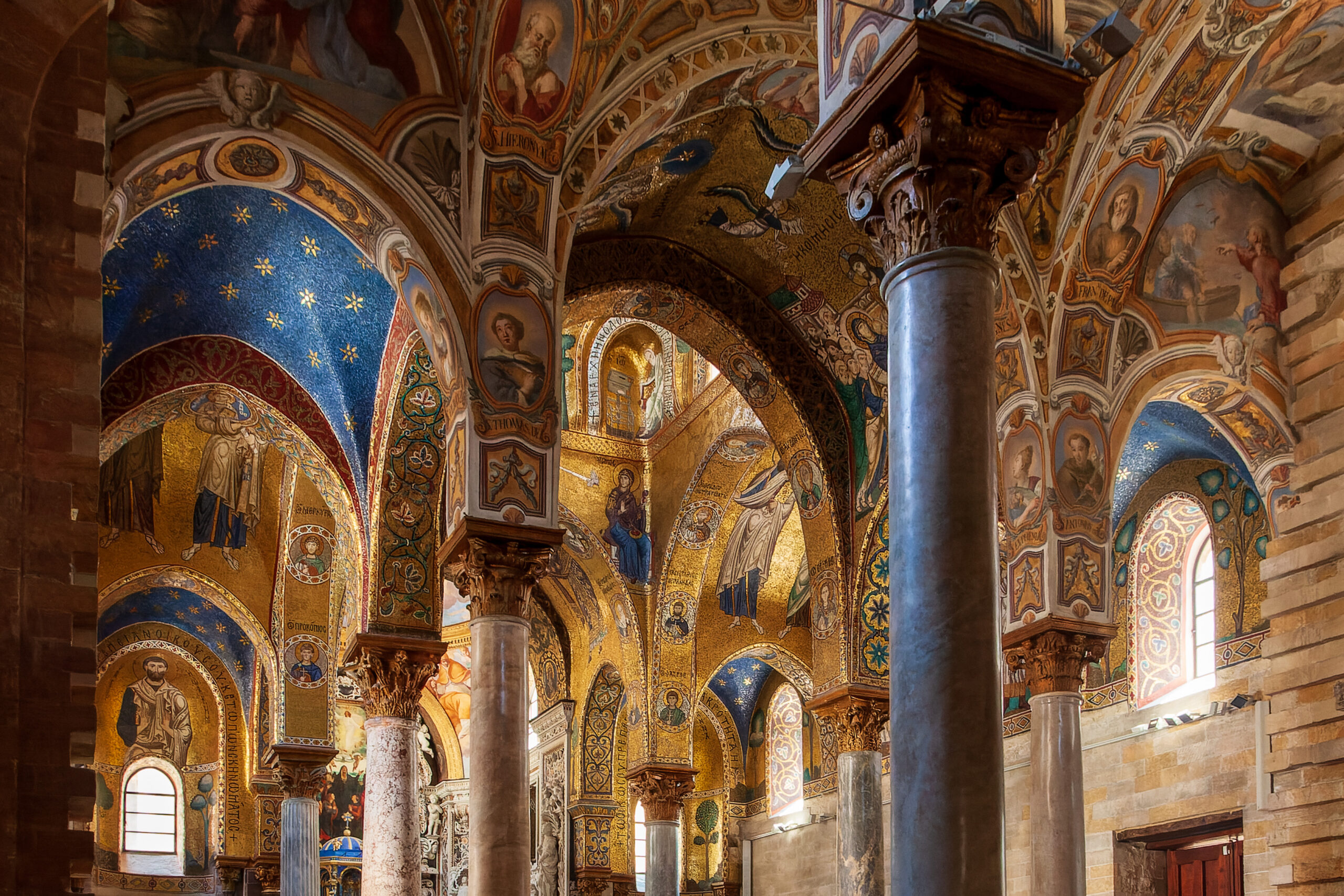
Ten metres apart, and opposite in every way. The Martorana (1143), founded by King Roger’s Syrian-Greek prime minister, is all mosaic, with a Christian hymn written in Arabic beneath the dome and the only contemporary portrait of Roger II being crowned by Christ. San Cataldo is a cube of bare stone with three red domes and absolutely nothing inside: after all that gold, the effect is very strong.
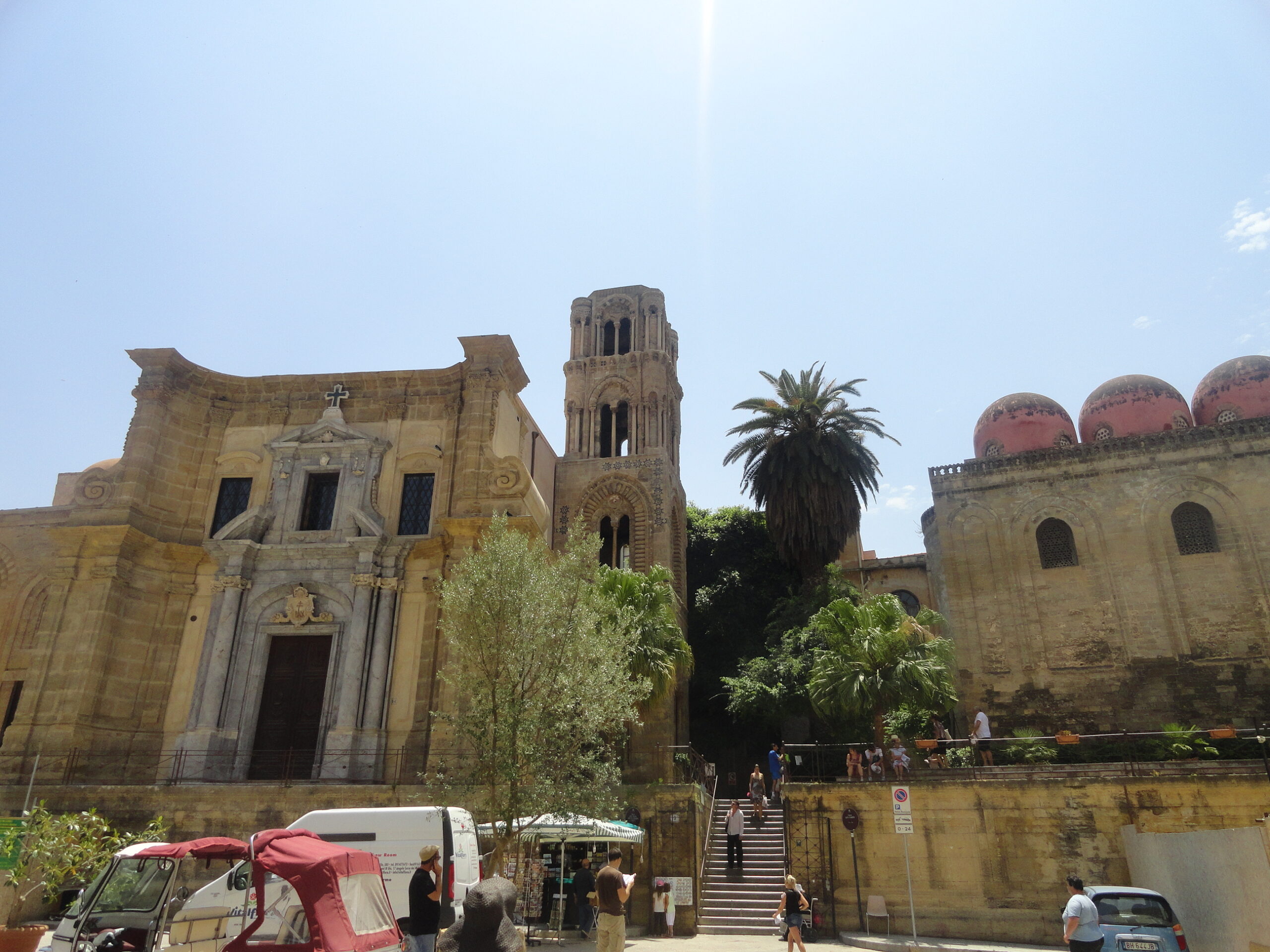
The other monuments in the UNESCO circuit: the Norman Palace, the Zisa (a 1165 pleasure palace with passive cooling), San Giovanni degli Eremiti with its five red domes and orange-tree cloister, the Admiral’s Bridge where Garibaldi entered Palermo in 1860, and Cefalù cathedral, an hour away by train.
Baroque and the nineteenth century
What the Spanish left behind, and what the citrus money left behind
The Quattro Canti and the Pretoria Fountain

The crossing of the two streets that cut the old city, closed off in 1620 by four identical concave facades: a fountain for each season at the bottom, a Spanish king in the middle, the patron saint of each quarter at the top. Fifty metres away, the Pretoria Fountain, carved in Florence in 1554, bought by the Palermo senate, taken apart into 644 pieces and reassembled here: the Palermitans, seeing all those naked statues in front of an enclosed convent, called it the Fountain of Shame.

The oratories of Giacomo Serpotta
Santa Cita, San Lorenzo, San Domenico · €3-6 each · they shut at one
This is the thing Palermitans mention first and visitors almost always skip. Serpotta (1656-1732) worked almost only here and almost only in stucco — plaster and marble dust — bringing it with a technique of his own to a porcelain sheen. His figures do not stand still: they lean out, turn, chat; his puttini play with the saints’ attributes. In one niche he portrayed himself with a lizard beside him, which in Sicilian is scupitta: his signature. In San Lorenzo, in 1969, Caravaggio’s Nativity was stolen: a reproduction hangs there today, and the canvas has never been found.
The Teatro Massimo
Guided tour €12-15, half an hour, in several languages

The largest opera house in Italy, opened in 1897 when Palermo was extremely rich on citrus and sulphur. To see: the auditorium with its ceiling of movable petals and the Pompeian Room, where whoever speaks at the centre hears only their own voice amplified. The second half of the story says as much about the city: it stayed shut for twenty-three years, from 1974 to 1997.
The historic markets
Three of them, and they are three different things · all in the morning, except the Vucciria in the evening

Ballarò is the oldest and the only one that is still a real market, where the neighbourhood does its shopping: loud, dense, with the sellers’ abbanniata chanting the price in broad dialect. The Capo is tidier and handier, wedged into the alleys behind the Cathedral. The Vucciria — from the French boucherie — is the one Guttuso painted in 1974; by day it is nearly dead now, but from nine in the evening it fills with people drinking standing up and grilling meat and octopus in the open.
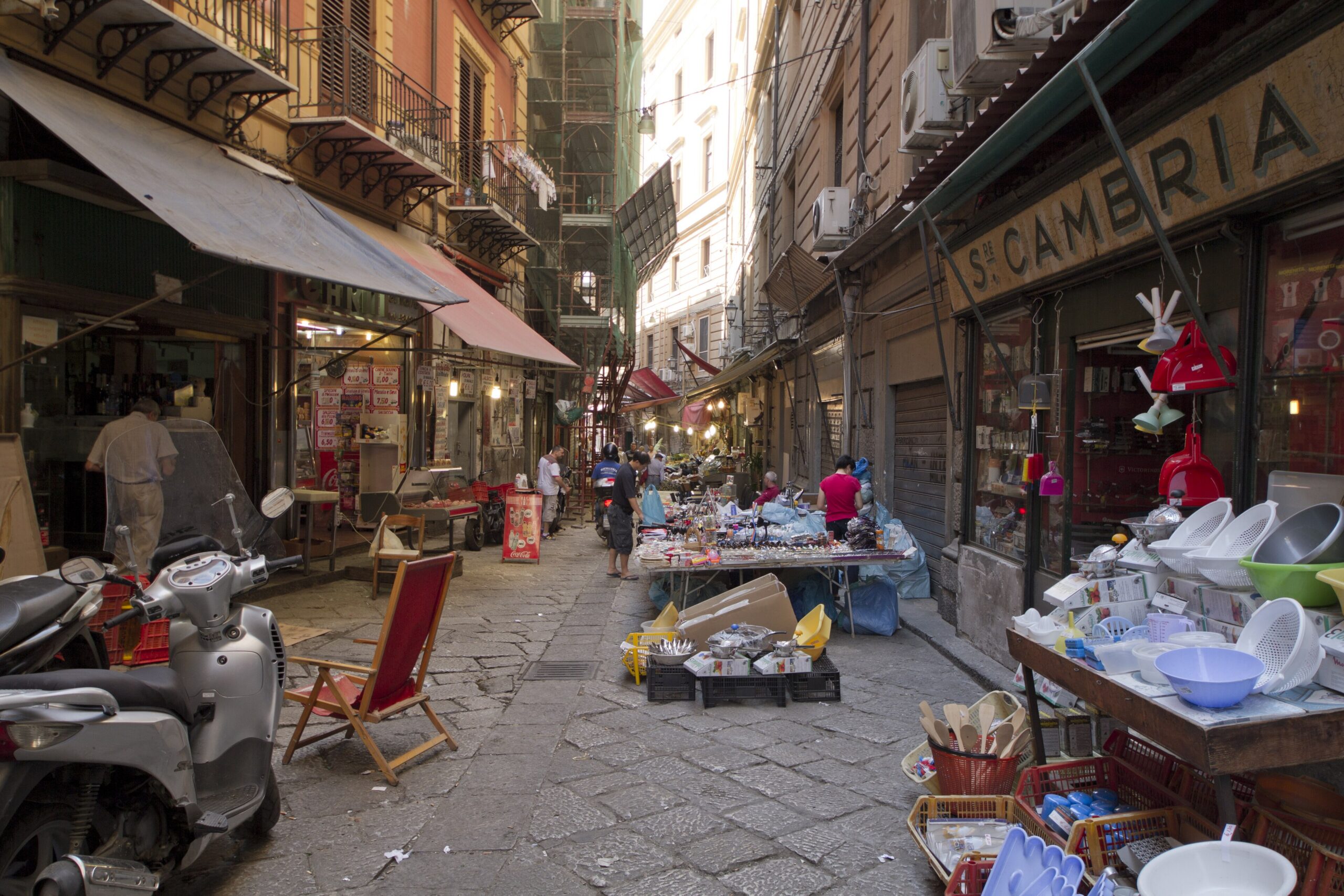
Breakfast: granita (mulberry, almond, lemon) with a brioche col tuppo. Street food: panelle and crocchè in a roll, the arancina (feminine and round in Palermo), sfincione from the cart, stigghiola off the grill in the evening, and pane c’à meusa with spleen, schietto with lemon or maritato with ricotta. Sitting down: pasta con le sarde with wild fennel, raisins and pine nuts; sarde a beccafico; caponata; swordfish rolls. Sweet: cannoli filled to order (if they are ready-made, go elsewhere), cassata, and frutta martorana, marzipan fruit invented in the convent next to the Martorana. A street-food meal costs €5-10, a trattoria €20-30.
Museums and singular places
The Capuchin Catacombs
€5 · not for everyone

Around one thousand two hundred and fifty mummified bodies, dressed in their own clothes, along corridors divided into friars, men, women, professionals and children. It began by accident in 1599, when the friars found some of their brothers mummified by the dry tufa; over time it became a status symbol, with families paying to display their dead well dressed. It ended in 1880. The last person buried is Rosalia Lombardo, who died aged two in 1920 and was embalmed so well that she seems asleep.
Palazzo Abatellis and the Salinas Museum
Palazzo Abatellis holds two works that justify the trip: the Triumph of Death, an enormous fifteenth-century fresco with Death on horseback riding through a garden of nobles, and the Annunciata by Antonello da Messina, one of the finest portraits of the Italian fifteenth century: a young woman in a blue veil raising her hand towards us, which is to say towards the angel, who is not there. The Salinas Archaeological Museum holds the metopes of Selinunte and finds from the Greek colonies of Sicily.
The Zisa, San Giovanni degli Eremiti, the botanical garden
The Zisa (from the Arabic al-Aziz, the splendid) is a Norman pleasure palace of 1165, built by Muslim craftsmen with a system of passive cooling made of air currents and indoor fountains; inside is a museum of Islamic art. San Giovanni degli Eremiti has five red domes and a cloister of orange trees. The botanical garden, from 1789, is among the most important in Europe and holds the giant fig considered the largest tree in Italy.
The sea and the mountain

Mondello is thirty to forty minutes away by bus (route 806): white sand, shallow turquoise water, the Liberty villas and the Charleston pavilion on its piles. Until the end of the nineteenth century it was a malarial marsh; it was drained and turned into a seaside resort by a Belgian company. In summer it is very crowded; in the shoulder seasons it is perfect.
Above the bay stands Monte Pellegrino, which Goethe called the most beautiful promontory in the world. At the top is the sanctuary of Saint Rosalia, the cave where in 1624 the bones attributed to the city’s patron were found: tradition says carrying them in procession ended the plague, and Palermo has celebrated her Fistinu on 14-15 July ever since. From the summit you see the whole Conca d’Oro.
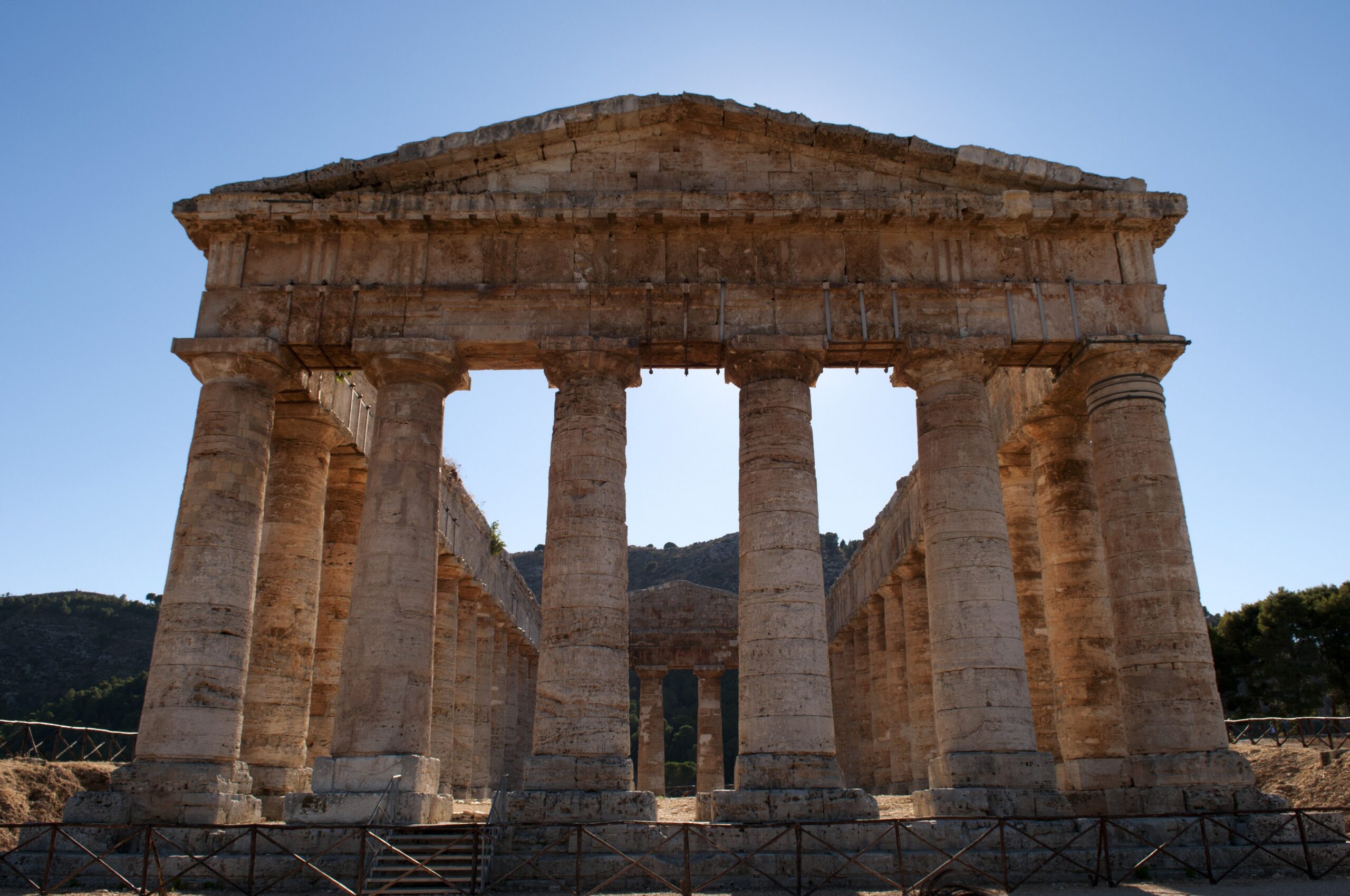
Cefalù, an hour east by train: a fishing town under an enormous crag, with a Norman cathedral of 1131 whose Christ Pantocrator many consider finer than the one at Monreale, and a beach inside the town. Segesta, an hour and a half west: a fifth-century BC Doric temple alone on a hill, never finished — it has no roof and the columns were never fluted — and a Greek theatre facing the mountains.

1. The opening hours. A great many churches and all the oratories close between 1 and 1.30pm and do not reopen; on Sunday afternoons almost everything is shut. Indoor visits in the morning, markets and walking in the afternoon.
2. The Palatine Chapel must be booked, entry is by timed slot, and when the Regional Assembly is sitting the Royal Apartments close.
3. No car in the centre. Restricted traffic zones, very narrow alleys, awkward parking: everything is done on foot or by bus. From Punta Raisi airport the best way in is the train, which leaves from under the terminal.
Frequently asked questions
If I am short of time, what must I see?
In this order: the Palatine Chapel, the Cathedral, the two churches on Piazza Bellini and a walk through Ballarò with lunch on your feet. If you have even half a day more, add Monreale: it is the one thing outside the centre worth a journey on its own.
What is the Arab-Norman style?
What happens when the Normans conquer, in 1072, an island that has been Arab for two centuries and, instead of erasing it, keep Muslim architects, Greek mosaicists and Latin masons at work. The result is buildings with a Latin plan, Byzantine mosaics and Islamic ceilings. Since 2015 nine of these monuments have been a UNESCO World Heritage Site.
Monreale or the Palatine Chapel?
They are two different things and anyone who can sees both. The Palatine Chapel is small and perfect, and it is the only place where the three cultures touch inside the same room. Monreale is the maximum scale: six thousand four hundred square metres of mosaic and a cloister with 228 capitals all different. If you must choose one and you are in the centre, the Chapel; if you have half a day, Monreale repays the journey.
Are the Capuchin Catacombs for everyone?
No. There are 1,250 mummified bodies, dressed and standing, and it is not a reconstruction: it is a cemetery in use from 1599 to 1880. Anyone squeamish or travelling with small children should make a considered choice. Nearby alternatives are the Zisa and the botanical garden.
What is the thing almost nobody sees and should?
The oratories of Giacomo Serpotta: Santa Cita, San Lorenzo, San Domenico. White stucco worked like porcelain, figures leaning out and talking among themselves, and in San Lorenzo the gap left by Caravaggio’s Nativity, stolen in 1969 and never recovered. They cost a few euros each and stand a few hundred metres apart.
Which market should I choose?
Ballarò if you only do one: it is the oldest and the only one still a real market. The Capo is tidier and convenient if you are staying near the Cathedral. The Vucciria is nearly empty by day: it makes sense from nine in the evening, when the square fills with people drinking standing up.
Arancina or arancino?
In Palermo, arancina, feminine and round; in Catania, arancino, masculine and pointed like Etna. The Accademia della Crusca has declared both correct, which settled nothing.
When is the best time to come?
April-May and September-October. July and August go above 35 degrees. On 14-15 July there is the Fistinu of Saint Rosalia, with the triumphal float along the Cassaro and fireworks over the sea: wonderful, but the city is packed. Winter is mild, around 15 degrees, and the churches are open just the same.
Is it a safe city?
Yes, like any large city: you walk around, including in the evening in the lively areas. The usual care against pickpockets applies in the markets and on public transport. Many alleys are peeling and badly lit and look worse than they are: if you prefer, stay on the main streets.
How long do you need for Palermo?
One day for the spine of the old city; three to add Monreale, the oratories, the Capuchins and the sea; four or five if you also want Cefalù or Segesta. Less than a day means seeing only the Palatine Chapel, which is not a bad way to spend two hours anyway.
September 3, 2026


