

Matera in 1 day: the Sassi, the cistern under the square and the sunset
Matera is probably the longest continuously inhabited settlement in Europe: people have lived in the caves of this ravine for nine thousand years. It is also the only Italian city to have gone, in seventy years, from being called in Parliament “the national shame” to being European Capital of Culture. In 1952 an act of the Italian state ordered its forced evacuation: sixteen thousand people were moved into new districts and the Sassi stood empty for thirty years. Walking through them today, knowing that, is a different experience from visiting a handsome old town: those houses were abandoned by decree and reinhabited by choice.
At a glance
- How long · a full day, 9am to 10pm
- How much walking · about 6 km, but with constant climbs and stairways: they are the only streets there are
- Shoes · comfortable, with soles that grip: polished limestone is slippery, especially wet
- What has to be booked · the Palombaro Lungo, visited only with a guide at set times
- Budget · €35-55 per person excluding accommodation
- Starting point · Piazza Vittorio Veneto, in the upper town
- Finishing point · a viewpoint at sunset, then the lit Sassi
- What is left out · the rock churches on the far side of the ravine: those are the second and third day
Matera is built on the walls of a canyon: the distances on the map are short, but almost every stretch goes up or down.
Morning — The town above and the Sasso Barisano
2 km · 3 stops · 9am to 1.30pm · downhill, then up
1 – Piazza Vittorio Veneto and the Palombaro Lungo
Time 1 hour · Palombaro €3-5, guided visits at set times only · Square free

You start at the top, and rightly so: Piazza Vittorio Veneto is the drawing room of the new town, the nineteenth- and twentieth-century one that for decades turned its back on the Sassi, treating them as a disgrace to be hidden. From the parapet on the eastern side the first view opens up, and that is the moment you understand where you have arrived.
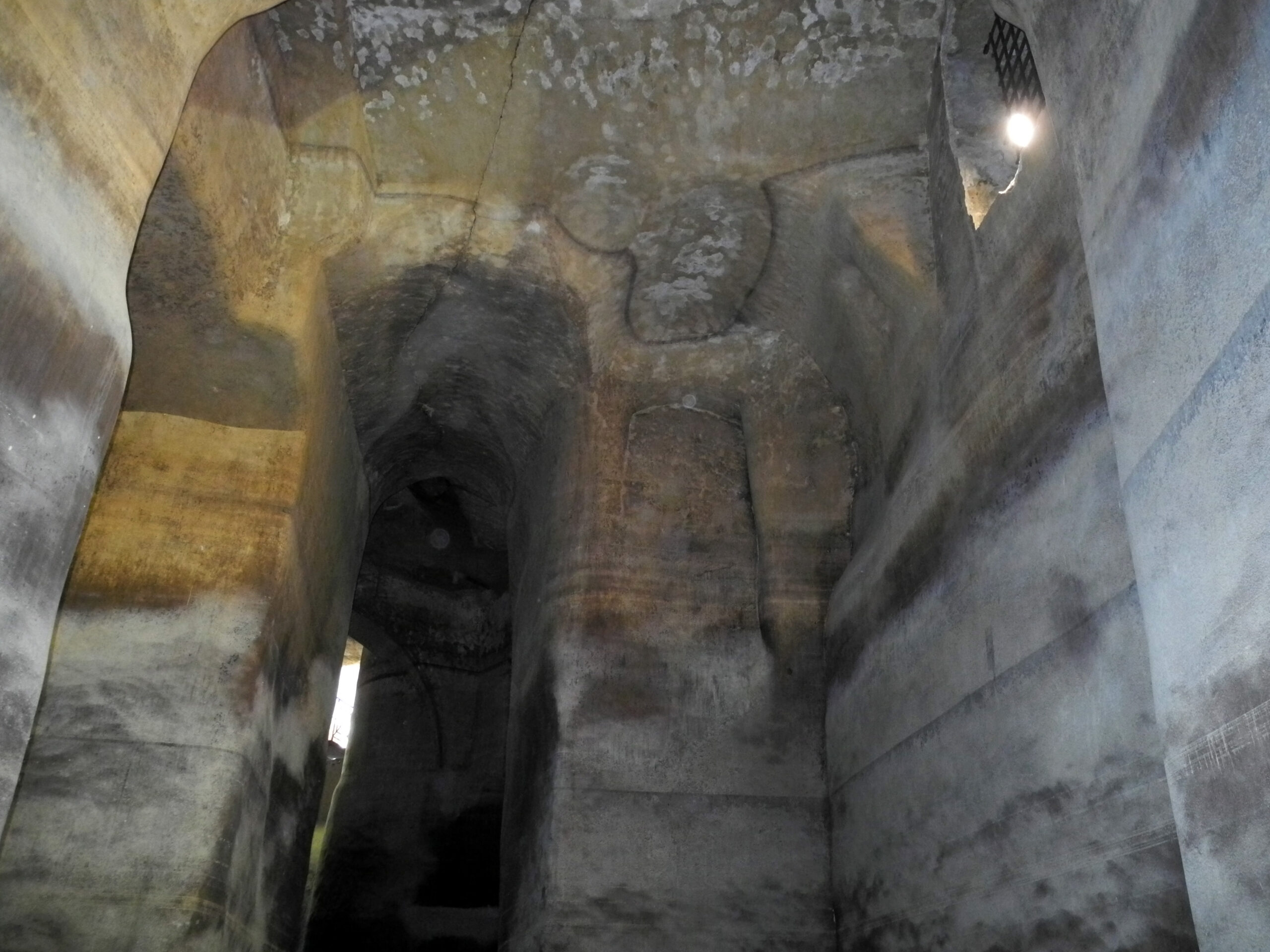
Beneath the square, and this is the surprise, lies the Palombaro Lungo: a cistern cut into the rock the size of a cathedral, fifteen metres high, holding five thousand cubic metres of water. It is the most impressive thing in Matera and nobody sees it from outside. It was built in the nineteenth century by joining smaller cisterns; the walls are rendered with waterproof cocciopesto in the Roman tradition, and you go down with a guide, walking on gangways above the water.
It explains everything else: Matera lies in an area with no usable rivers, and for nine thousand years life here was possible only thanks to a rainwater harvesting system — channels cut in the rock, a cistern under every house, sand filters — that is one of the great works of vernacular hydraulic engineering in the Mediterranean. It was rediscovered by accident in 1991, during work on the square.
2 – The Sasso Barisano
Time 1 hour 30 · Free · Getting there you walk down from the square

The Sasso Barisano — named after Bari, the direction it faces — is the richer of the two, the one with worked facades and carved doorways, and today the more restored: this is where the scattered hotels and the restaurants are.
What to grasp while walking through it is the structure, which has no equal: the houses are cut into the rock and then extended forward in masonry, and they are stacked down the slope, so that the roof of one house is the street or the courtyard of the one above. There are no streets in the normal sense: there are routes that run over rooftops. That is why, wandering, you keep ending up on terraces that are somebody’s house.
Getting lost on purpose is the right way to visit Matera. But two things are worth looking for: the chimneys, which in the poorest houses are the only opening besides the door, and the cisterns, recognisable by the circular covers in the floors of the courtyards: every house had one.
3 – The Civita and the Cathedral
Time 1 hour · Cathedral free, donation welcome · Walk 15 minutes uphill

The Civita is the spur of rock that divides the two Sassi, and it is the highest and oldest point: the original fortified settlement stood here, and the noble families lived here. At the top is the Cathedral, Apulian Romanesque of 1270, with a bell tower fifty-two metres high that is visible from everywhere in the city.
Inside, after a long restoration, medieval frescoes have re-emerged from under the Baroque decoration: there is a fourteenth-century Last Judgement and a Madonna della Bruna, the city’s patron, whose feast — on 2 July — ends with the crowd tearing the triumphal papier-mâché float to pieces to carry a fragment home for luck. The float is rebuilt every year in order to be destroyed.
From the flanks of the Civita open the two best views of the morning: on one side the Barisano you have just walked, on the other the Caveoso, which is the afternoon.
Matera’s cooking was born of poverty and is good for that reason. Matera bread, an IGP product, is the starting point: durum wheat semolina, sourdough, a tall horn shape, thick crust and yellow crumb; it lasted a week, because families baked once in the communal oven and stamped their own loaf with a carved wooden mark bearing their initials. To try: peperoni cruschi, Senise peppers dried and fried for a few seconds until they snap like a crisp and can be eaten on their own; cialledda, stale bread soaked with tomato, onion and oregano; orecchiette with turnip tops; and cotto e crudo, sausage and cheese with cruschi. For wine, Aglianico del Vulture, grown on an extinct volcano an hour away and one of the great reds of the south. A trattoria meal runs €25-35.
Afternoon — The Sasso Caveoso
2 km · 3 stops · 3pm to 6.30pm · the steeper side
4 – The Sasso Caveoso
Time 1 hour · Free · Getting there you walk down from the Civita
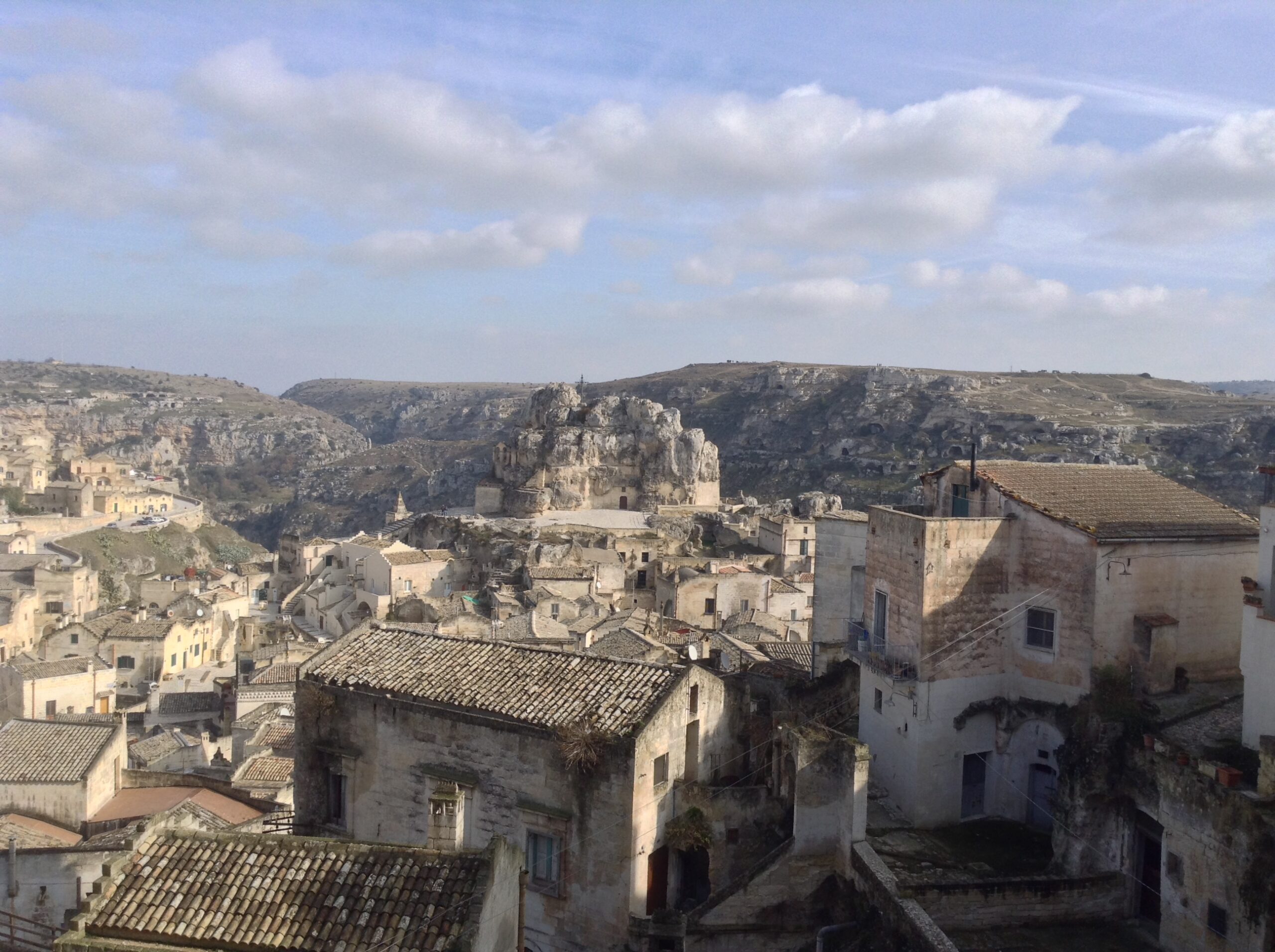
The Sasso Caveoso takes its name from the theatre-like cavea shape in which it drops towards the ravine, and it is the other face of Matera: here the houses are more excavated and less built, the alleys narrower, the facades poorer. It was the most deprived part, and it is the one that has stayed closest to what it was.
This is where you understand what Carlo Levi was denouncing in Christ Stopped at Eboli (1945), the book that turned Matera into a national scandal: he described families of ten living in a single room, with the mule and the hens indoors, and an infant mortality rate approaching fifty per cent. In 1950 prime minister De Gasperi came to see for himself; in 1952 an act of the state ordered the inhabitants moved to new districts. Sixteen thousand people left the Sassi, some willingly, many not.
The Sassi stood empty for thirty years, and into that emptiness came thieves, collapses and sheep. Only from the 1980s — with a law of 1986 and then UNESCO status in 1993 — were they recovered. That is why in Matera luxury stands next to an empty cave: some houses have become hotels, others are still as they were in 1952.
5 – A cave house
Time 30 minutes · Admission €3-5 · there are several, all similar
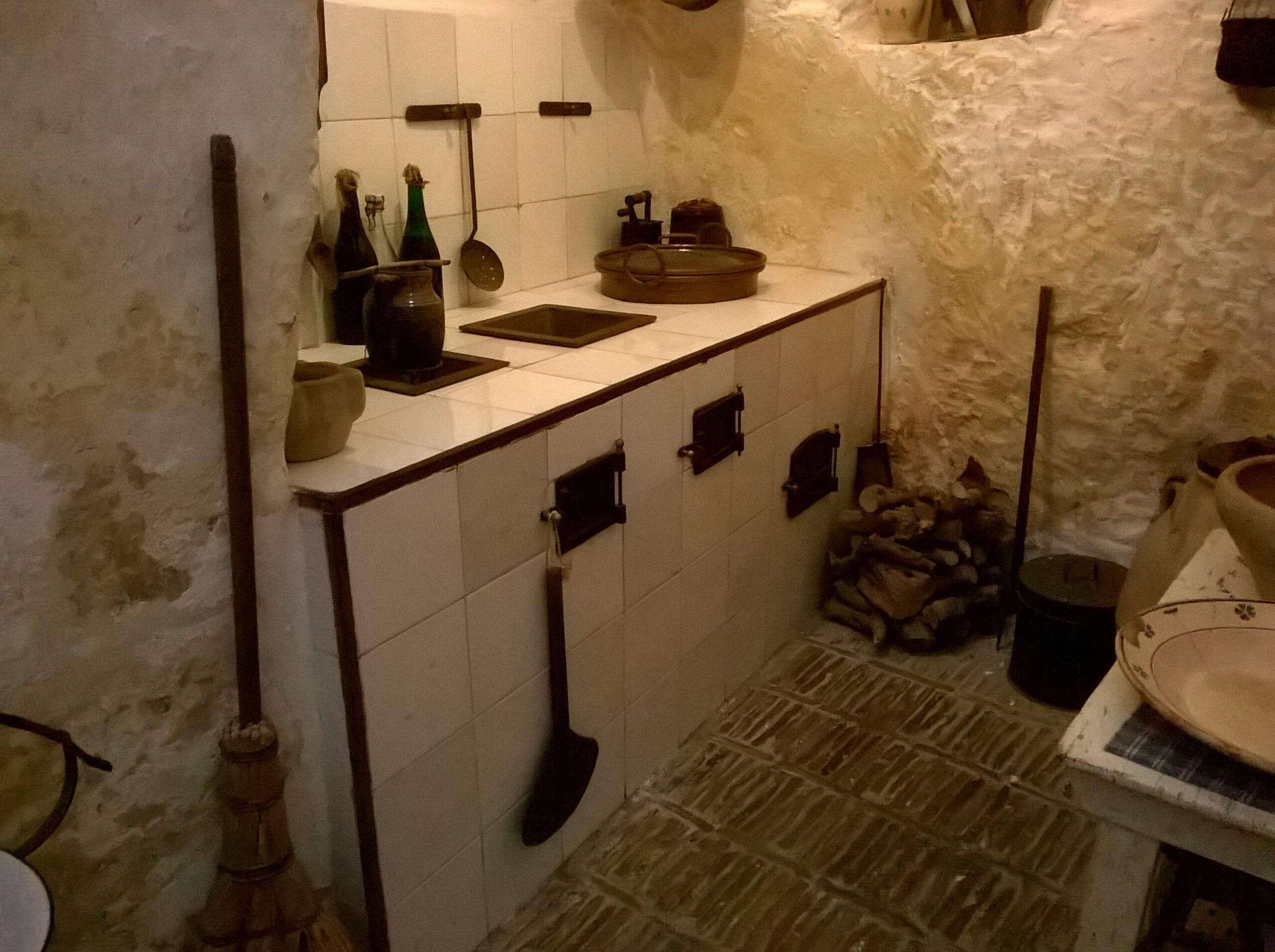
It is the shortest visit of the day and the most useful. A casa grotta is a dwelling left or put back as it was before the evacuation, with the real objects: a single excavated room of some thirty square metres, the bed raised on chests, the mule’s manger in the same room, the grain pit in the floor, the loom, the cistern, and no window other than the door.
The guides give the details that stay with you: small children slept in the drawers of the chest of drawers; the bed was high so the hens could be kept underneath; the mule’s warmth was the heating. After ten minutes in there, the photographs of the Sassi at sunset take on a different light.
6 – Santa Maria de Idris and the rock churches
Time 1 hour · Rock church circuit €7-9 · Walk 10 minutes

Santa Maria de Idris sits inside the great spur of rock that rises in the middle of the Caveoso and is the image that stands for Matera. The name comes from the Greek hydor, water: there was a water collection point here. Inside, an excavated corridor links it to the crypt of San Giovanni in Monterrone, with Byzantine frescoes from the twelfth to the seventeenth century.
In the territory of Matera there are over one hundred and fifty rock churches: they were cut from the eighth century onwards by Greek-rite monks arriving from the East, often fleeing the iconoclast persecutions, and the Benedictines carried on. The others to see in town are Santa Lucia alle Malve, the first Benedictine women’s settlement, with a Madonna of the Milk of 1270, and the Madonna delle Virtù with San Nicola dei Greci, a two-level complex on the edge of the ravine.
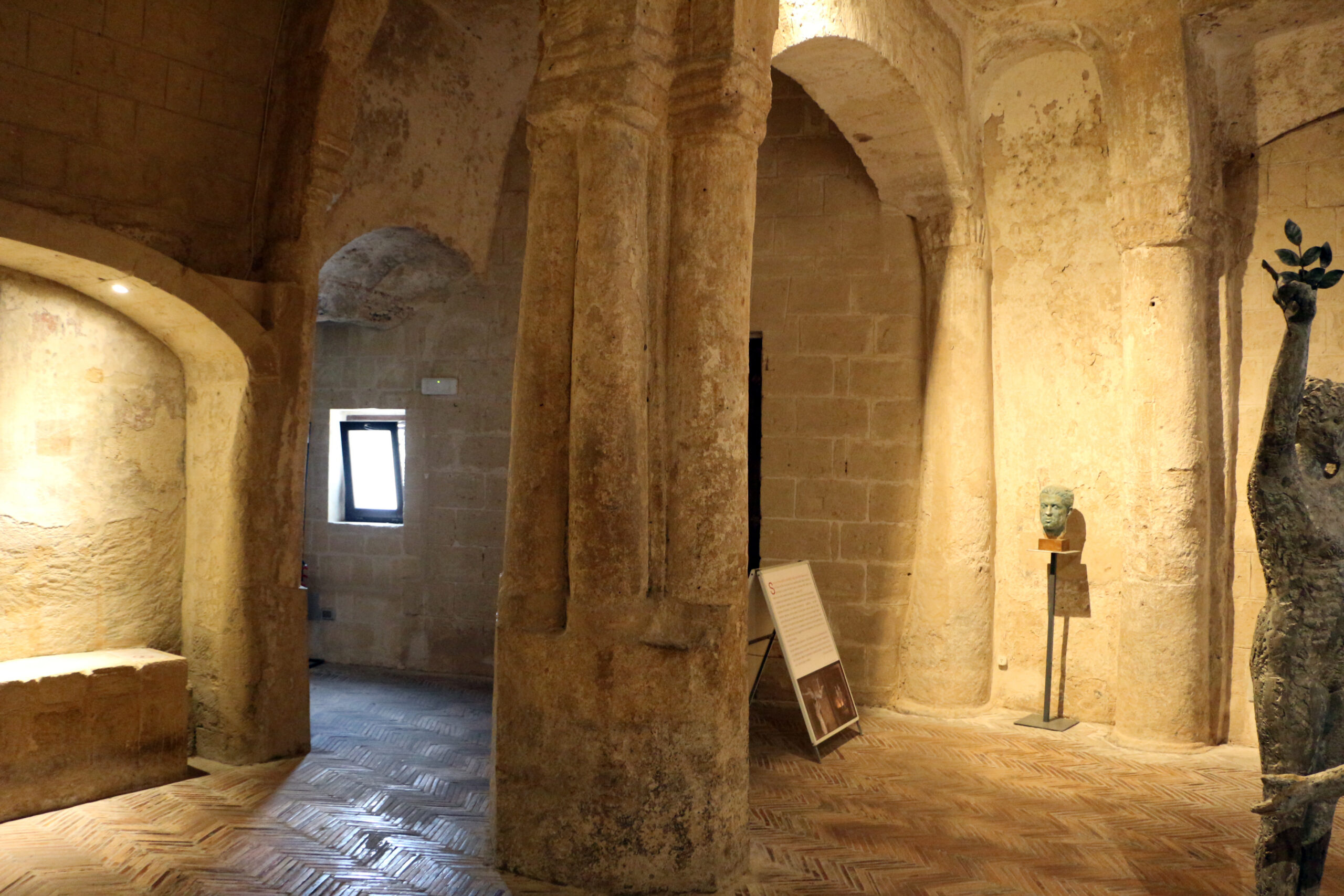
The rock churches have a combined ticket that pays off if you visit at least three. It is cool inside even in August and the light is dim: look at the frescoes slowly, letting your eyes adjust.
Evening — The viewpoint and the lit Sassi
2 km · 1 stop · from 6.30pm onwards
7 – The viewpoint on the far side of the ravine
Time 2 hours · Free · Getting there by car or taxi, 15 minutes; on foot it is an hour and a half of path
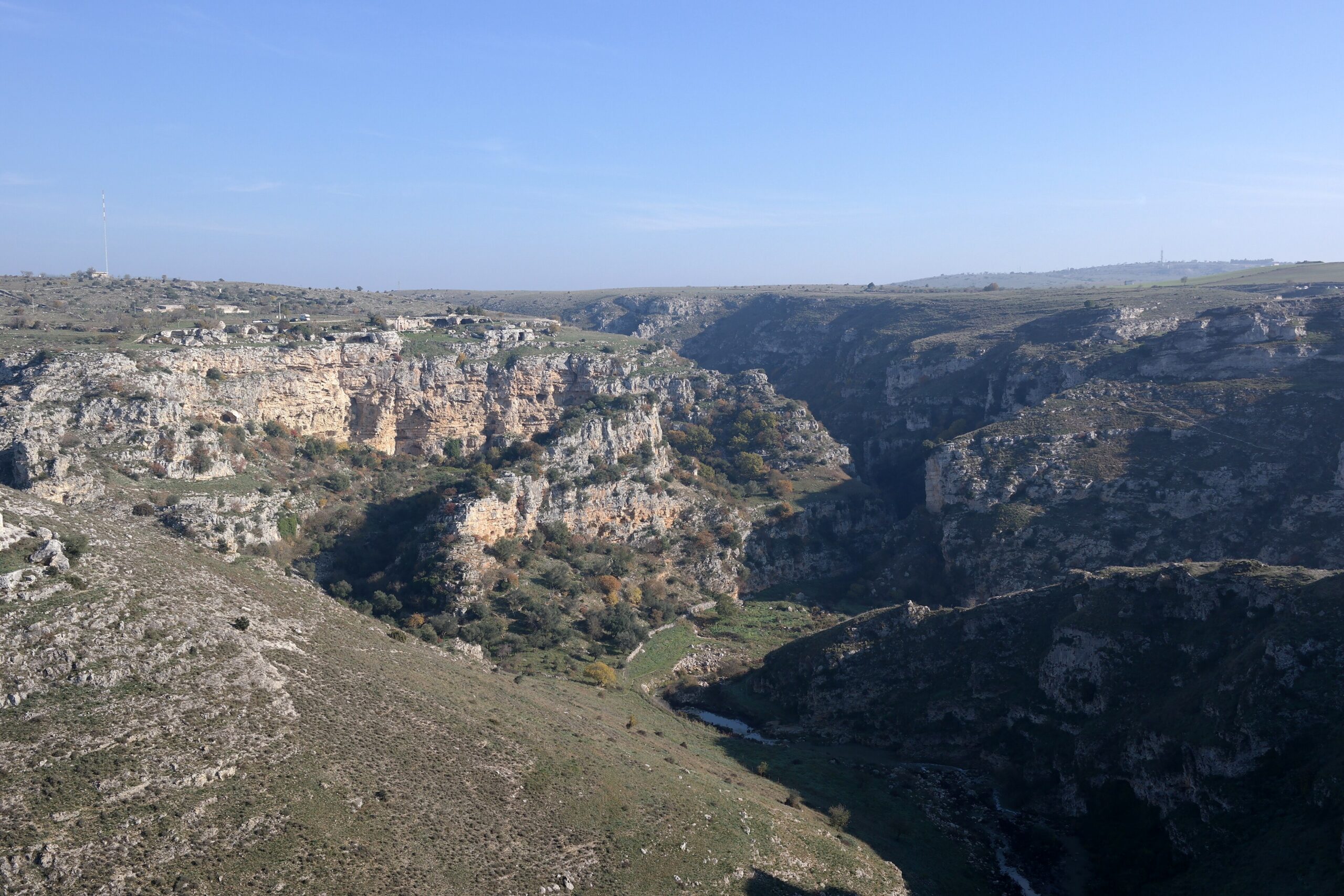
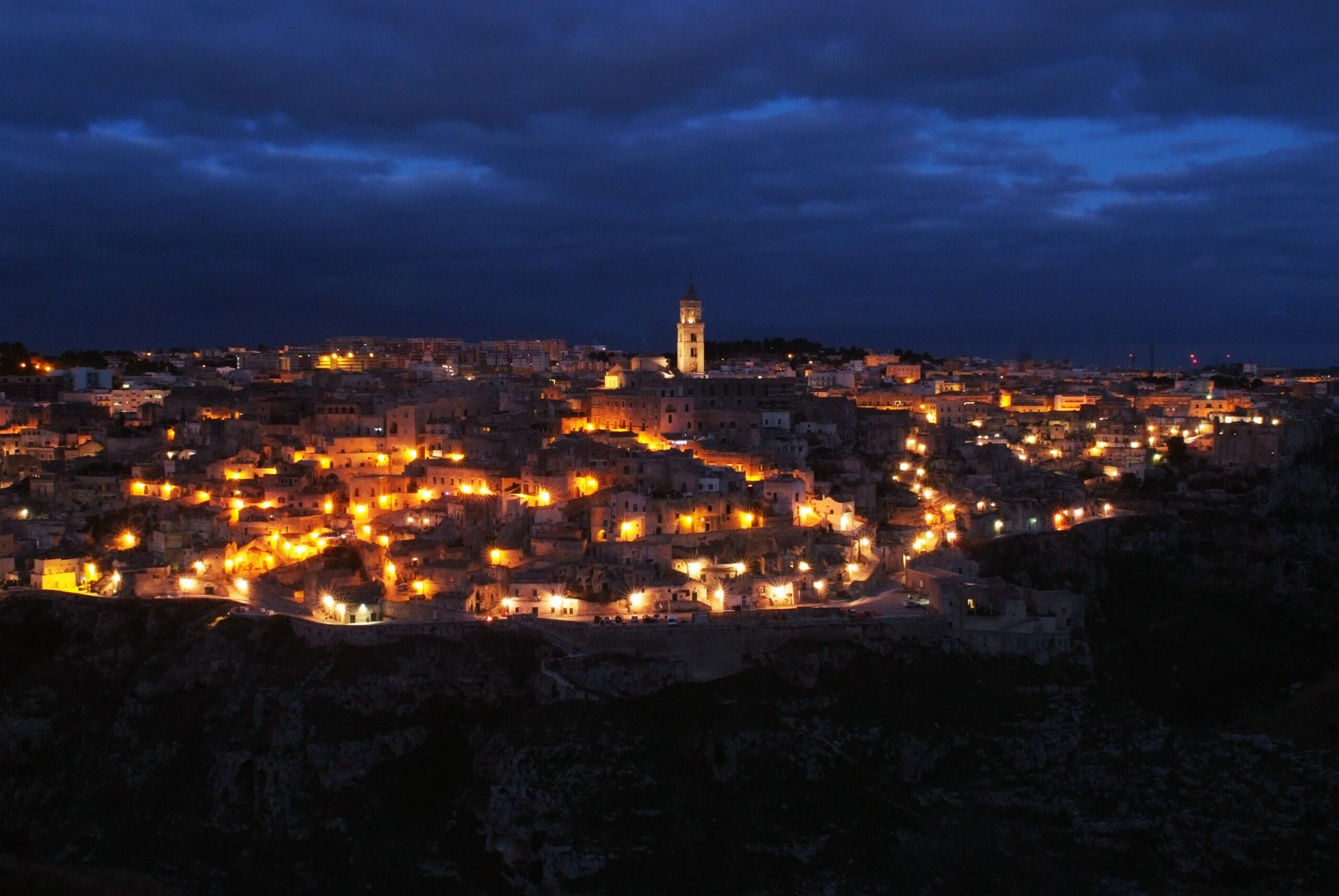
The thing to do at sunset is to cross the gravina — the canyon cut by the Gravina torrent, up to two hundred metres deep — and look at Matera from the other side, from the Murgia Timone viewpoint. From there you see the whole city at once, pressed against the wall with the cathedral on top: it is the spot from which almost every scene of the films set here was shot, from Pasolini’s The Gospel According to St Matthew to Mel Gibson’s The Passion, down to a car chase in No Time to Die.
The right moment is half an hour before sunset: you watch the stone go from white to gold to orange, and then the lights come on. Matera at night is one of the finest things to be seen in Italy, because every window and every lit cave draws the slope.
You get there by car or taxi in a quarter of an hour, or on foot by going down into the ravine and up the other side: about an hour and a half of path, fine but not to be done in the dark without a torch. In high season there are shuttles too.
Anyone who would rather not leave the city still has two viewpoints in the centre: Piazzetta Pascoli, looking over the Caveoso and the Idris spur, and the convent of Sant’Agostino above the Barisano.
In Matera there are no flat streets: there are stairways, and limestone polished by centuries of footfall is slippery, especially in the rain. You need closed shoes with soles that grip, and it must be said plainly that the city is hard work for anyone with mobility problems: many routes are impassable with pushchairs and wheelchairs, though some accessible itineraries do exist and it is worth asking at the tourist office. In summer the white stone reflects the sun and the Sassi easily go above 38 degrees with no shade at all: in July and August split the day, putting the caves and the rock churches — which are cool — in the middle hours.
What the day costs
| Item | Cost |
|---|---|
| Palombaro Lungo, guided visit | €3-5 |
| Cave house | €3-5 |
| Rock churches, combined ticket | €7-9 |
| Cathedral | free, donation welcome |
| Taxi or shuttle to the Murgia Timone viewpoint | €10-20 return |
| Lunch and dinner | €30-45 |
| Total | about €53-84 per person |
Reference figures for September 2026. Matera is largely visited free, because the best thing — walking in the Sassi — costs nothing: the tickets are few and cheap. What can weigh is the accommodation, because sleeping in a restored cave costs a good deal, and it is an expense that makes sense only if you count it as part of the experience. You do not need a car in the centre: you need one, if at all, for the viewpoint.
Frequently asked questions
Is one day in Matera enough?
Enough for the two Sassi, a cave house, the Palombaro Lungo and sunset from the viewpoint: the city is small and crossed on foot. What is left out are the rock churches of the Murgia Park, on the far side of the ravine, and the Crypt of Original Sin: they are the reason to stay a second day.
What exactly are the Sassi?
Two districts — Barisano and Caveoso — made of houses partly cut into the rock and partly built forward with the stone taken out by digging, stacked down the slope of a canyon. The feature with no equal is that the roof of one house is the street or the courtyard of the one above: there are no streets in the normal sense. They have been continuously inhabited for about nine thousand years and have been a UNESCO site since 1993.
Why were they called “the national shame”?
Because after the war families of ten lived in a single room with the animals indoors and no sewers, and infant mortality approached fifty per cent. The scandal broke with Carlo Levi’s Christ Stopped at Eboli (1945); De Gasperi came in person in 1950, and a law of 1952 ordered the evacuation: sixteen thousand people were moved to new districts. The Sassi stood empty for thirty years.
How do you get to Matera?
There is no mainline railway station: Matera is served by the Ferrovie Appulo Lucane from Bari (about an hour and a half, and they do not run on Sundays) and by coaches from Bari, Naples and Rome. The handiest airport is Bari, 65 km away, with direct buses in an hour and a quarter. Driving is easy, but you do not enter the centre: you park above and walk down.
How much walking is there, and do you need to be fit?
Six kilometres, but with constant ups and downs and hundreds of steps: you feel it by the end of the day. Closed shoes with good soles are needed, because polished limestone is slippery. Anyone with mobility difficulties should know: many routes are not accessible, though the tourist office can point out alternatives.
Is it worth sleeping in a cave?
It is the experience many people come for, and it works: the scattered hotels made from cave houses have absolute silence, a constant temperature and no windows. It costs a fair amount and needs booking ahead. If it is out of budget, know that sleeping in the new town costs a fraction and the Sassi are five minutes away on foot.
When is the best time for the view?
Sunset from the Murgia Timone viewpoint, on the far side of the ravine: fifteen minutes by car or taxi, or an hour and a half on foot along the path. Get there half an hour before sunset, and stay until the lights come on. In town, the two viewpoints are Piazzetta Pascoli and the convent of Sant’Agostino.
When is the best time to come?
April-June and September-October. In July and August the white stone reflects the sun and the Sassi go above 38 degrees with no shade. Winter is cold and windy but the city is empty and the light is superb. The special date is 2 July, the feast of the Madonna della Bruna, which ends with the crowd tearing the triumphal papier-mâché float to pieces to take a fragment home.
What is Matera bread?
An IGP bread of durum wheat semolina with sourdough, shaped like a tall horn, with a thick crust and yellow crumb. It comes from the fact that families baked once a week in the district’s communal oven, and the bread had to last until the next time: each family stamped its own with a wooden mark carrying their initials. Try it with peperoni cruschi, dried and fried for a few seconds.
How many films have been shot here?
Over seventy. The best known: Pasolini’s The Gospel According to St Matthew (1964), Mel Gibson’s The Passion (2004), Ben-Hur, Wonder Woman and the opening chase of No Time to Die (2021). The reason is always the same: Matera is the place in Europe that most resembles ancient Jerusalem, and it is two hours from an airport.
September 3, 2026


