New York in 5 days: with Brooklyn, Coney Island and Queens
With five days, New York stops being just Manhattan. The first three days remain those of the short itinerary, then you cross the river: a full day in Brooklyn, which if it were a city on its own would be the fourth largest in the United States, from low-rise neighborhoods to the Coney Island beach; and a day in Queens or the Bronx, which are the two places where tourists never go and where half the city lives. Queens alone is the most multicultural district on the planet: over one hundred sixty languages are spoken there. It’s the only way to truly understand how this city works.
In brief
- Duration · five full days, with a single base in New York
- How much walking · 8-11 km per day, flat terrain
- Book ahead · the observation deck building and the ferry to the Statue of Liberty; the crown several months in advance
- Budget · 510-690 dollars per person for the five days, accommodation excluded
- Transport · always subway, 2.90 $ per ride: after 12 rides in a week all others are free, and in five days you’ll definitely get there
- To know · for Coney Island and the Bronx you need 45-60 minutes of subway per leg: these are full days, not half days
- What’s left out anyway · Staten Island, the Catskills, Washington: that’s another trip
One color per day. The last two days are outside Manhattan: Brooklyn to the south, Queens to the east.
The first three days
They’re the same as the three-day itinerary. If you’re coming from there you can skip straight to day four.
Day 1 – Midtown, the park and the bridge
10 km · Grand Central, Top of the Rock, Times Square, Central Park, Brooklyn Bridge, Dumbo

The classic day: a train station that’s a monument, one well-chosen observation building, the world’s most famous park and crossing the bridge at sunset toward Brooklyn.
Day 2 – The tip of the island
9 km · Statue of Liberty, Ellis Island, Wall Street, 9/11 Memorial, High Line, Greenwich Village

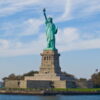
Morning by ferry, with Ellis Island carrying more weight for a European visitor than the statue itself: twelve million immigrants passed through that hall between 1892 and 1954. Afternoon at the memorial and then on foot along the High Line to the Village.
Day 3 – The museums and Harlem
8 km · Metropolitan or MoMA, Museum Mile, Harlem and the Apollo Theater

One major museum in the morning — just one, not two — and the afternoon heading north, all the way to Harlem, which is twenty minutes by subway from Central Park and feels like another city.
Day 4 — Brooklyn, from neighborhoods to the sea
9 km · 3 stages · from 9:30 to 11 pm · heading south all day
Brooklyn has two million six hundred thousand people: if it were a separate city it would be the fourth largest in the United States, after New York, Los Angeles and Chicago. Until 1898 it actually was, and the annexation to New York is still called the great disaster here, half jokingly.
Morning – Williamsburg
Time 3 hours · Free · Subway L to Bedford Av, one stop from Manhattan
Williamsburg is the neighborhood that in the 2000s became the model for all ‘trendy’ neighborhoods in Europe: industrial warehouses turned into cafes, breweries, record stores and vintage clothing shops. Today it’s expensive and partly out of fashion, and the phenomenon has moved further east to Bushwick, where the murals are.
What makes Williamsburg more interesting than a merely fashionable neighborhood is that in the same area, just a few streets south, lives one of the world’s largest Hasidic Jewish communities outside Israel, arrived after the war from Hungary and Romania: signs in Yiddish, shops that close Friday afternoon, private buses. Two worlds sharing the same postal code and barely speaking to each other.
Don’t miss: the waterfront of Domino Park, built where the Domino sugar refinery stood — the industrial structures were left as sculptures — with a full view of Manhattan; and the Brooklyn Brewery, in a former warehouse.
Early afternoon – Prospect Park and Park Slope
Time 2 and a half hours · Park and Botanical Garden: park free, garden about 18 $ · Subway L then 2 or 3 to Grand Army Plaza

Prospect Park is the other Olmsted and Vaux park, opened in 1867, nine years after Central Park. The two designers considered it their best work: here they had learned from their mistakes, and could work on terrain without roads crossing through it. It’s less famous, less crowded and more beautiful than you’d expect, with the Long Meadow, a meadow a mile and a half long with no building in sight.
Around it is Park Slope, the neighborhood of brownstones: rows of red sandstone houses with external staircases, the stoop, which is the image of Brooklyn in films. They’re from the late 1800s, built in series for the bourgeoisie fleeing Manhattan, and that color comes from stone quarried in New Jersey and Connecticut. Sitting on the steps of your house chatting with neighbors is a local habit with its own name, stoop sitting.
If you have time for just one thing in the park, the Brooklyn Botanic Garden: it has a Japanese garden from 1915, the oldest in the United States outside an exposition, and at the end of April the cherry blossom bloom with over two hundred trees.
Evening – Coney Island
Time 3-4 hours · Beach and boardwalk free, rides pay-per-use · Subway D, F, N or Q to Coney Island – Stillwell Av, 40 minutes

Forty minutes by subway and New York ends in open sea. Between the 1800s and early 1900s, Coney Island was the world’s largest amusement park, with three competing amusement parks and electric lighting that could be seen from ships: people came to see the light, when they didn’t have it at home. Then decades of decay, and for about twenty years a slow rebirth.
The three real things still there are: the Cyclone, wooden roller coaster from 1927 still operating, declared a historic monument, that jolts you around like it did then; the Wonder Wheel from 1920, an observation wheel with cabins that slide on tracks toward the inside while it turns; and the Riegelmann Boardwalk, four kilometers of wooden walkway over the sea.
You eat a hot dog from Nathan’s, which has been here since 1916: every July 4th there’s a hot dog eating contest, which American television broadcasts live like it’s a sport. Next to it is the New York Aquarium, good with kids.
Coney Island is seasonal: the rides run from late March to October, with reduced hours in spring and fall. In winter there remains the beach, the empty boardwalk and an atmosphere from a melancholy film — which some people actually like even better.
Day 5 — Queens, and the cable car
8 km · 3 stages · from 10 to 10 pm · the day that no tourist does
Queens is the largest district in New York by area and the most varied in the world: two million three hundred thousand people live there and over one hundred sixty languages are spoken. About half the residents were born abroad. It has no center, no iconic monument, and precisely for this reason it’s the most interesting of all five days.
Morning – Long Island City and Astoria
Time 3 hours · MoMA PS1 about 10 $, Museum of the Moving Image about 20 $ · Subway 7 to Court Sq, or N or W for Astoria
Long Island City sits directly across from Midtown, on the other side of the East River, and has the most beautiful view of skyscrapers in the whole city: go to Gantry Plaza State Park, where the old cranes for loading wagons onto barges still stand, and from there you see all of Manhattan. It’s also the place of the famous Pepsi-Cola neon sign from 1940, saved and put back on the waterfront as a monument.
Here is MoMA PS1, the experimental branch of MoMA inside a 19th-century public school: uncomfortable contemporary art, much more interesting than the main location if you’ve already seen enough paintings.
In Astoria next door is the largest Greek community outside Greece after Melbourne, with real bakeries and tavernas, and the Museum of the Moving Image, inside the film studios where Paramount shot silent films: there’s the costume collection, cameras and a room dedicated to The Muppets.
Afternoon – Flushing and the Unisphere
Time 3 hours · Park free · Subway 7 to Mets – Willets Point and then to the end of the line at Flushing

The number 7 subway line is called the International Express, and has been declared a national historic route: in twenty stops it passes through Irish, Colombian, Mexican, Filipino, Tibetan, Indian, Korean and Chinese neighborhoods, one after another. Looking out the window and reading the signs is already the visit.
At Flushing Meadows – Corona Park there were two world’s fairs, in 1939 and 1964, and the United Nations had their first headquarters there: it was here, in a fair pavilion, that in 1947 the partition of Palestine was voted on. From those fairs remain the Unisphere, the thirty-seven-meter steel globe symbol of 1964, and the New York State pavilions designed by Philip Johnson, rusted and cordoned off, that you’ve seen in Men in Black.
At the end of the line is Flushing, which is New York’s second Chinatown and is now larger and more authentic than the one in Manhattan: here you eat, and eat very well, spending little.
Evening – Roosevelt Island by cable car
Time 2 hours · Costs like a subway ride, pay with the same card · Departure from 59 St and Second Avenue

It closes with the most underrated thing in New York. The Roosevelt Island cable car crosses the East River at forty meters height, running alongside the Queensboro Bridge and putting before you the entire east side of Manhattan. It costs like a subway ride and you pay with the same card. It was built in 1976 as a temporary arrangement pending the arrival of the subway: the subway arrived in 1989, and the cable car remained because residents liked it.
Roosevelt Island is a three-kilometer-long strip of land in the middle of the river, with a grim history: for a century they kept the psychiatric hospital, smallpox, prison and poorhouse there, hidden from the city’s view. It was called Welfare Island. At the south end is the Four Freedoms Park, designed by Louis Kahn in 1974 and built only in 2012, almost forty years after his death: a triangle of grass that narrows between two rows of linden trees until a granite room open to the river. It’s the quietest place in New York, and it’s free.
If it rains, or if it’s very cold
- Day 4, Coney Island · in the rain it doesn’t make sense and in winter the rides are closed. Instead the Brooklyn Museum, which is next to Prospect Park and is the city’s second largest museum.
- Day 5 · is the easiest day to salvage: MoMA PS1 and Museum of the Moving Image are indoors, and the number 7 line with its signs you watch from the window.
- Instead of the cable car · in strong wind it gets suspended. Alternative: the NYC Ferry ferry, which costs little and is enclosed.
- In winter · Brooklyn and Queens have less protection than Manhattan and the distances between stops are greater: shorten the days, don’t grit your teeth.
How much the five days cost
| Voce | Spesa |
|---|---|
| Top of the Rock (or another observation deck) | 40-50 $ |
| Ferry, Statue of Liberty and Ellis Island | about 25 $ |
| 9/11 Memorial | about 33 $ |
| Metropolitan or MoMA | about 30 $ |
| Giardino Botanico, MoMA PS1, Museum of the Moving Image | circa 48 $ in tutto |
| Coney Island: two historic rides | about 20 $ |
| Parks, bridge, High Line, Harlem, Unisphere, Four Freedoms Park | free |
| Subway and cable car, 5 daysabout 35 $ — after 12 rides the rest is | free |
| Meals, 5 days | 280-450 $ |
| Total | about 510-690 $ per person |
Reference figures for August 2026, in dollars. With five days you’ll definitely hit the 12-ride weekly threshold: always pay with the same card or the same phone, otherwise the count resets from the beginning. And remember that the displayed price doesn’t include taxes, and that at restaurants an 18-20% tip is practically mandatory, not optional.
Frequently asked questions
Are five days in New York too many?
No, it’s the minimum number that lets you get out of Manhattan. With three days you see the tourist city; with five you add Brooklyn and Queens, where half of New Yorkers live. Whoever has seen only Manhattan has seen the storefront.
Does Brooklyn deserve a full day?
Yes. It has two million six hundred thousand people and until 1898 was a separate city: it would be the fourth largest in the United States. In one day you can fit Williamsburg, Prospect Park with the brownstones of Park Slope and Coney Island by the sea, which are three things that look nothing alike.
Is Coney Island worth the trip?
From late March to October yes: there’s the Cyclone from 1927, wooden roller coaster declared a monument, the Wonder Wheel from 1920 and four kilometers of boardwalk. That’s forty minutes by subway each way: plan for half a day. In winter the rides are closed and the beach is empty.
Does Queens have anything to see?
It has no iconic monument, it has something different: it’s the most multicultural place in the world, with over one hundred sixty languages spoken. There’s MoMA PS1, the film museum in Astoria, the Unisphere from the 1964 exposition and the second Chinatown in Flushing, where you eat better and spend less than in Manhattan.
What is line 7?
The subway that crosses Queens from Manhattan to Flushing, called the International Express and declared a national historic route: in twenty stops it passes from an Irish neighborhood to a Colombian, Mexican, Filipino, Tibetan, Indian and Chinese one. The signs at the stops tell the city’s story better than a museum.
Does the Roosevelt Island cable car cost a lot?
It costs like a subway ride, 2.90 $, and you pay with the same credit card. It crosses the East River at forty meters height next to the Queensboro Bridge. It’s probably the best view of the city for the price.
Prospect Park or Central Park?
Both are by Olmsted and Vaux, but Prospect Park came nine years later and the two designers considered it their best work: less crowded, with no roads crossing through it, with a meadow a mile and a half long. Central Park is not to be missed because it’s Central Park; Prospect Park is more beautiful.
Do I need a different card for the subway with five days?
No, in fact: always pay with the same credit card or the same phone. After twelve rides in the same week all subsequent rides are free, and in five days you’ll get there. Changing cards resets the count to zero and you lose the discount.
How much do five days in New York cost?
Between 510 and 690 dollars per person without accommodation. Days in Brooklyn and Queens cost much less than those in Manhattan, because parks, boardwalk and neighborhoods are free and you eat at half price. Most of the bill is meals.
When is it worth going?
May-June and September-October. If you’re coming for Coney Island you need the warm months, from late March to October; if you’re coming for the shop windows and the Rockefeller Center tree, December, knowing that prices and crowds are at their maximum. July and August are humid and heavy, and you feel it more in Queens and Brooklyn.
September 6, 2026