What to see in Verona: a guide by theme
Verona is the Italian city with the widest gap between what visitors come looking for and what there is to see. Millions of people photograph a balcony that was put up in 1936 and leave without knowing that a kilometre away there is a Romanesque basilica with forty-eight bronze panels from the eleventh century, and that the museum inside the castle is one of the masterpieces of twentieth-century architecture. This guide lists the places by theme rather than as an itinerary, saying for each one how long it takes, what it costs and whether it is worth the detour.
At a glance
- The five things not to miss · the Arena, the Castelvecchio museum laid out by Carlo Scarpa, the bronze doors of San Zeno, Piazza delle Erbe, sunset from Castel San Pietro
- What has to be booked · nothing in the city; the opera at the Arena in summer, and the Valpolicella wineries
- The day to avoid · Monday morning, when Castelvecchio and several civic museums open late or stay shut
- The finest thing that is free · Piazza delle Erbe and Piazza dei Signori, and the view from Castel San Pietro if you walk up
- The most underrated place · San Zeno Maggiore, off the circuit and reached by almost nobody
- Best time to come · April to June and September to October; summer has the opera, but also heat and crowds
Six thematic layers, not a route: switch on the one you are interested in.
The emblems, the things people come to Verona for
The Arena
Time 1 hour · Ticket about €12 · In summer the daytime visit can be restricted

It dates from the first century AD, so it precedes the Colosseum by a few decades, and it is the third largest Roman amphitheatre in Italy: it held thirty thousand people. Of the outer wall a fragment of four arches survives, which the Veronese call the Ala: the rest came down in the earthquake of 1117 and the stones ended up in the palaces of the city.
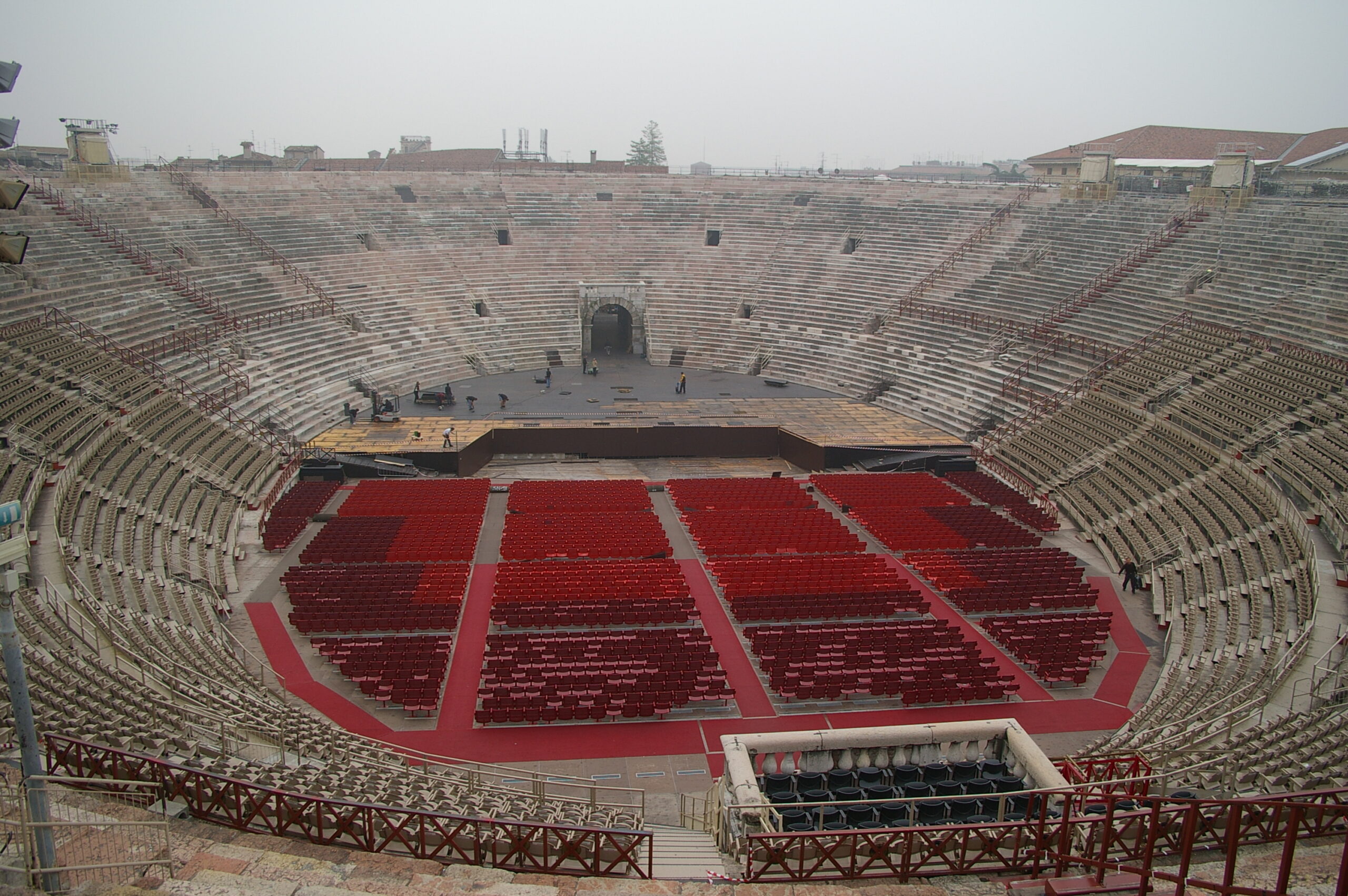
What sets it apart from every other amphitheatre is that it never stopped working. Since 10 August 1913, when Aida was staged here for the centenary of Verdi’s birth, it has held an opera festival every summer: around thirteen thousand people, with no amplification, the Roman acoustics doing all the work. As the performance begins the audience lights small candles and the bowl fills with points of flame.
A seat on the stone tiers costs a few tens of euros and you sit on the stone: you need a cushion, which can be hired at the entrance. Between June and September the daytime visit may be cut short by the sets: in that period the evening is the better bet.
Piazza delle Erbe
Time 1 hour · Free · Lamberti Tower about €8
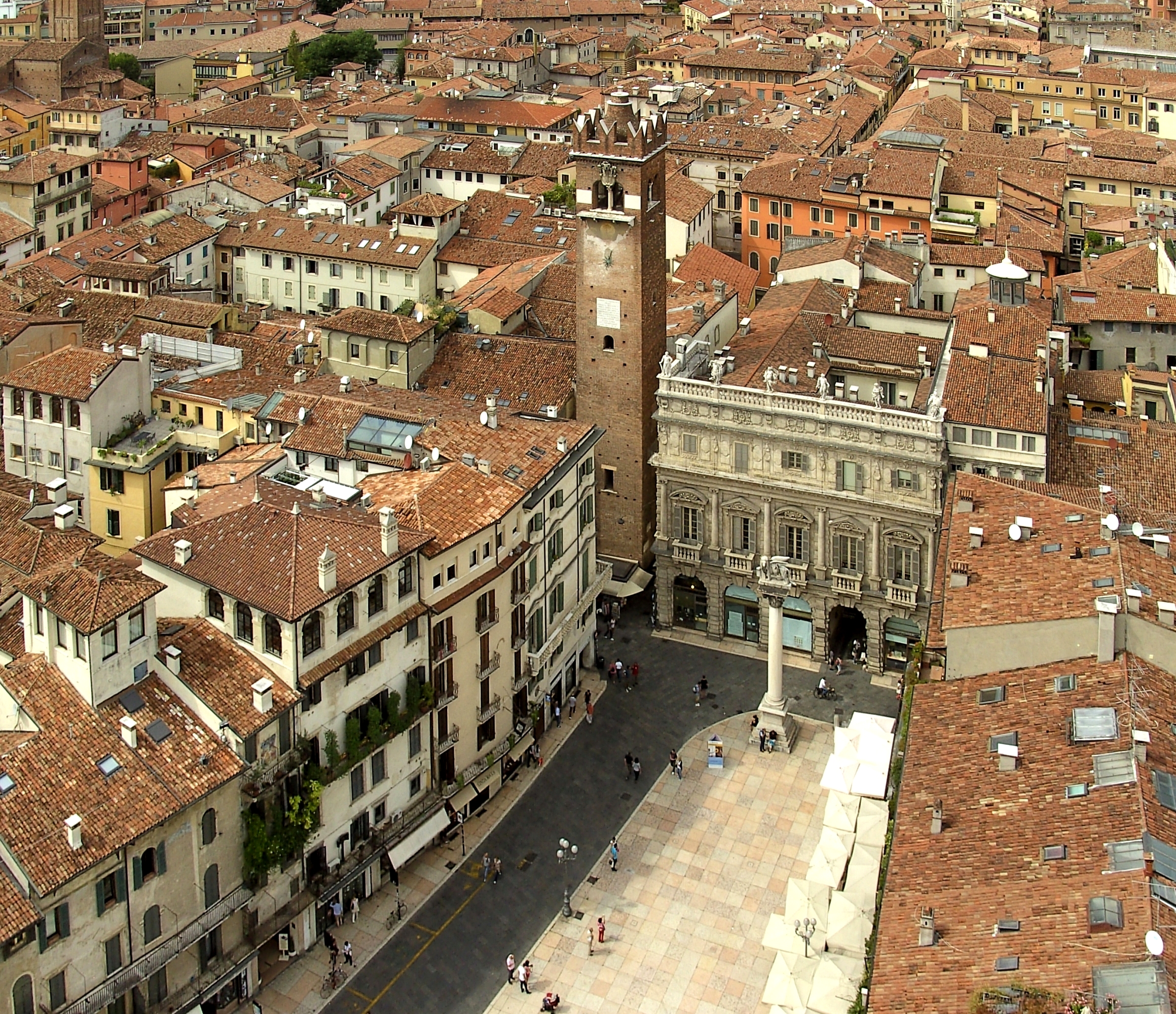
It sits exactly on top of the Roman forum and has kept its elongated shape. The beauty does not come from any one building but from the fact that they are all different: the crenellated Casa dei Mercanti, the Baroque Palazzo Maffei with statues of the gods along its cornice, the Gardello Tower, the frescoed houses.
In the middle, the fountain of the Madonna Verona from 1368: the statue, though, is Roman, fourth century, adapted a thousand years later by the addition of a head and arms. Under the Arco della Costa, towards Piazza dei Signori, a whale’s rib hangs on chains: it has been there for centuries, probably an apothecary’s sign, and legend says it will fall on the first just person to pass beneath it.
On the square, inside Palazzo Maffei, there is also a private house-museum with Boccioni, Morandi and De Chirico, and a suspended helical staircase: almost everybody walks past it.
Piazza dei Signori
Time 45 minutes · Free from outside · The quiet square of the city
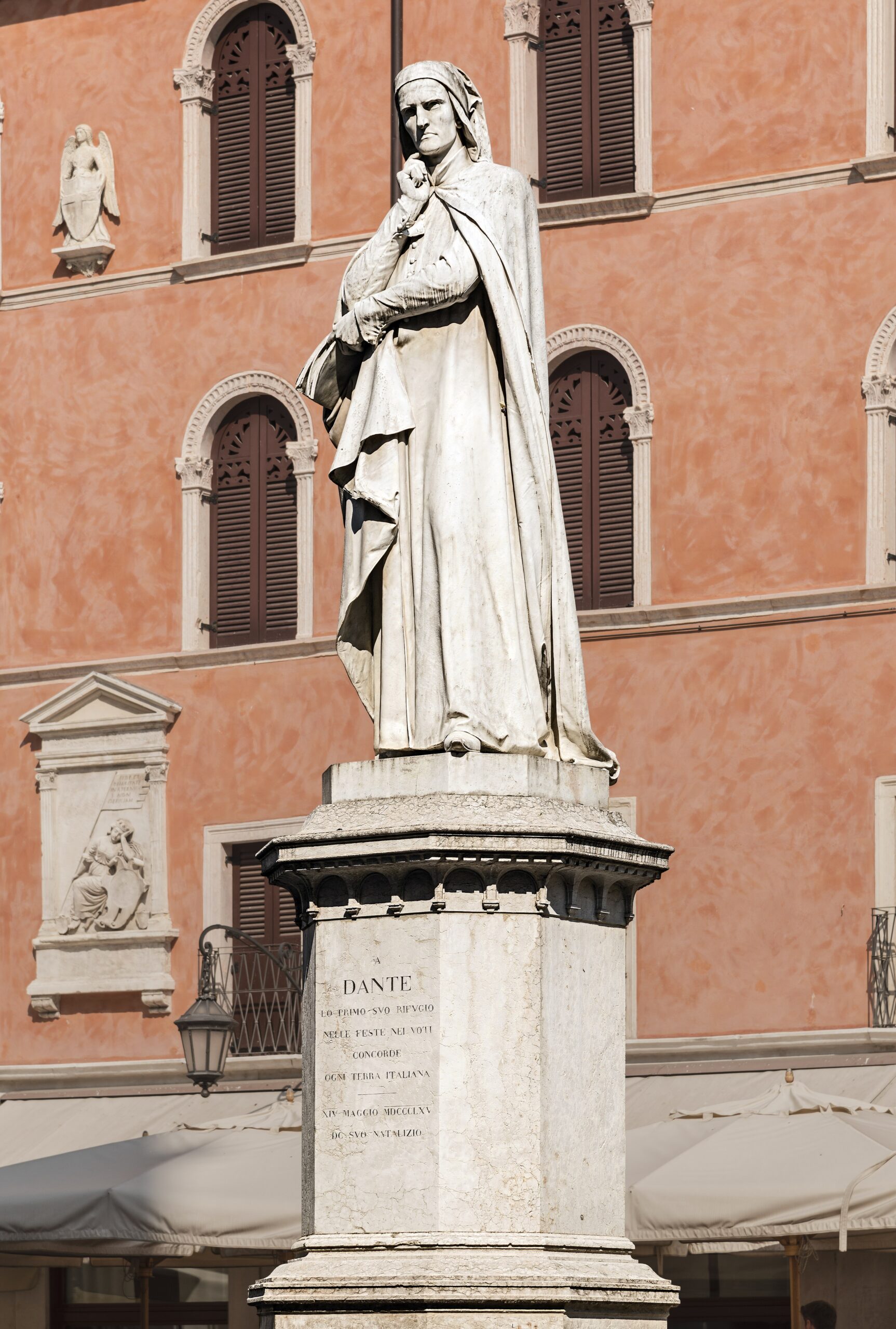
It is the reverse of Piazza delle Erbe: small, quiet, closed in by buildings of government — the Palazzo del Capitanio, the Palazzo della Ragione with its Gothic staircase in the courtyard, the Renaissance Loggia del Consiglio. The Veronese call it Piazza Dante.
The statue is deserved: driven out of Florence, Dante was taken in at Verona by Cangrande della Scala, and in the Paradiso he thanks him by calling the city “your first refuge and your first inn”. Verona is the first stop of his exile.
Juliet’s House, and how to take it
Time 20 minutes · Courtyard free, house about €6 · Always full

It is worth knowing in advance. The house is fourteenth-century and belonged to the Cappello family, which sounds like Capulet; the balcony was not there and was fitted in 1936 from a fragment of a fourteenth-century sarcophagus, when the city council decided to give visitors what they were coming to find. Shakespeare never went to Verona and took the plot from an Italian novella. The bronze statue is from 1969; the one on show today is a copy, because the original cracked under millions of hands and was withdrawn in 2014.
Having said that: the courtyard is free, it takes five minutes and it is the most successful piece of invented tourism in Italy. Take it for what it is. Juliet’s tomb, at San Francesco al Corso, is even more made-up but far less crowded, and the cloister there is genuinely lovely.
The Scaligers, who built the city you actually see
The della Scala family ruled Verona from 1262 to 1387, and almost everything now recognisable as Veronese — the swallowtail battlements, the towers, the bridges, the suspended tombs — is theirs. They are also the reason Dante found asylum here.
Castelvecchio and Carlo Scarpa’s museum
Time 2-3 hours · Ticket about €9 · Closed on Monday mornings

Cangrande II had it built between 1354 and 1376, and not against enemies from outside: against the Veronese. The battlemented Scaliger Bridge was there to let the family escape northwards in case of revolt. In 1945 the retreating Germans blew it up; it was rebuilt by dredging the stones from the bed of the Adige and putting them back in their original order.
The museum has Mantegna, Bellini, Veronese and Tintoretto. But the reason it is studied all over the world is Carlo Scarpa’s installation, carried out between 1958 and 1964: instead of concealing the layers left by each period, Scarpa left them on show; he hung the sculptures on supports of iron and concrete; he opened unexpected passages between the rooms and out into the open. It is regarded as one of the masterpieces of twentieth-century museum design.
The most famous point is the equestrian statue of Cangrande I, the original brought here from the tombs, set on a cantilevered concrete shelf over the void and in the open air, to be walked around and looked at from several heights. The rider is smiling, which is unusual in a funerary statue, and nobody has ever explained why.
The Scaliger Tombs
Time 30 minutes · Free from outside · Next to Piazza dei Signori
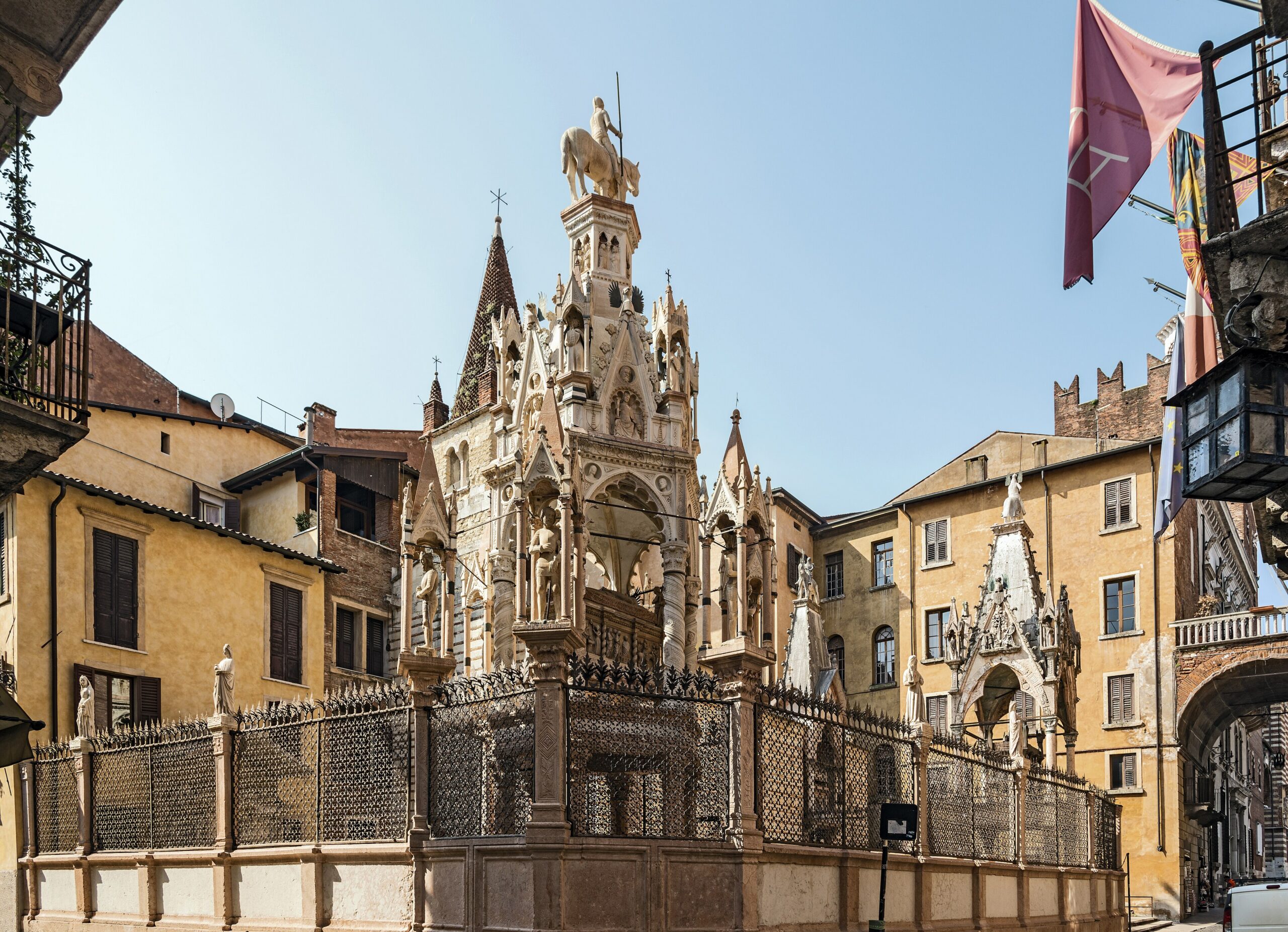
Inside a wrought-iron enclosure worked with the ladder motif — the family arms — stand the tombs of the lords of Verona, and they are held up in the air on columns, under Gothic canopies, with equestrian statues on top. There is nothing else like it in Italy.
Cangrande’s stands directly above the doorway of the church of Santa Maria Antica; the others — Mastino II, Cansignorio — are inside the enclosure. They are perfectly visible from outside: the enclosure itself opens only occasionally.
The Lamberti Tower
Time 45 minutes · Ticket about €8 with the lift · 368 steps on foot
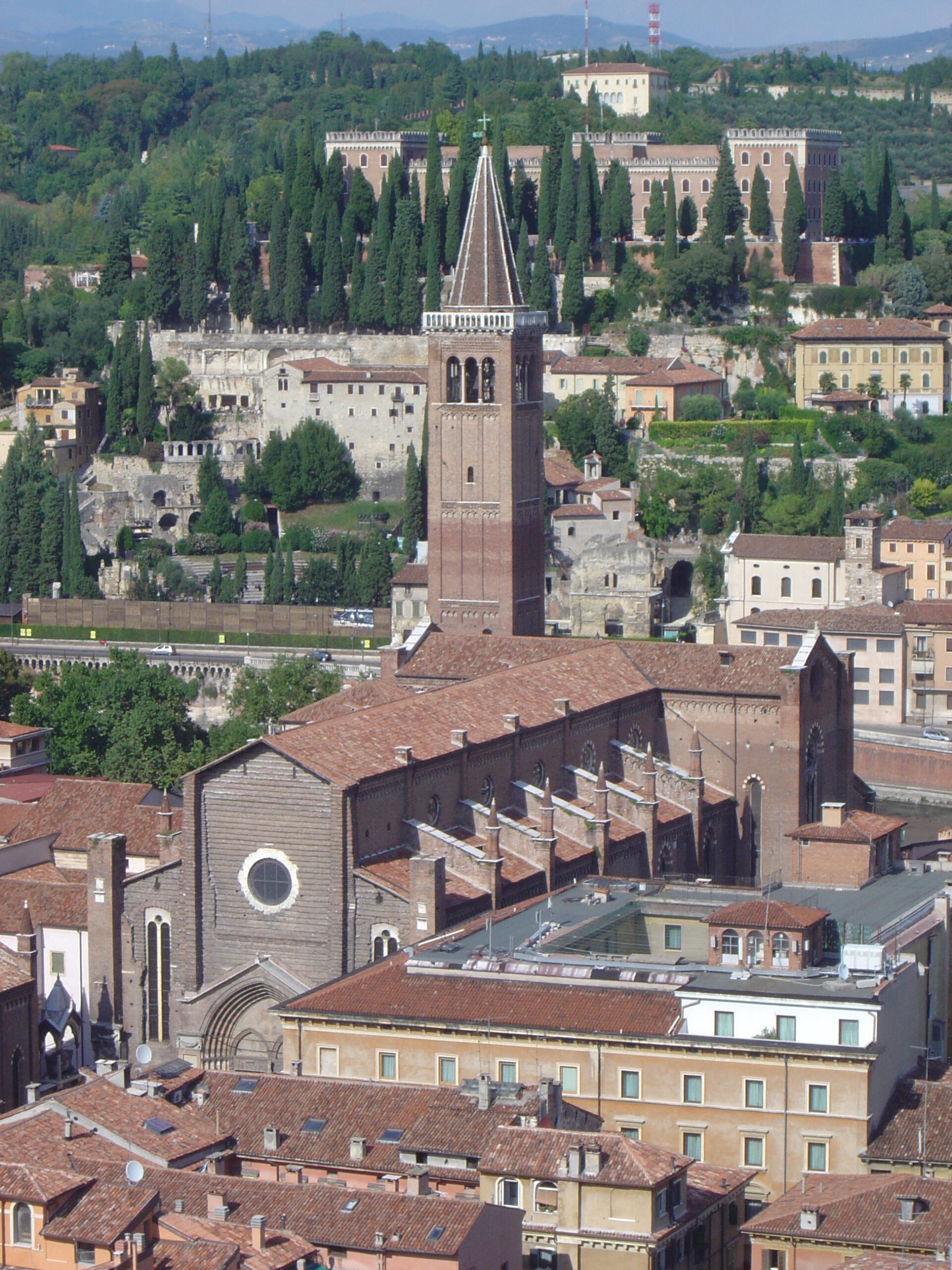
Eighty-four metres, the tallest in the city, begun in 1172 and finished in the nineteenth century — you can see the change of material halfway up. At the top are the two historic bells: the Rengo, which summoned the people, and the Marangona, which marked working hours and raised the alarm for fires.
The lift saves half the climb but not the last stretch. From up there the plan of the city makes sense: the bend of the Adige, the Arena, the red roofs and the hills behind.
The churches
San Zeno Maggiore
Time 1 hour · Ticket about €4 · The most underrated place in the city
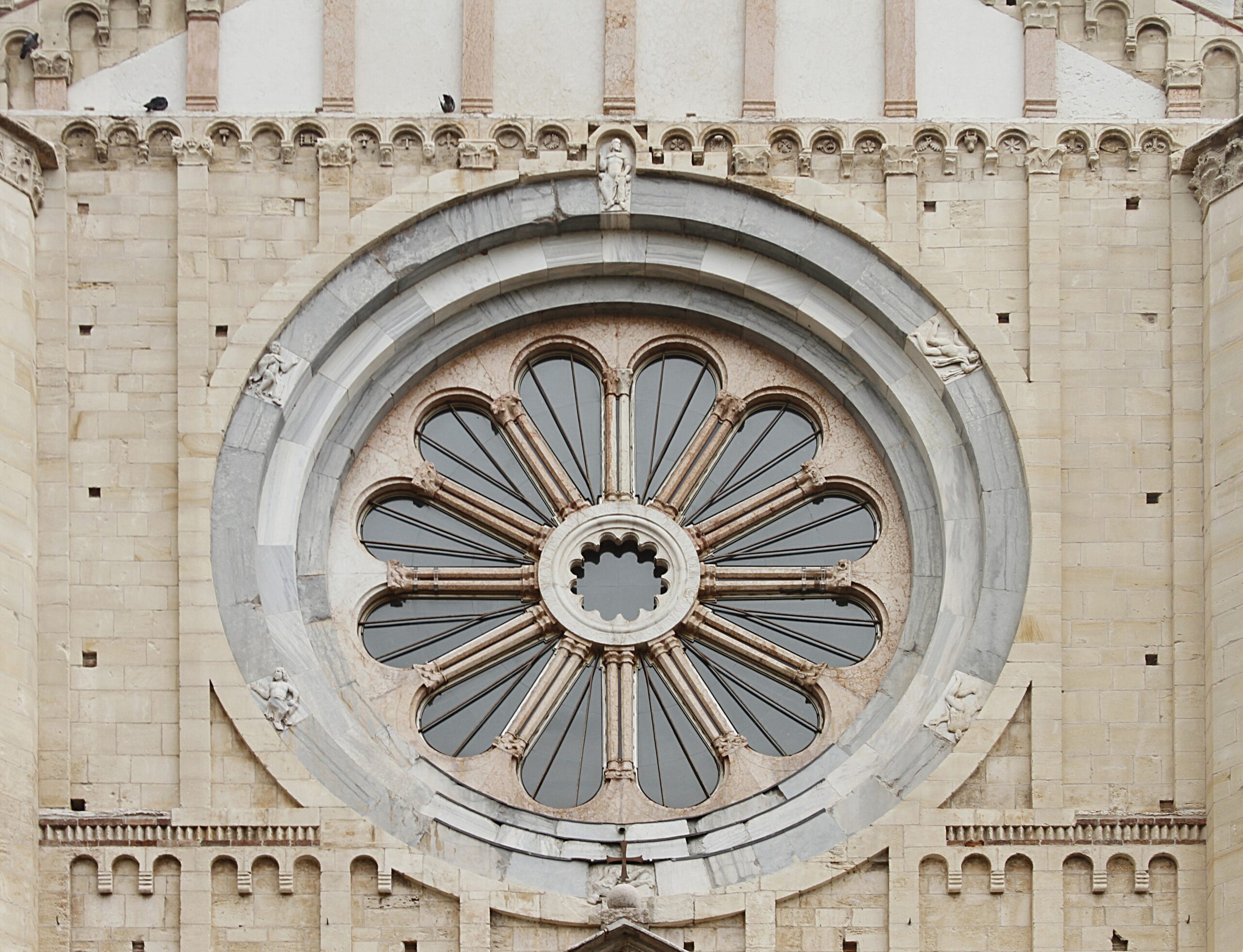
A kilometre west of Castelvecchio, off the day-visitor circuit, stands one of the most important Romanesque churches in Italy. The facade is of golden tufa, with Brioloto’s rose window known as the Wheel of Fortune: six human figures rise and fall around the circle, a moral lesson carved in stone.
The doorway is by Nicolò, flanked by reliefs of Genesis and the legend of Theodoric. But the thing to see is the bronze doors: forty-eight panels cast between the eleventh and twelfth centuries, with biblical stories and the miracles of Saint Zeno. The figures are out of proportion, the eyes enormous, the gestures exaggerated: this is not incompetence, it is a different language, and it works.
Inside, on the high altar, is Mantegna’s triptych of 1459, which invented the Renaissance way of painting an altarpiece. The three predella panels were carried off by Napoleon and never came back: two are in the Louvre, one in Tours, and photographic copies stand in their place. In the right-hand aisle, a statue of Saint Zeno smiling, extremely rare in Romanesque sculpture: the Veronese call him “san Zen che ride”, laughing Saint Zeno. And in the crypt, tradition says, Romeo and Juliet were married.
Sant’Anastasia
Time 45 minutes · Ticket about €4 · The largest church in the city
Gothic, with a facade that was never finished. Two things to look for. At the entrance, two statues of men bent under the weight of the holy water stoups: the Veronese call them i gobbi, the hunchbacks, and children have been climbing on them for centuries. And high up in a chapel, Pisanello’s Saint George and the Princess: a detached fifteenth-century fresco in which the knight is mounting his horse, with two hanged men in the background. It is International Gothic at its finest and it sits well above eye level: look at it slowly.
The Cathedral and San Fermo
Time 1 hour 30 for both · About €4 each · Combined ticket for the churches

The Cathedral stands towards the bend of the river. The Romanesque doorway is by Nicolò, the same sculptor as San Zeno, with the paladins Roland and Oliver carved either side; inside, in the first chapel on the left, there is an Assumption by Titian. The complex takes in the baptistery of San Giovanni in Fonte, with a single-block font carved in the thirteenth century.
San Fermo Maggiore is two churches one above the other: the lower one Romanesque, from the eleventh century, the upper one Gothic, from the fourteenth, with an extraordinary painted wooden ship’s-keel ceiling carrying four hundred portraits of saints. Few people and no queue.
Roman Verona
The city is far more Roman than it looks: the grid of the centre inside the river bend is still that of the castrum, and the remains are scattered everywhere, often wedged into houses. Verona has been a UNESCO site since 2000 precisely for this two-thousand-year continuity.
The Roman Theatre and the Archaeological Museum
Time 1 hour 30 · Ticket about €5 · On the left bank

First century BC, built into the hillside on the left bank. For centuries it lay buried under a whole quarter, and it was brought back to light in the nineteenth century by a private citizen, Andrea Monga, who bought the houses one by one in order to demolish them. Above the tiers, a former monastery houses the Archaeological Museum, and from its terrace you look down over the city.
In summer the Estate Teatrale Veronese is held here: Shakespeare performed inside a Roman theatre, which is a coincidence too good to waste.
Ponte Pietra, Porta Borsari, the Arco dei Gavi
Time 1 hour for all three · Free · Scattered around the centre
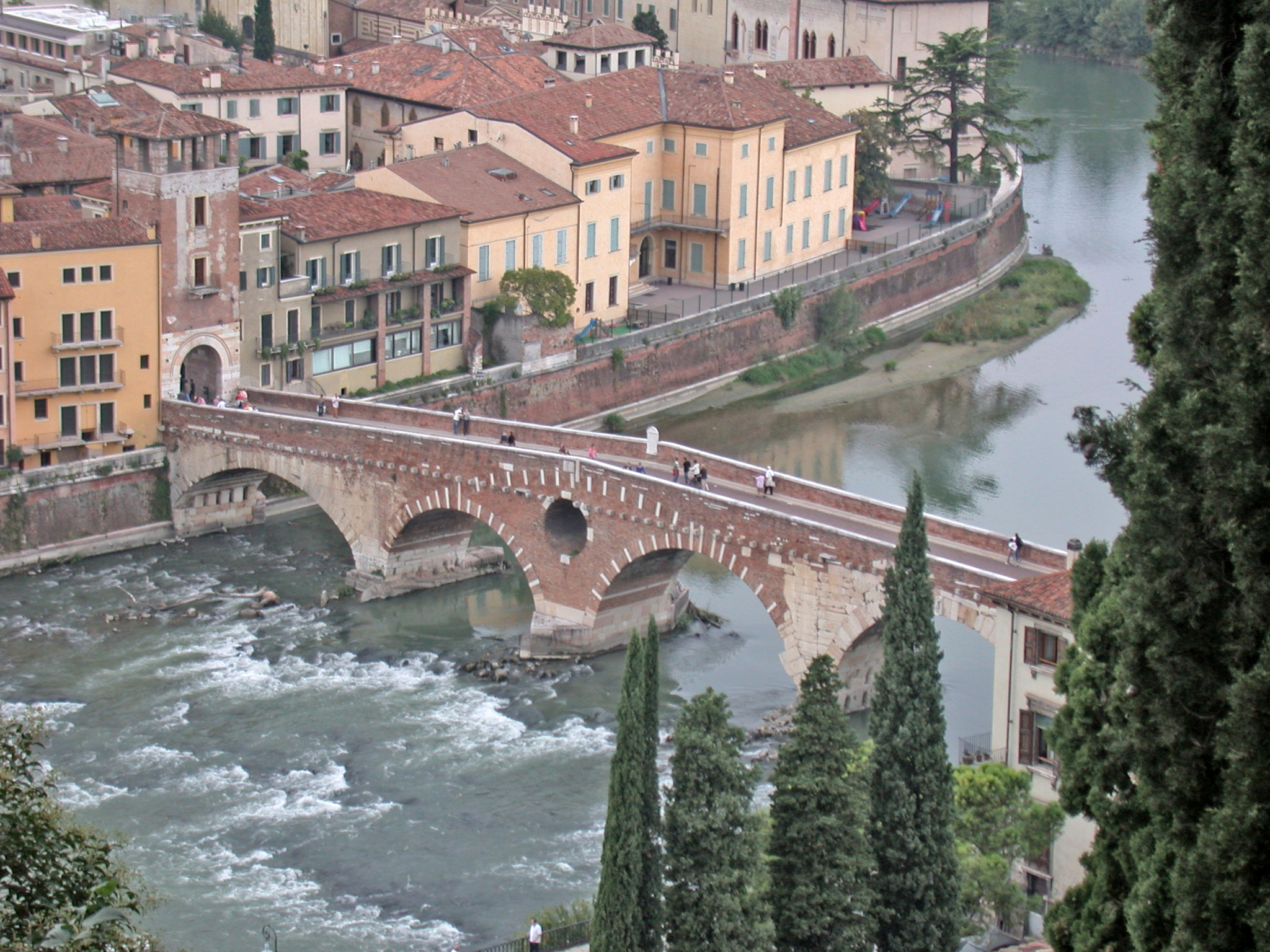
Ponte Pietra is the oldest bridge in the city: the two arches on the left-bank side are Roman, first century BC, the others were rebuilt in the Middle Ages and in the sixteenth century, and the difference in the stone is visible to the naked eye. This one too was blown up in 1945 and rebuilt by dredging the original blocks from the riverbed.
Porta Borsari is the main gate of the Roman city, first century AD, wedged between the buildings of a shopping street: people walk past without noticing it. The Arco dei Gavi, near Castelvecchio, was built by a private family to celebrate itself, dismantled by Napoleon and re-erected in 1932 a few metres away: beside it you can still see a stretch of the paving of the via Postumia, with the ruts left by carts.
Across the Adige, and the views
Castel San Pietro
Time 1 hour · Free on foot, funicular about €2 · Go at sunset

Above the Roman Theatre, at the top of the hill. The building is a nineteenth-century Austrian barracks and cannot be visited, but that is not why you climb: the terrace in front of it is the point from which you see the whole of Verona with the bend of the Adige, the bridges, the bell towers and the hills.
You go up on foot by a stepped path, ten steep minutes, or by the funicular reopened in 2017, which takes a minute and a half. The right moment is sunset, when the stone of the city turns pink.
The Giusti Garden
Time 1 hour · Ticket about €10 · One of the oldest gardens in Europe
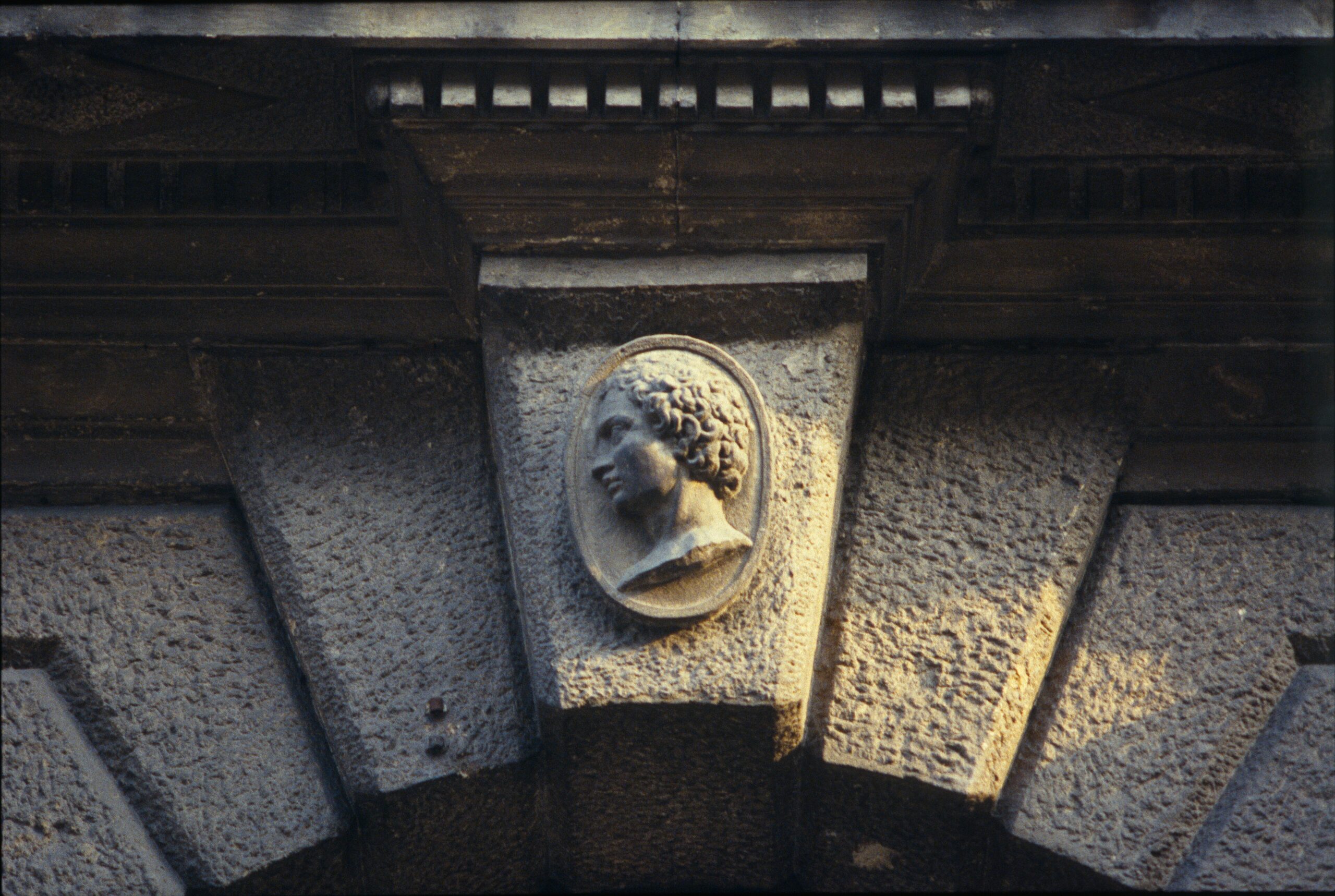
Laid out in the sixteenth century, it is one of the best-preserved Italian formal gardens in Europe: geometric hedges at the bottom, then an avenue of very tall cypresses climbing the hillside to a stone mask that once breathed fire on feast days, and from there a terrace over the city. There is also a hedge maze, among the oldest still in existence.
Goethe came through in 1786 and wrote about it in his Italian Journey; Mozart visited it too. It is ten minutes from Ponte Pietra and is almost always nearly empty.
Veronetta
Time as long as you like · Free · The university quarter
The left bank is called Veronetta and it is the quarter tourists do not reach: the university, neighbourhood osterie, normal prices, and the church of Santo Stefano, one of the oldest in the city. If you are after a real dinner rather than a tourist menu, this is where you cross the bridge.
The wine, all around the city
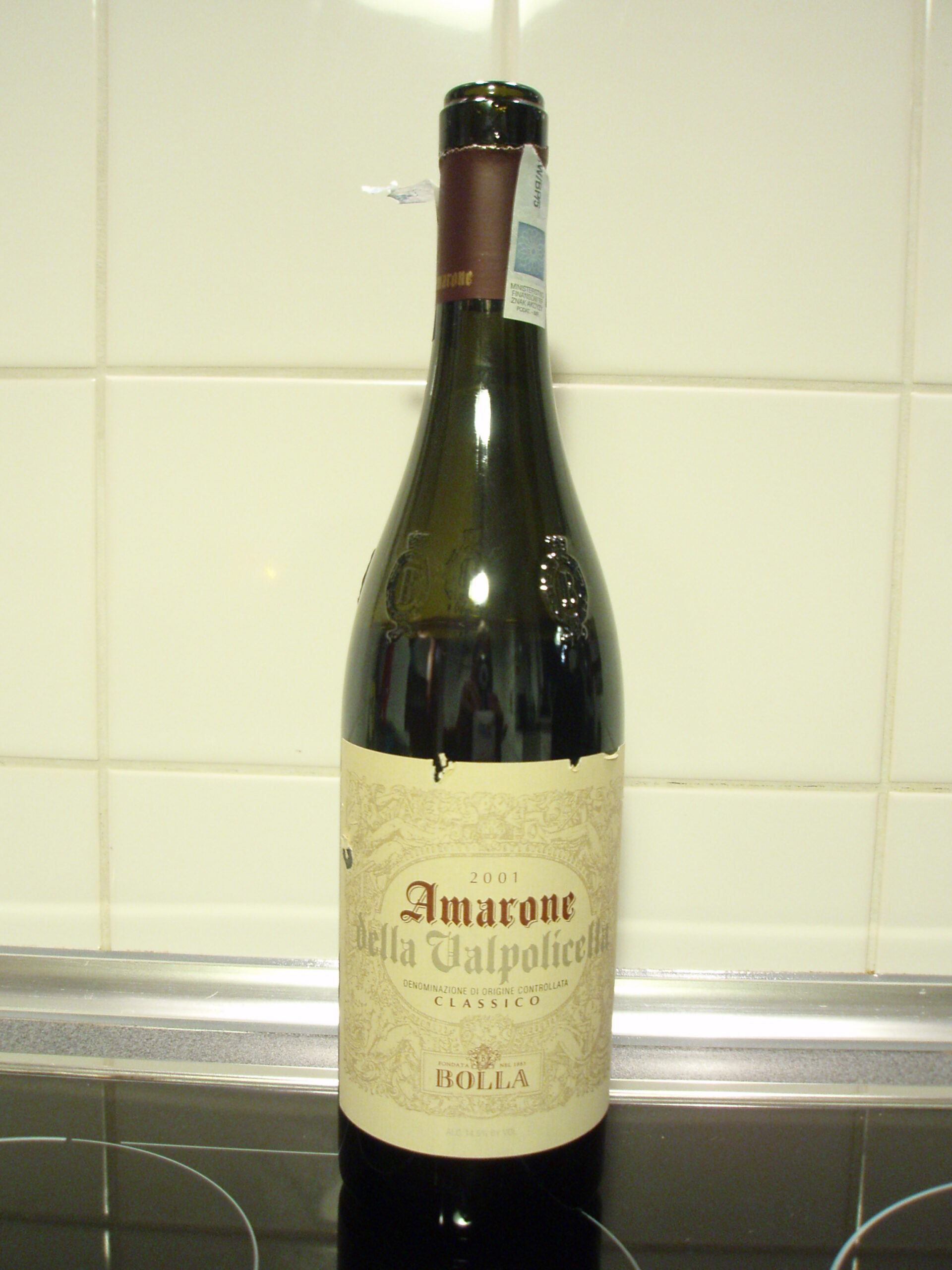
Verona is ringed by important denominations in every direction, and it hosts Vinitaly, the largest wine fair in Italy, every April.
To the north is the Valpolicella, which begins twenty minutes away by car. Amarone comes from appassimento: the grapes rest on racks for three or four months, lose half their weight in water and only then are they pressed, giving a wine of fifteen or sixteen degrees that ages for decades. Ask to see the fruttaie, the rooms where the grapes dry: between October and January they are full. The same method produces Recioto, the sweet version, which is the oldest wine of the area.
To the east is Soave, with a perfectly preserved Scaliger castle on the hill and walls running down to enclose the town: the white wine is made from garganega grapes. To the south-west, towards the lake, come Bardolino and Lugana.
Wineries are visited always by appointment, with a tasting costing between twenty and forty euros. Without a car the answer is an organised tour from Verona: there is no public transport between one winery and the next, and whoever drives does not drink.
What you eat
Veronese cooking belongs to the plain and the river. Bigoli are a thick extruded spaghetti, served with sardines or with donkey ragù. Risotto all’Amarone is the dish everyone tries and it really is good. Pastissada de caval is horsemeat stewed slowly in wine: it is the historic dish of the city and it is worth knowing that before you order.
Gnocchi have an official role here: the Veronese carnival is called Venerdì Gnocolar and the city’s carnival figure, the Papà del Gnoco, carries a sceptre with a gnocco skewered on it. The cake is pandoro, patented in Verona by Melegatti in 1894.
Three things to know
The centre sits in a river bend and is walked end to end. The Arena to Piazza delle Erbe is ten minutes, to Castelvecchio fifteen, to Ponte Pietra twenty. The only useful transport is the funicular to Castel San Pietro.
Juliet’s balcony dates from 1936. Knowing that in advance changes the mood: five minutes in the courtyard, which is free, and on you go. The real things start a hundred metres further along.
San Zeno is worth the extra kilometre. It is off the circuit and most day visitors never get there. It is the second thing in the city after the Arena and it costs four euros.
When to go
April to June and September to October. Autumn coincides with the Valpolicella harvest and with the drying rooms at their fullest. Summer has the opera at the Arena, which is a serious reason to come, but also heat, crowds and an impossible Lake Garda.
Two weeks to watch: Vinitaly in April, when hotel prices double and triple, and Verona in Love, around Valentine’s Day, which fills the centre. The opera season, June to September, pushes prices up only on performance nights.
What admission costs
| Place | Approximate cost |
|---|---|
| Piazza delle Erbe, Piazza dei Signori, the Scaliger Tombs | free |
| Ponte Pietra, Scaliger Bridge, Porta Borsari, Arco dei Gavi | free |
| Courtyard of Juliet’s House | free |
| Castel San Pietro on foot | free |
| Funicular to Castel San Pietro | about €2 |
| San Zeno, Sant’Anastasia, Cathedral, San Fermo | about €4 each |
| Roman Theatre and Archaeological Museum | about €5 |
| Juliet’s House | about €6 |
| Lamberti Tower with the lift | about €8 |
| Castelvecchio Museum | about €9 |
| Giusti Garden | about €10 |
| Arena, daytime visit | about €12 |
| Opera at the Arena, stone tiers | from a few tens of euros |
Reference figures for August 2026: prices change, so check the official sites. The Verona Card covers almost every monument in the city and pays for itself from three admissions upwards.
How to choose, by the time you have
Half a day. The Arena, Piazza delle Erbe and Piazza dei Signori with the Scaliger Tombs. A kilometre in all and about twelve euros.
One day. Add the Lamberti Tower, Sant’Anastasia, Castelvecchio with Scarpa’s museum and sunset from Castel San Pietro.
Two days. The second day is for San Zeno in the morning and the left bank in the afternoon: Roman Theatre, Giusti Garden, Veronetta.
Three days. On the third you go out of town: the Valpolicella wineries, or Sirmione and Lake Garda half an hour away by train, or Mantua with Mantegna’s Camera degli Sposi.
Frequently asked questions
What must you see in Verona?
Five things: the Arena, the Castelvecchio museum with Carlo Scarpa’s installation, the bronze doors of San Zeno Maggiore, Piazza delle Erbe with the Lamberti Tower and sunset from Castel San Pietro. Two of those are free.
Is Juliet’s balcony genuine?
No. The house is fourteenth-century and belonged to the Cappello family, but the balcony was fitted in 1936 using a fragment of a fourteenth-century sarcophagus. Shakespeare never went to Verona, and the bronze statue, from 1969, is now a copy: the original was withdrawn in 2014 because it had cracked. The courtyard is free and takes five minutes.
Why does Castelvecchio matter to architects?
For the museum installation by Carlo Scarpa, made between 1958 and 1964: he left the layers of each period visible instead of hiding them, hung the works on supports of iron and concrete and opened unexpected routes through the building. It is one of the masterpieces of twentieth-century museum design. The most famous point is the equestrian statue of Cangrande on a cantilevered shelf over the void, in the open air.
Why is San Zeno worth the walk?
Because it is the second thing in Verona after the Arena and it stands a kilometre off the circuit, so almost no day visitor reaches it. It has the Wheel of Fortune rose window, forty-eight bronze panels of the eleventh and twelfth centuries on its doors and Mantegna’s 1459 triptych on the altar. Admission is about four euros.
Can you see an opera at the Arena?
Yes, from June to September. The opera festival has run since 10 August 1913, when Aida was staged for the Verdi centenary: around thirteen thousand people, no amplification, and the small candles the audience lights as the lights go down. Seats on the stone tiers cost a few tens of euros but you sit on the stone: you need a cushion, which can be hired at the entrance.
What is Amarone?
The wine of the Valpolicella, which begins twenty minutes from Verona. It comes from appassimento: the grapes rest on racks for three or four months, lose half their weight in water and only then are pressed, giving a wine of fifteen or sixteen degrees that ages for decades. Wineries are visited by appointment and a tasting costs between twenty and forty euros.
What do you eat in Verona?
Bigoli with sardines or with donkey ragù, risotto made with Amarone, gnocchi — the local carnival is called Venerdì Gnocolar — and pastissada de caval, which is horsemeat stewed in wine and is worth understanding before you order. The cake is pandoro, patented here by Melegatti in 1894.
Is Verona a UNESCO site?
Yes, since 2000, and not for a single monument but for two thousand years of urban continuity: the Roman grid inside the bend of the Adige, the imperial remains wedged between the houses, the fourteenth-century Scaliger layout and the Venetian and Austrian fortifications, all superimposed and all still legible.
When is the best time to visit Verona?
April to June and September to October. Autumn coincides with the harvest in the Valpolicella. Summer has the opera at the Arena but also heat and crowds. Avoid the week of Vinitaly in April, when hotel prices double or triple.
September 3, 2026