

Stockholm in 3 days: Djurgården, the Nobel banquet and the painted metro
Three days is the right amount of time for Stockholm. The first is for understanding the geography — the island where the city was born, the seventeenth-century warship, the cliff from which you can see everything. The second is spent almost entirely on a single island, Djurgården, where the Swedes have lined up the museums through which they tell their own story: a village of real houses taken apart and rebuilt, the museum of everyday life, ABBA. The third is the one almost no one puts on their itinerary, and yet it’s the most distinctive: the City Hall where the Nobel banquet is held, and the metro, which here is a hundred-kilometre-long art gallery.
At a glance
- Duration · three full days
- How much walking · 8, 9 and 7 km — Stockholm is compact but has hills
- Book ahead · the Vasa Museum in summer, and the guided tour of City Hall, which is the only way in
- Budget · SEK 2,300-3,200 per person, excluding lodging — around €200-285
- Transport · 72-hour SL ticket, about SEK 350: covers metro, buses, trams and ferries
- Good to know · cash is barely accepted in Sweden. You’ll need a card
- What’s left out · the archipelago and Drottningholm: that’s day four and five
The colours mark out the three days. Each day is a loop: you always return toward the centre.
Day 1 — The Old Town, the Vasa and the view from above
8 km · 5 stops · 9:00 am to 9:00 pm · on foot and by ferry
The first day is the one-day itinerary, and we cover it here briefly. If you want the details — the changing-of-the-guard times, what to look for inside the armoury, the ninety-centimetre-wide alley — you’ll find them on the dedicated page; here the outline is enough, because the real value of this itinerary lies in the two days that follow.
1 – Gamla Stan and Stortorget
Time 2 hours · Free · Metro Gamla Stan

Stockholm was founded in 1252 on this island, at the narrowest point between Lake Mälaren and the Baltic, to control who passed through. Its centre is Stortorget, the square of coloured façades, which is also the site of the 1520 bloodbath: the Danish king Christian II had about ninety Swedish notables beheaded there over two days, and the revolt that followed led to independence from Denmark. Look for: the alley Mårten Trotzigs gränd, ninety centimetres wide, and inside Storkyrkan the wooden Saint George and the Dragon from 1489.
2 – The Royal Palace
Time 1.5 hours · Admission about SEK 200 (4 museums) · Changing of the guard usually 12:15pm, 1:15pm on Sundays

Six hundred rooms, built over sixty-three years after the Tre Kronor castle fire of 1697. The same ticket gets you into the apartments, the treasury, the medieval foundations and, above all, the armoury, where the clothes Swedish kings were wearing at the moment they died are kept — including the one with the bullet hole from Gustav III, killed at a masked ball in 1792.
3 – Riddarholmen
Time 30 minutes · Free · 8-minute walk

A small island of seventeenth-century palaces occupied by law courts, with no shops and no people. The Riddarholmskyrkan, with its pierced cast-iron spire, is the city’s oldest building and the mausoleum of Sweden’s kings. The reason to come is the quay behind it: from there you look out over the Riddarfjärden, with City Hall and Södermalm.
4 – The Vasa Museum
Time 2 hours · Admission about SEK 220 · Ferry from Gamla Stan, 15 minutes

The most powerful warship in the Swedish navy sank on 10 August 1628 after thirteen hundred metres of sailing, flags flying and the whole city watching: too tall, too narrow, with the gun ports open for the salute. It lay on the bottom for 333 years, and in the low-salinity Baltic the worm that eats away wood cannot survive: when it was raised, in 1961, it was intact. What you see today is 98 percent original wood, with seven hundred sculptures.
5 – Monteliusvägen at sunset
Time 1 hour · Free · Ferry to Slussen, then uphill
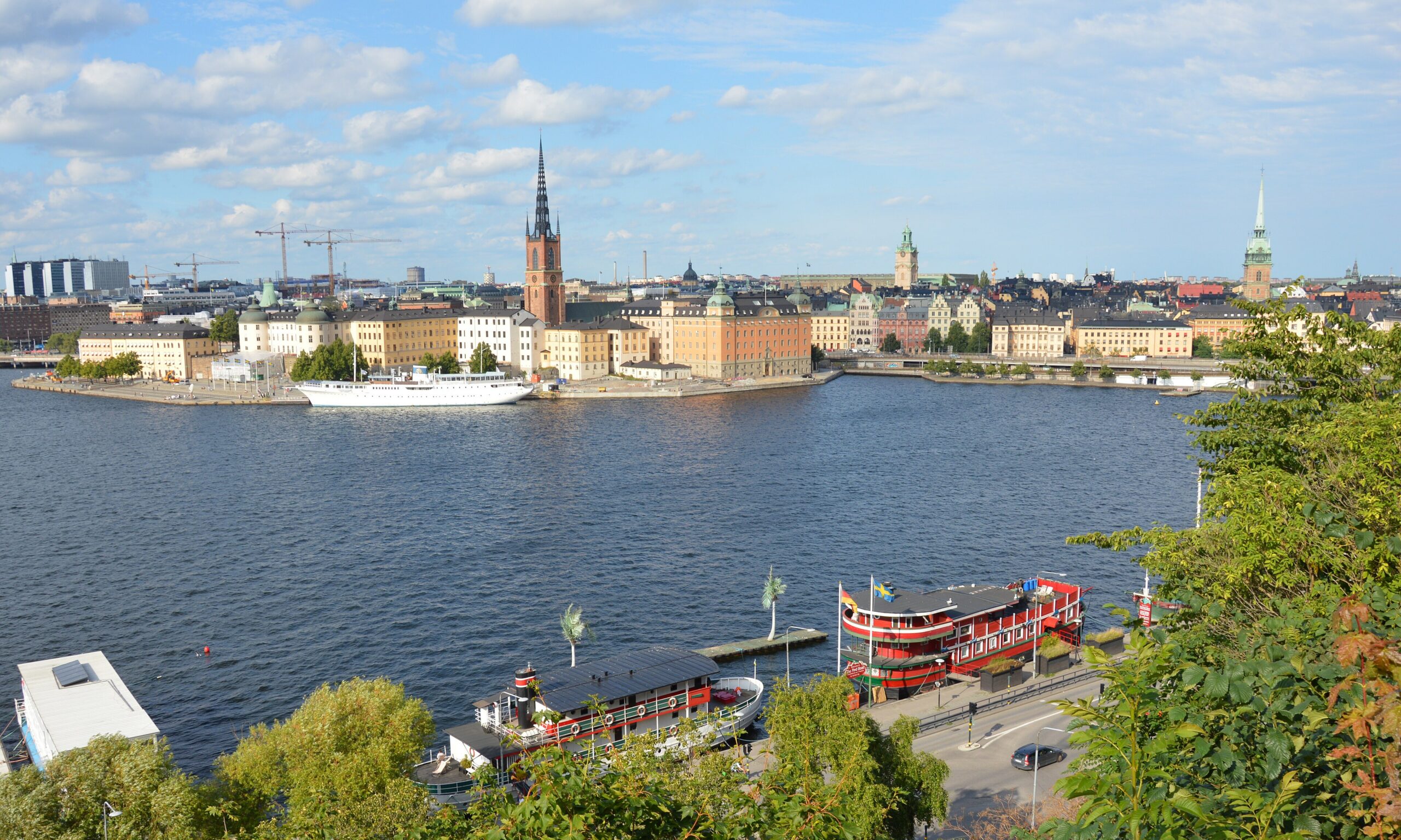
Five hundred metres of path along the edge of the Södermalm cliff, with wooden houses at your back and this morning’s whole city laid out below. In June the sun sets around 10pm and it never really gets dark; in December it sets at 2:50pm. Dinner is had by heading down to Mariatorget or the SoFo neighbourhood.
Nei giorni feriali quasi tutti i locali svedesi servono fra le 11 e le 14 il piatto del giorno con insalata a volontà, pane, burro e caffè a 130-160 corone: metà di quanto costa la stessa cucina la sera. In tre giorni la differenza si sente sul serio. Da provare: le köttbullar con puré e mirtilli rossi, la toast Skagen con i gamberetti, il salmone in tutte le forme e, il giovedì, la zuppa di piselli gialli con le frittelle, che è un’abitudine militare del Cinquecento rimasta viva. La fika — caffè e kanelbulle alla cannella e cardamomo — si fa una volta al giorno come minimo.
Day 2 — Djurgården, the island of museums
9 km · 4 stops · 9:30 am to 10:00 pm · a single island, then the ferry
The second day is spent almost entirely on Djurgården, once the royal hunting reserve — the name means “animal garden” — and today a green island within the world’s largest urban national park. Here, side by side, are the museums through which Sweden tells its own story. The best way to get there is the ferry from Slussen, which is included in the transport ticket.
6 – Skansen
Time 3-4 hours · Admission SEK 175-265 depending on season · Open every day of the year, including Christmas

Skansen is the world’s first open-air museum: it was opened by Artur Hazelius in 1891, and the idea was his and has been copied everywhere since. Hazelius had understood something ahead of everyone else: industrialisation was erasing rural Sweden within a single generation, and preserving it meant more than putting objects in a display case. So he began buying entire houses all over the country, taking them apart and rebuilding them on this hill.
Today there are around a hundred and fifty of them: farmhouses from Dalarna, an eighteenth-century wooden church where weddings still take place, a potter’s house, a print shop, a village school, a Sami homestead with tents and reindeer. These aren’t stage sets: inside are people in costume actually practising the trade — the blacksmith hammers, the baker bakes bread, the weaver weaves — and they answer questions while staying in character. The upper part also has a zoo of Nordic animals: elk, brown bears, wolves, wolverines, lynxes, otters and, in the children’s section, farmyard animals.
What makes Skansen different from a museum is that it’s also the Swedes’ living room: Valborg on 30 April with its bonfires, Midsummer with the flower-decked maypole and dancing, the Allsång concerts where thousands sing together on summer Tuesdays, the Christmas market. If you happen to be there on one of these dates, change your plans and come here.
Skansen is big and uphill. There’s an escalator and a lift at the main entrance (Hazeliusporten), and it’s worth using them: the hill is steep.
7 – The Nordic Museum
Time 1.5 hours · Admission about SEK 160, free under 18 · 10-minute walk
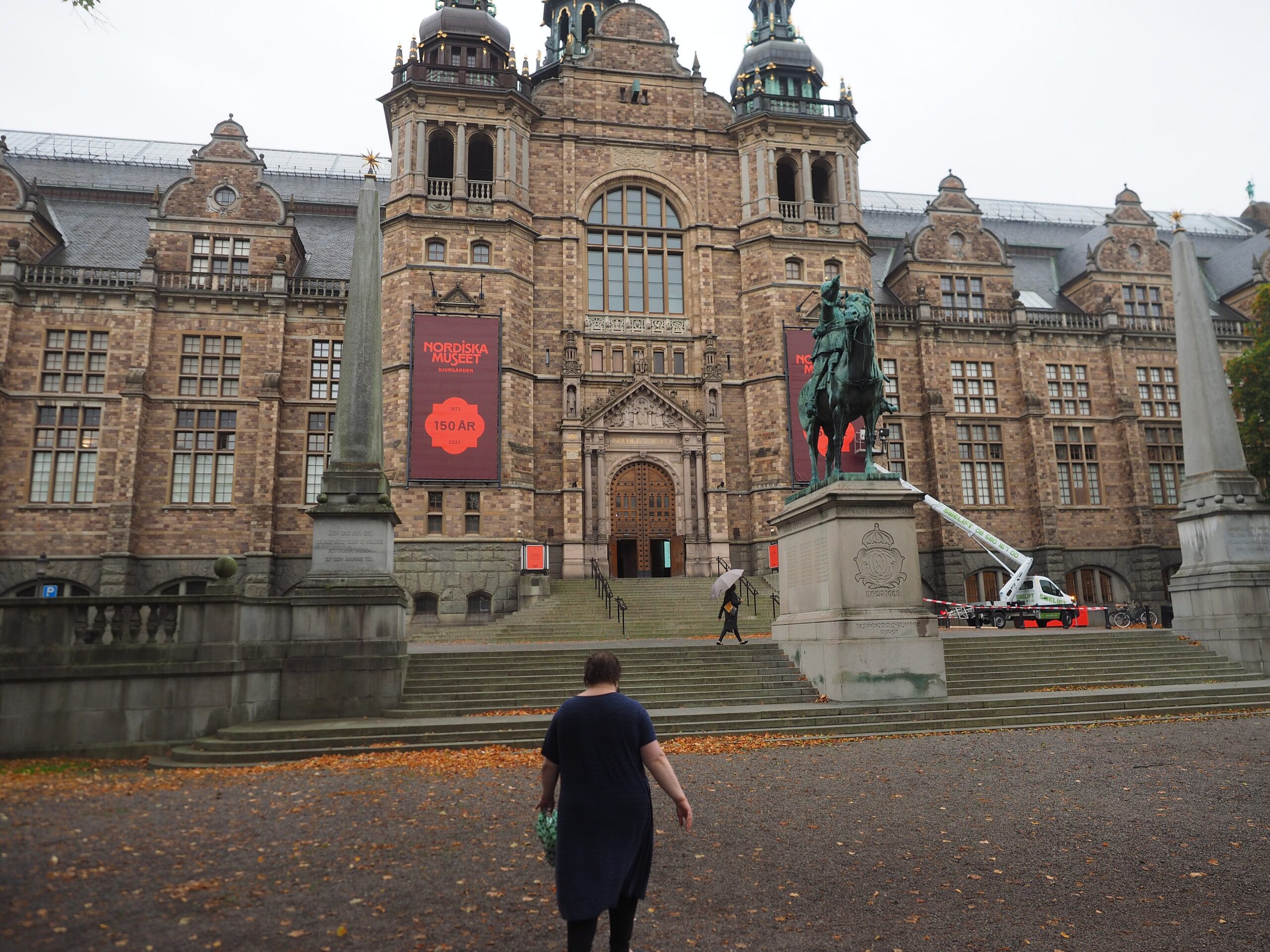
It’s Skansen’s indoor sibling, and it’s Hazelius again: same founder, same idea, an enormous building in Danish Renaissance style, opened in 1907. In the plans it was meant to be four times bigger, a kind of national Valhalla: the money ran out and only part of it was built, but the central hall, twenty-four metres high, gives you a sense of what they had in mind.
At the centre of that hall stands Carl Milles’ Gustav Vasa: a colossal statue in painted oak, seated like an emperor, with “Vare svenske” — be Swedish — inscribed below. Above and around it are the collections, which trace the story of everyday Swedish life from the sixteenth century to today: clothing, interiors, laid tables, traditions. The best sections are the one on Sami culture — the largest such collection in the world, now displayed in collaboration with the Sami themselves, which has completely changed how it’s presented — and the one on set tables, which tells the story of Swedish society through how people ate.
8 – ABBA The Museum (or the Vikingaliv, or the Thielska)
Time 1.5 hours · Admission about SEK 350, entry by booked time slot only · 10-minute walk
In 1974 four Swedes won Eurovision in Brighton with Waterloo and changed the course of European pop music: ABBA have sold something like four hundred million records and are still, after the music itself, one of Sweden’s most profitable exports. The museum is built to be used: you sing inside a booth, dance with holograms of the four, play a piano connected to the real one at Benny’s house — when he plays, this one moves too. There are the original costumes, and the reason they were so outlandish: Swedish tax law allowed stage clothes to be deducted only if they were unwearable in normal life.
It’s not a cheap museum, and it’s not for everyone. The two alternatives on the same island: the Vikingaliv, a Viking museum with a narrative ride, which works well with children; and the Thielska Galleriet at the far end of Djurgården, an early-twentieth-century private villa with works by Munch, Zorn, Carl Larsson and Strindberg, in an almost awkward silence — the choice for those who prefer art to crowds.
9 – Fotografiska, in the evening
Time 1.5 hours · Admission about SEK 200 · Open until 11pm on weekends · Ferry to Slussen

A photography museum in the former customs building on the Södermalm quay, and the only major Stockholm cultural institution open in the evening. Four big exhibitions a year plus a series of smaller ones, always high quality: from Nan Goldin to Salgado to Annie Leibovitz. Even if you’re not eating, go up to the top-floor bar: the glass wall looks out over the harbour and Djurgården, where you’ve spent the whole day.
Day 3 — The Nobels, the painted metro and the other shore
7 km · 4 stops · 9:30 am to 8:00 pm · on foot and by metro
10 – City Hall, where the Nobel banquet is held
Time 1.5 hours · Guided tour only, about SEK 150 · Tower separate, about SEK 80, open May to September
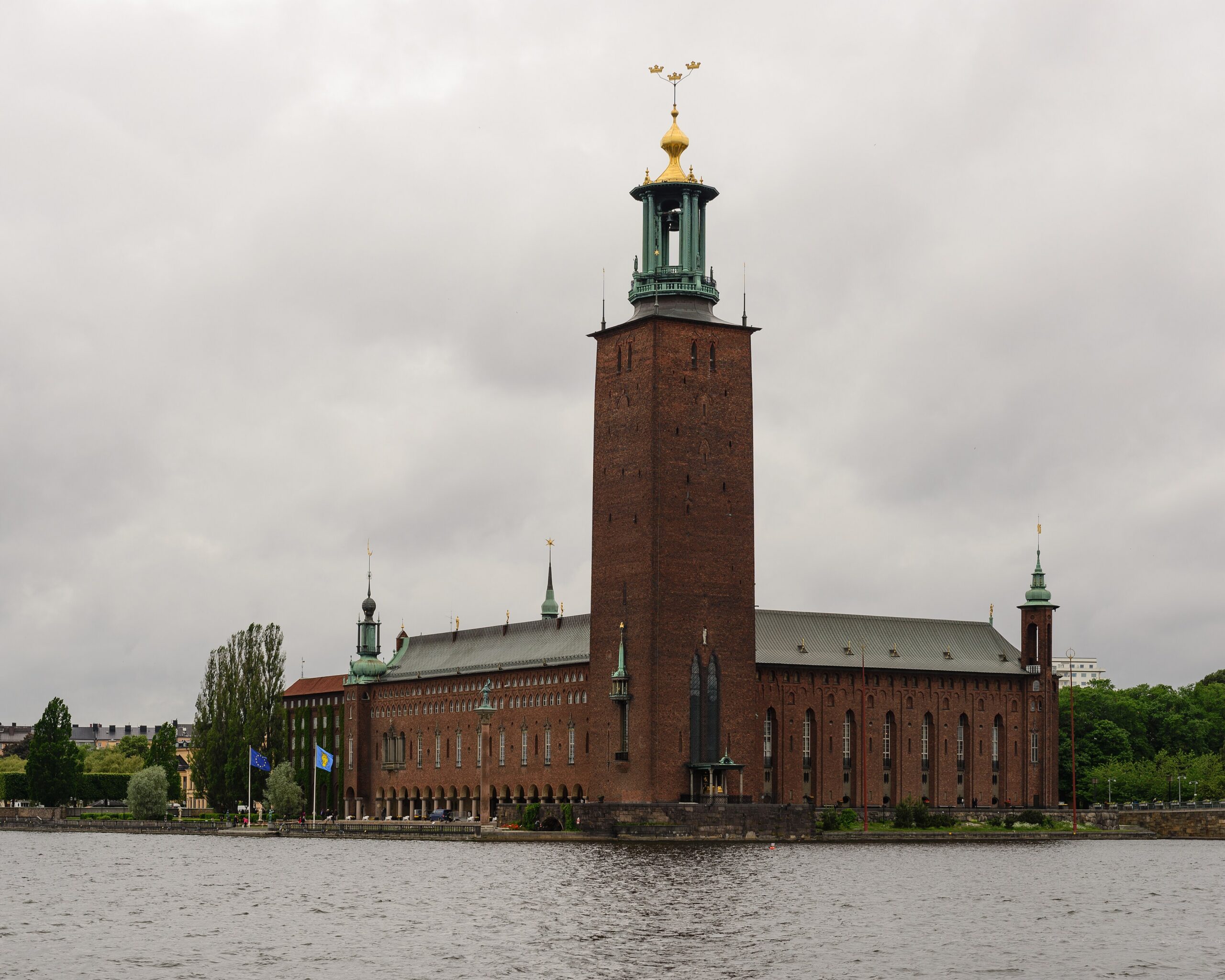
The Stadshuset is Stockholm’s most famous monument and it isn’t old: Ragnar Östberg built it between 1911 and 1923, with eight million handmade bricks, in a style that blends Nordic Romanesque, Venice and Art Nouveau. The tower is a hundred and six metres tall and topped with the three gilded crowns, the symbol of Sweden.
You can only get in with the guided tour, which lasts forty minutes and departs at fixed times in Swedish, English and sometimes other languages: tickets are bought on the same day at the entrance, but in peak months they sell out, so it’s worth booking online. There are two halls, and they’re the best in the city.
The Blå hallen, the Blue Hall, is the covered courtyard where the Nobel Prize banquet is held every 10 December: thirteen hundred guests, service timed to the second, and the staircase the laureates descend live on television — Östberg redesigned it several times, studying how to walk down stairs in a long gown without looking at your feet. The hall is called blue but is bare red brick: the architect had planned to plaster it in blue, then liked the colour of the brick too much and changed his mind, keeping the name.
The Gyllene salen, the Golden Hall, is covered in eighteen million gold and glass mosaic tiles: it features the Queen of Lake Mälaren, the allegory of Stockholm between East and West, with a detail the guides always mention — one figure is missing the top of its head, because the project’s measurements didn’t add up and the wall turned out lower than planned. Here, after the banquet, the dancing happens.
From May to September you can climb the tower: the first stretch by lift, then a spiral ramp with no steps. From up there you see the city in a full circle, and it’s the best view of Stockholm after last night’s.
11 – The metro as an art gallery
Time 1.5 hours · Cost just the metro ticket · Starting point T-Centralen
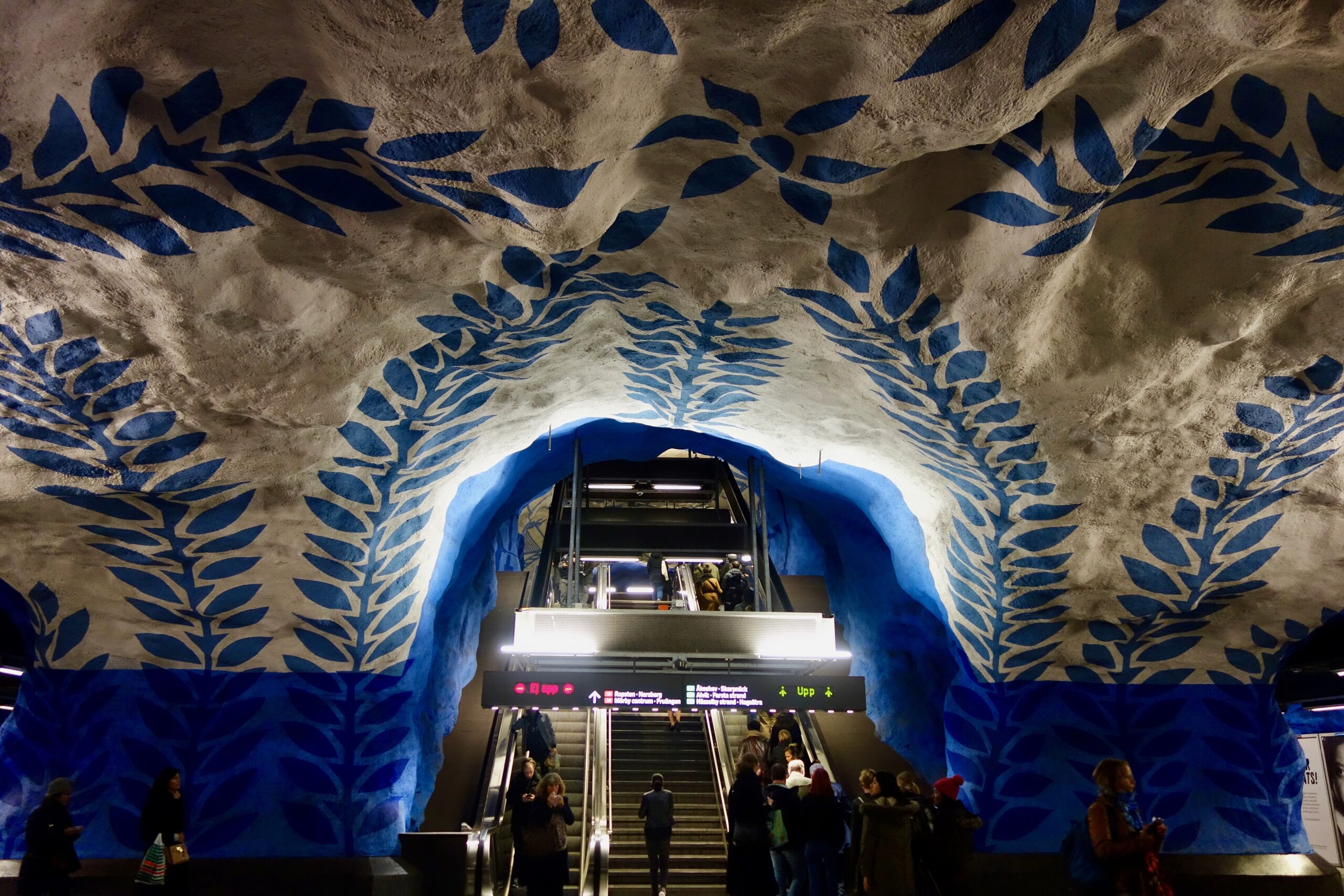
Stockholm’s tunnelbana is billed as “the longest art gallery in the world,” and for once that tourist-office line is accurate: ninety of its hundred stations are decorated by artists, across a hundred and ten kilometres of network. The story behind it is interesting: in the 1950s two artists, Vera Nilsson and Siri Derkert, campaigned so that public art wouldn’t stay confined to bourgeois museums but would be where working people passed through. The city agreed, and every new station has had an artist ever since.
Many stations on the blue line are cut straight into the bedrock and left raw, then painted: the effect is that of a coloured cave. The circuit to do, all on the blue line, takes an hour and a quarter:
- T-Centralen — the large blue leaves on a white background by Per Olof Ultvedt, from 1975: painted to calm commuters in the city’s most chaotic station. It’s the iconic image of the Stockholm metro.
- Kungsträdgården — the strangest: red, green and white, with statues, columns and genuine architectural fragments recovered from the Makalös palace, demolished in the nineteenth century, arranged like an archaeological dig. A rare spider species lives underground here, having arrived with the plants from the garden above.
- Solna centrum — a fiery red sky over a green fir forest, a kilometre long: it dates from 1975 and is a political statement, about rural depopulation and forest destruction.
- Stadion — the rainbow on a blue background, made in 1973 for the fiftieth anniversary of the 1912 Olympic Games; today it has become the symbolic site of Stockholm Pride.
- Tekniska högskolan — on the red line: the four elements, polyhedra and physics formulas, for the stop at the Institute of Technology.
You can do it all on a single ticket, because you never go back through the turnstiles. The best time is between 10am and 3pm: outside rush hour the platforms are empty and you can photograph them without people in the way.
12 – Kungsholmen and the Norr Mälarstrand promenade
Time 2 hours · Free · Metro to Rådhuset
Kungsholmen is the island where Stockholmers who don’t want tourists outside their door live: government offices, law courts, and on the south side one of the city’s most beautiful promenades. Norr Mälarstrand runs along the water for a couple of kilometres, with willow trees, moored boats — many lived in year-round — and the Södermalm cliff facing it. There are kiosks and floating cafés, and in summer people go swimming.
Along the way stands the Rådhuset, Carl Westman’s 1915 courthouse, a red-brick castle with an octagonal tower that is City Hall’s austere twin. Anyone in the mood for more walking can continue on to Fredhäll and then head back via Kungsholms kyrka and the Kungshallen covered market.
13 – Östermalms Saluhall and dinner
Time 1.5 hours · Free admission · Closed Sunday evening · Metro to Östermalmstorg
The last stop is the Östermalm covered market, from 1888, a brick and iron pavilion reopened in 2020 after five years of restoration. It’s the Swedish equivalent of a late-nineteenth-century European covered market: stalls of fish, reindeer and elk meat, cheeses, herring marinated a dozen different ways, and inside the market a series of small eateries where you sit at the counter.
It’s the right place for your last dinner in Stockholm: you eat things not easily found in restaurants — a well-made toast Skagen, reindeer meat, smoked fish — for a fair price by local standards. Around it lies Östermalm, the city’s elegant district, with its late-nineteenth-century buildings, shopping streets and the Royal Dramatic Theatre, the Dramaten, where Ingmar Bergman directed.
Il secondo giorno è il più esposto al tempo, perché Skansen è all’aperto. Se piove forte, invertitelo con il terzo: municipio e metropolitana sono al coperto e funzionano con qualsiasi tempo. Se venite fra novembre e febbraio, tenete conto che il sole cala fra le 14:50 e le 15:30: le tappe all’aperto vanno messe la mattina, e le viste dall’alto si fanno al buio, che in Svezia non è un ripiego — con la neve, la città illuminata dal Monteliusvägen è un’altra cosa. I musei gratuiti (Nationalmuseum, Moderna Museet, Historiska) sono le riserve da tenere per i pomeriggi che si svuotano.
What three days cost
| Voce | Costo |
|---|---|
| Palazzo Reale | circa 200 corone |
| Vasamuseet | circa 220 corone |
| Skansen | 175-265 corone |
| Nordiska museet | circa 160 corone |
| ABBA The Museum (facoltativo) | circa 350 corone |
| Fotografiska | circa 200 corone |
| Municipio, visita guidata e torre | circa 230 corone |
| Trasporti, biglietto SL da 72 ore | circa 350 corone |
| Pasti, 3 giorni | 900-1.400 corone |
| Totale | circa 2.435-3.375 corone a persona, sui 215-300 euro |
Figures as of September 2026. Payment is in Swedish kronor, exchange rate around 11.3 to the euro, and almost always by card. Two concrete ways to bring the bill down: eat the dagens lunch at midday and keep dinner light, and swap one of the paid museums for one of the many free ones. Skip the ABBA Museum and you drop below 2,100.
Frequently asked questions
Are three days enough for Stockholm?
For the city, yes, and comfortably: you see the old town, the Vasa, the whole of Djurgården, City Hall and the metro without rushing. What’s left out is the archipelago, and that’s no small detail: it’s twenty-four thousand islands and the other half of the experience. If you have an extra day, give it to that.
Is the Stockholm Pass worth it for three days?
Do the maths: the card costs quite a bit and only makes sense if you’re visiting three or four paid museums a day, which doesn’t happen here. With this itinerary you spend less by buying single tickets. The 72-hour SL transport ticket, on the other hand, always pays for itself.
How do you get into City Hall?
Only with the guided tour: you can’t wander around on your own. Tours last forty minutes, leave at fixed times in Swedish and English, and sell out during peak months — it’s worth booking online the day before. The tower has a separate ticket and is only open from May to September, with entries every forty minutes.
Is Skansen worth the price?
Yes, if you spend at least three hours there: it’s the world’s first open-air museum, with a hundred and fifty genuine historic buildings, craftspeople at work and a zoo of Nordic animals. If you go for just an hour, no. The ticket costs more in summer, when more is open. With children, it’s the best thing in Stockholm.
Which metro stations are worth seeing?
The finest are on the blue line: T-Centralen with the blue leaves, Kungsträdgården with the fragments of the demolished palace, Solna centrum with the red sky over the fir forest, Stadion with the rainbow. It all takes an hour and a quarter with a single ticket, without ever leaving through the turnstiles, and it’s best done outside rush hour.
What’s the weather like and how should you dress?
In summer it’s 20-24°C with extremely long days, but evenings by the water turn cool: you’ll need a jacket even in July. In winter it hovers between −5 and +2°C, with damp wind off the sea: waterproof shoes and layers. It rains often in autumn. The best period is May to September; October and November are the greyest months.
Is Stockholm expensive?
Yes, but less than its reputation suggests, and in recent years the krona’s exchange rate has helped visitors from the eurozone. The big-ticket items are lodging and alcohol (a beer costs SEK 80-100). The rest stays under control: the dagens lunch at SEK 130-160, transport at SEK 350 for three days, and a good half of the major museums being free.
Can you do it all on foot?
Almost: the centre spans three kilometres and distances are short. But there are bridges, hills and islands, and the ferries are included in the transport ticket: using them isn’t a compromise, it’s the best way to see the city. The Slussen–Djurgården crossing is a boat trip in its own right.
What are museum opening hours?
Generally 10am to 5pm, with one late evening a week (Wednesday or Thursday). Many close on Mondays: if your second day falls on a Monday, check beforehand, because Skansen is open every day but the Nordiska might not be. On 24, 25 and 31 December and at Midsummer, almost everything closes.
Is it worth staying in Södermalm?
Yes, if you want a lived-in neighbourhood rather than a postcard: bars, independent shops, slightly lower prices and Gamla Stan a fifteen-minute walk away. Norrmalm is more convenient for transport, Östermalm more elegant and expensive, Gamla Stan gorgeous but with small rooms and noise late into the evening in summer.
September 11, 2026


