

South Korea in 1 week: Seoul, the DMZ and Busan
A week in South Korea plays out at two speeds: Seoul, a megacity of twenty-five million people in its metropolitan area that moves from fifteenth-century royal palaces to skyscrapers on a single street, and Busan, the country’s second city, by the sea, far more relaxed. In between, a day trip worth the journey on its own: the most heavily guarded border in the world, an hour from the capital. You travel by KTX, the Korean high-speed train, which covers the four hundred kilometres between the two cities in two and a half hours.
At a glance
- Duration · 7 full days, plus the intercontinental flight
- Route · Seoul (4 nights, with a trip to the DMZ or Suwon) → Busan (2 nights)
- Train · KTX Seoul–Busan, 2h30, book online a few days ahead
- Budget · €700-1,100 per person on the ground, excluding the intercontinental flight
- Book ahead · the DMZ trip (organised tour only, passport required) and KTX tickets on weekends
- Season · April-May (cherry blossoms) and September-November (autumn foliage, dry weather) are the best periods
- Good to know · almost everything is paid by card or smartphone, cash is barely needed — the opposite of Japan
- What’s left out · Jeju island and the historic cities of Gyeongju and Jeonju: those are for a second trip
The KTX covers the 400 km between Seoul and Busan in two and a half hours: it’s the train that made Korea a country you can cover in a week.
Days 1 and 2 — Seoul, between royal palaces and new districts
2 full days · metro and on foot · from fifteenth-century Korea to the twenty-first century
1 – Gyeongbokgung and Bukchon
Time half a day · Admission 3,000 won, free in hanbok · Changing of the guard at 10am and 2pm
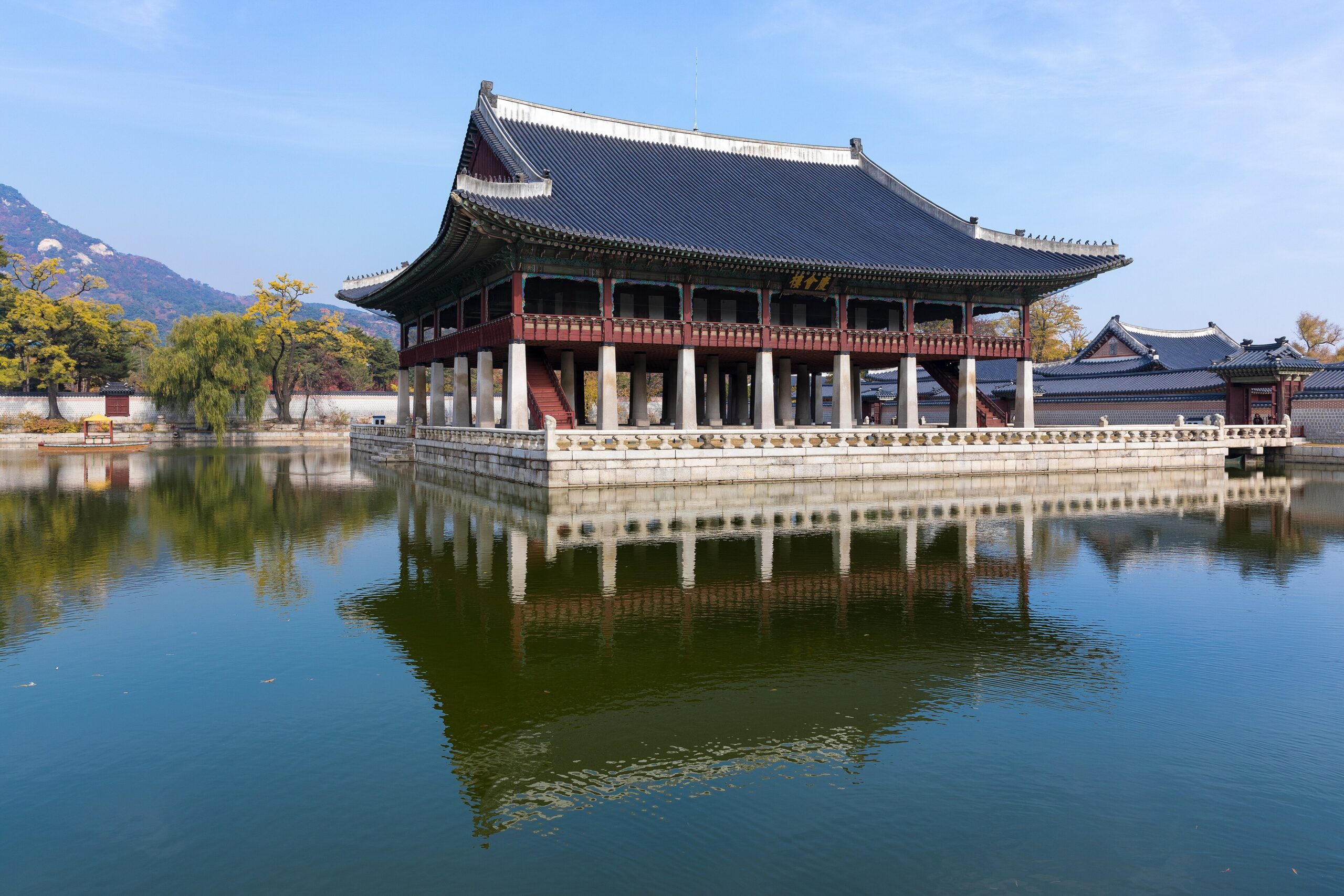
Gyeongbokgung is the largest of Seoul’s five royal palaces, built in 1395 as the main residence of the Joseon dynasty, which would rule Korea for over five hundred years. It was burned down during the Japanese invasion of 1592 and lay in ruins for nearly three centuries, until it was rebuilt on a large scale in the 1860s; Japan partially demolished it again during the twentieth-century colonial occupation to build the Government-General Building in front of it, which was itself torn down only in 1996. What you visit today is therefore largely a recent reconstruction, but faithful to the original layout.
The most photographed pavilion is Gyeonghoeru, a banquet hall on a platform of forty-eight stone columns, surrounded by an artificial pond where the king entertained foreign envoys. The royal changing of the guard, in Joseon-era costume with drums and banners, is held twice a day in front of the main gate, Gwanghwamun.
Anyone who rents a hanbok, the traditional Korean dress (10,000-20,000 won a day at one of the many shops around the palace), gets in for free: it’s become such a widespread custom that on spring weekends the palace courtyards fill with groups of friends and tourists dressed up.
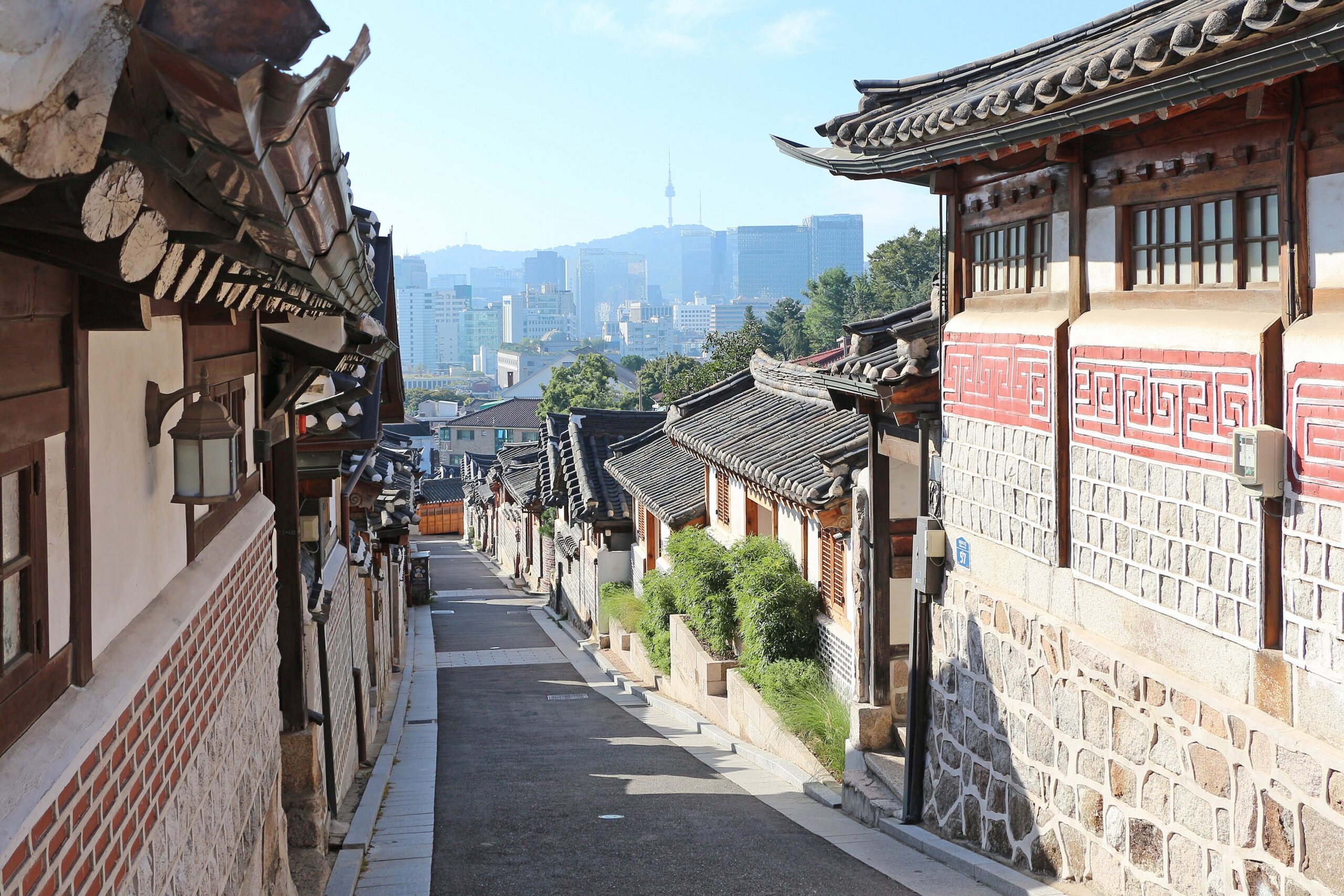
Just to the northeast is Bukchon Hanok Village, a hillside neighbourhood of nine hundred traditional hanok houses still lived in, dating from the Joseon period and having survived the city’s reconstruction after the 1950-53 war. It’s a real neighbourhood, not an open-air museum: the narrowest streets are residential, and since 2018 some have been closed to tourists after 5pm at residents’ request, tired of the noise.
2 – Myeongdong and Hongdae
Time the afternoon and evening · Metro line 2 or 4
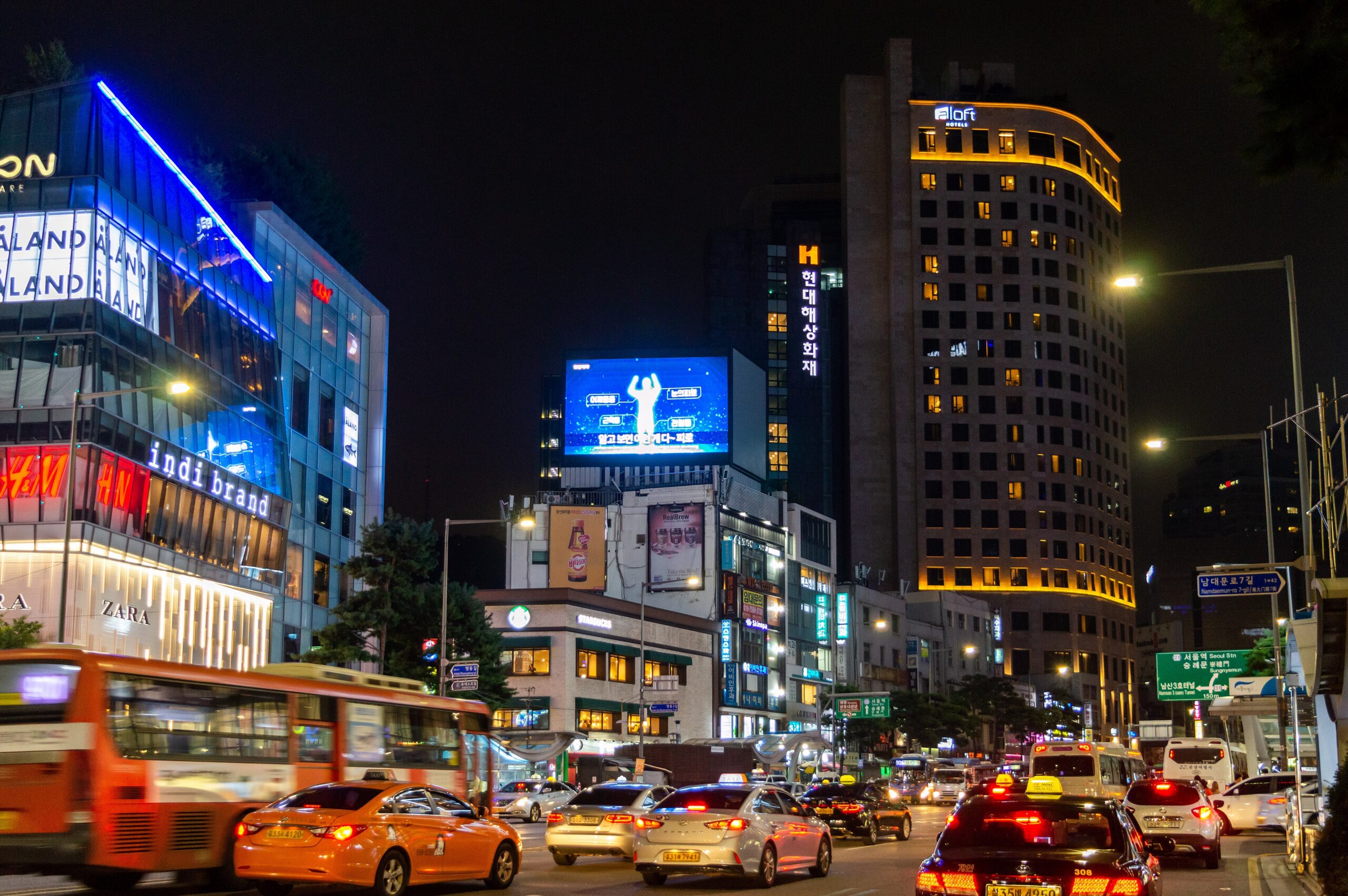
Myeongdong is the temple of Korean cosmetics and fashion shopping: hundreds of K-beauty shops with staff offering free samples at every turn, street food stalls packed tightly from late afternoon, and a constant flow of Asian tourists hunting the same products they’ve seen in Korean influencer videos. The 1898 neo-Gothic Myeongdong Cathedral was also a symbol of the Korean democratic movement in the 1980s, when it offered shelter to protesters.
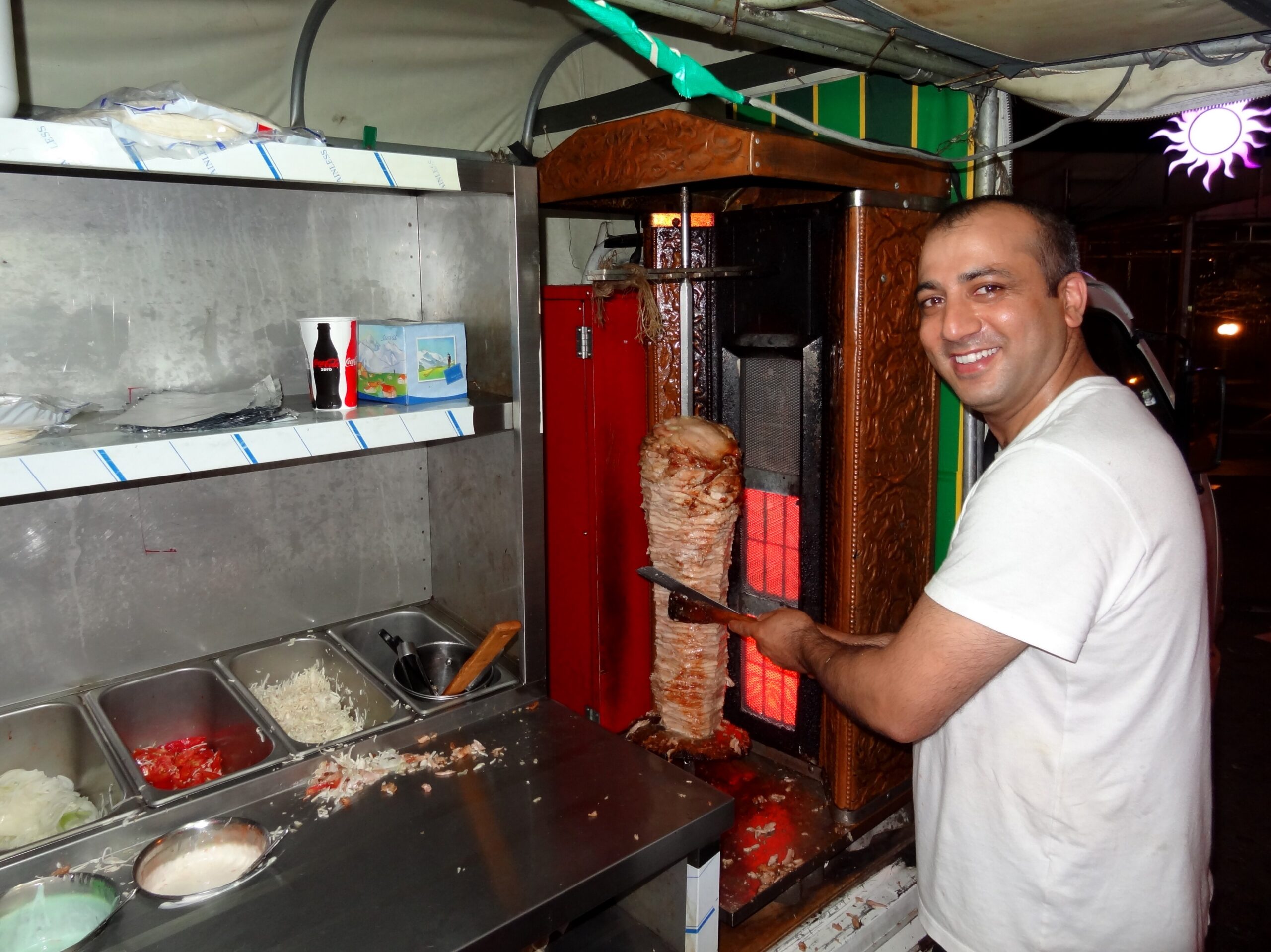
The evening is spent in Hongdae, the neighbourhood around Hongik University, the heart of Seoul’s independent music scene and youth nightlife since the 1990s: live busking nearly every evening in the main square, record shops, makeshift galleries, and a density of late-night venues found nowhere else in the city. Street food — tteokbokki (spicy rice cakes), hotteok (sweet stuffed pancakes), skewers of every kind — is eaten standing up, walking from one spot to the next.
La cucina coreana si mangia quasi sempre in compagnia e al centro del tavolo: il gogigui (barbecue coreano) si cuoce su una griglia incassata nel tavolo stesso, accompagnato da una decina di banchan — i contorni gratuiti e illimitati, dal kimchi alle alghe alle uova sode — che arrivano senza essere ordinati e si possono richiedere di nuovo gratis. Un pasto di barbecue costa 15.000-25.000 won a persona; una ciotola di bibimbap o kimchi jjigae in un ristorante di quartiere 8.000-12.000 won. Il soju, il distillato di riso a bassa gradazione, accompagna quasi ogni cena: si versa sempre agli altri, mai a se stessi, e si tiene il bicchiere con due mani quando lo versa qualcuno più anziano. Sul piccante: molti piatti lo sono davvero, non nella versione addomesticata che si trova in Europa.
Day 3 — The DMZ, the most heavily guarded border in the world
Day trip from Seoul · 55 km north · organised tour only, passport required

The Demilitarized Zone (DMZ) is the four-kilometre-wide strip separating South and North Korea since the end of the 1950-53 war, which ended with an armistice never followed by a peace treaty: technically, the two Koreas are still at war. Paradoxically, it’s also one of the best-preserved nature reserves in Asia, because for seventy years no one has built or farmed there.
The most tense point is the Joint Security Area (JSA) at Panmunjom, the only stretch of the border where North and South Korean soldiers face each other just metres apart: here, in 1976, an incident over the trimming of a poplar tree cost two American officers their lives (the “Ax Murder Incident”), and here in 2018 and 2019 the historic meetings between the leaders of the two Koreas and the United States were held. Access to the JSA is possible only through authorised tours, booked weeks ahead with passport verification, and can be suspended without notice in the event of tensions.
Easier to visit is the Third Tunnel of Aggression, dug by North Korea in the 1970s and discovered in 1978 thanks to a defector’s tip-off: you walk down as far as seventy-three metres underground into a rock passage a little over a metre wide, designed to move thirty thousand soldiers an hour toward Seoul. From Dora Observatory, with paid binoculars, you can see North Korean territory and, on clear days, the outline of a propaganda village with the world’s tallest flag on a hundred-and-sixty-metre pole.
Day 4 — Suwon, the UNESCO World Heritage fortress
Day trip from Seoul · 30 km south · train or metro line 1, 1 hour
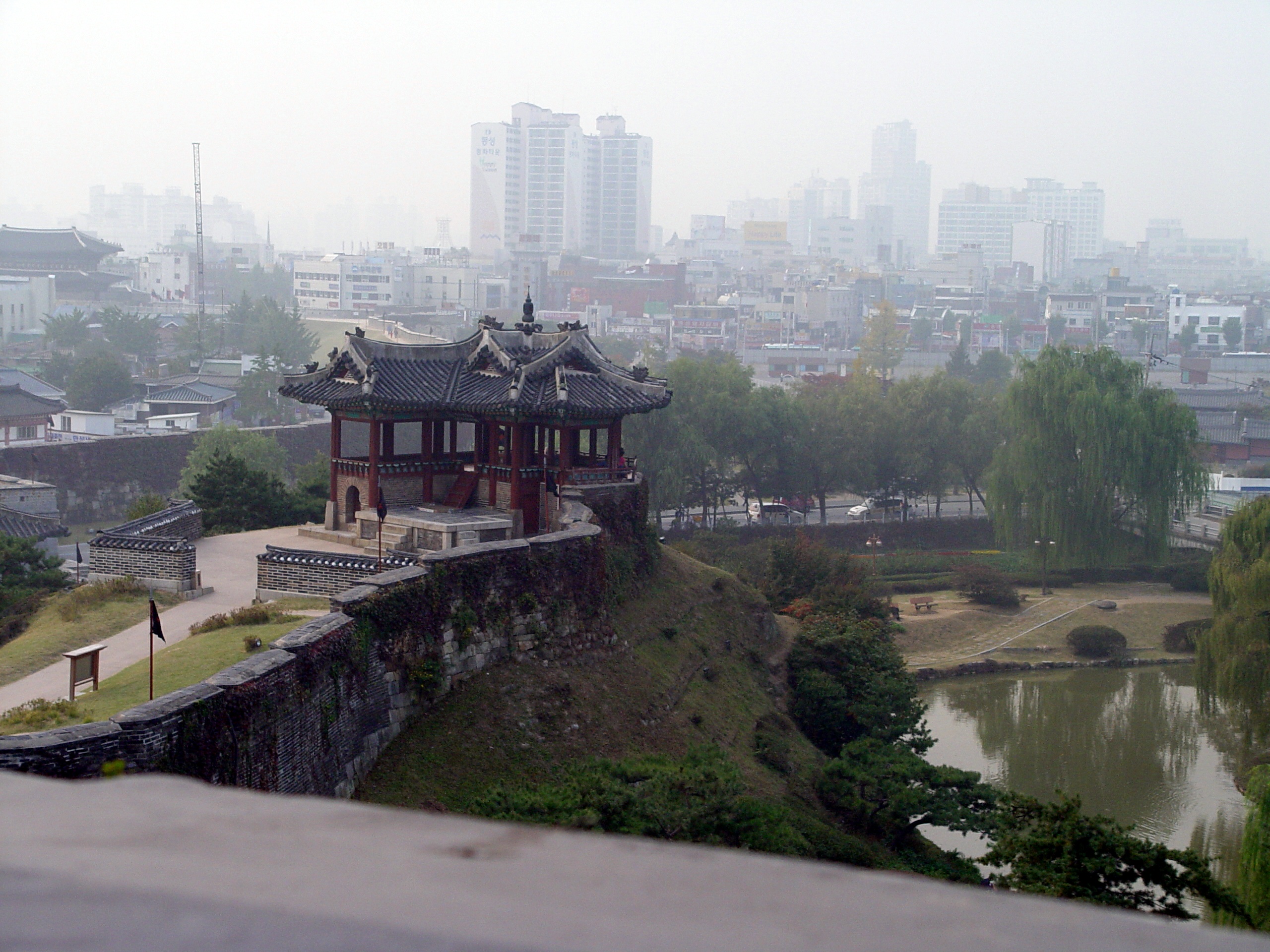
Hwaseong Fortress was built between 1794 and 1796 by King Jeongjo, one of the most enlightened rulers of the Joseon dynasty, partly to honour the memory of his father, who died shut inside a rice chest on his grandfather’s orders — one of the most dramatic episodes in Korean court history — and partly to plan a new capital far from the palace intrigues of Seoul. The project, led by the reformist scholar Jeong Yak-yong, used cutting-edge engineering techniques for the time, including cranes and pulleys that halved construction time.
The walls, five and a half kilometres long, can be walked almost entirely and offer views over the modern city that has grown up around them; they were damaged during the Korean War and rebuilt in the 1970s following an eighteenth-century construction manual that survived almost intact, which allowed for a historically accurate restoration recognised by UNESCO in 1997. Don’t miss Hwaseong Haenggung, Korea’s largest temporary royal palace, where costumed re-enactments take place on weekends.
Chi preferisce un giorno più rilassato può sostituire Suwon con Nami Island, l’isolotto a forma di mezzaluna sul fiume Han diventato famoso come location del drama Winter Sonata: viali di metasequoie e ginkgo che d’autunno diventano dorati, e un’atmosfera da parco romantico più che da sito storico. È un’ora e mezza da Seoul in treno più traghetto, e in alta stagione (autunno) è molto affollata.
Days 5 and 6 — Busan, the city by the sea
KTX Seoul–Busan, 2h30 · 2 nights · beaches, markets and colourful hillside houses
South Korea’s second city, with more than three million people, Busan became the refuge of the South Korean government and millions of displaced people during the North Korean invasion of 1950-53, and that history of forced hospitality has left traces still visible in the urban fabric. Compared with Seoul it’s slower, more maritime, and has a dialect accent (satoori) that South Koreans take pride in.
7 – Haeundae and Gamcheon
Time full day · Metro lines 1-2 and taxi/bus for Gamcheon
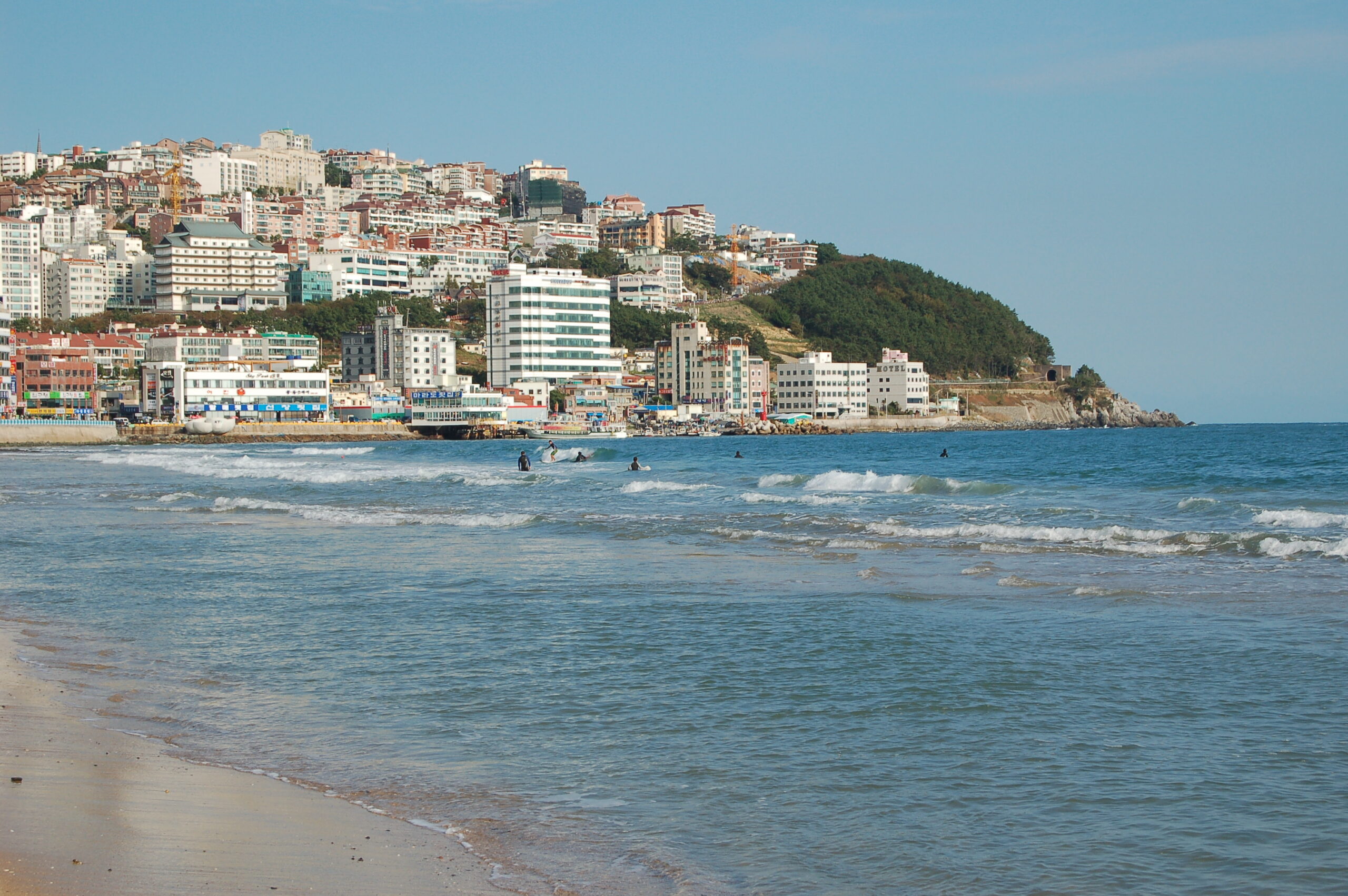
Haeundae is Korea’s most famous beach, a kilometre and a half of sand flanked by some of the country’s tallest residential towers: in summer up to a million people crowd it in a single weekend day, but in other seasons it remains a long seafront promenade with seafood restaurants behind it. Not far away, Gwangalli has a more scenic view of the Gwangan suspension bridge, lit up in colour every evening.
Gamcheon Culture Village was born in the 1950s as a settlement for refugees fleeing the Korean War, climbing a steep hillside in identical box-shaped houses built out of necessity for space. It stayed a poor neighbourhood for decades, but since 2009 it has been repainted through a public art project that turned it into one of the country’s most Instagrammed attractions, nicknamed the “Santorini of Busan” for its bright colours against the blue sea in the distance. It’s worth remembering that real people still live there — it’s not a film set: you walk slowly, avoid photographing inside houses with open doors, and stick to the marked paths that wind past murals, galleries and small cafés.
8 – Jagalchi Market
Time half a day · Best in the morning, when the catch arrives
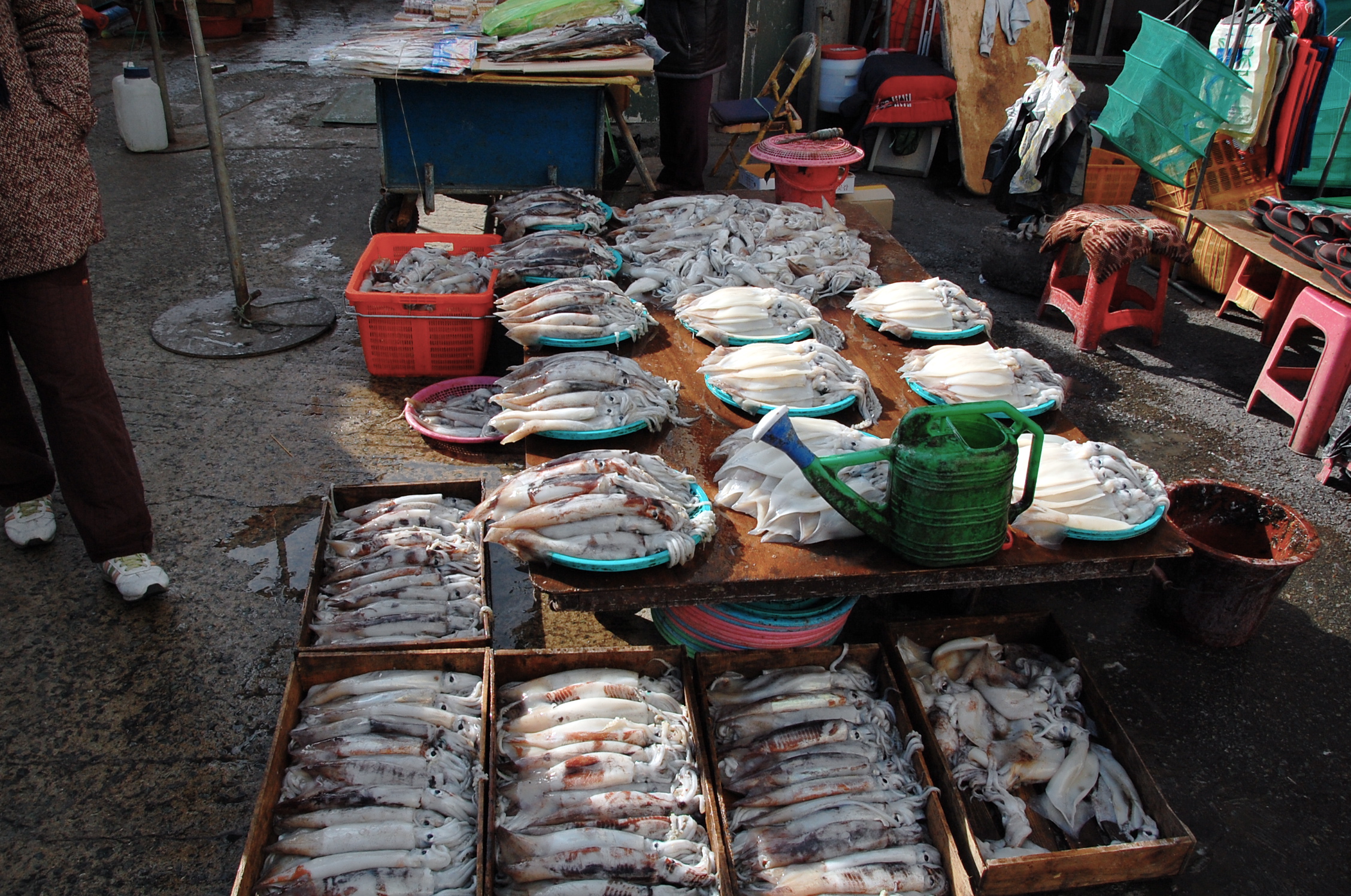
Jagalchi Market is Korea’s largest fish market, born spontaneously after the war when thousands of displaced people from the north, many of them fishermen, settled along Busan’s waterfront: today it’s run largely by the jagalchi ajumma, the middle-aged women who have sold freshly arrived fish for generations, calling out prices in the local dialect. You can buy fish on the ground floor and have it prepared upstairs at one of the attached restaurants, paying only for the preparation: it’s the cheapest way to eat fresh sashimi in Korea.
A few steps away, the Gukje night market and the BIFF Square district, dedicated to the Busan International Film Festival that brings Asian stars and international productions to the city every October, round out an afternoon on foot in the old town.
What a week costs
| Voce | Costo |
|---|---|
| KTX Seoul–Busan, andata | 59.800 won, circa 40 euro |
| Tour DMZ (JSA o tunnel+osservatorio) | 80.000-160.000 won, 55-110 euro |
| Alloggio, 7 notti (camera media) | 350-700 euro |
| Ingressi (Gyeongbokgung, Hwaseong, musei) | circa 15.000 won, 10 euro |
| Trasporti urbani (metro Seoul e Busan, T-money card) | circa 40-50 euro |
| Pasti, 7 giorni fra street food, barbecue e ristoranti medi | 150-250 euro |
| Totale in loco | circa 700-1.100 euro a persona |
Figures as of September 2026, excluding the intercontinental flight. Payment is in won, exchange rate around 1,550 to the euro. Unlike Japan, in Korea you pay almost everywhere by card or smartphone: the T-money card, rechargeable at convenience stores, covers the metro, buses and even some taxis. It’s worth booking the KTX online (Korail website or the Klook app) a few days ahead, especially on weekends.
Frequently asked questions
Is a week enough for South Korea?
It’s enough for an unhurried Seoul, the DMZ or Suwon as a day trip, and two days in Busan. It’s not enough for Jeju island or the historic inland cities like Gyeongju: those need a second trip or a few extra days.
Is it safe to visit the DMZ?
Yes, it’s one of the most organised tourist attractions in the country and millions of people visit it every year without incident. Tours are suspended only in rare cases of acute tension at the border, and agencies give advance notice. You just need your original passport and, for the JSA, a formal dress code.
What’s the best time to go?
April-May for the cherry blossoms and September-November for autumn foliage and dry, mild weather: these are also the most crowded months. June-July brings the rainy season (jangma); August is hot and humid; winter is cold and dry, with little snow in Seoul but plenty in the mountains.
Is English spoken?
Reasonably well in tourist spots and among younger people in Seoul, less so elsewhere. Metro and train signage is almost always bilingual Korean-English. Google Maps works poorly for navigation in Korea for national security reasons: it’s worth downloading Naver Map or KakaoMap before you leave.
How do payments work?
Almost everything is paid by card or with the rechargeable T-money card, which also covers public transport. Cash is only needed for small markets and some street food. Foreign cards work in most shops, but it’s worth carrying some won in cash just in case.
What do you eat if you can’t handle spicy food?
Not everything is spicy: bulgogi (sweet marinated meat), plain bibimbap, kimbap (rice and seaweed rolls) and many banchan are mild. In restaurants you can almost always ask for “an maepge” (not spicy), though it’s not always followed to the letter.
Do you need a visa?
Not for Italian citizens, for tourist stays of up to 90 days, but since 2023 electronic K-ETA registration has been required before departure (with some periodic exemptions announced by the Korean government): check the current status on the official website before booking your flight.
How much do you spend per day?
At an average level, €90-140 per day per person including lodging. Street food and meals at local restaurants remain cheap; the priciest items are lodging in Seoul and the DMZ tour.
What’s the most common mistake?
Underestimating the distances within Seoul: the metro is efficient but the city is enormous, and moving between far-apart districts like Gyeongbokgung and Hongdae takes more time than it looks on the map. The second mistake is not booking the DMZ tour in time, which sells out days in advance on summer weekends.
September 11, 2026


