

Japan in 2 weeks: Tokyo, Kamakura, Hakone, Kyoto, Nara, Osaka and Hiroshima
Two weeks in Japan take away the agony of having to choose between Tokyo and Kyoto, and it’s enough time to add what the first week has to leave out: Kamakura, the ancient samurai capital an hour from Tokyo; Hakone, where you sleep in a ryokan with an onsen in the room and hope for a cloudless Fuji; and Hiroshima with Miyajima, which close the trip with the most serious and most beautiful part of the Chugoku coast. It’s the same skeleton as the first week — Tokyo, Kyoto, Osaka — with four stops added and more breathing room in each one.
At a glance
- Duration · 14 full days, plus the intercontinental flight
- Route · Tokyo (4 nights, with a trip to Kamakura) → Nikko → Hakone (1 night) → Kyoto (3 nights, with a trip to Nara) → Osaka (2 nights) → Hiroshima and Miyajima (2 nights)
- Trains · all on JR and shinkansen: Tokyo–Hakone, Hakone–Kyoto, Kyoto–Hiroshima
- Budget · €1,700-2,600 per person on the ground, excluding the intercontinental flight
- Book ahead · the ryokan in Hakone well in advance, the national JR Pass (almost always worth it here) before leaving
- Season · March-May and October-November remain the best, but over two weeks there’s room for other months too
- Good to know · Fuji is visible only about 30% of the days of the year from Hakone: plan for the possibility it stays hidden
- What’s left out · Kanazawa, the Japanese Alps, Kyushu: that’s the third week
From Tokyo to Hiroshima, via Hakone, Kyoto, Nara and Osaka, it’s over 900 km travelled almost entirely by shinkansen: here, unlike China or Thailand, a domestic flight is never needed.
Days 1-4 — Tokyo, with a trip to Kamakura
4 nights · from ancient temples to skyscrapers, with a day out of town
1 – Asakusa and Ueno
Day 1 · on foot and by metro · the oldest Tokyo

You start at Sensoji, Tokyo’s oldest temple, legend says founded in 645: the Thunder Gate, Nakamise-dori with its centuries-old stalls, the incense in front of the main hall. In the afternoon you move on to Ueno, the large park with the national museum — the country’s richest collection of Japanese art — and Japan’s oldest zoo, opened in 1882. Ameyoko market, beneath the railway tracks, is where Tokyo does its shopping: fish, spices, discounted shoes, shouting in dialect.
2 – Shibuya and Shinjuku
Day 2 · the afternoon and evening · contemporary Tokyo

The Shibuya crossing, where up to three thousand people cross together every time the light turns green, and the statue of Hachiko, the dog who waited for his owner at the station every evening for nine years after his death in 1935. In the evening, Shinjuku: the free observatory at the Metropolitan Government Building, the tiny alleys of Golden Gai, the Kabukicho district.

3 – Kamakura, the samurai capital
Day 3 · a day trip from Tokyo · 50 km south · JR train, 1 hour
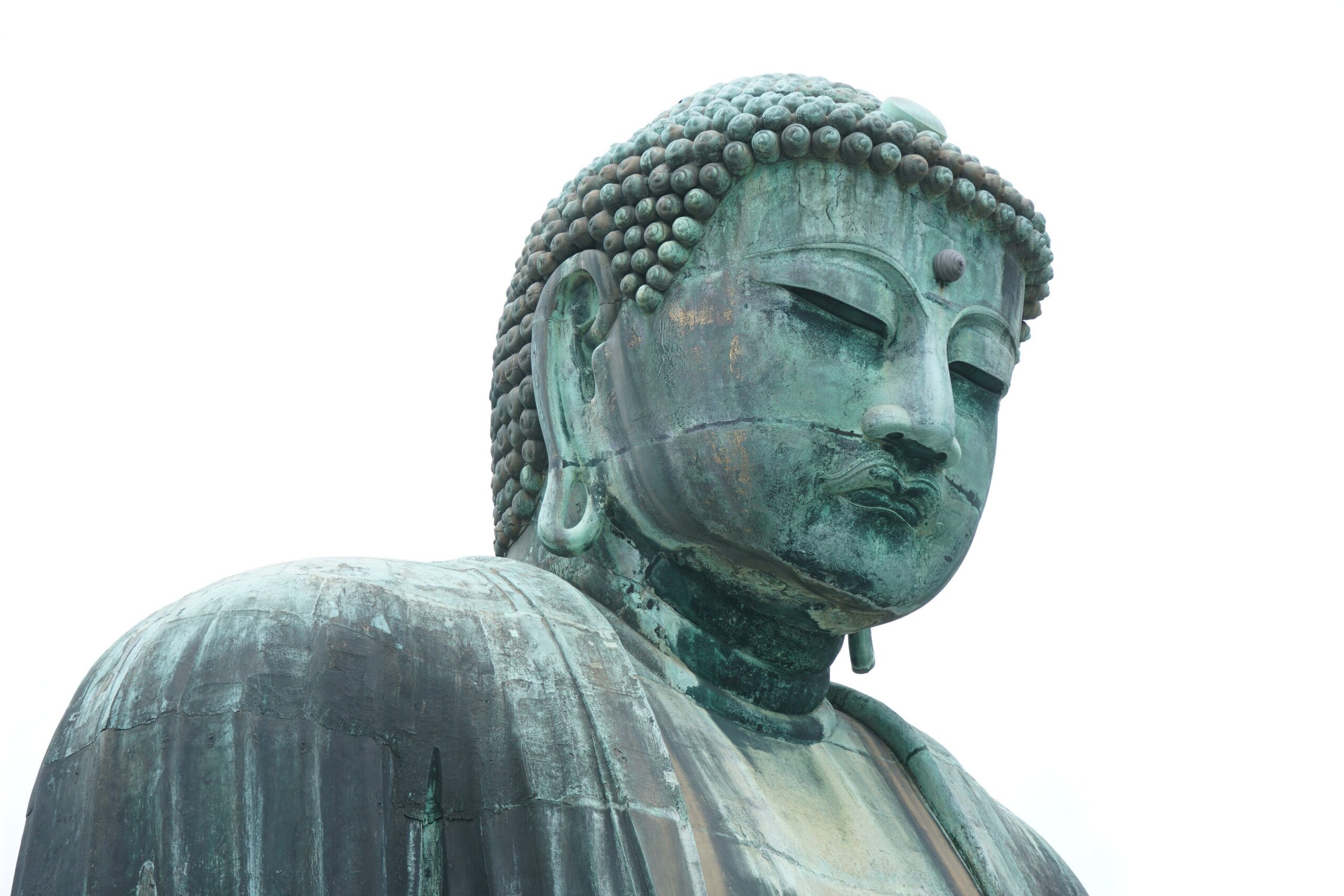
Kamakura was the de facto capital of Japan from 1185 to 1333, when the first shogunate moved real power away from the emperor in Kyoto, who remained sovereign in name only. It’s the period when the samurai class emerges as the ruling caste, and the city retains that atmosphere: more austere than Kyoto, wedged between the sea and the hills.
The Daibutsu, the great Buddha of the Kotoku-in temple, is the symbol of the city: eleven and a half metres of bronze cast in 1252, sitting outdoors ever since a tsunami in 1498 swept away the building that housed it — and no one has ever rebuilt it since, perhaps because the Buddha outdoors, with the mountains behind, has become more iconic than any hall could have made it. For two extra yen you can go inside the statue itself and see its hollow interior.
The Tsurugaoka Hachimangu, the city’s most important Shinto shrine, was founded in 1063 and dedicated to the god of war who protected the Minamoto clan, the founders of the shogunate. Anyone with time can add Enoshima, the island connected by a pedestrian bridge with a shrine dedicated to the goddess of the sea and fortune, or simply walk along Yuigahama beach, where Tokyoites go to surf on weekends.
4 – Akihabara and Odaiba
Day 4 · the day · from electronics to the artificial bay
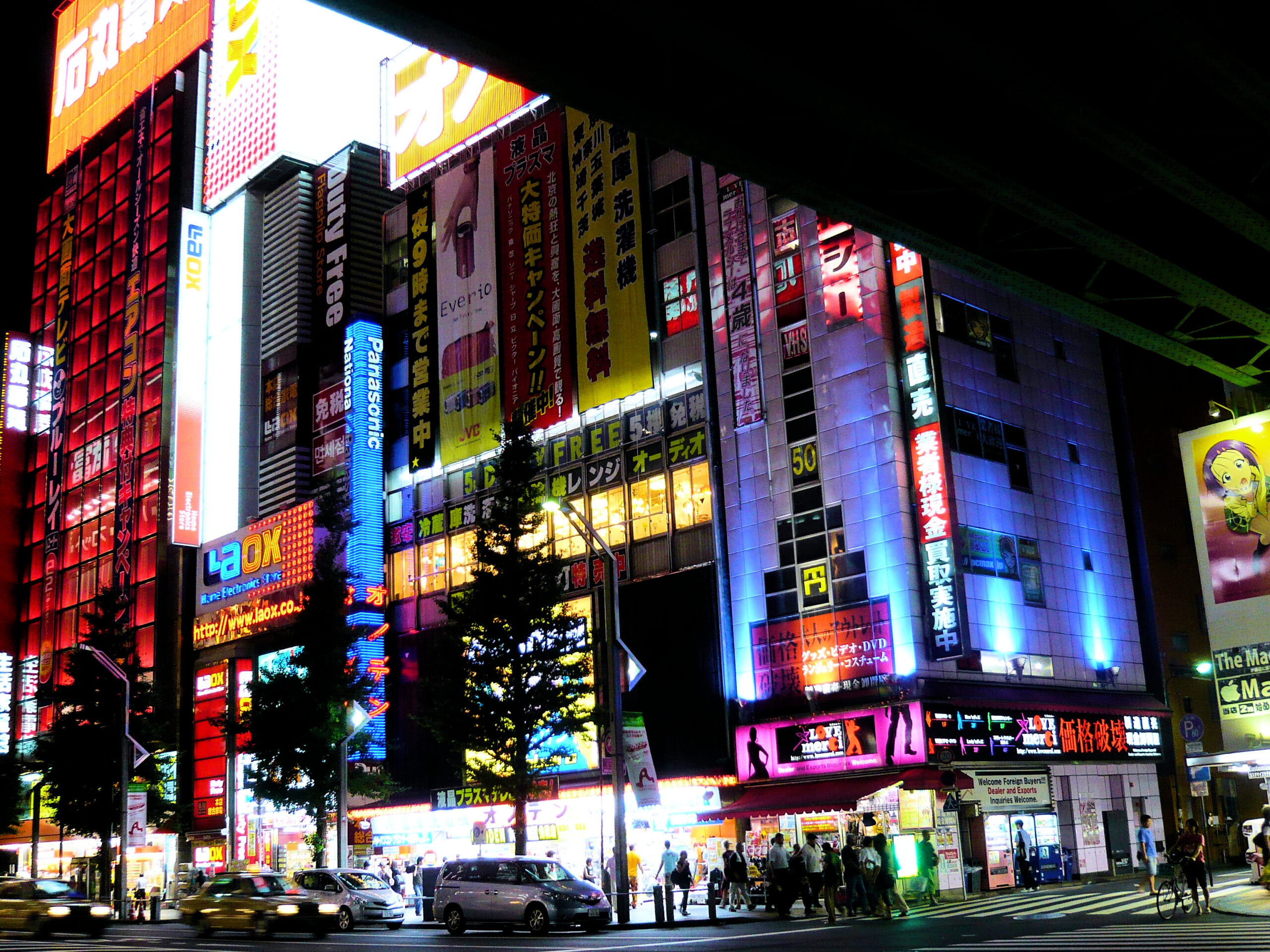
Akihabara was born in the 1950s as a market for radio parts salvaged from the army, and in the 1980s became the consumer electronics district; today it’s the world centre of otaku culture: manga shops eight floors deep, deafeningly loud arcades, maid cafés where waitresses dressed as nannies serve rice omelettes decorated with ketchup. In the afternoon, the metro takes you to Odaiba, the artificial island in Tokyo Bay with the Rainbow Bridge, futuristic shopping malls and, in the evening, the skyline view that closes out a week in the city nicely.
Un pasto in un konbini costa 400-700 yen e vale la pena; una ciotola di ramen da banco 800-1.200 yen, spesso ordinata a un distributore automatico prima di sedersi; il conveyor belt sushi, dove i piatti girano su un nastro e si pagano a colore, 1.500-2.500 yen a pasto. Non si mangia camminando per strada, non si lasciano mance, e i bastoncini non si piantano verticalmente nel riso.
Day 5 — Nikko: the shrine in the forest
Day trip from Tokyo · 140 km north · Tobu train, 2 hours

The Toshogu is the mausoleum of Tokugawa Ieyasu, the shogun who unified Japan in 1603 after a century and a half of civil wars: built in 1617 and expanded in 1636, it’s one of the most richly decorated complexes in the country, the opposite of the usual Zen austerity. The panel of the three wise monkeys — see no evil, hear no evil, speak no evil — is carved on the sacred stable and gave rise to the expression that has become proverbial the world over; above the Yomeimon gate there are more than five hundred gilded carvings, and one column is deliberately carved upside down, because absolute perfection would have drawn the envy of the gods.
With a full day you can go up as far as Lake Chuzenji and Kegon Falls, which plunge ninety-seven metres from a volcanic plateau: forty minutes by bus beyond the shrine, in a mountain landscape that has nothing in common with Tokyo.
Da luglio a settembre Tokyo è caldissima e umidissima, spesso oltre i 35 gradi con afa pesante: Nikko, a 600 metri di quota, è anche un modo per prendere fiato dal clima della capitale, non solo dalla folla.
Day 6 — Hakone, Fuji and the onsen
From Tokyo · Odakyu Romancecar train, 1h30 · 1 night in a ryokan
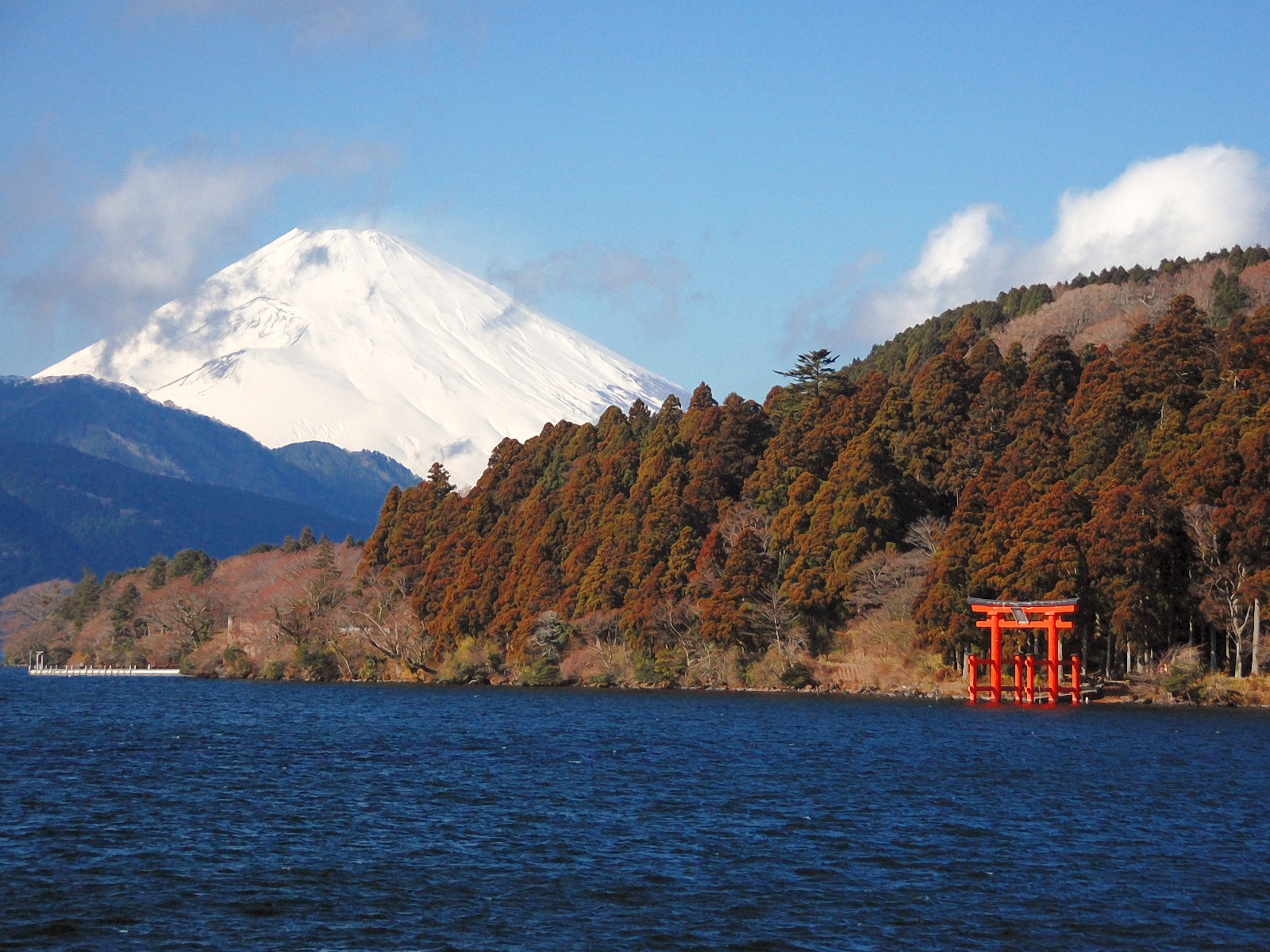
Hakone is a hot-spring area eighty kilometres from Tokyo, inside the crater of a still-active volcano, and it’s where the Japanese themselves go for a relaxing weekend and, weather permitting, to see Fuji. The classic way to visit is the Hakone Round Course: narrow-gauge train to Gora, funicular, ropeway over the volcanic valley of Owakudani — where the ground still smokes sulphur and hard-boiled eggs blackened by the sulphurous water are sold, said by tradition to add seven years of life each — and finally the pirate boat that crosses Lake Ashi.
It’s from the lake, on clear days, that you see Fuji reflected in the water: it happens about one day in three, more often in winter when the air is dry, much less in summer. Not seeing it is a real possibility, and it’s worth planning for the trip not to depend on it.
The night in Hakone is spent in a ryokan, the traditional Japanese inn: a yukata (light robe) to wear for the whole stay, a multi-course kaiseki dinner served in your room or a common hall, and an onsen, the natural hot spring fed by volcanic water, often with a view of the valley. You wash thoroughly before getting into the tub, seated on low stools with a handheld shower: the tub is for relaxing, not for washing.
Il Round Course si fa anche in giornata da Tokyo, senza notte a Hakone: si perde l’onsen privato del ryokan, ma restano la funivia, Owakudani e la barca sul lago. In quel caso partite con il primo treno utile: sono almeno sette-otto ore di giro.
Days 7-9 — Kyoto: the capital for eleven centuries
Shinkansen from Odawara (near Hakone) to Kyoto, about 2 hours · 3 nights
Imperial capital from 794 to 1868, spared the Second World War bombings by the direct intervention of American Secretary of War Henry Stimson, who had spent his honeymoon there: today it counts seventeen UNESCO sites within an urban fabric that no longer exists elsewhere in Japan.
7 – Fushimi Inari
Time 2-4 hours · Free admission, always open · Best at dawn

Founded in 711, Fushimi Inari Taisha is famous for the path of more than ten thousand vermilion torii gates climbing four kilometres up the hill, each donated by a company or individual as a votive offering to the deity of rice and prosperity. The stone foxes you meet everywhere are its messengers, not the deity itself. Climbing to the top takes two to three hours round trip; beyond the first viewpoint, Yotsutsuji, the crowds thin out almost completely.
8 – Kiyomizu-dera and Gion
Time the afternoon · Kiyomizu-dera admission 500 yen

Kiyomizu-dera (778) has a terrace resting on a hundred and thirty-nine wooden pillars assembled without a single nail, which gave rise to the expression “to jump off the Kiyomizu stage” — the Japanese equivalent of our “to take the plunge.” Walking down Sannenzaka and Ninenzaka, two Edo-period stone-stepped lanes, you reach Gion, the district of the geiko and maiko: towards evening, on Hanamikoji street, you might spot one passing between appointments — photographing them without permission or chasing after them has been fined since 2019.

9 – Arashiyama
Time half a day · JR Sagano train, 15 minutes · Best early morning

The bamboo grove, one of the “hundred soundscapes of Japan to be preserved” for the sound of the wind through the canes, can be walked almost alone before 8am. Around it, the Tenryu-ji (1339), a Zen temple with a garden designed to borrow the mountains in the background, and the Togetsukyo bridge over the Katsura river.
Day 10 — Nara, the first true capital
Day trip from Kyoto · JR or Kintetsu train, 45 minutes

Capital from 710 to 784, seventy years before Kyoto: here Japan took on, modelled on Tang China, the centralised form it would keep for centuries. Today it’s known above all for the more than twelve hundred free-roaming sika deer in the park, considered divine messengers since the eighth century. Todai-ji houses the bronze Vairocana Buddha, fifteen metres tall, cast in 752 using nearly all the bronze available in Japan at the time: the hall that houses it, rebuilt twice after the fires of 1180 and 1567, remains one of the largest wooden buildings in the world. Behind one pillar there’s a hole the size of the statue’s nostril: passing through it, legend says, promises enlightenment in the next life.
Days 11-12 — Osaka
Kyoto–Osaka train, 30-45 minutes · 2 nights · the castle and street food

Osaka Castle, built in 1583 by Toyotomi Hideyoshi, the peasant general who completed the unification of Japan: the current tower is a 1931 reconstruction with a museum inside, surrounded in spring by two hundred and fifty cherry trees in bloom.

Evenings are spent at Dotonbori, the canal that symbolises Osaka’s cuisine — takoyaki, okonomiyaki, kushikatsu with the rule “no double-dipping” — and at Shinsekai, the district that in the 1910s was meant to be the Coney Island of the East and remains the cheapest and most authentic in the city, with the Tsutenkaku tower. With two nights there’s also time for the Kaiyukan aquarium, one of the largest in the world, or a trip to the Buddhist temple complex of Koyasan in the mountains to the south, for anyone who wants to sleep in a monastery.
Days 13-14 — Hiroshima and Miyajima
Osaka–Hiroshima shinkansen, 1h20 · 2 nights · the trip’s most serious ending
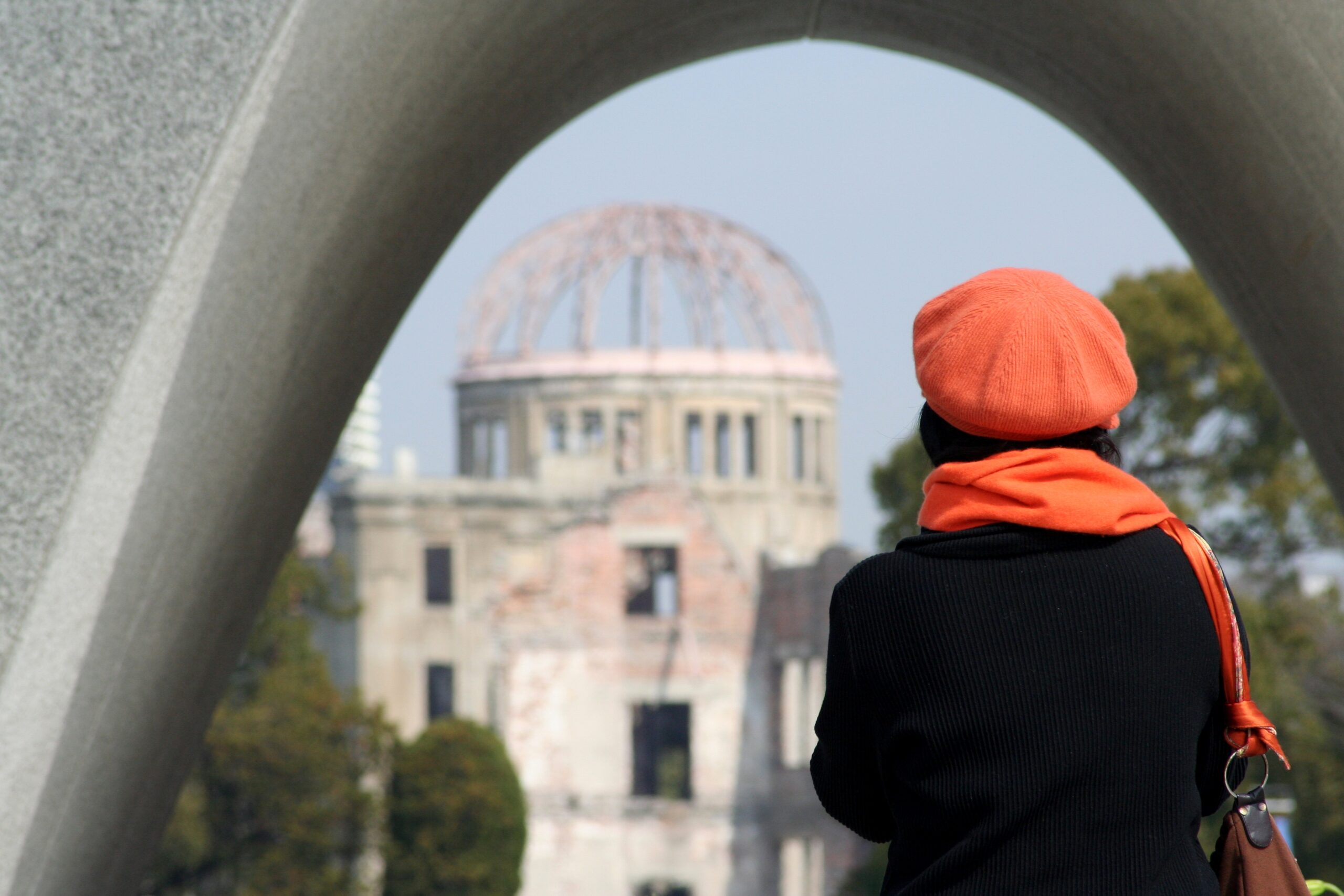
At 8:15am on 6 August 1945 the first atomic bomb used in war exploded 600 metres above Hiroshima. The Genbaku Dome — formerly the Industrial Promotion Hall, one of the few buildings almost at the epicentre not razed to the ground — has been left exactly as it was, a skeleton of concrete and twisted steel, a UNESCO World Heritage site since 1996 as a permanent warning. The Peace Memorial Museum, in the park in front of it, tells the story with real objects belonging to survivors — a watch stopped at 8:15, a burnt tricycle — and it’s a heavy visit that almost everyone considers necessary.
The children’s monument, with the statue of Sadako Sasaki and the thousands of coloured paper cranes sent by schools all over the world, tells the story of the girl who, sick with leukaemia caused by the radiation, tried to fold a thousand origami cranes believing the legend that she would be granted a wish. She folded over a thousand before dying in 1955, at the age of twelve: her story is now taught in Japanese schools as a symbol of peace.
La città ricostruita è moderna, viva e per niente cupa: ha una sua cucina (l’okonomiyaki alla Hiroshima, a strati invece che mescolato) e una squadra di baseball amatissima, i Carp. Il parco della pace resta un luogo di raccoglimento, ma il resto della città è una città giapponese normale che vale la pena vedere anche per quello.
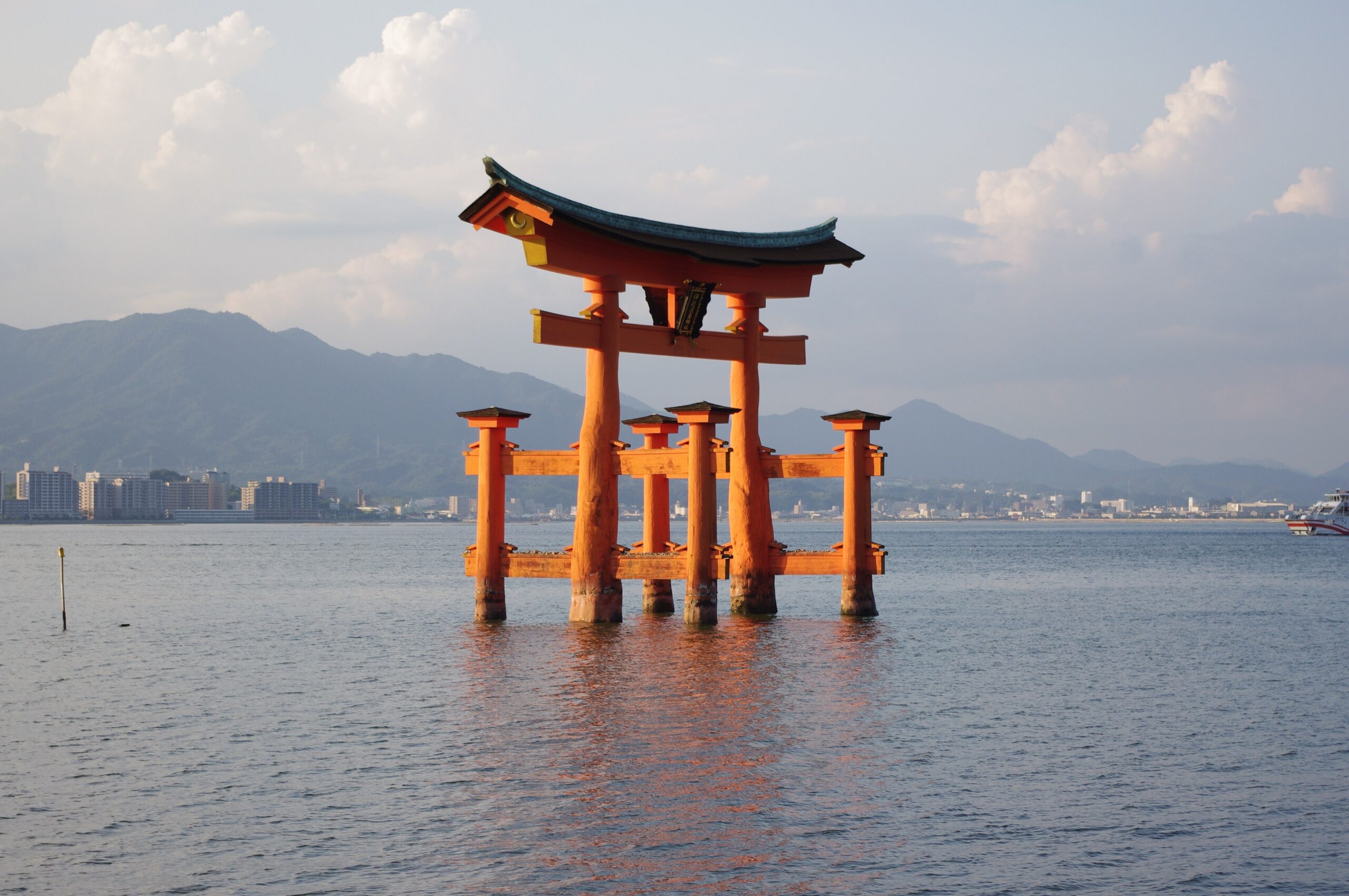
From Hiroshima, tram and ferry (ten minutes, included in the JR Pass) take you to Miyajima, the sacred island where the Itsukushima shrine and its vermilion torii gate seem to float on the water at high tide — at low tide, instead, you can walk right up to the base of the torii on the sand. The island is considered so sacred that for centuries births and deaths were not permitted there: even today there are no cemeteries. The deer roam free as in Nara, but here they’re more accustomed to people and sometimes bolder about visitors’ backpacks. Anyone with time can take the ropeway up Mount Misen, where tradition says a flame lit by the monk Kobo Daishi in 806 still burns.
What two weeks cost
| Voce | Costo |
|---|---|
| JR Pass nazionale, 14 giorni consecutivi | circa 80.000 yen, 500 euro |
| Ryokan a Hakone, 1 notte con cena e onsen | 150-350 euro |
| Alloggio, altre 13 notti (camera media) | 900-1.700 euro |
| Ingressi (Toshogu, Hakone funivia+barca, Kiyomizu-dera, Todai-ji, castello di Osaka, Museo della Pace, Itsukushima) | circa 12.000 yen, 75 euro |
| Trasporti urbani non coperti dal pass (metro Tokyo, bus Kyoto) | circa 60-80 euro |
| Pasti, 14 giorni fra konbini, ramen, kaiseki e okonomiyaki | 300-500 euro |
| Totale in loco | circa 1.700-2.600 euro a persona |
Figures as of September 2026, excluding the intercontinental flight. On this route — with three shinkansen legs plus Hakone and the Nikko trip — the 14-day national JR Pass is almost always worth it compared with single tickets, unlike on the short week. It must be bought before leaving (or activated online) and activated within three months. The Hakone ryokan is the most variable item: it ranges from €100 to over €500 a night depending on the quality of the onsen and the kaiseki dinner.
Frequently asked questions
Is two weeks enough for Japan?
For the Tokyo-Kyoto-Osaka triangle with the surrounding stops (Kamakura, Nikko, Hakone, Nara, Hiroshima, Miyajima), yes, and at a human pace, not a rushed one. Kyushu, the Japanese Alps and Kanazawa are left out: that’s the third week, for those who come back.
Is the JR Pass worth it on this itinerary?
Almost always yes, unlike on the short week: with three shinkansen legs plus the JR trains to Kamakura, Nikko, Hakone and Miyajima, the 14-day pass (about 80,000 yen) costs less than the sum of single tickets. It must be activated within 90 days of purchase and requires a passport to collect in Japan.
Do you definitely see Fuji from Hakone?
No: it’s visible about one day in three on average, more in winter when the air is dry, much less in summer when haze hides it almost all the time. It’s still worth going, for the onsen and Owakudani, but plan for the possibility that Fuji stays hidden.
What’s the best period for such a long two weeks?
March-May (cherry blossoms) and October-November (autumn foliage) remain the most beautiful months, but also the priciest and most crowded: book the Hakone ryokan months ahead. June is the rainy season; July-August are hot and humid but with summer festivals; winter is dry, cold and has very few tourists, excellent for the onsen.
How does the onsen work if you’re not used to it?
You wash thoroughly, seated, before entering the tub: the tub water is shared and must not be soaped. Many traditional onsen ban visible tattoos; high-end ryokan often have a private in-room onsen that gets around the problem. Men and women are almost always separated.
Is Hiroshima a sad place to visit?
The Peace Memorial Park is, and it’s meant to be: it’s a place for reflection, not an attraction. But the city around it is modern, lively and not gloomy at all, with its own cuisine and a strong sporting identity. Most visitors find the visit heavy but necessary, not depressing in an absolute sense.
Do you need to book kaiseki restaurants or ryokan?
The Hakone ryokan, yes, weeks or months ahead during peak periods: the good rooms with private onsen sell out fast. Street restaurants and konbini don’t require booking; Kyoto’s most renowned kaiseki restaurants do, often well in advance.
How much do you spend per day over two weeks?
At an average level, €120-190 per day per person including lodging, higher than the first week because of the ryokan night and extra transport. Konbini remain the way to keep meal spending down.
What’s the most common mistake on such a long itinerary?
Filling every day with no margin: after a week of temples, trains and suitcases, a free afternoon — maybe right in Hakone or Miyajima — matters more than a forced sixth stop crammed into an already full day. The second mistake is underestimating Hiroshima as “just one day”: with Miyajima it deserves the full two nights planned here.
September 11, 2026


