
Lanzarote in 1 week: Timanfaya, Manrique and La Geria
Lanzarote is the strangest island in the Canaries, for two reasons: a six-year eruption in the eighteenth century that buried a quarter of its territory under lava, and an artist, César Manrique, who from the 1960s onward convinced the whole island to build within that landscape instead of on top of it. The result is the only Canary Island with no skyscrapers on the coast and a visual identity recognizable everywhere.
In brief
- Duration · 7 full days, plus the flight
- Base · anywhere: the island is small (60 km long) and can be toured in a day from any point
- Budget · 500-850 euros per person on the ground
- Good to know · six of the island’s seven «Centers of Art, Culture and Tourism» are works by César Manrique: there’s a combined ticket that pays off if you visit at least three
- Timanfaya · the park can only be visited by park bus along the Ruta de los Volcanes: free walking isn’t allowed, except for a few guided hikes by reservation
- Season · dry, mild climate year-round, little rain; constant wind, often strong
- The whole island has been a UNESCO biosphere reserve since 1993
Lanzarote is sixty kilometers long: driving from one end to the other takes a little over an hour.
Day 1 — Timanfaya National Park
Half day · bus visit along the Ruta de los Volcanes
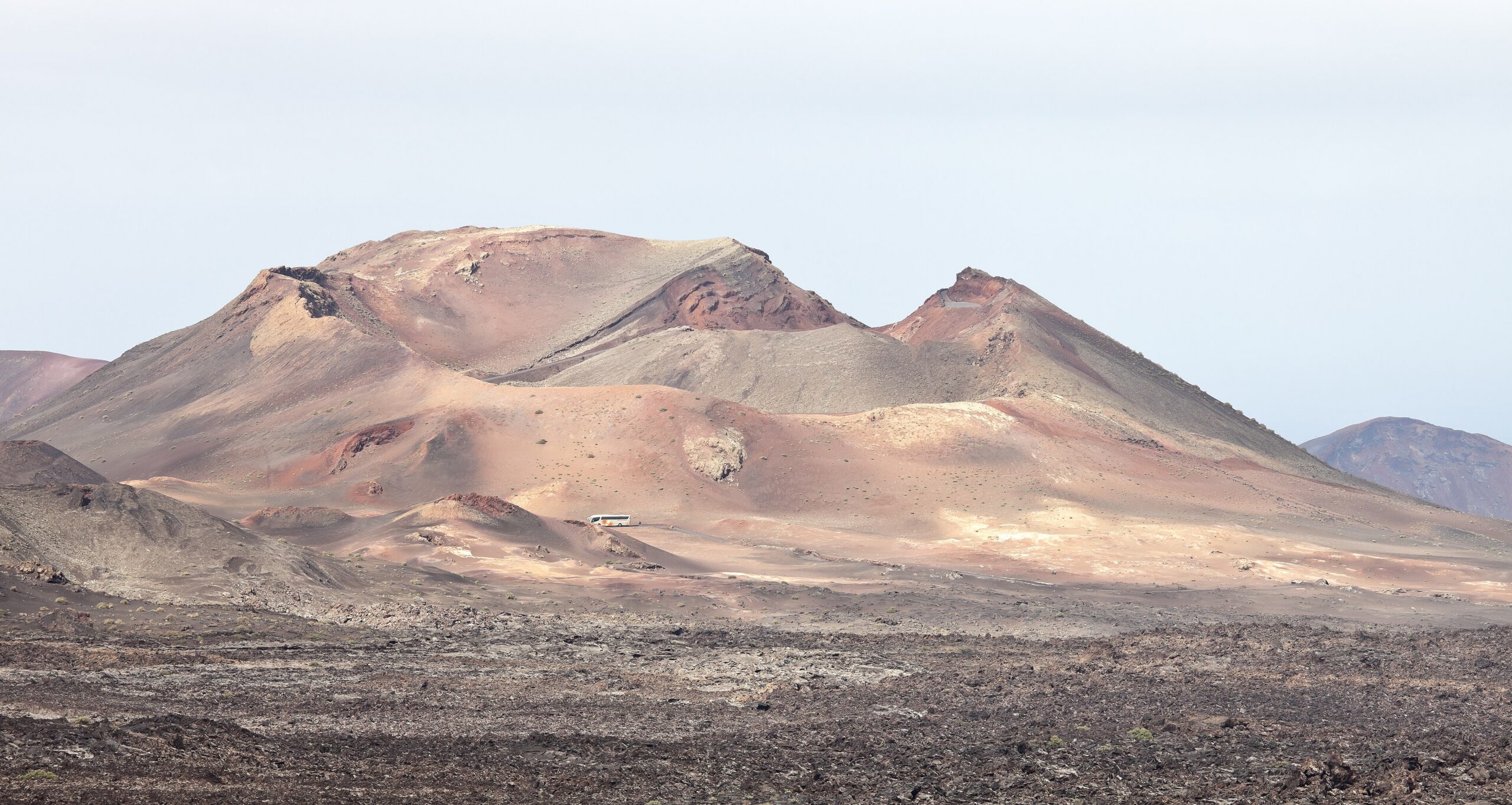
Between 1730 and 1736, Lanzarote was rocked by one of the longest eruptions in recorded history: six continuous years of activity that buried eleven villages and roughly a quarter of the island’s surface under lava, including its most fertile farmland. The parish priest of Yaiza, Andrés Lorenzo Curbelo, kept a diary that remains one of the most detailed firsthand accounts ever written of a prolonged eruption.
The resulting Fire Mountains are now a national park, visitable only by official bus along a fourteen-kilometer route through cinder cones and lava flows: walking freely isn’t allowed, to protect an ecosystem of lichens that recolonizes the lava at a pace measured in centuries. At the Islote de Hilario, rangers demonstrate that the ground just a few meters down still reaches 400-600 degrees: brushwood pushed into a hole catches fire within seconds, and water poured down a pipe shoots back up like a geyser. The El Diablo restaurant, designed by Manrique, grills meat on a grate heated directly by geothermal heat.
Day 2 — Manrique’s north: Jameos, Cueva de los Verdes, Mirador del Río
Full day · the works that defined the island

César Manrique (1919-1992), a Lanzarote-born painter and architect who returned to the island after years in New York, convinced local authorities in the 1960s to ban roadside billboards and tall buildings on the coast, and to have houses painted white with green window frames (blue on the coast): it’s why Lanzarote doesn’t resemble any other tourist island in the Mediterranean or the Atlantic.
The Jameos del Agua is his most famous work: a collapsed section of a lava tunnel transformed into a public space with a natural underground lake, home to an endemic species of blind albino crab (Munidopsis polymorpha) found nowhere else in the world, and an auditorium carved into the cave with remarkable acoustics.

The nearby Cueva de los Verdes is part of the same six-kilometer lava tunnel, formed by the eruption of the Corona volcano about four thousand years ago: for centuries it was used by islanders as a refuge from the Berber and European pirates who raided the island. The guided tour ends with an optical effect that shouldn’t be spoiled for those planning to visit.
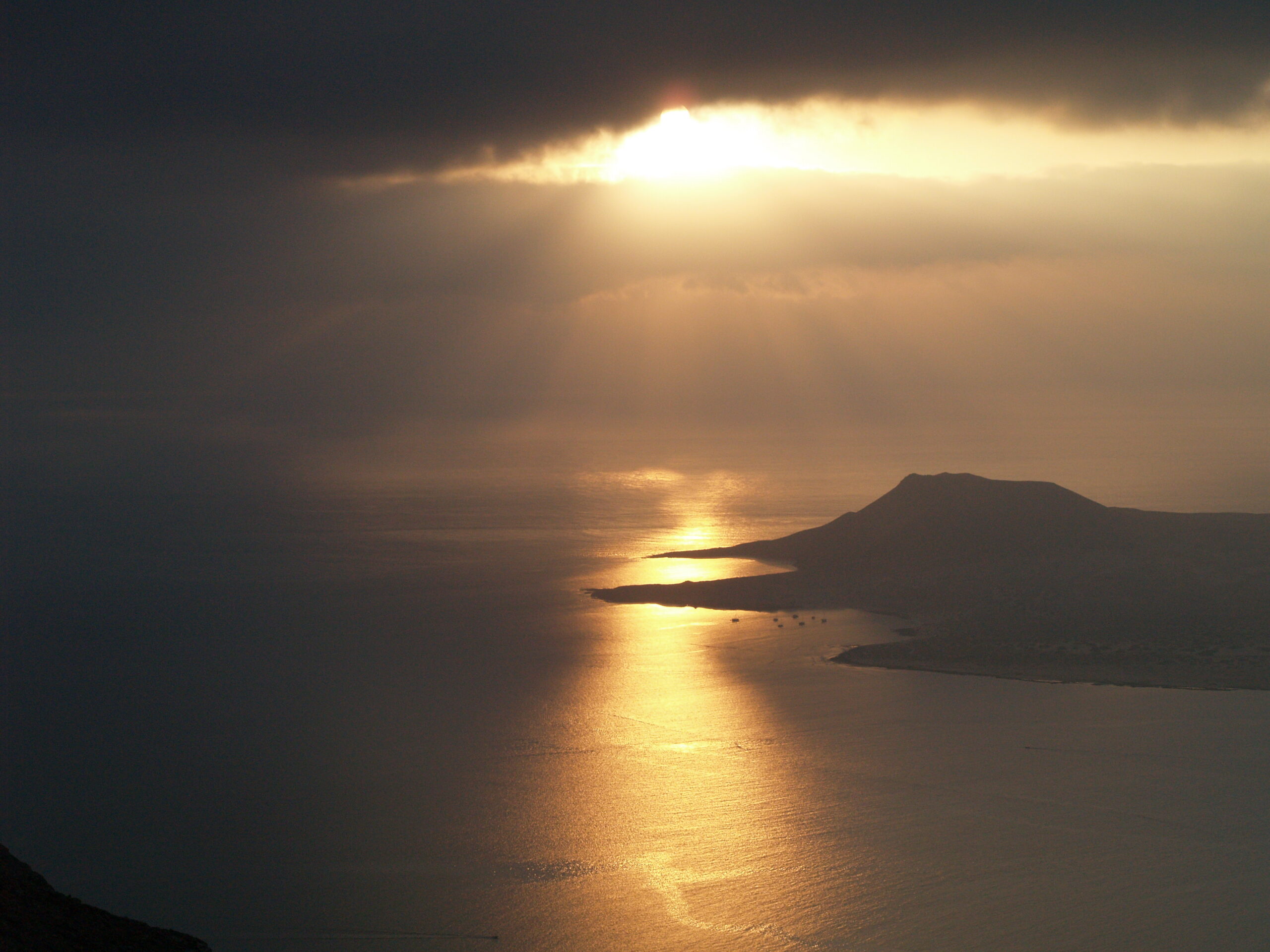
The Mirador del Río, carved by Manrique out of a military lookout post 475 meters above the sea, looks out over the strait (“el río”) that separates Lanzarote from La Graciosa: from the outside it’s almost invisible, camouflaged into the rock, and reveals itself only once you step inside.
Day 3 — La Geria, wine on lava
Half day · wineries and tastings

After the eighteenth-century eruption, Lanzarote’s farmers invented a farming system unique in the world for cultivating land covered in volcanic ash: digging circular pits into the volcanic mantle down to the buried fertile soil, planting a single vine, and shielding it from the wind with a semicircular stone wall. The volcanic ash (picón) traps nighttime humidity and releases it slowly, allowing cultivation on an island where rain is scarce. The result — thousands of pits lined up across a black landscape — is one of the most recognizable images of the Canaries, and it produces Malvasía Volcánica wines with a protected designation of origin.
Day 4 — The Papagayo beaches
Beach day · dirt road, paid entrance

The Playas de Papagayo, in the Los Ajaches Nature Monument at the island’s southern tip, are a series of pale-sand coves sheltered from the wind, with clear water and no buildings around: you reach them on a dirt track with an entrance toll, which has kept them protected from development. They’re Lanzarote’s most beautiful beaches and stay relatively quiet even in high season, if you avoid the middle of the hottest hours.
Day 5 — Teguise and the Jardín de Cactus
Full day · history and Manrique’s last work

Teguise was the island’s capital for almost four centuries, from the 1400s to 1852, and it’s Lanzarote’s best-preserved historic center: white one-story houses, the Santa Bárbara castle atop the Guanapay volcano (today a piracy museum, a theme that’s anything but folkloric around here), and on Sundays the island’s biggest market, which fills every street in town.

The Jardín de Cactus, in Guatiza, was the last work Manrique completed before his death in 1992: an amphitheater carved out of an old volcanic-ash quarry, holding over seven thousand specimens from about 1,100 cactus species from around the world, arranged on concentric terraces. It sums up his core idea: not to build against the volcanic landscape, but within it.
Oltre alle papas arrugadas con mojo comuni a tutte le Canarie, qui si beve il vino Malvasía Volcánica di La Geria, secco e minerale, e si mangia pesce fresco nei porti di El Golfo e Playa Blanca. Da provare il queso de cabra locale alla griglia con mojo, e la carne al calore geotermico del ristorante El Diablo a Timanfaya, più per l’esperienza che per la cucina in sé.
How much a week costs
| Voce | Costo |
|---|---|
| Alloggio, 7 notti (camera media) | 250-450 euro |
| Noleggio auto, 7 giorni | 110-180 euro |
| Timanfaya (ingresso + bus) | circa 12 euro |
| Centri di Manrique (biglietto combinato per 3-6 centri) | 30-40 euro |
| Pasti, 7 giorni | 120-200 euro |
| Totale in loco | circa 500-850 euro a persona |
Figures as of September 2026, flight excluded. The combined pass for the Centers of Art, Culture and Tourism (Jameos, Cueva de los Verdes, Mirador del Río, Jardín de Cactus, Casa-Museo del Campesino, Casa Museo César Manrique) pays off if you visit at least three.
Frequently asked questions
Is a week enough for Lanzarote?
Yes, with room to spare: the island is small and the main stops (Timanfaya, Manrique’s centers, La Geria, Papagayo, Teguise) can be covered in five to six days, leaving room for a day trip to La Graciosa or beach days.
Can you walk inside Timanfaya park?
No, not freely: the standard visit takes place by bus along the Ruta de los Volcanes. There are a few guided walking hikes by reservation (such as the Termesana trail), with limited spots, to be booked in advance with the park.
Who was César Manrique and why is he everywhere?
A Lanzarote-born artist and architect who, from the 1960s onward, convinced the island to ban billboards and tall buildings on the coast, personally designing six of its main tourist attractions. It’s why Lanzarote has a coherent, recognizable look, different from every other tourist island.
How do you get to La Graciosa?
By ferry from Órzola, in the north of the island, in about 25 minutes: La Graciosa is the eighth inhabited Canary Island and can also be visited as a day trip. It has its own dedicated guide on this site.
Do you need a car?
Highly recommended: the main sights are spread across the whole island and public transport is limited. That said, distances are short and the roads are in good condition.
How much do you spend per day?
At a mid-range level, 70-120 euros per day per person including accommodation.
What’s the most common mistake?
Visiting Timanfaya in the middle of the day during high season, when the queue for the park buses can top an hour: it’s better to arrive at opening time. The second mistake is underestimating the constant wind, which makes beach days less pleasant on the coasts exposed to the north.
September 11, 2026