

Fuerteventura in 1 week: Corralejo, Cofete and the windy beaches
Fuerteventura is the oldest of the Canary Islands — twenty million years old, against El Hierro’s mere million and a half — and it shows: the volcanoes have eroded into soft hills, there are no forests, and what’s left is the island with the archipelago’s longest beaches, over a hundred and fifty kilometers of sand, and the constant wind that has made it a world capital of windsurfing and kitesurfing.
In brief
- Duration · 7 full days, plus the flight
- Base · Corralejo (north, livelier) or the Jandía/Morro Jable area (south, very long beaches)
- Budget · 450-800 euros per person on the ground
- Car · useful for Cofete and the interior; Cofete requires a vehicle suited to the dirt track (many rental contracts expressly forbid it: check first)
- Season · the driest and windiest island in the Canaries, mild year-round; the wind is constant and can be strong in summer too
- A UNESCO biosphere reserve since 2009, and a Starlight reserve for the quality of its night sky
Fuerteventura is over a hundred kilometers long: driving from Corralejo to Morro Jable takes a good hour and a half.
Day 1 — The Corralejo dunes and Isla de Lobos
Full day · the north of the island

The Corralejo Dunes Natural Park protects over two thousand six hundred hectares of shifting pale-sand dunes facing turquoise water: as at Maspalomas, the sand doesn’t come from the Sahara but from organic marine sediments accumulated over millennia. The coastal road that crosses the park is one of the island’s most recognizable images.

Opposite Corralejo, the Isla de Lobos — six square kilometers, uninhabited, so named for the monk seals (“sea wolves”) that lived there until the sixteenth century — is reached by a twenty-minute ferry ride. Access is capped with a free permit to be requested online, to limit the impact on the ecosystem: the Puertito lagoon and the trail up to the La Caldera volcano can be covered in half a day.
Day 2 — El Cotillo and the northwest coast
Full day · lagoons and waves
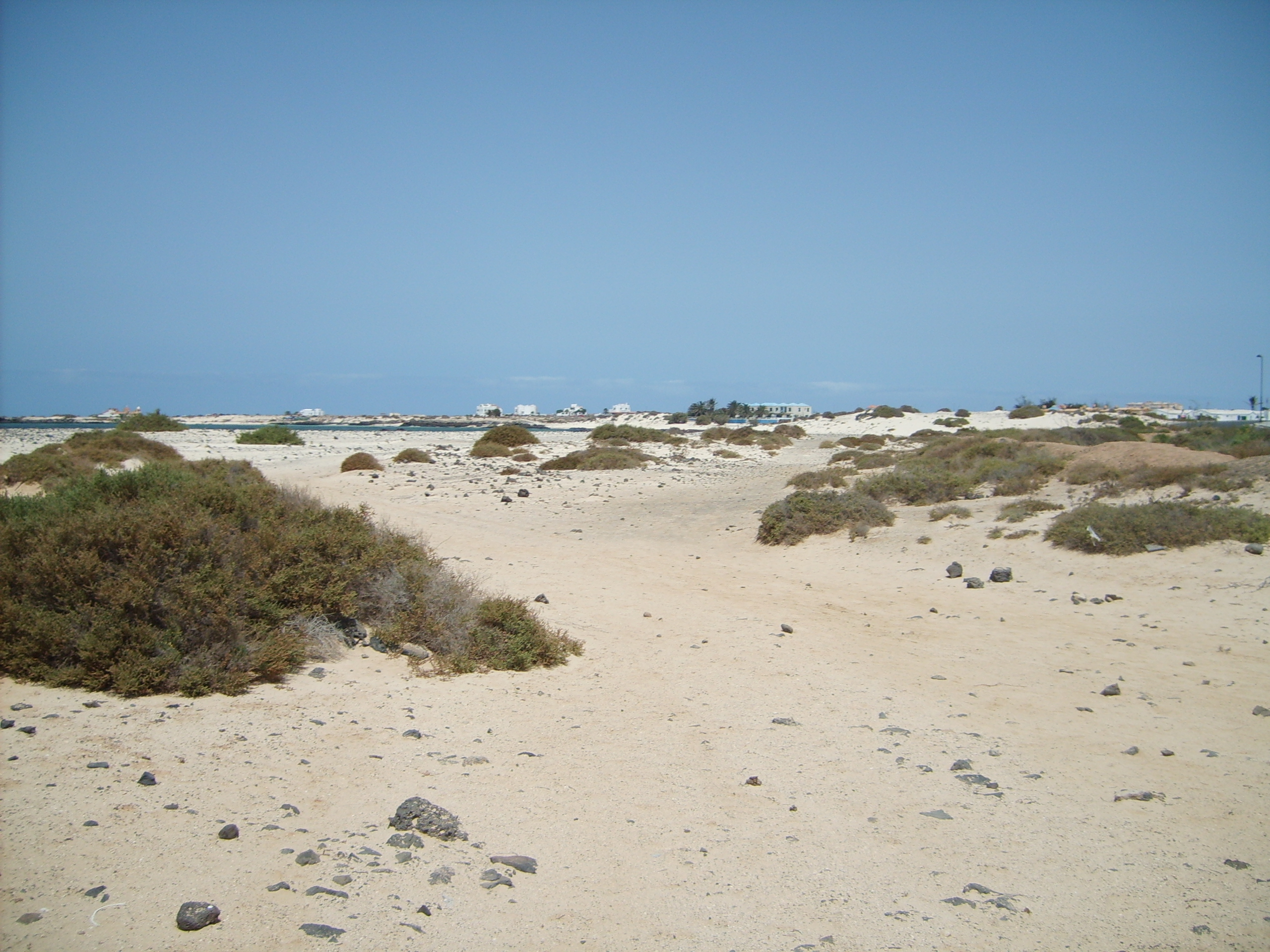
El Cotillo, a former fishing village turned surfer destination without entirely losing its original character, has two sides: to the north, the lagunas, natural pools sheltered by rock barriers where the water stays calm and shallow (great with kids), and to the south, long beaches exposed to Atlantic swells, popular with surfers. The Tostón lighthouse and the small Tostón castle, an eighteenth-century watchtower against pirates, round out the day.
Day 3 — Betancuria and the interior
Half day · the island’s history

Betancuria, founded in 1404 by the Norman Jean de Béthencourt, who conquered the island for the crown of Castile, was Fuerteventura’s capital for over four centuries: its inland position, in a sheltered valley, was meant to protect it from the pirate raids that plagued the coasts. Today it’s a village of a few hundred residents with the church of Santa María, the ruined Franciscan convent, and an archaeological museum dedicated to the Majos, the island’s Berber aboriginal people.
The nearby Mirador de Morro Velosa, designed by César Manrique (who also worked outside Lanzarote), offers the widest view over the island’s bare interior. The area produces queso majorero, a protected-designation-of-origin goat cheese and one of Spain’s most award-winning products: on the island, goats outnumber people.
Day 4 — Playa de Sotavento and the wind
Beach day · the Jandía peninsula

The Playa de Sotavento, on the southeastern coast of the Jandía peninsula, stretches over twenty kilometers: at low tide it forms a lagoon of extremely shallow water hundreds of meters wide, which, combined with the constant wind, has made this beach one of the world capitals of windsurfing and kitesurfing — a stage of the world championship was held here for decades. Even those who don’t practice these sports come to walk through the shallow water for hundreds of meters.
Day 5 — Cofete, the beach at the end of the track
Full day · mountain dirt track, suitable vehicle required
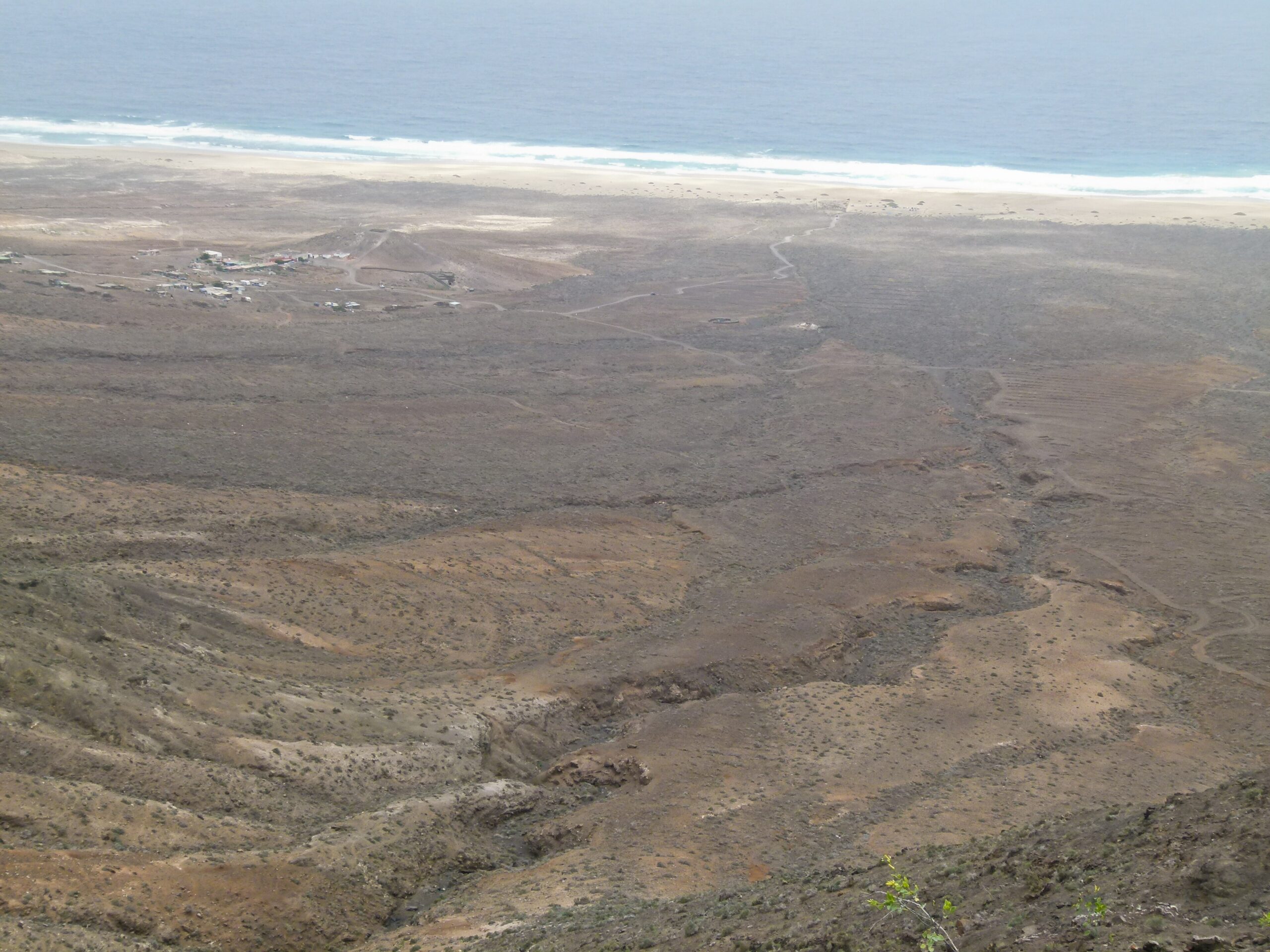
The Playa de Cofete, on the windward side of the Jandía peninsula, is one of the most striking beaches in Europe: fourteen kilometers of deserted sand hemmed in behind by a six-hundred-meter mountain range, with no buildings or services. It’s reached via a twenty-kilometer dirt track of switchbacks over the pass, and it’s precisely the difficulty of access that has kept it untouched.
A Cofete le correnti sono forti e non c’è sorveglianza: il bagno è sconsigliato o pericoloso in molte condizioni. Inoltre molti contratti di noleggio auto vietano espressamente le piste sterrate, Cofete compresa: verificate le clausole prima di partire, o raggiungetela con i bus/tour autorizzati che fanno servizio da Morro Jable.
Above the beach stands the mysterious Villa Winter, a house built in the 1940s by the German engineer Gustav Winter, around which decades of legends have grown — a Nazi submarine base, a refuge for fleeing officials — none of which has ever been proven: historians consider it simply the isolated residence of a businessman with good ties to the Franco regime.
Il prodotto simbolo è il queso majorero, formaggio di capra DOP, servito fresco, semi-stagionato o alla griglia con mojo. Il pesce è ottimo nei porti (Morro Jable, El Cotillo), spesso vieja (pesce pappagallo) o cherne. Come nel resto delle Canarie, le papas arrugadas accompagnano tutto. Un pasto medio costa 15-25 euro a persona.
How much a week costs
| Voce | Costo |
|---|---|
| Alloggio, 7 notti (camera media) | 220-450 euro |
| Noleggio auto, 7 giorni | 110-180 euro |
| Traghetto Isla de Lobos andata/ritorno | circa 15-20 euro |
| Pasti, 7 giorni | 110-190 euro |
| Totale in loco | circa 450-800 euro a persona |
Figures as of September 2026, flight excluded. Fuerteventura is generally the cheapest of the major islands, especially outside the European high season.
Frequently asked questions
Is a week enough for Fuerteventura?
Yes: the island is long, but the main stops (the Corralejo dunes, Lobos, El Cotillo, Betancuria, Sotavento, Cofete) can be covered in five to six days, leaving room for beach days or water sports.
Do you need a permit for the Isla de Lobos?
Yes, a free permit to be requested online in advance: daily access is capped to protect the islet’s ecosystem. The ferry from Corralejo must be booked separately.
Can you get to Cofete with a regular car?
The track can be driven cautiously even with regular cars in dry conditions, but many rental contracts expressly forbid dirt roads, voiding insurance in case of damage. Check the clauses or use the authorized buses/tours from Morro Jable.
What’s the best time to go?
Year-round, thanks to the mild, dry climate. The wind is constant and can be strong in summer: those seeking calm beach days may prefer sheltered coasts; those who windsurf or kitesurf find the best conditions precisely in the windiest months.
Is it true there are more goats than people?
Yes, historically goats have outnumbered the island’s residents: they’re the basis of queso majorero production, a PDO cheese among the most award-winning in Spain.
How much do you spend per day?
At a mid-range level, 65-115 euros per day per person including accommodation: Fuerteventura is generally the cheapest of the major islands.
What’s the most common mistake?
Swimming at Cofete while underestimating the currents, which are strong and unsupervised. The second mistake is staying only in the coastal tourist areas without ever seeing the interior (Betancuria, the viewpoints), which tells the island’s real story.
September 11, 2026


