La Palma in 3 days: the Caldera de Taburiente and Europe’s clearest sky
La Palma is called La Isla Bonita, and it has two things no other Canary Island has at the same level: the Caldera de Taburiente, an eroded amphitheatre eight kilometres across with walls fifteen hundred metres tall, and one of the purest night skies on the planet, protected by law and home to one of the world’s leading astronomical observatories. Three days are enough to see both without rushing.
At a glance
- Duration · 3 full days
- Base · Santa Cruz de La Palma (east) or Los Llanos de Aridane (west)
- Budget · €250-400 per person on the ground
- Car · essential: the island is extremely steep and public transport is limited
- Night sky · La Palma is a Starlight Reserve and has had a regional law against light pollution in force since 1988, the first of its kind in the world
- Good to know · the 2021 Tajogaite (Cumbre Vieja) eruption changed the geography of the Todoque and La Laguna area: some roads and trails remain closed or rerouted, check before you go
The numbers follow the order of the visit.
Day 1 — Santa Cruz de La Palma
Half a day · the colonial capital

In the sixteenth century, Santa Cruz de La Palma was the third most important port of the Spanish empire after Seville and Antwerp, an essential hub on the routes to the Americas: that wealth produced the houses with their characteristic wooden balconies facing the ocean along Avenida Marítima, and the Renaissance palaces around Plaza de España. The historic fabric is so well preserved that the town is considered one of the best-kept colonial centres in the Canaries.
Day 2 — Caldera de Taburiente National Park
Full day · trekking or mirador by car

The Caldera de Taburiente isn’t a volcanic crater in the strict sense, but an enormous erosion amphitheatre — the geological term “caldera” was actually coined here, from this very place, and entered international scientific terminology through the German geologist Leopold von Buch, who studied it in the nineteenth century. It’s eight kilometres across, with walls exceeding fifteen hundred metres, and its highest point, the Roque de los Muchachos, reaches 2,426 metres.
Anyone not trekking sees it from the miradores reachable by car, such as La Cumbrecita (access is capped, with mandatory online booking in high season). Those who walk have dozens of trails, from the caldera floor to the Barranco de las Angustias and on to the Cascada de Colores, where iron minerals colour the rock red and orange.
Day 3 — Roque de los Muchachos and the sky
Full day · a climb to 2,400 metres and stargazing
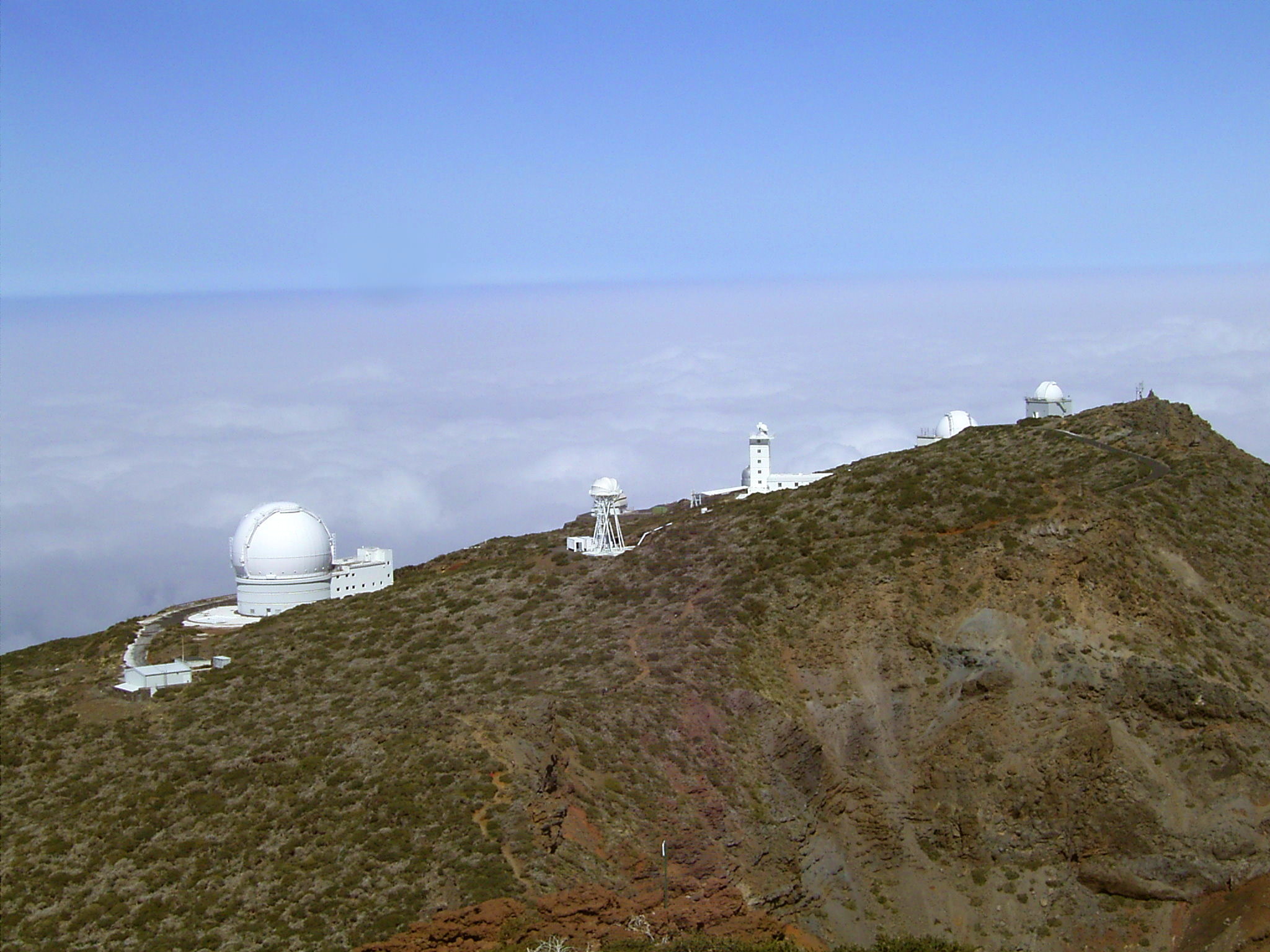
The Roque de los Muchachos Observatory, on the rim of the caldera at 2,400 metres, houses some of Europe’s most important telescopes, including the Gran Telescopio Canarias (a 10.4-metre primary mirror, among the largest optical telescopes in the world). The combination of altitude, a temperature inversion that traps clouds below the observatory’s level, and a 1988 law against light pollution — the first of its kind in the world — makes La Palma’s sky one of the best on the planet for astronomy.
By day you drive up for the view over the caldera from above (often above a sea of clouds); by evening, dozens of operators run guided telescope observations from the island’s miradores, which remain one of the most remembered experiences for anyone who visits.
Fra settembre e dicembre 2021 il vulcano Tajogaite, sulla dorsale di Cumbre Vieja, ha eruttato per quasi tre mesi distruggendo oltre milleduecento edifici nella zona di Todoque e El Paraíso e creando nuove colate a mare. L’area è oggi in parte visitabile con percorsi e mirador dedicati, ma strade e sentieri cambiano nel tempo: verificate la situazione aggiornata prima di programmare escursioni in quella zona, e ricordate che per molti abitanti si tratta di case perdute da poco, non di un’attrazione.
What three days cost
| Voce | Costo |
|---|---|
| Alloggio, 3 notti | 100-200 euro |
| Noleggio auto, 3 giorni | 50-90 euro |
| Osservazione stellare guidata | 30-50 euro |
| Pasti, 3 giorni | 60-90 euro |
| Totale | circa 250-400 euro a persona |
Frequently asked questions
Is three days enough for La Palma?
For the capital, the caldera seen from the miradores and an evening of stargazing, yes. Anyone wanting to do the long treks inside the caldera or the Ruta de los Volcanes (a six-to-seven-hour crossing along the ridge) should plan for at least five days.
Do you need to book to enter the caldera?
For the La Cumbrecita mirador, yes: car access is capped, with mandatory online booking during peak periods. The park’s other access points (Barranco de las Angustias) don’t require booking but have limited parking.
Can you visit the observatory?
The outdoor area and the miradores are freely accessible during the day; guided tours inside the telescopes must be booked separately and have limited availability. At night, access to the observatory area is regulated so as not to disturb scientific observations.
Can you see the area of the 2021 eruption?
Yes, there are dedicated routes and viewpoints over the Tajogaite lava flow, but the state of roads and trails changes over time: check the updated local information before going.
What’s the most common mistake?
Underestimating travel times: La Palma is small but vertical, and getting from the east coast to the west takes longer than the map suggests.
September 11, 2026