

La Gomera in 3 days: Garajonay, Valle Gran Rey and the whistled language
La Gomera is an almost circular island carved by ravines so deep that, before modern roads, islanders communicated from one side to the other with a whistled language — the silbo gomero, an intangible UNESCO heritage still taught in the island’s schools. At its center, the Garajonay forest preserves a laurel woodland that vanished from mainland Europe millions of years ago.
In brief
- Duration · 3 full days
- How to get there · ferry from Los Cristianos (Tenerife), about 50 minutes
- Base · San Sebastián de La Gomera (the port) or Valle Gran Rey (west, more touristy)
- Budget · 250-400 euros per person on the ground
- Car · recommended, but the roads are winding with many switchbacks: anyone prone to car sickness should know this
- Good to know · silbo gomero has been a UNESCO heritage since 2009 and is compulsorily taught in the island’s schools
The numbers follow the order of the visit.
Day 1 — Garajonay National Park
Full day · hiking in the laurisilva
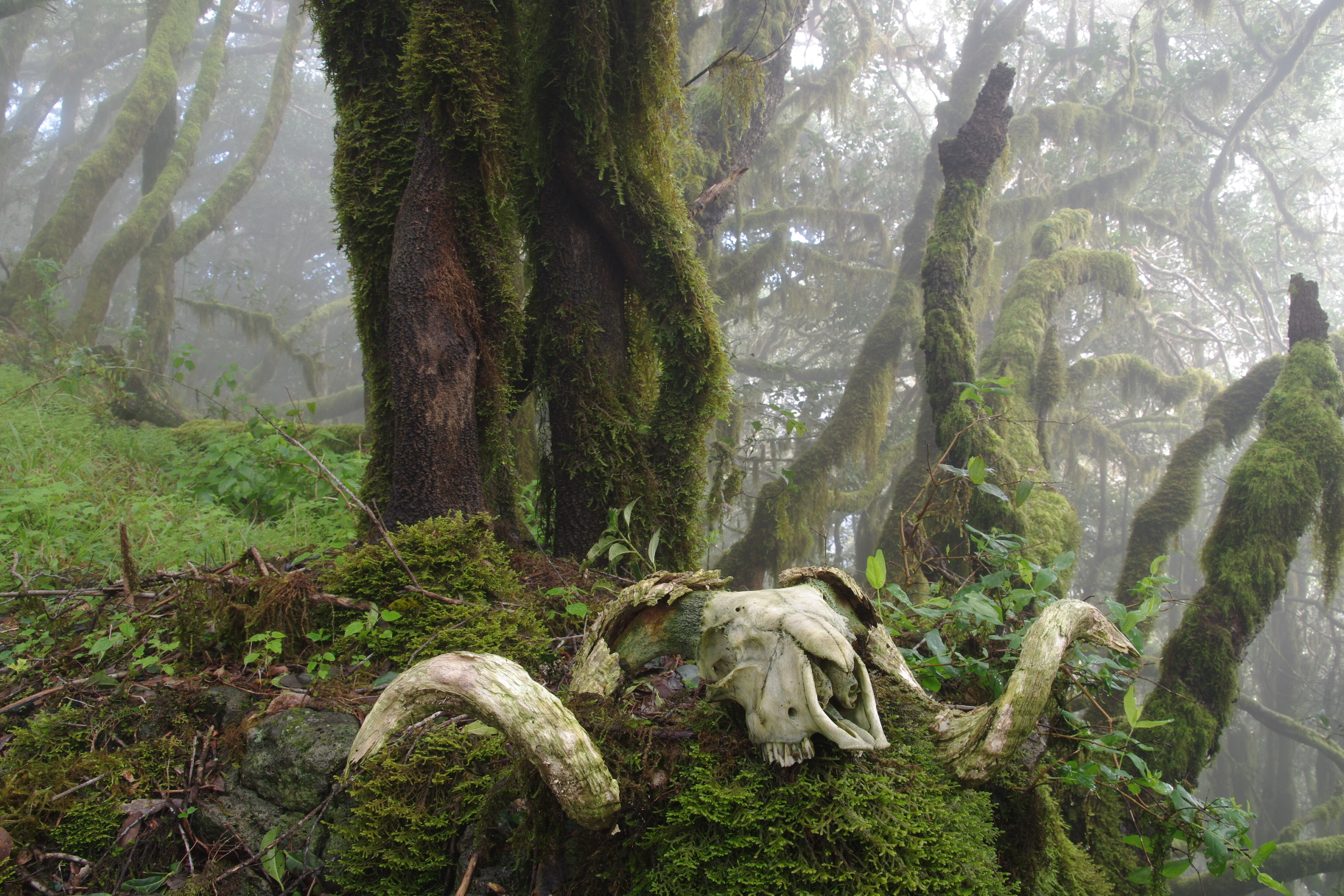
Garajonay National Park, a UNESCO heritage site since 1986, protects the most extensive laurisilva forest in the Canaries: a woodland of laurels, wild lindens, and tree ferns that once covered much of the Mediterranean basin in the Tertiary era and survives today only on a few Atlantic islands. The forest is permanently damp because clouds carried by the trade winds condense on the leaves and drip to the ground: this is the so-called “horizontal rain,” which on these islands replenishes the aquifers more than actual rainfall does.
Well-marked trails cross the park: the classic route climbs to the Alto de Garajonay (1,487 meters, the island’s highest point), from which on clear days you can see Tenerife with the Teide, La Palma, and El Hierro all at once.
Day 2 — Valle Gran Rey
Full day · the western side
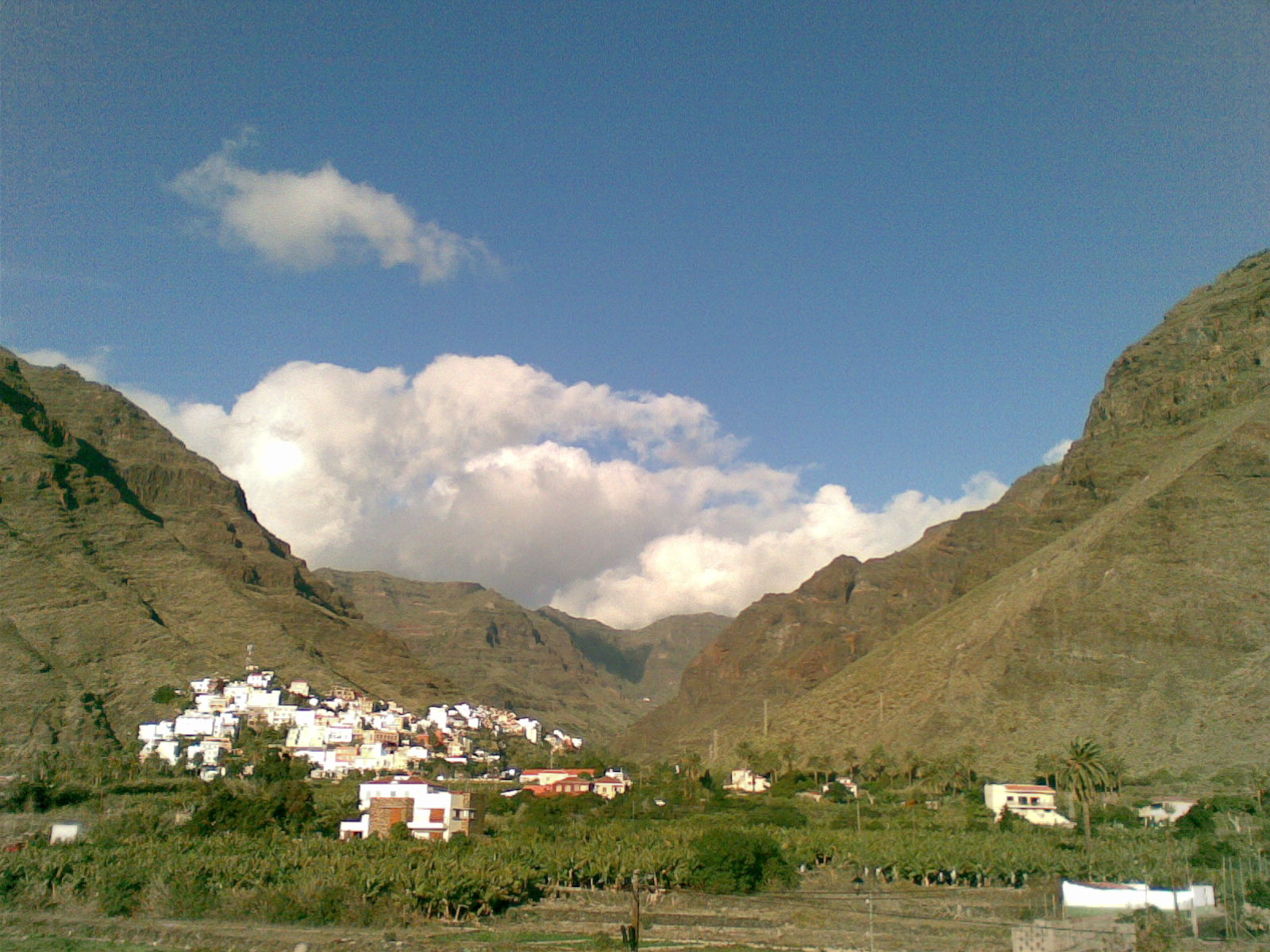
Valle Gran Rey is a ravine that runs from the forest down to the sea through hand-carved agricultural terraces, palm trees, and villages clinging to the cliffs: in the 1970s it became a destination for the European counterculture and has kept an atmosphere unlike anywhere else in the Canaries. From the port of Vueltas, boat trips depart to watch dolphins and pilot whales, present year-round in the channel between La Gomera and Tenerife, and to see Los Órganos from the sea, a wall of vertical basalt columns that resemble organ pipes, visible only from the water.
Day 3 — Agulo, Hermigua and the north
Full day · the villages facing the Teide
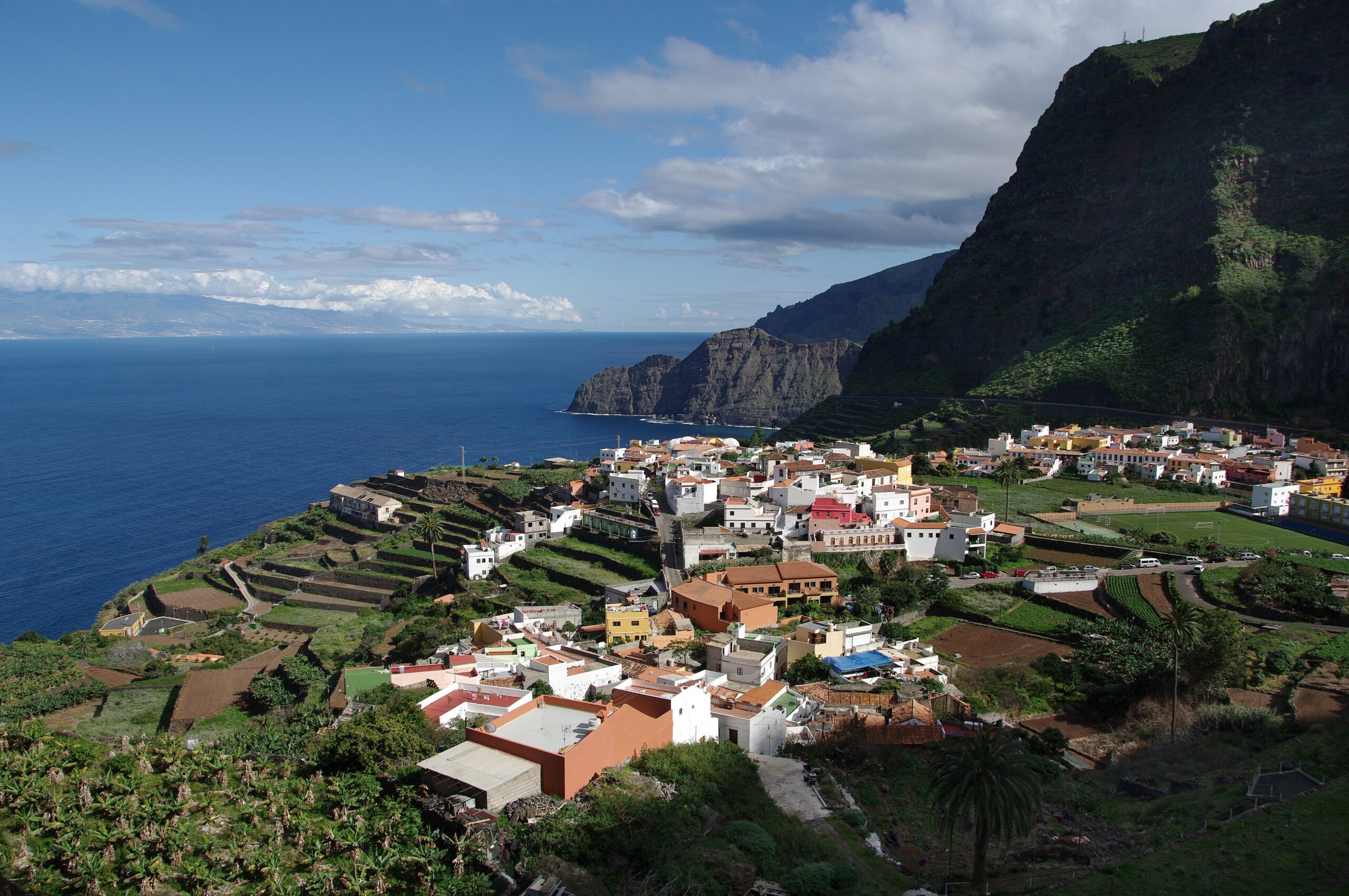
Agulo, often called the island’s most beautiful village, sits on a natural terrace above the ocean with Tenerife’s Teide rising on the horizon fifty kilometers away: the view is one of the iconic images of the western Canaries. Nearby Hermigua, in a valley of banana trees and palms, preserves traditional rural architecture, and the area still hosts public demonstrations of silbo gomero, the whistled language that reproduces the phonetic structure of Spanish and once allowed communication across kilometers between one side of the ravines and the other.
How much three days cost
| Voce | Costo |
|---|---|
| Traghetto da Tenerife, andata/ritorno | 60-90 euro (di più con auto al seguito) |
| Alloggio, 3 notti | 100-200 euro |
| Noleggio auto, 3 giorni | 50-90 euro |
| Pasti, 3 giorni | 60-90 euro |
| Totale | circa 250-400 euro a persona |
Frequently asked questions
Can you visit La Gomera in a day from Tenerife?
You can, but it’s a shame: with the round-trip ferry only a few hours remain, just enough for a taste of Garajonay or the port. Two or three nights let you really see the island.
What is silbo gomero?
A whistled language that reproduces the phonetic structure of Spanish, born to communicate across the island’s deep opposing ravine walls. It has been an intangible UNESCO heritage since 2009 and is taught in the island’s schools to keep it from being lost.
Do you need a car?
Recommended: buses connect the main towns but with few departures. The roads are winding, with a great many switchbacks: anyone prone to car sickness should know this in advance.
What’s the best time to go?
Year-round, with a mild climate. The Garajonay laurel forest is often wrapped in fog: it’s part of the experience, but those seeking clear views from the Alto de Garajonay should go up early in the morning.
What’s the most common mistake?
Underestimating travel times: a few kilometers on the map can take forty-five minutes of switchbacks between one side of the island and the other.
September 11, 2026


