

Berlin in 1 day: following the line of the Wall
Berlin is not visited like other European capitals, because it has no historic centre: it was bombed to ninety per cent destruction, then split in two for twenty-eight years, and what you see today is a city stitched back together on purpose without hiding the seams, choosing to leave the scars visible instead of covering them. That is why in one day you do not «see Berlin»: you follow a line, the one the Wall once ran along, and look at what happened on each side of it. It is the European city where a single day can teach you more than a week anywhere else.
At a glance
- How long · a full day, from 9am to 10pm
- How much walking · about 8 km on the flat, plus two Underground rides
- What has to be booked · the Reichstag dome, free but with compulsory registration days ahead; the museums on the Island a few days ahead
- Budget · €45-80 per person excluding accommodation: Berlin is the cheapest capital in this group
- Starting point · the Brandenburg Gate, S-Bahn and U-Bahn Brandenburger Tor
- Finishing point · the East Side Gallery and Kreuzberg
- What is left out · Charlottenburg, Potsdam, the Pergamon Museum (closed for a long restoration), Sachsenhausen: those are day two and three
Nine stops. Berlin’s distances are real: two stretches are covered by Underground, marked in the text.
Morning — The seat of power
2 km · 3 stops · 9am to 12:30pm · all within five hundred metres
1 – Brandenburg Gate
Time 30 minutes · Free · S-Bahn/U-Bahn Brandenburger Tor

The Brandenburg Gate dates from 1791 and is not a triumphal arch: it is a customs gate, the last of the eighteen that once closed off Berlin. Its model was the Propylaea of the Acropolis, and it is Germany’s first neoclassical building.
On top stands the quadriga, which has travelled: in 1806 Napoleon, entering Berlin as a conqueror, had it dismantled and taken to Paris as spoils of war. It stayed there eight years; in 1814 the Prussians took it back and brought it home, and to celebrate they added an iron cross and a Prussian eagle to the goddess that had not been there before. Ever since, the square has been called Pariser Platz, a sarcasm Berliners have never denied.
From 1961 to 1989 the Gate stood inside the death strip: the Wall ran in front of it and behind it, and no one could enter the space between, from either east or west. The photographs of 9 November 1989, with people standing on the Wall in front of the Gate, are the defining image of the end of the twentieth century in Europe.
Look at the ground: a double row of cobblestones crosses the asphalt, with a brass plaque reading Berliner Mauer 1961-1989. That line marks the path of the Wall, and you will find it all day, underfoot, running through the streets.
2 – The Reichstag and its dome
Time 1 hour · Free but with compulsory registration days ahead, with ID · Walk 5 minutes

The Reichstag is the seat of the German parliament, and it is the building where the whole of twentieth-century German history can be read. Opened in 1894, it was set on fire in February 1933: Hitler, chancellor for a month, used the fire to suspend constitutional freedoms, and the dictatorship began from there. In 1945 it was taken by the Soviets after days of room-by-room fighting, and the photograph of the red flag raised on its roof is one of the best-known images of the war.
When Germany reunified and parliament returned here, Norman Foster rebuilt the building with two decisions worth understanding. The first: inside, the pencil and charcoal graffiti of Soviet soldiers from 1945, in Cyrillic, was left visible on the corridor walls — obscene messages were erased, the rest were not. The second: above the chamber is a glass dome reached by a spiral ramp, and the public who climb it walk above the heads of the MPs, looking down at them through the transparent floor. It is a political statement turned into architecture: the people stand above parliament, and parliament is visible.
The climb is free, but registration must be done online days ahead, giving name and ID, and at the entrance there is a security check like at an airport. If you forgot to book, you can try the kiosk at the corner of the lawn for the following days.
3 – The Holocaust Memorial
Time 45 minutes, 1.5 hours with the information centre · Free · Walk 5 minutes

Two hundred metres from the Brandenburg Gate, covering an entire block, stand 2,711 steles of grey concrete arranged in a grid. It is the Memorial to the Murdered Jews of Europe, by architect Peter Eisenman, opened in 2005 after seventeen years of parliamentary debate over whether to build it, where, and how.
There is no explanation, no name, no symbol. The steles vary in height and the ground undulates: you enter at the edge, where they are as low as benches, and walking toward the centre the ground drops while the blocks rise, until they stand four metres tall and you find yourself at the bottom of a grey corridor where you can no longer see anyone or hear the traffic. Eisenman has always refused to explain what it represents; the effect, though, is calculated to the centimetre.
Below, in the south-east corner, is the Ort der Information, free: four underground rooms with the stories of individual families, the last letters thrown from the trains, and a room where the names of identified victims are read aloud, one by one. Reading them all would take more than six years. Go in: the memorial above, without these rooms, risks staying an abstract installation.
On behaviour: do not climb on the steles or pose for photos on them. The memorial is unfenced and always open, by choice, but the attendants do intervene, and they are right to.
Berlin eats on the street, and eats well. Currywurst — sliced sausage with curry sauce and chips — was invented here in 1949 and costs €4-6 at the kiosks (Imbiss). The döner kebab in the form we know it was invented in Berlin in the 1970s by Turkish immigrants: the city has the second-largest Turkish community in the world after Turkey, and in Kreuzberg you eat for six euros better than in many restaurants. In Kneipen, neighbourhood pubs, a dish runs €10-16. Overall, Berlin costs about a third less than Paris or Amsterdam.
Midday — Prussian Berlin and the East
2.5 km · 3 stops · 1:30pm to 5pm · you walk along a single avenue
4 – Unter den Linden and Bebelplatz
Time 45 minutes · Free · walk east from the Gate
Unter den Linden — «under the lime trees» — is the avenue running from the Gate to Museum Island, and it was Prussia’s ceremonial axis. Along it stand Humboldt University, where Hegel, the Brothers Grimm, Einstein and twenty-nine Nobel laureates taught or studied, the Staatsoper, and the Neue Wache.
The Neue Wache is a small neoclassical building that today serves as the national memorial to the victims of war and tyranny: inside is an empty hall with a single sculpture, an enlarged version of Mother with her Dead Son by Käthe Kollwitz, standing under an oculus open in the roof. Rain falls in, snow falls in, and that is the point. Entry is free, and you stay for two minutes in silence.
Next to it is Bebelplatz, and here you need to look at the ground. On 10 May 1933 Nazi students burned about twenty thousand books in this square, by Freud, Marx, Brecht, Kafka, Einstein, Thomas Mann. At the centre of the square is a glass pane set into the paving: looking down through it, you see a white underground room with empty shelves, enough for twenty thousand volumes. A plaque nearby carries a line by Heinrich Heine, written in 1821: «Where they burn books, they will ultimately burn people too». Heine’s own books were among those burned.
5 – Museum Island
Time 1.5 hours for one museum · Single ticket about €12-16, combined ticket about €24 · Some closed on Mondays
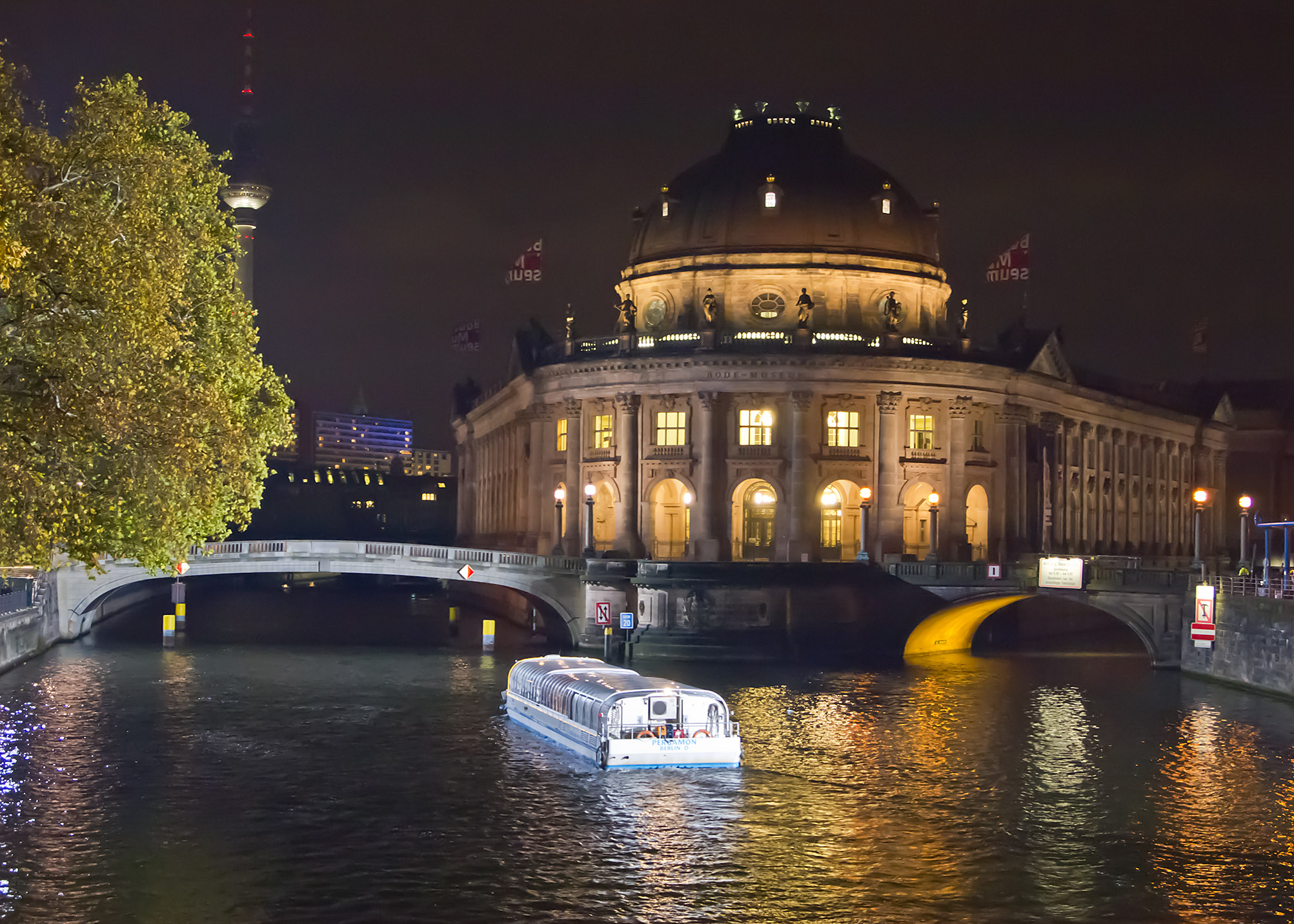
On an island in the middle of the Spree stand five museums built between 1830 and 1930, a UNESCO site: a deliberate Prussian project to make Berlin a cultural capital on a par with Paris and London.
With only one day, you do one. The Neues Museum is our choice: inside is the bust of Nefertiti, carved around 1340 BC, found in Egypt in 1912 and, ever since, at the centre of an unresolved restitution claim. The building itself is worth the visit: destroyed by bombing, it was rebuilt by David Chipperfield in 2009 without disguising the damage — blackened walls, missing frescoes, new brick alongside the wounded original. It is the manifesto of how Germany treats its own ruins.
Alternatives: the Altes Museum for classical antiquity, the Alte Nationalgalerie for nineteenth-century German painting, the Bode for sculpture. The Pergamon Museum, the most famous, is closed for a very long restoration and will reopen in stages over the coming years: check before counting on it.
6 – Alexanderplatz and the tower
Time 30 minutes, 1 hour if you go up · Tower about €25 · Walk 15 minutes

Alexanderplatz was the heart of East Berlin and has been left as the GDR left it: enormous, windswept, concrete, ringed by prefabricated blocks. It is not pretty, and that is exactly why it is interesting: it is the only spot in the centre where you can see at a glance what the socialist city looked like.
The Fernsehturm, the television tower, dates from 1969 and is Germany’s tallest building: 368 metres. The GDR built it to be seen from West Berlin, as a demonstration of technical capability. Then something happened that everyone in Berlin tells you about: when the sun hits the steel sphere, the reflection traces a cross. In an officially atheist state that had just demolished several churches, this was embarrassing; Berliners nicknamed it Rache des Papstes, the Pope’s revenge, and no one ever managed to make it go away.
On the square also stands the World Clock, from 1969, showing the time in a hundred and forty-eight cities: it was East Berlin’s meeting point, and it still is.
Afternoon and evening — The Wall
3 km · 3 stops · 5pm to 10pm · two Underground rides
7 – Checkpoint Charlie and the Topography of Terror
Time 1.5 hours · Topography of Terror free · Metro U6 to Kochstraße
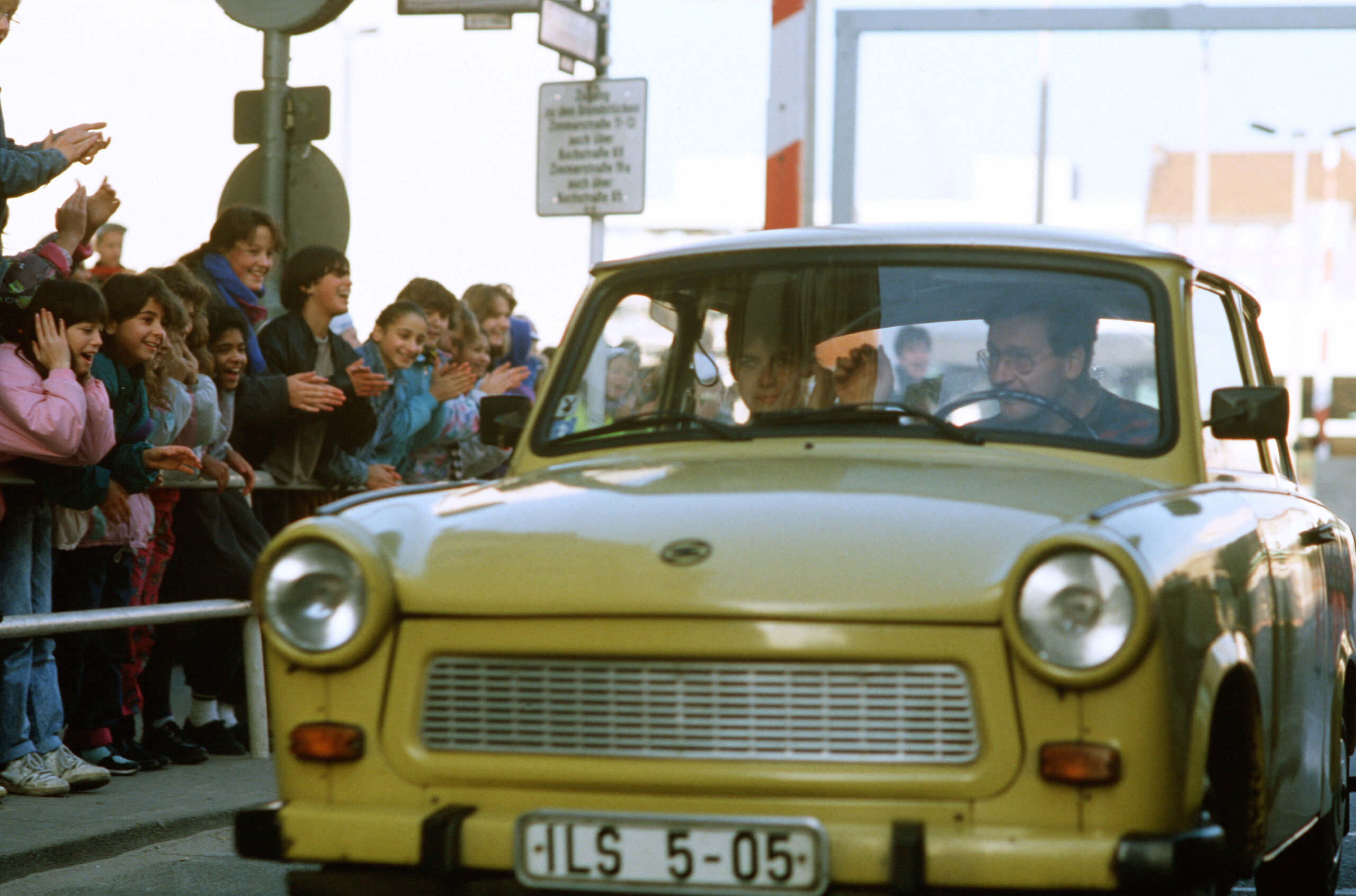
Checkpoint Charlie was the crossing reserved for foreigners and Allied personnel, and in October 1961 it was the spot where American and Soviet tanks faced each other a hundred metres apart for sixteen hours, guns loaded: the moment the Cold War came closest to turning hot in Europe.
Let us be honest: the place is disappointing today. The guard hut is a replica, there are fake soldiers charging for photos, souvenir shops and a fast-food outlet. Spend five minutes there, read the open-air panels reconstructing the history of the crossings and the escapes, and walk two hundred metres.
Two hundred metres away is the Topography of Terror, and it is one of the most important sites in Europe. On this ground stood the headquarters of the Gestapo, of the SS, and the Reich Main Security Office: the extermination was organised from here. The buildings were razed, and for decades the site stayed abandoned ground no one wanted to talk about; only in the 1980s did a group of citizens begin digging to uncover the foundations.
Today it is a free documentary museum, sober, with no objects and no staging: only documents, photographs and texts, outdoors along a surviving stretch of the Wall and indoors in the pavilion. It does not tell the story of the victims, it tells the story of the perpetrators: who they were, how they were recruited, what they signed, what careers they had after 1945. It is uncomfortable, and it works extremely well.
8 – East Side Gallery
Time 1 hour · Free · Metro U1 or S-Bahn to Warschauer Straße

The East Side Gallery is the longest surviving stretch of the Wall: 1,316 metres along the Spree. In 1990, in the months between the fall and reunification, a hundred and eighteen artists from twenty-one countries painted it: it is the largest open-air art gallery in the world.
The most famous mural is the kiss between Brezhnev and Honecker by Dmitri Vrubel, titled My God, Help Me to Survive This Deadly Love: it reproduces a real 1979 photograph, because the kiss on the mouth between socialist leaders was a genuine ritual. The other is the Trabant breaking through the wall by Birgit Kinder, with the date of the fall as its number plate.
One thing to note: this was not the side East Berliners saw. The Wall was actually two walls, and this was the inner one, facing the death strip, which no one could approach. The historic graffiti stood on the other side, facing west, where anyone could reach it with a brush. These murals were painted afterward, on a wall no GDR citizen had ever been able to touch.
A little further on is the Oberbaumbrücke, the two-tier red-brick bridge between Friedrichshain and Kreuzberg, which was also a crossing point: at sunset it is the most photogenic spot in the city.
9 – Kreuzberg
Time 2 hours · Free · cross the bridge on foot
You end in Kreuzberg, the district that explains Berlin better than any monument. It stood in the West, but was wedged against the Wall on three sides: a forgotten cul-de-sac, with decaying houses and very low rents, where in the 1970s Turkish workers summoned to Germany settled, and alongside them punks, artists, conscientious objectors — there was no military service in West Berlin, and that drew a whole generation.
What emerged is a district that is Turkish, alternative and political all at once. You eat the best kebab in the city here, there are Kneipen open until dawn, occupied courtyards, murals, and the Turkish market on the Landwehr canal on Tuesdays and Fridays. On summer evenings people sit on the grass along the canal with something bought at a kiosk: drinking outdoors is normal in Berlin, and the city has a tolerance that does not exist elsewhere.
If it rains
- Instead of the East Side Gallery · the DDR Museum on the Spree, where you open drawers, climb into a Trabant, and walk through a reconstructed typical East German flat.
- Instead of Kreuzberg outdoors · the Hackesche Höfe, a sequence of eight connected art nouveau courtyards in Mitte, with shops, cinemas and cafés: you move from one to the next under cover.
- If it rains all day · add a second museum on the Island, or go to the Gemäldegalerie at the Kulturforum, which holds one of the most important collections of early European painting on the continent and is always half-empty.
- Always works · the Topography of Terror has a covered pavilion, and it is free.
What the day costs
| Item | Cost |
|---|---|
| Reichstag and dome | free, with registration |
| Holocaust Memorial and information centre | free |
| Topography of Terror | free |
| One museum on the Island | €12-16 |
| Fernsehturm, if you go up | about €25 |
| Transport, zone AB day ticket | about €10 |
| Lunch from a kiosk | €5-9 |
| Dinner at a Kneipe or kebab | €8-18 |
| Total without the tower | about €45-60 |
| Total with everything | about €70-85 |
Reference figures as of August 2026: check official websites before you travel. Berlin is the cheapest capital in this collection: you eat well for ten euros, and the most important things to see — the Reichstag, the Memorial, the Topography of Terror, the whole Wall — are all free. If you plan on several museums, the three-day Museumspass covers about thirty state museums.
Getting around

Berlin is big: nine times the area of Paris. The distances between attractions are real, and you cannot do everything on foot. The transport network, however, is the best in Europe: U-Bahn (metro), S-Bahn (urban rail), trams in the eastern part, buses. A single ticket covers everything.
For one day, the zone AB day ticket is worth it, about €10: it covers the whole centre. Brandenburg airport sits in zone C, so getting there needs an ABC ticket. The ticket must be validated in the yellow machine before boarding: there are no gates, but plain-clothes inspectors do exist, and the fine is steep.
In the middle of the city is the Tiergarten, two hundred and ten hectares of parkland, which is a story in itself: in the winter of 1946-47 Berliners almost entirely felled it for firewood, and grew potatoes on the cleared land. What you see today has been replanted, tree by tree, starting in 1949.
Frequently asked questions
Is one day enough to see Berlin?
It is enough to follow the line of the Wall and understand the city: the Brandenburg Gate, the Reichstag, the Holocaust Memorial, Unter den Linden, one museum on the Island, Alexanderplatz, the Topography of Terror, the East Side Gallery and Kreuzberg. Charlottenburg, Potsdam, the Sachsenhausen camp and the northern districts are left out. Berlin is a three-day city, but one day built this way teaches more than a week elsewhere.
How do you book the Reichstag dome?
Online on the Bundestag website, free of charge, giving the name and ID of every visitor: you need a few days’ notice, since spots are limited. At the entrance there is an airport-style security check, and you must bring the ID you registered. If you forgot to book, there is a kiosk at the corner of the lawn where you can try to secure a slot for the following days.
Where can you still see the Berlin Wall?
Three different, complementary places. The East Side Gallery is the longest stretch, 1,316 metres, painted by a hundred and eighteen artists in 1990. The Gedenkstätte Berliner Mauer on Bernauer Straße preserves a complete stretch with the death strip, the watchtower and the double wall, and it is the one that makes you understand how it actually worked. At the Topography of Terror stands an original, unrestored stretch. Throughout the city, the route is marked by a double row of cobblestones in the asphalt.
Is the Pergamon Museum open?
No: it is closed for a very long restoration and will reopen in stages over the coming years. If your trip revolved around the Pergamon Altar or the Ishtar Gate, check the state of the works before you leave. The other museums on the Island — the Neues, the Altes, the Alte Nationalgalerie, the Bode — are open.
Is it worth going to Checkpoint Charlie?
Five minutes, no more: the guard hut is a replica, there are paid fake soldiers and souvenir shops. What is genuinely worthwhile lies two hundred metres away: the Topography of Terror, a free documentary museum built on the site of the Gestapo and SS headquarters, which tells the story of the perpetrators rather than the victims and is one of the most important places in Europe.
How much does a day in Berlin cost?
Between €45 and €60 per person, making it the cheapest capital covered on this site. The reason: the main things are free — the Reichstag, the Holocaust Memorial, the Topography of Terror, the whole of the Wall — and you can eat very well for ten euros between Currywurst, kebab and neighbourhood pubs.
How do transport tickets work?
A single ticket covers the metro, urban trains, trams and buses. For one day, the zone AB day ticket is worth it, about ten euros, covering the whole centre; for the airport you need ABC. The ticket must be validated in the yellow machine before boarding: there are no gates, but plain-clothes inspectors exist, and the fine is steep.
What do you eat in Berlin?
Currywurst, invented here in 1949, at kiosks for €4-6. The döner kebab in the form we know it was born in Berlin in the 1970s: the city has the second-largest Turkish community in the world, and in Kreuzberg you eat for six euros better than in many restaurants. In Kneipen, neighbourhood pubs, a dish runs between ten and sixteen euros.
Why does Berlin have no historic centre?
Because about ninety per cent of it was destroyed in the bombing and the 1945 battle, and then it was split in two for twenty-eight years, its centre cut in half by the Wall. What you see is a recent stitching-together, and the city has deliberately chosen not to hide the scars: the blackened walls of the Neues Museum, the urban gaps, the cobblestones marking the Wall in the asphalt.
What is the glass pane on Bebelplatz?
It is the memorial to the book burning of 10 May 1933, when Nazi students burned about twenty thousand volumes here. Looking down through the pane, you see a white underground room with empty shelves, sized exactly for those twenty thousand books. Beside it is a line by Heinrich Heine from 1821: «Where they burn books, they will ultimately burn people too». Heine’s own books were among those burned.
September 3, 2026


