

What to see in Milan: a guide to the places that really count
Milan has the opposite problem to the other Italian art cities: it does not put on display what it holds. Leonardo’s Last Supper sits behind a booking made months in advance, Michelangelo’s final sculpture stands in a bare room inside a castle, and the most thoroughly frescoed church in the city has an anonymous facade on a busy street. This guide lists the places in order of importance rather than as an itinerary, saying for each how long it takes, what it costs and whether it has to be booked.
At a glance
- The five things not to miss · the cathedral roof terraces, Leonardo’s Last Supper, the Rondanini Pietà, the Brera Picture Gallery, the Navigli at aperitivo hour
- What has to be booked · the Last Supper months ahead, the cathedral roof the day before
- The day to avoid · Monday, when Brera and the castle museums close
- The finest thing that is free · San Maurizio al Monastero Maggiore, frescoed from top to bottom
- The most underrated museum · the Ambrosiana, which holds Caravaggio, Leonardo and Raphael’s cartoon
- Best time to go · April-June and September-October; though winter is when you see the Alps
Five thematic layers, not days: switch on only the ones you care about, from the box at the top right.
The landmarks, the reason people come to Milan
The Duomo and the roof terraces
Time 2 hours · Ticket about €16 by stairs, €20 by lift · Timed entry

Work began in 1386 and the facade was only considered finished in the 1960s, which is where the local saying “as long as the building of the Duomo” comes from — still in use. The marble is pink Candoglia and came by boat from Lake Maggiore along the canals: the cathedral and the city of water are the same story.
Inside, five naves and fifty-two pillars forty-five metres high, one for each week of the year. Set into the floor by the entrance is the meridian line of 1786, which for a century gave Milan its official time: at solar noon a beam enters through a hole in the wall and falls on the brass strip. In the right transept, the flayed Saint Bartholomew, carrying his own skin over his shoulders like a cloak.
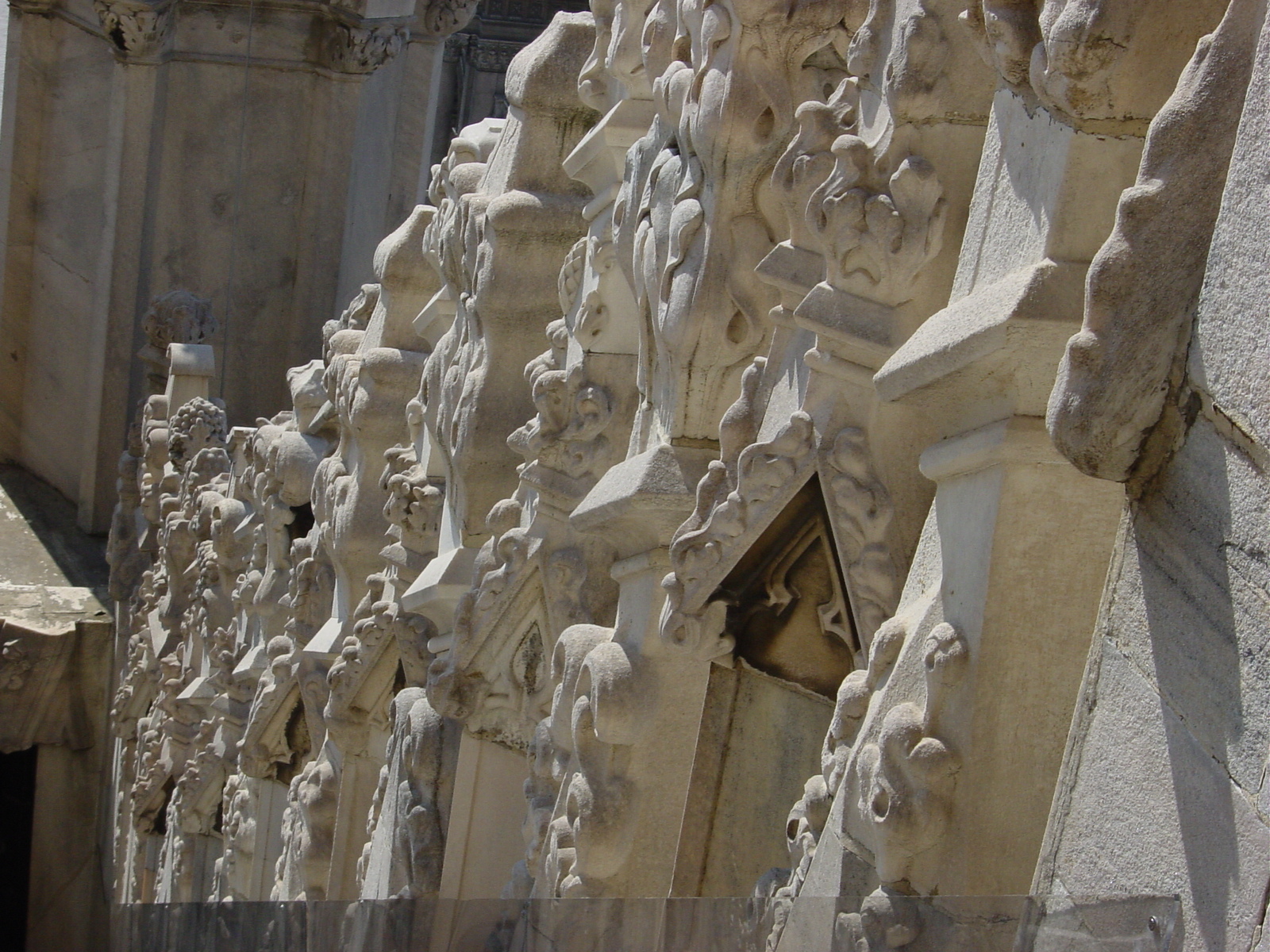
The roof terraces are the best thing the city offers. You go up onto the roof and walk among the spires and more than three thousand statues; on clear winter days you see the whole arc of the Alps. At the top the gilded Madonnina, a hundred and eight metres up: by tradition no building in Milan could rise above her, and the towers that did now carry a copy of her on their spire.
Galleria Vittorio Emanuele II
Time 30 minutes · Free

It is the first covered shopping arcade in Europe, from 1877: two arms in a Latin cross, an octagon at the crossing, an iron and glass vault thirty-two metres high. The architect Giuseppe Mengoni fell from scaffolding days before the inauguration and never saw it finished.
The floor of the octagon carries mosaics with the arms of the four capital cities. Turin’s has a bull: tradition says you plant your heel on its more delicate parts and spin all the way round for luck. The mosaic is worn to the cement and gets remade every few years.
Teatro alla Scala
Time 1 hour with the museum · Ticket about €15 · The auditorium is seen from a box, unless there are rehearsals

Built in 1778 on the site of the church of Santa Maria alla Scala, which gave it its name. The modest front was a choice: the theatre is on the inside, six tiers of boxes and nearly two thousand seats. The theatre museum ticket gives access to a box from which you see the auditorium; if rehearsals are running the box stays shut, which happens often.
The season opens on 7 December, Saint Ambrose’s day, and it is the social event of the Italian year. Stalls seats cost hundreds of euros, but the loggione has places for a few tens, sold on the day: people queue from early morning.
Sforza Castle and the Rondanini Pietà
Time 2 hours · Courtyards free, museums about €5 · Closed on Mondays

It has been a Visconti fortress, a Sforza palace and Spanish and Austrian barracks. At the end of the nineteenth century a vote decided whether to pull it down; it was saved to house the civic museums. The courtyards are free to cross, but five euros gets you into a collection that anywhere else would be the city’s main museum.
The thing to see is the Rondanini Pietà, Michelangelo’s last sculpture, which he was working on days before dying at eighty-eight. It is unfinished: the body of Christ is barely blocked out and the arm from the first version is still there, detached, beside it. It stands alone in a bare room, the former Spanish hospital, and it is the strongest thing Milan has to offer.
The museums
Brera Picture Gallery
Time 2 hours · Ticket about €15 · Closed on Mondays
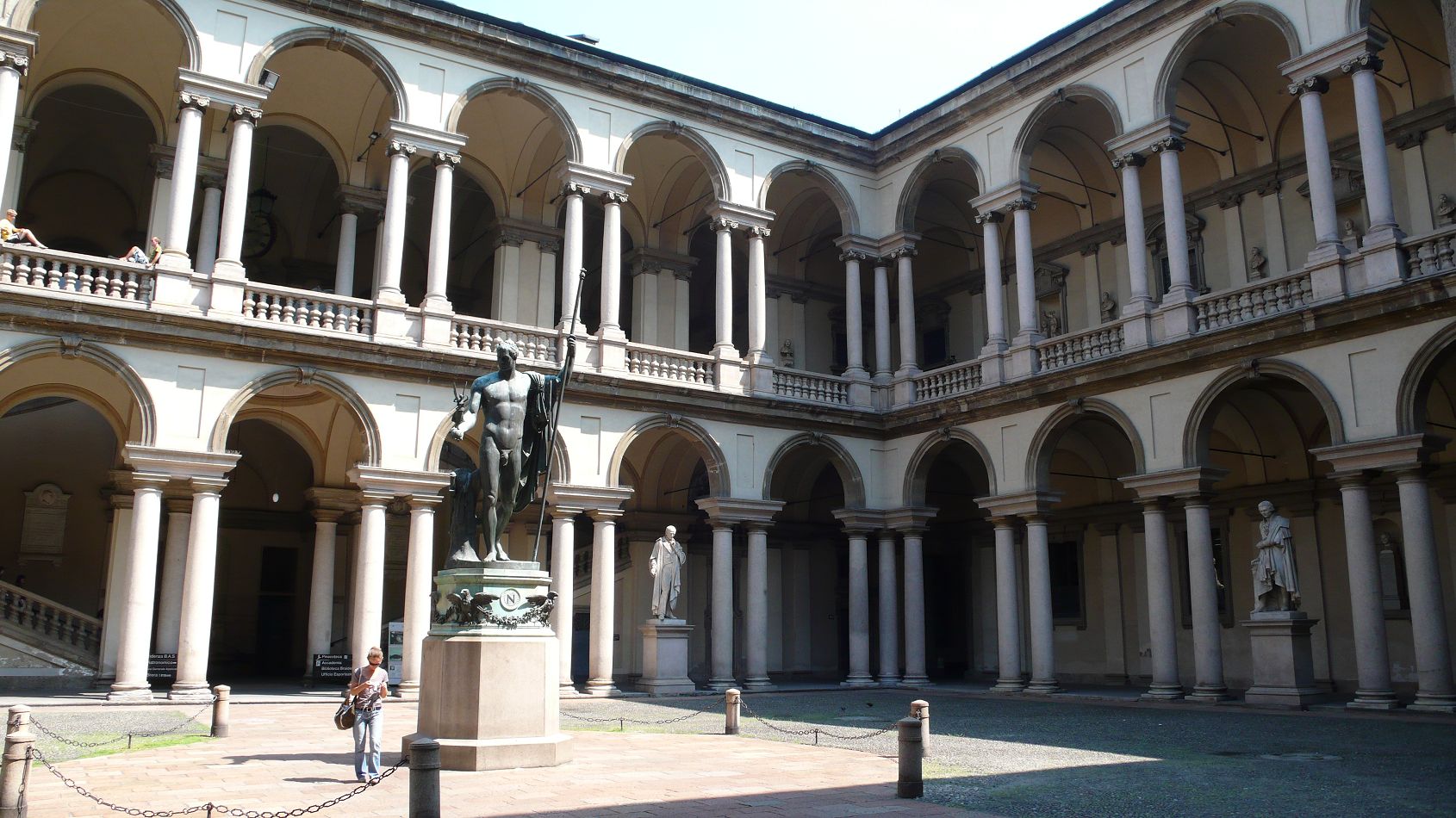
Inside a seventeenth-century palace that still houses the fine arts academy, which is why you pass students with portfolios. In the arcaded courtyard, Canova’s Napoleon as Mars the Peacemaker, naked and in bronze.
Four paintings justify the ticket on their own. Mantegna’s Dead Christ, seen from the feet in a foreshortening that still looks impossible. Raphael’s Marriage of the Virgin, painted at twenty-one, in which the domed temple steals the scene. Caravaggio’s Supper at Emmaus, the second version, painted on the run from Rome and far darker than the first. And Hayez’s The Kiss, the image of the Italian Risorgimento, much smaller than everyone imagines.
Ambrosiana Picture Gallery
Time 1 hour 30 · Ticket about €15 · Almost always half empty
It is the most underrated museum in the city and it stands two steps from the Duomo. It grew in 1618 out of Cardinal Federico Borromeo’s library, and it is one of the oldest public picture galleries in Europe.
It holds Caravaggio’s Basket of Fruit, the first still life in Italian painting, with leaves already eaten by insects; Leonardo’s Portrait of a Musician, the only male portrait securely attributed to him; and Raphael’s full-size cartoon for the School of Athens, eight metres by three, the working drawing used for the Vatican fresco. The library keeps Leonardo’s Codex Atlanticus, with sheets shown in rotation.
Museo del Novecento
Time 1 hour 30 · Ticket about €10 · On Piazza Duomo
You climb a spiral ramp and begin with The Fourth Estate by Pellizza da Volpedo, shown alone: six metres of canvas with striking workers advancing towards the viewer, the image Italy uses to describe the start of the twentieth century. Then the Futurists, Boccioni above all, who lived here and painted the city’s building sites; Morandi; Fontana, with his slashed canvases and a neon ceiling. On the top floor, a window looking straight at the cathedral facade.
Poldi Pezzoli and the house museums
Time 1 hour · Ticket about €14 · Closed on Tuesdays
The house of a nineteenth-century collector, left to the city with everything still in it: arms, clocks, tapestries, and the Portrait of a Young Woman by Pollaiolo, in profile against a blue ground, which is the museum’s symbol and one of the best-known images of the Italian fifteenth century.
Built on the same idea are the Bagatti Valsecchi house museum, a lived-in palace rebuilt in Renaissance style by two collector brothers, and Villa Necchi Campiglio, a 1930s bourgeois house with a swimming pool and tennis court in the middle of the city, run by the FAI. Three short visits, none of them ever crowded.
Leonardo in Milan
Leonardo lived in Milan for almost twenty years, in the service of Ludovico il Moro, and left more here than in any city except Florence.
The Last Supper
Time 15 minutes · Ticket about €15 · Booking compulsory, months ahead
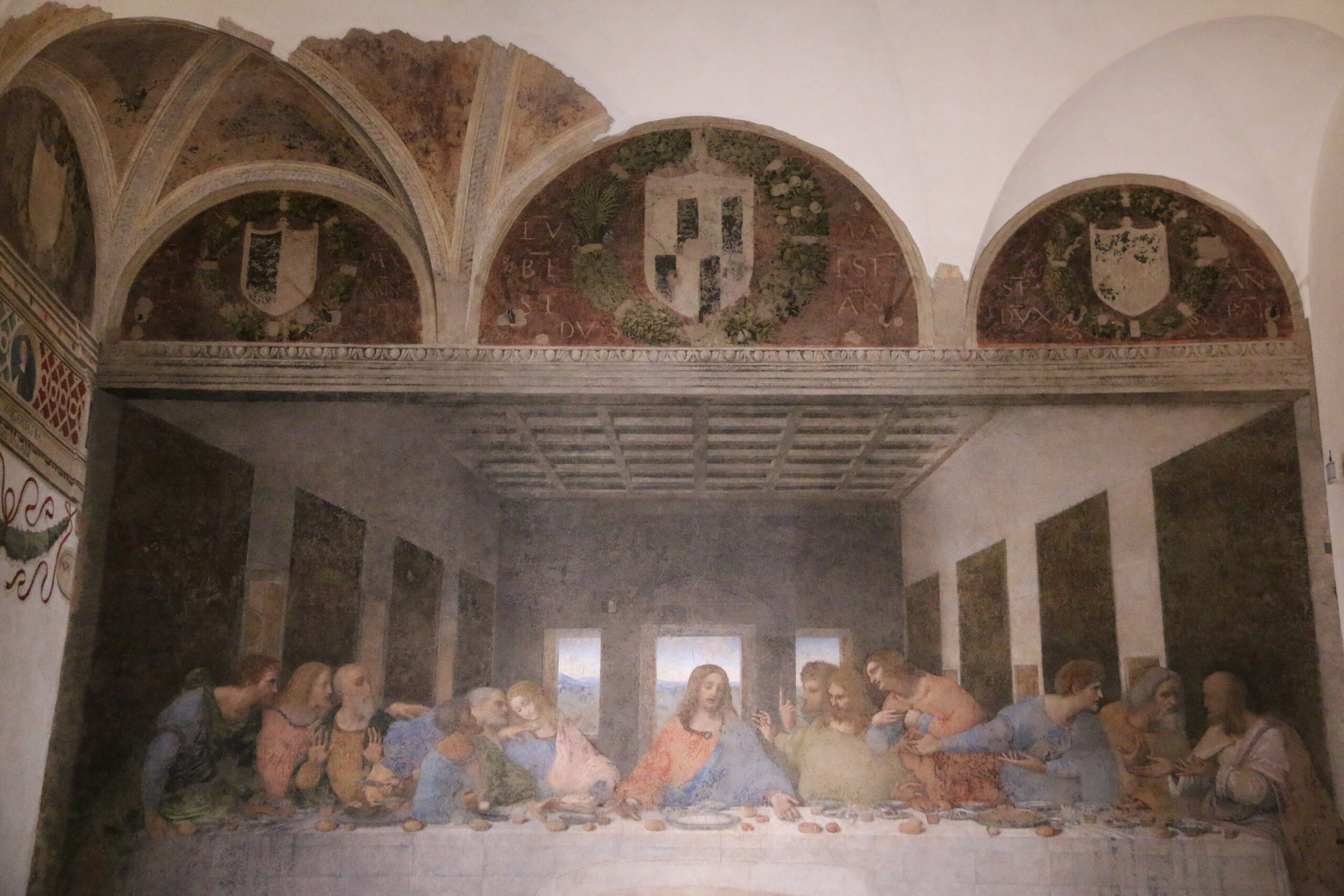
The Last Supper is on the refectory wall of Santa Maria delle Grazie, painted between 1495 and 1498. It is not a fresco: Leonardo used a dry technique that let him go back over the detail, and for that reason the paint began to lift while he was still alive. What you see is the result of a restoration that took twenty-one years.
The visit lasts fifteen minutes, in groups of thirty-five, after two humidity-controlled antechambers. Watch the hands: the instant caught is the one where Jesus says that one of them will betray him, and all twelve react together, in four groups of three. Without a booking you do not get in: tickets are released in quarterly blocks and go within hours, and agency packages cost three or four times as much.
The church is free and worth it on its own: the apse and sacristy are by Bramante.
The Sala delle Asse and the Incoronata lock
Time 30 minutes in all · Sala delle Asse on the castle ticket, the lock free
Inside the Sforza Castle, the Sala delle Asse carries the decoration of interlaced branches painted by Leonardo in 1498, visible again after a very long restoration: sixteen mulberry trees knotting together until they cover the vault. It is not the Last Supper, but it is Leonardo, and it needs no booking.
The conca dell’Incoronata, on Via San Marco, is the last piece left in the city of the lock system that let boats climb between canal levels. Leonardo worked on it and left drawings: it is restored, visible from the street, and almost nobody looks at it.
Science and Technology Museum
Time 3 hours · Ticket about €10 · The largest technical museum in Italy
It carries Leonardo’s name and holds the biggest collection of models built from his drawings. But the museum is far wider than that: steam locomotives inside their own hall, aircraft, a sectioned ocean liner and the submarine Enrico Toti, which you can go inside with a separate ticket, booked on the spot as soon as you arrive. It is the right museum if you are travelling with teenagers.
The churches
Basilica of Sant’Ambrogio
Time 40 minutes · Free · Closes in the early afternoon

The oldest church in Milan, founded by Ambrose himself in 379 and rebuilt in Romanesque form in the eleventh century. You enter across a four-sided portico, and that passage from street to courtyard changes the way you arrive inside.
The ninth-century golden altar by Vuolvinius is one of the masterpieces of Carolingian goldsmithing. In the crypt lie the bodies of Ambrose and the martyrs Gervasius and Protasius, clothed and visible. At the end of the right aisle, the chapel of San Vittore in Ciel d’Oro has fifth-century mosaics on a gold ground holding the oldest portrait of Ambrose we possess, made by people who could have known him in person.
San Maurizio al Monastero Maggiore
Time 45 minutes · Free · They call it the Sistine Chapel of Milan
On Corso Magenta, behind a facade that says nothing, is a church frescoed from top to bottom by Bernardino Luini and his workshop in the sixteenth century. It is divided in two by a wall: in front the part for the congregation, behind the choir of the Benedictine nuns, who could not be seen and followed mass through a grille.
There is not a centimetre without paint, entry is free, and almost nobody finds it: it is the finest thing in Milan that costs nothing. Next door is the Archaeological Museum, inside the monastery, with the remains of the Roman walls.
San Lorenzo Maggiore and the Columns
Time 45 minutes · Church free, chapel of Sant’Aquilino a few euros
In front of the basilica stand sixteen Roman columns from the second century, re-erected here in the fourth: they are the largest piece of imperial Milan still on view, and in the evening they become the meeting point for the city’s young. The church is early Christian and centrally planned, and the chapel of Sant’Aquilino keeps fourth-century mosaics and, below, blocks of stone taken from the Roman amphitheatre.
San Bernardino alle Ossa
Time 20 minutes · Free
Two steps from the Duomo, a side chapel is entirely lined with human bones arranged as decoration: skulls set into the arches, femurs as cornices, all put together in the eighteenth century with the remains from the nearby lepers’ cemetery. The light comes from a ceiling fresco showing the triumph of souls. It is free and very few people get there.
Water and the twentieth century
The Navigli and the Darsena
Time an evening · Free to walk · Aperitivo €10-15

Milan was a city of water and hardly anyone notices, because the inner canals were covered over in the 1930s. What remains is the Naviglio Grande, dug from 1179 and therefore older than the cathedral, and the Naviglio Pavese. They meet at the Darsena, which until the 1960s was one of the busiest ports in Italy by tonnage: the cathedral marble came through here.

You walk the Ripa di Porta Ticinese looking into the courtyards; halfway along is the Vicolo dei Lavandai, with the covered wooden wash-house where laundry was done until the 1950s. In the evening this is where the city stops: move away from the Darsena and the prices drop.
The Monumental Cemetery
Time 1 hour 30 · Free · Closed on Mondays
An open-air sculpture museum, opened in 1866, where the industrial families of Milan competed to build the most imposing tomb: shrines, temples, crypts and monuments signed by the leading Italian sculptors of the nineteenth and twentieth centuries. At the entrance, the Famedio gathers the illustrious Milanese, from Manzoni onwards. It costs nothing and it is one of the most surprising places in the city.
Fondazione Prada and contemporary Milan
Time 2 hours · Ticket about €15 · Closed on Tuesdays
A distillery from the 1910s converted by Rem Koolhaas, with one building covered in gold leaf and a white nine-storey tower looking over the city. On the ground floor the Bar Luce, designed by Wes Anderson as a 1950s Milanese café: you can go in without a ticket.
For vertical Milan, twenty minutes on foot from Centrale: Piazza Gae Aulenti is a raised square ringed by the towers of Porta Nuova, and beside it stand the two towers of the Bosco Verticale, with eight hundred trees planted on the balconies. It is the piece of the city Milanese show off first, and it is free to walk around.
What you eat
Risotto alla milanese is yellow with saffron and finished with bone marrow: in a trattoria it costs twelve to eighteen euros. The real cotoletta is thick, on the bone and cooked in butter: the thin one, wide as the plate, is a different recipe — good, but not the same thing. In winter there is cassoeula, cabbage and pork, and all year round ossobuco, eaten with the risotto.
Panettone was invented here, and the old pastry shops sell a smaller version all year. The fried panzerotto has been the quick lunch of generations of Milanese, eaten standing up.
The aperitivo began in Milan and it is a meal: between seven and nine you pay for a glass, ten to fifteen euros, and eat from a buffet included in the price. It is not a tourist habit: it is how the city has dinner on a Friday.
Three things to know
Milan is visited with a calendar in hand. The Last Supper wants months of notice, the cathedral roof at least a day, and Mondays close Brera, the castle museums and the Monumental Cemetery. A Monday with nothing booked is the worst possible day.
The distances are shorter than they look. On the map the centre seems large, but it is twenty minutes on foot from the Duomo to the castle and twenty-five from the castle to the Navigli. The metro is for the long hops, not for getting round the centre.
In winter you see the Alps. That is when the cathedral terraces are at their best: clear air after rain or a north wind, and the whole alpine arc appears. In summer, almost never.
When to go
April-June and September-October are the right months: good weather and a city in full swing. Watch out for the Salone del Mobile week in April and the fashion weeks in February and September, when hotel prices double.
July and August are hot and humid, and in August half the city closes: on the other hand there is nobody about and the museums can be seen in peace.
Winter is cold and foggy, but on clear days it is the best time for the cathedral roof. On 7 December, Saint Ambrose’s day, the city is celebrating: the Scala season opens and the Oh bej! Oh bej! fair fills the streets around the castle.
What it costs to get in
| Place | Price | Booking |
|---|---|---|
| Duomo with roof terraces, by lift | about €20 | Advised |
| Duomo with roof terraces, by stairs | about €16 | Advised |
| Brera Picture Gallery | about €15 | No, closed Mondays |
| Ambrosiana Picture Gallery | about €15 | No |
| La Scala, theatre museum | about €15 | No |
| The Last Supper | about €15 | Compulsory |
| Fondazione Prada | about €15 | No |
| Poldi Pezzoli Museum | about €14 | No |
| Museo del Novecento | about €10 | No |
| Science and Technology Museum | about €10 | The submarine, yes |
| Sforza Castle museums | about €5 | No, closed Mondays |
| Galleria, Sant’Ambrogio, San Maurizio, San Bernardino, Monumental Cemetery, Navigli | free | — |
Reference figures as of August 2026: museums change their prices, check the official websites before you travel. Entry to state museums is free for under-18s.
How to choose, according to the time you have
One day · the Duomo and its terraces in the morning, the Galleria and La Scala, Brera in the afternoon, the Navigli in the evening. The full route is in Milan in 1 day.
Three days · a day for the Duomo and the centre, a day for Leonardo, the castle and the canals, and a day out of town at Lake Como or Bergamo: that is Milan in 3 days.
Frequently asked questions
What should I see in Milan if it is my first time?
The Duomo with its roof terraces, the Galleria Vittorio Emanuele II, the Rondanini Pietà at the Sforza Castle, the Brera Picture Gallery and the Navigli at aperitivo hour. And, if you booked in time, Leonardo’s Last Supper.
How do you book Leonardo’s Last Supper?
On the official Cenacolo Vinciano website, where tickets are released in quarterly blocks and sell out within hours. The visit lasts fifteen minutes in groups of thirty-five. Without a booking you cannot get in: there is no standby queue, and agencies resell packages at three or four times the price.
What can you see for free in Milan?
The Galleria Vittorio Emanuele II, the basilica of Sant’Ambrogio, San Maurizio al Monastero Maggiore frescoed by Luini, San Bernardino alle Ossa, San Lorenzo with its Roman columns, the Monumental Cemetery, the castle courtyards, Parco Sempione, the Navigli and Piazza Gae Aulenti.
Which is the finest museum in Milan?
Brera, for sheer importance: Mantegna, Raphael, Caravaggio and Hayez within a few rooms. But the one nobody visits and which would deserve the queue is the Ambrosiana, with Caravaggio’s Basket of Fruit, Leonardo’s Portrait of a Musician and Raphael’s cartoon for the School of Athens.
What is the worst day to visit Milan?
Monday: the Brera Picture Gallery, the Sforza Castle museums and the Monumental Cemetery are all closed. The Duomo and its terraces, the Galleria, the churches and the Navigli stay open.
How many days do you need for Milan?
One is enough for the monumental centre, because the distances are short and everything is flat. Three is the right length: it adds Leonardo, the smaller museums and a day out of town at Lake Como, Bergamo or the Certosa di Pavia.
Is Milan expensive compared with the other art cities?
For accommodation and eating out it is the dearest in Italy, and during the Salone del Mobile and the fashion weeks hotel prices double. Museums, though, cost what they cost elsewhere, and many of the best things are free. A full day runs €90-140 per person before accommodation.
Is it worth going up onto the cathedral roof?
It is the best thing the city offers: you walk on the roof among a hundred and thirty-five spires and three thousand statues, and on clear winter days you see the entire arc of the Alps. The stairs are two hundred and fifty steps and cost less; entry is by timed slot, so buy online.
August 25, 2026


