

La Graciosa in 1 day: the eighth Canary Island, with no paved roads
La Graciosa is the eighth inhabited island of the Canaries, officially recognised as such only in 2018: twenty-seven square kilometres, seven hundred residents, no paved roads and a single village. It’s reached in twenty-five minutes by ferry from Lanzarote and can be explored in a day — on foot, by bicycle, or by shared 4×4, the only vehicles allowed.
At a glance
- Duration · 1 day (you can also stay overnight, but beds are very few and must be booked well in advance)
- How to get there · ferry from Órzola, in the north of Lanzarote, about 25 minutes, several sailings a day
- Budget · €40-80 per person for the day
- How to get around · on foot, by rented bicycle (the most common choice) or by shared 4×4 taxi: there are no paved roads on the island
- Good to know · there are no ATMs or large supermarkets: bring enough cash and water
- Nature reserve · the island is part of the Archipiélago Chinijo, Europe’s largest marine reserve
The island is about eight kilometres long: a full bicycle circuit takes a good half day on sandy tracks.
Morning — Caleta de Sebo and Playa Francesa
First half of the day · the village and the sheltered beach

Caleta de Sebo is the village where the ferry docks and where nearly all seven hundred of the island’s residents live: single-storey white houses, sandy streets instead of paved ones, a few seafood restaurants on the harbour and the bicycle rental shops. Until 2018 La Graciosa was administratively considered part of Lanzarote; recognition as the archipelago’s eighth inhabited island is recent, and for residents it was a small victory of identity.
South of the village, Playa Francesa is the most sheltered beach and the easiest to reach on foot (about forty minutes): calm water, with a view of Lanzarote’s Risco de Famara cliffs, which rise six hundred metres on the other side of the strait.
Afternoon — Playa de las Conchas
Second half of the day · by bicycle or 4×4, about 5 km from the harbour
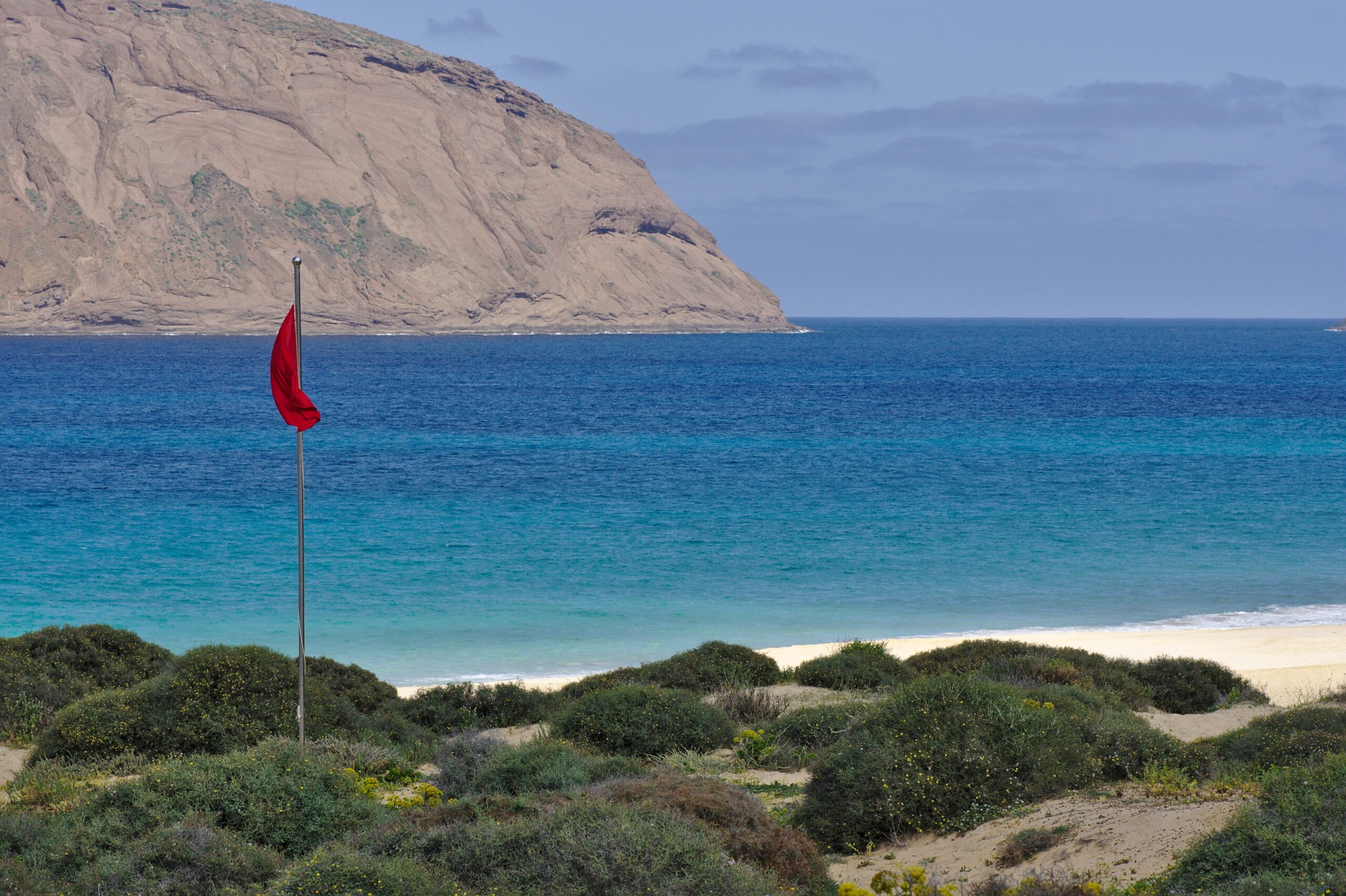
Playa de las Conchas, on the island’s north side, is the most spectacular: golden sand, turquoise water and the silhouette of the volcanic islet of Montaña Clara opposite. It’s also the most dangerous for swimming: the currents are strong and there’s no lifeguard, and signs clearly warn of this. You come here for the scenery and to walk, not to swim.
Sull’isola non ci sono bancomat, l’ombra è praticamente assente fuori dal paese e i punti di ristoro stanno quasi tutti a Caleta de Sebo. Chi gira in bicicletta su piste sabbiose sotto il sole deve calcolare acqua e protezione in anticipo: è l’errore più comune di chi arriva pensando a una gita banale.
What the day costs
| Voce | Costo |
|---|---|
| Traghetto da Órzola andata/ritorno | circa 26 euro |
| Noleggio bicicletta, giornata | 10-15 euro |
| Pranzo di pesce a Caleta de Sebo | 15-25 euro |
| Totale | circa 40-80 euro a persona |
Frequently asked questions
Can you visit La Graciosa in a day?
Yes, and it’s how most visitors see it: taking the first morning ferry from Órzola and returning in the late afternoon, you can see the village and the two main beaches without rushing.
Can you sleep on the island?
Yes, but beds are very few (a handful of guesthouses and rental homes in Caleta de Sebo) and must be booked well in advance, especially in summer. Camping is allowed only in the designated area with a free permit that must be requested ahead of time.
Do you need cash?
Yes: there are no ATMs on the island and not all businesses accept cards. It’s worth arriving with enough cash for the day.
Can you bring a car?
No: only residents’ authorised vehicles and shared 4×4 taxis circulate on the island. Visitors get around on foot or by bicycle, on sandy tracks.
Can you swim at Las Conchas?
It’s not advisable: the currents are strong and there’s no lifeguard. For swimming, Playa Francesa and the sheltered coves south of the village are better suited.
September 11, 2026

