China in 3 weeks: Pingyao, Zhangjiajie, Hangzhou and Hong Kong beyond the classic route
Three weeks in China follow the same backbone as two — Beijing, Xi’an, Chengdu, Guilin, Shanghai — with four extra stops that change the whole meaning of the trip. Pingyao is an entire Ming city still inside its walls, the only place where you can see what a Chinese city looked like before the twentieth century. Zhangjiajie is thousands of sandstone pillars rising out of the forest, the landscape that inspired the floating mountains of Avatar. Hangzhou has the lake Chinese poets have been writing about for a thousand years. And Hong Kong closes the trip with the same language and another world entirely. The extra week isn’t there to see more: it’s there to understand how much China isn’t just one thing.
At a glance
- Duration · 21 full days
- Route · Beijing (4) → Pingyao (2) → Xi’an (2) → Chengdu (2) → Zhangjiajie (3) → Guilin and Yangshuo (2) → Hangzhou (1) → Shanghai and Suzhou (3) → Hong Kong (2)
- Transfers · five high-speed train legs, two domestic flights
- Budget · 1,900-3,100 euros per person on the ground, intercontinental flight excluded
- Note · Hong Kong is a separate jurisdiction: different currency, its own customs, and a single-entry Chinese visa gets used up when you leave. You need a double-entry visa, or Hong Kong has to go at the end
- To prepare beforehand · visa, Alipay or WeChat Pay linked to your card, roaming eSIM
- Season · April-May or September-October, avoiding the week of October 1st and Lunar New Year
The route is a big S: you head down from Beijing toward the centre, cut south to Zhangjiajie and Guilin, come back up the coast to Shanghai, and drop down again to Hong Kong. The high-speed train covers almost all of it.
Days 1-4 — Beijing
4 nights · the empire, the Wall, the alleyways

The first week is the same as the two-week itinerary, so we’ll sum it up here. Tiananmen Square, forty-four hectares, and beyond the gate the Forbidden City: seven hundred and twenty thousand square metres built between 1406 and 1420, home to twenty-four emperors. You walk it along the central axis, but the best part is the side courtyards; then climb Jingshan to see it from above. Book online with your passport, and it’s closed on Mondays.
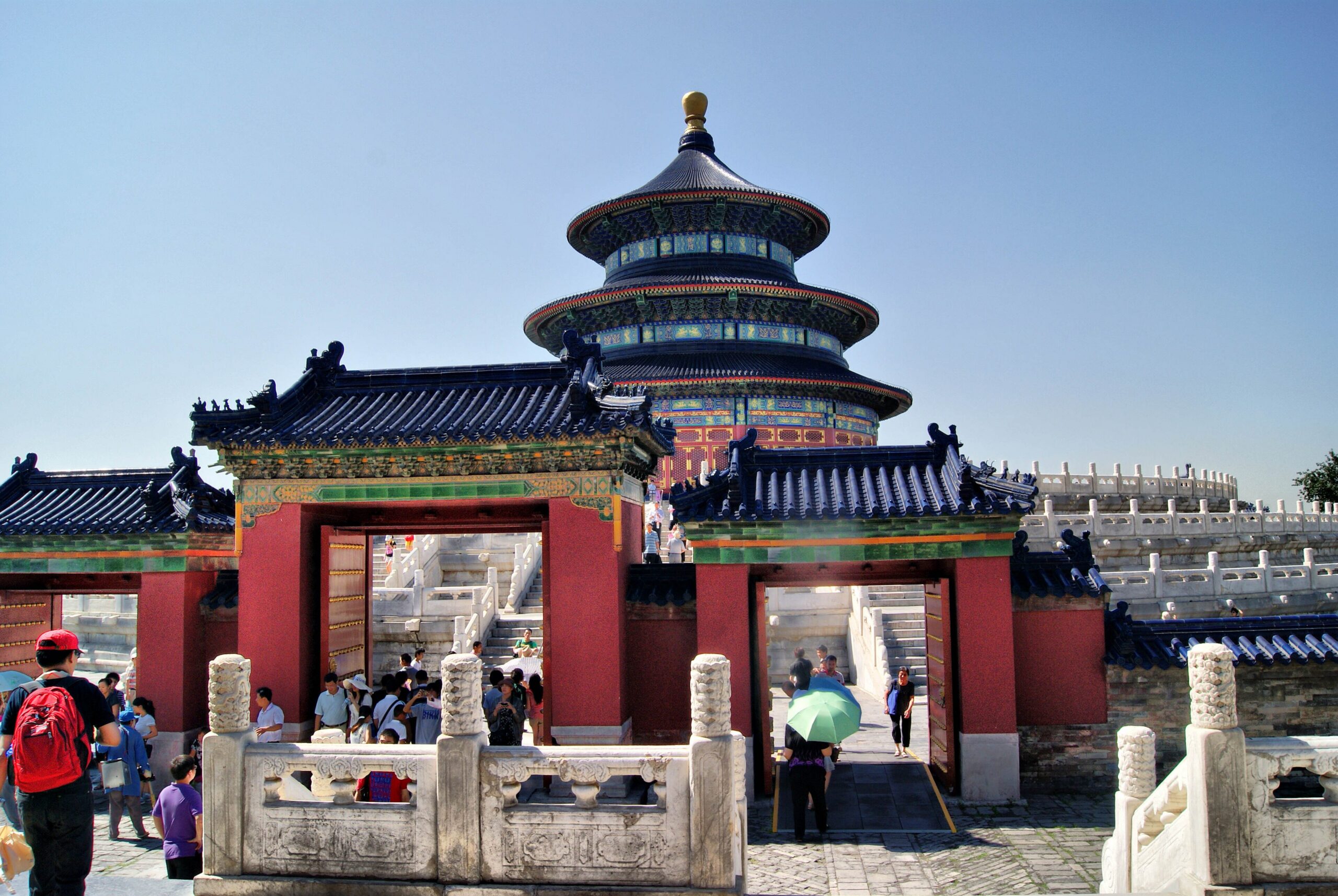
The Temple of Heaven, where the emperor prayed for the harvest as the Son of Heaven: four columns for the seasons, twelve for the months, twelve for the hours. Go at seven, when the park becomes Beijing’s living room for the elderly, amid tai chi, sung opera and mahjong.
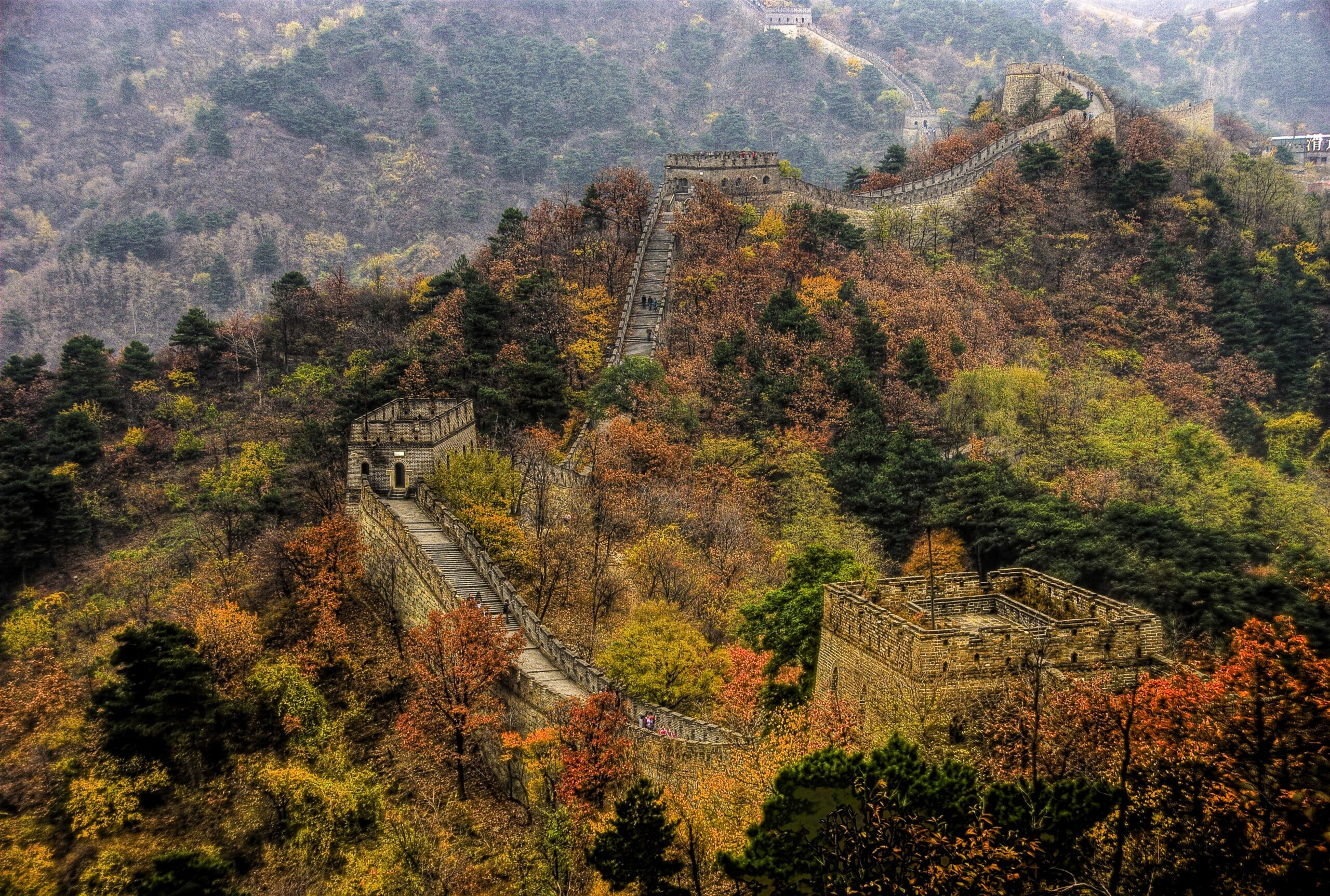
The Great Wall: Mutianyu is the best compromise, Badaling the most crowded, Jinshanling the most beautiful and nearly empty for anyone with a full day. Then there’s the Summer Palace with its seven-hundred-and-twenty-eight-metre Long Corridor and the marble boat that never sailed, and the hutong, the alleys between courtyard houses that were demolished by the thousand in the 1990s.
1. Il visto. Serve, va chiesto in anticipo al centro visti con itinerario e prenotazioni, e le regole cambiano spesso: verificate quelle aggiornate sul sito ufficiale. Se mettete Hong Kong in mezzo al viaggio serve un visto a doppio ingresso, perché uscire verso Hong Kong consuma l’ingresso singolo.
2. I pagamenti. Si paga tutto con Alipay o WeChat Pay inquadrando un codice. Entrambe accettano carte straniere, ma vanno installate e collegate prima di partire. La carta di credito occidentale funziona quasi solo negli alberghi internazionali.
3. Internet. Google, Maps, WhatsApp e gran parte dei servizi occidentali sono bloccati. La soluzione più semplice è una eSIM in roaming comprata prima: il traffico esce dal paese. Scaricate mappe e traduttore offline, e tenete gli indirizzi in caratteri cinesi.
Days 5-6 — Pingyao, the whole Ming city
High-speed train from Beijing, 3-4 hours · 2 nights · the first extra stop of the third week

This stop alone justifies the extra week. Pingyao, in Shanxi, is the only Chinese city to have preserved its entire Ming- and Qing-era urban layout: not a restored district, but the complete 1370 walls — six kilometres, seventy-two towers, twelve metres high — enclosing nearly four thousand historic courtyard houses, the original streets, and the people who still live in them.
It was saved for the most mundane of reasons: it became poor. In the twentieth century, while other Chinese cities were tearing down to rebuild, Pingyao didn’t have the money to do it, and in the 1980s an architect convinced the authorities to protect it rather than modernise it. It’s been a UNESCO World Heritage Site since 1997.
What you need to grasp, walking through it, is that this dusty, out-of-the-way town was, for a century, China’s financial capital. In 1823 the Rishengchang opened here, the first Chinese bank to issue transferable letters of credit: before that, silver had to be moved physically by cart, under armed guard. Pingyao’s system let you deposit in Beijing and withdraw in Canton with a piece of paper, and for decades more than half the empire’s remittances passed through here. The banks were called piaohao, there were around twenty on this one street, and they all collapsed between the fall of the empire and the rise of modern banking. The Rishengchang can be visited, with its reinforced vaults and secret codes written in poems.
The single ticket, around 125 yuan and valid for three days, covers about twenty sites: the walls, the banks, the imperial court with its cells and hearing hall, the merchants’ residences, the temples. But the best thing is to walk around in the evening, once the coaches have left and only the red lanterns and empty alleys remain. You sleep in one of the courtyard houses turned into inns: brick kang beds, an inner courtyard, and a fair amount of cold in winter.
An hour and a half away are the Yungang rock-cut temples, near Datong: fifty-three caves carved in the fifth century with over fifty thousand Buddha statues, some seventeen metres tall. It’s one of the three great Chinese cave-temple complexes, and it’s worth the detour if you have an extra day.
Days 7-8 — Xi’an
High-speed train from Pingyao, 3 hours · 2 nights

The Terracotta Army, discovered in 1974 by farmers digging a well: around eight thousand life-size soldiers, horses and chariots, buried for twenty-two hundred years to guard the tomb of Qin Shi Huang, the first emperor. Every face is different, each piece bears the incised name of the workshop supervisor, and they were originally painted in vivid colours: the lacquer flakes off within minutes of contact with air, which is why most of the site remains unexcavated. The emperor’s own burial mound has never been opened, and soil analysis has found abnormal mercury levels, just as the ancient sources describe.

Xi’an was Chang’an, the eastern terminus of the Silk Road and, under the Tang, probably the largest and most cosmopolitan city in the world. The 1370 walls are the most complete surviving in China, and can be cycled in about ninety minutes.
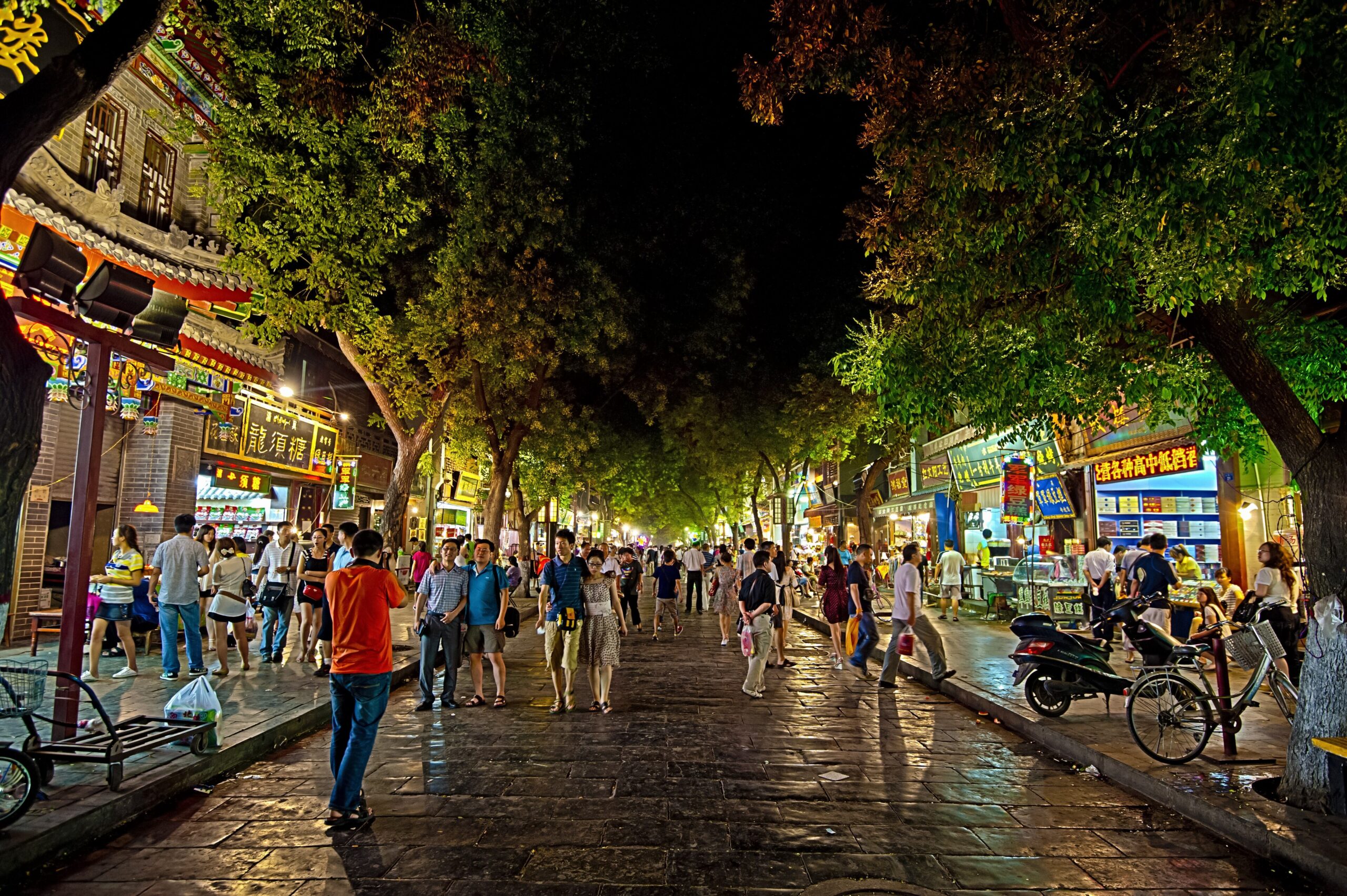
The Muslim Quarter is home to the Hui, Chinese Muslims descended from Arab and Persian Silk Road merchants. The Great Mosque, founded in 742, has neither domes nor minarets: it’s built like a Chinese temple, with courtyards and wooden pavilions. In the evening the streets become a food market: roujiamo, biang biang noodles, yangrou paomo.
Days 9-10 — Chengdu and Sichuan
High-speed train from Xi’an, 3-4 hours · 2 nights
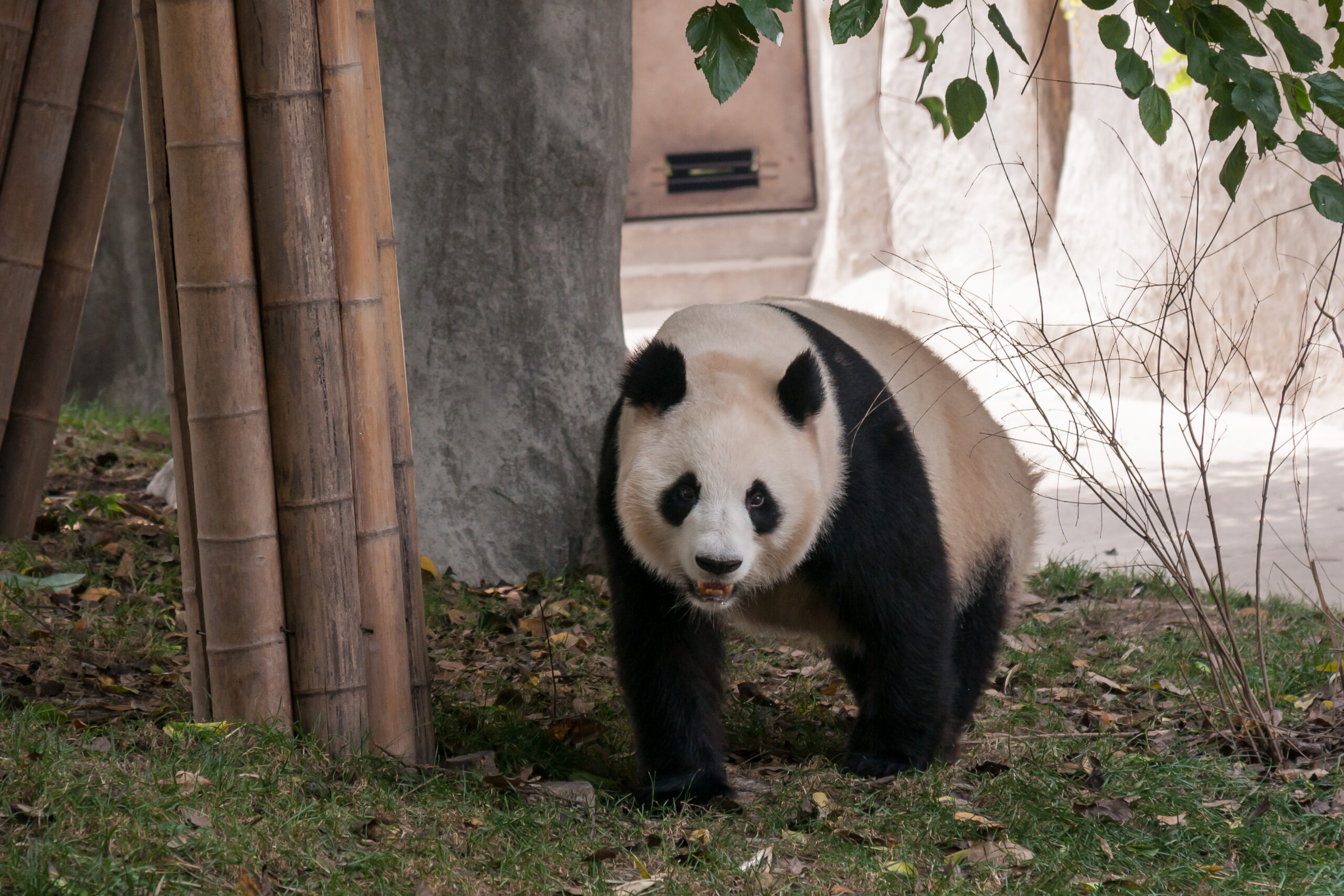
The giant panda breeding research centre, founded in 1987 with six animals and which has since bred over two hundred: the species moved from endangered to vulnerable in 2016. One piece of advice: arrive at opening time, around 7:30, because they eat in the morning and then sleep for the rest of the day.
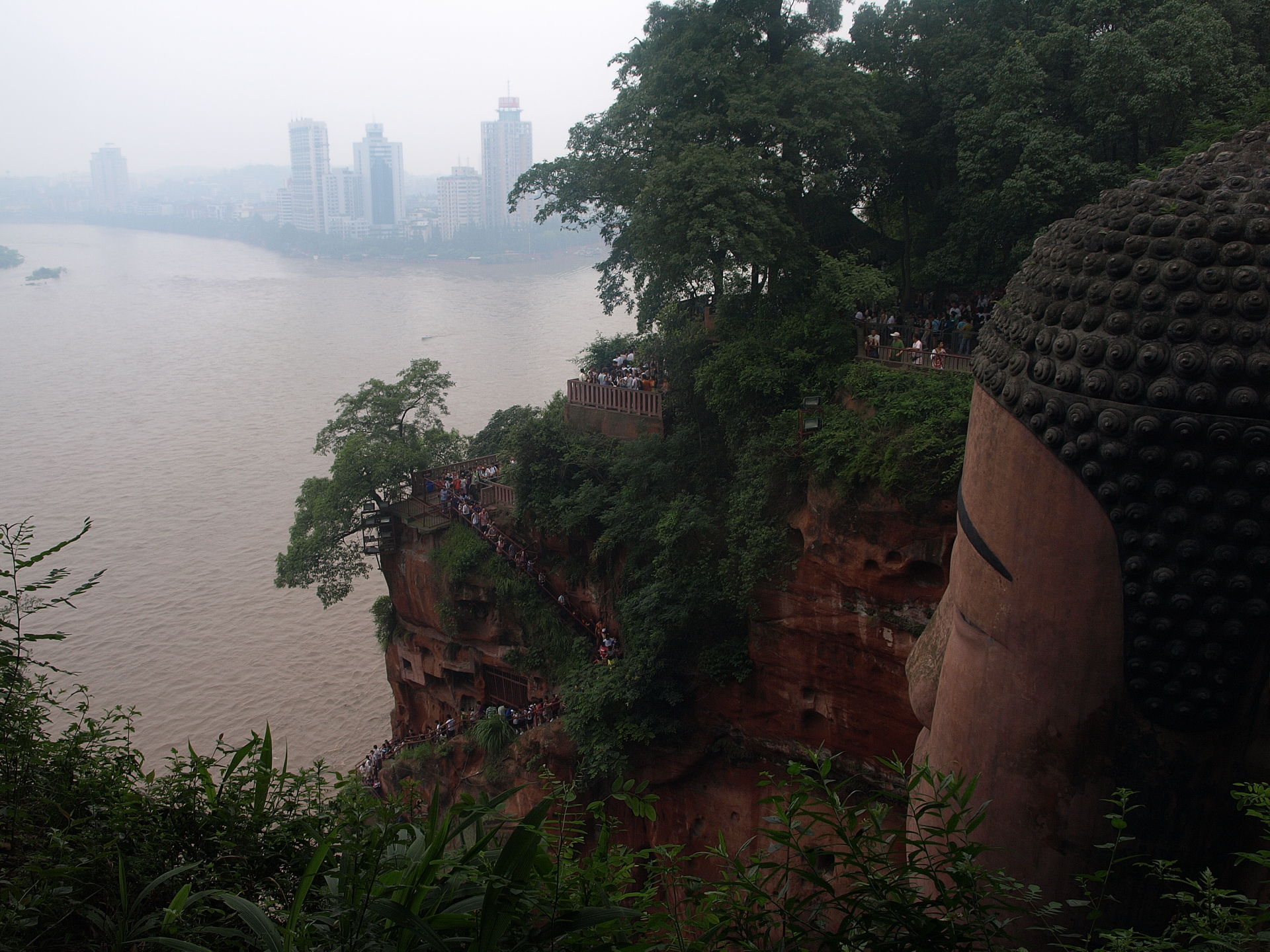
The Giant Buddha of Leshan, the largest stone Buddha statue in the world, begun in 713 by the monk Haitong to calm the currents that were sinking boats — and it actually worked, because the stone carved out and dumped into the river changed its course.
With three weeks, it’s worth adding a real afternoon in a teahouse in People’s Park or at Wenshu Monastery in Chengdu: you sit for a whole afternoon with a cup that’s endlessly refilled, while people play mahjong all around. It’s how this city lives, and it’s one of the few things in China you can’t rush.
La differenza fra le regioni è enorme, e in tre settimane si attraversano quasi tutte. A Pechino l’anatra laccata, nata alla corte Ming, tagliata al tavolo e avvolta in cialde sottili. A Xi’an il pane, il montone e le tagliatelle degli Hui. Nel Sichuan il málà: il pepe di Sichuan non brucia, intorpidisce le labbra, e combinato col peperoncino dà una sensazione che in Europa non esiste — mapo tofu, dan dan mian, e l’hotpot, chiedendo il pentolone a due scomparti. A Shanghai i sapori dolci e i xiaolongbao, i ravioli al vapore col brodo dentro, che si mangiano forando prima l’involucro. A Hong Kong il dim sum, che è un pasto della mattina e del primo pomeriggio, non della sera. Due parole utili ovunque: «bu la», non piccante, e «máipán», il conto. E un’app di traduzione con la fotocamera, che inquadra il menu e lo traduce, cambia il viaggio.
Days 11-13 — Zhangjiajie, the floating mountains
Flight from Chengdu, 1h30 · 3 nights · the second extra stop

Zhangjiajie National Forest Park, in Hunan, was the first national park established in China, in 1982, and is part of the Wulingyuan UNESCO World Heritage area. It has more than three thousand quartzite sandstone pinnacles, some over four hundred metres tall, only a few metres wide and covered in vegetation right to the top: they formed through the differential erosion of an uplifted ancient seabed, a rare geological formation anywhere in the world.
When it’s foggy — and it often is — the peaks emerge from a white sea while their bases vanish: this is where the site’s international fame comes from, since the landscape inspired the floating mountains of Avatar. One of the pillars was officially renamed Avatar Hallelujah Mountain in 2010, a marketing move you can smile at, but the place is extraordinary regardless of the film.
It helps to know it’s huge: almost five thousand hectares, with a multi-day ticket (about 225 yuan) and a network of internal shuttle buses. The things not to miss:
- Yuanjiajie, the plateau with the highest concentration of pillars and the First Bridge Under Heaven, a natural rock arch.
- Tianzi Shan, the highest area, which with fog gives the park’s most famous view.
- The Bailong Elevator, three glass lifts built against a sheer cliff face that climb 326 metres in under two minutes: a controversial attraction — some consider it an eyesore in a UNESCO site — but it saves a three-hour climb.
- Jinbian Valley, a flat walk along a stream where you look up at the pillars from below, with monkeys following the visitors.
An hour outside the park is Tianmen Shan, another mountain: you go up on the world’s longest cable car (almost eight kilometres), walk along glass walkways suspended over thin air, and reach Heaven’s Gate, a natural opening one hundred and thirty metres wide in the cliff, up to which climb 999 steps. The road up to the foot of the mountain has ninety-nine hairpin bends over eleven kilometres.
Three nights isn’t too many: the park alone calls for at least two full days, Tianmen Shan for one more. Bring hiking shoes and a jacket: you’re at altitude and the weather changes fast. Expect crowds in the main areas — it’s a destination much loved by Chinese travellers — and bear in mind it becomes unmanageable during the October Golden Week.
Days 14-15 — Guilin and Yangshuo
High-speed train from Zhangjiajie, 4-5 hours · 2 nights
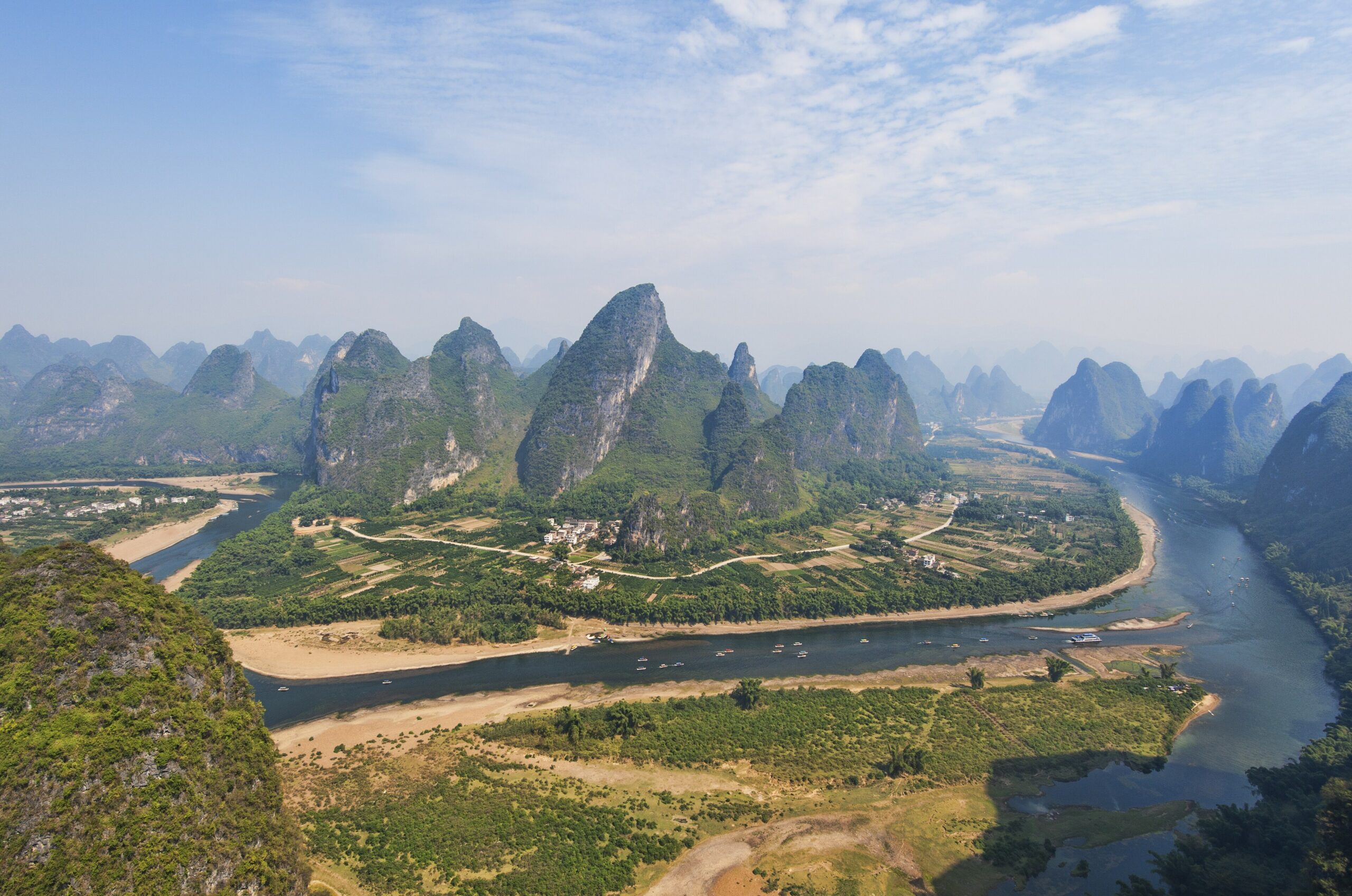
The landscape between Guilin and Yangshuo is tower karst: limestone hills rising vertically out of the plain, shaped over three hundred million years by the erosion of an ancient seabed. It’s been the subject of Chinese landscape painting for over a thousand years, and one precise stretch of this river, at Xingping, appears on the back of the 20-yuan banknote.
The Guilin–Yangshuo river cruise lasts four hours and is beautiful but crowded: the alternative is taking a bus to Xingping and spending an hour and a half on a bamboo raft along the best stretch, for a fraction of the cost.

In Yangshuo, just two kilometres by bike are enough to leave the strip of bars behind and find yourself among rice paddies and water buffalo along the Yulong River. With three weeks it’s worth adding the detour to the Longji rice terraces, the ‘dragon’s backbone’: steps carved into the hillside since the fourteenth century up to a thousand metres, farmed by the Zhuang and Yao minorities, that change completely with the seasons — sheets of water in May, green in summer, gold in September.
Day 16 — Hangzhou, the poets’ lake
High-speed train from Guilin · 1 night · the third extra stop
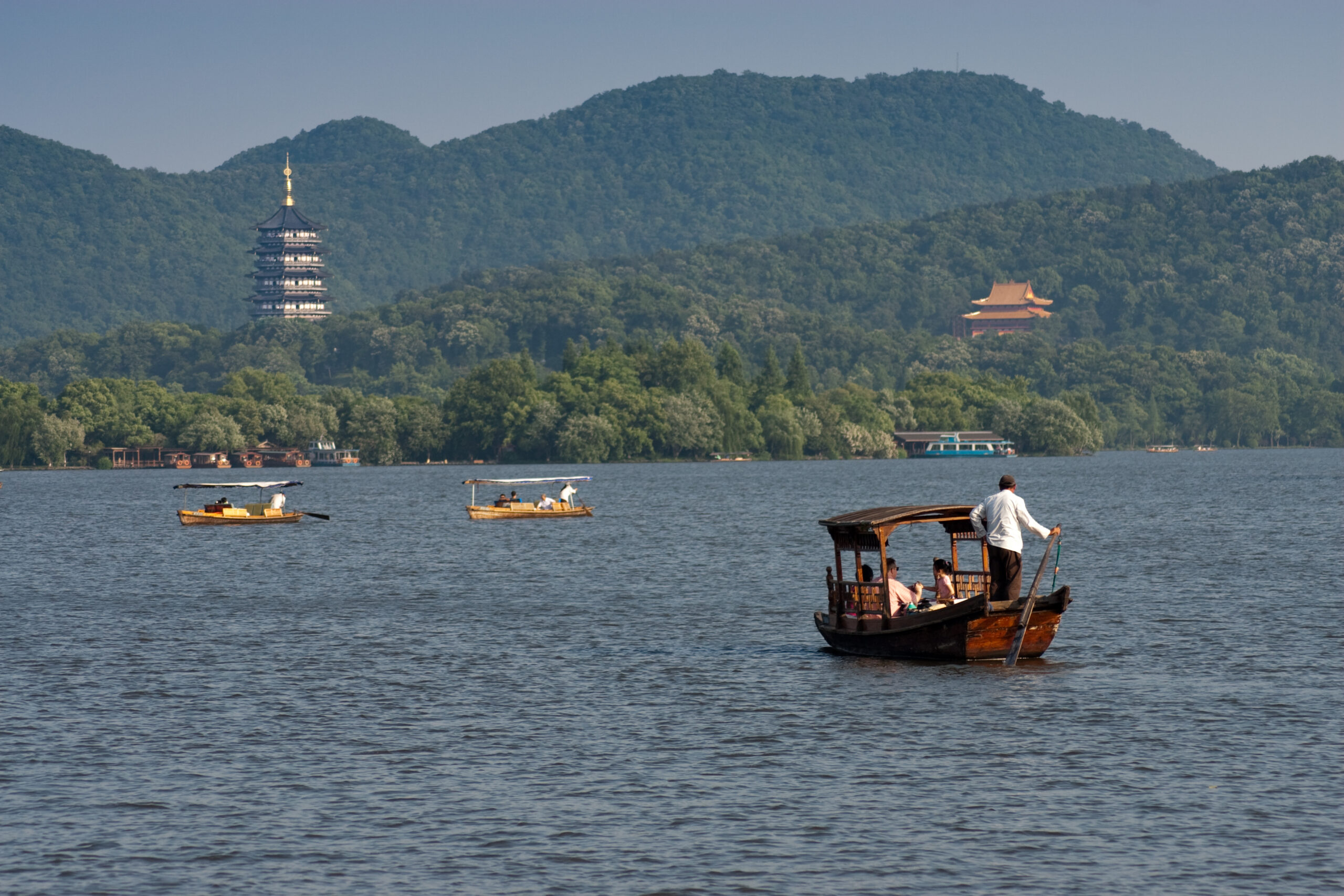
Hangzhou‘s West Lake is probably the most celebrated landscape in Chinese culture: poems have been written about it for a thousand years, and it has served as a model for dozens of gardens in China, Korea and Japan. Marco Polo, who called it Quinsai, described it as ‘the finest and most splendid city in the world.’ Under the Southern Song, from 1138, it was the imperial capital and was perhaps the most populous city on the planet.
What escapes most visitors is that the lake isn’t natural in the shape it has: it was once a lagoon, and for a thousand years it has been deliberately shaped by human hands. The two causeways that cross it are the work of two poet-officials — the Bai causeway by Bai Juyi, in the ninth century, and the Su causeway by Su Dongpo, in the eleventh — built with dredged mud to reclaim it. They’re landscape and public works at once, which is why UNESCO listed it as an example of how an aesthetic idea can shape a territory.
The loop can be done by bike along the shore (about ten kilometres) or by boat. Things to see: the rebuilt Leifeng Pagoda, tied to the legend of the White Snake; Lingyin Temple, one of the largest Buddhist monasteries in China, with the Peak Flying from Afar caves and three hundred rock carvings; and the Longjing tea plantations on the hills, where the prized Dragon Well green tea is grown. In a single day you can fit the lake and one of the other two things, not both.
Days 17-19 — Shanghai and Suzhou
High-speed train from Hangzhou, 1 hour · 3 nights

The Bund, with its bank buildings built between 1890 and 1930, when Shanghai was divided into foreign concessions where Chinese law didn’t apply — the period China calls the century of humiliation. Across the river, Pudong, which in 1990 was still fields: that photo compared with today’s skyline is the most powerful record of what thirty years of China have meant.

The Yu Garden from 1559, the former French Concession with its plane trees and shikumen houses, the Shanghai Museum (free, with its archaic bronzes) and the Shanghai Jewish Refugees Museum in Hongkou, which tells how between 1938 and 1941 Shanghai was the only port in the world admitting people without a visa: around twenty thousand Jews fleeing Europe found refuge there.
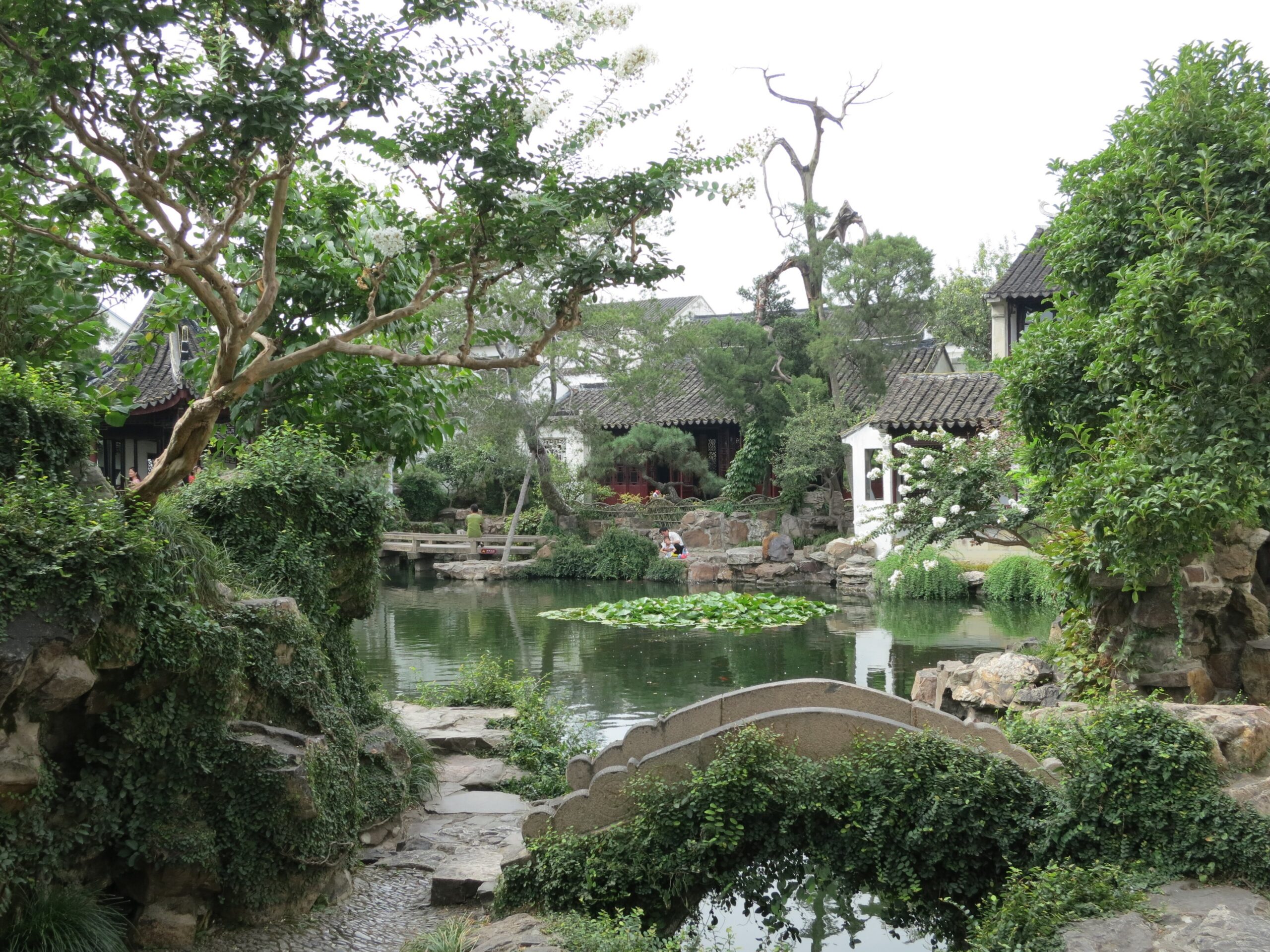
Half an hour by train is Suzhou, with nine UNESCO-listed gardens. These are scholars’ gardens: compositions conceived the way a poem is composed, where every window frames a scene and the path never shows everything at once. The Master of the Nets Garden, half a hectare, is considered the most successful precisely because it’s the smallest.
L’alta velocità cinese è 45.000 chilometri di linee costruite in vent’anni, più di tutto il resto del mondo. I biglietti sono nominali e si viaggia col passaporto, che serve anche per entrare in stazione. Presentatevi almeno 45 minuti prima: le stazioni sono grandi come aeroporti, con controllo bagagli e sale d’attesa separate, e l’imbarco chiude 5 minuti prima della partenza — chi arriva dopo non sale, senza eccezioni. La seconda classe basta e avanza. In tre settimane si fanno cinque tratte lunghe in treno e due in aereo: Chengdu–Zhangjiajie e, se serve, il rientro.

Days 20-21 — Hong Kong
High-speed train from Shanghai (8 hours) or flight (2h30) · 2 nights · the fourth extra stop
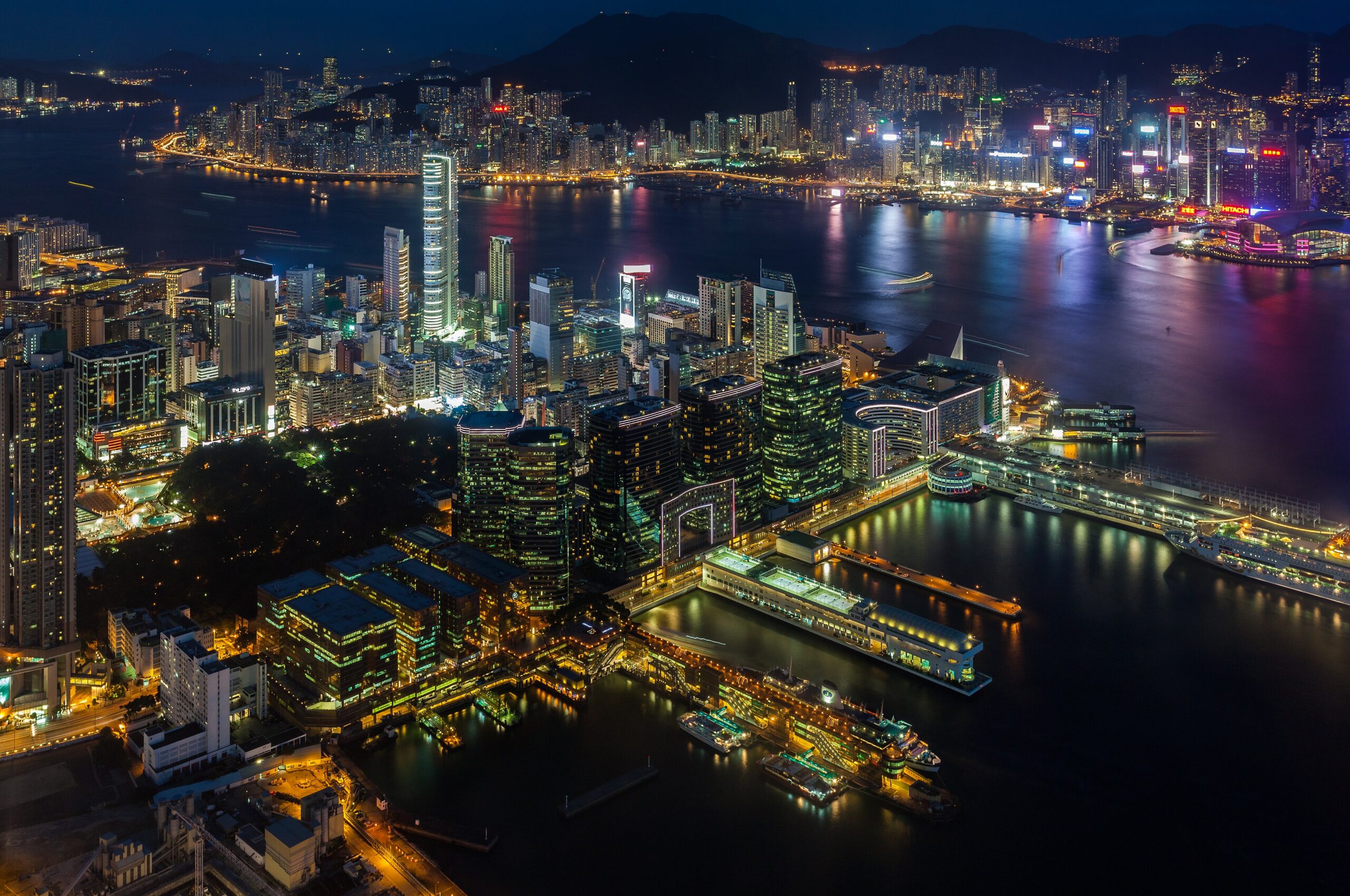
Hong Kong closes the trip and is the sharpest contrast of the whole three weeks. It was a British colony from 1841 to 1997, returned to China under the formula ‘one country, two systems’: it keeps its own currency, customs, legal system and official language — Cantonese is spoken, not Mandarin, and English is widespread. In practical terms, for a traveller, it’s another country: you cross a border, change currency, and Google and WhatsApp work.
Things to do in two days:
- Ride up to Victoria Peak on the Peak Tram, the funicular dating from 1888, for the view over the bay and the skyscrapers — at sunset, if you can manage it.
- Cross the harbour on the Star Ferry, running since 1888: it costs a few Hong Kong dollars and is one of the most beautiful crossings in the world.
- The Big Buddha at Ngong Ping on Lantau Island, thirty-four metres of bronze seated atop 268 steps, reachable by a cable car five and a half kilometres long.
- A proper dim sum in a noisy hall, in the morning: here it’s a morning meal, not an evening one.
- The night markets of Kowloon, the Man Mo Temple with its incense coils hanging from the ceiling, and the fishing villages of the New Territories, which give the lie to the idea of Hong Kong as purely a vertical city: seventy per cent of its territory is green and protected.
Hong Kong è una giurisdizione separata con dogana propria: uscire dalla Cina continentale per andarci consuma l’ingresso del visto cinese. Se avete un visto a ingresso singolo e Hong Kong è in mezzo al viaggio, non potrete rientrare. Le due soluzioni: chiedere un visto a doppio ingresso, oppure — come in questo itinerario — mettere Hong Kong alla fine e ripartire da lì, cosa che spesso conviene anche per il volo di ritorno. Per Hong Kong in sé gli italiani non hanno bisogno di visto per soggiorni brevi. Verificate sempre le regole aggiornate prima di prenotare.
What three weeks cost
| Voce | Costo |
|---|---|
| Treni veloci (Pechino–Pingyao–Xi’an–Chengdu, Zhangjiajie–Guilin, Guilin–Hangzhou–Shanghai) | circa 1.800 yuan, 230 euro |
| Voli interni (Chengdu–Zhangjiajie, Shanghai–Hong Kong) | 150-280 euro |
| Alloggio, 20 notti | 650-1.300 euro (Hong Kong da sola pesa per un quinto) |
| Ingressi (Pechino, Pingyao, terracotta, panda, Leshan, Zhangjiajie, Hangzhou, giardini) | circa 1.500 yuan, 192 euro |
| Crociera sul fiume Li | 220-450 yuan, 28-58 euro |
| Trasporti urbani e navette dei parchi | circa 80 euro |
| Pasti, 21 giorni | 400-750 euro |
| Totale in loco | circa 1.900-3.100 euro a persona |
Figures as of September 2026, intercontinental flight and visa excluded. In mainland China you pay in yuan (about 7.8 to the euro), in Hong Kong in Hong Kong dollars (about 8.4 to the euro). Eating in China costs little — 30-60 yuan at a real neighbourhood restaurant — and the metro costs 3-8 yuan; Hong Kong, by contrast, is as expensive as a European capital, especially for accommodation, and it’s the item that pulls up this itinerary’s average. The other big costs are Zhangjiajie (park ticket, shuttles, cable cars) and long-distance transport. Set up Alipay or WeChat Pay before you leave: in China you can barely buy anything without them, while in Hong Kong Western cards work normally.
Frequently asked questions
What changes between two and three weeks in China?
The backbone is the same; the extra week adds four things, each very different from the others: Pingyao, the only Chinese city that has remained whole the way it was in the Ming era; Zhangjiajie, a landscape with no real equivalent; Hangzhou, with the most celebrated lake in Chinese culture; and Hong Kong, which is the other possible face of the same civilisation. It also helps you avoid rushing: with fourteen days you change city every two days, and by the end you’re exhausted.
Does Hong Kong require a separate visa?
To enter, no — Italians don’t need a visa for short tourist stays. The problem is the opposite: leaving mainland China for Hong Kong uses up the entry on your Chinese visa, because it’s a separate jurisdiction with its own customs. With a single-entry visa you can’t get back in. The solutions are a double-entry visa, or putting Hong Kong at the end of the trip, as in this itinerary.
Is Pingyao worth it?
Yes, and it’s the stop that most justifies the third week. It’s the only Chinese city to have preserved its entire Ming- and Qing-era urban layout: complete 1370 walls, nearly four thousand historic courtyard houses, and people still living there. It was saved because it was too poor to demolish. Worth seeing is the Rishengchang, the first Chinese bank to issue letters of credit, through which more than half the empire’s remittances passed in the early nineteenth century.
How many days do you need for Zhangjiajie?
At least two full days for the park and one for Tianmen Shan, so three nights. The park is huge — almost five thousand hectares — and you get around with internal shuttles; the ticket (about 225 yuan) is valid for several days. Bring hiking shoes and a jacket. Expect crowds in the main areas: it’s a destination much loved by Chinese travellers, and it becomes unmanageable during the October Golden Week.
Is it true that Zhangjiajie inspired Avatar?
That’s the accepted version: the quartzite sandstone pinnacles — over three thousand of them, up to four hundred metres tall — which seem to float when shrouded in fog provided visual references for the film’s floating mountains, and in 2010 one of the pillars was officially renamed after them. It’s also a marketing operation; but the place is extraordinary regardless, and it was already a UNESCO World Heritage Site since 1992.
Train or plane, with three weeks?
Train for anything under six or seven hours, which in this itinerary is almost everything: it arrives in the centre, it’s punctual, and it has none of the airport’s dead time. Plane for Chengdu–Zhangjiajie and for the final hop to Hong Kong (although the Shanghai–Hong Kong high-speed train does exist and takes eight hours). Remember: stations as big as airports, arrive 45 minutes early, boarding closes five minutes before departure.
How do you pay, and does the internet work?
In China you pay with your phone, via Alipay or WeChat Pay: install them and link your card before leaving. Google, Maps, WhatsApp and most Western services are blocked: the simplest solution is a roaming eSIM bought in advance, since the traffic exits the country. In Hong Kong, none of this applies: Western cards and the internet work normally.
When’s the best time to go?
April-May or September-October. With three weeks you cross very different climates: Beijing and Pingyao are dry and cold in winter, the south and Hong Kong are hot and humid in summer, and from June to September the southern coast is exposed to typhoons. Avoid the Golden Week from October 1st and Lunar New Year, when hundreds of millions of people travel at once.
Is English spoken?
In mainland China, very little, outside international hotels. In Hong Kong, a lot, since it’s an official language. On the mainland, a camera-based translation app, downloaded with offline packs, changes the trip: it translates menus just by pointing at them. Keep addresses written in Chinese characters to show taxi drivers.
How much does it all cost?
Between 1,900 and 3,100 euros per person on the ground for twenty-one days, intercontinental flight and visa excluded. Mainland China is cheap on food and urban transport; the big costs are long-distance transport, Zhangjiajie’s ticket and cable cars, and above all Hong Kong, where accommodation costs as much as in a European capital and which alone accounts for about a fifth of the budget.
Is it too much, as an itinerary?
It’s dense but not frantic: nine bases in twenty-one days, with stops of two or three nights and no forced overnight transfers. Anyone who prefers to slow down can drop Hangzhou, which is the shortest stop and the least essential, and give an extra night to Pingyao and one to Shanghai. Anyone who wants even more can add a fourth week for Yunnan — Lijiang, Dali, Tiger Leaping Gorge — which is the China of minorities and mountains.
September 11, 2026