Miami in 1 day: art deco, Wynwood and Little Havana
Miami is not an American city with a beach attached to it: it’s a Latin American city that happens to be in the United States. More than half its residents were born abroad, and in many neighborhoods Spanish isn’t the second language, it’s the first. In a single day you can do the three things that explain it: the Art Deco district in Miami Beach, which is the world’s largest concentration of 1930s architecture; Little Havana, where Cuba arrived in 1960; and Wynwood, a warehouse area turned into an open-air mural museum. The beach sits in between, and you don’t need to plan it.
In a nutshell
- Duration · a full day, from 9 to 11pm
- Walking distance · 6-7 km, all flat, but with three trips in between
- Things to know · Miami is a car city: without a car you take buses and taxis, and travel time needs to be factored in
- Budget · $90-140 per person, accommodation excluded, without a car
- When · November to April. June to November is hurricane season, and summer humidity is oppressive
- Prices · in dollars, with tax and tip to be added to the bill
- What’s not included · the Everglades, Coral Gables, Key Biscayne: these are the second and third day
The beach is on an island: between Miami Beach and the actual city there’s a bridge and twenty minutes.
Morning — Miami Beach and Art Deco
3 km · 2 stops · from 9 to 1pm · we start on the island
1 – Ocean Drive and the Art Deco district
Time 2 hours · Free · Guided tour of the Art Deco Welcome Center about $30, in the morning

The Miami Beach Architectural District has about eight hundred protected buildings built between 1923 and 1943, and is the world’s largest concentration of Art Deco architecture. They are low, white and pastel-colored hotels and apartment buildings, with horizontal lines imitating ships: portholes instead of windows, railings like ocean liner decks, fins and antennae. The style is called Streamline Moderne, and it’s the idea of the future people had in the 1930s.
That it survived is thanks to one person: Barbara Baer Capitman, who in the late 1970s — when the neighborhood was run-down and the bulldozers were already lined up — founded the Miami Design Preservation League and literally stood in front of them. In 1979 she obtained federal protection: it was the first twentieth-century district in the United States to receive it, and many thought it absurd to protect such recent buildings.
The walk is along Ocean Drive between 5th and 15th Street, then back along Collins Avenue and Washington Avenue, which have the best buildings and far fewer people. See the Colony Hotel with its neon sign, the Breakwater, the Carlyle. At number 1116 Ocean Drive is Casa Casuarina, the villa where Gianni Versace was shot on the steps in July 1997: today it’s a hotel, and people photograph themselves at the gate.
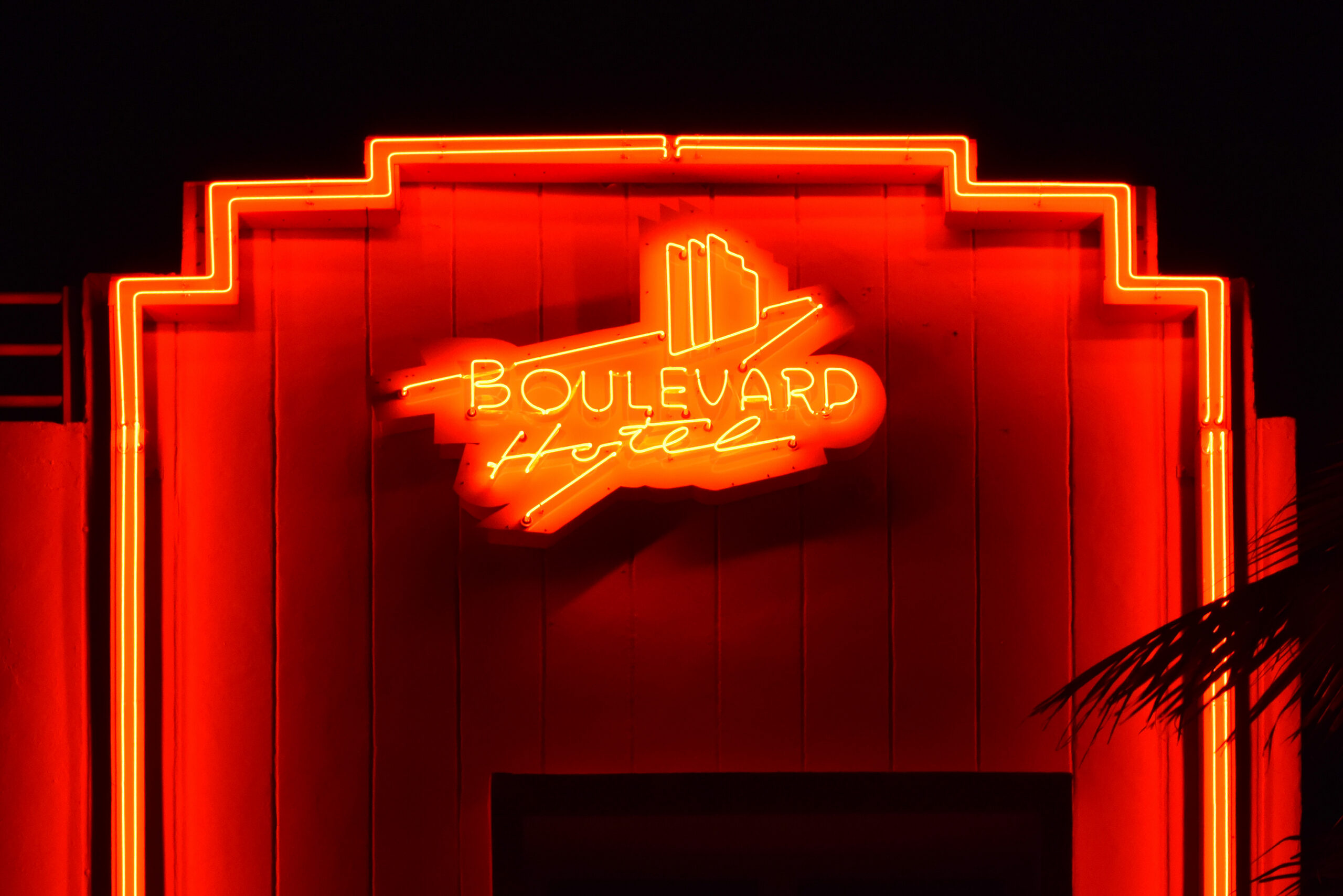
The neighborhood looks different two times: in the morning for the pastel colors and details, and after sunset for the neon signs, which have been restored one by one and are the real reason this place is famous. If you can, come back in the evening.
2 – The beach
Time 1 and a half hours · Free, beaches in Florida are public · on foot from Ocean Drive
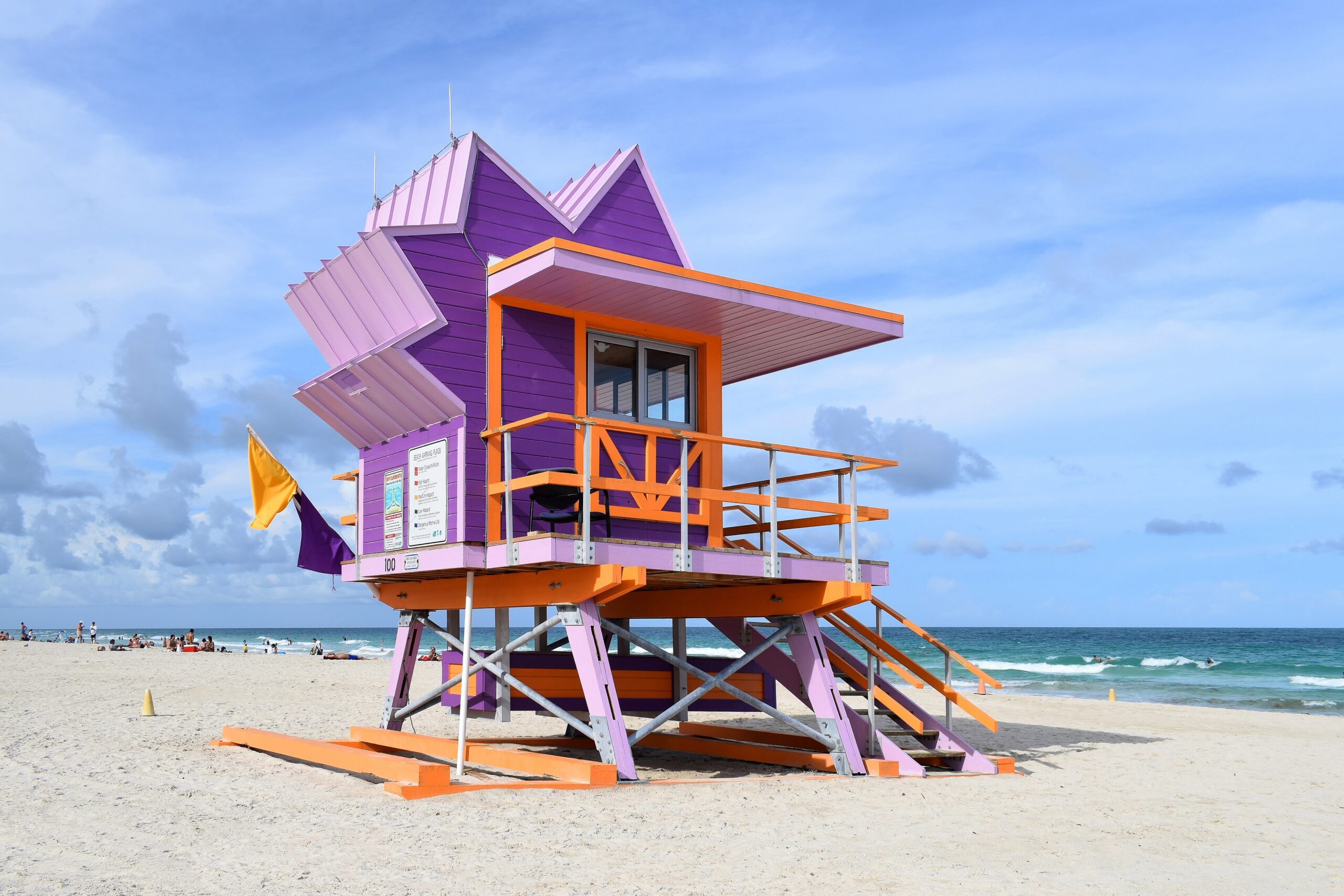
The beach is behind Ocean Drive, beyond a strip of park: clear, wide sand, with green water. In Florida all beaches are public up to the high tide line, and access is free; you only pay for lounge chairs and umbrellas if you want them.
The colored lifeguard towers have become the symbol of the city and have a story: after Hurricane Andrew in 1992, which swept them all away, architect William Lane redesigned each one, each different, in Art Deco colors. He gave them to the city.
A detail that surprises visitors: much of this sand is not natural. In the 1970s the beach had almost disappeared from erosion, and the Army Corps of Engineers rebuilt it by pumping millions of cubic meters of sand from the sea floor. The operation is repeated every few years.
Early afternoon — Wynwood
1.5 km · 1 stop · from 1:30pm to 4pm · lunch included
3 – Wynwood Walls and murals
Time 2 and a half hours with lunch · Wynwood Walls about $12, the streets around are free · Travel 25 minutes from the Beach
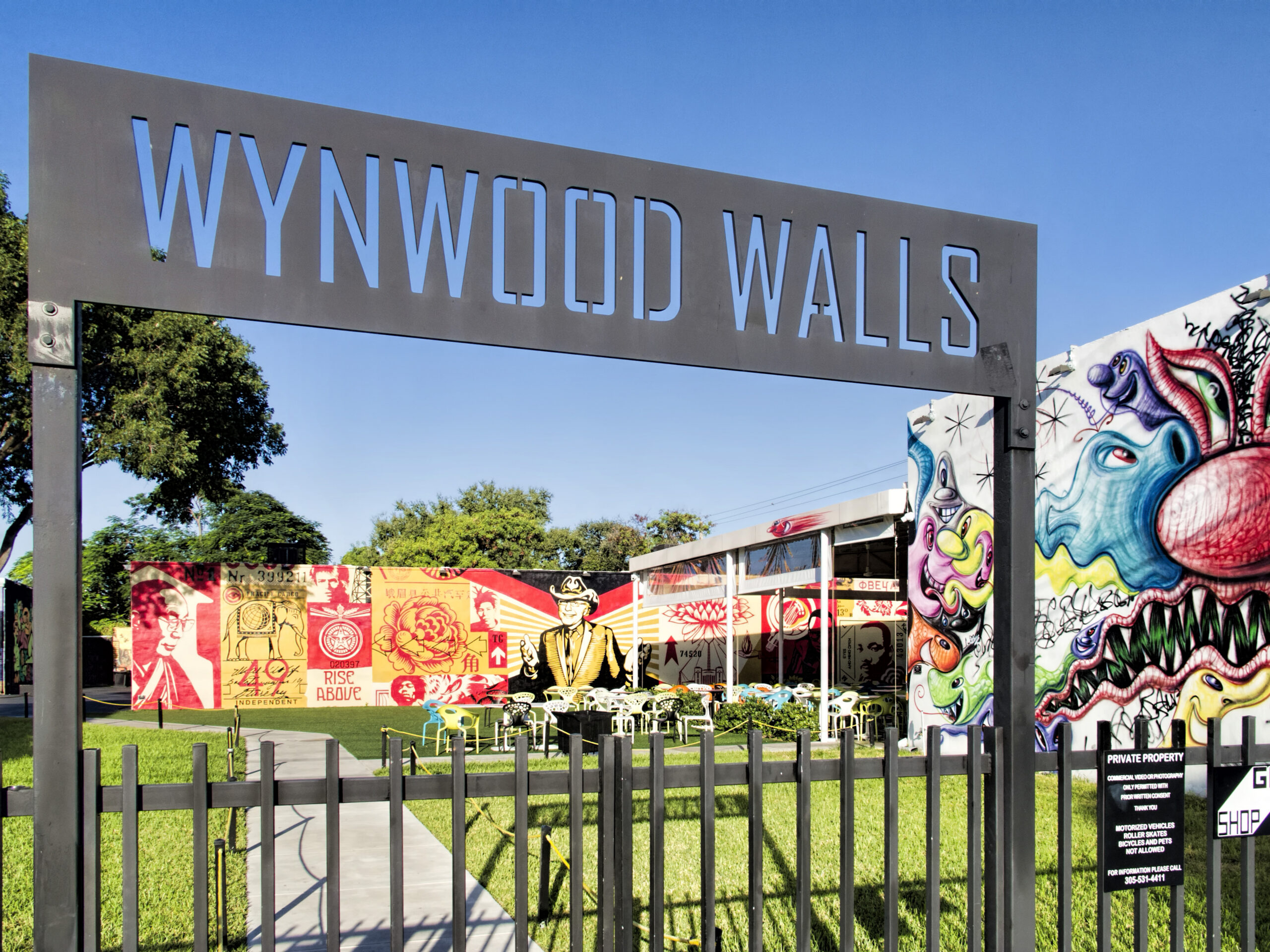
Wynwood was a neighborhood of abandoned warehouses and textile factories. In 2009 a developer, Tony Goldman — the same person who had already brought SoHo in New York and South Beach here back to life — bought a block of windowless warehouses and said those blank walls were «canvases waiting». He called some of the world’s greatest street artists and had them paint.
The Wynwood Walls are the fenced courtyard with the main works and you pay to enter; but the important thing is that the entire neighborhood around is painted, free, for about a dozen blocks. The murals change constantly: many get covered over every year, especially in December during Art Basel. The one you photograph might not be there next year, and that’s the whole point.
It’s also the neighborhood where you eat best for little: breweries, taco shops, gelato places. And the usual honest warning applies: Wynwood is the textbook case of how art brings gentrification: rents have increased tenfold and the original residents, largely Puerto Rican, have moved away.
Afternoon — Little Havana
1.5 km · 1 stop · from 4pm to 7pm · the most interesting part of the day
4 – Calle Ocho
Time 3 hours · Free · Travel 15 minutes from Wynwood · Domino Park closes at 6pm
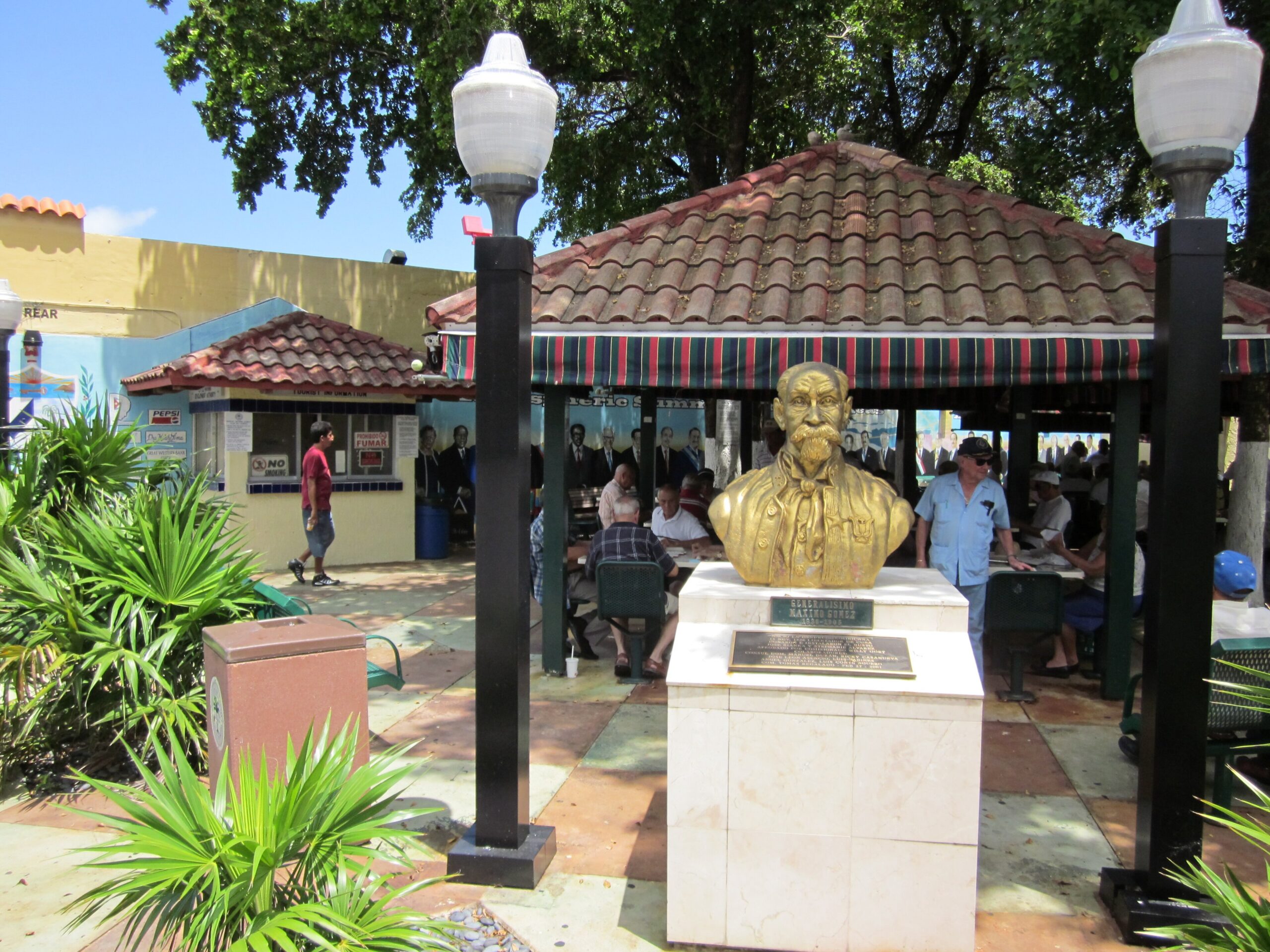
On January 1, 1959 Fidel Castro enters Havana; in the months and years that follow, hundreds of thousands of Cubans cross the strait and settle in Miami, ninety miles to the north. Many thought they’d return in a few months. They settled in a then-poor neighborhood around Southwest 8th Street, which everyone calls Calle Ocho.
The heart is Máximo Gómez Park, for everyone the Domino Park: an outdoor courtyard with domino tables where men have played since 1976, discussing Cuban politics loudly. To sit at the tables you have to be at least 55 years old: it’s a written rule. You watch from outside the fence, and you want to watch.
The other things to do, all within three blocks:
- drink a cafecito at a window counter: very strong, very sweet coffee, served in tiny cups to share among everyone, drunk standing on the sidewalk. It costs a dollar and is a social ritual
- watch cigars being rolled by hand in shops, still made the way they are in Cuba
- the Calle Ocho Walk of Fame, with stars on the pavement dedicated to Latin artists
- a Cuban sandwich: pork, ham, cheese, pickles and mustard, pressed on a griddle
If you’re there the last Friday of the month, Calle Ocho closes to traffic for Viernes Culturales: live music, open galleries, people dancing in the street. It’s the best time to see it.
Evening — Downtown, the bay and neon
2 km · 1 stop · from 7pm to 11pm
5 – Downtown, Bayfront and return to South Beach
Time 4 hours with dinner · Metromover is free · Travel 15 minutes from Little Havana
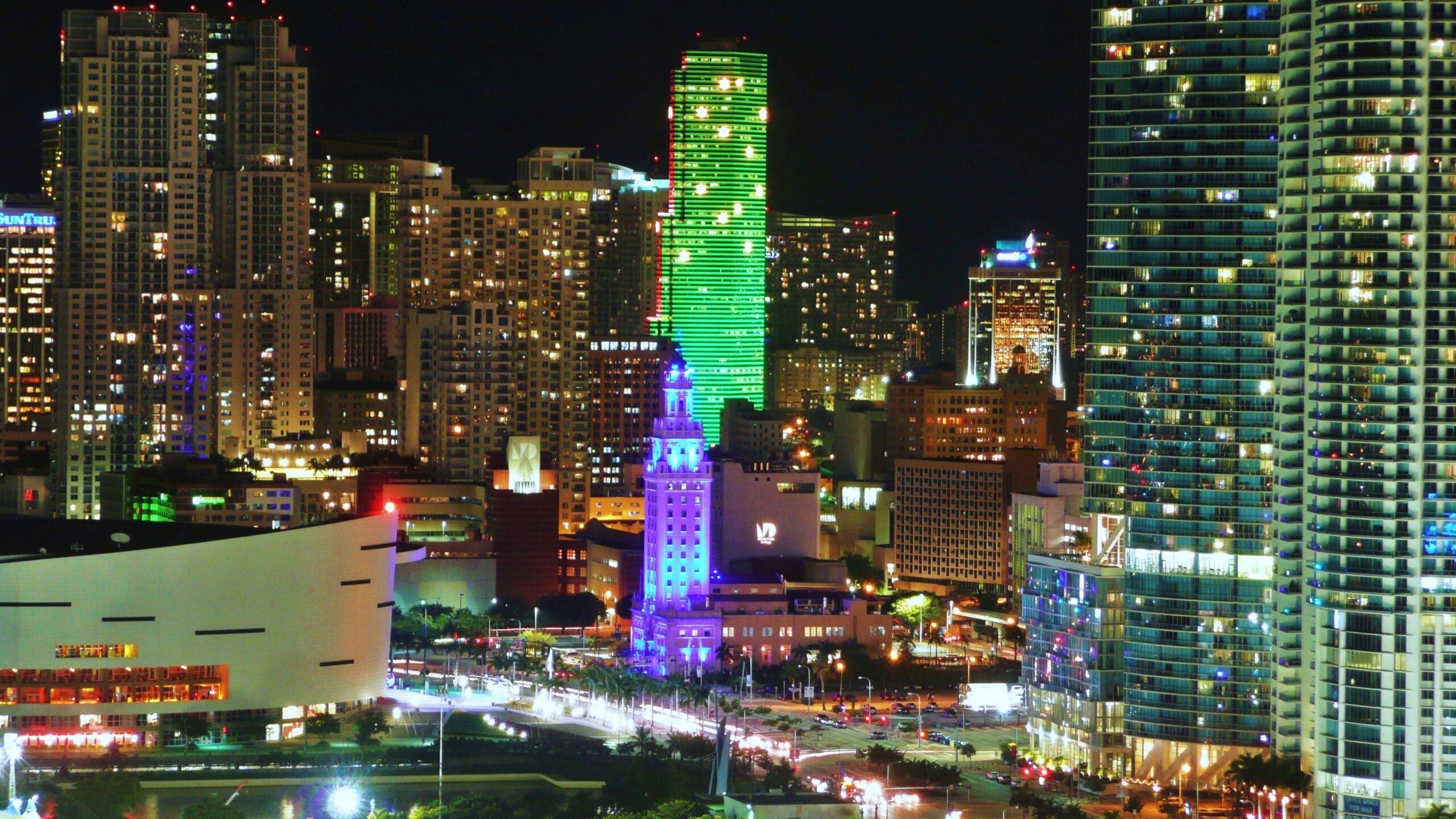
Miami’s downtown has something no other American city gives you: the Metromover, an automated elevated metro that circles downtown and is completely free. It goes over the roofs, passes between skyscrapers, and in the evening you can do the complete loop in half an hour, just for the view, without paying anything.
You get off at Bayfront Park, on the bay, and from there you watch the skyscrapers light up: many have programmable lighting and change color every evening. Next door is the Pérez Art Museum, with its suspended terrace and hanging plant columns, and the Frost Museum of Science: if you have half a day spare another time, they’re worth it.
To finish you return to South Beach with the neon on: the same hotels you saw in the morning, at night, seem like a different neighborhood. Dinner on Española Way — a Mediterranean-style pedestrian street from the 1920s — costs less than Ocean Drive and the food is better.
On Ocean Drive many restaurants automatically add an 18-20% tip to the bill and then leave the tip line blank, so tourists end up paying twice. Check your bill: it’s legal practice but unfair, and it’s the number one complaint from Miami Beach visitors.
If it rains, or if it’s too hot
- Summer downpours · from June to September it rains almost every afternoon, but for half an hour and then the sun comes back. Don’t change your plans: take shelter under a portico and wait.
- Instead of the beach · the Pérez Art Museum on the bay, the Frost Museum of Science with the planetarium, or the Bass Museum in South Beach.
- If it’s very hot · reverse the day: beach early in the morning, the afternoon in museums or under the cool arcades of Little Havana, and walks after 6pm.
- Hurricane season · June to November. It’s not a reason not to come, but keep an eye on forecasts and get insurance that covers cancellation.
How much the day costs
| Voce | Spesa |
|---|---|
| Wynwood Walls | about $12 |
| Art Deco guided tour (optional) | about $30 |
| Beach, Little Havana, street murals, Metromover | free |
| Travel by bus or taxi | $25-40 |
| Breakfast, cafecito and lunch | $25-35 |
| Dinner | $30-55 |
| Total | about $95-170 per person |
Reference figures from August 2026, in dollars. Miami is a city built for the car: without one, taxi travel is the biggest cost. The Metromover downtown and the Miami Beach Trolley on the island are free, though, and cover most of the day.
Getting around
Miami is not a subway city like New York: it’s wide, low, and built for the car. What does exist, though, works well and is mostly free: the Metromover circles downtown, the Miami Beach Trolley covers the island, and both are free. The Metrorail, the real metro, has only two lines and is of little use to the tourist.
The connection between Miami Beach and the city crosses a bridge and takes twenty to thirty minutes: there’s a bus, there are taxis. With this route you cross twice, which is why the stops are grouped by area.
If you rent a car: at South Beach parking is a nightmare and costs a lot, and many hotels charge for a parking spot even thirty or forty dollars a night. For a day like this, a car is more of a problem than a convenience; it only becomes necessary for the Everglades and the Keys.
Frequently asked questions
Is one day enough in Miami?
For the city, almost: in one day you can fit the Art Deco district, the beach, the Wynwood murals and Little Havana, which are the four things that explain it. Left out are nature — the Everglades — and historic neighborhoods like Coral Gables, which are the second and third day.
Do you need a car in Miami?
For one day in the city, no, and at South Beach it’s even a problem: parking is expensive and hard to find. The Metromover downtown and the trolley at Miami Beach are free. A car becomes necessary for the Everglades and to go down to the Keys.
When is it best to go to Miami?
November to April: dry heat, eighty degrees, little rain. June to September humidity is oppressive and it rains almost every afternoon, but it costs much less. Hurricane season runs from June to November.
What is the Art Deco district?
About eight hundred buildings built between 1923 and 1943 in Miami Beach: the world’s largest concentration of Art Deco architecture. It was saved from demolition in the 1970s by Barbara Capitman, and in 1979 became the first protected twentieth-century district in the United States. In the evening, with the neon on, it’s a completely different thing.
Do you pay for Wynwood?
Only the Wynwood Walls, the fenced courtyard with the main works, about twelve dollars. The entire neighborhood around is painted and it’s free, for about a dozen blocks. The murals are redone often, especially in December during Art Basel.
Is Little Havana just for tourists?
Calle Ocho in the central section is very busy, but the neighborhood is real: the Cuban community that arrived after 1959 lives there, the Domino Park is not a recreation, and to sit at the tables you have to be more than 55 years old. Drink a cafecito standing at a window counter: it costs a dollar and is the most authentic thing of the day.
Is Miami Beach free?
Yes. In Florida all beaches are public up to the high tide line and access is free: you only pay for lounge chairs and umbrellas. Fun fact: much of the sand was pumped from the sea floor in the 1970s, because erosion had almost erased the beach.
Why is there already a tip on the bill?
On Ocean Drive many restaurants automatically add an 18-20% service charge and still leave the tip line blank, so people who don’t look pay twice. It’s legal if stated on the menu, but it’s the number one complaint from tourists: read the bill before you sign.
Is Miami safe?
The areas on this route — South Beach, Wynwood, Calle Ocho, downtown — are busy and peaceful day and night. Like any big American city, neighborhoods change character quickly block by block: in the evening stay on main streets and don’t walk on foot in areas where there’s no one around.
Is English spoken in Miami?
Yes, but in many neighborhoods Spanish is the first language: more than half the residents were born abroad, and it’s normal to be served in Spanish. In Little Havana some Spanish helps a lot; everywhere, you can get by in English.
September 6, 2026