

Madrid in 1 Day: The Prado, the Habsburgs and Tapas on Cava Baja
Madrid is a capital unlike any other, for a simple reason: it was invented on paper. In 1561 Philip II moved the court there from Toledo because it sat at the exact centre of the peninsula, and a town of two thousand souls became a capital. It has no major river, no port, no grand medieval core. What it has instead are three things worth the trip: one of the three or four most important painting museums in the world, a way of living on the street unlike anywhere else in Europe, and hours that simply have to be accepted — dinner here is at ten, and it is not an affectation.
At a glance
- How long · a full day, from 9:30am to midnight
- How much walking · about 7 km, with a few ups and downs
- What has to be booked · not much: buy the Prado online to skip the queue, and it is worth booking the Royal Palace
- Budget · €45-80 per person, excluding accommodation
- Free time slots · the Prado is free for the last two hours of weekday afternoons, the Reina Sofía has similar slots: build the day around this
- Starting point · Royal Palace, metro Ópera
- Finishing point · La Latina or Malasaña, for the evening
- What is left out · Toledo, Segovia, the Escorial, the Thyssen: those are day two and three
Eight stops, almost all on foot: the centre of Madrid fits inside two and a half kilometres.
Morning — Habsburg Madrid
2 km · 3 stops · 9:30am to 2pm · all on foot in the old centre
1 – Royal Palace
Time needed 1.5 hours · Ticket about €14 · Metro Ópera · Free slot in the late afternoon for EU citizens, with queues

The Palacio Real has 3,418 rooms and is the largest royal palace in Western Europe, bigger than Versailles and Buckingham. Nobody lives there: the Spanish royal family lives in a smaller residence outside the city, and this one is used for state ceremonies.
It stands here because the Alcazar once did, the ninth-century Muslim fortress around which Madrid was born: the city was founded by the Arabs as a military outpost, and its name probably comes from al-Magrit, «spring of water». The Alcazar, which became the Habsburgs’ palace, burned to the ground on Christmas night 1734; the fire destroyed over five hundred paintings, several by Velázquez among them. Philip V, who was French and Louis XIV’s grandson, seized the chance to build a new one entirely in stone, so it would never burn again.
Inside: the Throne Room with a ceiling frescoed by Tiepolo, who came to Madrid at seventy and died there; the Porcelain Room, entirely clad in ceramic; the Royal Pharmacy with hundreds of apothecary jars; and the Armoury, one of the two or three most important in the world, with the armour of Charles V and Philip II. There is also a quartet of decorated Stradivari instruments, the only ones in the world still kept together exactly as the luthier conceived them.
Outside, the Plaza de Oriente with statues of the Visigothic kings and the Almudena Cathedral: begun in 1883 and consecrated only in 1993, which makes it one of the newest cathedrals in Europe — Madrid was a capital for over four centuries without one.
2 – Plaza Mayor
Time 30 minutes · Free · Walk 10 minutes

The Plaza Mayor dates from 1619 and is no ordinary square: it is an enclosed rectangle, a hundred and twenty-nine metres by ninety-four, ringed by identical three-storey buildings with 237 balconies. You enter through nine arches.
That shape has a function: it was a theatre. Bullfights, coronations, beatifications, markets, tournaments and the Inquisition’s autos de fe were all held here, and the balconies were seating, rented or assigned by rank. The king watched from the Casa de la Panadería, the frescoed building on the north side, once the seat of the bakers’ guild.
The square has burned three times — in 1631, 1670 and 1790 — and each time it was rebuilt more regular. Today the tables under the arcades are expensive and not where you eat: you cross the square, look around, and walk fifty metres further on.
3 – Mercado de San Miguel and La Latina
Time 1.5 hours, lunch included · Free · Walk 2 minutes

Just outside Plaza Mayor stands the Mercado de San Miguel, the only Madrid market with its original iron-and-glass structure from 1916. It is no longer a neighbourhood market but a market of tapas: you move between stalls, take a plate here and a glass there, and eat standing up. It is touristy and pricier than the rest of the city, but the structure is worth it and it is a good way to understand how tapas work.
From there you go down into La Latina, the oldest district and the best for eating properly. Cava Baja is a short street with an unmatched density of taverns: you go in, order a drink and a couple of tapas at the bar, pay, leave and go to the next one. This is the tapeo, and it is not an aperitif: it is how Madrid has dinner.
How it works: you stand at the bar, which costs less than a table. Order a caña (small beer) or a wine, and at many places a free tapa comes with it. Portions are called tapa (small), media ración and ración. Things to try: bocadillo de calamares, the fried-squid sandwich that is Madrid’s street food; cocido madrileño if you are really hungry; patatas bravas; and jamón ibérico.
Afternoon — The Prado and the park
3 km · 3 stops · 3:30pm to 8pm · this is the reason for the trip
4 – Puerta del Sol and Gran Vía
Time 45 minutes · Free · walk east
The Puerta del Sol is Spain’s conventional centre: set in the paving is a plaque, kilometre zero, from which every road distance in the country is measured, and there are always twenty people queuing to photograph their feet on it.
On New Year’s Eve, all of Spain watches the clock on the Casa de Correos: at midnight on 31 December people eat twelve grapes, one per chime, and whoever fails to keep up gets bad luck for the year. The tradition began in Madrid in 1909, apparently from a grape surplus that growers needed to sell off.
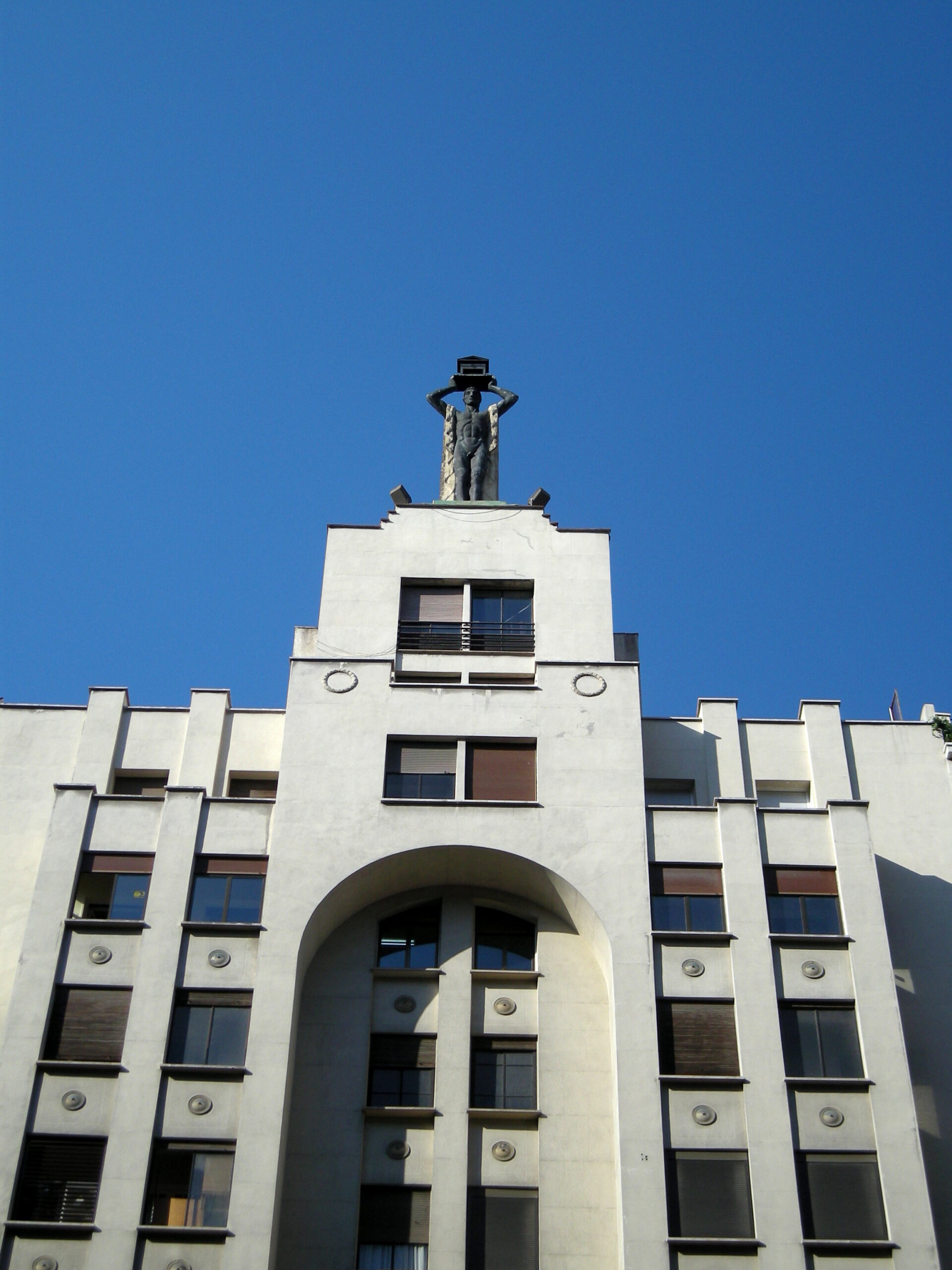
From here starts the Gran Vía, opened in 1910 by demolishing over three hundred buildings and wiping out fourteen streets: a brutal, much-debated operation, meant to give Madrid a modern artery. What came out of it was a mile and a half of early-twentieth-century architecture with neon signs, cinemas and theatres: they called it Madrid’s Broadway. Walk it at least as far as the Edificio Metrópolis, the one with the black dome and winged statue, which is the city’s emblem.
5 – Museo del Prado
Time needed 2.5 hours · Ticket about €15 · Free in the last two hours of weekdays and the last five of Sunday
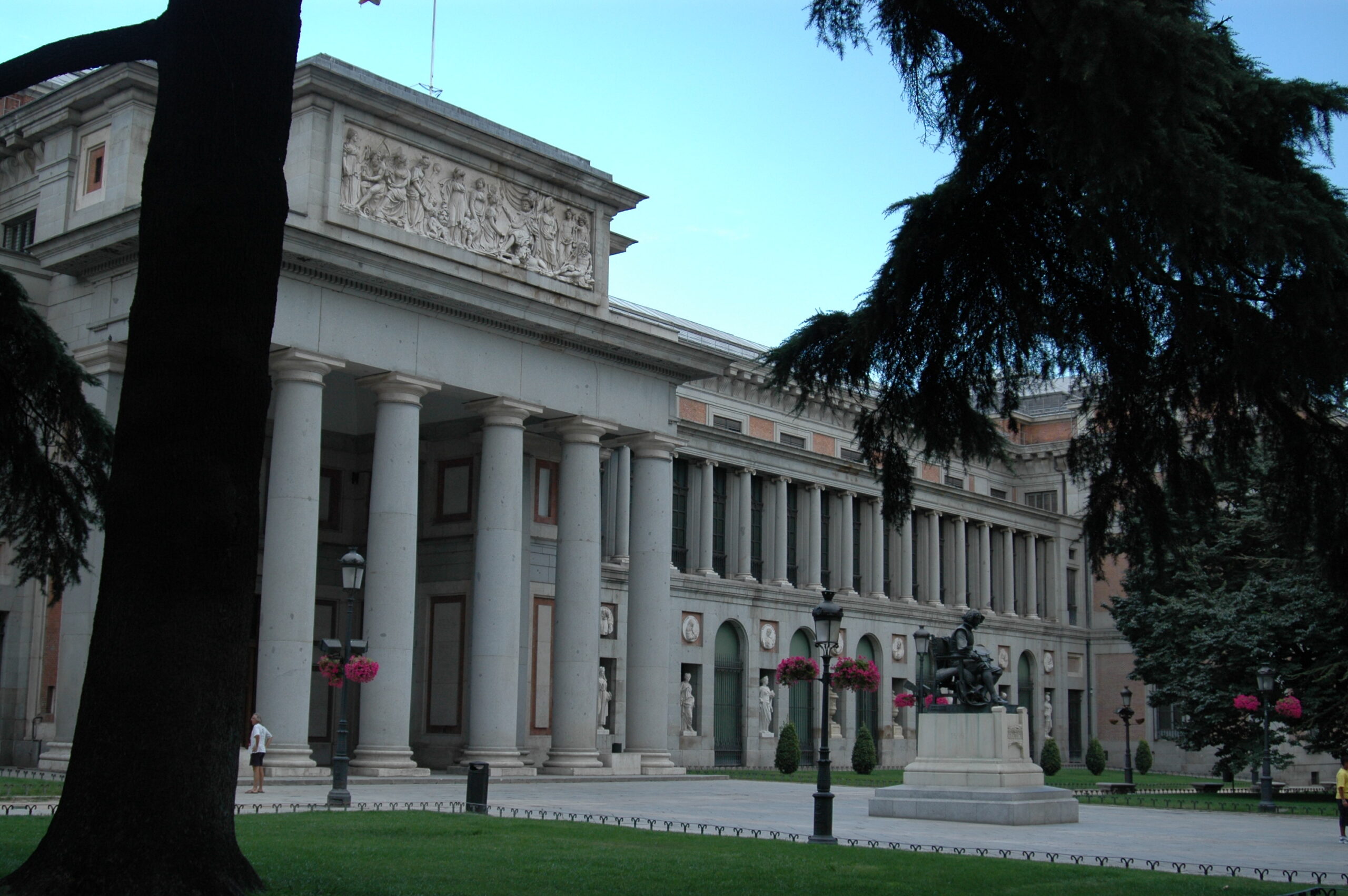
The Prado is one of the three or four most important painting museums in the world, and it has a trait that sets it apart from the Louvre: it is not an encyclopaedic collection, it is the private collection of the kings of Spain, that is, the personal taste of a dynasty that for two centuries was the richest in Europe because it had the silver of the Americas. They bought what they liked, and their taste was good.
What not to miss, if you have two and a half hours:
- Las Meninas by Velázquez, 1656. It is the most argued-over painting in the history of art: you see the painter painting, a canvas of which we see only the back, the infanta with her ladies-in-waiting, and in the background a mirror in which the king and queen appear — meaning they stand where you do. People have never stopped arguing about exactly what is happening.
- Goya’s Black Paintings. Fourteen works that the painter, old, deaf and disillusioned, made directly on the walls of his own house between 1819 and 1823, uncommissioned and never meant to be shown. They were removed and transferred to canvas fifty years later. Saturn Devouring His Son hung in the dining room.
- The Third of May 1808, also by Goya: the execution of madrileños by Napoleonic troops, with the man in the white shirt and outstretched arms. It is considered the first modern painting about war, the one from which Manet and Picasso descend.
- The Garden of Earthly Delights by Bosch, which Philip II bought and kept in his bedroom at the Escorial.
- The Titian room: Charles V made him his court portraitist, and this is where you understand what Habsburg power looked like.
The free slot in the last two hours of weekdays is real, and you really do get in, but the queue starts half an hour earlier and in those two hours you see it at a run. If the museum genuinely interests you, pay the ticket and take your time.
6 – Retiro Park
Time 1 hour · Free · Walk 5 minutes

The Retiro was the private garden of a seventeenth-century royal palace of which almost nothing remains today, and it only opened to the public in 1868. It covers a hundred and twenty-five hectares, a UNESCO World Heritage Site since 2021 together with the Prado boulevard.
At its centre is the lake with rowing boats that have been rented out for over a century, and further on the Palacio de Cristal: a glass-and-iron greenhouse built in 1887 to house tropical plants brought from the Philippines, then a Spanish colony, for an exhibition. Today it hosts contemporary art installations and entry is free.
The park also holds something unusual: the Monument to the Fallen Angel, from 1885, one of the very few public statues in the world dedicated to Lucifer. It stands, coincidentally or not, at 666 metres above sea level.
On Sundays the Retiro is where all of Madrid goes: musicians, drum circles, people dancing, puppet shows. If you are there on a Sunday afternoon, this is the best time to come.
Evening — Guernica and the tapas
2 km · 2 stops · 8pm to midnight · this is when the day truly begins
7 – Museo Reina Sofía
Time 1.5 hours · Ticket about €12, free in evening slots and Sunday afternoon · Closed on Tuesdays

The Reina Sofía is the museum of twentieth-century art and occupies a former eighteenth-century general hospital, with two glass lifts hanging off the façade that have become part of the building’s identity.
You come here for one thing: Guernica by Picasso, from 1937. It is enormous — three and a half metres by nearly eight — and painted in white, black and grey in just over a month, after the bombing of the Basque town of Guernica by German and Italian aircraft during the Spanish Civil War. It was shown at the Spanish pavilion of the Paris Exposition that same year.
Picasso left it on deposit at MoMA in New York with one condition: it would return to Spain only once public freedoms had returned. It arrived in Madrid in 1981, six years after Franco’s death, and for a decade it was displayed behind bulletproof glass with soldiers standing guard. Around the painting the museum shows the preparatory studies, dozens of them, and the photographs Dora Maar took in the studio as the work took shape: you can watch the painting being born.
The museum also holds Dalí and Miró. If you are short on time, do only the second floor.
8 – Malasaña and the night
From 9:30pm on · Free · Metro Tribunal or Noviciado
In Madrid the evening starts late and ends very late: dinner is at ten, people go out at eleven, and bars close at three. The city has a relationship with the street unmatched elsewhere in Europe, and the historical reason is also architectural: homes are small, so people live outside.
Malasaña is the district where this shows best. It takes its name from Manuela Malasaña, a fifteen-year-old girl killed by the French in the uprising of 2 May 1808 — the one Goya painted — and it was the centre of the Movida madrileña, the cultural, musical and social explosion of the 1980s that followed the end of the dictatorship, which produced Almodóvar, among others.
Today it is the district of vintage shops, bookshops and bars. Around Plaza del Dos de Mayo people sit outside until late. Next door is Chueca, Madrid’s gay district, with the best venues and one of the most open atmospheres in Europe.
If you would rather close the night more traditionally, head back to La Latina and do the round of taverns on Cava Baja. And if you make it to the end of the night, the classic last stop is Chocolatería San Ginés, open since 1894 and almost always open all night: churros and thick hot chocolate at five in the morning are a Madrid ritual.
If it rains
It does not rain much in Madrid — it is one of the driest European capitals — but winters are cold and summers get a heat that needs managing just like rain.
- Instead of the Retiro · the Museo Thyssen-Bornemisza, between the Prado and the Reina Sofía, completing the «art triangle»: a private collection bought by the state in 1993, covering everything the Prado lacks, from the Italian primitives to expressionism.
- Instead of the walk down Gran Vía · the Mercado de San Miguel or the Mercado de San Antón in Chueca, both covered.
- In summer, between 2pm and 6pm · you stay in. Madrileños do not go out then, and they are right: forty degrees in the shade is no joke. Use those hours for museums and start walking again after seven.
What the day costs
| Item | Cost |
|---|---|
| Royal Palace | about €14 |
| Museo del Prado | about €15, free in the last two hours of weekdays |
| Museo Reina Sofía | about €12, with free slots |
| Plaza Mayor, Retiro, Puerta del Sol, Gran Vía, Malasaña | free |
| Metro, 10-ride ticket | about €12 |
| Tapas lunch | €12-20 |
| Tapas dinner | €15-25 |
| Total paying for all museums | about €70-85 |
| Total using the free slots | about €45-55 |
Reference figures as of August 2026: check official websites before you travel, since free-slot hours change. Madrid is noticeably cheaper than Barcelona for an equivalent day, especially for food: here a standing tapas dinner costs half as much. And all three major museums have daily free slots, which is rare in Europe.
Getting around
The centre is done on foot: from the Royal Palace to the Retiro is twenty-five minutes. The metro is one of the best in Europe, twelve lines, clean and very frequent; it is worth getting the rechargeable card with the ten-ride ticket, which cuts the price compared to single fares.
From Barajas airport: metro line 8 reaches the centre with one change in about forty minutes, with an airport surcharge; there are also express buses running to Atocha around the clock. Taxis have a fixed fare to the centre, clearly posted: anyone quoting something else is not a regular taxi.
Madrid sits at 650 metres above sea level, the highest capital in Europe: that explains the cold winters, the scorching summers and the light, which is sharp and clear, and which the Prado’s painters captured for centuries.
Frequently asked questions
Is one day enough to see Madrid?
It is enough for the Habsburg centre, the Prado, the Retiro, the Reina Sofía with Guernica, and an evening of tapas. It leaves out the Thyssen, the Palacio de Cristal by daylight, the northern districts and above all the day trips: Toledo, Segovia and the Escorial. Madrid is a two- or three-day city, but a well-planned single day pays off well.
When is entry to the Prado free?
In the last two hours of opening on weekdays and the last five on Sundays and public holidays. It is a real slot and you really do get in, but the queue starts half an hour before and in two hours you see it at a run. If the museum interests you, pay the fifteen euros and take your time. The Reina Sofía and the Thyssen also have free slots: check the current hours before you go.
What is the art triangle?
The three great museums lined up along the same boulevard, a few minutes apart: the Prado for old master painting, the Reina Sofía for the twentieth century with Guernica, the Thyssen-Bornemisza for everything the other two lack. In one day you can do two; in two days all three, and there is a combined ticket worth buying.
Where is Picasso’s Guernica?
At the Museo Reina Sofía, second floor. Picasso painted it in 1937 after the bombing of the Basque town and left it on deposit in New York with one condition: it would return to Spain only once public freedoms had returned. It arrived in 1981, six years after Franco’s death. Around it are displayed the preparatory studies and the photographs Dora Maar took as the painting took shape.
What time do people eat in Madrid?
Late, later than the rest of Europe: lunch between 2pm and 4pm, dinner from 9:30pm to 11pm. Restaurants open at 7:30pm are for tourists. The formula to use is the tapeo: you stand at the bar, order a caña and a tapa, pay, leave, and move to the next place. On Cava Baja, in La Latina, you can do the full round.
Madrid or Barcelona, which is better?
They are two different experiences. Barcelona has Gaudí, the sea and an extraordinary urban layout, but it is very expensive on tickets and very crowded. Madrid has the Prado, a street life Barcelona does not have, lower prices and far fewer tourists in proportion. If you are after architecture, go to Barcelona; if you are after painting and atmosphere, Madrid.
How much does a day in Madrid cost?
Between 45 and 55 euros per person using the museums’ free slots, between 70 and 85 paying for everything. It is noticeably cheaper than Barcelona for an equivalent programme, especially for food: a standing tapas dinner costs half as much and the food is better.
Why is Plaza Mayor closed on all sides?
Because it was a theatre. The 1619 square was used for bullfights, coronations, markets, tournaments and Inquisition trials, and its 237 balconies were seating assigned by rank. The king watched from the Casa de la Panadería, the frescoed building on the north side. It has burned three times and been rebuilt more regular each time.
Is the Royal Palace worth it?
Yes, and it is the largest royal palace in Western Europe: 3,418 rooms, more than Versailles. Worth seeing: the Throne Room with Tiepolo’s ceiling, the Armoury — one of the most important in the world, with Charles V’s armour — and the Stradivari quartet, the only one in the world still kept together. Nobody lives there: the royal family lives outside the city.
What day trips can you take from Madrid?
Toledo is the best: half an hour by high-speed train, and the city where Christians, Jews and Muslims lived side by side for centuries, with its cathedral, synagogues and El Greco’s house. Then Segovia with its intact Roman aqueduct, and the Escorial, Philip II’s monastery-palace. All are under an hour away.
September 4, 2026


