

Madrid in 3 Days: The Art Triangle, the Districts and Toledo
Madrid with three days changes character, because it stops being just the Prado. The first day is the essential one: the Habsburgs, the great museum, the Retiro, Guernica. The second completes the art triangle with the Thyssen and heads into the districts — Malasaña, Chueca, the Rastro if it is Sunday — which are the reason madrileños are convinced they live in the best city in Europe. The third takes a train to Toledo, which is half an hour away and is worth a trip on its own: the city where Christians, Jews and Muslims lived in the same square kilometre for centuries.
At a glance
- How long · three full days, from 9:30am into the night
- How much walking · 7-9 km a day; Toledo is all uphill
- What has to be booked · not much: the Royal Palace and the Prado online to skip the queue, and the train to Toledo
- Budget · €150-250 per person for the three days, excluding accommodation
- Free time slots · the Prado, Reina Sofía and Thyssen all have them: plan the day around them
- Day to avoid · Monday for the Prado at certain times of year and Tuesday for the Reina Sofía: check ahead
- Best day for the Rastro · Sunday morning
- What is left out · Segovia, the Escorial, Aranjuez, Cuenca: those are day four and five
One colour per day. Toledo is off the map to the south, half an hour away by high-speed train.
Day 1 — The Habsburgs, the Prado, Guernica
7 km · 3 stops · 9:30am to midnight · the essential day
Morning – Royal Palace, Plaza Mayor, La Latina
9:30am-2pm · Palace about €14 · the rest free

The Palacio Real has 3,418 rooms and is the largest royal palace in Western Europe. It stands where the Arab Alcazar once stood, the fortress around which Madrid was born — the city was founded by the Arabs as a military outpost — which burned on Christmas night 1734, destroying over five hundred paintings, several by Velázquez among them. Inside: the Throne Room with its Tiepolo ceiling, the Armoury with the armour of Charles V and a Stradivari quartet, the only one in the world still kept together.

The Plaza Mayor from 1619 is an enclosed rectangle a hundred and twenty-nine metres by ninety-four with 237 balconies: it was a theatre for bullfights, coronations, markets and Inquisition trials, and the balconies were seating. The king watched from the Casa de la Panadería.
Lunch in La Latina, on Cava Baja: you stand at the bar, order a caña and a tapa, pay, and move to the next place. It is not an aperitif, it is how Madrid eats.
Afternoon – Museo del Prado
3:30-6:30pm · Ticket about €15, free in the last two hours of weekdays
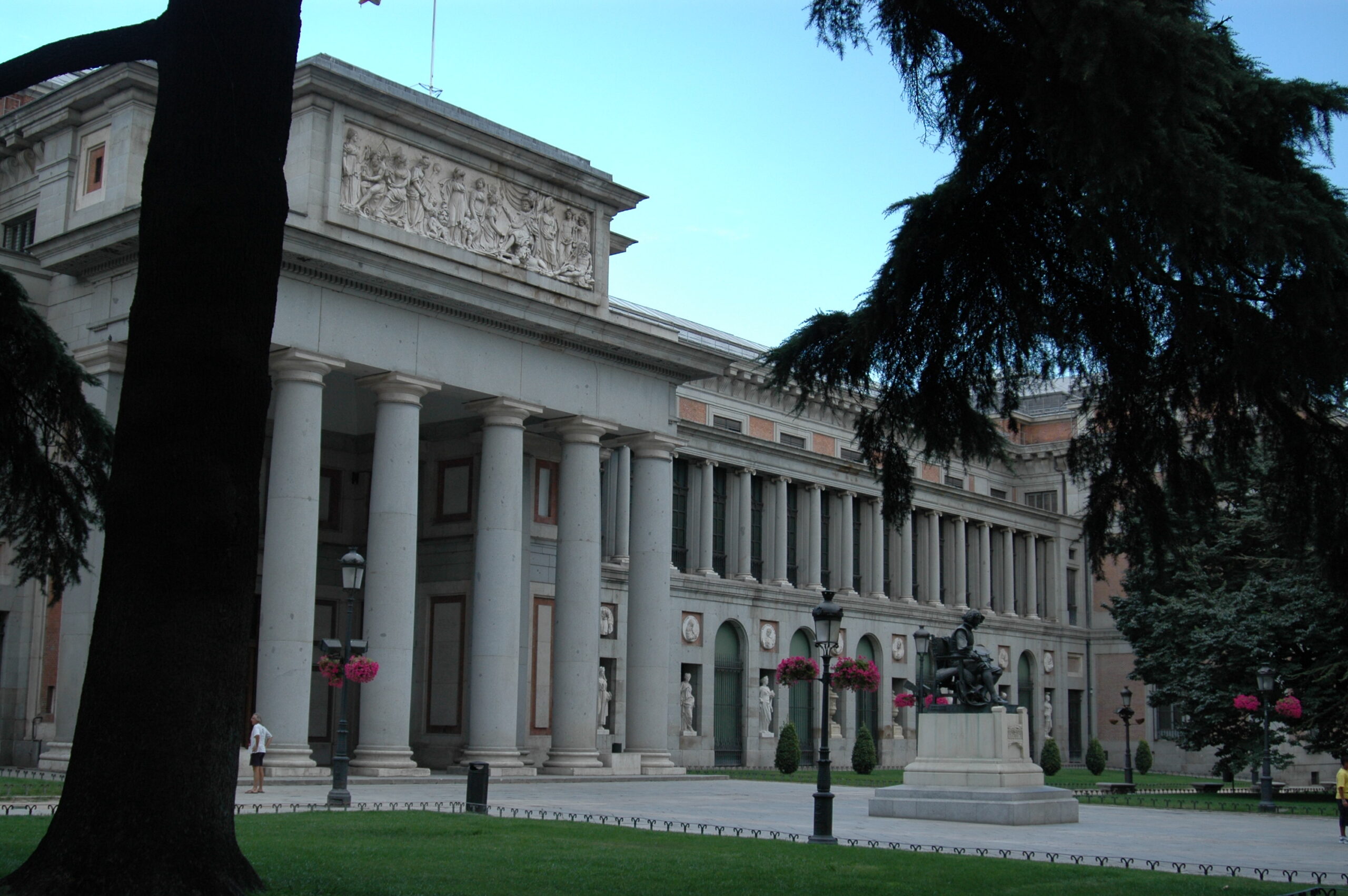
The Prado is not an encyclopaedic collection like the Louvre: it is the private collection of the kings of Spain, the taste of a dynasty that for two centuries was the richest in Europe because it had the silver of the Americas.
With three hours: Las Meninas by Velázquez, the most argued-over painting in the history of art, with the mirror in the background where the king and queen appear, meaning they stand where you do; Goya’s Black Paintings, fourteen works made directly on the walls of his own house between 1819 and 1823, uncommissioned and never meant to be shown — the Saturn hung in the dining room; The Third of May 1808, the execution of madrileños by the French, the first modern painting about war; The Garden of Earthly Delights by Bosch, which Philip II kept in his bedroom; and the Titian room, Charles V’s court portraitist.
Evening – Retiro, Reina Sofía, tapas
7pm to midnight · Reina Sofía about €12, with free evening slots · Closed on Tuesdays

An hour in the Retiro, once the private garden of the kings, opened to the public only in 1868: the lake with rowing boats and the Palacio de Cristal, a glass-and-iron greenhouse built in 1887 for plants brought from the Philippines.
Then the Reina Sofía for Guernica: three and a half metres by nearly eight, painted in just over a month in 1937 after the bombing of the Basque town. Picasso left it in New York with one condition — it would return to Spain only with the return of public freedoms — and it arrived in 1981, six years after Franco’s death. Around it are the preparatory studies and the photographs Dora Maar took as the painting took shape.
Day 2 — The Thyssen and the districts
8 km · 4 stops · 10am into the night · the day you understand how madrileños live
Morning – Museo Thyssen-Bornemisza
10am-1pm · Ticket about €14, free on Monday afternoon · Metro Banco de España
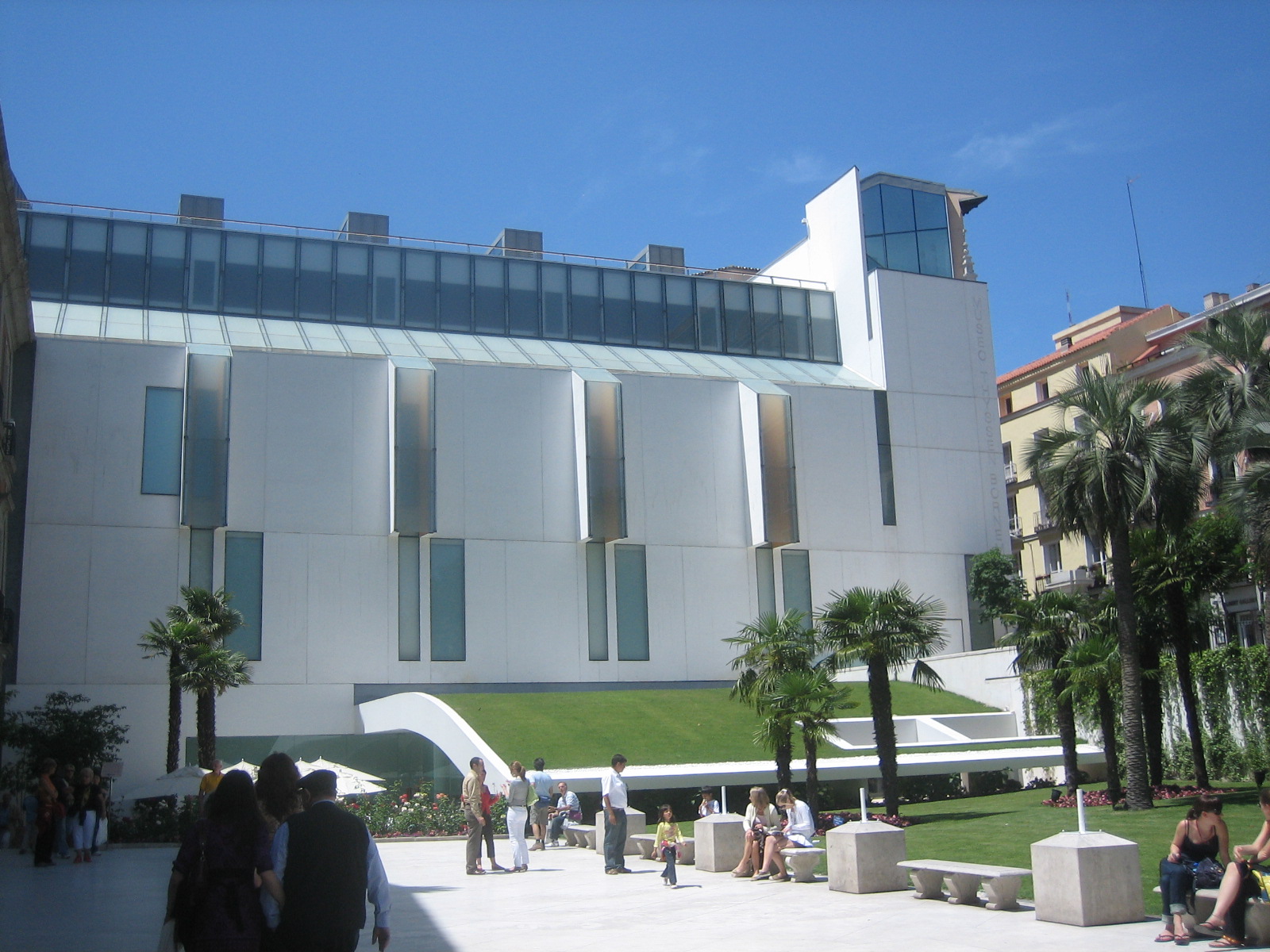
The Thyssen-Bornemisza completes the art triangle and has a precise role: it covers everything the Prado lacks. The collection was assembled over two generations by a family of steel industrialists and was the second-largest private collection in the world after the British crown’s; the Spanish state bought it in 1993, beating other countries in the bidding.
The route is chronological, running from thirteenth-century Italy to German expressionism and American pop, in a single thread: primitives, Van Eyck, Dürer, Caravaggio, then impressionists, Van Gogh, Kandinsky, Hopper, Rothko. In three hours you cross eight hundred years of European painting, and it is the best way to put in order everything you saw the day before.
Early afternoon – Templo de Debod and Plaza de España
2:30-5pm · Free · Metro Plaza de España or Ventura Rodríguez

In the park above Plaza de España there is something that catches everyone off guard: a genuine Egyptian temple. The Templo de Debod was built in the third century BC in Nubia, near Aswan.
In the 1960s, construction of the Aswan Dam was about to submerge dozens of Nubian monuments. UNESCO launched an international campaign and several countries sent teams and money to dismantle, move and rebuild the temples; in gratitude, Egypt gave away four of them to the countries that had contributed the most. One went to Madrid: it was dismantled stone by stone, shipped over and reassembled here in 1972, oriented as the original. The other three are in New York, Turin and Leiden.
Go at sunset, which is when madrileños bring anyone who comes to visit: the temple reflects in the pool and the whole sierra opens up behind it. It is free, you can also go inside (with long queues at weekends), and it is one of the strangest sights in Europe.
Just below is Plaza de España, recently redone, with the monument to Cervantes and the bronze statues of Don Quixote and Sancho Panza. The Gran Vía starts from here.
Afternoon – Malasaña and Chueca
5:30-9pm · Free · Metro Tribunal
Malasaña takes its name from a fifteen-year-old girl killed by the French in the uprising of 2 May 1808 — the one Goya painted — and was the centre of the Movida madrileña, the cultural and social explosion of the 1980s that followed the end of the dictatorship, which produced Almodóvar, among others. Today it is the district of vintage shops, bookshops and bars, and around Plaza del Dos de Mayo people sit outside until late.
Next door is Chueca, Madrid’s gay district: since the 1990s it has gone from a run-down area to one of the liveliest districts in the city, with the best venues and an openness few European capitals have. The covered Mercado de San Antón has food stalls and a rooftop terrace.
In between, if you fancy a small museum: the free Museo de Historia de Madrid has a spectacular baroque façade and inside a model of the city in 1830 that shows just how fast Madrid grew.
Evening – La Latina, or the Rastro if it is Sunday
From 9:30pm on · Free · the Rastro is only on Sunday morning
Tapas dinner in La Latina, working your way round the taverns. If your second day falls on a Sunday, flip the plan and start with the Rastro: Madrid’s flea market, held since the sixteenth century in the streets around the Ribera de Curtidores, with over a thousand stalls spread across the whole district. Go in the morning, buy little and look a lot, and around one everyone moves on to the taverns of La Latina for vermú — draught vermouth, a Sunday ritual in Madrid with a tapa of olives or sardines.
Day 3 — Toledo
The whole day · high-speed train from Atocha, 33 minutes · book the train

If we had to choose a single day trip in Spain, it would be Toledo. It is thirty-three minutes away from Madrid on the high-speed train, on a crag surrounded on three sides by the Tagus, and that defensive geography is the reason the city has come down to us almost intact: a UNESCO World Heritage Site since 1986.
Why Toledo is different
It was capital of the Visigothic kingdom, then a Muslim city for four centuries, then retaken by the Christians in 1085. What matters is what happened next: for about three centuries Christians, Jews and Muslims lived in the same square kilometre, and the city became a unique centre of translation in Europe. At the School of Translators, backed by the kings of Castile, scholars of the three religions translated into Latin the Greek and Arabic texts — Aristotle, Ptolemy, Euclid, Avicenna, al-Khwarizmi — that the West had lost. Much of what medieval Europe knew of mathematics, astronomy and philosophy passed through here.
It ended in 1492, with the expulsion of the Jews, and then of the Muslims. Toledo also lost its role as capital when Philip II moved the court to Madrid in 1561, and it has stopped growing ever since: which is why it has stayed as it was.
What to see
5-6 hours · Cathedral about €12 · Tourist bracelet for seven monuments, about €12 · many climbs
The cathedral is one of the great Gothic cathedrals of Europe, built from 1226 on the site of the main mosque, itself built over the Visigothic church. Inside is the Transparente, a must-see: a baroque altar where a hole was cut into the Gothic vault to let a shaft of natural light fall on the tabernacle. In the eighteenth century it was a scandal, and it is pure theatre. The sacristy is a picture gallery with El Greco, Titian, Caravaggio, Goya.
El Greco lived in Toledo from 1577 until his death: he was Cretan, named Doménikos Theotokópoulos, and Spain simply called him «the Greek». In the church of Santo Tomé is his masterpiece, the Burial of the Count of Orgaz, painted for the exact spot where it hangs and never moved: the earthly world below, the heavenly one above, and the faces of Toledans of his own time among the mourners.
Two synagogues remain from the Jewish quarter, and they are as strange as the rest of the city: the fourteenth-century Sinagoga del Tránsito has mudejar — that is, Islamic-style — decoration with Hebrew and Arabic inscriptions, and is today the Sephardic Museum. Santa María la Blanca was built as a synagogue by Muslim craftsmen for a Jewish community under a Christian king, and later became a church: inside are white horseshoe arches that look like a mosque. The Mosque of Cristo de la Luz, from 999, is the oldest standing building in the city.
For the photograph: cross the Tagus and climb to the Mirador del Valle, on the far bank, from which you see the whole city on its crag with the Alcázar and the cathedral. A tourist bus runs there, or take a taxi.
Toledo is all uphill and the paving is uneven: wear proper shoes. From the station to the centre is a twenty-minute uphill walk, or a bus, or the public escalators that climb from the Bisagra gate. It gets very hot in summer: set off early.
If it rains, or if it is very hot
It does not rain much in Madrid, but in summer the middle hours are unworkable and should be treated like rain.
- Days 1 and 2 · are already built around museums: simply move the walks to the evening, after seven, as madrileños do.
- Instead of the Templo de Debod · the Museo Arqueológico Nacional, which holds the Lady of Elche, the most famous Iberian sculpture, and a reproduction of the Altamira caves.
- Day 3 · Toledo in the rain is still easy to explore, because the streets are narrow and covered and the monuments are indoors. In the cold, Toledo works better than Segovia, which is more exposed.
What the three days cost
| Item | Cost |
|---|---|
| Royal Palace | about €14 |
| Prado, Reina Sofía, Thyssen | about €41, much less using the free slots |
| Toledo: return train plus cathedral and bracelet | about €50 |
| Plaza Mayor, Retiro, Templo de Debod, Rastro, the districts | free |
| Urban transport, 3 days | about €18 |
| Meals, 3 days | €75-120 |
| Total | about €150-250 per person |
Reference figures as of August 2026: check official websites before you travel, since free-slot hours change. The Paseo del Arte, a combined ticket for the three museums, costs less than the sum of the individual tickets. Madrid remains noticeably cheaper than Barcelona for an equivalent day, especially on food.
Frequently asked questions
Is three days enough for Madrid?
Yes, and it is the right amount: one for the Habsburgs and the Prado, one for the Thyssen and the districts, one for Toledo. It leaves out Segovia with its Roman aqueduct, the Escorial and Aranjuez, all under an hour away and best kept for day four and five.
Is Toledo worth going to?
It is the best day trip in Spain: thirty-three minutes on the high-speed train and you arrive in an intact medieval city on a crag ringed by the Tagus, where Christians, Jews and Muslims lived side by side for three centuries and where the School of Translators gave Europe back Aristotle, Ptolemy and Euclid. There is the cathedral, two synagogues with Islamic decoration and El Greco’s Burial of the Count of Orgaz in the spot it was painted for.
What is the art triangle?
The three great museums lined up on the same boulevard: the Prado for old master painting, the Reina Sofía for the twentieth century with Guernica, the Thyssen for everything the other two lack, from the Italian primitives to Hopper and Rothko. The combined Paseo del Arte ticket costs less than buying them separately.
Why is there an Egyptian temple in Madrid?
Because Egypt gave it to Spain. In the 1960s the Aswan Dam was about to submerge the Nubian monuments; UNESCO organised the rescue and Egypt donated four temples to the countries that had contributed most. The Templo de Debod, from the third century BC, was dismantled stone by stone and rebuilt in Madrid in 1972, oriented as the original. Go at sunset: it is free.
When is the Rastro held?
On Sunday mornings and public holidays, in the streets around the Ribera de Curtidores in La Latina. It is Madrid’s flea market, dating back to the sixteenth century, with over a thousand stalls. Around one everyone moves to the taverns for vermú, draught vermouth, a Sunday ritual in Madrid.
What time do people eat in Madrid?
Lunch between 2pm and 4pm, dinner from 9:30pm to 11pm. Places open at 7:30pm are for tourists. The mechanism is the tapeo: standing at the bar, a caña and a tapa, pay and move to the next place. In many spots the tapa comes free with the drink.
How much do three days in Madrid cost?
Between 150 and 250 euros per person excluding accommodation, Toledo included. It drops considerably using the free slots of the three museums, which are daily and real. Food weighs little: a tapas dinner costs €15-25 and the food is good.
Toledo or Segovia, which is better?
Toledo if you only do one: it is richer, more complex and closer. Segovia has an almost intact Roman aqueduct — 167 arches with no mortar, held up by gravity alone — and an Alcázar that looks like a fairy-tale castle, and is half an hour away on the high-speed line in the opposite direction. With four days, do both.
Who was El Greco and why did he live in Toledo?
He was Cretan, named Doménikos Theotokópoulos, trained in Venice and Rome and arrived in Spain in 1577 hoping to work for Philip II at the Escorial. The king did not take to him; he settled in Toledo and stayed until his death. His elongated figures and unnatural colours were baffling for the time and were only reassessed in the twentieth century, as a forerunner of expressionism.
Is Madrid good in summer?
It is hard: forty degrees is not unusual and the city sits at 650 metres on a plateau with no sea. The solution is the one madrileños use: museums and siesta between 2pm and 6pm, and outdoor life from seven in the evening into the night. In August many places close for holidays, but the city empties out and prices drop. The best periods are May-June and September-October.
September 4, 2026


