

Barcelona in 5 days: the complete day-by-day itinerary
With five days, Barcelona stops being only Gaudí. The first three remain those of the classic itinerary — modernisme, the old city with Montjuïc, and Montserrat. The fourth and fifth are the ones almost no one does, and they change the trip: a day in Girona, an intact small medieval city thirty-eight minutes away by high-speed train, and a day devoted to the Barcelona that Barcelonians keep for themselves — the Gràcia district, the Tibidabo hill with the oldest amusement park in Europe still open, and the beaches beyond Barceloneta. As an alternative, the sea at Sitges.
At a glance
- How long · five full days
- How much walking · 7-9 km a day; Montserrat and Tibidabo have genuine climbs
- What has to be booked · Sagrada Família weeks ahead, then Park Güell, one modernist house, the Palau de la Música and the trains to Girona
- Budget · €300-450 per person for the five days, excluding accommodation
- Transport · two ten-ride tickets per person are enough, plus the regional trains
- Day to avoid · Monday, when the Museu Picasso, the MNAC and the Fundació Miró are closed
- What is left out · Roman Tarragona, the Ebro Delta, the Costa Brava to the north: a trip of their own
One colour per day. Montserrat and Girona are off the map, an hour and forty minutes away by train respectively.
The first three days
The first three are those of the three-day itinerary and do not change: they are well ordered, and there is no point reshuffling them.
Day 1 – Gaudí and modernisme
7 km · Sagrada Família at 9am, the Eixample with La Pedrera and Casa Batlló, Park Güell at sunset
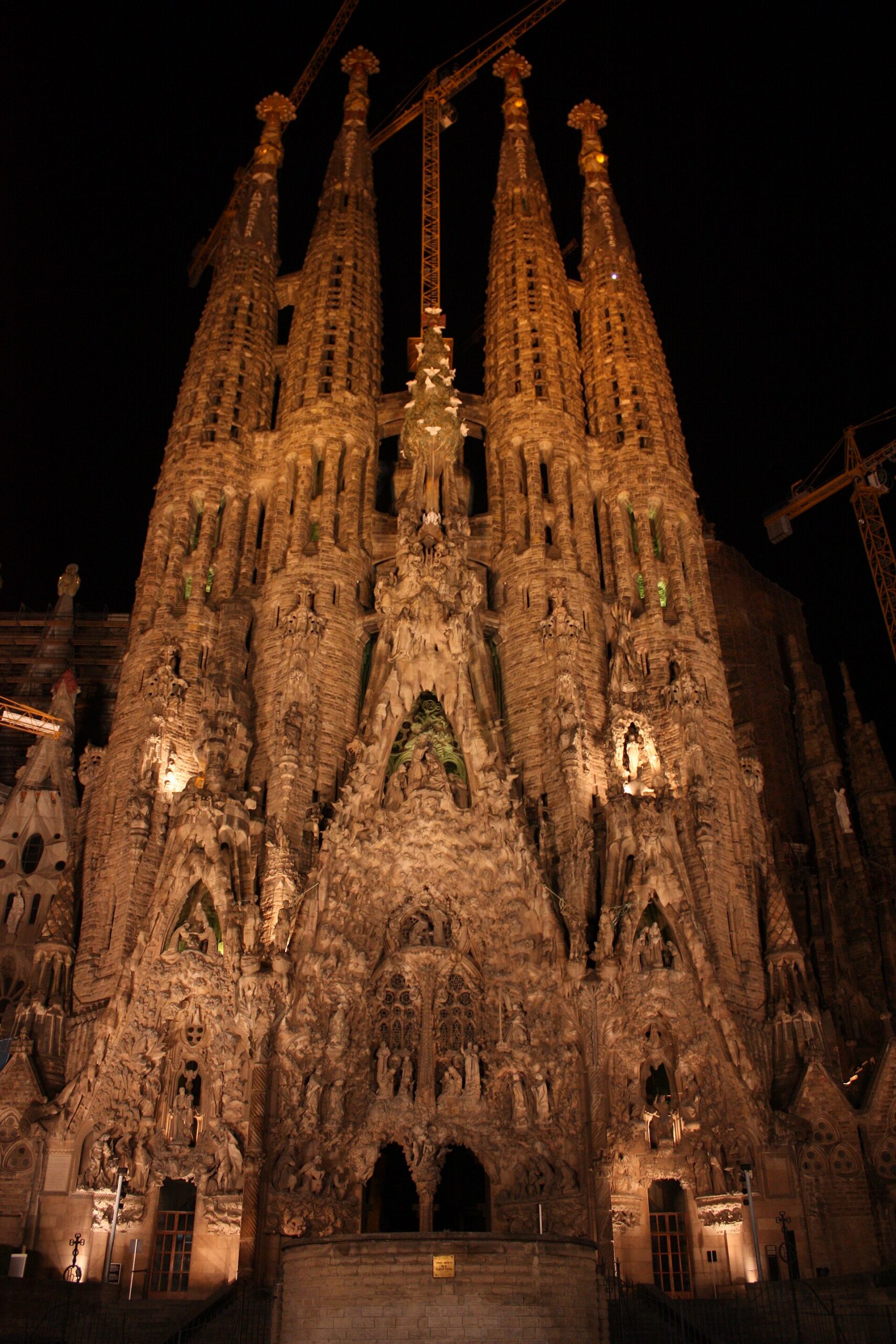
The nine o’clock slot at the Sagrada Família, when light enters through the blue and green windows to the east. The columns branch like trees: the solution Gaudí used to do away with Gothic flying buttresses, which he called «crutches».
Then Cerdà’s Eixample, with its 45-degree block corners, and one modernist house of your choice — we recommend La Pedrera for the roof with its warrior-shaped chimneys. Afternoon at Park Güell, born as a luxury housing estate that failed to sell even three plots.
Day 2 – The old city and Montjuïc
8 km · Barri Gòtic, the Boqueria, Santa Maria del Mar, the Museu Picasso, Palau de la Música, Montjuïc
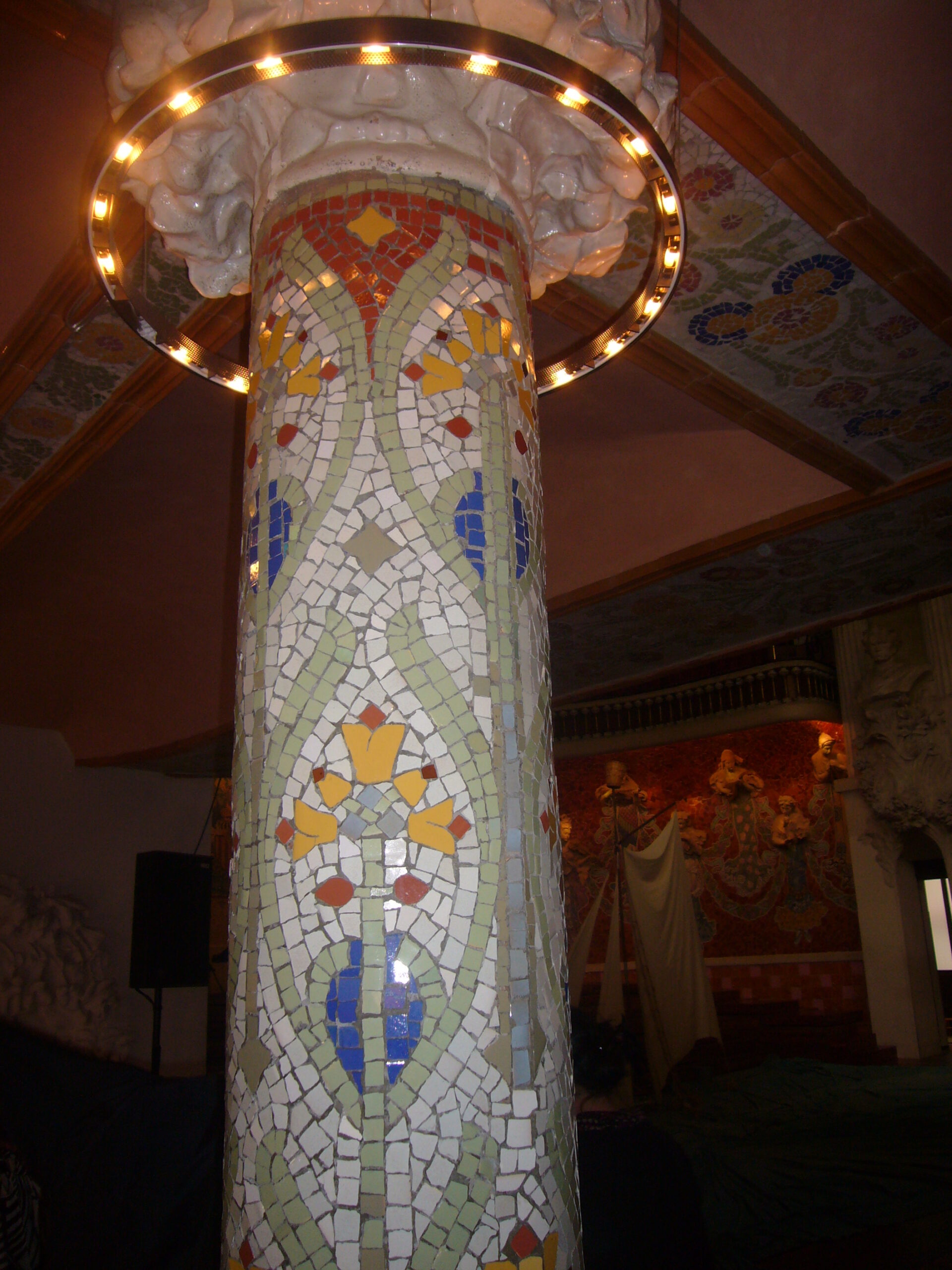
Morning among the Roman and medieval lanes of the Barri Gòtic and in the Boqueria market, open since 1217. Afternoon in the Born with Santa Maria del Mar, built in fifty-five years by the district’s dockworkers, and the Museu Picasso. Then the guided tour of the Palau de la Música, the most underrated thing in the city.
Evening on Montjuïc, with the MNAC and its unique collection of Romanesque frescoes removed from small Pyrenean churches, and the Font Màgica in front of the Palau Nacional.
Day 3 – Montserrat
6-7 hours · FGC train from Plaça d’Espanya plus rack railway or cable car
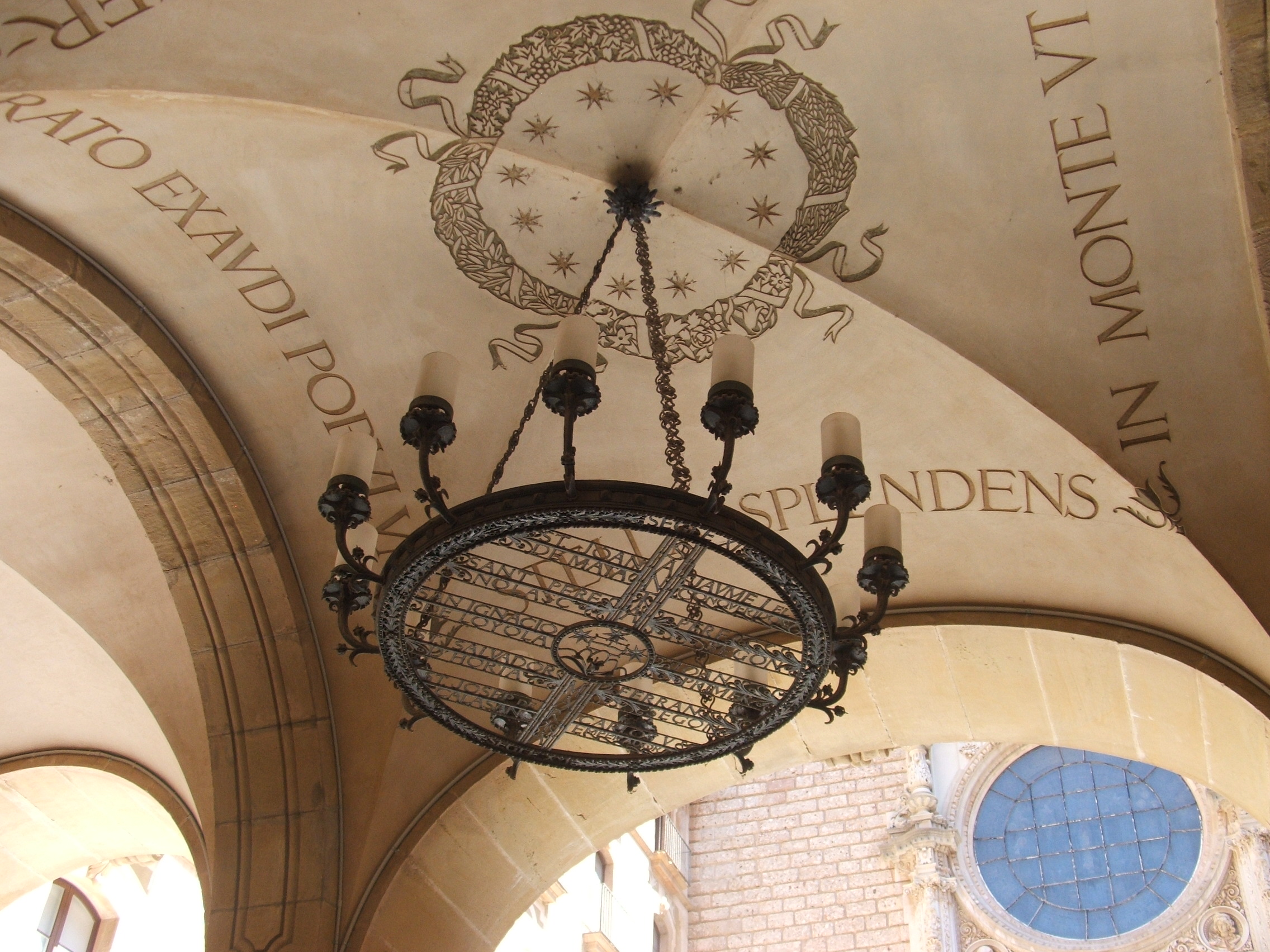
An hour by train brings you beneath a conglomerate mountain eroded into thousands of rounded spires. The monastery dates from 1025, the Moreneta is the patroness of Catalonia, and the Escolania sings at midday on weekdays: if you can be there, it is worth the trip on its own. Leave by nine, ahead of the coach tours.
Day 4 — Girona
The whole day · high-speed train from Barcelona Sants, 38 minutes · the day trip almost no one does

If we could recommend only one day trip from Barcelona other than Montserrat, it would be Girona: thirty-eight minutes by high-speed train — less than it takes to cross Barcelona by metro — and an intact medieval city, with a hundred thousand residents and none of the coastal crowds.
What to see
5-6 hours in the city · Cathedral about €8, Arab Baths about €3 · almost everything else free
The cathedral has the widest Gothic nave in the world: twenty-three metres with no intermediate columns, a structural gamble approved in 1416 only after twelve architects were summoned to debate it. You reach it up a baroque staircase of ninety steps that TV viewers may recognise: part of Game of Thrones was filmed here, and the city has built a small tourism industry on it.
Inside the chapter museum is the Tapestry of Creation, an eleventh-century Romanesque embroidery depicting the creation of the world: one of the most important medieval textiles in Europe, and almost no one knows about it.
The Call is the Jewish quarter, one of the best preserved in Europe: narrow lanes and stairways, with the Museu d’Història dels Jueus telling the story of Girona’s eight-hundred-year Jewish community, up to the expulsion of 1492.
On the Passeig de la Muralla you walk on top of the Carolingian and medieval walls for a mile and a half, climbing the towers: it is free, and from up there you see the whole city with the Pyrenees in the background. Then there are the houses on the Onyar, the colourful façades overhanging the river that are the city’s postcard image: seen from the Pont de les Peixateries Velles, a red iron bridge built in 1877 by Gustave Eiffel’s firm, twelve years before the Paris tower.
Also worth seeing: the Arab Baths, Arab in name only — they are Romanesque, from 1194, built on the model of Muslim baths —, and the monastery of Sant Pere de Galligants, with a perfect Romanesque cloister.
Girona is also a food city: one of the most awarded restaurants in the world, El Celler de Can Roca, is here, booked a year in advance. Short of that, the city has a density of serious trattorias out of proportion to its size: have lunch here rather than in Barcelona.
Alternative: if you prefer the sea, Sitges is forty minutes south by regional train — seventeen beaches, a white old town around the church on the headland, and a nightlife that has made it one of the Mediterranean’s LGBT capitals. A lighter, less cultural day than Girona.

Day 5 — The Barcelona of Barcelonians
7 km · 3 stops · 10am to 11pm · no compulsory monuments
Morning – Gràcia
10am-1:30pm · Free · Metro Fontana or Joanic

Gràcia was its own town until 1897, when Barcelona annexed it against the wishes of its residents, and it has kept the scale of a village: narrow streets, few cars, and a string of small squares with café tables where people sit at any hour — Plaça de la Vila, Plaça del Sol, Plaça de la Virreina, Plaça de la Revolució.
There are real shops, bookshops, art-house cinemas and a strong civic fabric: Gràcia is also the most politically active district in the city, visible on the balconies. The Festa Major, in mid-August, is a competition between streets over who decorates best, with themes built from recycled materials worked on for a whole year: one of the finest, least touristy things in Barcelona.
On the edge of the district is Casa Vicens, Gaudí’s first major work, from 1885, open to the public only since 2017: an explosion of green and yellow marigold tiles, very different from mature Gaudí, and far less visited than the houses on passeig de Gràcia.
Afternoon – Tibidabo
2:30pm-6:30pm · Church free, lift to the statue a few euros, amusement park about €35 · Tramvia Blau and funicular, or bus
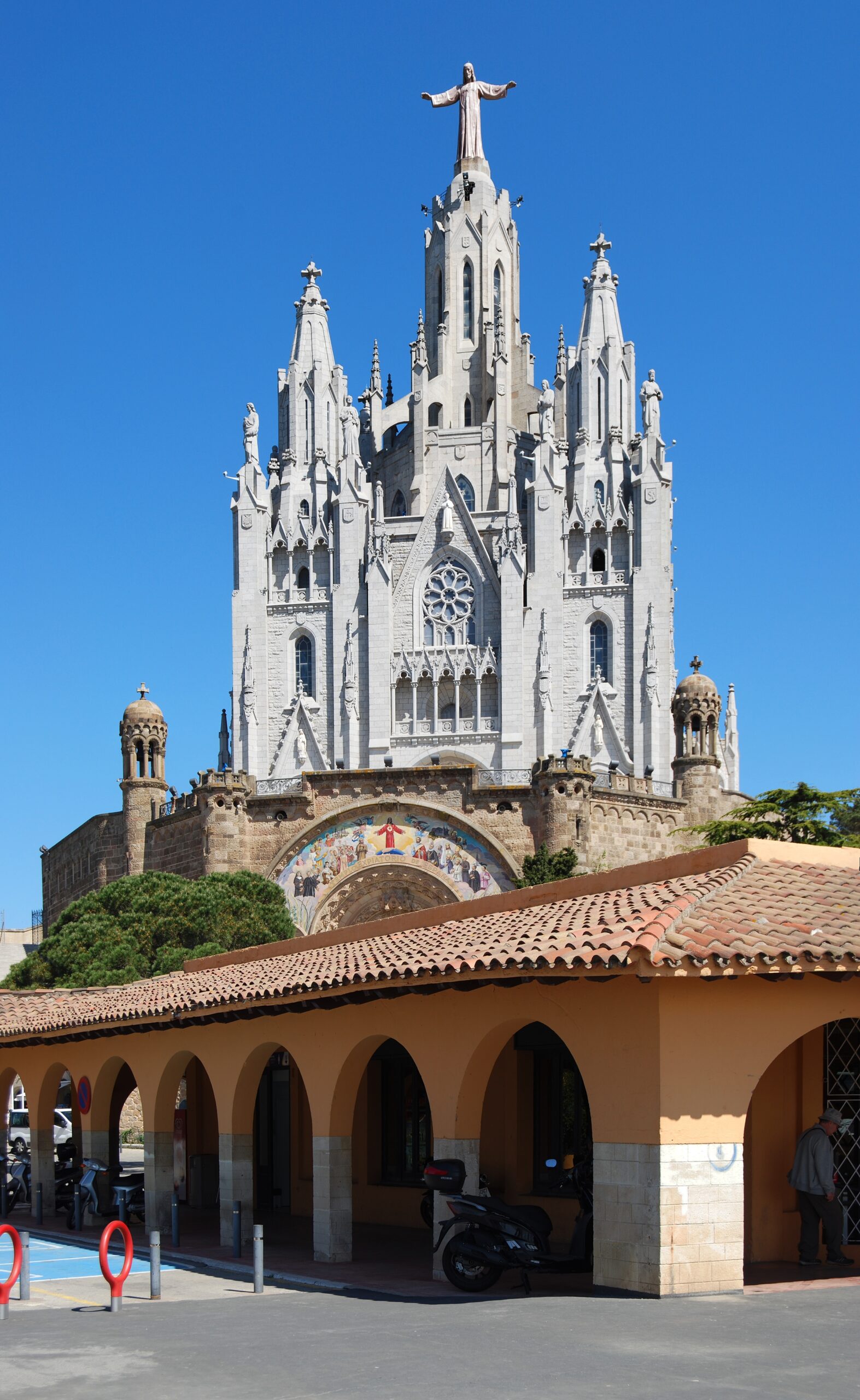
Tibidabo is the summit of the Collserola range, 512 metres above the city, and the name comes from the Gospel: haec omnia tibi dabo, «all this I will give you», what the devil says to Jesus while showing him the world from the top of a mountain. Barcelonians have a certain sense of humour.
At the top stands the Sagrat Cor Expiatory Temple, a neo-Gothic church finished in 1961 topped by a bronze Christ with open arms; a lift takes you up to the terrace beneath the statue, and the view reaches the sea and, on clear days, the Pyrenees.
Next to it is the Parc d’Atraccions, opened in 1901: one of the oldest amusement parks in the world still running, and some rides are the original ones from the early twentieth century — the Avió, a plane hanging from a rotating arm, has been turning since 1928. It is small and a little old-fashioned, and that is exactly why it is charming: mostly Barcelona families go there.
The right way up is the Tramvia Blau, a historic tram from 1901 that climbs to the funicular (when it is running; otherwise a replacement bus operates), then the funicular to the top. Check the schedules, since the park and the transport run reduced timetables out of season.
Evening – Poblenou and the northern beaches
7pm-11pm · Free · Metro Poblenou or Llacuna
Head down to the sea, but not to Barceloneta: further north. Poblenou was the industrial zone — called «the Catalan Manchester» for its textile mills — and since the 2000s has been converted, through the 22@ urban plan, into a district of offices, universities and studios. The result is mixed: alongside the glass towers, chimneys and brick sheds remain, and the Rambla del Poblenou has stayed a genuine neighbourhood street with its bars.
The beaches here — Bogatell, Mar Bella, Llevant — are the same four kilometres of sand created for the 1992 Olympics, but without the crowds of Barceloneta: locals go here. In the evening, have dinner at one of the xiringuitos beach bars or in the streets behind, where prices are neighbourhood, not seafront.
If you would rather finish in the city: the Bunkers del Carmel, the old civil-war anti-aircraft positions on a hill above Gràcia, have the finest view in Barcelona at sunset, are free, and are a twenty-minute uphill walk away. The neighbourhood has, however, asked for the evening crowds to be limited because people used to party there late into the night: go before dark and keep the noise down.
If it rains
- Day 3, Montserrat · in fog you see little and the trails become dangerous. Swap it with day 4: Girona copes better, since the cathedral, the baths and the museums are indoors and the lanes of the Call are narrow and sheltered.
- Day 5 · Tibidabo makes no sense in the rain. Alternatives: CosmoCaixa, the science museum with a rebuilt Amazon rainforest inside, the best place in the city with children; the Fundació Miró on Montjuïc; or the Hospital de Sant Pau, a modernist complex of pavilions linked by underground galleries.
- Always works · the Roman basement of the Museu d’Història in Plaça del Rei: four thousand square metres of ancient city below street level.
What the five days cost
| Item | Cost |
|---|---|
| Sagrada Família, Park Güell, one modernist house | about €72 |
| Museu Picasso, Palau de la Música, MNAC | about €47 |
| Montserrat, train and rack railway | €25-40 |
| Girona, return train plus cathedral and baths | €35-55 |
| Tibidabo, tram, funicular and church | about €15; with the amusement park €50 |
| Barri Gòtic, Santa Maria del Mar, beaches, Gràcia, the Bunkers, Font Màgica | free |
| City transport, 5 days | about €40 |
| Meals, 5 days | €130-200 |
| Total | about €300-450 per person |
Reference figures as of August 2026: check official websites before you travel. Buy online in advance anything with a time slot. Many civic museums are free on the first Sunday of the month and other Sundays from 3pm: with five days it is quite likely one will fall in your stay, so check the calendar before buying tickets.
Frequently asked questions
Is five days too many for Barcelona?
No, if you step outside the Gaudí circuit. Five days fit the three classics plus two trips that transform the visit: Montserrat and Girona, or alternatively a day devoted to the neighbourhoods and the hills. If instead you stay five days inside the Sagrada-Rambla-Park Güell triangle, then yes, it is too many.
Is it worth going to Girona from Barcelona?
It is the trip we recommend most after Montserrat: thirty-eight minutes by high-speed train, less than it takes to cross Barcelona by metro. You find an intact medieval city, with the widest Gothic nave in the world, one of the best-preserved Jewish quarters in Europe, a mile and a half of walls you can walk for free, and food far better than on the coast.
Girona or Sitges, which is better?
Girona if you want history, architecture and a real city; Sitges if you want the sea, beaches and a lighter day. Sitges is forty minutes by regional train and is also one of the Mediterranean’s LGBT capitals, with a white old town around the church on the headland. Girona costs a little more by train and pays off far more.
What is Tibidabo and how do you get there?
It is the summit of the range closing off Barcelona to the north, 512 metres, with a neo-Gothic church at the top and the oldest amusement park in Europe still running, opened in 1901: some rides are the original ones. You go up on the Tramvia Blau, a historic 1901 tram, then the funicular. Check the schedules, which are much reduced out of season.
Where is the best sunset spot over Barcelona?
The Bunkers del Carmel, the civil-war anti-aircraft positions on a hill above Gràcia: free, a twenty-minute uphill walk, with a 360-degree view of the city. The neighbourhood has asked for evening crowds to be limited because of the noise, so go before dark and behave well. Alternatively, the Park Güell terrace or Tibidabo.
Which neighbourhoods should you see beyond the centre?
Gràcia, its own town until 1897 and still village-scaled, with small squares full of café tables; Poblenou, the converted former industrial zone, with the beaches locals use; and the Raval, the city’s most multi-ethnic district, home to the MACBA. The three Barcelonas tourists never see.
How much do five days in Barcelona cost?
Between €300 and €450 per person excluding accommodation. The heaviest item is monument tickets, not food: the Sagrada, Park Güell and one modernist house alone exceed seventy euros. Many civic museums, though, are free on the first Sunday of the month and other Sundays from 3pm, and over five days it is quite likely one will fall in your stay.
Do you need to book the trains to Girona and Montserrat?
For Girona yes, if you take the high-speed train: seats are assigned and prices rise closer to the date. For Montserrat no: the FGC train from Plaça d’Espanya is regional and bought on the day; the combined ticket with the rack railway or cable car is worth it and costs less than buying separately.
Is Casa Vicens worth it?
It is Gaudí’s first major work, from 1885, and open to the public only since 2017: green and yellow marigold tiles, very different from mature, curving Gaudí. It sits on the edge of Gràcia and gets far fewer visitors than the houses on passeig de Gràcia. With five days, yes: it is the missing piece that explains where he started.
Is Barcelona a good city for families?
Very much so: urban beaches, the historic Tibidabo amusement park, CosmoCaixa with its rebuilt Amazon rainforest, the aquarium and Park Güell. Distances are short, the metro works well, and mealtimes run later than children usually like: if you eat at nine, plan a proper afternoon snack.
September 3, 2026


