

What to see in Turin: a guide by theme
Turin has a reputation problem: for half a century it was «the Fiat city», and that hid the fact that it holds the most important Egyptian museum in the world after Cairo, a crown of UNESCO palaces, eighteen kilometres of porticoes and the Alps at the end of its streets. This guide lists the places by kind rather than as an itinerary, saying for each one how long it takes, what it costs and whether it is worth the detour.
At a glance
- The five things not to miss · the Egyptian Museum, Guarini’s Chapel of the Holy Shroud, the Mole with the Cinema Museum, the Reggia di Venaria, the view from Monte dei Cappuccini
- What has to be booked · the Egyptian Museum and the Mole lift, at least the day before
- The day to avoid · Monday, when the Royal Museums, Palazzo Madama and the Venaria all close
- The finest thing that is free · the Chapel of the Holy Shroud inside the cathedral, and the view from Monte dei Cappuccini
- The most underrated museum · the Car Museum, which is far more than a row of cars
- Best time to go · September to June; in winter, after the wind, you see the Alps from the centre
Six thematic layers, not a route: switch on whichever interests you.
The landmarks, what you come to Turin for
The Mole Antonelliana
Time 2 hours with the museum · Ticket about €17 museum and lift · Book the lift

The symbol of the city was born out of a failure. In 1863 the Jewish community commissioned Alessandro Antonelli to build a synagogue; he kept raising the design far beyond the agreement, costs exploded, and in 1877 the community gave up and handed the building to the city in exchange for another site. Antonelli carried on until his death at ninety-three, and his son completed the spire in 1889: 167 metres, for years the tallest masonry building in Europe. It is on the Italian two-cent coin.
The panoramic lift crosses the void of the hall, with no walls, in fifty-nine seconds, up to the little temple at eighty-five metres.
Piazza Castello and Palazzo Madama
Time 1 hour, 2 with the museum · Palazzo Madama about €10 · Closed on Tuesdays

The geometric centre of the city: a porticoed rectangle of forty thousand square metres from which the four main axes run. In the middle stands Palazzo Madama, which deserves the circumnavigation: on one side the white Baroque facade of Juvarra, from 1721; on the other a medieval castle with two square towers built on the eastern Roman gate. Inside is the Civic Museum of Ancient Art, which owns Antonello da Messina’s celebrated Portrait of a Man.
Piazza San Carlo and the porticoes
Time 1 hour · Free · Always open

This is Turin’s drawing room and one of the most successful squares of the Italian seventeenth century: rectangular, porticoed on two sides, closed at the end by two apparently identical churches. They are not: the facade of Santa Cristina is by Juvarra, that of San Carlo is nineteenth-century and imitates it. At the centre, the equestrian monument to Emanuele Filiberto, the Caval ’d Brons.

From here runs via Roma, and from there the network: Turin has about eighteen kilometres of porticoes, more than twelve of them unbroken. The Savoys built them so the court could move under cover, and today they serve everyone: you cross half the city without an umbrella.
The museums
The Egyptian Museum
Time 3 hours · Ticket about €18 · Timed entry: book ahead

It is the main reason to come to Turin. Founded in 1824 from the collection bought by Charles Felix, it is the oldest museum in the world devoted to Egyptian civilisation and for the importance of its collection it ranks second only to Cairo. Forty thousand objects, six and a half thousand on display.
What exists nowhere else is the tomb of Kha and Merit, found intact in 1906 by Ernesto Schiaparelli: an Eighteenth Dynasty architect and his wife, buried around 1400 BC with their entire household — the bed, the chairs, the folded clothes, the food, the cosmetics. It is not a royal tomb: it is daily life that reached us untouched.
Then the Gallery of the Kings, staged with mirrors and raking light by a film set designer; the Papyrus of the gold mines, which is the oldest surviving geographical map; the Royal Canon with the list of the pharaohs; and the rock temple of Ellesiya, saved from the waters of the Aswan dam and given to Italy.
Royal Museums and Galleria Sabauda
Time 3 hours · Ticket about €15 · Closed on Mondays
A single ticket covers the Royal Palace with the Savoy apartments, the Royal Armoury — one of the most important collections of historic arms in Europe, in a seventy-metre gallery — the Royal Gardens, the Museum of Antiquities and the Galleria Sabauda, which holds van Eyck, Fra Angelico, Mantegna, Bronzino and a Flemish and Dutch section that surprises everyone.
The same complex includes the Royal Library, which owns Leonardo’s red-chalk self-portrait and the Codex on the Flight of Birds. They are too fragile for permanent display and are shown only on announced occasions: check first, but do not count on it.
National Cinema Museum
Time 2 hours · Ticket about €12 museum only · Inside the Mole
Turin’s second museum and the most theatrical in Italy, because the display uses the hall of the Mole itself: you climb a spiral ramp around the central void, past magic lanterns, shadow theatres, pre-cinema devices, cameras and costumes. In the temple hall you watch clips lying back in tilted red armchairs, looking upwards.
Its being in Turin is no accident: Italian cinema was born here, and in the 1910s the Turin studios were among the largest in Europe. Cabiria came out of them.
Car Museum and the Lingotto
Time 2-3 hours · MAUTO about €15 · Lingotto rooftop track free
The National Automobile Museum is the city’s most underrated, because people who are not enthusiasts skip it and are wrong to: it is not a row of cars but an account of how the motor car changed cities, work and landscape, designed by stage designers. There are eighty vehicles from 1769 onwards, including the Isotta Fraschini from Sunset Boulevard.
Not far away is the Lingotto: the Fiat factory of 1923, five floors with an assembly line that climbed as it went and a test track on the roof, where finished cars were driven. Le Corbusier called it one of the most impressive sights in industry. Today it is a shopping centre, the track can be walked for free, and above it hangs Renzo Piano’s suspended casket with the Pinacoteca Agnelli: only twenty-five paintings, but they are Canaletto, Matisse, Picasso, Manet, Balla.
The royal residences
Between the sixteenth and eighteenth centuries the Savoys built a crown of palaces and hunting estates in and around Turin, using architecture as a political instrument. Since 1997 the ensemble has been a UNESCO World Heritage Site. In a long weekend you can visit two or three.
Reggia di Venaria Reale
Time 4 hours with the gardens · Ticket about €20 · Closed on Mondays

Half an hour north of the city. Born in the seventeenth century as a hunting residence, enlarged by Juvarra, reduced to a barracks in the nineteenth century and to a ruin in the twentieth: the restoration, begun in 1999 and lasting eight years, was the largest cultural heritage recovery ever carried out in Europe.
The Great Gallery is the reason for the journey: seventy-five metres of white nave fifteen metres high, two facing rows of tall windows, no painted decoration and no paintings. Light and the rhythm of the bays do all the work, and it changes completely with the hour. Add the Chapel of Sant’Uberto, the stables and eighty hectares of gardens.
Stupinigi hunting lodge
Time 2 hours · Ticket about €12 · Half an hour from the centre
To the south-west, another UNESCO residence and more Juvarra, 1729. The plan is a Saint Andrew’s cross, four oblique wings around a central oval hall two storeys high: arguably the finest Baroque room in Piedmont, frescoed with hunting scenes. On the dome, a bronze stag. Napoleon stayed here, and the Savoys held their court weddings here.
Basilica of Superga
Time 3 hours including travel · Basilica free, royal tombs ticketed · Rack tramway about €9

On the hill at 670 metres, again by Juvarra, 1717-1731: built to fulfil a vow made by Victor Amadeus II after the French siege of 1706 was lifted. Below lie the Savoy tombs. You get there by a rack tramway in service since 1884, eighteen minutes through the woods in period carriages.
At the back stands the wall into which, on 4 May 1949, the aircraft bringing home the Grande Torino crashed in fog: all thirty-one people aboard died, and with them a side that had won five league titles in a row and made up almost the entire national team. The plaque with the names is the most visited spot on the hill.
Churches and the Shroud
Cathedral and Chapel of the Holy Shroud
Time 45 minutes · Free entry · The finest thing in Turin that costs nothing
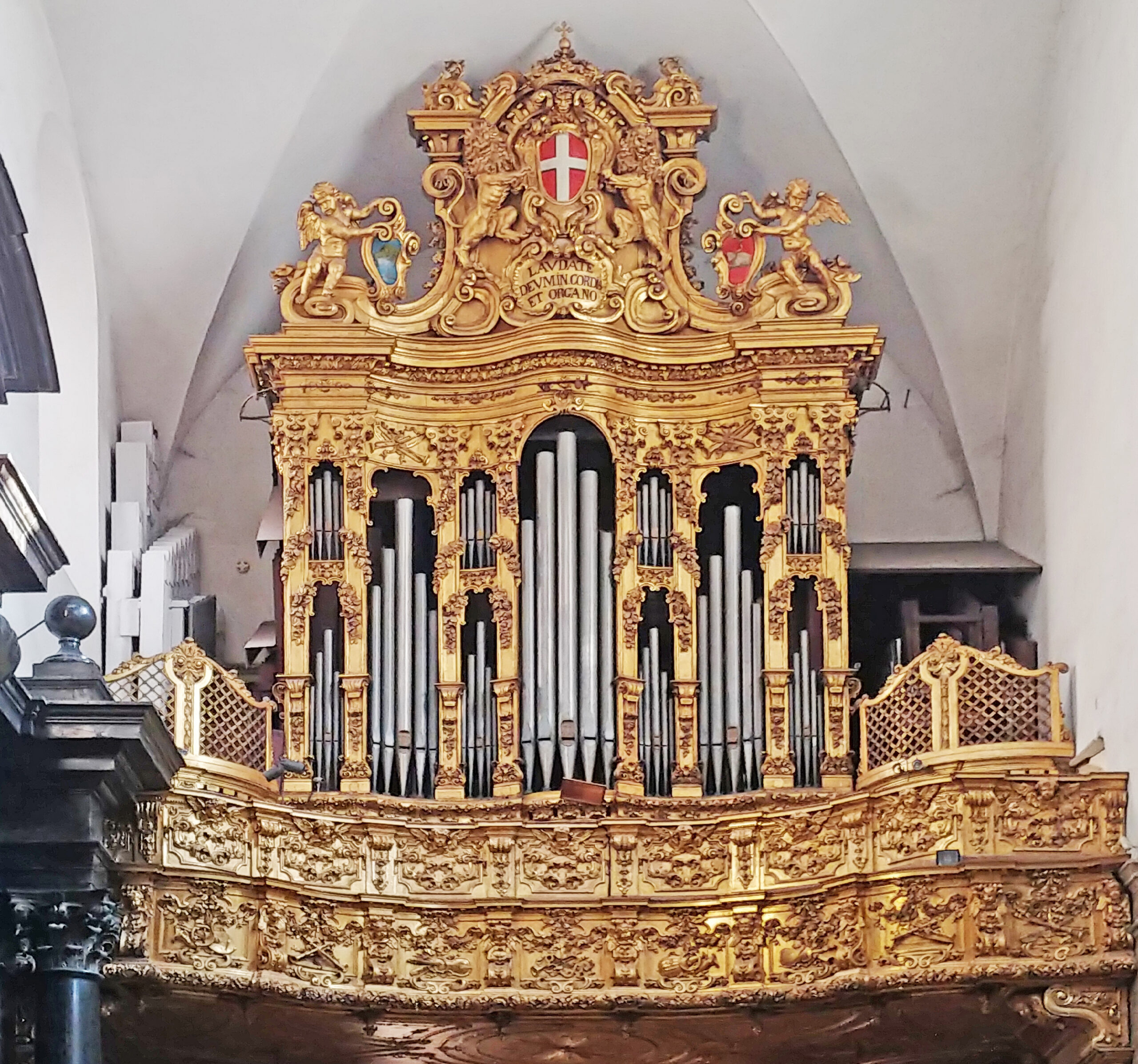
The cathedral, from 1498, is Turin’s only Renaissance church. Behind the altar, the Chapel of the Holy Shroud by Guarino Guarini, 1668-1694, is one of the boldest things in European Baroque: the dome is built of thirty-six superimposed, staggered arches climbing in a spiral, and looking up you lose all sense of distance. Guarini was a mathematician as well as an architect, and it shows.
On the night of 11 April 1997 a fire gutted it; the Shroud was saved by a firefighter who smashed the bulletproof glass of its case with a sledgehammer. The restoration took twenty-one years and the chapel reopened in 2018, with the blackened marble left visible where the fire had marked it.
The Shroud cannot be seen. It is kept rolled in an inert-gas case and is displayed only during ostensions, decided by the Vatican years apart. In the church you see a full-size photographic reproduction. Anyone arriving expecting otherwise is disappointed.
San Lorenzo, the Consolata, the Gran Madre
Time 1 hour 30 for all three · Free · Scattered across the centre
The Royal Church of San Lorenzo, on Piazza Castello, has no church facade at all — it looks like a palace — but inside is another Guarini dome, of eight interlaced arches leaving the sky visible through the tracery. It is arguably more surprising than the Shroud chapel, and almost nobody visits it.
The Sanctuary of the Consolata is the Turinese people’s own church, the devotional one, with a Baroque interior by Guarini and Juvarra crowded with painted ex-votos: hundreds of small panels recording accidents, illnesses and shipwrecks survived. Next door is a historic café where you drink the bicerin.

The Gran Madre di Dio, across the bridge, is a neoclassical pantheon built to celebrate the return of the Savoys after Napoleon. The two statues flanking its steps are at the centre of the city’s esoteric legends: one holds a chalice, and some have read it as the Grail. It is a twentieth-century invention, but the city adopted it gladly.
Roman Turin and the Quadrilatero
Turin began as Augusta Taurinorum, a Roman military camp, and its plan is still that: the right-angled grid of the old centre follows the castrum, with the cardo and decumanus now via Garibaldi and via Porta Palatina. It is why you never get lost in this city.
Porta Palatina
Time 20 minutes · Free · Behind the cathedral
Two polygonal brick towers thirty metres high with four arched openings: this is the northern gate of the Roman city, from the first century BC, and one of the best-preserved Roman gates in the world. It stands in a green space and people walk past it as if it were street furniture. Beside it survive the remains of the Roman theatre, visible from the Royal Museums.
The Roman Quarter and Porta Palazzo
Time 2 hours · Free · The market closes at one

The Quadrilatero is the rectangle of narrow streets inside the camp perimeter, the only part of Turin where the streets become lanes. By day it is a district of small shops and small museums; by night it is where people eat and drink.
Just to the north, Porta Palazzo is the largest open-air market in Europe: fruit and vegetable stalls, fish, clothing, plus covered halls. Go in the morning. On Saturdays, behind it, is the Balon flea market, and on the second Sunday of each month the Gran Balon, which is proper antiques.
The cafés, the river and the green
Historic cafés, the bicerin and the aperitivo
Time as long as you like · Bicerin about €6 · Aperitivo €8-12
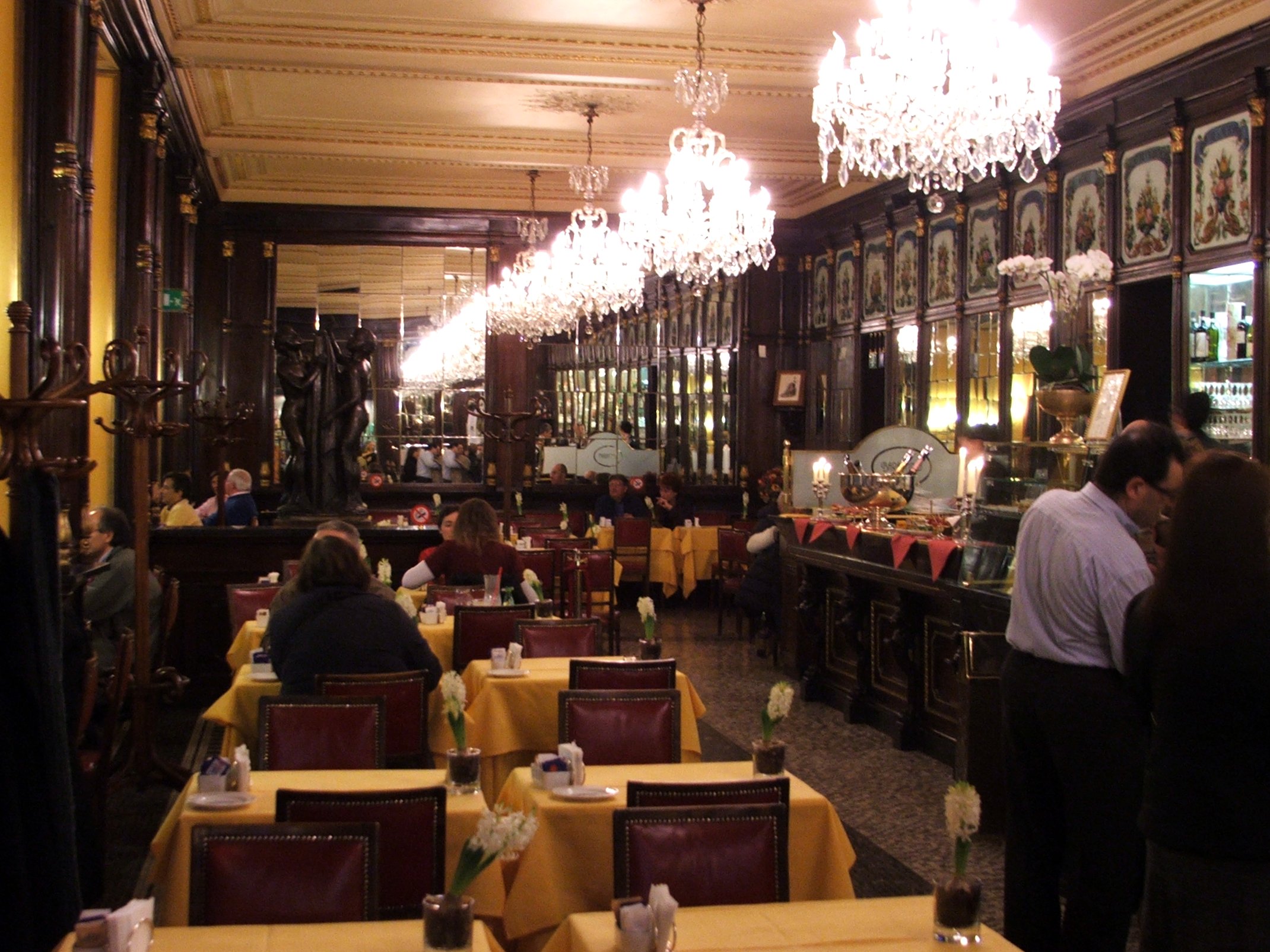
Turin has a dozen historic cafés with their nineteenth-century interiors intact: wood, mirrors, stucco, marble counters. Al Bicerin dates from 1763 and has two tiny rooms; Baratti & Milano, from 1875, stands under the Galleria Subalpina; Mulassano, from 1907, is the size of a drawing room, and in 1925 the tramezzino was invented there — the name was suggested by the poet d’Annunzio to avoid the English word.
The bicerin is the city’s drink: coffee, hot chocolate and cream, poured in layers into a small glass and not stirred. You drink it without a spoon, and that is the correct way. Cavour was a regular.
And then there is the fact that the aperitivo was born here: in 1786 Antonio Benedetto Carpano invented vermouth in a shop under the porticoes of Piazza Castello, and from that came the habit of drinking before dinner with something to eat. Milan turned it into a phenomenon, but the origin is Turinese. So is the gianduiotto, created in 1865 when the Napoleonic blockade made cocoa impossible to find and chocolatiers eked it out with Langhe hazelnuts.
The Valentino park and the Medieval Village
Time 2 hours · Free · On the bank of the Po
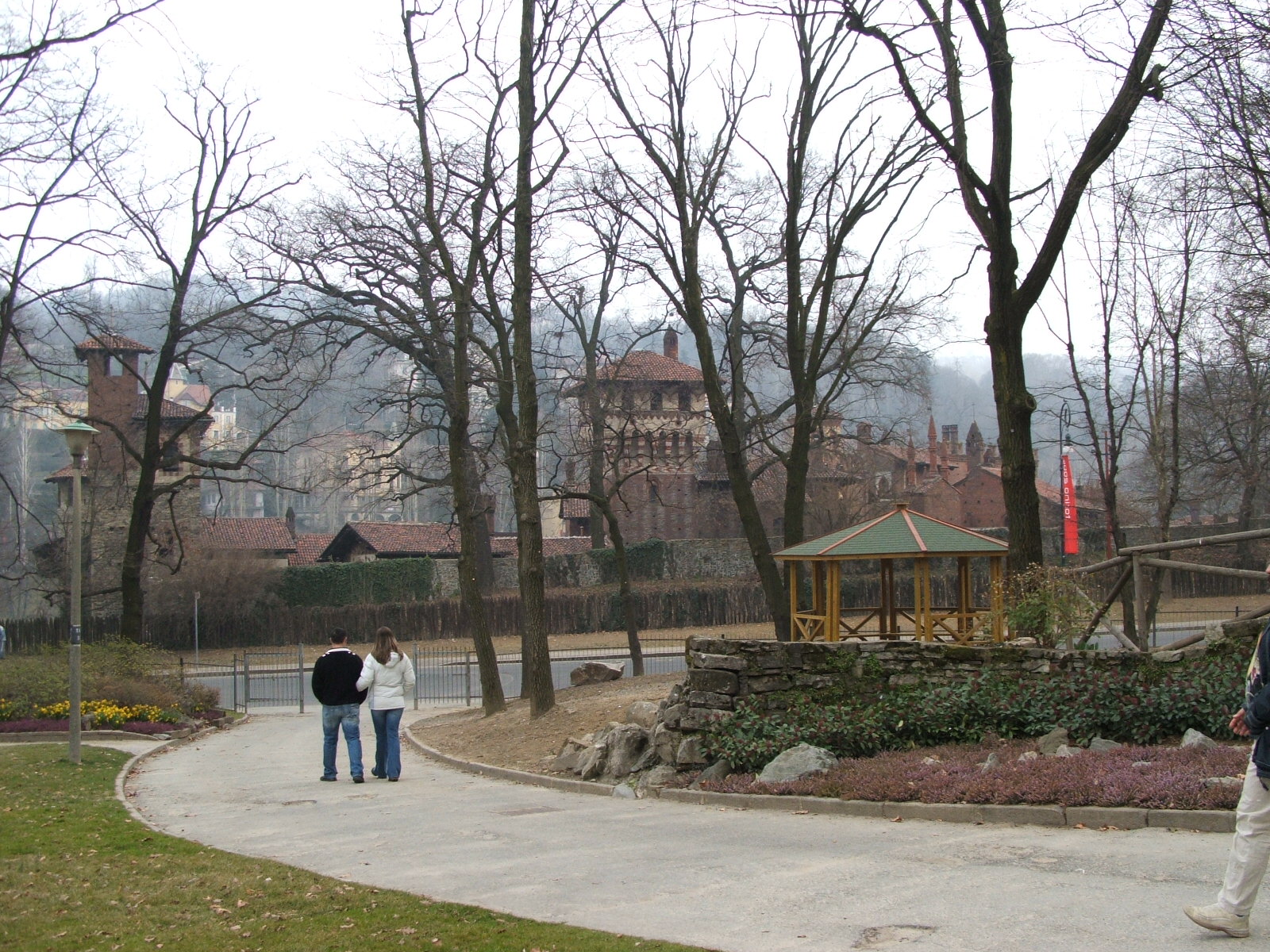
Forty-two hectares along the river, with the Castello del Valentino, a UNESCO Savoy residence now housing the faculty of architecture. Inside the park stands the Medieval Village, which is not medieval at all: it was built in 1884 for the Italian General Exhibition as a full-scale reproduction of a fifteenth-century Piedmontese village, copying real buildings from around the region piece by piece. It was meant to be dismantled and never was. Walking through is free; the keep is ticketed.
The Murazzi and Monte dei Cappuccini
Time 1 hour 30 · Free · At sunset

The Murazzi are the stone arches built into the embankment of the Po, for twenty years the heart of Turin nightlife, then closed and now partly reopened. From there you follow the river on foot up to Monte dei Cappuccini, a knoll with a sixteenth-century church, ten minutes of climbing from corso Moncalieri.
It is the best free viewpoint in the city: in front, Turin spread out with the Mole standing above it; behind, the hill; and in the distance, if the air is clean, the arc of the Alps with Monviso recognisable by its point. The right light is at sunset, and the best days are in winter after the wind.
What to eat
Piedmontese cooking is rich, slow and wintry. Agnolotti del plin are filled pasta pinched shut — plin means exactly that — and are sometimes served on a napkin with no sauce at all. Vitello tonnato is the starter by definition; tajarin is a very fine cut of pasta made with forty egg yolks to the kilo; bagna cauda, anchovies, garlic and oil, is a winter dish and is shared.
The dessert is bonet, a cocoa and amaretti pudding. Chocolate is serious business here: gianduiotto, cremini, and the bicerin. To drink, the wines made an hour away: Barolo, Barbaresco, Barbera, Nebbiolo, and Moscato d’Asti with dessert.
Three things to know
The grid makes everything easy. The streets are straight and at right angles and the porticoes cover the main axes: you walk a great deal without noticing and you never get lost. Piazza Castello to San Carlo is five minutes, to the Mole ten, to the river fifteen.
Monday closes almost everything. The Royal Museums, Palazzo Madama and the Venaria are all shut. The Egyptian Museum and the Cinema Museum stay open, so it is not a lost day, but it is not the day to arrive.
The Alps are seasonal. In winter, after the wind, the chain is sharp from the city centre: this is the only large Italian city with the Alps as a backdrop. In summer the haze of the plain almost always erases them.
When to go
September to June. Autumn is the best season of all, because it coincides with the truffle season in the Langhe and with clear days. Winter is cold but the porticoes make it bearable, and after the wind you see the Alps. Summer is the worst: humid heat off the plain, a half-empty city, many places closed.
Watch the festival calendar: the Book Fair in May, Terra Madre and the Salone del Gusto in even years, and the smaller fairs all fill the hotels and push prices up.
What the entrances cost
| Place | Indicative cost |
|---|---|
| Cathedral, Chapel of the Shroud, San Lorenzo, Consolata, Gran Madre | free |
| Porta Palatina, Roman Quarter, Porta Palazzo, Valentino | free |
| Rooftop test track at the Lingotto | free |
| Monte dei Cappuccini | free |
| Rack tramway to Superga, return | about €9 |
| Palazzo Madama | about €10 |
| Stupinigi hunting lodge | about €12 |
| Cinema Museum, museum only | about €12 |
| Royal Museums | about €15 |
| Car Museum | about €15 |
| Cinema Museum with the Mole lift | about €17 |
| Egyptian Museum | about €18 |
| Reggia di Venaria, palace and gardens | about €20 |
Reference figures as of August 2026: fares change, so check the official websites. The Torino+Piemonte Card pays for itself from three museums upwards and includes the Venaria.
How to choose, according to the time you have
Half a day. The Egyptian Museum and nothing else, then a walk through Piazza Castello and Piazza San Carlo. Three hours of museum and one of porticoes.
One day. Add the cathedral with the Chapel of the Holy Shroud, the Royal Museums or Palazzo Madama, the Mole with the Cinema Museum, and the river in the evening.
Two days. The second day is for the residences: the Venaria in the morning, Superga in the afternoon by rack tramway.
Three days. The third goes out of town: the Langhe with Alba and the Barolo villages, or the Sacra di San Michele in the Val di Susa.
Frequently asked questions
What must you see in Turin?
Five things: the Egyptian Museum, Guarini’s Chapel of the Holy Shroud inside the cathedral, the Mole Antonelliana with the Cinema Museum, the Reggia di Venaria and the view from Monte dei Cappuccini. Two of these are free.
How many days do you need in Turin?
One is enough for the Savoy centre with the Egyptian Museum and the Mole. Two let you add the residences outside the city, the Venaria and Superga. The third is better spent in the Langhe or at the Sacra di San Michele.
Can you see the Turin Shroud?
Almost never. It is kept rolled in an inert-gas case in the cathedral and is displayed only during ostensions, decided by the Vatican years apart. In the church you see a full-size photographic reproduction. Guarini’s Chapel of the Holy Shroud, however, can be visited freely and is the finest thing in Turin that costs nothing.
Why is the Egyptian Museum in Turin so important?
Because it is the oldest in the world devoted to Egypt, founded in 1824, and for the importance of its collection it ranks second only to Cairo. It holds the tomb of Kha and Merit, found intact in 1906 with its entire household, the oldest surviving geographical map, and the Royal Canon listing the pharaohs. Allow at least three hours.
How many kilometres of porticoes does Turin have?
About eighteen, of which more than twelve are unbroken. The Savoys built them so the court could move under cover from the Royal Palace as far as the Valentino park, and today they let you cross half the city without an umbrella.
What is a bicerin?
Turin’s drink: coffee, hot chocolate and cream poured in layers into a small glass and not stirred, drunk without a spoon. You have it in the historic cafés, above all at Al Bicerin, open since 1763 near the Consolata. It costs around six euros.
Can you see the Alps from Turin?
Yes, and it is the only large Italian city with the Alpine chain at the end of its streets. The good days are in winter after the wind: from Monte dei Cappuccini or from the Mole you can pick out Monviso by its point. In summer the haze of the plain almost always erases them.
What is the most underrated museum in Turin?
The National Automobile Museum, which non-enthusiasts wrongly skip: it is not a row of cars but an account of how the motor car changed cities, work and landscape, designed by stage designers. Not far away is the Lingotto, with its rooftop test track that can be walked for free.
Is it true that the aperitivo was invented in Turin?
Yes. In 1786 Antonio Benedetto Carpano invented vermouth in a shop under the porticoes of Piazza Castello, and from there came the habit of drinking before dinner with something to eat alongside. The gianduiotto chocolate, created in 1865, and the tramezzino sandwich, invented at the Mulassano café in 1925, are also Turinese.
September 2, 2026


