
Vienna in 3 days: Wittelsbach palaces, art, and Bratislava across the border
Three days in Vienna are enough to dismantle the idea that it is only a city of emperors. The first day is the essential Habsburg one: Schönbrunn, the Hofburg, the cathedral, Klimt. The second is the most interesting and almost nobody does it: turn-of-the-century Vienna, the fifteen years in which Freud, Klimt, Schoenberg, Wittgenstein and Loos worked in the same coffee houses, and half of twentieth-century Europe was born. The third takes a boat or a train up the Danube into the Wachau valley, a UNESCO World Heritage Site an hour away.
At a glance
- How long · three full days, from 9am to 10pm
- How much walking · 6-8 km a day, on the flat
- What has to be booked · Schönbrunn with a time slot; the Opera’s standing tickets are bought the same evening
- Budget · €180-290 per person for the three days, excluding accommodation
- Transport · day pass or 72-hour ticket, to validate on first use
- Day to avoid · Monday, when several museums close
- What is left out · Bratislava (an hour away!), Salzburg, the Semmering: those are day four and five
One colour per day. The Wachau is off the map to the west, an hour by train along the Danube.
Day 1 — The Habsburgs
7 km · 3 stops · 9am to 10pm · the essential day
Morning – Schönbrunn
9am-12:30pm · Ticket €22-32 with time slot · Gardens free

The Habsburgs’ summer residence, 1,441 rooms, made what it is by Maria Theresa. In the Hall of Mirrors, in 1762, six-year-old Mozart played for the empress and, legend says, proposed to the young Marie Antoinette. Franz Joseph, who reigned for sixty-eight years, slept here on a military camp bed.
The gardens are free: climb to the Gloriette for the view, and the gardens hold the oldest zoo in the world still operating, from 1752, with the octagonal pavilion where the court had breakfast watching the animals.
Afternoon – Hofburg and the cathedral
1:30-5:30pm · Hofburg about €20 · Cathedral nave free
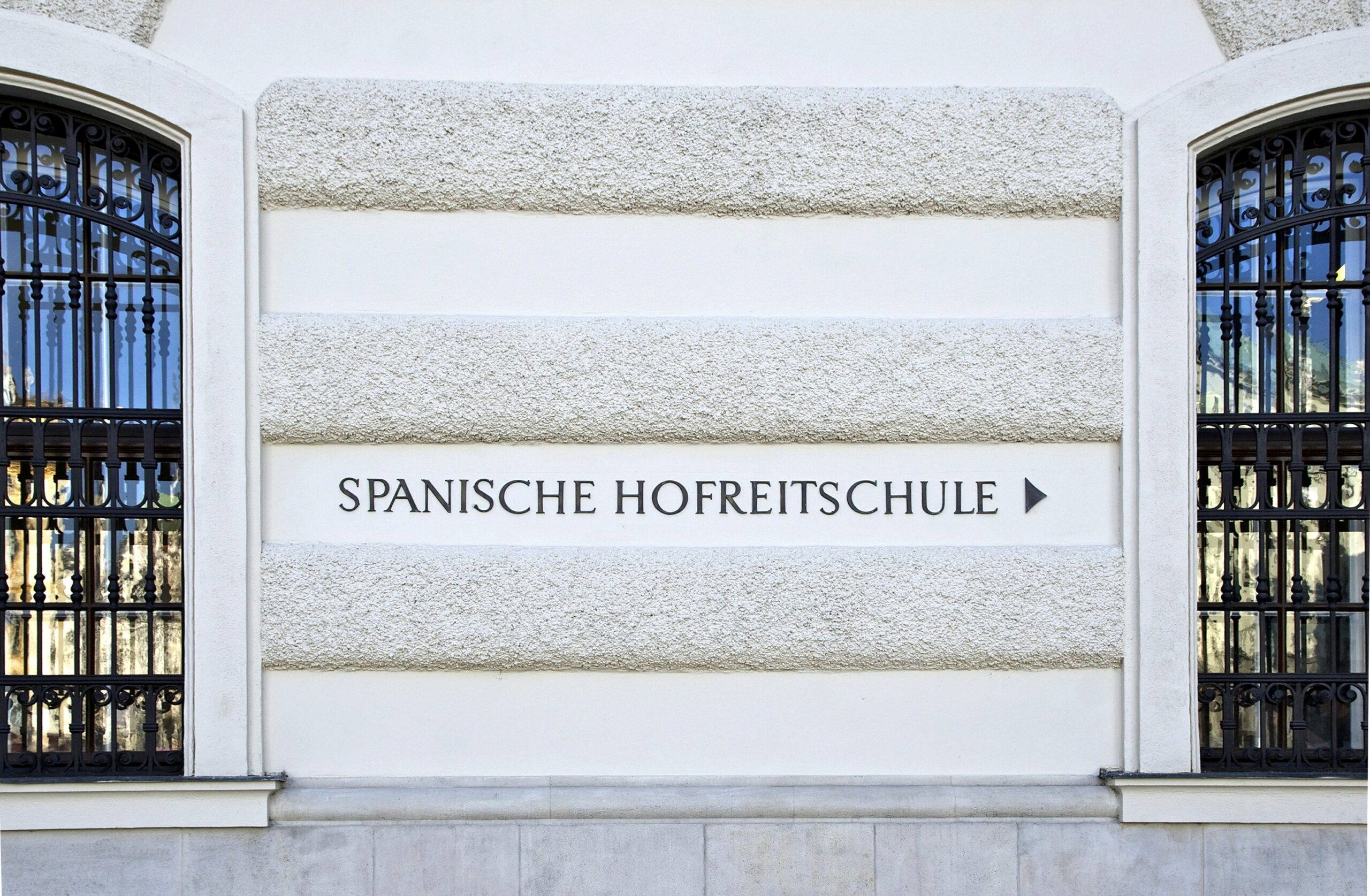
The Hofburg is the winter residence and grew over seven centuries by adding one wing at a time: eighteen wings, nineteen courtyards, and today it houses the presidency of the republic, four museums and the National Library. Worth seeing: the Sisi Museum, which dismantles the rosy film myth and tells the real person; the Imperial Treasury with the crown of the Holy Roman Empire from around the year 1000; and the National Library’s Prunksaal, one of the finest baroque halls in Europe.

The Stephansdom has a south spire 136 metres tall, climbed by 343 steps. The coloured roof burned in 1945 and was rebuilt with donations from Austria’s nine regions, each offering a part. In the north tower hangs the Pummerin, a bell cast from the bronze of the Turkish cannons of 1683.
Evening – Belvedere and a coffee
6-10pm · Belvedere about €17 · Coffee €8-14

The Belvedere was built by Prince Eugene of Savoy, born in Paris, rejected by Louis XIV, and who became the greatest general of his time in Habsburg service. Inside is the world’s largest Klimt collection, including The Kiss, painted in 1908 with real gold leaf.
Then a historic coffee house, which is UNESCO heritage and not an afterthought: order a Melange or an Einspänner, the glass of water arrives on the silver tray, and you stay as long as you like.
Day 2 — Turn-of-the-century Vienna
8 km · 4 stops · 10am to 11pm · the day almost no one does, and it is the best one
Between 1890 and 1914, in a city of two million people, Sigmund Freud, Gustav Klimt, Egon Schiele, Arnold Schoenberg, Gustav Mahler, Ludwig Wittgenstein, Adolf Loos, Otto Wagner, Karl Kraus and Robert Musil all worked at the same time. Many knew each other, most detested each other, and they met in the same coffee houses. Psychoanalysis, atonal music, modern architecture and analytic philosophy were all born within a two-kilometre radius, in the same fifteen years, while the empire was dying. This day follows that story.
Morning – Kunsthistorisches Museum
10am-1pm · Ticket about €21 · Closed on Mondays at certain times of year · Metro Museumsquartier

The Kunsthistorisches was built on the Ringstraße in 1891 for a practical reason: over four centuries the Habsburgs had amassed an enormous collection and no longer knew where to put it. It is the mirror twin of the Natural History Museum facing it.
The thing that exists nowhere else: the largest collection of Pieter Bruegel the Elder, twelve paintings out of about forty surviving in the world. There is Hunters in the Snow, the Tower of Babel, the Fight Between Carnival and Lent. They hang in the same room and are alone worth the trip to Vienna.
Then Vermeer’s The Art of Painting, Raphael, Caravaggio, Velázquez, Rubens, and the Kunstkammer: the Habsburg chamber of wonders, twenty thousand objects including automata, coral, ivory, mechanical clocks, and the Cellini Salt Cellar, the only surviving goldwork certainly by Benvenuto Cellini — stolen in 2003 and found buried in a forest three years later.
If you have time or are with children: the museum’s grand staircase has spandrels painted by a very young Gustav Klimt, before the Secession, visible from a special walkway installed at certain times of year. Ask at the entrance.
Early afternoon – The Secession and Otto Wagner
2-5pm · Secession about €12 · Loos Haus free from outside · on foot
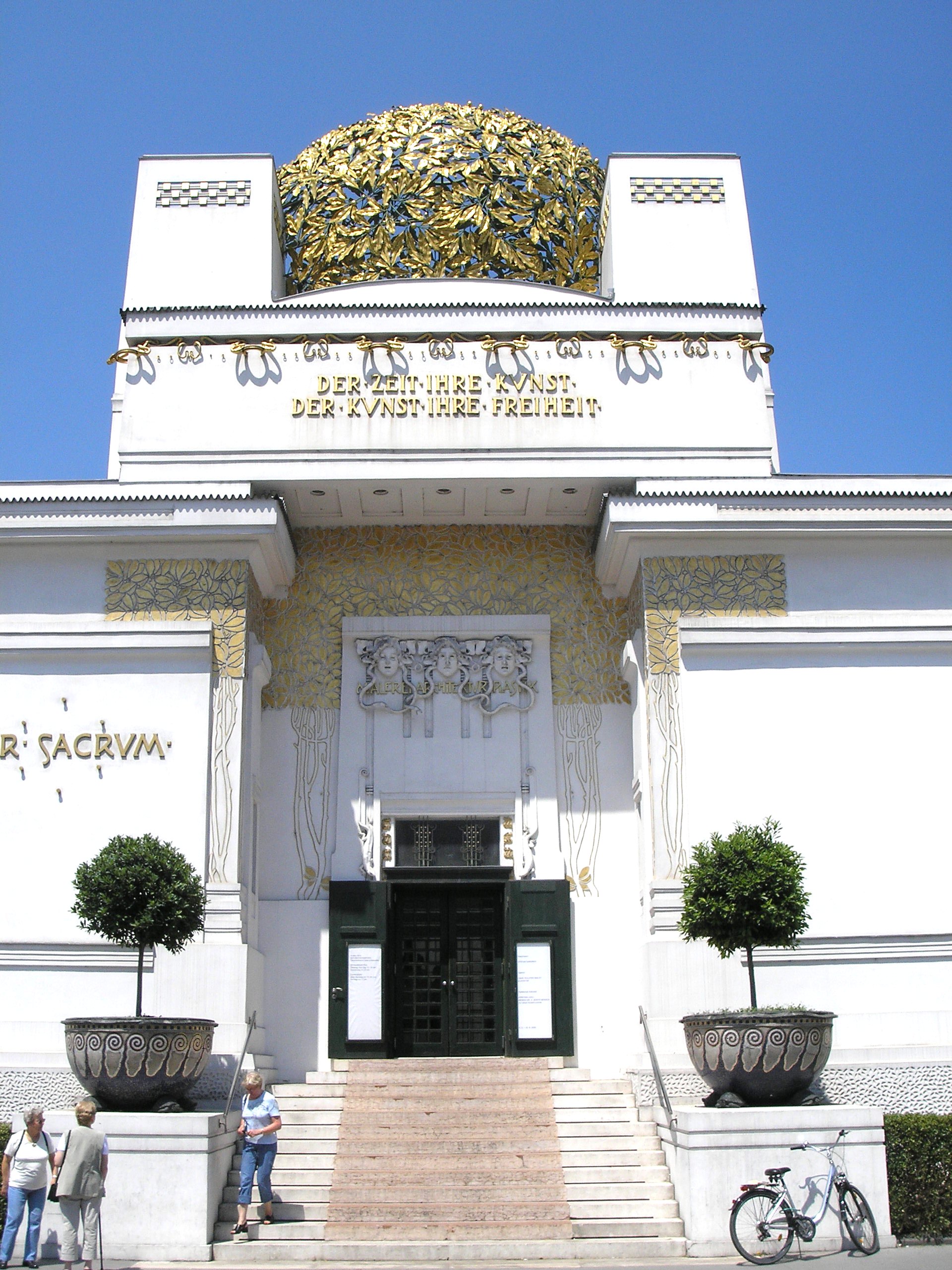
In 1897 a group of artists led by Klimt broke away from the official association of Viennese artists, which they saw as conservative, and founded the Secession. The following year they built a headquarters: a white, cubic building topped with a dome of gilded laurel leaves that Viennese immediately nicknamed «the golden cabbage». Above the entrance the motto still reads: Der Zeit ihre Kunst, der Kunst ihre Freiheit — to every age its art, to art its freedom.
In the basement is Klimt’s Beethoven Frieze, from 1902: thirty-four metres of painting across three walls, conceived as a temporary work for a single exhibition and saved by chance by a collector. It tells the Ninth Symphony in images and ends with a kiss.
A few steps away, two buildings that explain the architectural break of those years. Otto Wagner’s Postsparkasse, from 1906, has a façade of marble slabs fixed with visible aluminium rivets: showing the nails instead of hiding them was a statement. And the Looshaus on Michaelerplatz, from 1910, which Adolf Loos built with no ornament and no window frames, directly opposite the Hofburg: the scandal was such that the newspapers called it «the house without eyebrows», and it is said Franz Joseph avoided using that palace door to not see it. Loos had written an essay titled Ornament and Crime.
Afternoon – Freud and Hundertwasser
5-7pm · Freud Museum about €15 · Hundertwasserhaus free from outside
At Berggasse 19 is the apartment where Sigmund Freud lived and saw patients for forty-seven years, from 1891 to 1938, when he had to flee to London after the Nazi annexation. Here he wrote The Interpretation of Dreams. The museum is deliberately bare: Freud took almost all the furniture with him, including the famous couch, which is in London. What remains is the original waiting room, photographs, documents, and the door with his nameplate.

Then an eighty-year jump forward, twenty minutes away: the Hundertwasserhaus, built between 1983 and 1985. Friedensreich Hundertwasser was a painter convinced that straight lines were «godless» and that modern architecture made people ill. Vienna’s city council let him design a social-housing building, and this is what came out of it: deliberately uneven floors, no two windows alike, coloured columns, and two hundred and fifty trees growing from the balconies and windows — he called them «tree tenants» and argued they had citizenship rights.
You cannot go inside, since people actually live there, but it is free to view from outside. Opposite is a shopping centre he built in the same style, which you can enter.
Evening – Grinzing and the new wine
From 7:30pm on · Free entry, you pay for what you drink · Tram 38 from Schöttentor
Vienna is the only European capital with vineyards inside its city limits: about six hundred hectares, on the northern hills. And it has an institution no other place has: the Heuriger.
In 1784 Emperor Joseph II issued a decree allowing wine growers to sell their own wine directly from home, without a licence, as long as it was that year’s vintage and any food served was also home-produced. That decree is still in force. An open Heuriger hangs a pine branch above the door: it means the new wine is ready.
You take the tram to Grinzing, Nussdorf or Neustift am Walde, sit at long tables in a courtyard under the vines, get food from a self-service counter — cold cuts, cheeses, Liptauer, bread — and drink the house wine. It is cheap, it is loud, and it is how the Viennese have spent summer evenings for two centuries. Grinzing is the most touristy; the Nussberg vineyards, just above it, have the view over the city and far fewer coaches.
Day 3 — The Danube and the Wachau
The whole day · train to Melk, one hour · then boat to Krems, or bicycle

The Wachau is the stretch of the Danube between Melk and Krems, thirty-six kilometres of narrow valley with terraced vineyards, stone villages and ruined castles. A UNESCO World Heritage Site, an hour by train from Vienna.
Melk Abbey
2 hours · Ticket about €15 · Train from Wien Westbahnhof, one hour
The Benedictine abbey of Melk stands on a crag above the river and can be seen for miles. It has stood since 1089, but what you see is the early-eighteenth-century baroque rebuild: 365 windows, a yellow façade 360 metres long, and an idea of magnificence that served a political purpose — the Catholic Counter-Reformation in territories only recently reclaimed from Protestantism.
Inside, two things: the abbey church, one of the most sumptuous baroque interiors in Europe, all gold and faux marble; and above all the library, with around a hundred thousand volumes, globes, carved wooden shelving and a frescoed ceiling. This library — and others like it in Austrian abbeys — inspired Umberto Eco’s The Name of the Rose: the narrator-monk is named Adso of Melk.
The monks are still there, and the abbey runs a school with nine hundred students: it is not a museum, it is a living institution nearly a thousand years old.
The boat to Krems
2 hours by boat · Ticket about €30 · April to October · alternatively, cycle the bike path
From Melk you go down to the jetty and take the boat that runs the length of the valley to Krems: two hours against the current, less than that downstream. You pass beneath terraced vineyards, villages with onion-domed church towers, and castles.
Halfway along is Dürnstein, the prettiest village in the valley: coloured houses, a church with a blue bell tower, and on the crag above it the ruins of the castle where in 1192 Richard the Lionheart was held prisoner, captured on his way home from crusade by the Duke of Austria whom he had insulted in the Holy Land. He was freed after a year against a huge ransom, which the duke used to finance Vienna’s walls and found Wiener Neustadt. The legend of the minstrel Blondel who found him by singing beneath castle windows was born here.
The Wachau is also a serious wine region: it produces Grüner Veltliner and Riesling on dry-stone terraces built in the Middle Ages. The valley’s apricots, the Marillen, have protected-origin status and go into candied fruit, jams and a spirit.
Krems, at the end of the valley, has a well-preserved medieval centre, and from there the train brings you back to Vienna in an hour.
As an alternative to the boat: the Danube bike path runs through here and is flat, paved and well signposted. Rent a bike in Melk and return it in Krems, thirty-six kilometres almost entirely flat. In summer it is the best way to see the Wachau.
If it rains
- Days 1 and 2 · are already almost entirely indoors. Instead of the Grinzing vineyards, a city-centre Heuriger (there are several in Ottakring) or a historic coffee house.
- Day 3 · the Wachau loses a lot in the rain, and the boat is not pleasant. Indoor alternatives for the day: the Leopold Museum in the MuseumsQuartier, which holds the world’s largest Egon Schiele collection; or a trip to Bratislava, an hour by train and the closest foreign capital to any other capital in all of Europe.
- Always works · the MuseumsQuartier, one of the largest cultural complexes in the world, built inside the former imperial stables: six museums and courtyards with colourful plastic benches where the Viennese sit at any hour.
What the three days cost
| Item | Cost |
|---|---|
| Schönbrunn and the Hofburg | about €42 |
| Belvedere | about €17 |
| Kunsthistorisches | about €21 |
| Secession and the Freud Museum | about €27 |
| Melk and the boat down the Wachau | about €45 |
| Trains to Melk and Krems | about €35 |
| Cathedral, the Ring, Naschmarkt, Hundertwasserhaus, Prater, MuseumsQuartier | free |
| Urban transport, 3 days | about €18 |
| Meals, 3 days | €90-140 |
| Total | about €180-290 per person |
Reference figures as of August 2026: check official websites before you travel. With this many museums, it is worth weighing up the Vienna Pass. And do not forget the Opera’s standing tickets, on sale eighty minutes before the show for a few euros: the best value in the city.
Frequently asked questions
Is three days enough for Vienna?
Yes, and it is the right amount: one for the Habsburgs, one for turn-of-the-century Vienna — Klimt, Freud, the Secession, Loos — and one for the Danube valley. It leaves out Bratislava, an hour by train, Salzburg and the Semmering railway.
What is “turn-of-the-century Vienna”?
The fifteen years between 1890 and 1914 in which, in a city of two million people, Freud, Klimt, Schiele, Schoenberg, Mahler, Wittgenstein, Loos, Otto Wagner and Karl Kraus all worked at the same time. Psychoanalysis, atonal music, modern architecture and analytic philosophy were all born within a two-kilometre radius, while the empire was dying. It is Vienna’s most interesting day, and almost no one does it.
Why visit the Kunsthistorisches?
Because it holds the world’s largest collection of Pieter Bruegel the Elder: twelve of about forty surviving paintings, including Hunters in the Snow and the Tower of Babel, all in the same room. Then Vermeer, Raphael, Caravaggio, and the Kunstkammer with the Cellini Salt Cellar, the only surviving goldwork certainly by Cellini, stolen in 2003 and found buried in a forest.
What is a Heuriger?
A wine-grower’s tavern selling its own vintage, under a 1784 imperial decree still in force: when it hangs a pine branch above the door, the new wine is ready. You sit at long tables in the courtyard, get food from a self-service counter, and it is cheap. Go to Grinzing or Nussdorf by tram. Vienna is the only European capital with six hundred hectares of vineyards inside its city limits.
Is the Wachau worth it?
Yes, and it is the best day trip from Vienna: an hour by train to Melk, the Benedictine abbey on the crag with a hundred-thousand-volume library that inspired The Name of the Rose — the monk is named Adso of Melk — then two hours by boat to Krems through terraced vineyards. In summer you can do it by bicycle on the flat Danube bike path, thirty-six kilometres.
What is the Hundertwasserhaus?
A social-housing building built between 1983 and 1985 by the painter Friedensreich Hundertwasser, convinced that straight lines were «godless»: uneven floors, no two windows alike, and two hundred and fifty trees growing from the balconies, which he called «tree tenants». You cannot go inside, since people live there: you view it from outside, and it is free.
Can you see Freud’s couch in Vienna?
No: it is in London. Freud took almost all the furniture with him when he had to flee in 1938, after the Nazi annexation. The museum at Berggasse 19 — the apartment where he lived and saw patients for forty-seven years and where he wrote The Interpretation of Dreams — is deliberately bare, and that emptiness is part of the story. What remains is the original waiting room, documents and photographs.
How much do three days in Vienna cost?
Between 180 and 290 euros per person excluding accommodation, with the Wachau trip included. Palace and museum tickets are the heavy item; transport is cheap, and there is plenty that is free: the Ring, Schönbrunn’s gardens, the Naschmarkt, the cathedral nave, the Prater, the MuseumsQuartier.
Can you go to Bratislava from Vienna?
Yes, and it is the closest foreign capital to any other capital in all of Europe: one hour by train, sixty kilometres. There is also a hydrofoil on the Danube in summer. It is a great alternative to day three if the weather is bad, or a fourth day.
When is the best time to visit Vienna?
May-June and September-October for the weather. December for the Christmas markets, a serious institution here rather than a fair: the one in front of the City Hall is the biggest, but the best are the small ones in Spittelberg and the Freyung. January and February are ball season, with over four hundred balls in the city, including the Opera Ball.
September 5, 2026