Vienna in 1 Day: Schönbrunn, the Hofburg, Klimt and a Real Coffee
Vienna is the capital of an empire that no longer exists, and that explains everything you see: a city of two million people with palaces, museums and theatres built for a power of fifty million. The centre sits inside a ring two and a half kilometres across — the Ringstraße, laid where the walls used to stand — and it is entirely walkable. In a single day you can fit the cathedral, the winter imperial palace, the summer one, a museum, a market and a coffee house: and the coffee house is not a filler, it is one of the reasons you come.
At a glance
- How long · a full day, from 9am to 10pm
- How much walking · about 7 km on the flat, plus two metro rides
- What has to be booked · Schönbrunn with a time slot, and Opera tickets if you want a show
- Budget · €55-95 per person, excluding accommodation
- Starting point · Schönbrunn, metro U4
- Finishing point · the Prater, or a historic café
- What is left out · the Kunsthistorisches, the Albertina, the Vienna of Klimt and Freud, the Grinzing vineyards: those are day two and three
Eight stops. The two metro rides are at the start and the end: everything else is inside the Ring.
Morning — The summer palace
2 km · 2 stops · 9am to 1pm · you start outside the centre and head back in
1 – Schönbrunn
Time needed 2.5 hours · Ticket €22-32 depending on the tour · Book a time slot · Metro U4 Schönbrunn

Go here first, at opening time: it is outside the centre, has the worst queues in the city, and takes up half a day.
Schönbrunn was the summer residence of the Habsburgs and has 1,441 rooms. The original late-seventeenth-century plan called for something even bigger than Versailles, but there was not enough money; it was Maria Theresa, in the eighteenth century, who turned it into what you see, and her mark is everywhere in the palace, including the colour: that yellow is called Schonbrunner Gelb and became an official colour of the Habsburg administration, used on barracks and stations across the empire. You can still spot it today in Trieste, Prague, Lviv.
Forty of the 1,441 rooms are open to visitors, and the most interesting are the ones where history touches down. The Hall of Mirrors: here, in 1762, six-year-old Mozart performed for Maria Theresa, and legend has it that after the concert he jumped into the empress’s arms and proposed to the young archduchess Marie Antoinette, who was the same age. Thirty years later she would be guillotined in Paris. The Chinese Room, the Vieux-Laque Zimmer with its Oriental lacquer panels, and the room where Franz Joseph — who reigned sixty-eight years, from 1848 to 1916 — slept on a military camp bed and rose at four in the morning.
The gardens are free and enormous. Climb up to the Gloriette, the colonnade at the top of the hill: it is a twenty-minute climb, and from up there you see the palace with Vienna behind it. The gardens also hold the Tiergarten, the oldest zoo in the world still operating: founded in 1752 as an imperial menagerie, and the octagonal pavilion at its centre, where the court used to have breakfast watching the animals, is still the original one.
2 – Naschmarkt
Time 1 hour, lunch included · Free · Metro U4, two stops, to Kettenbrückengasse · Closed on Sundays
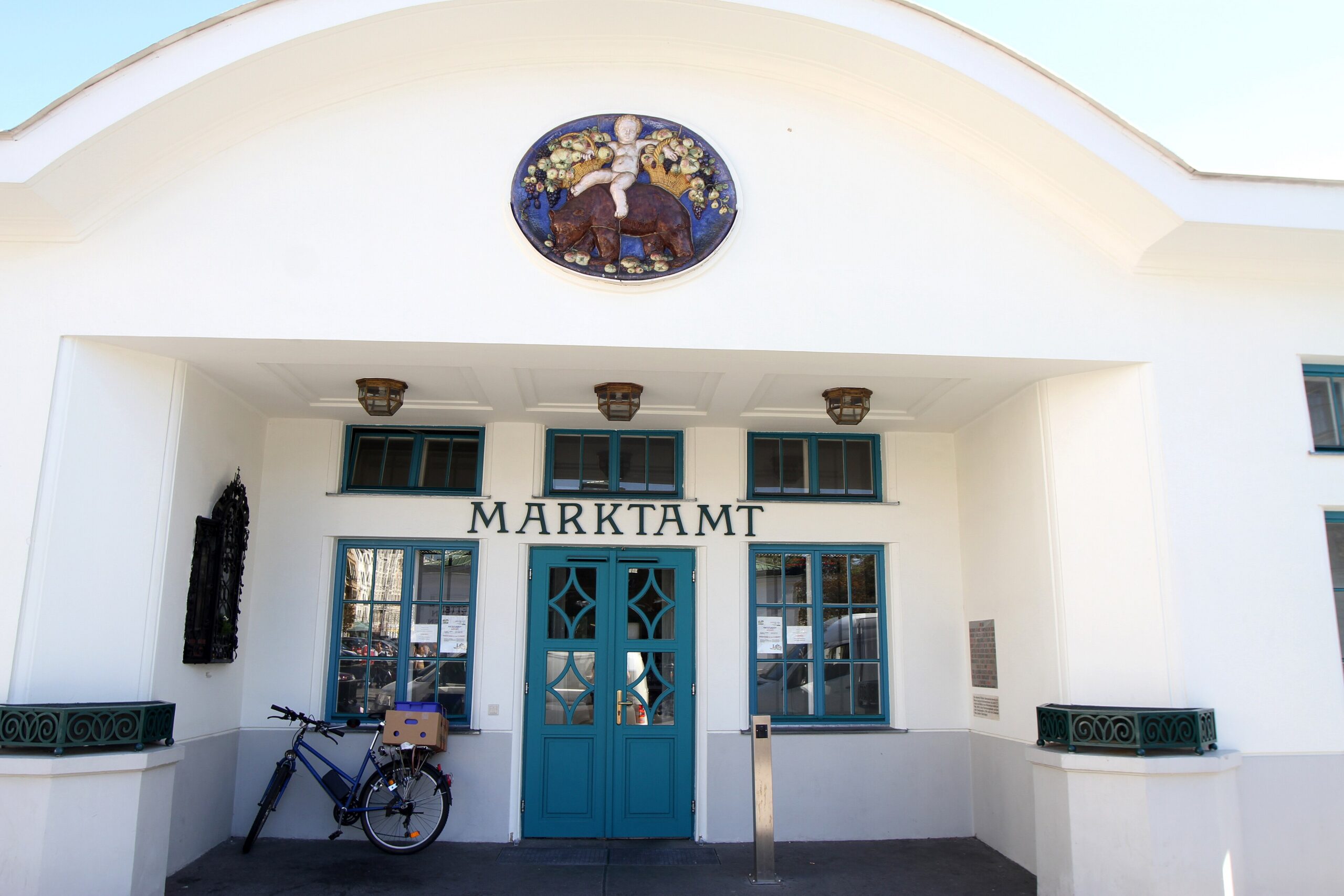
The Naschmarkt has been Vienna’s market since the sixteenth century and stretches for a mile and a half along a strip that covers the buried Wien river: the water still flows under the stalls.
The first half, toward the Opera, is now mostly restaurants and tourist stalls; the second is still the real market, with growers, Turkish and Greek stallholders, spice and pickle stands. The city has a sizeable Balkan and Turkish community, and this is where you see it.
On Saturdays the far end of the market adds the Flohmarkt, the flea market, which is large, chaotic and worth a wander.
Along the market, look up: there are two buildings by Otto Wagner, from 1899, among the first modern buildings in Europe. The Majolikahaus has a façade entirely clad in flowered ceramic tiles that could be hosed down: a hygienic solution, not just a decorative one, in a city thick with coal smoke.
At the market, standing up: a Käsekrainer stall (the sausage with cheese inside) or a Balkan kiosk costs €5-9. If you want a proper Viennese meal, there are three things: Wiener Schnitzel, which by tradition and law is made of veal — if the menu says Schnitzel vom Schwein it is pork, costs half as much, and is a different dish; Tafelspitz, the boiled beef that was Franz Joseph’s favourite, served with sauces and potatoes; and Gulasch, which arrived from Hungary with the empire. A meal in a Beisl, the Viennese tavern, costs €15-22.
Midday — The imperial centre
2.5 km · 3 stops · 2pm to 5:30pm · all on foot inside the Ring
3 – The Opera and the Ringstraße
Time 1 hour · Guided Opera tour about €15 · Metro U4 to Karlsplatz
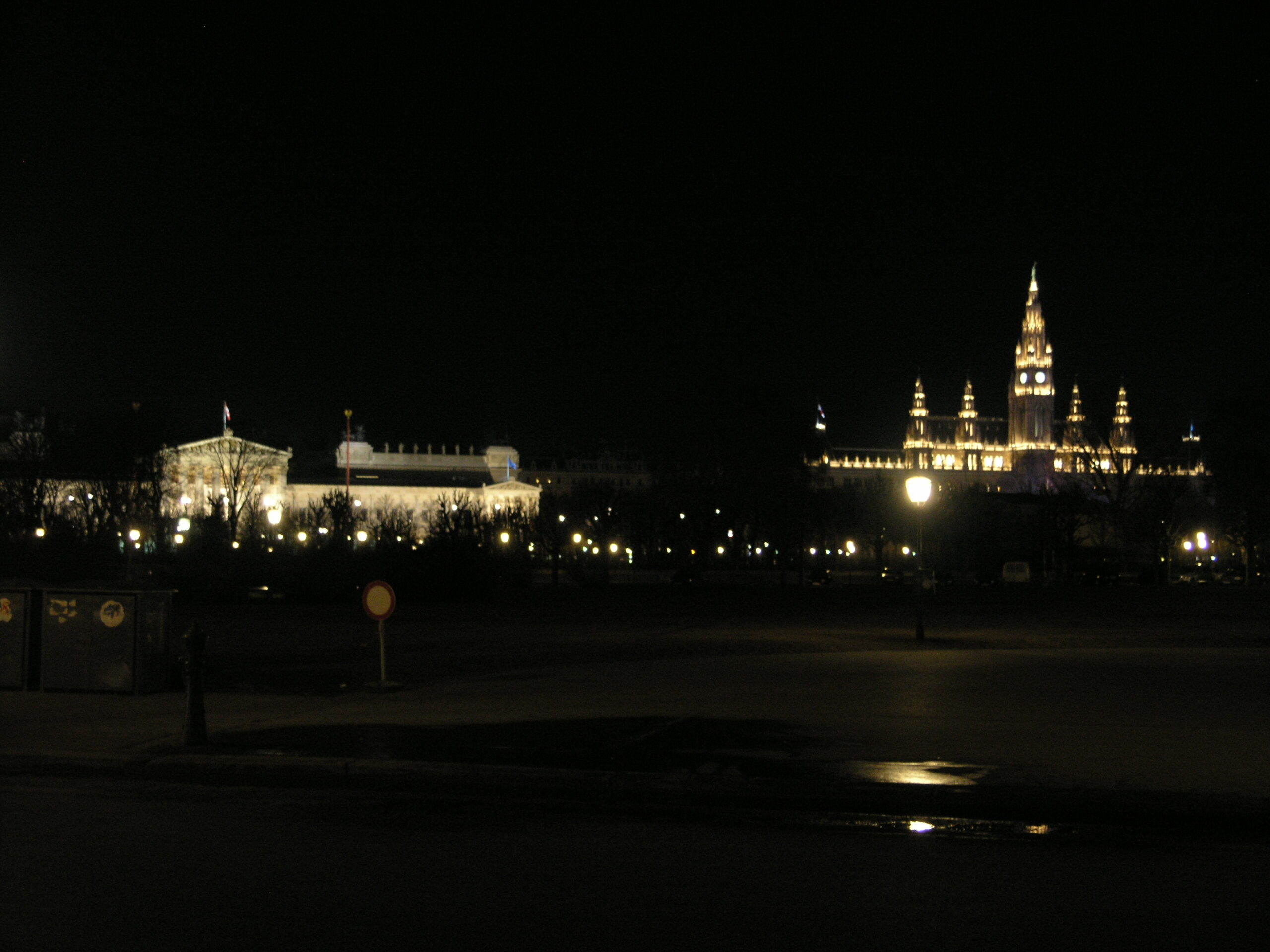
In 1857 Franz Joseph signed a decree that changed Vienna: tear down the walls and build a fifty-seven-metre-wide ring boulevard in their place. Along the Ringstraße, over thirty years, all the city’s great public buildings went up, each built in the style thought fitting to its function: Parliament in Greek style, because democracy is Greek; the City Hall in Flemish Gothic, because civic liberties are medieval; the University in Renaissance style, because knowledge is Renaissance; the Burgtheater in baroque.
The best thing you can do in half an hour is hop on tram 1 or 2, which run along the Ring, and simply stay seated with an ordinary ticket: it costs the same as any ride, and you see all the buildings go past in order.
The Staatsoper was the first building on the Ring, finished in 1869. The critics savaged it and the emperor made a lukewarm comment; one of the two architects took his own life and the other died of a heart attack a few months later, before the opening. From then on, to avoid causing more harm, Franz Joseph began responding to everything shown to him with the phrase «It was very nice, I liked it very much», which became proverbial.
Today the Opera stages over three hundred performances a year with an almost different programme every night. The thing to know: they sell standing tickets for a few euros, on sale eighty minutes before the show, and it is an institution — you queue up, tie a scarf to the railing to hold your place, and watch an opera at the Vienna State Opera for the price of a coffee.
4 – The Hofburg
Time 1 hour from outside; 2 hours with the museums · Sisi Museum and apartments about €20 · Walk 10 minutes
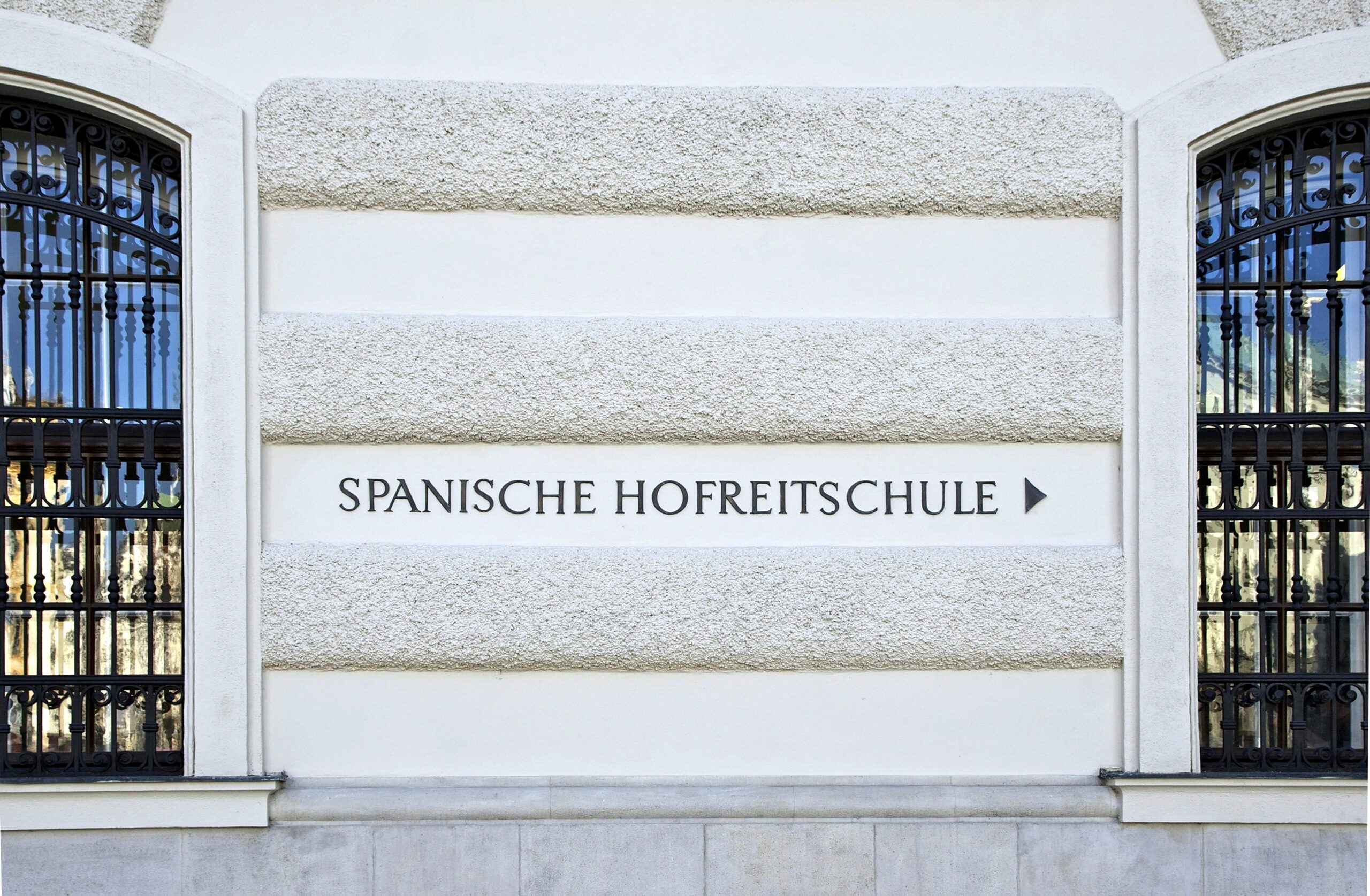
The Hofburg was the Habsburgs’ winter residence and is not a palace: it is a district, grown over seven centuries by adding one wing at a time, from the thirteenth century to 1918. It contains eighteen wings, nineteen courtyards, and today houses the Austrian presidency, four museums, the National Library and the Spanish Riding School.
You can walk through it for free, courtyard by courtyard, and that alone is worth a lot. If you go in, the three things worth it:
- The Sisi Museum and the imperial apartments. Elisabeth of Bavaria, Franz Joseph’s wife, is the figure Austria has built a tourism industry around, and the museum does something honest: it tries to dismantle the rosy film-version myth and tell the real person, who hated court life, travelled to escape it, was obsessed with her own body, and was stabbed to death in Geneva in 1898 by an anarchist who had meant to kill someone else.
- The Imperial Treasury (Schatzkammer): here is the crown of the Holy Roman Empire, octagonal, from around the year 1000, used to crown emperors for eight centuries. There is also the Holy Lance, once believed to be the one that pierced Christ.
- The National Library, whose Prunksaal is one of the finest baroque halls in Europe: eighty metres long, walnut shelving, giant globes and a frescoed ceiling.
In the courtyards is the Spanish Riding School, where white Lipizzaner horses have been trained in classical dressage since the sixteenth century. The shows are expensive, but the morning training sessions can be seen for a much cheaper ticket.
5 – St. Stephen’s Cathedral
Time 45 minutes · Nave free, full tour and tower cost extra · Walk 8 minutes

The Stephansdom is Vienna’s emblem, and Viennese call it Steffl. The south tower is 136 metres tall, climbed by 343 spiral steps; the north tower was never finished and has a lift.
The first thing you notice is the roof: 230,000 glazed tiles forming, on the south side, the double-headed Habsburg eagle, and on the north, the coats of arms of Vienna and Austria. The roof burned in 1945, in the last days of the war — not from bombing but from a fire spreading from looted nearby houses — and was rebuilt with contributions from Austria’s nine regions, each donating a part: one gave the tiles, one the floor, one the pews, one the portal. It is considered the symbolic monument of Austria’s post-war revival.
In the north tower hangs the Pummerin, a bell of over twenty tonnes cast from the bronze of Turkish cannons abandoned after the 1683 siege: it is heard only at New Year and on a few other occasions. Beneath the church are the catacombs, holding the bones of some eleven thousand people moved here from the city cemetery in the eighteenth century, and the urns with the Habsburgs’ entrails — who were buried in three separate places: the body in the Capuchin crypt, the heart in the Augustinian church, the entrails here.
Afternoon and evening — Klimt, coffee and the wheel
2.5 km · 3 stops · 5:30pm to 10pm
6 – Belvedere and Klimt’s The Kiss
Time 1.5 hours · Ticket about €17 for the Upper Belvedere · Tram D or 15 minutes on foot

The Belvedere is two baroque palaces linked by a sloping garden, built in the early eighteenth century not for an emperor but for Prince Eugene of Savoy, the general who had saved Vienna from the Turks and defeated the French: born in Paris, rejected by Louis XIV for the French army, he offered his services to the Habsburgs and became the greatest commander of his time. With the spoils of his campaigns, he built this.
In the Upper Belvedere is the world’s largest collection of Gustav Klimt, including The Kiss, from 1908: two figures wrapped in gold on a gold ground, standing at the edge of a flowering meadow. Klimt used real gold leaf — his father was a gold engraver and he had learned the technique as a boy — and the painting was bought by the Austrian state before it was even finished.
The same rooms hold Egon Schiele and Oskar Kokoschka, the generation that came after Klimt: turn-of-the-century Vienna is the place where, in the same years and often the same cafés, Freud, Wittgenstein, Mahler, Schoenberg, Loos and Klimt were all at work. Few cities have packed so much into a single decade.
7 – A Viennese coffee house
Time 1 hour · Cost €8-14 · not a filler: it is a stop in its own right
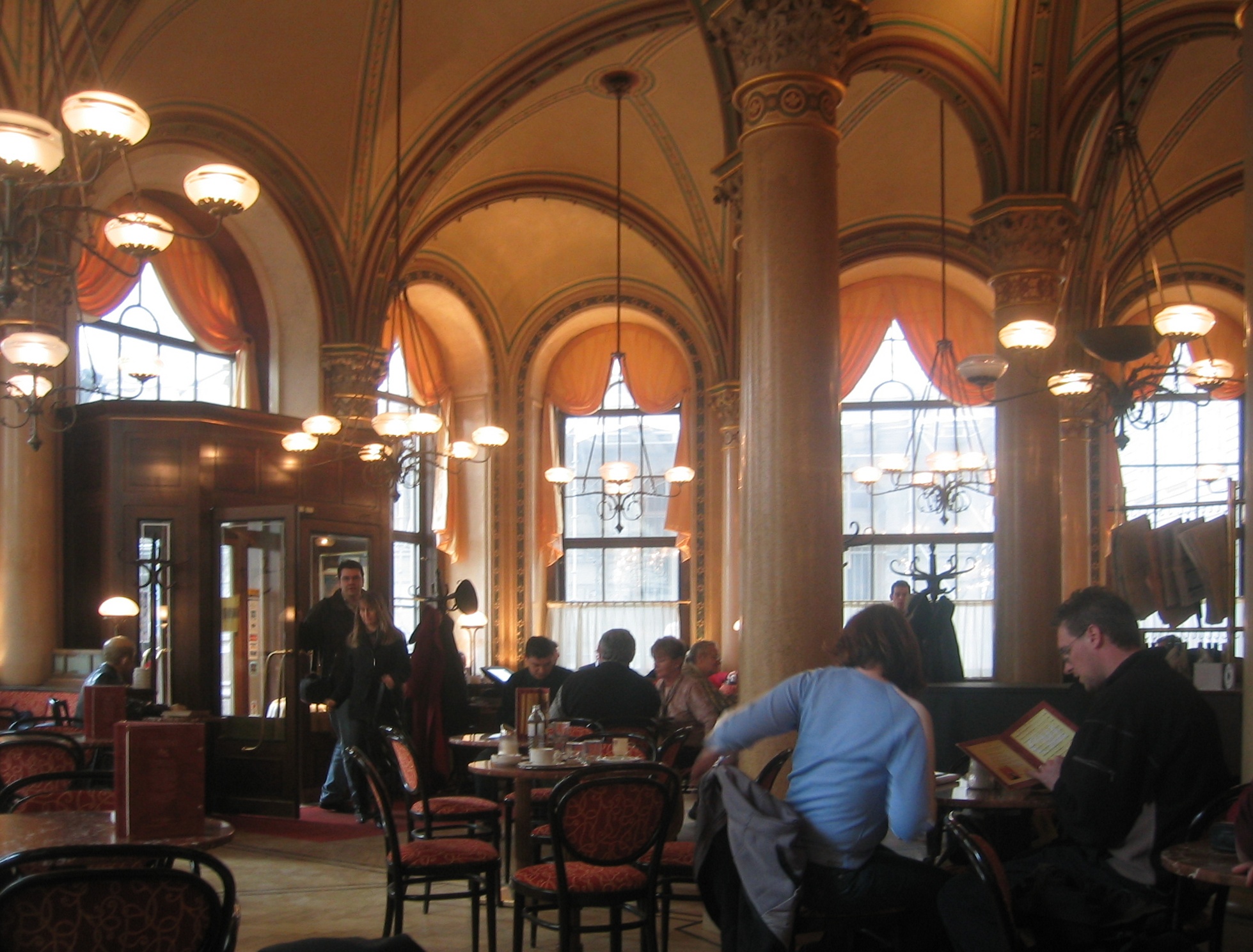
Viennese coffee house culture is on the UNESCO Intangible Cultural Heritage list, and the official definition contains the phrase that explains everything: a place «where time and space are consumed, but only the coffee appears on the bill».
The unwritten rule is that you can stay for hours with a single order, read the newspapers the café keeps mounted on wooden rods, write, and not be bothered. In Vienna’s coffee houses Trotsky played chess, Freud wrote, and Peter Altenberg had his post delivered there because he had no fixed address.
How to order: never ask for «a coffee». The forms are precise. The Melange is the most common, half coffee and half steamed milk. The Kleiner Brauner is an espresso with a small jug of cream on the side. The Einspänner comes in a glass with whipped cream on top. A glass of water always arrives on the silver tray, and is refilled: it is included, and it is not a courtesy — it is the sign that you may stay.
With the coffee, a cake. The Sachertorte was invented in 1832 when sixteen-year-old apprentice Franz Sacher had to improvise a dessert for Prince Metternich; the Hotel Sacher and the Demel pastry shop fought over the original recipe in court for twenty-five years, and the ruling settled who could write «Original» on the box. The Apfelstrudel arrived from the Turks by way of Hungary.
8 – The Prater
Time 1.5 hours · Park free, wheel about €14 · Metro U1 or U2 to Praterstern
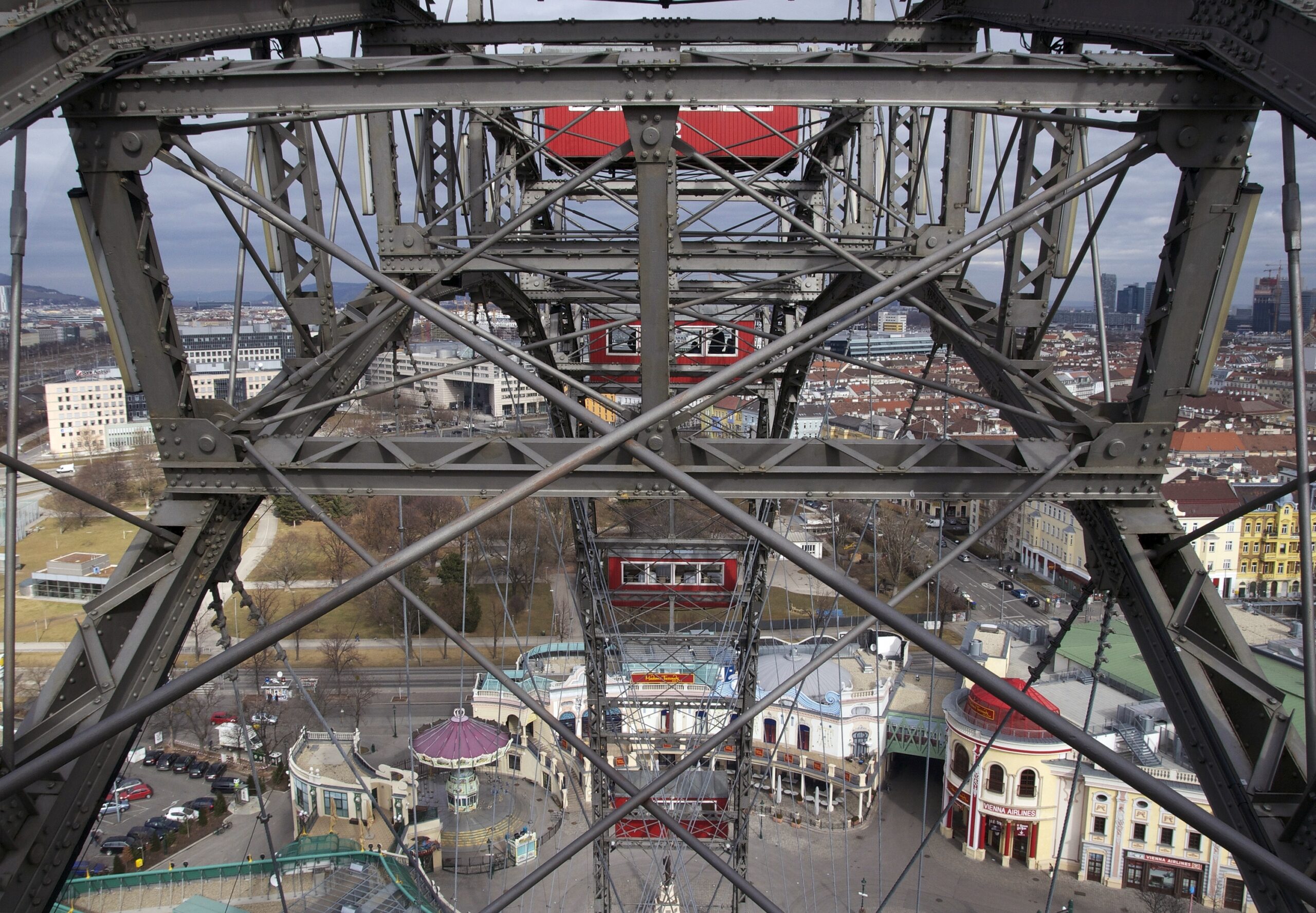
The Prater was the imperial hunting reserve and was opened to the public by Joseph II in 1766, by a decree that scandalised the nobility: to their protests he replied that if he wanted to be only with his equals he should spend his days in the Capuchin crypt, among the dead.
The Riesenrad, the Ferris wheel, dates from 1897 and still turns: sixty-five metres tall, wooden cabins the size of small rooms where you stand and can even have dinner. It was built for Franz Joseph’s jubilee by an English engineer, and in 1944 it was nearly destroyed by fire: it was rebuilt with fifteen cabins instead of thirty, because there was not enough money, and it has stayed that way ever since. It appears in the final scene of The Third Man, the 1949 film shot in occupied, rubble-strewn Vienna, and that scene made it famous worldwide.
The funfair around it is free to enter — you only pay for the rides — and it is a mix of modern attractions and old-fashioned sideshows, with neon lights and beer gardens. Behind it is the green Prater, a genuine six-square-kilometre wood with tree-lined avenues: almost no tourist ever crosses it.
If it rains
Vienna has more great museums per capita than any other city in Europe: substituting is easy.
- Instead of the Naschmarkt · the Kunsthistorisches Museum, which holds the world’s largest collection of Pieter Bruegel the Elder — twelve of about forty surviving paintings, including Hunters in the Snow — plus Vermeer, Raphael, Caravaggio and the Habsburg Kunstkammer.
- Instead of the Prater · the Albertina, which holds Dürer’s drawings — including the Hare — and an impressionist collection, inside a Habsburg palace whose state rooms can also be visited.
- Always works · a historic coffee house: in the rain it is even better, and it is exactly how the Viennese themselves use it.
What the day costs
| Item | Cost |
|---|---|
| Schönbrunn, basic tour | about €22 |
| Hofburg with Sisi Museum | about €20 |
| Upper Belvedere | about €17 |
| Cathedral, nave | free; tower and catacombs cost extra |
| Riesenrad | about €14 |
| Schönbrunn gardens, the Ring, Naschmarkt, Prater | free |
| Transport, day pass | about €8 |
| Lunch | €9-22 |
| Coffee with cake | €8-14 |
| Dinner in a Beisl | €18-28 |
| Total with two monuments | about €55-75 |
| Total with everything | about €95-115 |
Reference figures as of August 2026: check official websites before you travel. If you plan to visit four or more palaces and museums, the Vienna Pass or the combined Sisi Ticket (Hofburg, Schönbrunn and the imperial furniture collection) save money. And remember the Opera’s standing tickets, which cost only a few euros.
Getting around
The centre inside the Ring is entirely walkable: from the cathedral to the Opera is ten minutes. Beyond it, the transport network is one of the best in Europe: five metro lines, twenty-nine tram lines — Vienna has one of the most extensive tram networks in the world — and hundreds of buses, all on the same ticket.
The day pass costs around €8 and pays off immediately. It must be validated on first use at the blue machines: there are no barriers, but there are inspections. Viennese themselves have an annual pass that costs one euro a day, a policy choice from the 2000s that has been copied across Europe.
From Schwechat airport: the S7 train reaches the city in twenty-five minutes for a few euros and is the sensible choice; the CAT takes sixteen minutes but costs three times as much.
A local courtesy: in Austria you greet people on entering shops and cafés, and not doing so is noticed. Grüß Gott on the way in, Danke and Wiederschauen on the way out. Older waiters in the historic coffee houses are addressed as Herr Ober: it is a profession and a career, not a side job.
Frequently asked questions
Is one day enough to see Vienna?
It is enough for Schönbrunn, the imperial centre with the Hofburg and the cathedral, the Belvedere with Klimt’s The Kiss, a historic coffee house and the Prater. It leaves out the Kunsthistorisches with its Bruegels, the Albertina, the Vienna of Freud and the Secession, and the Grinzing vineyards. Vienna is a three-day city, but the centre is compact and a single day shows a great deal.
Do you need to book Schönbrunn?
Yes: entry is by time slot, and in high season the queues are long. Go there first, at opening time. The gardens are free and open to all, including the climb to the Gloriette, from which you see the palace with the city behind it. The gardens also hold the oldest zoo in the world still operating, from 1752.
Where is Klimt’s The Kiss?
At the Upper Belvedere, which holds the world’s largest Klimt collection. The painting is from 1908 and made with real gold leaf: Klimt had learned the technique from his father, who was a gold engraver. The same rooms hold Egon Schiele and Oskar Kokoschka.
How does the Viennese coffee house work?
It is UNESCO Intangible Cultural Heritage, and the unwritten rule is that you can stay for hours with a single order, reading the café’s newspapers. Do not order «a coffee»: ask for a Melange (half coffee, half steamed milk), a Kleiner Brauner (espresso with cream on the side) or an Einspänner (with whipped cream, in a glass). The glass of water that arrives is included and means you are welcome to stay.
Can you go to the Opera without spending a fortune?
Yes, and it is one of the best things about Vienna: the Staatsoper sells standing tickets for a few euros, on sale eighty minutes before the show. You queue up, tie a scarf to the railing to hold your spot, and watch an opera at the Vienna State Opera for the price of a coffee. The programme changes almost every night.
What is the Ringstraße?
The fifty-seven-metre-wide ring boulevard built from 1857 in place of the walls torn down by Franz Joseph’s decree. Over thirty years all the great public buildings went up along it, each in the style considered fitting for its function: a Greek Parliament, a Gothic City Hall, a Renaissance University, a baroque Burgtheater. To see them all, just hop on tram 1 or 2 with an ordinary ticket.
Is Wiener Schnitzel made of pork or veal?
Veal: the name «Wiener Schnitzel» is protected and applies only to veal. If the menu says Schnitzel vom Schwein or Wiener Art, it is pork, costs about half as much and is a different dish — good, but different. The other two Viennese dishes worth trying are Tafelspitz, Franz Joseph’s favourite boiled beef, and gulasch.
How much does a day in Vienna cost?
Between 55 and 75 euros per person doing two monuments, between 95 and 115 doing them all. The imperial palace tickets are the heavy item, around twenty euros each. Transport is cheap (eight euros for the day pass), and the cathedral nave, Schönbrunn’s gardens, the Ring, the Naschmarkt and the Prater cost nothing.
Why is the cathedral roof coloured?
It is made of 230,000 glazed tiles forming the double-headed Habsburg eagle on the south side and the coats of arms of Vienna and Austria on the north. The roof burned in 1945, in the last days of the war, and was rebuilt with contributions from Austria’s nine regions: each donated a part — the tiles, the floor, the pews, the portal. It is the symbol of Austria’s post-war revival.
Is Vienna expensive?
Less than you would think. Museum tickets are in line with Paris, but transport is very cheap, you can eat well for twenty euros, and there is plenty that costs nothing: the Ring, the imperial parks, the Naschmarkt, the Prater, the cathedral nave. And it has topped world quality-of-life rankings for years, which you can feel just walking around.
September 4, 2026