

Amsterdam in 3 days: the museums, Amsterdam Noord and the windmills
Amsterdam runs out quickly: two days are enough for the centre, and anyone with three does well to spend one of them elsewhere. The first day belongs to the museums and the canals, the second drops into the city the museums do not tell you about — the Jewish quarter, Rembrandt’s house, the markets, and the north bank of the IJ, the Amsterdam of the last twenty years. The third takes a train: Zaanse Schans with its windmills and Haarlem, the Dutch city Amsterdam was before it became a tourism capital, fifteen minutes away.
At a glance
- How long · three full days, from 9am to 10pm
- How much walking · 6-8 km a day, entirely flat
- What has to be booked · Anne Frank House six weeks ahead, Van Gogh and the Rijksmuseum a few days ahead
- Budget · €200-300 per person for the three days, excluding accommodation
- Transport · the centre is done on foot; day 3 needs the regional trains
- Rule number one · the red tarmac belongs to the bicycle, not to you
- What is left out · Utrecht, Delft, The Hague, Rotterdam, Keukenhof in spring: those are a fourth and fifth day
One colour per day. Zaanse Schans and Haarlem are outside the city, 20 and 15 minutes away by train.
Day 1 — The museums and the canals
7 km · 3 stops · 9am to 10pm · the day where everything needs booking
Morning – Rijksmuseum and Van Gogh Museum
9am-1:30pm · Rijksmuseum about €25, Van Gogh about €24 · two hundred metres apart

The Rijksmuseum tells the story of the Golden Age, when a republic of merchants became the richest trading power in the world. At the end of the Gallery of Honour hangs Rembrandt’s The Night Watch, which in 1715 was cut down because it did not fit the town hall wall: about sixty centimetres are missing on the left, and since 2021 the museum has displayed the reconstruction alongside it. The same gallery holds four Vermeers, out of around thirty-five of his paintings known to exist in the world.

The Van Gogh Museum is the largest collection in the world of a single artist, and it exists thanks to one person: Johanna van Gogh-Bonger, widow of his brother Theo, who spent her life making that legacy known when no one was buying those paintings. The route is chronological: from The Potato Eaters of 1885 to Wheatfield with Crows of 1890. Five years lie between them.
Afternoon – The canal ring
2pm-4:30pm · Free · all on foot
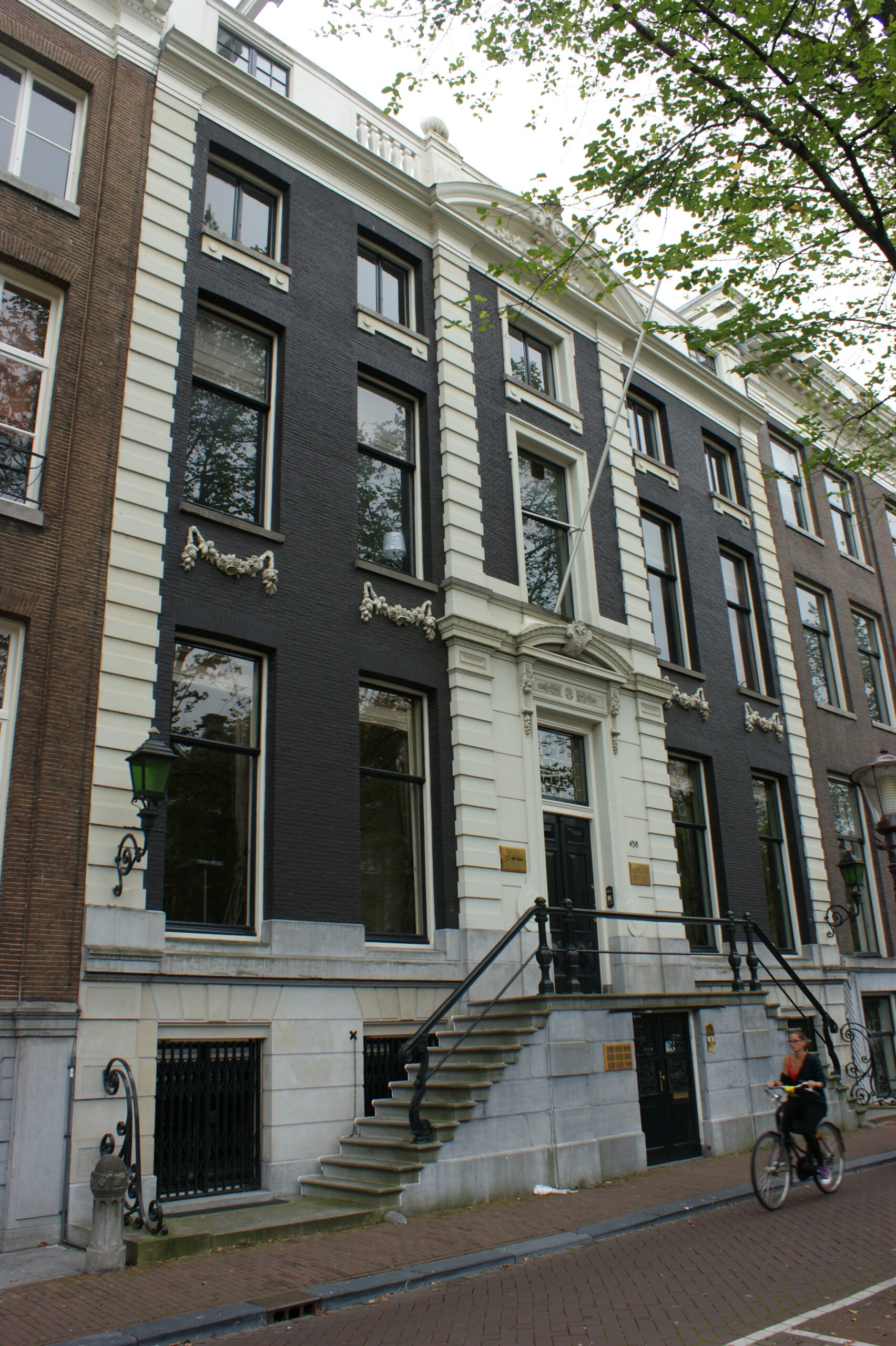
The canal ring is a UNESCO site, born as a property development: in 1613 the city council had three concentric canals dug on land reclaimed from the marsh, subdivided it and sold it. The houses are narrow because tax was charged on the width of the façade, and lean forward on purpose so goods hoisted by the hook on the gable would not hit the wall.
The best part for walking is the Nine Streets, the cross-lanes between the three canals. Amsterdam has over twelve hundred bridges and around a hundred and sixty-five canals: more than Venice.
Evening – Anne Frank and the Jordaan
5pm-10pm · Anne Frank House about €16, booking compulsory · the museum has evening slots

At Prinsengracht 263, behind a revolving bookcase, eight people hid for two years and one month. The rooms are empty: Otto Frank, the sole survivor, wanted them left as the Germans had left them after the raid. The film-star pictures Anne pasted on the walls and the marks her parents used to note her growth are still there.
Tickets are released online with a time slot and sell out within hours, often six weeks ahead. There is no ticket office.
Afterward, the Jordaan: a working-class district born in the seventeenth century, today one of the most expensive in the city. Look for the hofjes, hidden courtyards built by benefactors as free housing for elderly single women: you enter through a small street door and find total silence inside. People live there: go in quietly and do not photograph through the windows.
Day 2 — The old city and the north bank
6 km · 3 stops · 10am to 10pm · one free ferry crossing
Morning – Rembrandt House and the Jewish quarter
10am-1:30pm · Rembrandt House about €20, Jewish Historical Museum about €20 · Metro Waterlooplein

The Rembrandt House is the studio-home where Rembrandt lived from 1639 to 1658, and it can be visited under a rare condition: it is known exactly what was inside, room by room, because when he went bankrupt in 1656 the court drew up a notarised inventory of everything for auction. The house has been restored to that list: the studio with pigments to be ground, the cabinet of curiosities with shells, armour and stuffed animals he used as models, the box beds.
Rembrandt bought this house when he was the highest-paid painter in Amsterdam and lost it twenty years later: he had spent too much on art and collections, the market changed, and the creditors came. He died poor in 1669 and was buried in a rented grave.
The district around it was the Jodenbuurt, the Jewish quarter, where Rembrandt found models for his biblical figures. Here stand the Portuguese Synagogue from 1675, still lit only by candlelight, and the Jewish Historical Museum. Set into the pavement in front of the houses are the Stolpersteine, stumbling stones bearing the names of those deported.
At the Waterlooplein flea market, running since 1885, you can buy anything and look for free.
Early afternoon – Dam Square, the Oude Kerk, the Begijnhof
2pm-5pm · Royal Palace about €12, Begijnhof free · 15 minutes on foot

Dam means dam, and it is the point the city was born from. The Royal Palace was built in the seventeenth century as the town hall and was the largest civic building in Europe: the statement of a city of merchants with neither king nor court. It rests on 13,659 wooden piles, a number Dutch schoolchildren still learn by heart.
Behind it, the Oude Kerk from 1213 is the oldest building in Amsterdam: the floor is made entirely of tombstones, two thousand five hundred of them, with ten thousand people buried beneath, including Rembrandt’s wife.
A short walk away is the best-hidden spot in the centre: the Begijnhof. You enter through a low doorway and find yourself in a courtyard of houses around a lawn, home since the Middle Ages to the beguines, lay women living in religious community without vows. At number 34 stands the oldest wooden house in the Netherlands, from 1528, which survived the bans imposed after the great fires that required building in brick. There is also a clandestine Catholic church: after the Reformation, Catholic worship was banned in public but tolerated in private, and Amsterdam filled with churches disguised as houses.
Evening – Amsterdam Noord
5:30pm-10pm · Free ferry behind Central Station · A’DAM Lookout about €16
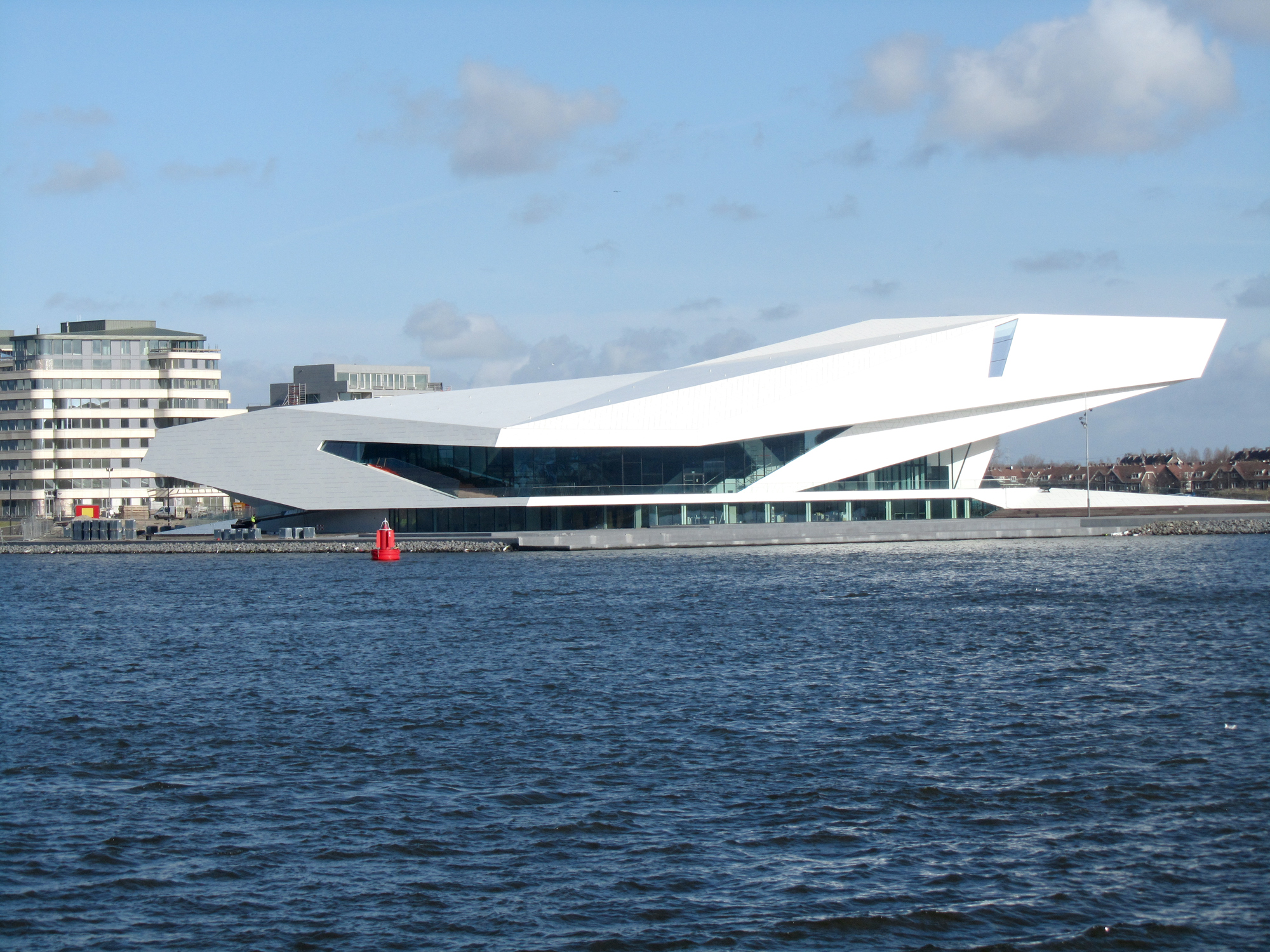
Behind Central Station are the jetties for the ferries to the Noord: they are free, leave every few minutes, take bicycles too, and cross the IJ in three minutes. It is the finest free thing in Amsterdam.
Until twenty years ago the Noord was shipyards and social housing, and residents of the centre never set foot there. Today it is where Amsterdam experiments: the EYE Filmmuseum, the angular white building overlooking the water, has a bar with a terrace and screenings; the A’DAM Toren, the former Shell headquarters, has an observation deck on top and a swing suspended over a hundred-metre drop; and NDSM, the former shipyard, has become an area of warehouses taken over by artists’ studios, markets and enormous murals.
Have dinner here, in one of the venues carved out of the warehouses, and take the ferry back in the dark, watching the city lit up from the water.
Day 3 — The windmills and Haarlem
The whole day · 2 stops · regional trains, no booking needed
Morning – Zaanse Schans
3 hours · Village entry free, windmills about €5-6 each · Train to Zaandijk-Zaanse Schans, 17 minutes from Central Station, then 15 on foot
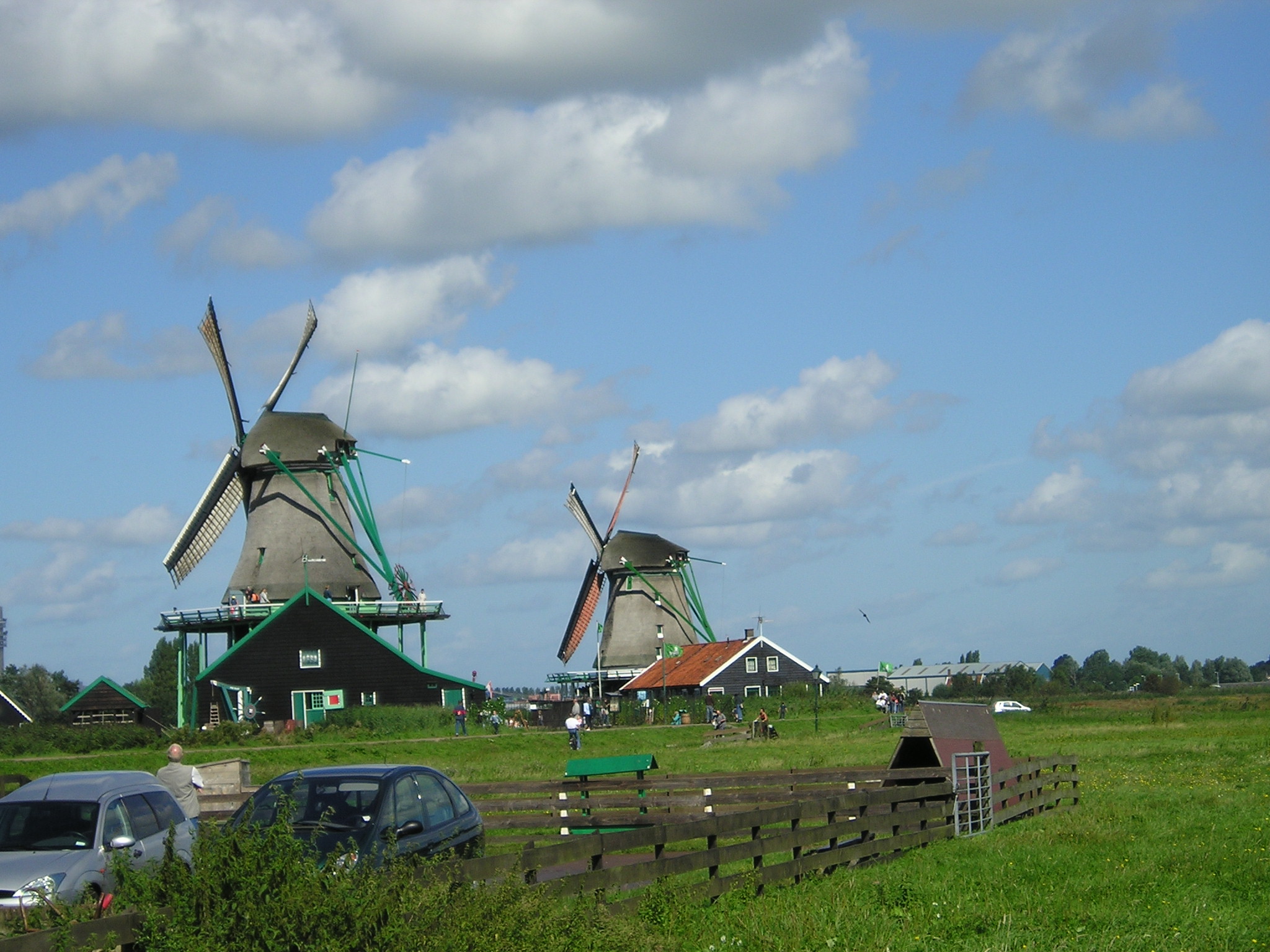
Zaanse Schans is seventeen minutes by train and deserves explaining for what it is, because many visitors leave disappointed: it is not a historic village that stayed put, it is an open-air museum built between 1961 and 1974 by moving windmills and wooden houses saved from demolition across the Zaan region, piece by piece, to this spot. That said, the buildings are authentic and the windmills genuinely work.
What makes the place interesting is understanding what they were for. In the eighteenth century, along the river Zaan there were over six hundred windmills, and they were industrial plants: the first industrialised zone in Europe, a century before the steam engine. They did not only grind grain — they sawed timber for shipyards (a sawmill windmill cut cutting times by a factor of thirty), pressed seeds for oil, ground pigments, spices, tobacco, paper. The fleet with which the Netherlands ruled the seas was made possible by those mills.
If you go into one, pick it by type: De Kat still grinds mineral pigments and sells the colours to restorers; De Zoeker makes seed oil; Het Jonge Schaap is a sawmill rebuilt to the original designs. Inside you climb steep ladders and watch the wooden gears turn, loud and impressive.
Arrive early, by half past nine: from eleven onward the coaches unload and the village fills up. As an alternative to Zaanse Schans, anyone who prefers genuine mills without the staging can go to Kinderdijk, a UNESCO site with nineteen mills from 1740 still standing in place, but it is much further, near Rotterdam.
Afternoon – Haarlem
4 hours · Frans Hals Museum about €18, Grote Kerk a few euros · Train 15 minutes from Amsterdam

Haarlem is fifteen minutes by train and has a hundred and sixty thousand residents, and it is recommended for a precise reason: it is what Amsterdam was before it became a destination. Same architecture, same canals, same gables, but with people living there and no crowds.
The Grote Markt is one of the finest squares in the Netherlands, with a fourteenth-century town hall and the Grote Kerk, St Bavo’s church: inside is a 1738 Müller organ with almost five thousand pipes, thirty metres tall, played by Mozart at ten, by Händel and by Liszt. Free concerts still happen on certain days: if you catch one, go in.
The Frans Hals Museum holds the painter’s great group portraits — he was from here: civic guard companies and the governors of almshouses, painted with a rapid brushwork that in the seventeenth century looked sloppy and in the nineteenth was rediscovered as strikingly modern — Manet and the Impressionists came to Haarlem specifically to study it. His last paintings, the Regents, made in his eighties, are among the starkest things in Dutch painting.
Also worth seeing: the Teylers Museum, the oldest museum in the Netherlands, opened in 1784 and left exactly as it was: wooden display cases, fossils, electrostatic machines, drawings by Michelangelo and Raphael, and no electric light in the oval room, which is visited only by daylight.
Haarlem is also four kilometres from the sea: if you have time left, a bus goes to Zandvoort, a long North Sea beach.
If it rains
It rains about one day in three in Amsterdam. Substitutes:
- Day 1 · already almost all indoors. Instead of walking the canals, a covered boat tour: the canal ring is made to be seen from the water.
- Day 2 · instead of the Noord, the Stedelijk of modern art or the Nemo, the family science museum inside Renzo Piano’s green prow-shaped building.
- Day 3 · Zaanse Schans is bleak and outdoors in the rain: devote the whole day to Haarlem, which has three excellent indoor museums, or go to Utrecht (25 minutes by train), which has two-level canals with waterside cellars turned into bars.
What the three days cost
| Item | Cost |
|---|---|
| Rijksmuseum and Van Gogh Museum | about €49 |
| Anne Frank House | about €16 |
| Rembrandt House | about €20 |
| Frans Hals Museum in Haarlem | about €18 |
| Zaanse Schans windmills, two visits | about €12 |
| Trains to Zaanse Schans and Haarlem | about €18 |
| Canals, the Jordaan, the Begijnhof, ferries to the Noord, the Vondelpark | free |
| City transport, 3 days | about €20 |
| Meals, 3 days | €90-140 |
| Total | about €200-300 per person |
Reference figures as of August 2026: check official websites before you travel. With three days and five or six museums, it is worth comparing the Museumkaart, aimed at residents but purchasable by visitors too, against the sum of individual tickets. In Amsterdam almost everything is booked online, and for the Anne Frank House there is no alternative.
Frequently asked questions
Is three days enough for Amsterdam?
It is more than enough for the centre alone, which runs out in two. The third day pays off well if you use it to leave the city: Zaanse Schans with its windmills and Haarlem, or Utrecht or Delft. Amsterdam is a small city, and its added value is that the whole of the Netherlands is within an hour by train.
Is it worth going to Zaanse Schans?
Yes, knowing what it is: not a historic village that survived intact, but an open-air museum built in the 1960s and 70s by moving authentic windmills and houses saved from demolition here. The windmills genuinely work and grind pigments, oil and timber. Arrive by half past nine: from eleven the coaches unload.
Why do Dutch windmills matter?
Because they were industrial plants, not picturesque grain mills. In the eighteenth century, along the river Zaan there were over six hundred: they sawed timber for shipyards, pressed oilseeds, ground pigments, spices, paper. It was the first industrialised zone in Europe, a century before the steam engine, and the Dutch fleet exists because of them.
What is Haarlem and why go there?
A city of a hundred and sixty thousand people, fifteen minutes by train, and it is what Amsterdam was before mass tourism: same canals, same architecture, but with people actually living there. It has one of the finest squares in the Netherlands, a 1738 organ played by Mozart as a child, the Frans Hals Museum, and the Teylers, the country’s oldest museum, which feels frozen in the eighteenth century.
How do you get to Amsterdam Noord?
On the free ferries leaving from the jetties behind Central Station: they cross the IJ in three minutes, run every few minutes, and take bicycles too. It is the finest free thing in the city. On the other side are the EYE Filmmuseum, the A’DAM tower with its swing suspended over the drop, and the former NDSM shipyard with its murals.
Do you need the Museumkaart or the I amsterdam City Card?
Do the maths on the tickets you would actually buy. With this itinerary you do four or five museums in three days, right at the edge of where it pays off. Note: the Anne Frank House is included in neither, and must still be booked separately, weeks ahead.
What is the Begijnhof?
A hidden courtyard in the centre, houses around a lawn, home since the Middle Ages to the beguines: lay women living in religious community, without vows. You enter through a low doorway, and there is total silence a hundred metres from the crowds. At number 34 stands the oldest wooden house in the Netherlands, from 1528. Entry is free, and people live there: keep quiet.
How does transport work in the Netherlands outside Amsterdam?
Regional trains are frequent and punctual and need no booking: buy a ticket at the machine or use a contactless card at the gates, remembering to tap out too. Haarlem is 15 minutes away, Zaandijk 17, Utrecht 25, The Hague 50. It is the European country where a single base city works best.
Is Amsterdam expensive?
The museums are — twenty-five euros each for the two big ones — and so is accommodation. Everything else is not: you walk everywhere, the ferries are free, the canals and courtyards cost nothing, and lunch is an eight-euro sandwich. Three days run €200-300 per person excluding accommodation.
When is the best time to go?
April and May for the tulips — Keukenhof opens for only eight weeks in spring — and September for the weather and the light. Summer is crowded and prices rise; winter gets dark early, but frozen canals, when they happen, are a rare spectacle. 27 April is Koningsdag, the king’s birthday: the city dresses in orange and turns into an open-air flea market, beautiful but needing accommodation booked months ahead.
September 3, 2026


