

Turin in 3 days: the museums, the hills and a day in the Langhe
Three days in Turin divide themselves, because the city is made of three things that do not fit together. There is the Savoy centre, a grid of squares and porticoes that is walked in a day. There are the royal residences, which lie outside the city, are a UNESCO site, and want a whole day to themselves. And then there is the fact that the Langhe hills begin half an hour from here, and that a hillside of vineyards is a perfectly sensible way to end a trip.
At a glance
- How long · three full days: one in the city, one among the residences, one out of town
- How much walking · about 6 km on day one, less on the others but with more travelling
- What has to be booked · the Egyptian Museum and the Mole lift; the Venaria at weekends
- Budget · €200-320 per person for three days, excluding accommodation
- Where to stay · between Piazza Castello and Piazza San Carlo, or in the Roman Quarter
- When to go · September to June; in winter you see the Alps, in summer the city empties and the heat is humid
- What is left out · Stupinigi, the car museum, the Lingotto: those are a fourth day
Three layers, one per day. Day two leaves the city in two opposite directions, day three heads for the hills.
Day 1 — The Savoy centre
6 km · 5 stops · all on foot, much of it under porticoes

The first day is the centre, and it is what anyone with a single day would do. The grid helps: everything sits on the four axes leading out of Piazza Castello, and you cannot get lost.
Morning – Piazza Castello, the Shroud, the Egyptian Museum
Time 5 hours · Cost about €33 · Book the Egizio
At the centre of the square, Palazzo Madama has a Baroque facade by Juvarra in front and a medieval castle behind, built on the eastern Roman gate. On the north side the Royal Museums: the Savoy apartments, the Royal Armoury in a seventy-metre gallery, and the Galleria Sabauda with van Eyck, Fra Angelico and Mantegna.
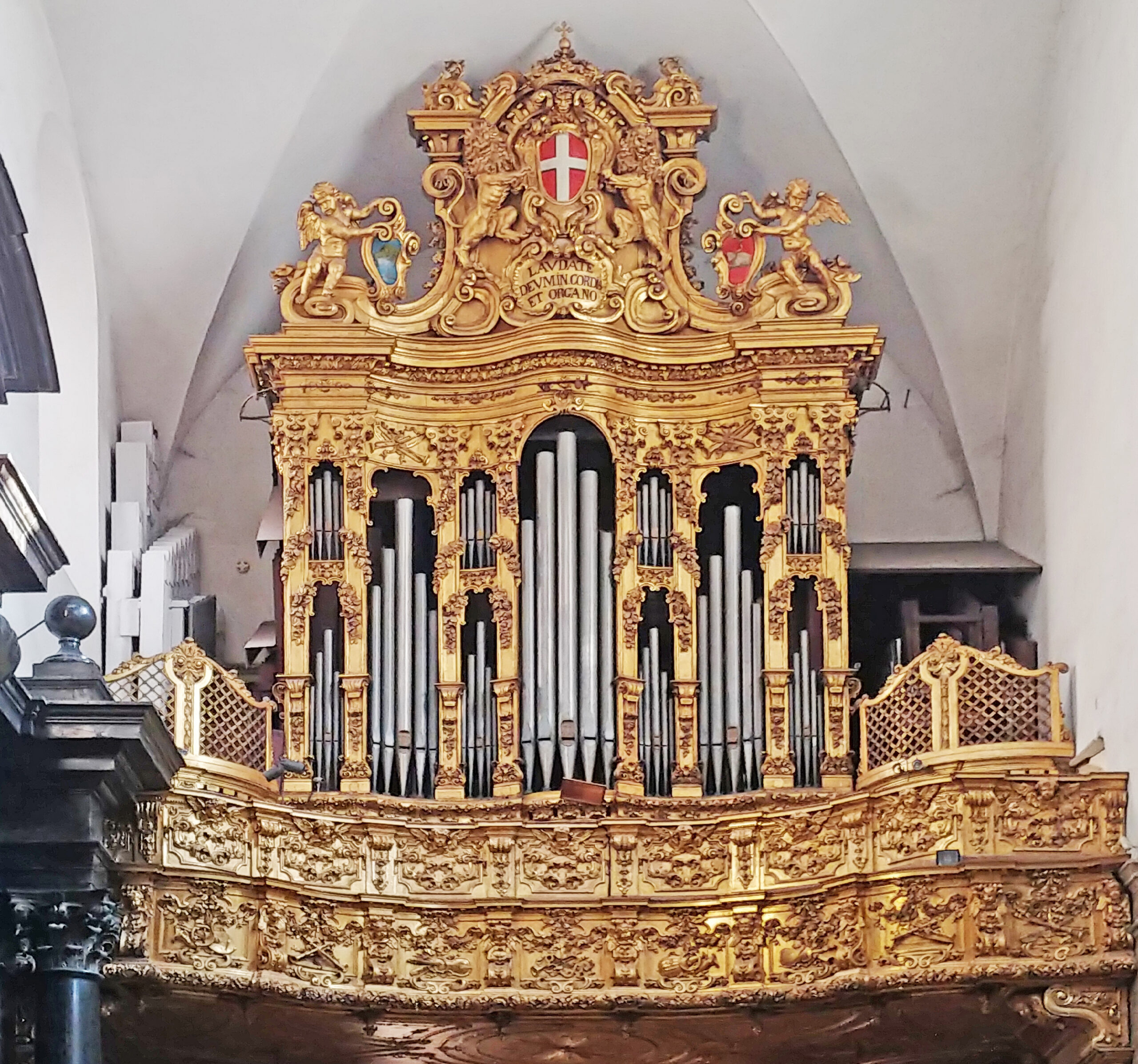
Five minutes on foot and you are in the cathedral, the city’s only Renaissance church. Behind the altar, the Chapel of the Holy Shroud by Guarino Guarini, 1668-1694: a dome of thirty-six staggered arches climbing in a spiral, apparently endless. A fire gutted it in 1997 and the restoration took twenty-one years. The Shroud itself is not visible: it is shown only during ostensions, years apart.

Then the Egyptian Museum, which is the real reason to come to Turin: founded in 1824, the oldest in the world devoted to Egypt and second only to Cairo for the importance of its collection. The tomb of Kha and Merit was found intact in 1906, complete with the entire household of a family from 1400 BC. Allow three hours.
In the Roman Quarter behind the cathedral: agnolotti del plin twelve to sixteen euros, vitello tonnato around twelve. Or at the counter of a historic café with a tramezzino, invented here at Mulassano in 1925.
Afternoon – San Carlo, the porticoes, the Mole
Time 4 hours · Cost about €17 · All on foot

Piazza San Carlo is the city’s drawing room: rectangular, porticoed, closed by two churches that look identical and are not. Under the porticoes stand the historic cafés, and in the pavement of the Caffè Torino there is a bronze bull you grind your heel on for luck.

From here runs via Roma, porticoed end to end. Turin has about eighteen kilometres of porticoes: in the nineteenth century the court went from the Royal Palace to the Valentino without getting wet.

The Mole Antonelliana began in 1863 as a synagogue and ended up in the city’s hands because Antonelli kept raising it beyond the agreement. At 167 metres, it houses the National Cinema Museum, visited by climbing a spiral ramp. The panoramic lift crosses the void of the hall in fifty-nine seconds.
Day 2 — The royal residences and the river
Little walking, much travelling · 3 stops · the Venaria in the morning, Superga in the afternoon
The Residences of the Royal House of Savoy have been a UNESCO World Heritage Site since 1997: a crown of palaces and hunting estates built around Turin over the two centuries in which the Savoys used architecture as a political instrument. Two can be visited in a day, and they lie in opposite directions.
Morning – the Reggia di Venaria Reale
Time 4 hours with the gardens · Ticket about €20 palace and gardens · Closed on Mondays

Half an hour north of the city, by shuttle or train. The Venaria began in the seventeenth century as a hunting residence, was enlarged by Juvarra in the eighteenth, and reduced to a barracks in the nineteenth: when restoration began in 1999 it was a ruin. The work took eight years and was the largest cultural heritage recovery ever undertaken in Europe.
What you come for is the Great Gallery: a white nave seventy-five metres long and fifteen high, with two facing rows of tall windows and no painted decoration. Nothing hangs on the walls, and that is deliberate: light and the rhythm of the bays do all the work. It changes completely with the hour and the sky.
There are also the Chapel of Sant’Uberto, again by Juvarra, the stables and the gardens, which run to eighty hectares and can be toured by shuttle. Allow four hours if you do not want to rush.
The village of Venaria, opposite the palace, has Piedmontese trattorie at normal prices and better food than the internal cafeterias. Alternatively, go back into town and eat quickly before heading up to Superga.
Afternoon – Superga by rack tramway
Time 3 hours including travel · Rack tramway about €9 return · Basilica free

On the other side of the city, on the hill at 670 metres. The basilica of Superga is by Juvarra, 1717-1731, and was built to fulfil a vow made by Victor Amadeus II after the French siege of 1706 was lifted. Below, in the royal tombs, lie almost all the Savoys from that point onwards.
You get there on a rack tramway which has run from Sassi since 1884: eighteen minutes through the woods in period carriages. The ride is half the reason to go.
At the back of the basilica stands the retaining wall into which, on 4 May 1949, the aircraft bringing home the Grande Torino football team crashed in fog. All thirty-one people aboard died, and with them a side that had won five league titles in a row and made up almost the entire Italian national team. There is a plaque with the names, and it is the most visited spot on the hill.
From the terrace, on clear days, you see the whole plain and the Alpine arc from Monviso to Monte Rosa.
End of the day – the Valentino park
Time 1 hour 30 · Free · On the left bank of the Po
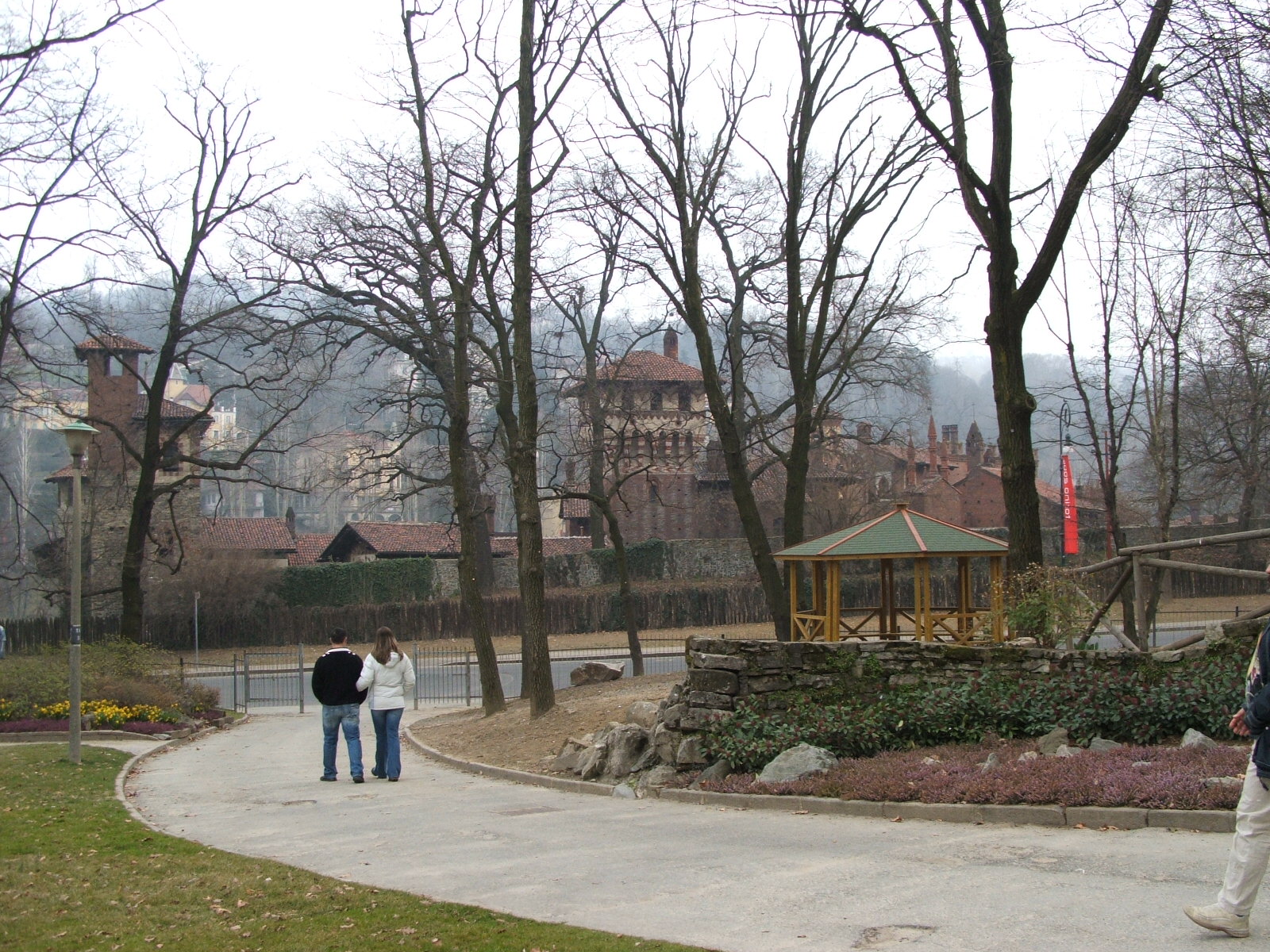
If there is light left, the Valentino park closes the day well. Inside stands the Medieval Village, which is not medieval at all: it was built in 1884 for the Italian General Exhibition as a full-scale reproduction of a fifteenth-century Piedmontese village, copying real castles and houses from around the region piece by piece. It was meant to be dismantled afterwards and never was. You walk through it for free.
Day 3 — Out of town: the Langhe or the Sacra di San Michele
A full day · Alba is an hour and a half away, the Sacra one hour
The third day goes out of town, and the two directions differ in character as much as in compass bearing: the Langhe if you want hills, wine and a long lunch; the Sacra di San Michele if you would rather have a mountain, a stairway and an abbey hanging over a precipice.
The Langhe – Alba, Barolo and the UNESCO hills
Journey 1 hour 30 by train or car · Better by car to move between villages · Wineries by appointment
South of Turin begin the Langhe, hills of vineyards which since 2014 have been a UNESCO World Heritage Site together with the Roero and the Monferrato. Alba is the capital: a medieval centre with towers, and from mid-October to early December the white truffle fair, which is when the town is at its most expensive and at its best.
Around it lie the Barolo villages — Barolo, La Morra, Serralunga, Monforte, Castiglione Falletto — each on its own knoll, each with a castle and a view. La Morra has the widest belvedere; Barolo has a wine museum inside the castle; Grinzane Cavour was Cavour’s estate and is itself part of the UNESCO site.
Wineries almost all require booking, usually with a paid tasting between fifteen and thirty euros. If you drive, remember that the driver does not drink: many wineries say so plainly and offer a spittoon and water.
A practical note: you can reach Alba by train, but moving between the Langhe villages needs a car or an organised tour. Connections between one village and the next are almost non-existent.
The Sacra di San Michele – an abbey on a precipice
Journey 1 hour · Ticket about €8 · Final stretch uphill, on foot or by car
At the mouth of the Val di Susa, at nine hundred and sixty metres, an abbey built around the year 1000 on the summit of Mount Pirchiriano, resting directly on the rock. It is the symbol monument of Piedmont and stands on an imaginary line linking Mont Saint-Michel in Normandy with the sanctuary of Saint Michael on the Gargano.
You reach it by climbing the Stairway of the Dead, a ramp cut into the rock passing niches where the skeletons of monks were once displayed. At the top, the church is built partly cantilevered over the void: from one window you look down for hundreds of metres.
Umberto Eco came here and took from it the idea for the abbey in The Name of the Rose. The place justifies it.
Where to stay
It is worth staying inside the square formed by Piazza Castello, Piazza San Carlo and Porta Nuova station: everything is walkable, the porticoes cover the walking, and the station is right there.
The Roman Quarter costs a little less and is the liveliest district at night, which is also why it is noisy. San Salvario, behind Porta Nuova, has low prices and good restaurants and is very handy for the train; it is busy at night. The Crocetta is residential, quiet, and ten minutes’ walk from the centre.
Turin hosts many trade fairs and festivals — the Book Fair in May, Terra Madre, the Salone del Gusto — and in those weeks hotels fill and prices rise. Check the calendar before fixing your dates.
What it costs
| Item | Indicative cost |
|---|---|
| Egyptian Museum | about €18 |
| Cinema Museum with the Mole lift | about €17 |
| Royal Museums | about €15 |
| Reggia di Venaria, palace and gardens | about €20 |
| Rack tramway to Superga, return | about €9 |
| Cathedral, Chapel of the Shroud, Valentino, Medieval Village | free |
| Train to Alba, return | €12-18 |
| Winery tasting in the Langhe | €15-30 |
| Lunches, three days | €50-80 |
| Dinners, three days | €90-140 |
| Total per person, three days | €200-320 |
Accommodation excluded. Reference figures as of August 2026: check the official websites before you travel. With three museums or more the Torino+Piemonte Card pays for itself, and it includes the Venaria.
Getting around
The centre is done on foot and the porticoes cover nearly every axis. The driverless metro has a single line linking Porta Susa, Porta Nuova and the Lingotto; a city ticket costs about €1.90, a day ticket around €4.50.
For the Venaria there is a shuttle from the centre, or a train from Torino Dora and a fifteen-minute walk at the other end. For Superga you need the rack tramway from Sassi, reached by tram 15.
For day three: Alba is reached by train with a change at Asti or Bra, an hour and a half; but moving between the Langhe villages practically requires a car. For the Sacra di San Michele, train to Avigliana and then bus or taxi, or car to the car park and twenty minutes uphill on foot.
From Caselle airport the train reaches Torino Dora in about twenty minutes. By train: Milan one hour, Genoa an hour and forty.
Frequently asked questions
Are three days in Turin too many?
No, if you leave the centre. The first day covers the Savoy city with the Egyptian Museum and the Mole; the second is for the Savoy residences, which are outside the city and are a UNESCO site; the third pays off far better spent in the Langhe or at the Sacra di San Michele.
Is the Reggia di Venaria worth the trip?
Yes, and it is a full half-day. The restoration, begun in 1999 on a building reduced to a ruin, was the largest cultural heritage recovery ever carried out in Europe. Juvarra’s Great Gallery — seventy-five metres of windows and not a single painting hung — justifies the journey on its own. Add the gardens, which run to eighty hectares.
Langhe or Sacra di San Michele as a day trip from Turin?
The Langhe if you want hills, wineries and a long lunch: a UNESCO site since 2014, with Alba an hour and a half away, though moving between the Barolo villages needs a car. The Sacra di San Michele if you prefer a day in the mountains: an abbey from around the year 1000 resting on rock at nine hundred and sixty metres, an hour from Turin, which inspired the abbey in The Name of the Rose.
How much does a long weekend in Turin cost?
Between €200 and €320 per person for three days excluding accommodation, with the main museums and the day trip. Museums are the largest expense: if you visit three or more, the Torino+Piemonte Card pays for itself and includes the Venaria.
How do you get to Superga?
By the rack tramway from Sassi, running since 1884: eighteen minutes through the woods in period carriages, about nine euros return. Sassi is reached by tram 15. The basilica is free; the royal tombs are ticketed.
Which area is best to stay in Turin?
The square between Piazza Castello, Piazza San Carlo and Porta Nuova: everything is walkable and the porticoes cover the walking. The Roman Quarter costs less and is lively at night but noisy; San Salvario is cheap and handy for the station; the Crocetta is quiet and residential.
When is the best time to visit Turin?
September to June. In winter, after the wind, you see the Alps from the city centre, and the porticoes make rain irrelevant. Summer is humid and the city empties. Watch out for the weeks of the Book Fair in May and the other large festivals, when hotels fill up.
What are the Savoy Residences?
A crown of palaces and hunting estates built by the House of Savoy in and around Turin between the sixteenth and eighteenth centuries, inscribed on the UNESCO World Heritage list in 1997. It includes the Royal Palace, Palazzo Madama, the Reggia di Venaria, the Stupinigi hunting lodge, Racconigi castle and others. In three days you can visit two or three.
September 2, 2026


