

Naples in 1 day: a walking itinerary along Spaccanapoli
Naples in a day is done by walking in a straight line. The old centre is still the Greek grid of the fifth century BC: three parallel streets running east to west, cut by alleys, and the main one — the one everybody calls Spaccanapoli — crosses the city from side to side. You start at one end, you arrive at the other, and practically everything is on the way. The rest of the day is the seafront and a pizza made properly.
At a glance
- Length · one full day, from 9 am until after dinner
- Walking distance · about 7 km, nearly all of it flat or downhill
- Bookings · none compulsory, but the Sansevero Chapel sells out
- Budget · €55-85 per person, accommodation excluded: Naples costs less than the other art cities
- Starting point · Piazza Dante or the Archaeological Museum
- Ending point · the Chiaia seafront at sunset
- What stays out · Pompeii, Vesuvius, Capri: those are days in their own right
Three parts of the day, seven stops. The route follows Spaccanapoli from north to south and ends at the sea.
Morning — The Archaeological Museum and Spaccanapoli
2.5 km · 3 stops · 9 am to 1:30 pm · start at the Archaeological Museum
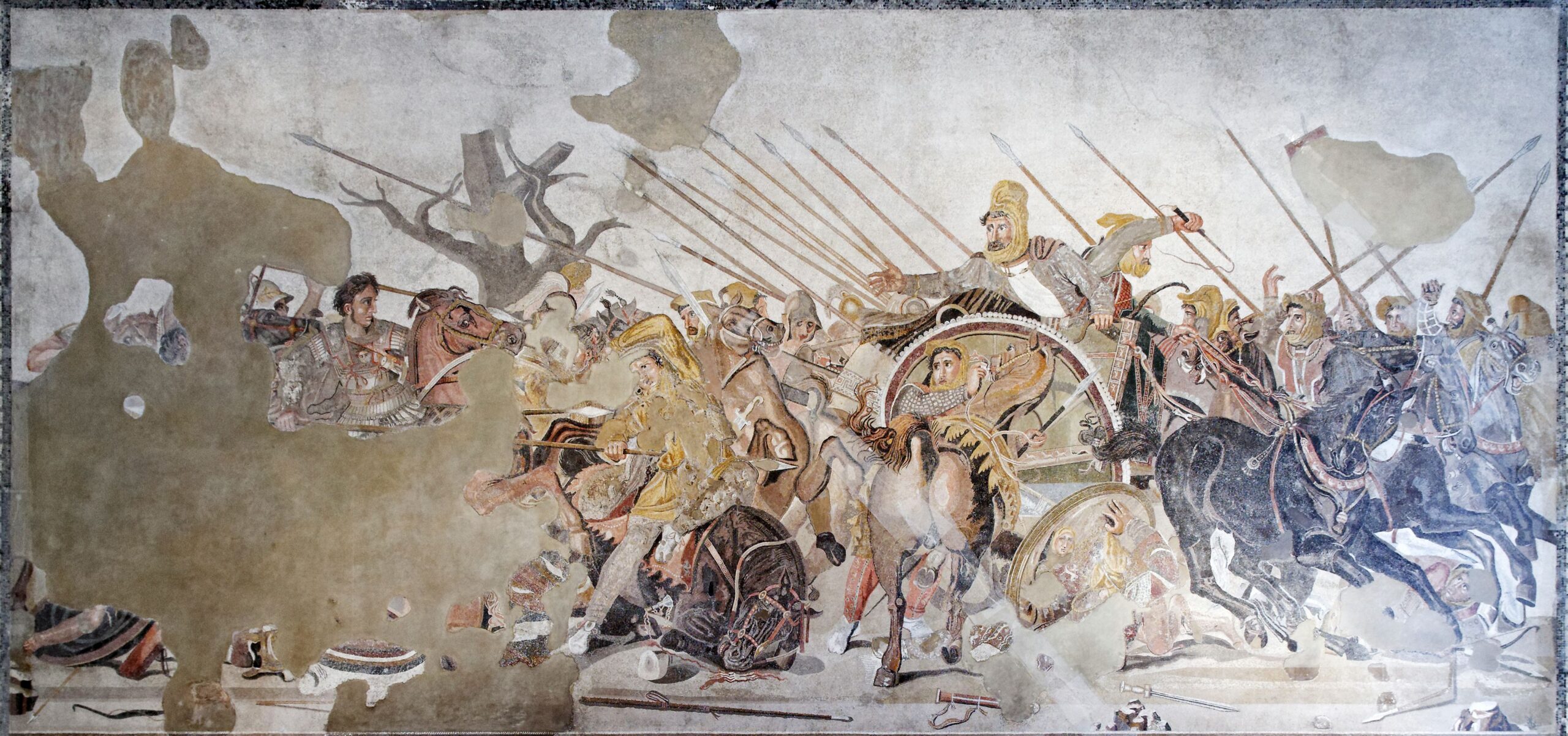
The day begins in a museum almost nobody expects. The National Archaeological Museum holds everything that was taken out of Pompeii and Herculaneum: anyone who visits the excavations without coming here sees empty houses, because the frescoes, the mosaics and the statues are all in this building on Via Foria. It is also the right way to prepare for Pompeii, if you go another day.
1 – National Archaeological Museum
Visit 2 hours · Ticket about €22 · Closed on Tuesdays
Three things not to skip. The Alexander Mosaic from the House of the Faun, ten square metres made of a million and a half tesserae, showing Darius fleeing at Issus. The Farnese collection, with the Farnese Bull, the largest ancient sculptural group to survive, carved from a single block of marble. And the Secret Cabinet, the room of Pompeian erotic objects, which was walled up for nearly two centuries and is still shown in a separate space.
Upstairs, the cork model of Pompeii built in the nineteenth century: it is the fastest way to grasp the plan of the city.
2 – Spaccanapoli and San Gregorio Armeno
Visit 1 hour 30 walking · Getting there 15 minutes downhill on foot · Entry free

You walk down Via Pessina to Piazza Dante and take Via dei Tribunali, the decumanus maximus of the Greek city. The parallel street further south, the one you can see from above slicing through the centre like a blade, is Spaccanapoli: the name is not official, on maps it is Via Benedetto Croce and then Via San Biagio dei Librai.
Between the two runs San Gregorio Armeno, the street of nativity-scene craftsmen: workshops open all year making shepherds, fishermen, pizza makers and, by now a firm tradition, famous people from the current year. In December it is impassable; in June you can walk.
You do not need a plan for this stretch: look up, go in wherever it is open, buy a warm sfogliatella. There are dozens of churches along the way and almost all are free.
3 – Sansevero Chapel
Visit 45 minutes · Ticket about €10 · Booking advised, limited entry
It is a small chapel in an alley two steps from Spaccanapoli, and inside is the Veiled Christ by Giuseppe Sanmartino, from 1753: a body laid out under a marble veil so fine that for two centuries people believed it was a real veil petrified by an alchemical process. It is not: it is carved from the same block, which is why it has to be seen in person.
The prince of Sansevero who commissioned the chapel was an alchemist, a freemason and an inventor, excommunicated more than once. In the basement are his anatomical machines: two skeletons with the circulatory system entirely preserved, still argued over today. Places are limited and sell out at weekends: book online.
The historic pizzerias are on Via dei Tribunali, and this is where it pays to eat pizza at lunchtime rather than in the evening, because the queues after dark are very long. Otherwise Neapolitan street lunch is a pizza a portafoglio folded in four, or fried food: crocchè, pasta fritters, zeppole.
Afternoon — Santa Chiara, the underground and the Plebiscito
3 km · 3 stops · 3 pm to 7 pm · you walk down towards the sea

4 – Santa Chiara cloister
Visit 45 minutes · Ticket about €6 for the cloister · Church free
The church was bombed in 1943 and rebuilt bare, as it originally was. But the majolica cloister survived: sixty-six octagonal pillars covered in tiles painted in the eighteenth century, with hunting scenes, sea scenes and everyday life, and benches between the pillars decorated the same way. In the middle, a garden of orange and lemon trees. It is the quietest place in central Naples, which in Naples is a rare merit.
5 – Underground Naples
Visit 1 hour 30 with the guided tour · Ticket about €12 · Guided only, fixed departure times
Forty metres below the city there is a second Naples, carved out of tuff: Greek quarries first, then cisterns of the Roman aqueduct, then air-raid shelters during the war, when thousands of people lived down here. The toys and the beds are still there.
The tour also passes through a passage half a metre wide, walked sideways holding a candle: anyone claustrophobic can wait in the main corridor. At the end you come up inside a Roman theatre, beneath a private flat: you enter from below and come out in an alley.
6 – Piazza del Plebiscito and Galleria Umberto I
Visit 1 hour · Getting there 20 minutes on foot down Via Toledo · Entry free

You walk down Via Toledo, the strolling street, and halfway along it is worth stopping at Toledo metro station: it has repeatedly been named among the finest in Europe, with a light shaft lined in blue mosaic simulating a descent into water. You get in with a metro ticket, one euro thirty.
The Galleria Umberto I, from 1890, has an iron and glass dome fifty-seven metres high. Opposite it stands the Teatro San Carlo, the oldest working opera house in Europe, opened in 1737, forty years before La Scala.
Piazza del Plebiscito closes the monumental part of the day: a semicircle of columns like St Peter’s Square, the basilica of San Francesco di Paola in front and the Royal Palace behind. On windy days it is the windiest place in the city.
Sunset — Castel dell’Ovo and the seafront
1.5 km · 1 stop · from an hour before sunset · you walk along the sea
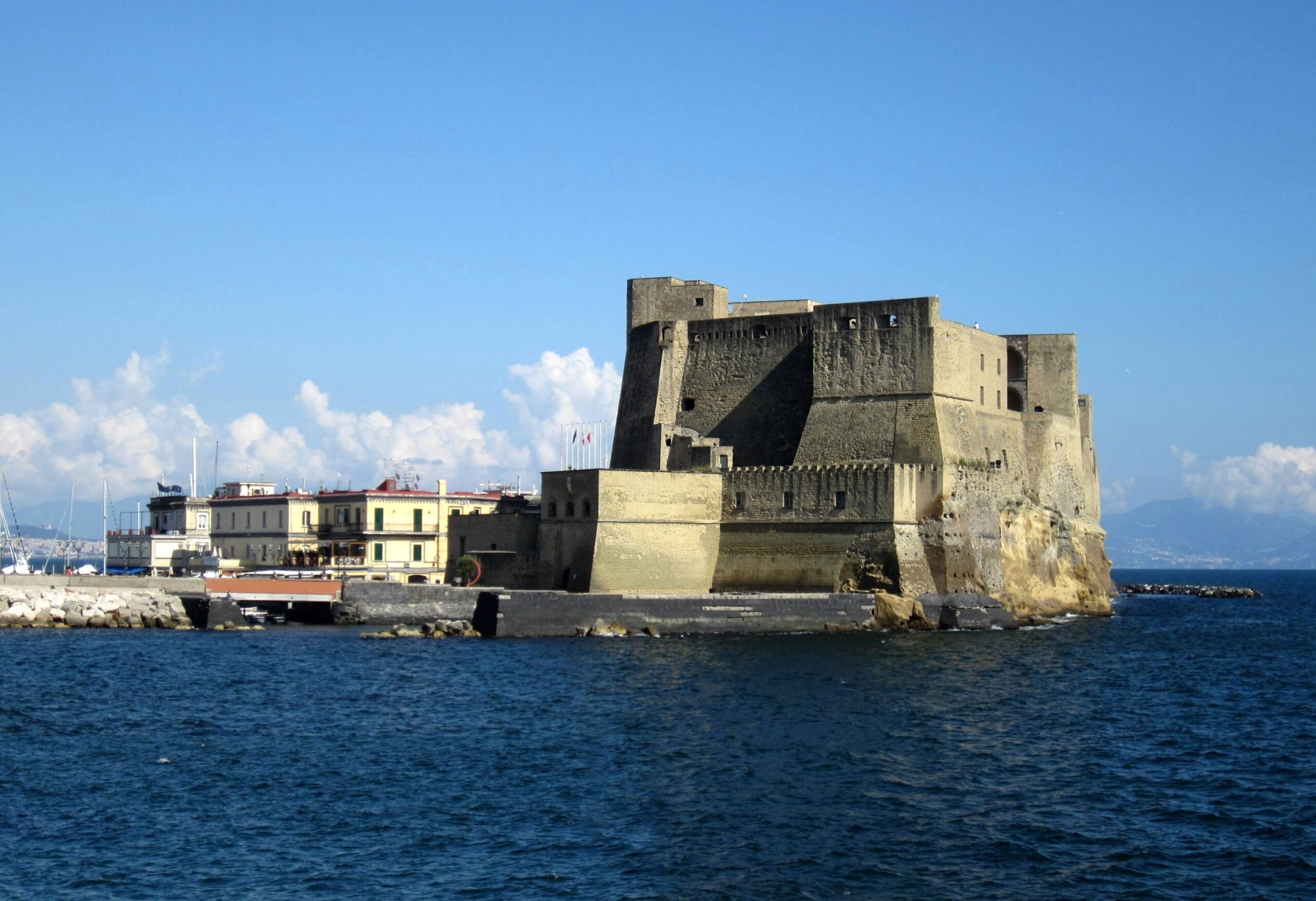
From Piazza del Plebiscito it is ten minutes down to the sea. Castel dell’Ovo stands on an islet linked by a bridge, and it is the point where the city began: the Greek colonists landed here and called it Parthenope. The name comes from a legend about Virgil, who is said to have hidden a magic egg in the foundations: as long as the egg holds, Naples holds.
Entry is free and you can climb to the terrace at the top, from which you see the whole gulf: Vesuvius on the left, Capri ahead on clear days, Posillipo on the right. At sunset it is the best place in the city and it costs nothing.
Below the castle is the Borgo Marinari, a small harbour with restaurants on the water, and from there runs the Lungomare Caracciolo, closed to traffic and two and a half kilometres long: it is where Neapolitans walk, and walking it at sunset is the right way to end the day.
Pizza, which in Naples is not a detail

Neapolitan pizza is a regulated product: dough of flour, water, salt and yeast only, long proving, shaped by hand without a rolling pin, baked in a wood oven at 485 degrees for sixty to ninety seconds. It comes out soft, with a puffed crust blistered black, and it folds: anyone expecting a crisp pizza will be disappointed, because that is a different thing.
The two classics are the marinara — tomato, garlic, oregano, oil, no cheese — and the margherita. In a serious pizzeria they cost between five and nine euros, which is why Naples remains the cheapest art city in Italy.
The historic pizzerias are nearly all on Via dei Tribunali and around it. In the evening you queue and you cannot book: you take a number and wait in the street. Anyone who does not want to wait goes at lunchtime, when the same pizzerias are half empty.
Three things to know
The traffic does not follow the rules you expect. Scooters do not always stop at pedestrian crossings: cross at a firm, predictable pace and the cars will slow down. Stopping halfway is the most dangerous thing you can do.
Carry your bag in front in crowded alleys and do not hold your phone while walking. It is not a dangerous city to walk in, but scooter thefts do happen and they almost always involve a phone held in plain sight.
Coffee is drunk standing at the counter and costs very little: about a euro in Naples, half what it costs in Milan. If someone mentions the caffè sospeso, it is the tradition of paying for an extra one for whoever comes next and cannot afford it.
What it costs
| Item | Indicative cost |
|---|---|
| National Archaeological Museum | about €22 |
| Underground Naples with guide | about €12 |
| Sansevero Chapel | about €10 |
| Santa Chiara cloister | about €6 |
| Castel dell’Ovo | free |
| City transport, day ticket | about €4.50 |
| Lunch, pizza or fried food | €7-15 |
| Dinner in a trattoria | €20-30 |
| Total per person | €55-85 |
Reference figures as of August 2026: museums change their prices, check the official websites before you travel. Naples remains the Italian art city with the lowest cost of living.
Getting around
The old centre is walked entirely and is almost flat: from the Archaeological Museum to the sea is a fifty-minute walk downhill.
Metro line 1 is useful for getting back up and worth taking anyway: several stations are works of contemporary art, in particular Toledo and Università. A single ticket costs a little over a euro and the day ticket about €4.50.
For the hills — Vomero, the San Martino charterhouse — there are four funiculars, included in the city ticket. The Centrale leaves from Via Toledo and reaches the top in five minutes.
Taxis have fixed set fares for the main routes: ask the fare before getting in and ask for the meter to be switched on.
Frequently asked questions
Can you see Naples in one day?
The old centre, yes: the Archaeological Museum, Spaccanapoli with San Gregorio Armeno, the Sansevero Chapel, Santa Chiara, the underground, Piazza del Plebiscito and the seafront fit into a full day, because the route runs almost entirely downhill and in a straight line. Pompeii, Vesuvius, Capri and the Vomero stay out.
What has to be booked in Naples?
Nothing strictly, but the Sansevero Chapel has limited entry and sells out at weekends: get the ticket online a few days ahead. Underground Naples has fixed departure times and should be checked. The Archaeological Museum is closed on Tuesdays.
Is Naples dangerous?
The old centre and the tourist areas are walked comfortably, including in the evening, because they are full of people until late. The precautions are those of any large city: bag in front in crowded alleys, phone not in your hand while walking, nothing valuable on show. Thefts almost always involve a phone held in plain sight.
How much does a day in Naples cost?
Between €55 and €85 per person excluding accommodation, and it is the cheapest art city in Italy: a pizza in a historic pizzeria costs between five and nine euros, and a coffee at the counter about a euro.
Pizza at lunch or dinner?
At lunch, if you only have one day. The historic pizzerias on Via dei Tribunali have hour-long queues in the evening and take no bookings: you take a number and wait in the street. At midday the same pizzerias are half empty and the pizza is identical.
When is the best time to visit Naples?
April to June and September to October. Winter is mild and rainy but perfectly workable; August is hot and many workshops close. December makes San Gregorio Armeno impassable with the nativity crowds — which for many people is precisely the reason to come.
Can you get to Pompeii from Naples in a day?
Yes, on the Circumvesuviana from Piazza Garibaldi: half an hour to Pompei Scavi. But it is a full day, not half of one: the site is the size of a town. If you only have one day in Naples, it does not fit.
August 23, 2026


