What to see in Venice: a guide to the places that really count
In Venice the problem is not choosing what to see: it is realising that half the city is not seen at all, because everyone walks the same corridor between the station, Rialto and St Mark’s. This guide lists the places in order of importance rather than as an itinerary, and gives the same space to the monuments and to the quarters nobody passes through. For each one you get how long it takes, what it costs and whether it has to be booked.
At a glance
- The five things not to miss · St Mark’s Basilica, the Doge’s Palace, the Grand Canal by vaporetto, the Scuola Grande di San Rocco, an evening in Cannaregio
- What has to be booked · St Mark’s Basilica and the Doge’s Palace, both timed
- The right hours · before 9 am and after 8 pm: the city empties abruptly
- The best thing almost nobody does · climbing the bell tower of San Giorgio Maggiore instead of St Mark’s
- To check before travelling · the access fee and the acqua alta forecast
- Best time to go · April-May and September-October
Five thematic layers, not days: switch on only the ones you care about, from the box at the top right.
The landmarks, the reason people come to Venice
St Mark’s Basilica
Time 1 hour 30 with all supplements · Ticket about €6 basic, plus Pala d’Oro, museum and loggia · Timed entry
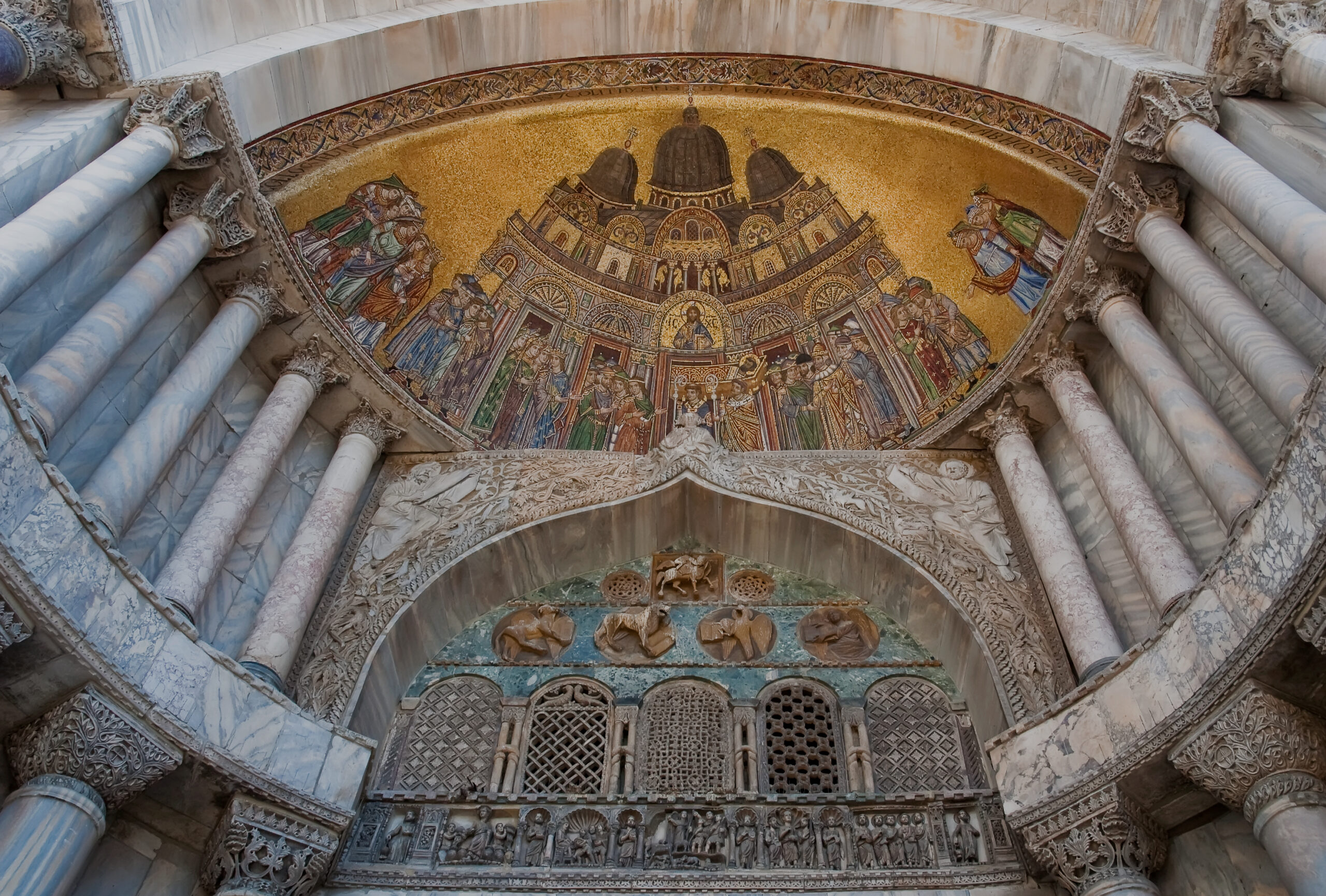
It is not an Italian cathedral but a Byzantine church, with five domes and eight thousand square metres of gold-ground mosaics going back to the twelfth century. It was the doge’s private chapel until 1807, not the city’s cathedral: which is why it stands attached to the seat of government rather than the religious centre.
What justifies the supplement: the Pala d’Oro behind the altar, two thousand pearls, emeralds and Byzantine enamels begun in 976; the museum, with the four original bronze horses looted from Constantinople in 1204; and the loggia, which opens onto the balcony above the square. The floor undulates because the basilica rests on wooden piles in mud and has settled over a thousand years.
Doge’s Palace
Time 2 hours · Ticket about €30 combined with the St Mark’s Square museums

Look at it from outside before going in: it is built the wrong way up, heavy wall on top and light colonnade below, and no other Gothic palace dares as much. Inside, the Hall of the Great Council is fifty-three metres long and held two thousand people: above the throne, Tintoretto’s Paradise, for centuries the largest painting on canvas in the world.
On the frieze of doges’ portraits, one panel is painted black: it is the place of Marin Falier, beheaded for conspiracy in 1355 and erased from official memory. The Secret Itineraries tour, booked separately, goes through the offices, the torture chambers and the Piombi cells from which Casanova escaped.
Piazza San Marco and the bell tower
Time 1 hour · Square free, bell tower about €10 with a lift

It is the only space in Venice called a piazza: all the others are campi. The bell tower collapsed in on itself in 1902, killing nobody except the custodian’s cat, and was rebuilt «as it was, where it was» in ten years. It has a lift, and from the top the shape of the city and the lagoon becomes clearer than on any map.
The Clock Tower can only be visited with a guide, by booking, and it is worth it: you climb inside the mechanism of 1499, still working, up to the two Moors who strike the hours on the bell.
Rialto bridge and the Grand Canal
Time 1 hour between bridge and vaporetto · Bridge free, vaporetto €9.50 a ride
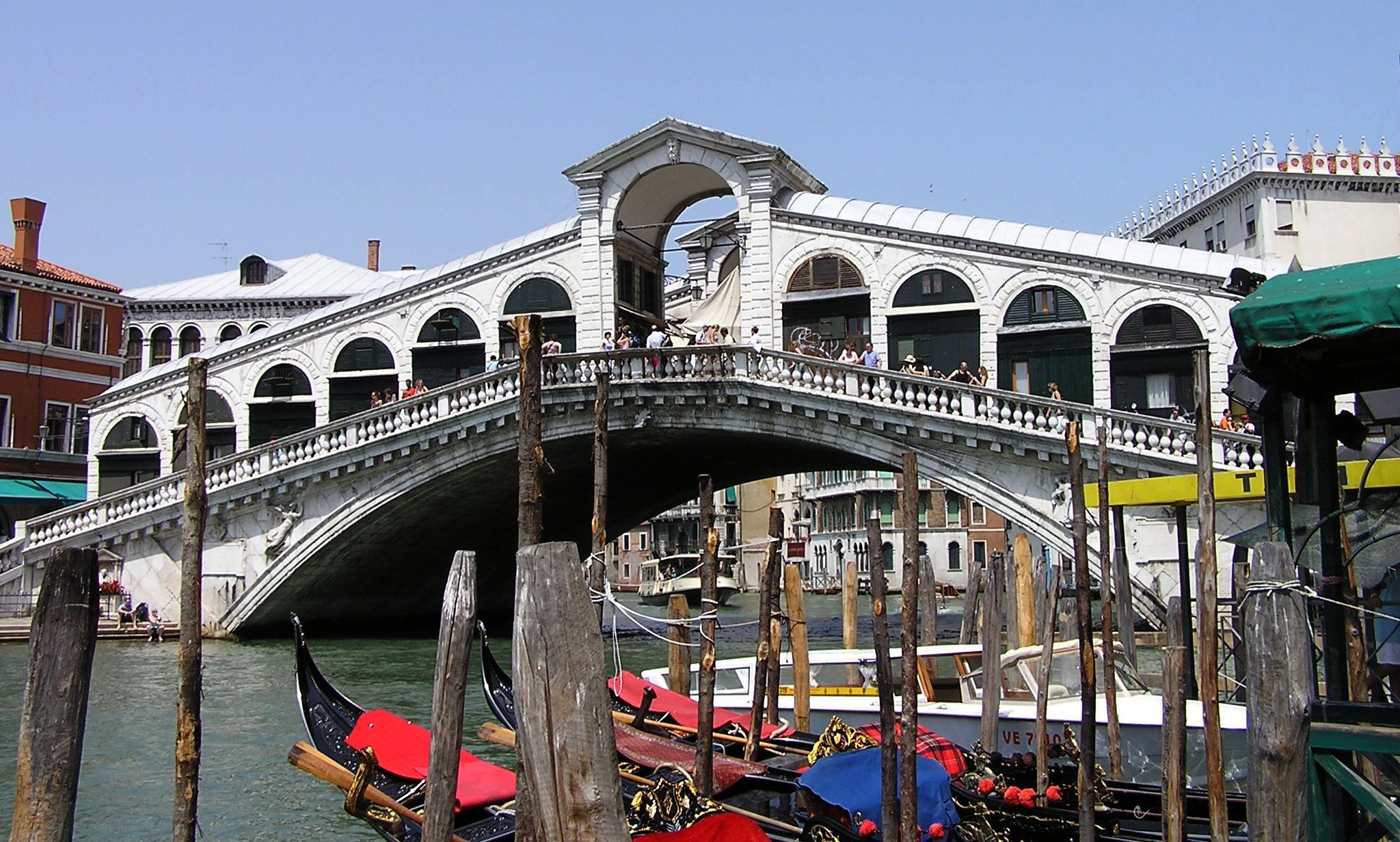
Until 1854 this was the only bridge over the Grand Canal. The stone version dates from 1591 and won a competition that Michelangelo and Palladio also entered.
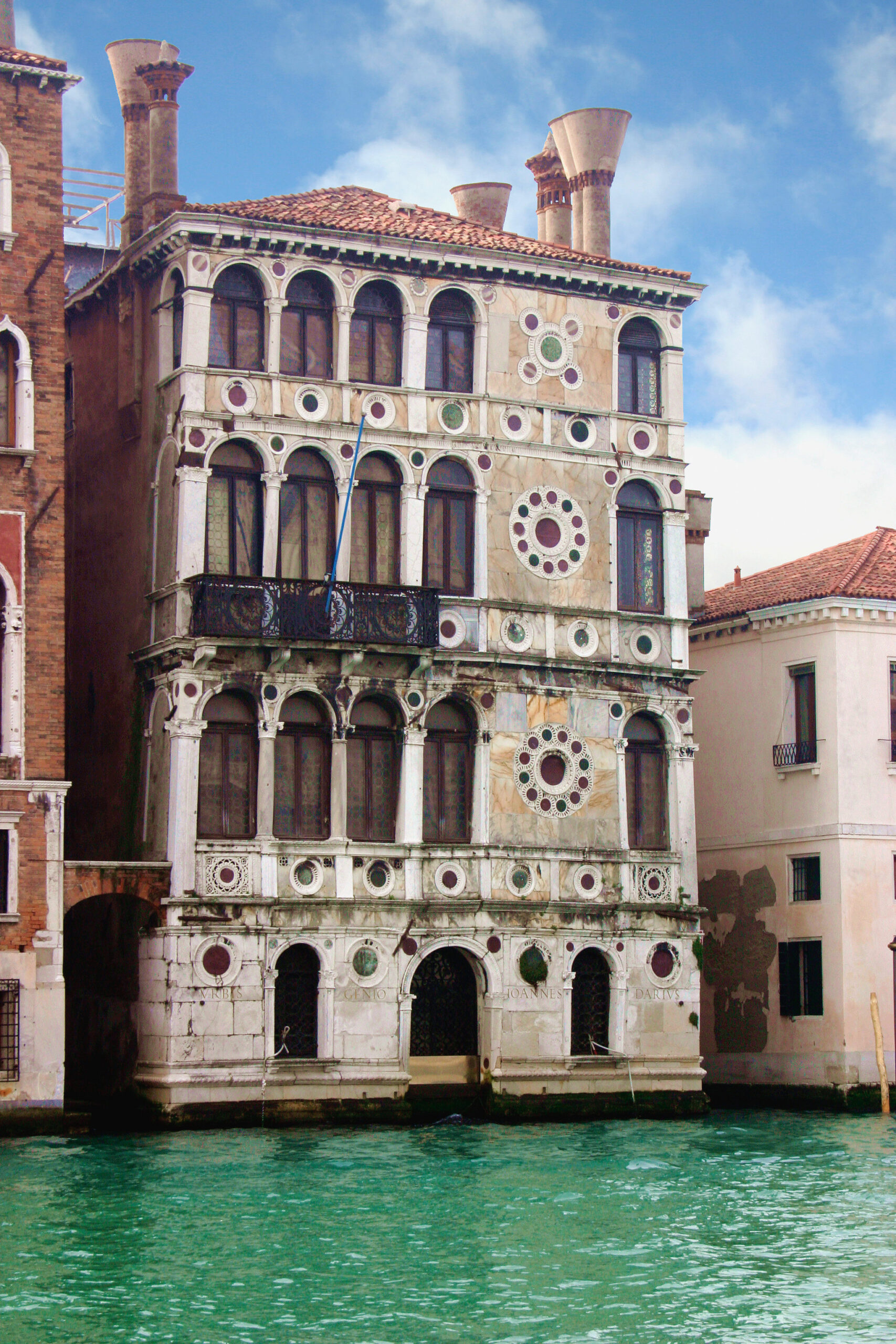
But the right way to see the canal is from the water: line 1 covers it entirely in three quarters of an hour, stopping everywhere. Sit at the stern, in the open: two hundred palaces from the thirteenth to the eighteenth century, all turned towards the water because the water was the street and the landward side was the tradesmen’s entrance.
The museums
Scuola Grande di San Rocco
Time 1 hour 30 · Ticket about €10 · Almost never a queue
It is the most underrated thing in Venice. Tintoretto worked here for twenty-three years, from 1564, filling two halls with fifty canvases: many are on the ceiling and are looked at lying back on the benches or with the mirrors handed out at the entrance. The Crucifixion in the Sala dell’Albergo takes up an entire wall and is the largest picture he ever painted.
Gallerie dell’Accademia
Time 2 hours · Ticket about €15
All of Venetian painting in one place: Bellini, Carpaccio, Giorgione’s Tempest which nobody has ever managed to explain, and Veronese’s Feast in the House of Levi, which the Inquisition attacked as irreverent and which he resolved by changing the title rather than the painting. Leonardo’s Vitruvian Man is here too, shown only occasionally because light damages it.
Peggy Guggenheim Collection
Time 1 hour 30 · Ticket about €17
It occupies Palazzo Venier dei Leoni, on the Grand Canal, which never got past its ground floor because building stopped in the eighteenth century. Peggy Guggenheim lived here for thirty years with her collection: Picasso, Pollock, Max Ernst who was her husband, De Chirico, Magritte. The garden on the canal is one of the few quiet open spaces in the centre.
Ca’ Rezzonico
Time 1 hour 30 · Ticket about €10
The museum of eighteenth-century Venice, installed in a Grand Canal palace left furnished: ballrooms, Tiepolo frescoes on the ceilings, a reconstructed pharmacy and Pietro Longhi’s scenes of everyday life. It is the best way to understand how people actually lived inside these palaces.
Scuola di San Giorgio degli Schiavoni
Time 45 minutes · Ticket about €6 · A single room
A small hall in Castello where Carpaccio painted an entire cycle between 1502 and 1507: St George and the dragon, St Jerome and the lion, and the celebrated St Augustine in his Study with the little white dog. Ten people are admitted at a time and you sit down. It costs six euros and it is one of the best things in the city.
The churches
Frari basilica
Time 1 hour · Ticket about €5
Gothic, enormous, in brick. Over the high altar is Titian’s Assumption, nearly seven metres tall, which struck the friars as too modern when it was unveiled in 1518. Inside are also Titian’s own tomb, Canova’s pyramid-shaped monument and a Giovanni Bellini triptych in the sacristy that many consider his masterpiece.
Salute basilica
Time 40 minutes · Entry free, sacristy charged
It was built in thanks for the end of the plague of 1630, which had killed a third of the city, and rests on a hundred thousand wooden piles driven into the mud. The sacristy holds eight Titians and Tintoretto’s Marriage at Cana. Every 21 November Venetians process to it across a bridge of boats built for the occasion: one of the few festivals still entirely theirs.
San Giorgio Maggiore
Time 45 minutes · Church free, bell tower about €8
The church is by Palladio and has two Tintorettos flanking the altar, including a Last Supper seen at an angle. But the reason to cross the basin is the bell tower: it has a lift, almost never a queue, and from it you see Piazza San Marco facing you, with the whole city behind. It is exactly the view everyone looks for from St Mark’s bell tower, where St Mark’s itself is missing.
Santi Giovanni e Paolo
Time 45 minutes · Ticket about €5
Venetians call it San Zanipolo. It is the Republic’s pantheon: twenty-five doges are buried here, in monuments covering the walls from floor to ceiling. Outside, in the campo, stands Verrocchio’s equestrian statue of Colleoni, the finest Renaissance equestrian monument alongside the Gattamelata in Padua.
The quarters, which are half the trip
Venice has six quarters and ninety per cent of visitors walk through two of them. Walking through the others costs nothing and is the part you remember.
Cannaregio and the Ghetto

The most inhabited and least visited quarter. The Ghetto is the first in history: in 1516 the Republic confined the Jews here, and the word comes from the foundry that stood on the site before, the getto. Unable to spread outwards, the houses grew upwards to eight storeys with very low ceilings: they are the tallest buildings in the city. Five synagogues, three visitable with a guide from the Jewish museum.
In the evening people go out along the Fondamenta della Misericordia and degli Ormesini, two adjacent canals with tables outside.
Dorsoduro and the Zattere
The university and museum quarter. The Zattere is the quayside facing the Giudecca canal: sun all afternoon, and the Venetians’ promenade, without a single souvenir window. Campo Santa Margherita is the students’ square and fills up in the evening. At the squero di San Trovaso gondolas are still built by hand: it is one of the last four workshops left.
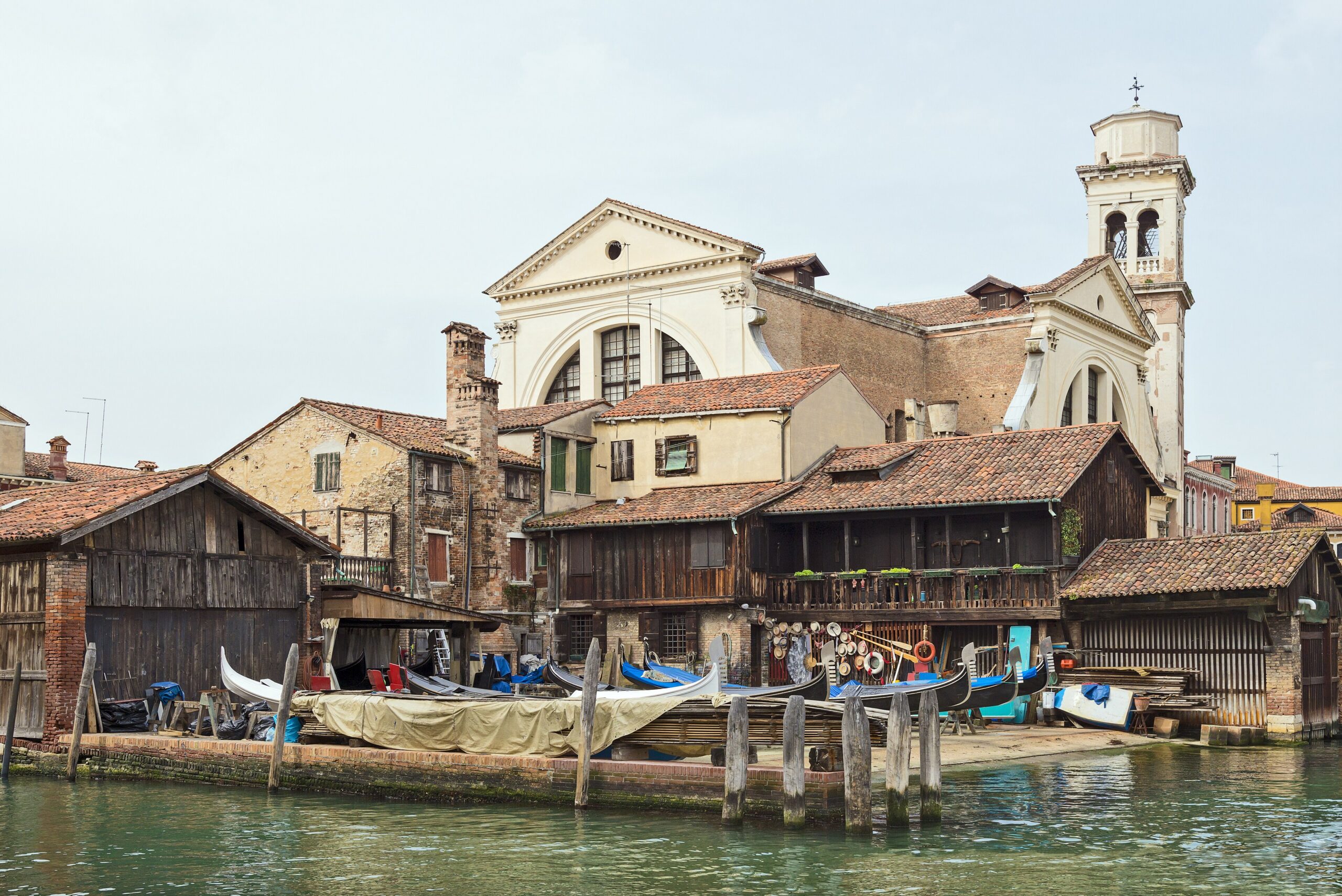
Castello and the Arsenale
The largest and most residential quarter: ten minutes from St Mark’s and you find washing hung out and children playing in the campo. The Arsenale was the Republic’s shipyard and in the sixteenth century produced a galley a day using an assembly-line system: you can see it from outside, and in Biennale years you can go into the Corderie.
San Polo and the Rialto market
The smallest quarter, containing the Rialto market: in the morning, under the Gothic loggia of the fish market, it is still a real market where restaurateurs shop. You see moèche, crabs caught just after moulting and eaten whole, and cuttlefish with their ink. Closed Sunday and Monday. The best bacari in the city are around it.
The lagoon
Murano · in 1291 the Republic forced all glassmakers to move here, officially because of fire risk, in reality to control an industrial secret worth a fortune: anyone leaving Venice with the technique risked their life. The furnaces give demonstrations; be wary of the «free tours» offered around St Mark’s, which always end in a showroom.
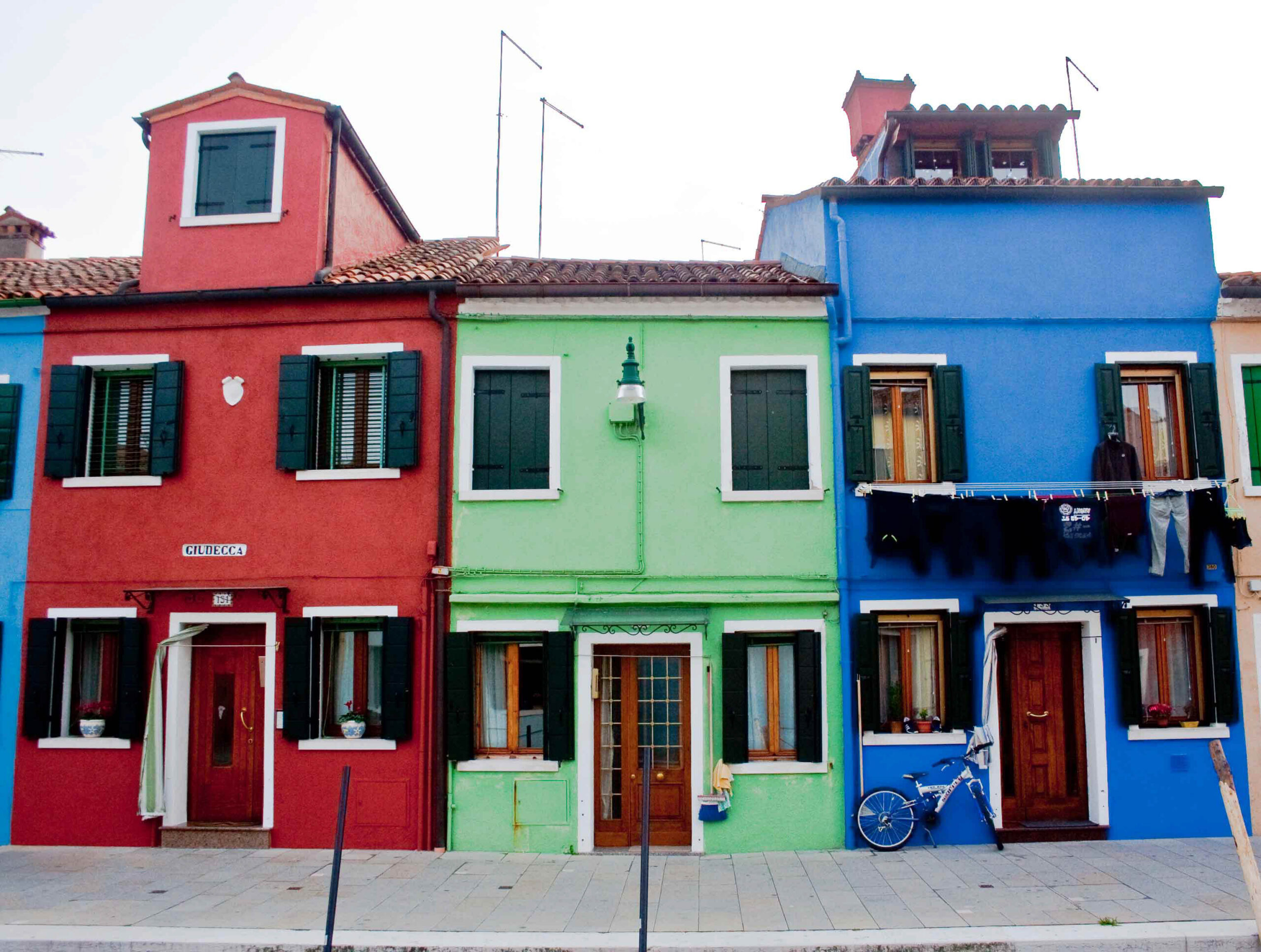
Burano · the houses are painted in solid colours, and changing one still means asking the council, which replies by assigning a colour. It is also the island of needle lace. Go in the afternoon, once the morning groups have left.
Torcello · twenty thousand inhabitants in the Middle Ages, fewer than ten today: malaria and silting emptied it, and Venice was partly built with its bricks. What remains is the basilica of Santa Maria Assunta, founded in 639, with a mosaic Last Judgement covering the entire west wall and a Madonna on a gold ground in the apse that justifies the trip on its own.
Lido · an island with cars, Liberty villas and twelve kilometres of beach. Half an hour by vaporetto takes you from the Middle Ages to the seaside, and in September there is the film festival.
The right hours, which in Venice matter more than elsewhere
Venice receives tens of thousands of day visitors arriving by ship and coach, and almost all of them follow the same route: station, Rialto, St Mark’s, and back. The flow starts around ten and ends around six in the evening, when the ships leave.
Which means that before nine and after eight in the evening the city is a different place, and that anyone staying in the lagoon sees a Venice day visitors will never see. It is the main reason it is worth paying for a hotel in the centre rather than sleeping in Mestre.
Acqua alta and the access fee
Acqua alta comes mainly between October and January, peaking in November. It does not flood the whole city: it starts at Piazza San Marco, the lowest point, and above 110 cm raised walkways are put out. Forecasts are published by the city’s tide centre. Boots are sold everywhere, but checking the tide the night before is more useful.
The access fee is payable only on certain days of the year and only by people entering the city without staying overnight. The rules and dates change from season to season: check the city website before travelling, because without a booking you risk a fine.
What it costs to get in
| Place | Price | Booking |
|---|---|---|
| Doge’s Palace, combined with the St Mark’s Square museums | about €30 | Advised |
| Peggy Guggenheim Collection | about €17 | No |
| St Mark’s Basilica with Pala d’Oro, museum and loggia | about €15 | Timed slot |
| Gallerie dell’Accademia | about €15 | No |
| St Mark’s bell tower | about €10 | No |
| Scuola Grande di San Rocco | about €10 | No |
| Ca’ Rezzonico | about €10 | No |
| San Giorgio Maggiore bell tower | about €8 | No |
| Scuola di San Giorgio degli Schiavoni | about €6 | No |
| Frari basilica | about €5 | No |
| Salute basilica | free, sacristy charged | — |
| Vaporetto, single / 24 hours / 72 hours | €9.50 / 25 / 45 | — |
Reference figures as of August 2026: museum, vaporetto and access fee prices change often, check the official city and Venezia Unica websites before you travel.
How to choose, according to the time you have
One day · St Mark’s at opening time with the basilica and the Doge’s Palace, Rialto, the Grand Canal by vaporetto and an inhabited quarter in the evening. The full route is in Venice in 1 day.
Three days · a day for St Mark’s, a day for the quarters with San Rocco and the Accademia, a full day in the lagoon between Murano, Burano and Torcello: that is Venice in 3 days.
Frequently asked questions
What should I see in Venice if it is my first time?
St Mark’s Basilica, the Doge’s Palace, the Grand Canal travelled by vaporetto, the Rialto bridge and market, and at least one evening in an inhabited quarter like Cannaregio or Dorsoduro. If there is time left, the Scuola Grande di San Rocco is worth as much as the monuments on the square and has no queue.
What has to be booked in Venice?
St Mark’s Basilica has timed entry and booking avoids a queue that exceeds an hour in summer; the Doge’s Palace is worth booking for the same reason, and the Secret Itineraries tour has few places. You should also check the access fee, which concerns only day visitors not staying overnight.
How much does a gondola cost?
The fare is set by the city: around €90 for 25-30 minutes until 7 pm, around €110 in the evening. That is the price of the boat, not per person, and it takes up to five passengers. Starting from the inner canals of Cannaregio or Dorsoduro costs the same and is worth far more than starting at St Mark’s.
What can you see for free in Venice?
All the campi and lanes, which are half the trip; Piazza San Marco; the Rialto bridge and the market in the morning; the Salute basilica; the Zattere; the Ghetto; the squero di San Trovaso seen from the fondamenta. And walking with no destination, which here is an activity in itself.
Are the islands worth it?
Yes, but as a full day. Fondamente Nove to Torcello takes a good hour by vaporetto, and the three islands are quite different: Murano for glass, Burano for colour and lace, Torcello for silence and a Byzantine mosaic that justifies the trip on its own.
When does the acqua alta happen?
Mainly between October and January, peaking in November. It starts at Piazza San Marco, the lowest point in the city. Forecasts are published by the city’s tide centre and above 110 cm raised walkways are put out.
When is the best time to visit Venice?
April-May and September-October. July and August are hot, humid and extremely crowded. Carnival and the Redentore are spectacular but make the city impassable. January and February, outside Carnival, are the months when Venice belongs to Venetians again.
How many days do you need for Venice?
One is enough for the landmarks; three is the right length, because it adds the inhabited quarters, the museums that matter and a day in the lagoon. But time works differently in Venice: half of what you remember comes from walking with no destination, and that takes days, not hours.
August 22, 2026