

Venice in 1 day: on foot and by vaporetto
Venice is the only Italian city where an itinerary is not about saving time but about not wasting it getting lost — and getting lost, here, is also the best thing that can happen to you. With a single day you have to choose: either you do the two monuments that genuinely matter, or you walk. This itinerary holds both together, putting St Mark’s at opening time, when the square is still empty, and leaving the afternoon to the quarters where people actually live.
At a glance
- Length · one full day, from 9 am until after dinner
- Walking distance · about 8 km, plus the vaporetto legs
- Bookings · St Mark’s Basilica and the Doge’s Palace, both with timed entry
- Budget · €80-120 per person, accommodation excluded
- Starting point · Piazza San Marco at 9 am
- Ending point · Cannaregio or Dorsoduro for dinner
- To budget for · the access fee on designated days, if you are not staying overnight
Three parts of the day, seven stops. The fifth is done by vaporetto: it is a stop in its own right, not a transfer.
Morning — St Mark’s at opening time
1.5 km · 3 stops · 9 am to 1 pm · all within the square

There is one rule for Venice in a single day: get to St Mark’s as it opens. Between ten and four the square is crossed by tens of thousands of people, and at six in the evening it empties abruptly because the cruise ships and coaches leave. If you are sleeping in the city, the first hour of the morning and the hour after sunset are a different Venice, free of charge.
1 – St Mark’s Basilica
Visit 1 hour with the Pala d’Oro and the loggia · Ticket about €6 basic, supplements for the Pala d’Oro and museum · Timed entry
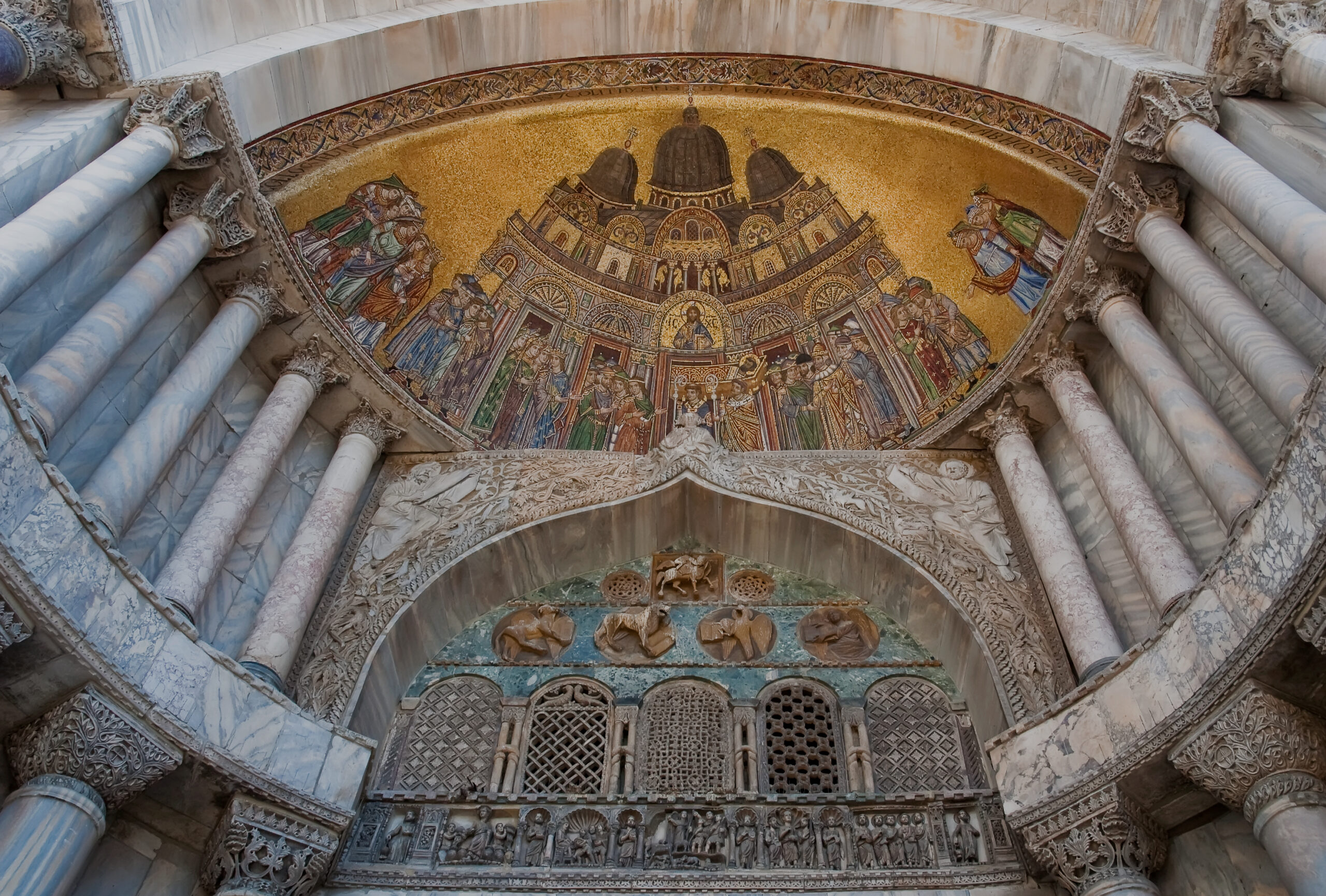
It is not an Italian cathedral: it is a Byzantine church, with five domes and eight thousand square metres of gold-ground mosaics going back to the twelfth century. The basilica was the doge’s private chapel until 1807, not the city’s cathedral, which is why it stands attached to the seat of government rather than to the religious centre.
Two things justify the supplement. The Pala d’Oro behind the altar: a panel of two thousand pearls, emeralds and Byzantine enamels, begun in 976. And the loggia of the horses, from which you step out onto the balcony above the square and see the bronze quadriga close up — copies: the originals, looted from Constantinople in 1204, are upstairs.
The floor undulates, and it is not a design effect: the basilica rests on wooden piles driven into mud and has settled into waves over a thousand years.
2 – Doge’s Palace
Visit 1 hour 30 · Getting there 2 minutes · Ticket about €30, combined with the museums on the square

Look at it from outside before going in: it is built upside down, with the heavy wall on top and the light colonnade below, and no other Gothic palace dares as much. Inside, the Hall of the Great Council is fifty-three metres long and held two thousand people: above the throne hangs Tintoretto’s Paradise, for centuries the largest painting on canvas in the world. On the frieze of doges, one panel is painted black: it is the place of Marin Falier, beheaded for conspiracy in 1355 and erased from official memory.
You leave across the Bridge of Sighs towards the new prisons. The name is a nineteenth-century romantic invention: most people crossing it were going to serve short sentences, not to die.
3 – The square, the bell tower and the Procuratie
Visit 45 minutes · Bell tower about €10, with a lift
It is the only space in Venice called a piazza: all the others are campi. The bell tower collapsed in on itself in 1902, killing nobody except the custodian’s cat, and was rebuilt «as it was, where it was» in ten years. It has a lift, and from the top the shape of the city and the lagoon becomes clearer than on any map.
Under the Procuratie is Florian, open since 1720. A coffee at a table costs as much as a lunch: knowing that, it can still be worth doing once in a lifetime.
Not around St Mark’s. Walk ten minutes towards Rialto and eat cicchetti standing up in a bacaro: they are Venetian bites costing one or two euros each — sardines in saor, creamed salt cod, half an egg with an anchovy — washed down with an ombra, a small glass of wine. Four cicchetti and two ombre make a lunch, and cost ten euros.
Afternoon — Rialto, the Grand Canal and Dorsoduro
4 km · 3 stops · 2:30 pm to 7 pm · one leg by vaporetto
4 – Rialto bridge and market
Visit 1 hour · Entry free · Fish market closed Sunday and Monday
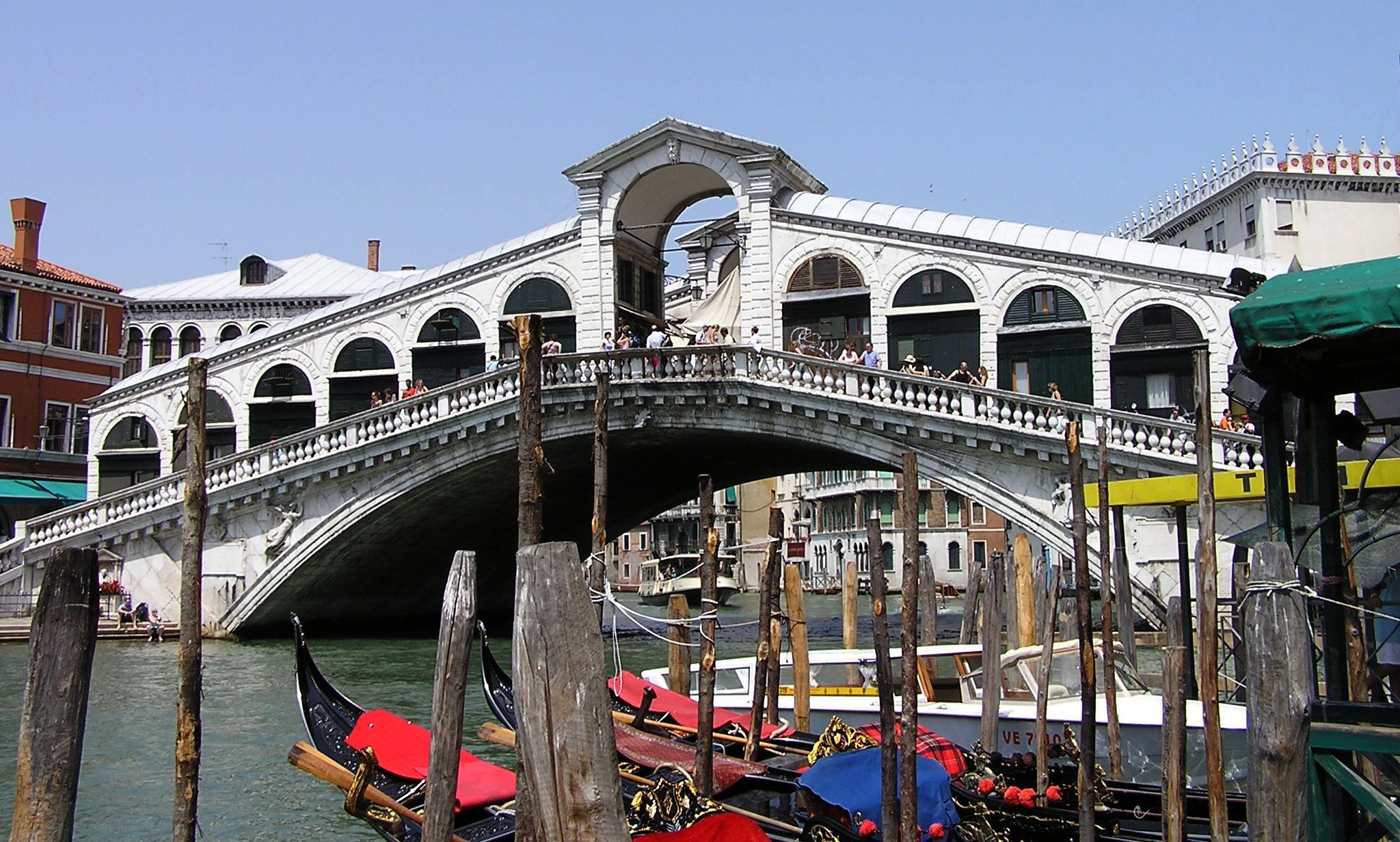
Until 1854 this was the only bridge over the Grand Canal: to cross, the whole of Venice came through here. The stone version dates from 1591 and won a competition that Michelangelo and Palladio also entered. There have always been shops on the bridge, and they have always sold things to outsiders.
The thing worth seeing is on the other side: the Rialto market, with the fish stalls under the Gothic loggia. In the morning it is still a real market where restaurateurs do their shopping; in the afternoon it is closed, but the loggia and the surrounding lanes remain the right place for bacari.
5 – The Grand Canal by vaporetto
Time 45 minutes · Line 1 from Rialto towards Piazzale Roma and back · Included in the day ticket
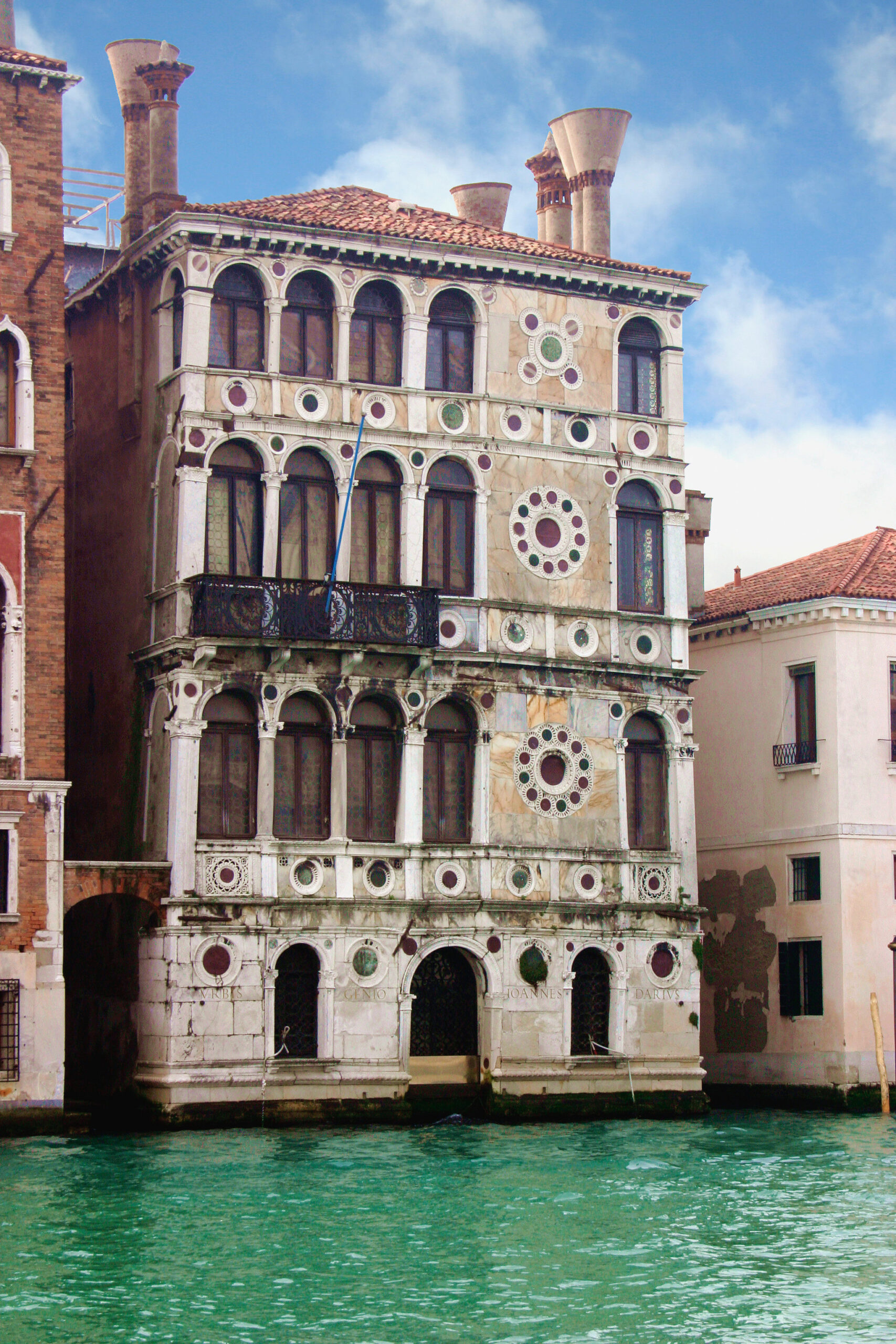
This is a stop, not a transfer. Line 1 stops everywhere and covers the whole canal in three quarters of an hour: sit at the stern, in the open, and look at the facades. Two hundred palaces in a row, from the thirteenth to the eighteenth century, all turned towards the water because the water was the street: the landward side is the tradesmen’s entrance.
Worth recognising along the way: the Ca’ d’Oro, flamboyant Gothic whose decorations were once lined with real gold; Ca’ Rezzonico, the museum of eighteenth-century Venice; and Palazzo Venier dei Leoni, which never got past its ground floor and now holds the Peggy Guggenheim collection.
A single vaporetto ride costs €9.50: if you expect more than two, the day ticket pays for itself immediately.
6 – Dorsoduro and the Zattere
Visit 2 hours · Entry free, museums charged separately
This is the university and museum quarter, and the half of Venice where you can breathe. At the Gallerie dell’Accademia is Venetian painting — Bellini, Carpaccio, Giorgione, Veronese’s Feast in the House of Levi, whose title the Inquisition made him change; at the Peggy Guggenheim, twentieth-century art in a house on the canal. With a single day you do one of the two, or neither.
Then walk to the Zattere, the long quayside facing the Giudecca canal: it is the Venetians’ promenade, it gets sun all afternoon and there is not a single souvenir window. At the far end, the Punta della Dogana and the basilica of the Salute, built in thanks for the end of the plague of 1630 and resting on a hundred thousand wooden piles.
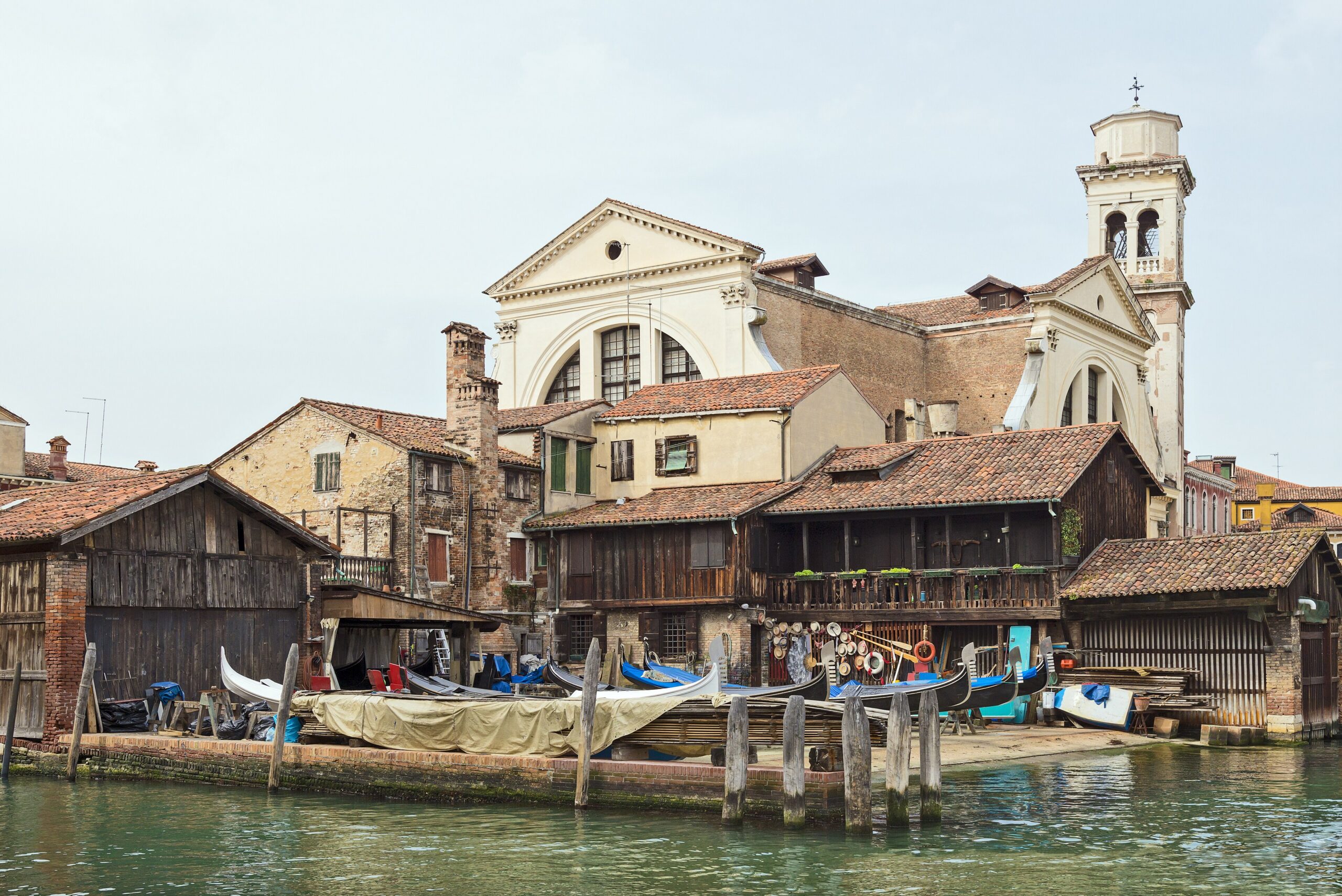
On the way, at the squero di San Trovaso, gondolas are still built and repaired by hand: it is one of the last four workshops left.
Evening — Cannaregio
2.5 km · 1 stop · from 7 pm onwards · vaporetto or twenty minutes on foot

It is the most inhabited and least visited quarter, and in the evening it is where you eat and drink without queuing. Its spine is the Fondamenta della Misericordia and degli Ormesini, two adjacent canals with tables outside.
Inside Cannaregio is the Ghetto, the first in history: in 1516 the Republic confined the Jews here, and the word comes from the foundry that stood on the site before, the getto. Unable to spread outwards, the houses grew upwards: they are the tallest buildings in Venice, up to eight storeys with very low ceilings. The square is quiet and there are five synagogues, three of them visitable with a guide from the Jewish museum.
If you still have energy, walk back towards St Mark’s after ten: the empty square at night, lit and without a soul in it, is the image that stays.
Cannaregio along the Fondamenta della Misericordia, or Dorsoduro around Campo Santa Margherita, the students’ square. Always avoid: tourist menus with photographs, and any restaurant within two hundred metres of St Mark’s. If you see «spaghetti alla veneziana» on a board, turn the corner.
Four things not to do
Do not take a gondola at midday from St Mark’s. The fare is fixed — around €90 for 25-30 minutes until 7 pm, €110 after — and it is for the boat, not per person. But the better ride starts from the inner canals of Cannaregio or Dorsoduro, where there is no traffic and you cannot hear the motorboats.
Do not feed the pigeons and do not buy seed for them: it has been banned since 2008 and the fine is steep.
Do not swim in the canals and do not sit on bridges to eat: both are fined, and the second happens by accident.
Do not trust the signs. The yellow arrows only say «per San Marco» and «per Rialto», and they often take you the long way round. Download offline maps before you go: between the lanes the signal comes and goes.
What it costs
| Item | Indicative cost |
|---|---|
| St Mark’s Basilica with Pala d’Oro and loggia | about €15 |
| Doge’s Palace, combined with the St Mark’s Square museums | about €30 |
| Bell tower | about €10 |
| Vaporetto, day ticket | about €25 |
| Access fee, only on designated days and without an overnight stay | €5-10 |
| Lunch of cicchetti | €10-15 |
| Dinner in an osteria | €30-45 |
| Total per person | €80-120 |
Reference figures as of August 2026: museum, vaporetto and access fee prices change often, check the official city and Venezia Unica websites before you travel.
Getting around
On foot and by vaporetto, there is nothing else. Venice can be crossed entirely on foot in a little over an hour, from Piazzale Roma to St Mark’s, and walking is almost always faster than waiting for the right line.
The vaporetto costs €9.50 for a single ride: past two rides the day ticket is worth it. Tickets are sold at kiosks, machines and through the app. Two lines matter: 1, the slow one, which stops everywhere along the Grand Canal, and 2, faster, which skips the minor stops.
There is also the traghetto: working gondolas that cross the Grand Canal where there is no bridge, costing two euros, taken standing up. It is the cheapest way to get into a gondola.
Anyone arriving by car leaves it at Piazzale Roma or the Tronchetto and pays for the garage by the day: cars do not enter the centre, and this is the one city in Europe where that is literally impossible.
Frequently asked questions
Can you see Venice in one day?
Yes, if you accept seeing part of it: Piazza San Marco with the basilica and the Doge’s Palace, Rialto, the Grand Canal from the vaporetto and one inhabited quarter such as Dorsoduro or Cannaregio. The islands, the major museums and everything you find by getting lost stay out — and in Venice that is half the trip.
What has to be booked in Venice?
St Mark’s Basilica has timed entry and booking avoids a queue that in summer exceeds an hour. The Doge’s Palace is worth booking for the same reason. Everything else is bought on the spot. You should also check the access fee, payable only on certain days and only by those not staying overnight.
How much does a gondola cost?
The fare is set by the city: around €90 for 25-30 minutes until 7 pm, around €110 in the evening. That is the price of the boat, not per person, and a gondola takes up to five passengers. Starting from the inner canals rather than St Mark’s costs the same and is worth far more.
When does the acqua alta happen?
Mainly between October and January, peaking in November. It does not flood the whole city: it starts at Piazza San Marco, the lowest point. Forecasts are published by the city’s tide centre, and above 110 cm raised walkways are put out.
When is the best time to visit Venice?
April-May and September-October. July and August are hot, humid and extremely crowded; Carnival and the Redentore are spectacular but make the city impassable. January and February, outside Carnival, are the months when Venice belongs to Venetians again.
Better to sleep in Venice or Mestre?
In Venice, if the budget allows, and for one precise reason: the city before nine and after eight in the evening is a different thing, and anyone sleeping elsewhere never sees those hours. Mestre costs half as much and is ten minutes away by train, but you lose the best part.
How much does the vaporetto cost?
About €9.50 for a single ride, valid 75 minutes. The day ticket costs about €25 and pays off from the third ride. If you are staying longer, there are 48- and 72-hour options.
August 22, 2026


